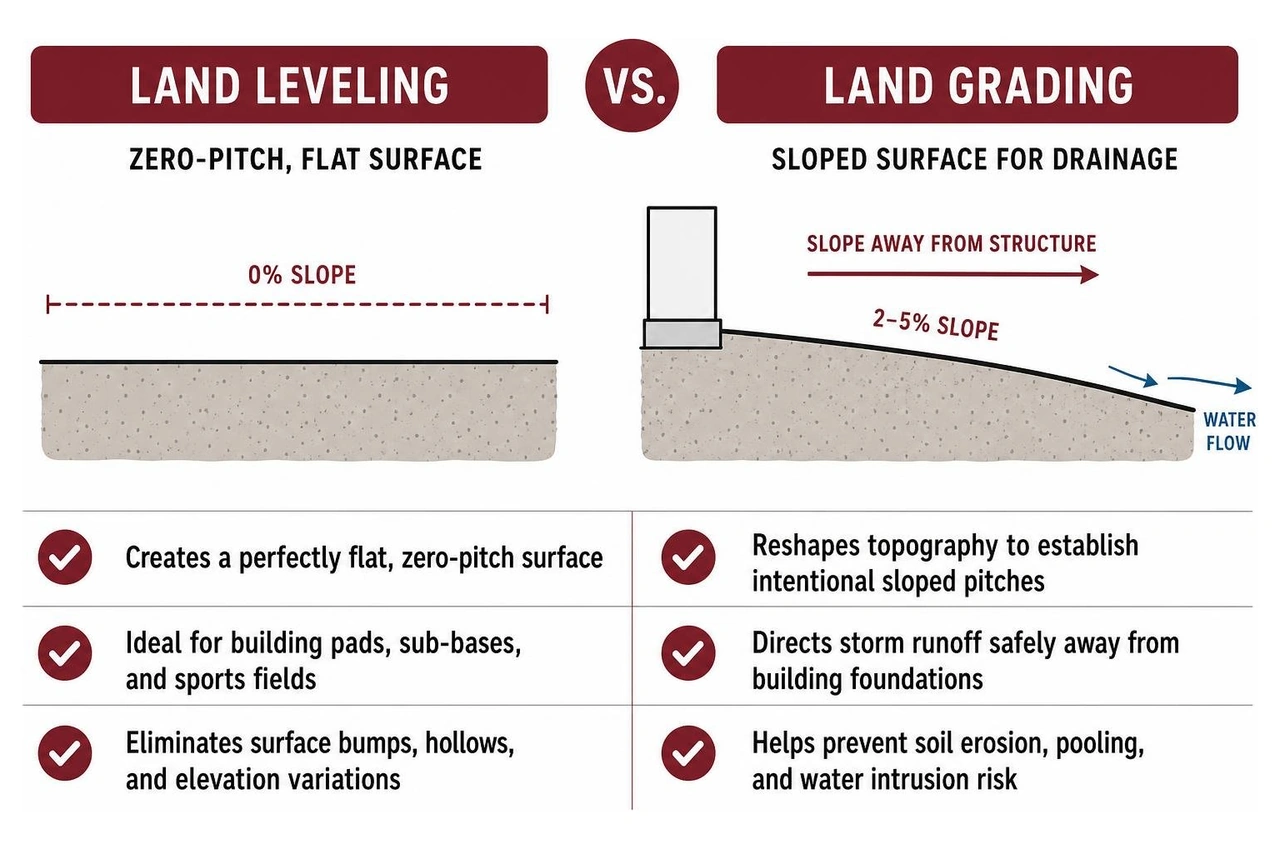
When property owners and developers begin searching for earthwork professionals, the terms "leveling" and "grading" are often used interchangeably. However, in professional earthmoving, they refer to two distinct operations with different engineering goals.
Understanding the distinction ensures you hire the right specialist. If your goal is to build a slab-on-grade structure, you need precise leveling. If your priority is keeping storm run-off out of a foundation, you need land grading and excavation.
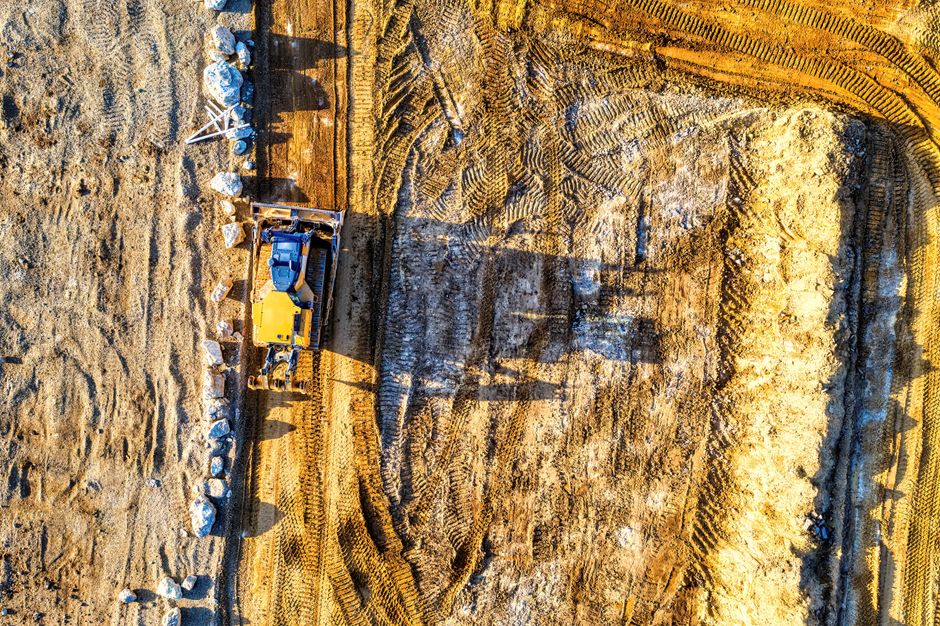
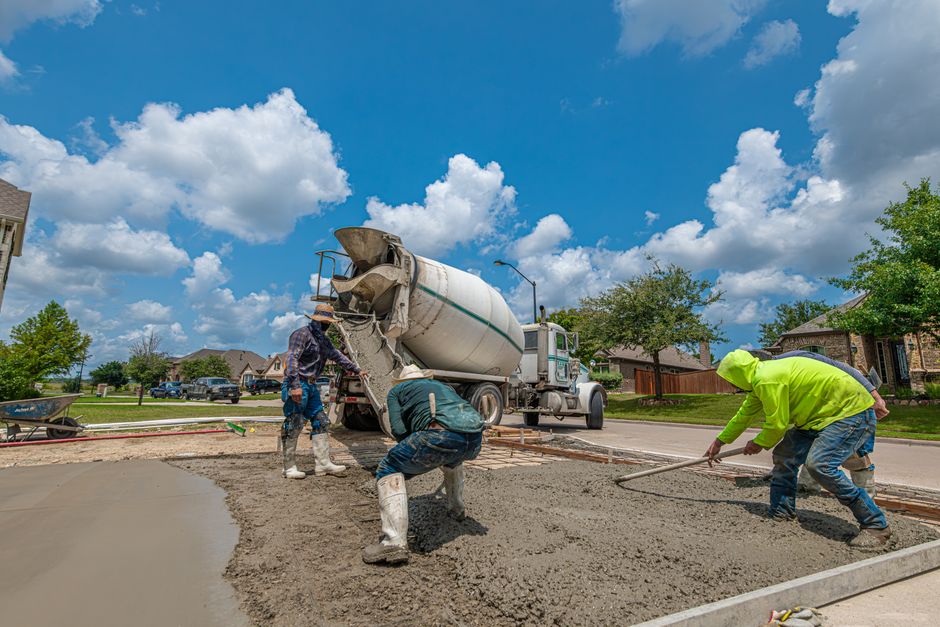
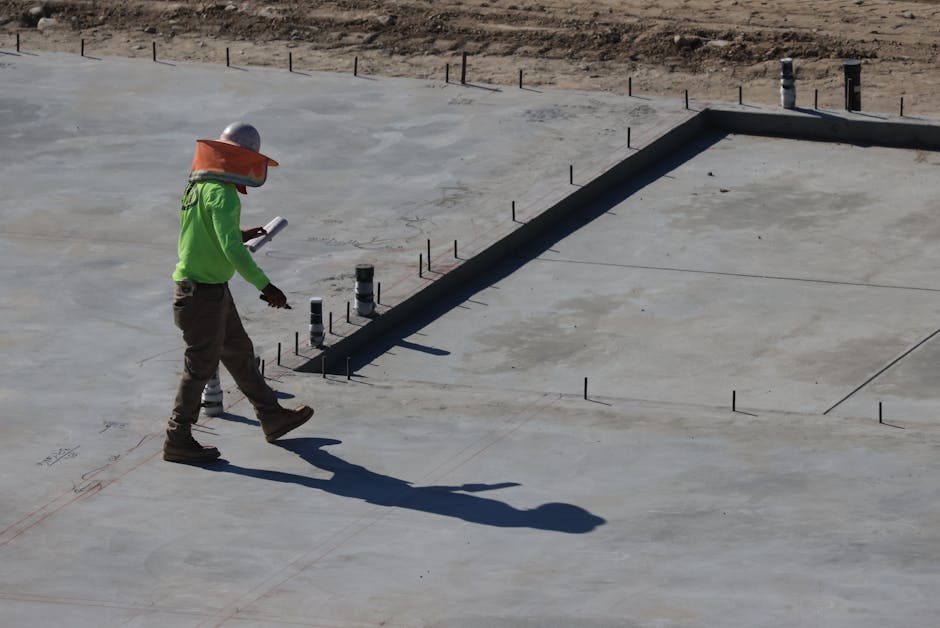
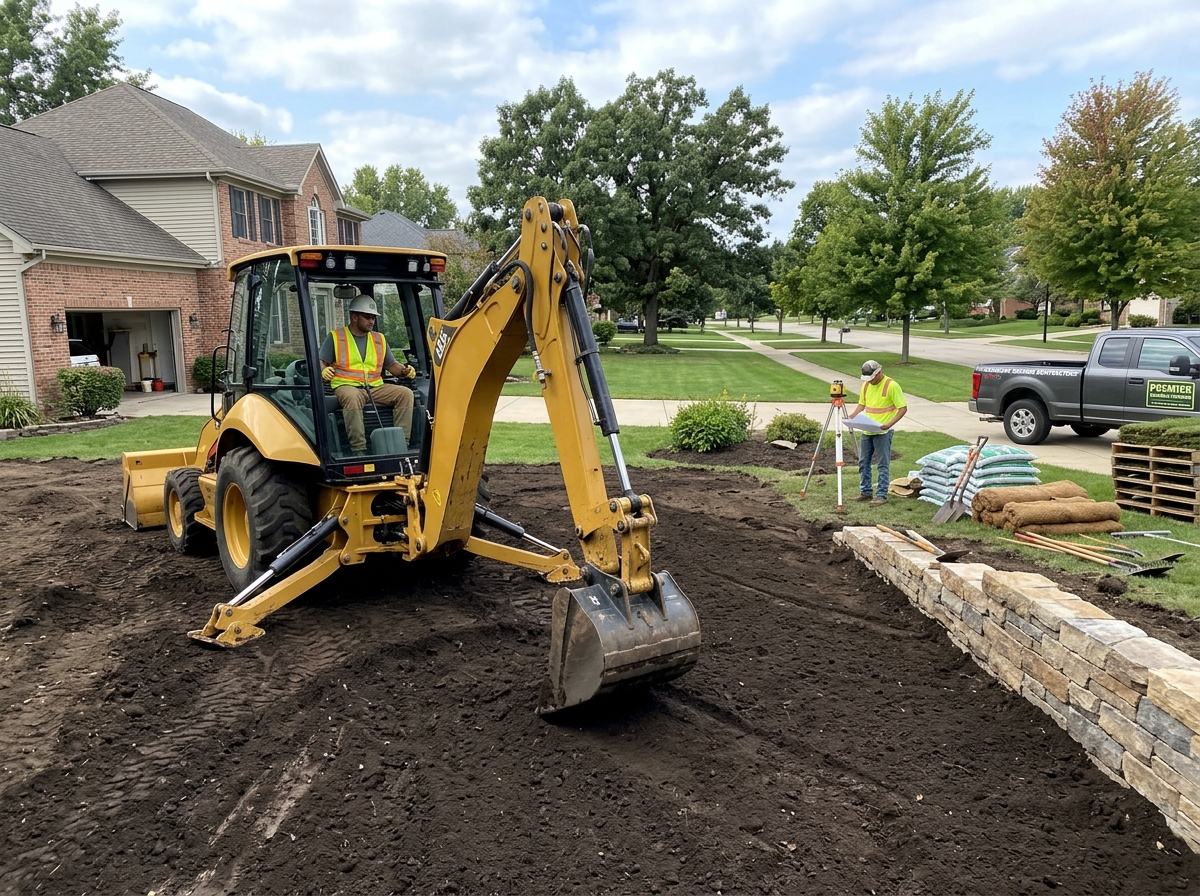
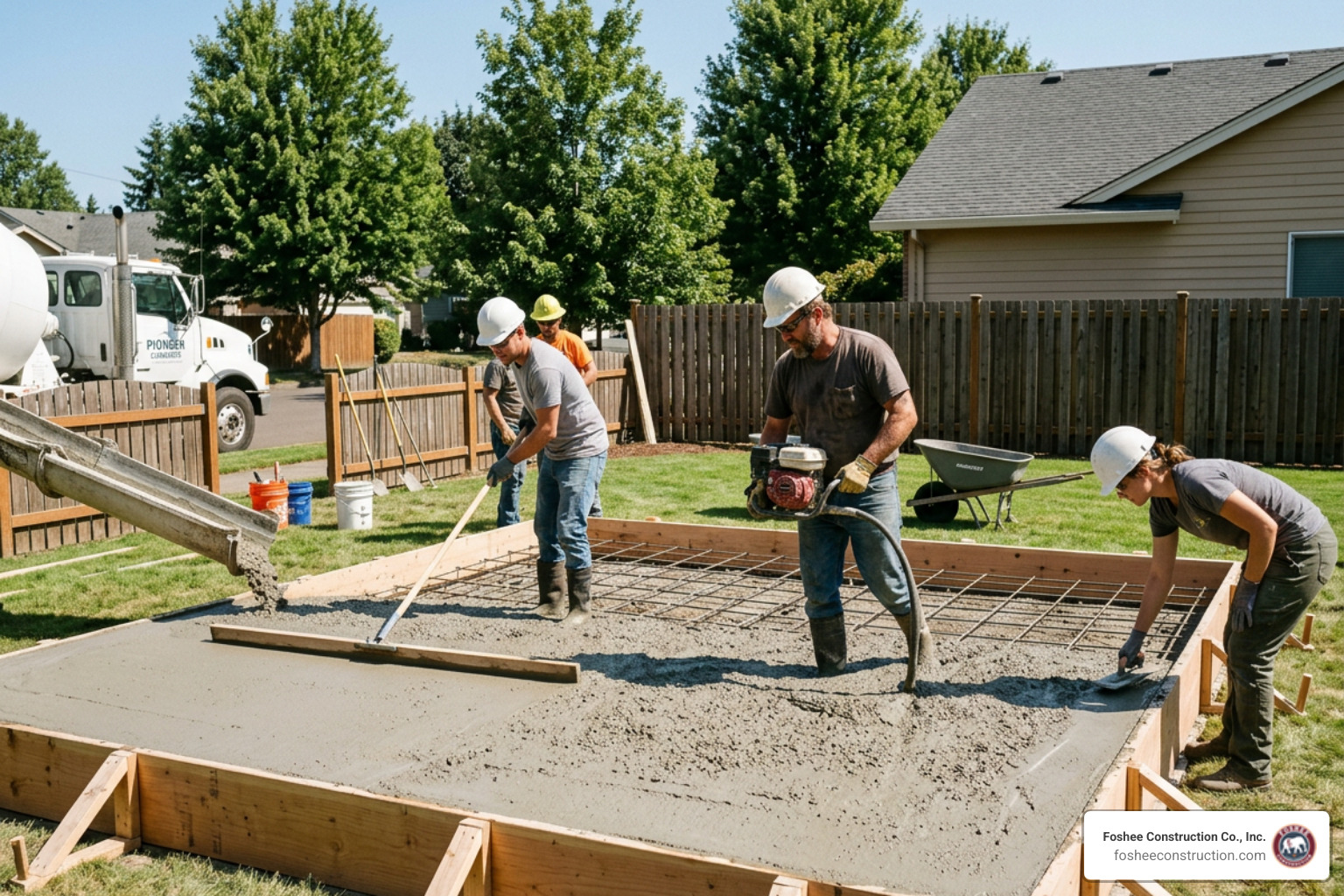
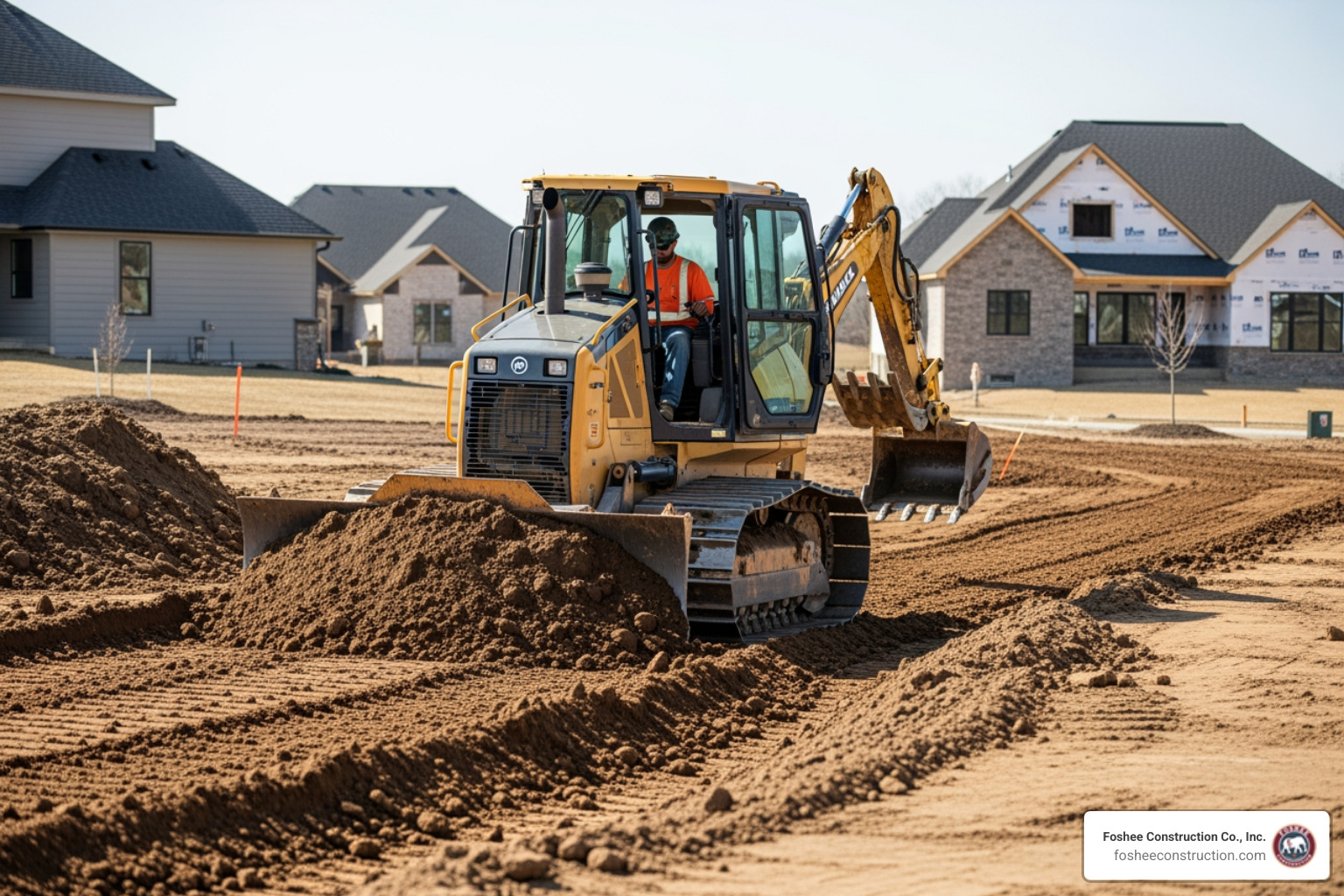
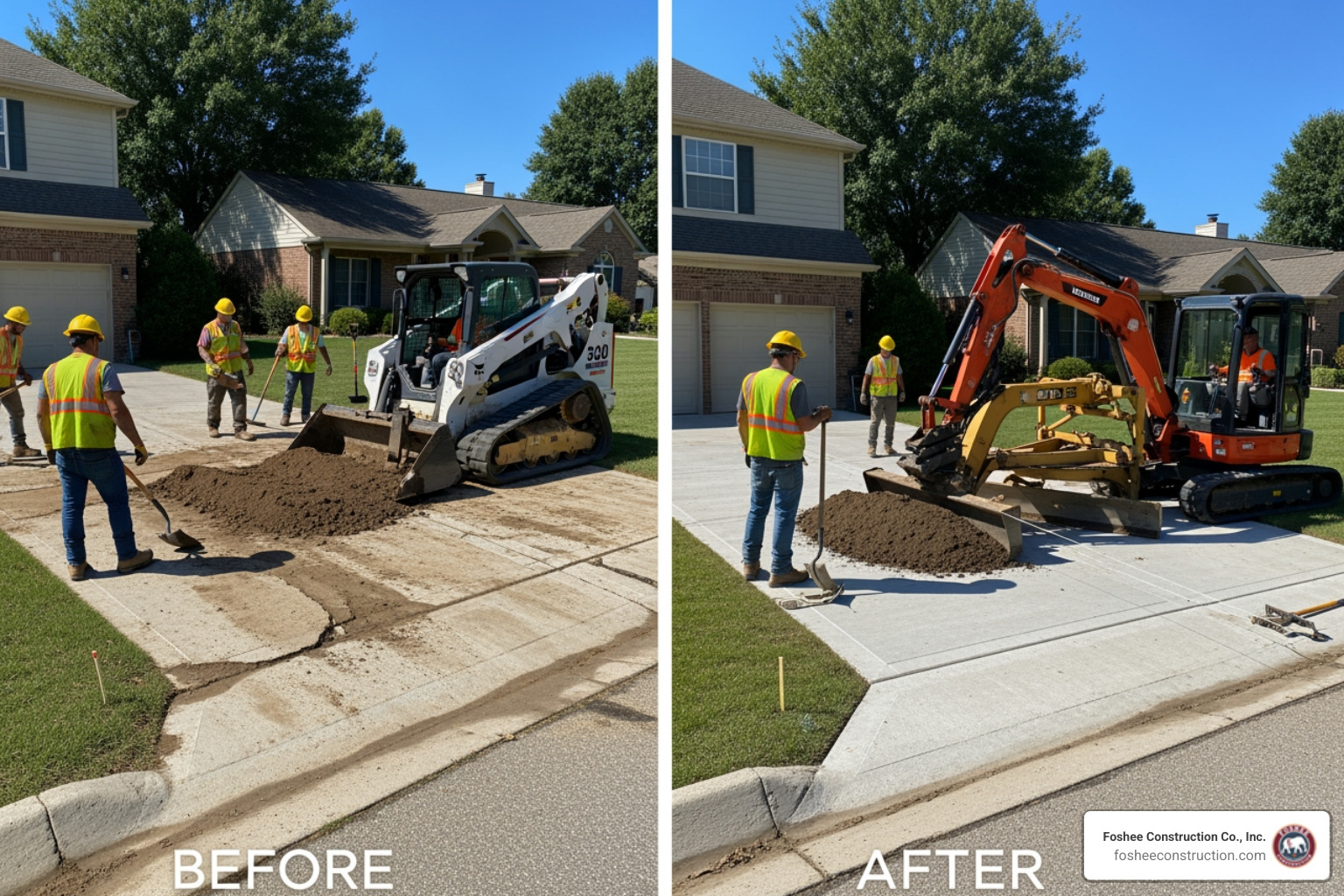
Both disciplines work together during comprehensive site development. For instance, when prepping a home build, a contractor will level the immediate house pad to ensure a uniform concrete pour while applying a continuous grade to the surrounding yard. This sloped pitch redirects rainwater toward designated retention basins or swales.
Enlisting a skilled grading and drainage contractor delivers several long-term functional advantages:
Finding reliable land leveling companies near me requires evaluating a contractor's technical capabilities, legal compliance, and past performance. Simply accepting the lowest estimate can lead to shallow drainage lines, improper compaction, and costly rework.

When vetting potential contractors, look beyond basic marketing claims and focus on verified qualifications:
Before signing a contract, protect your investment by asking these direct operational questions:
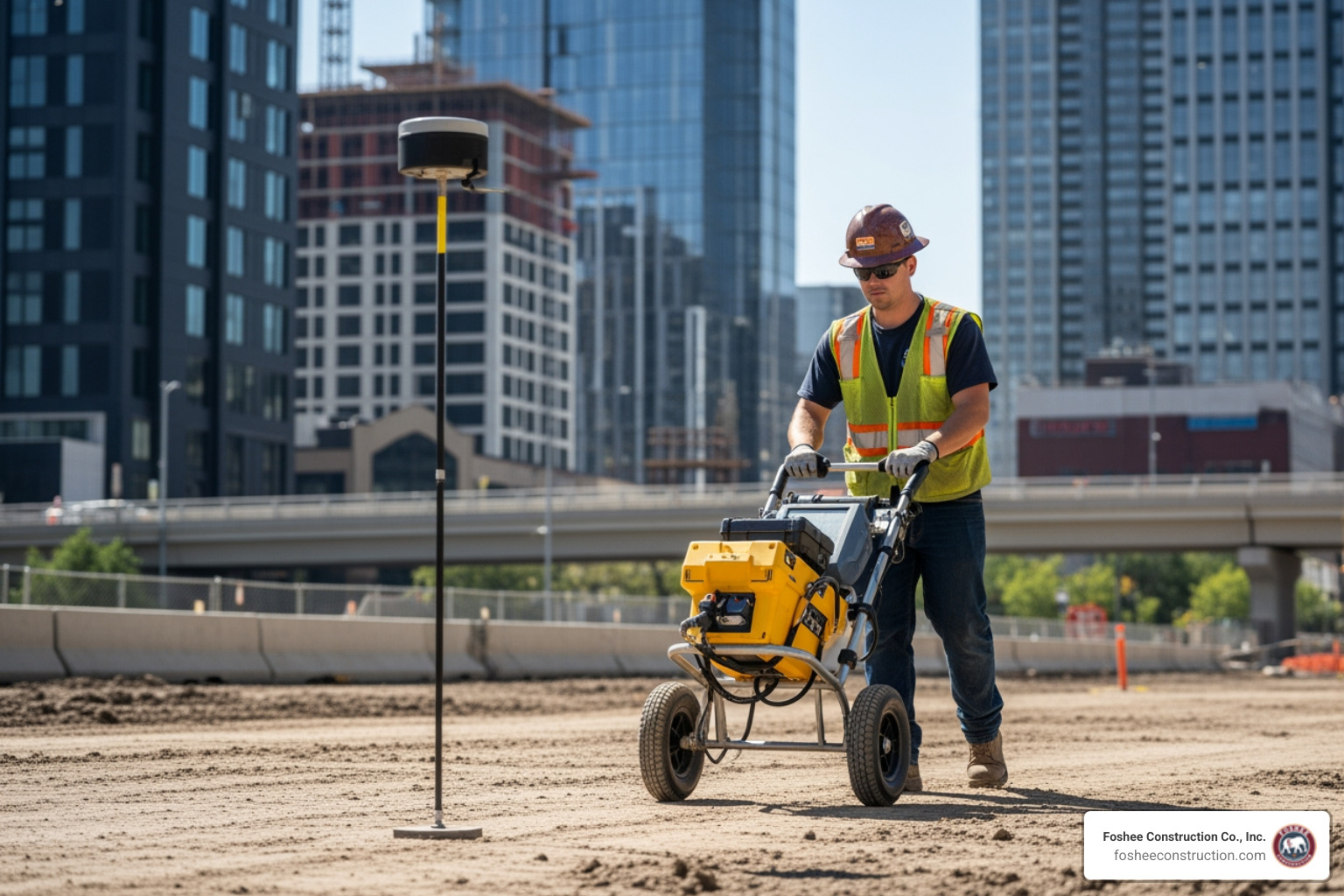
Modern site preparation has evolved significantly beyond manually guided machinery. Today's leading site prep operations integrate advanced technology directly into heavy iron fleets to achieve extreme accuracy.
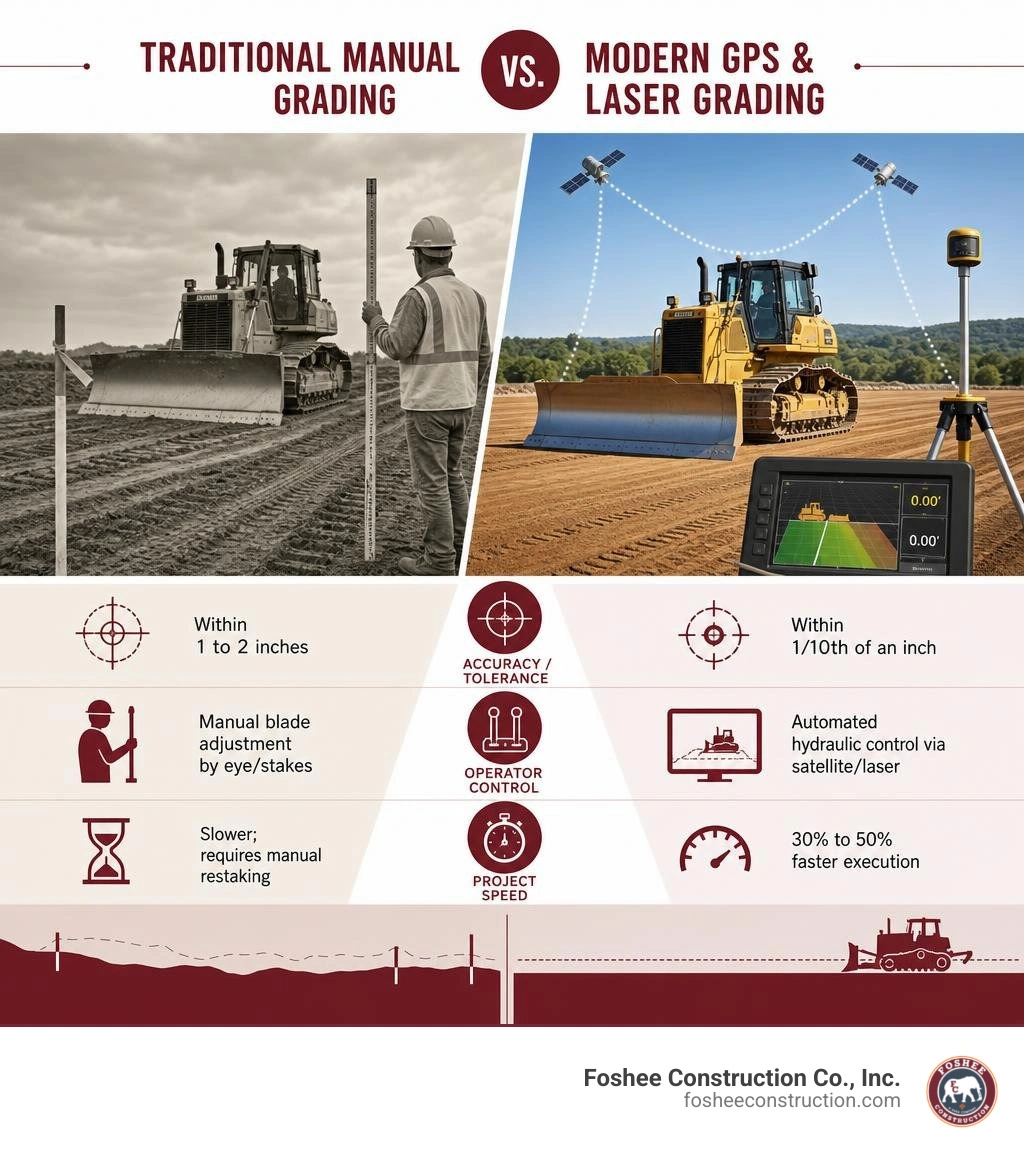
| Feature / Metric | Traditional Manual Grading | Modern GPS & Laser Grading |
|---|---|---|
| Accuracy / Tolerance | Within 1 to 2 inches | Within 1/10th of an inch |
| Operator Control | Manual blade adjustment by eye/stakes | Automated hydraulic control via satellite/laser |
| Project Speed | Slower; requires manual restaking | 30% to 50% faster execution |
| Rework Risk | High (susceptible to human error) | Extremely low |
| Material Efficiency | Higher risk of over-excavation | Precision earth moving reduces material waste |
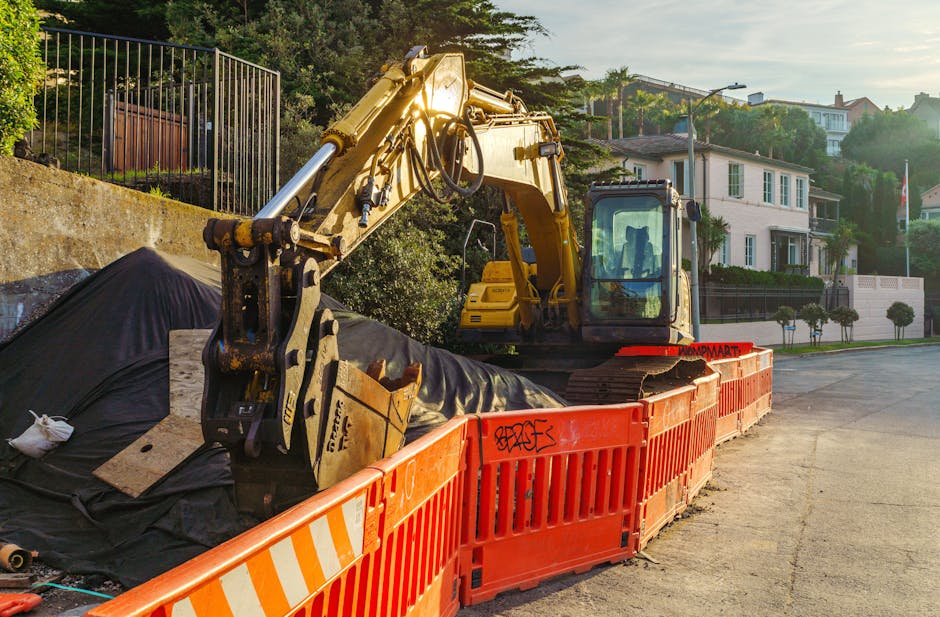
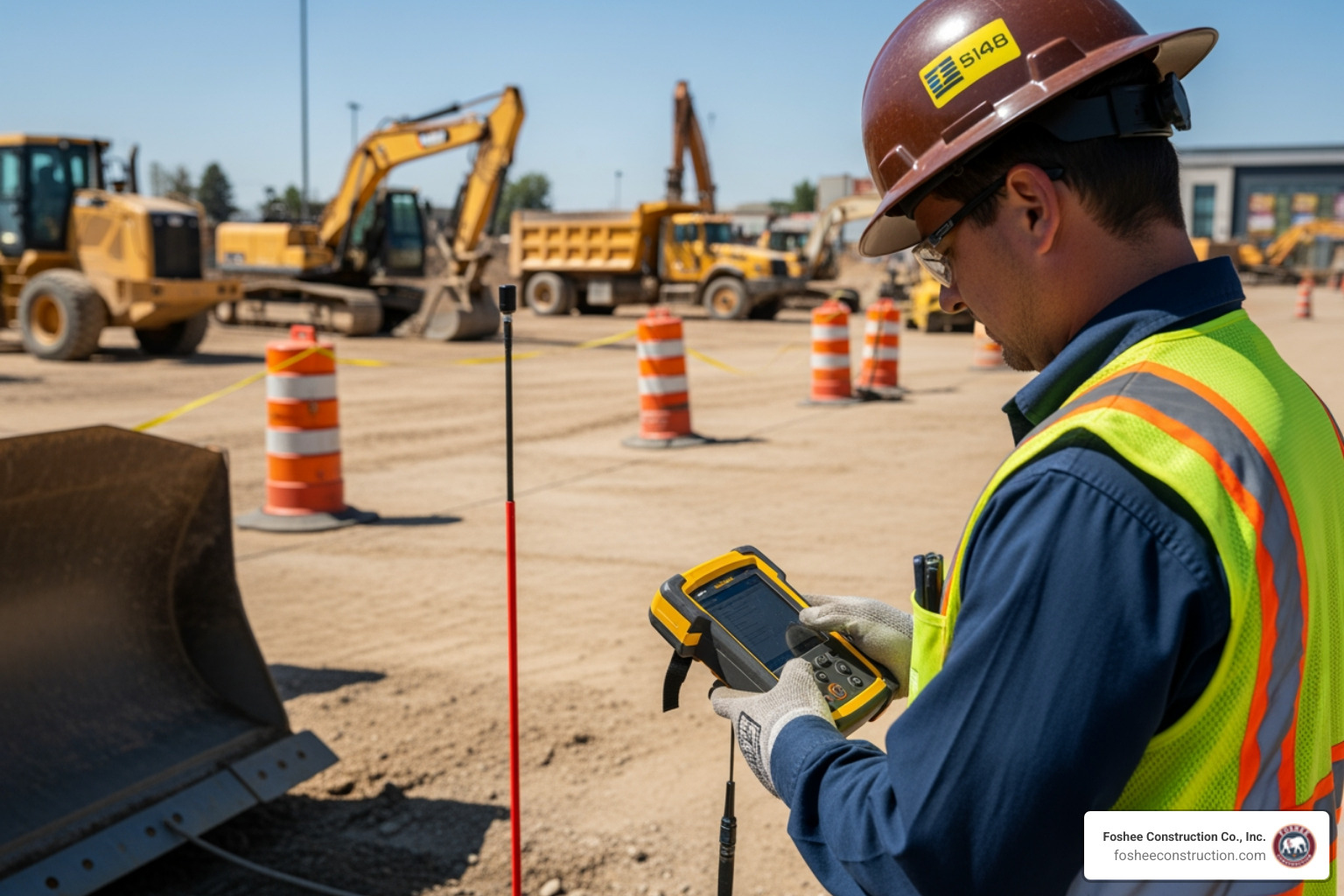
GPS 3D machine control and laser guidance systems interface directly with an operator's electric-over-hydraulic tractor blades and scraper pans. As the machine traverses the site, automated sensors continuously adjust blade elevation to match digital engineering plans, eliminating guesswork. These automated systems are routinely integrated into standard professional earthmoving setups:
Contractors using these high-tech tools deliver turnkey site preparation services faster and with tighter tolerances than traditional methods allow.
Precision earthmoving is critical across a wide range of residential, commercial, and agricultural applications:
Land leveling costs vary widely based on property size, slope, soil conditions, and site accessibility. While simple lawn care projects are budget-friendly, major land preparation involves significant labor and equipment resources.
Across the industry, general landscaping rates average between $25 and $50 per person per hour (translating to $50 to $100 per hour for a standard two-person crew). Overall landscape costs average around $3,500, with prices ranging from $200 for micro-adjustments to $14,000+ for large site clearing and grading jobs. Standard specialized projects include:
For a broader look at cost variables, explore our detailed landscape grading contractors guide 2026.
Homeowners often ask if they can level their own land to save money. The answer depends heavily on project scope.
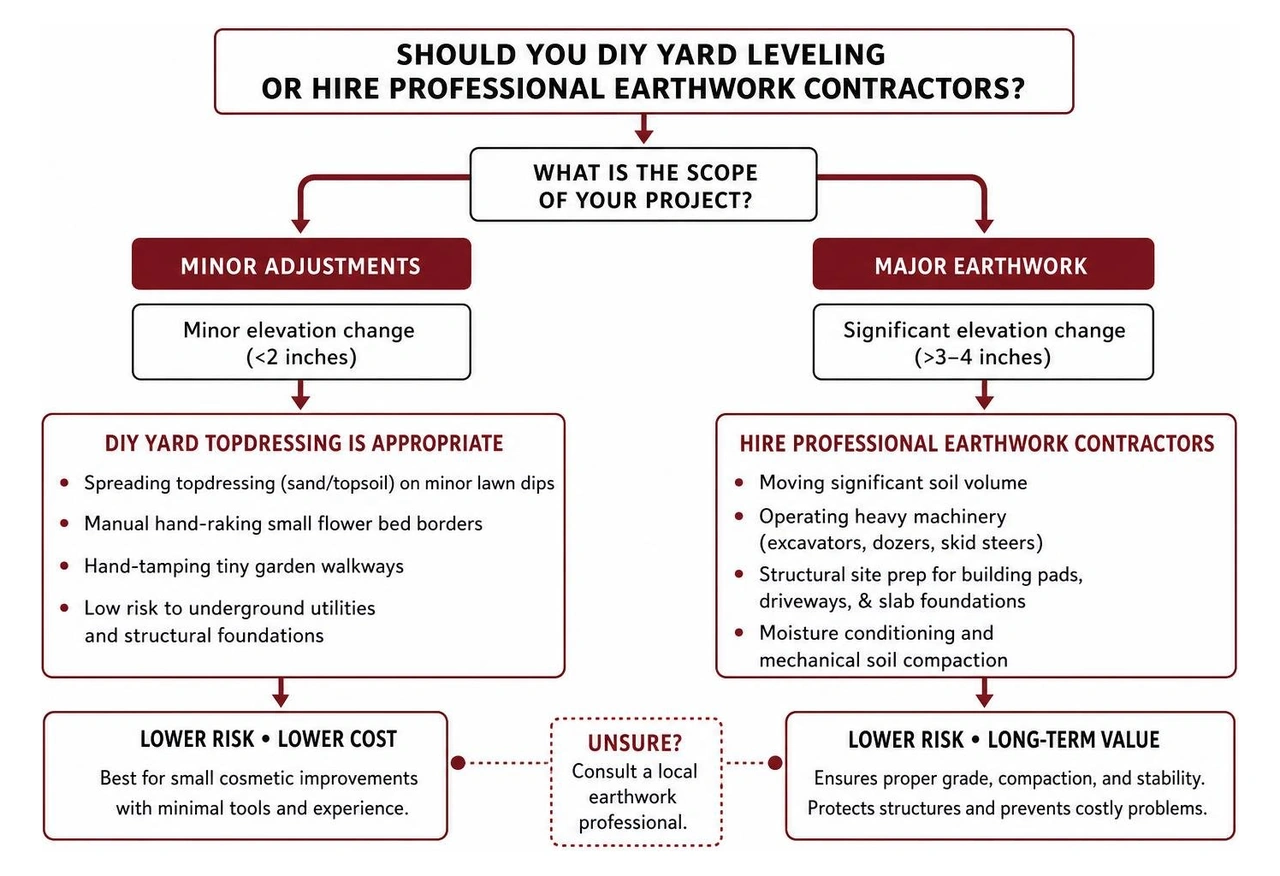
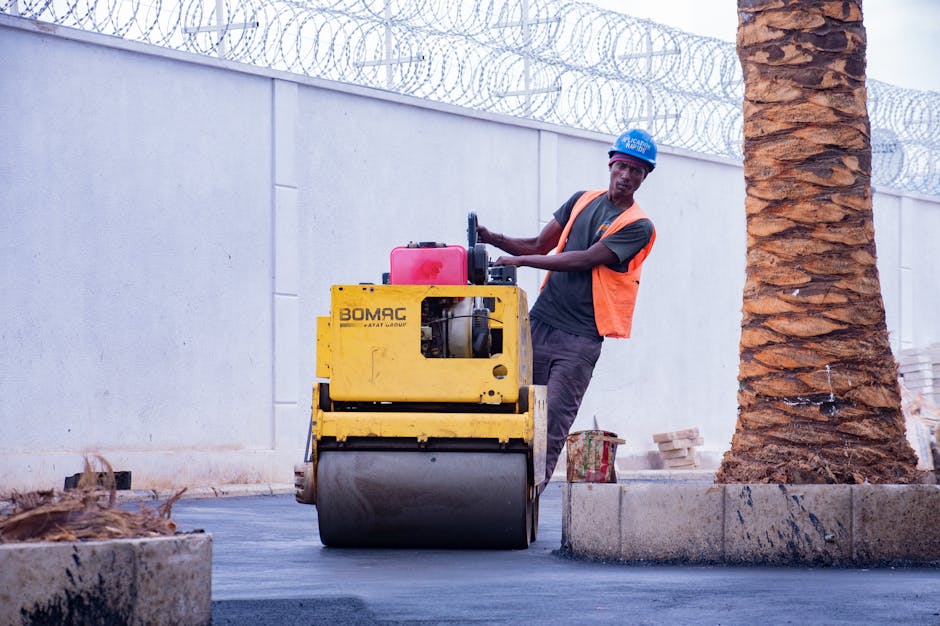
Attempting heavy earthwork DIY poses serious risks. Without heavy compacting machinery, backfilled dirt will settle unevenly over time, cracking concrete or pooling water toward structures. Professional site prep requires experienced heavy equipment operators to ensure correct pitch, compaction, and structural stability. For larger home builds, review site preparation for house construction to see why professional machinery is essential.
Land leveling alone may not solve severe standing water issues. While flattening a surface eliminates low dips where water pools, true drainage solutions rely on land grading to establish a continuous sloped slope that directs water away.
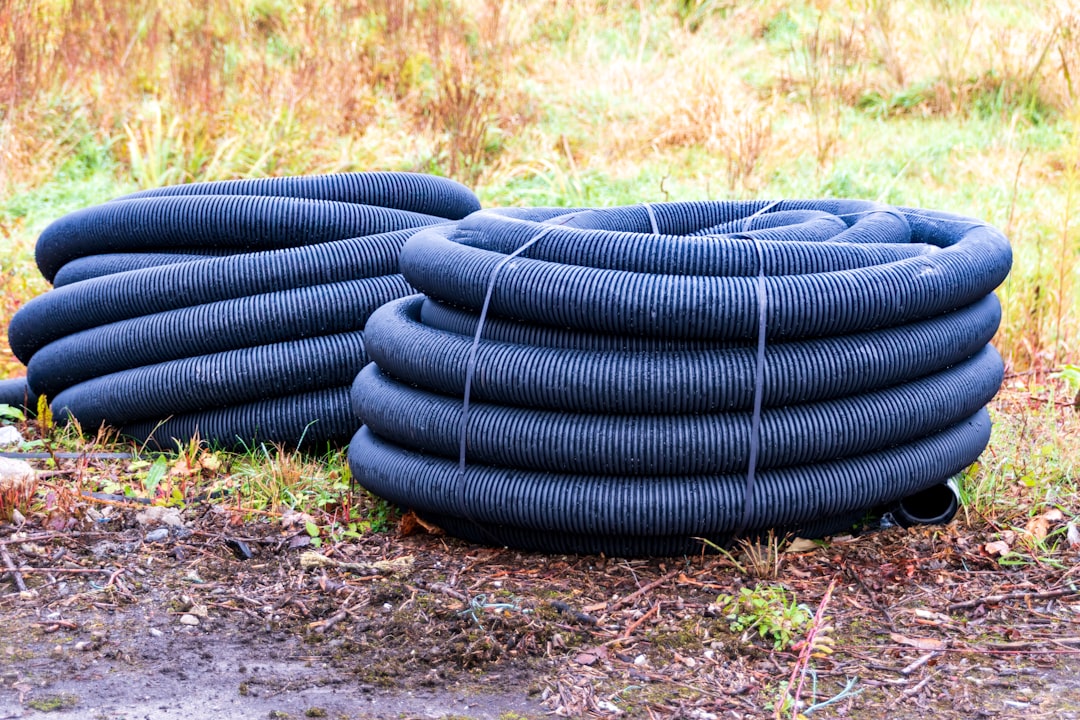
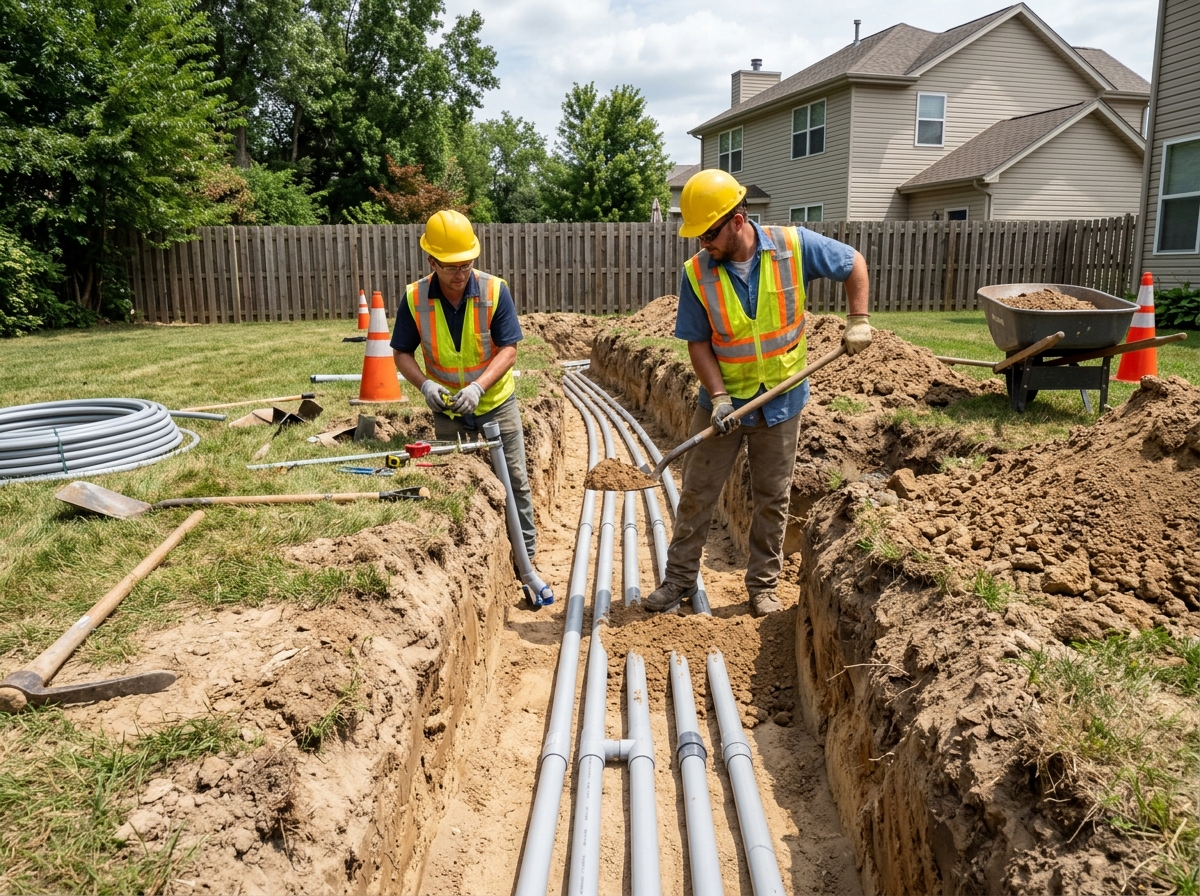
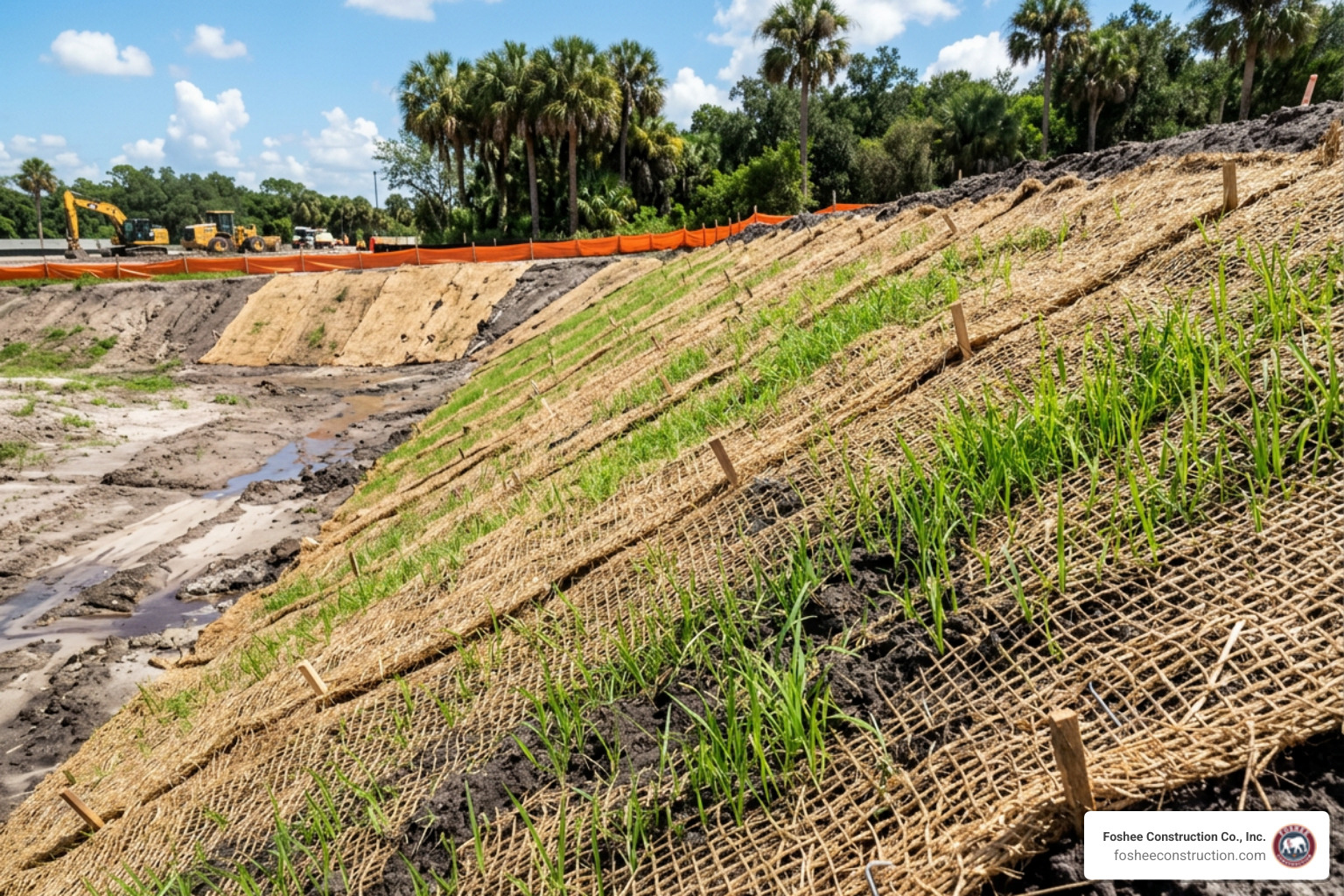
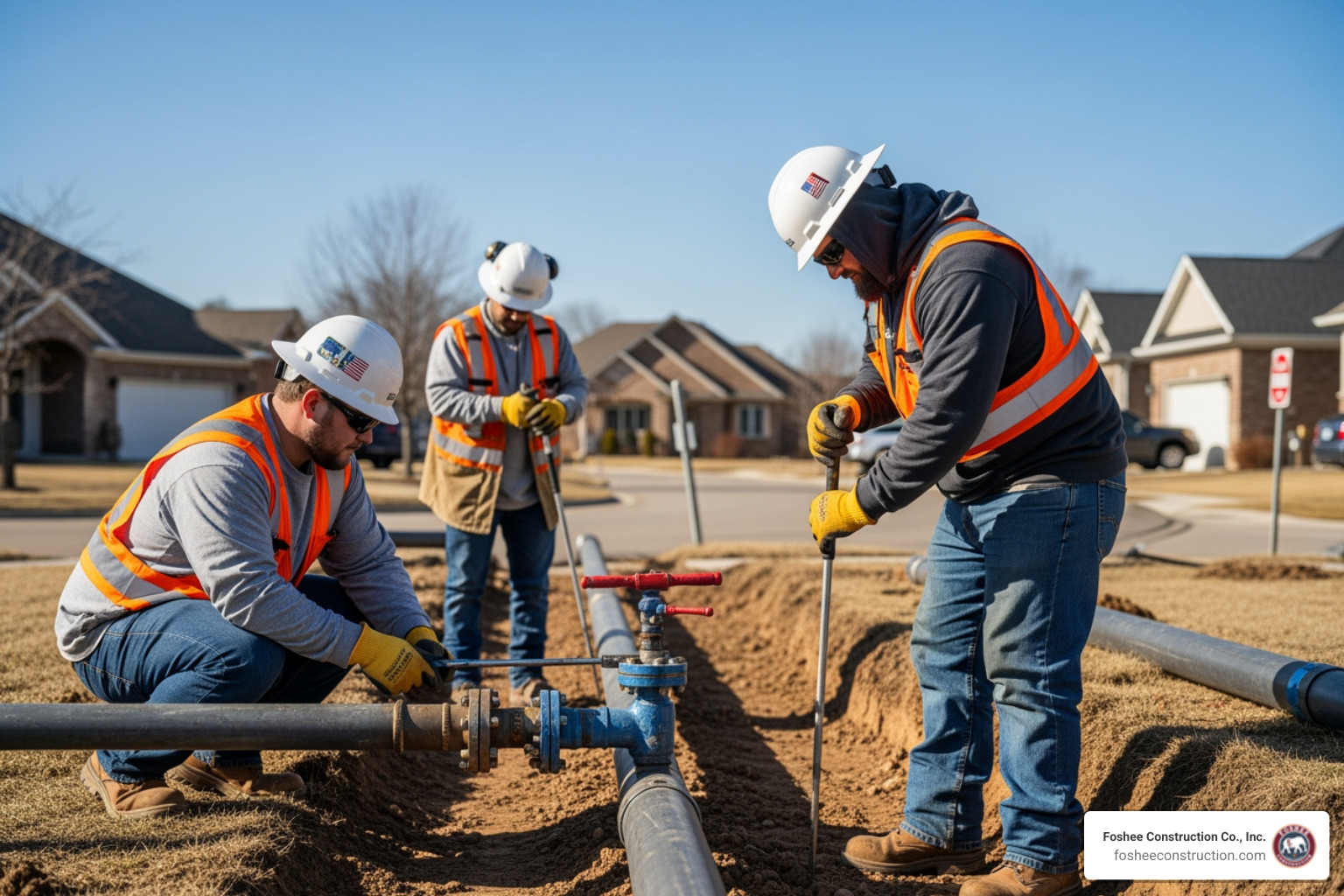
For severe runoff issues, contractors often pair re-grading with subsurface drainage infrastructure, such as French drains, catch basins, or discharge pipes. Installing drainage pipes too shallowly during surface work is a common mistake made by inexperienced operators—always ensure your contractor buries pipes at an appropriate depth to handle storm water flow long-term.
Project duration depends heavily on site acreage, soil moisture, cut-and-fill volume, and weather conditions.
Equipment operators often run extended operational schedules during prime weather windows to complete dirt moving quickly and keep projects on track.
Licensing requirements vary depending on the scope of work and local regulations:
Finding reliable land leveling companies near me comes down to choosing an experienced contractor with modern tech, proper credentials, and a transparent approach. High-quality earthwork sets the stage for every phase of construction that follows.
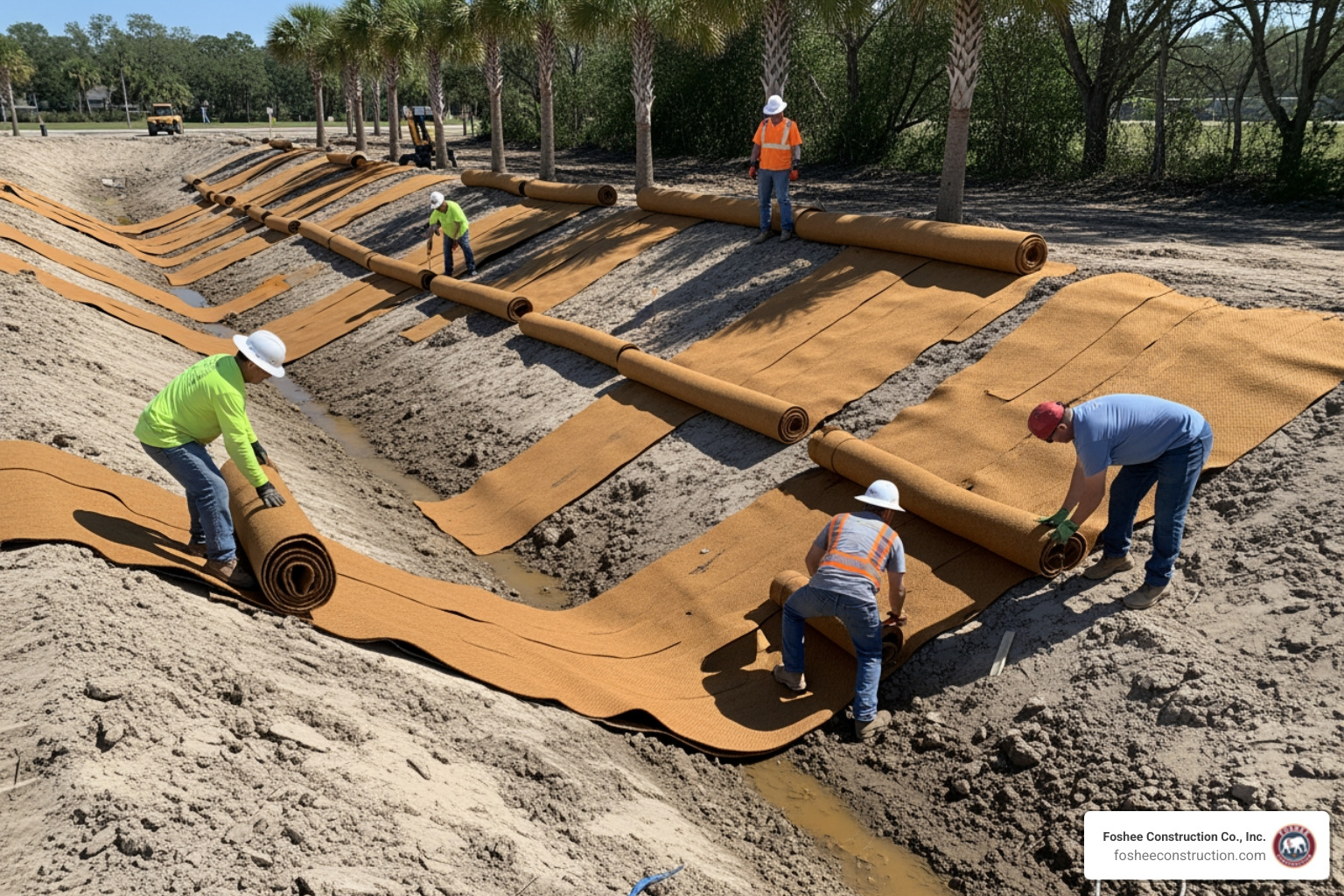
At Foshee Construction Co., Inc., we deliver complete site development across Minneola, Lake County, and Central Florida. Based right here in Minneola, our expert team specializes in site preparation, including erosion control, precision grading, underground utilities, and complete turn-key earthwork. We pride ourselves on transparent bids, disciplined scheduling, uncompromising job-site safety, and dependable working relationships with top regional contractors.
Ready to get your site prepared right the first time? Learn more about our background and capabilities by exploring our complete site prep minneola services or visit Why Foshee Construction to request a transparent estimate for your next project today.
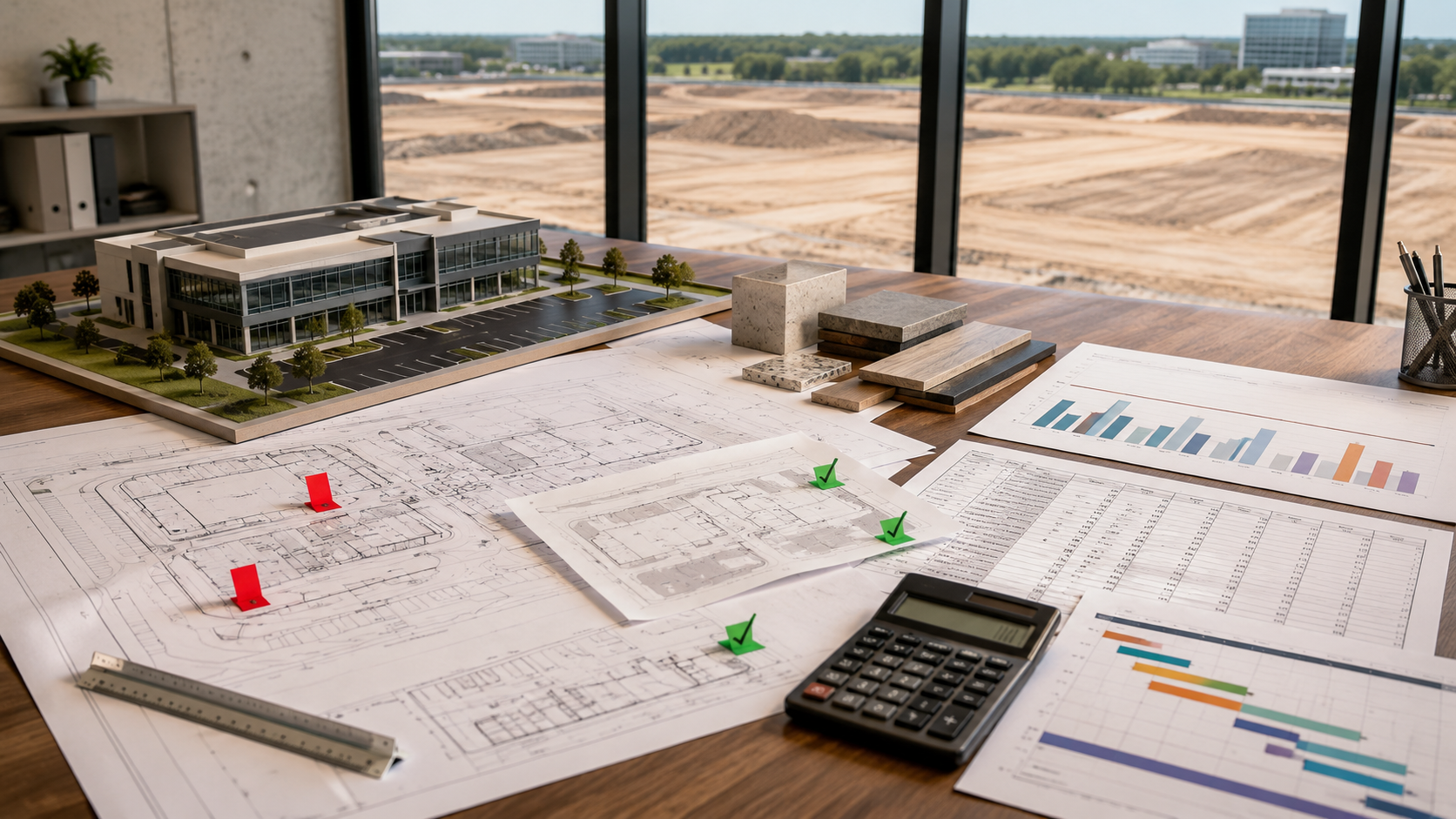
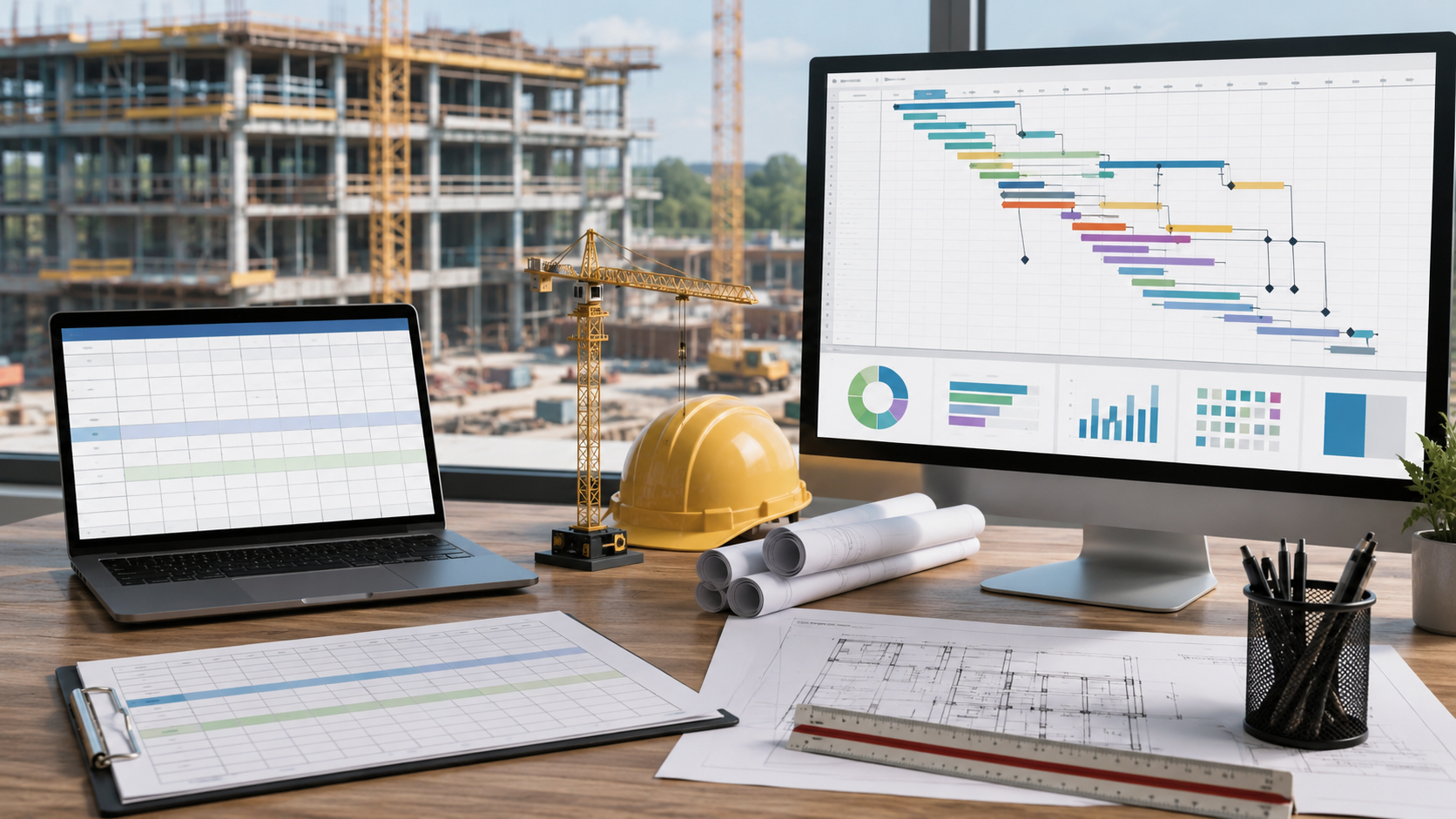
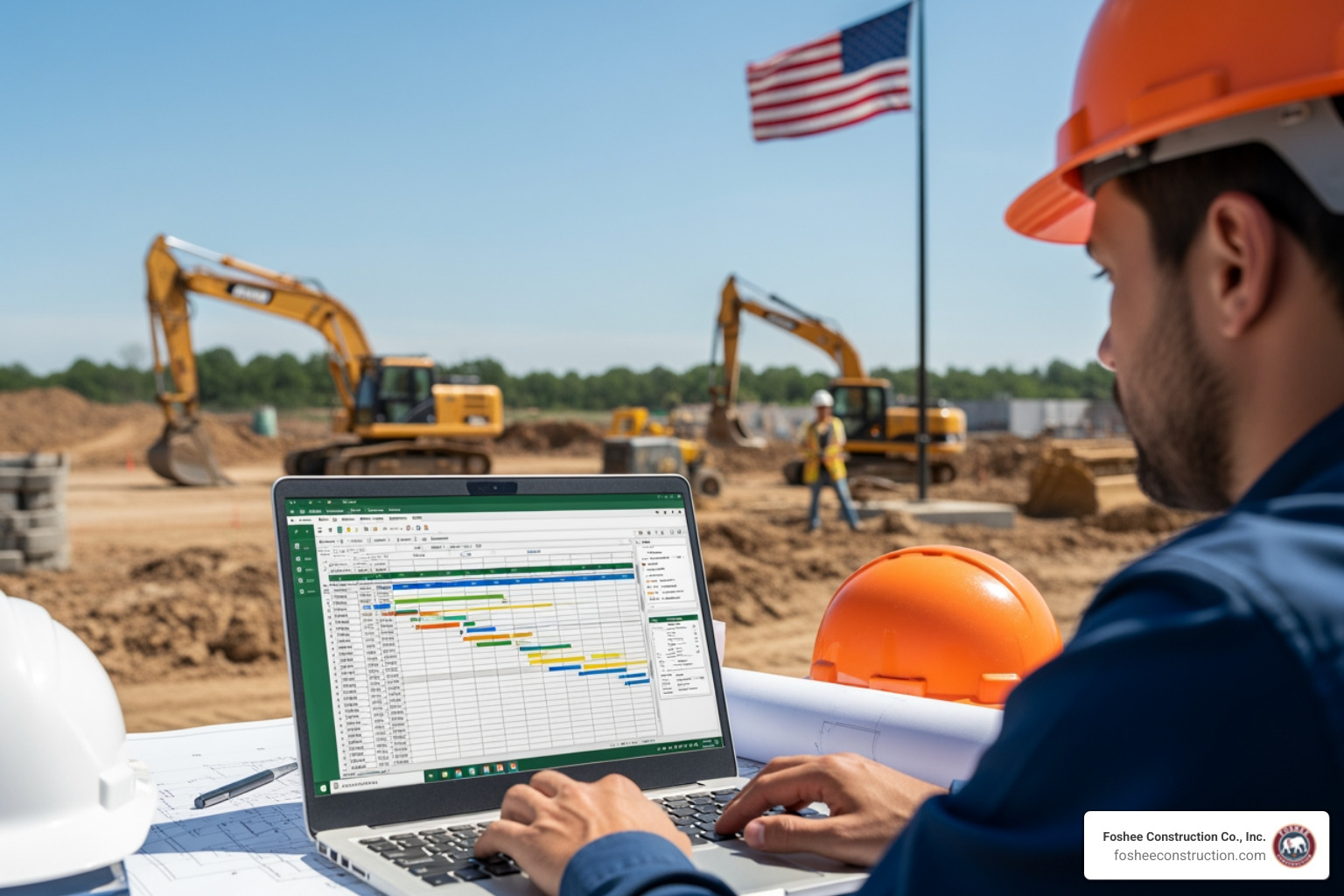
We build bids using HeavyBid and AGTEK because the details matter long before the job starts. When the numbers are accurate and the scope is clearly defined, it sets the tone for how the entire project runs. Estimating isn’t just a step in the process, it’s the foundation we build on.
That same mindset carries into the field. Our crew is trained to work with purpose, follow the Civil Engineers’ Plan to the finest detail, and hold the line on quality. When expectations are clear from day one, there’s no need for shortcuts, and no confusion about how the work gets done.
Clients trust our bid packages because they’re complete and ready to use. Project managers know what we’re covering, what’s excluded, and how we plan to approach the job. That clarity removes friction and lets teams focus on execution instead of interpretation.
As part of our review process, we go into the plans before anything hits the site. We ask the questions early, resolve issues before they show up in the field, and keep RFIs moving. This approach prevents delays and protects the timeline.
Over time, that consistency builds trust. Many of the people we work with today came through referrals from past projects – engineers, GCs, and superintendents who’ve seen how we operate and want the same experience again.
In 2024, Foshee Construction was acquired by Saga Infrastructure Solutions, a national network of civil construction companies. Saga supports regional contractors by giving them access to better tools, long-term resources, and operational backing, without changing how they run day to day.
Foshee will continue to operate under its name, with the same team and field leadership in place.
“From the very time a project starts, we start that partnership. We try to catch as much as we can with the tools that we have. Not everybody is using the software platforms we are. That’s the differentiator: we’re not just bidding. We’re anticipating, problem-solving, and making sure the job runs right.”
— Don, CEO, Saga Infrastructure Solutions
Foshee is now part of a broader regional strategy that includes Florida, the Piedmont Atlantic, Texas, Colorado, and the Arizona Sun Corridor. The name, crews, and standards remain. What’s improving is the support behind it.