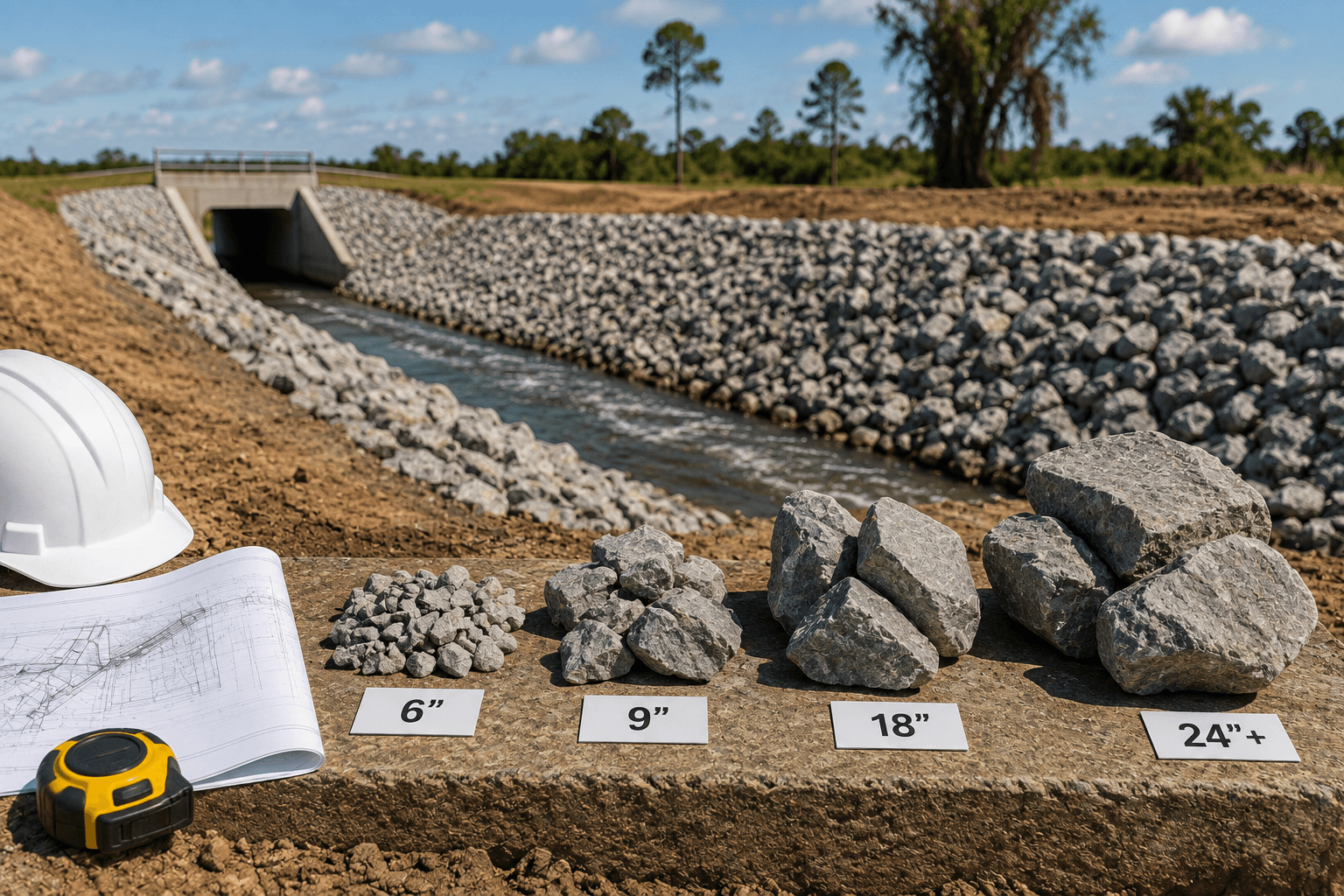
Choosing the best rip rap stone size for lasting slope defense depends on matching the median stone diameter ($D_{50}$) and rock weight classification to the slope steepness and peak design water velocity. Low-velocity runoff (under 5 ft/s) requires Class I surge stone (4 to 6 inches), moderate flows (5 to 10 ft/s) require Class II to Class III stone (6 to 12 inches), and high-velocity channels exceeding 10 ft/s demand Class IV or Class V armor stone (12 to 24+ inches) to prevent hydrodynamic scour.
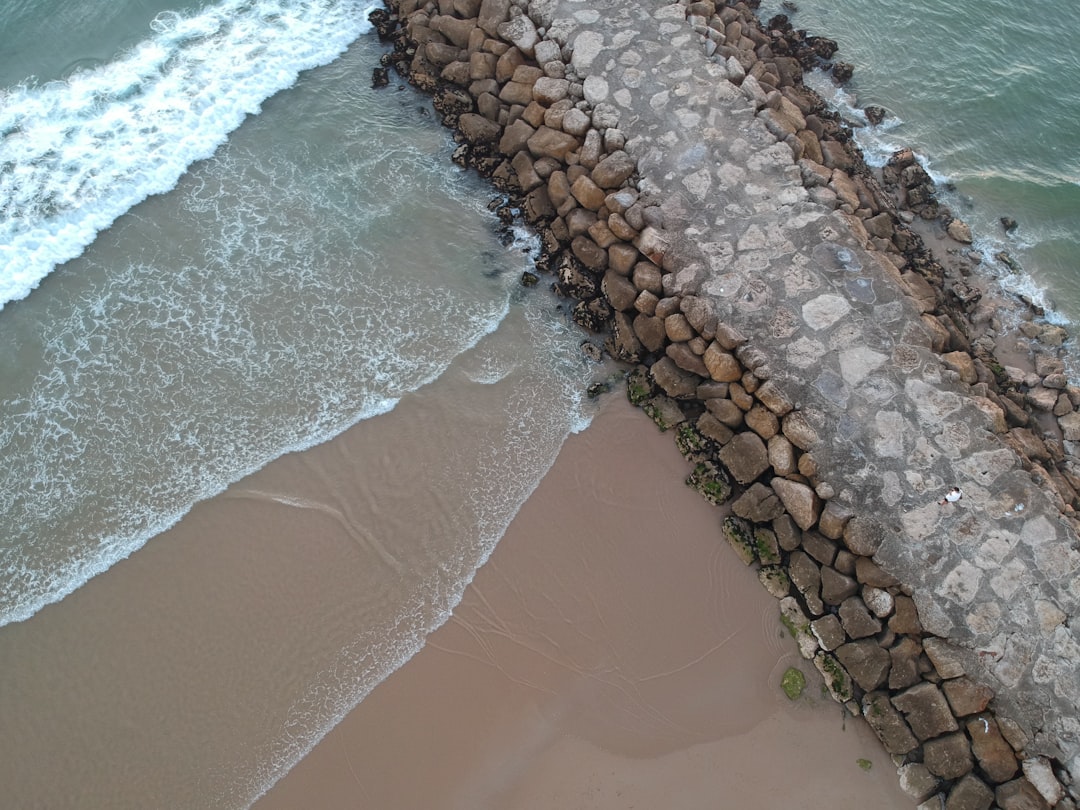
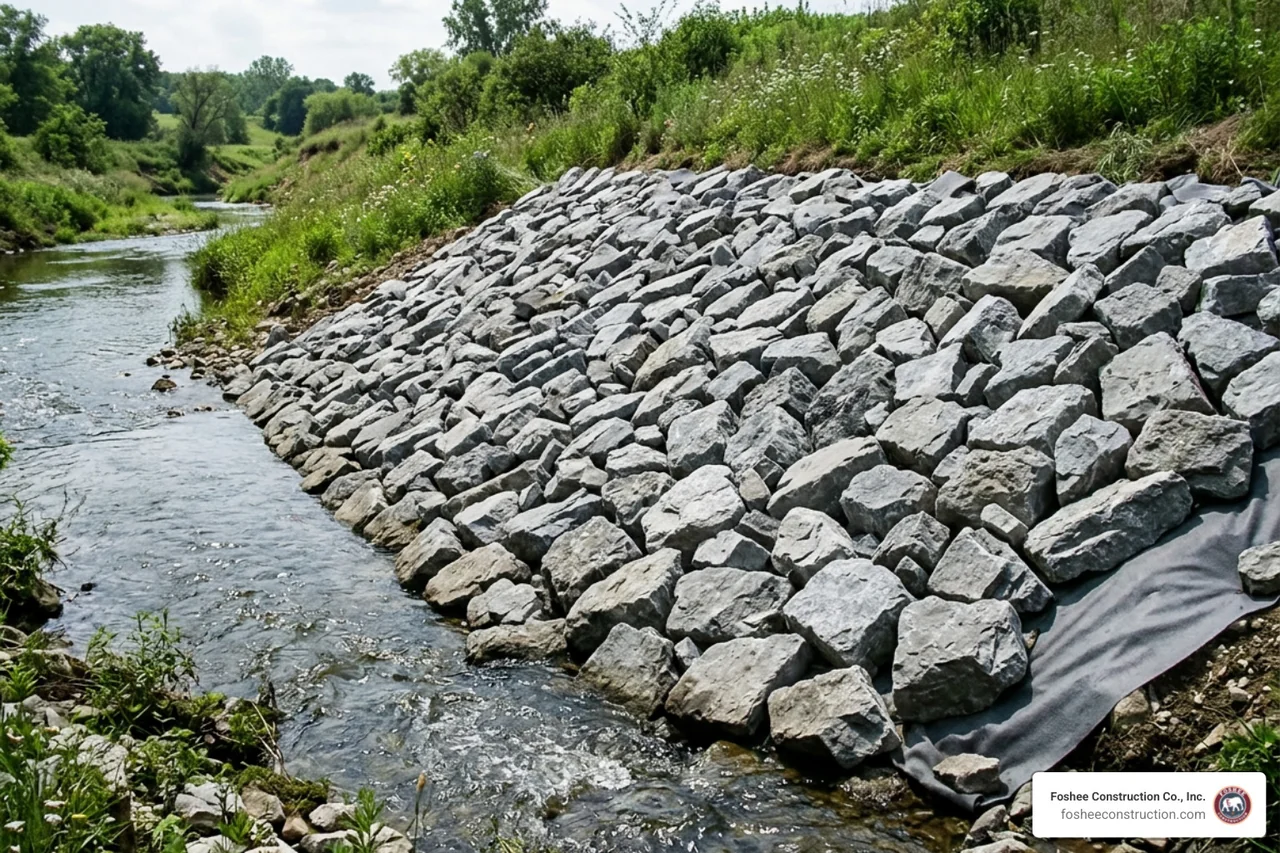
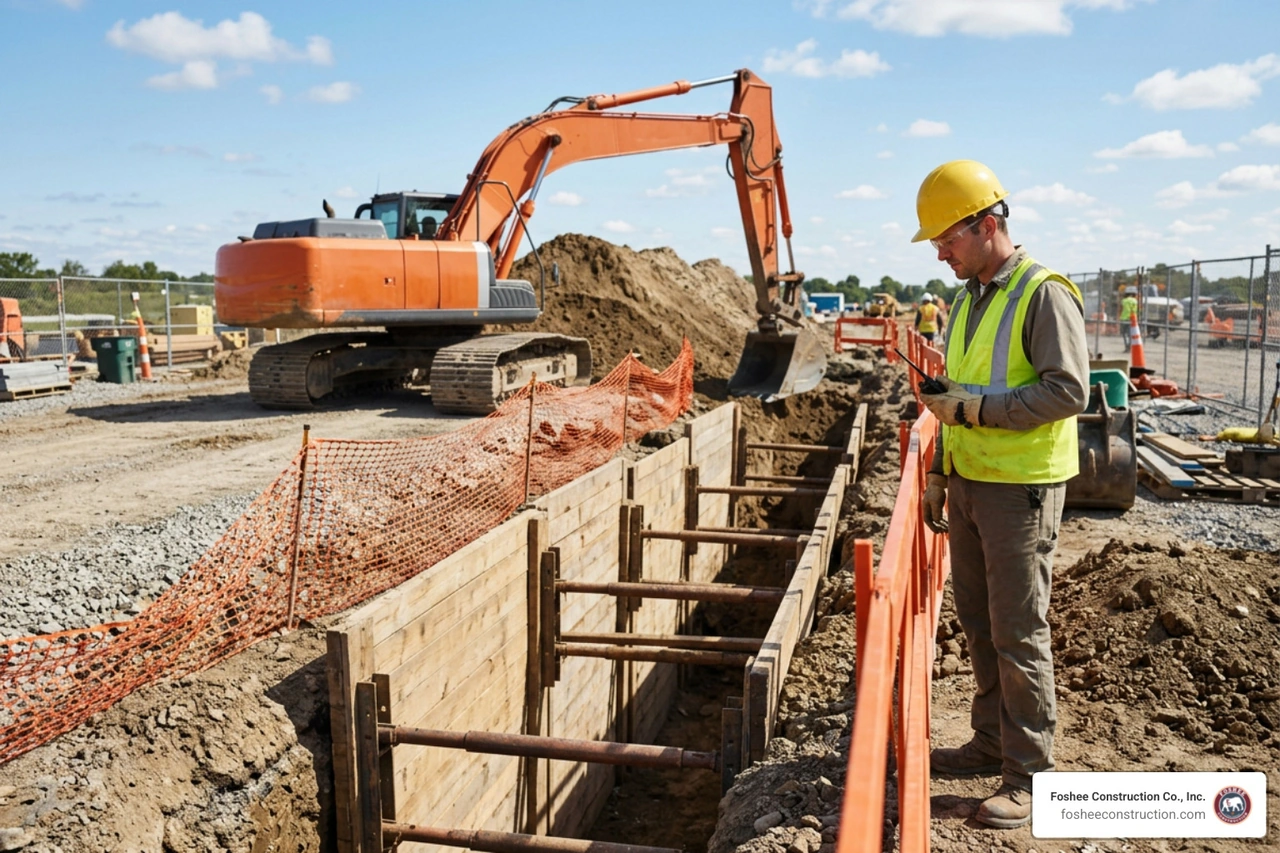
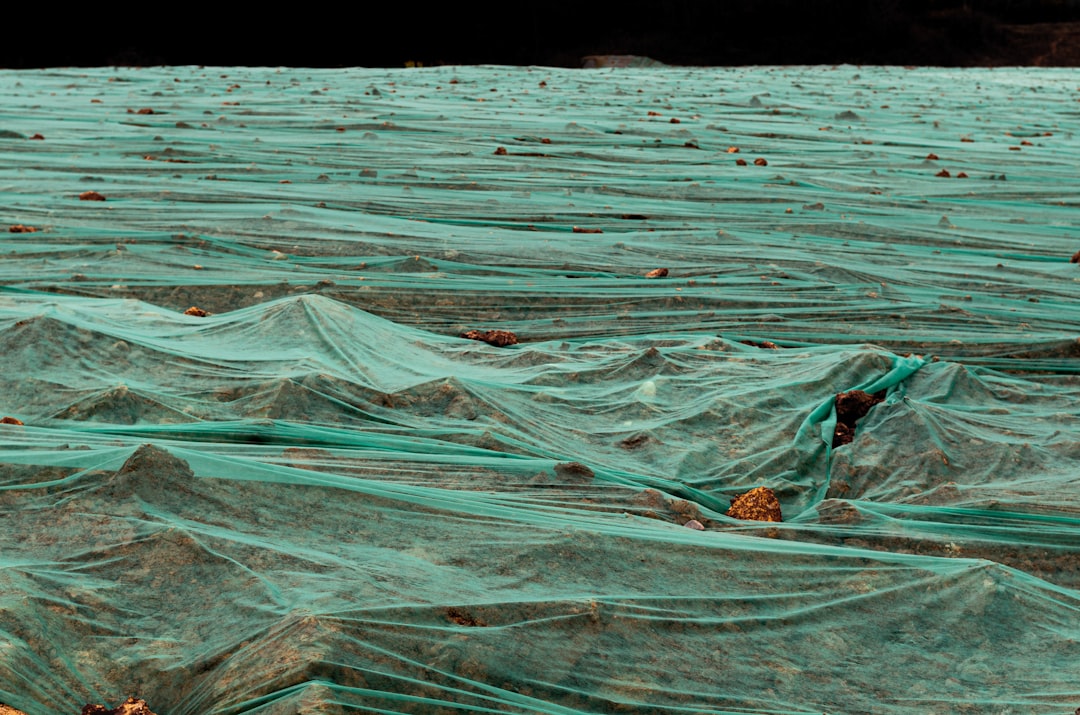
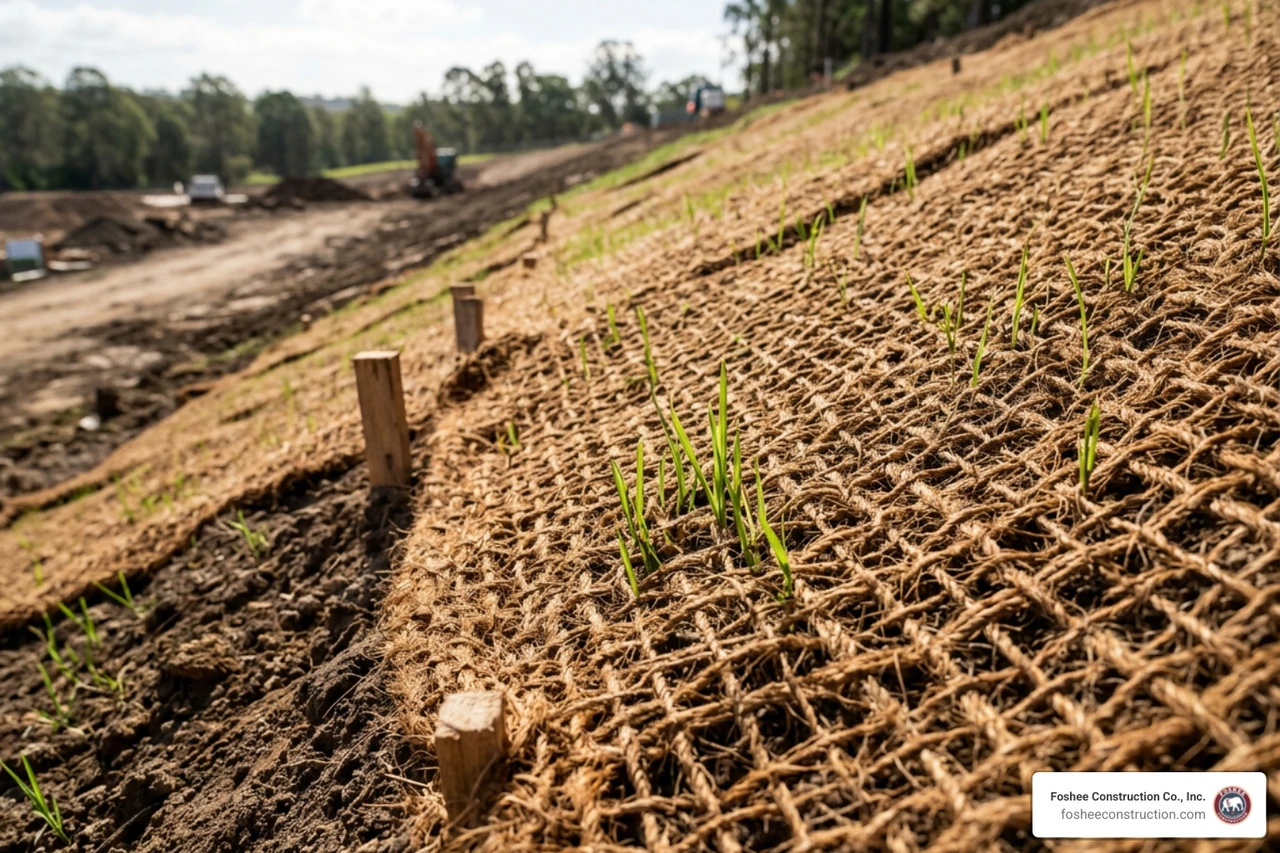
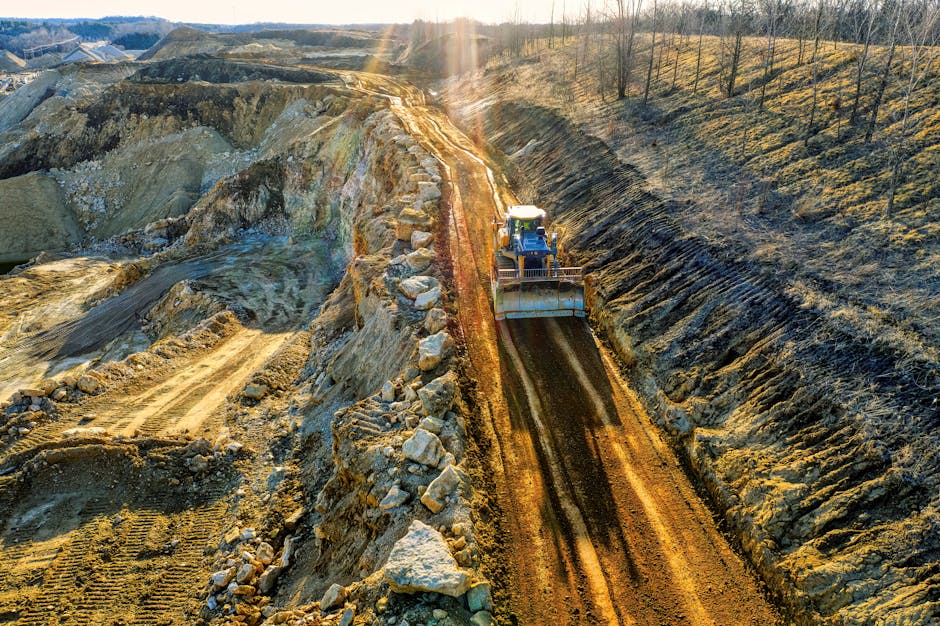
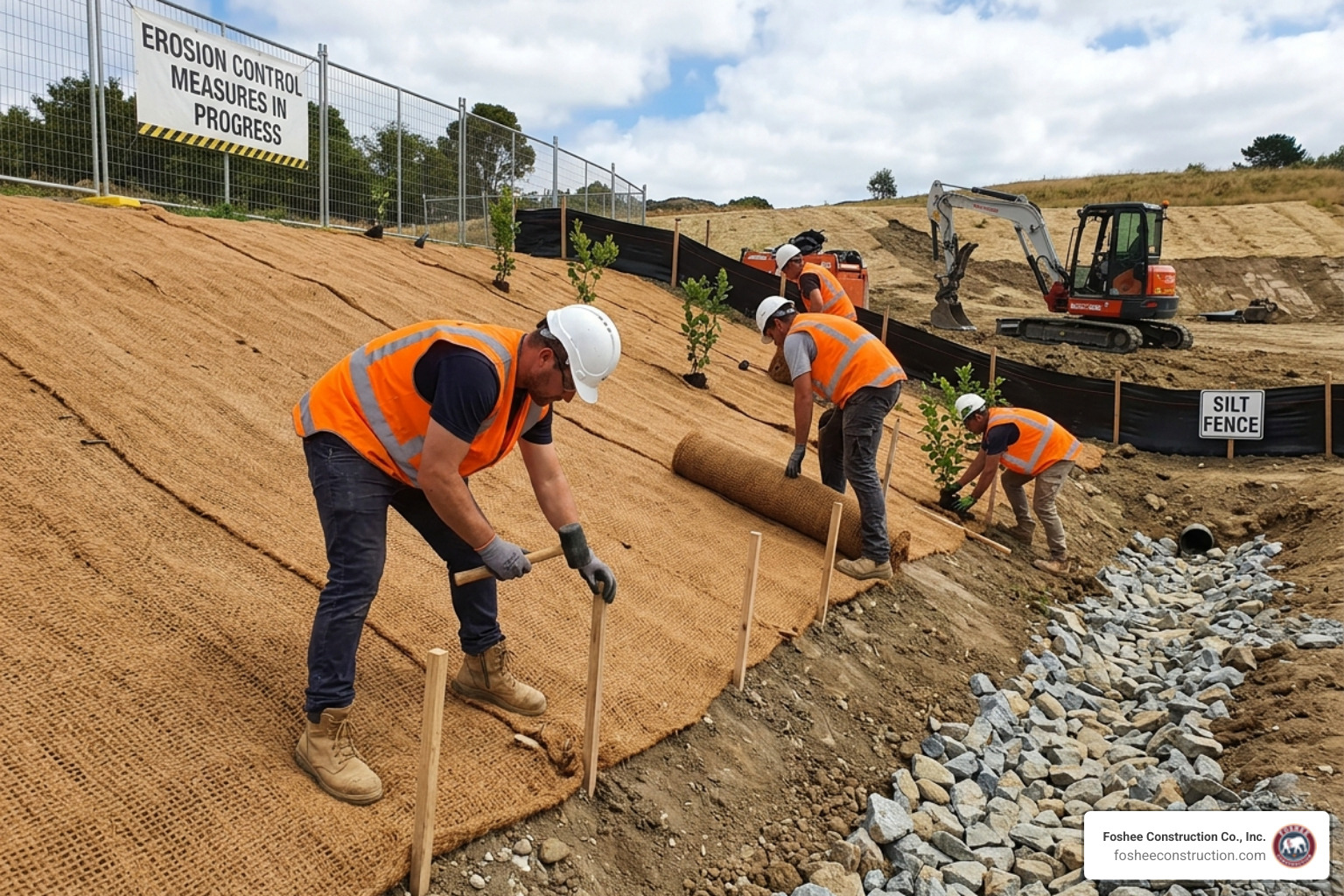
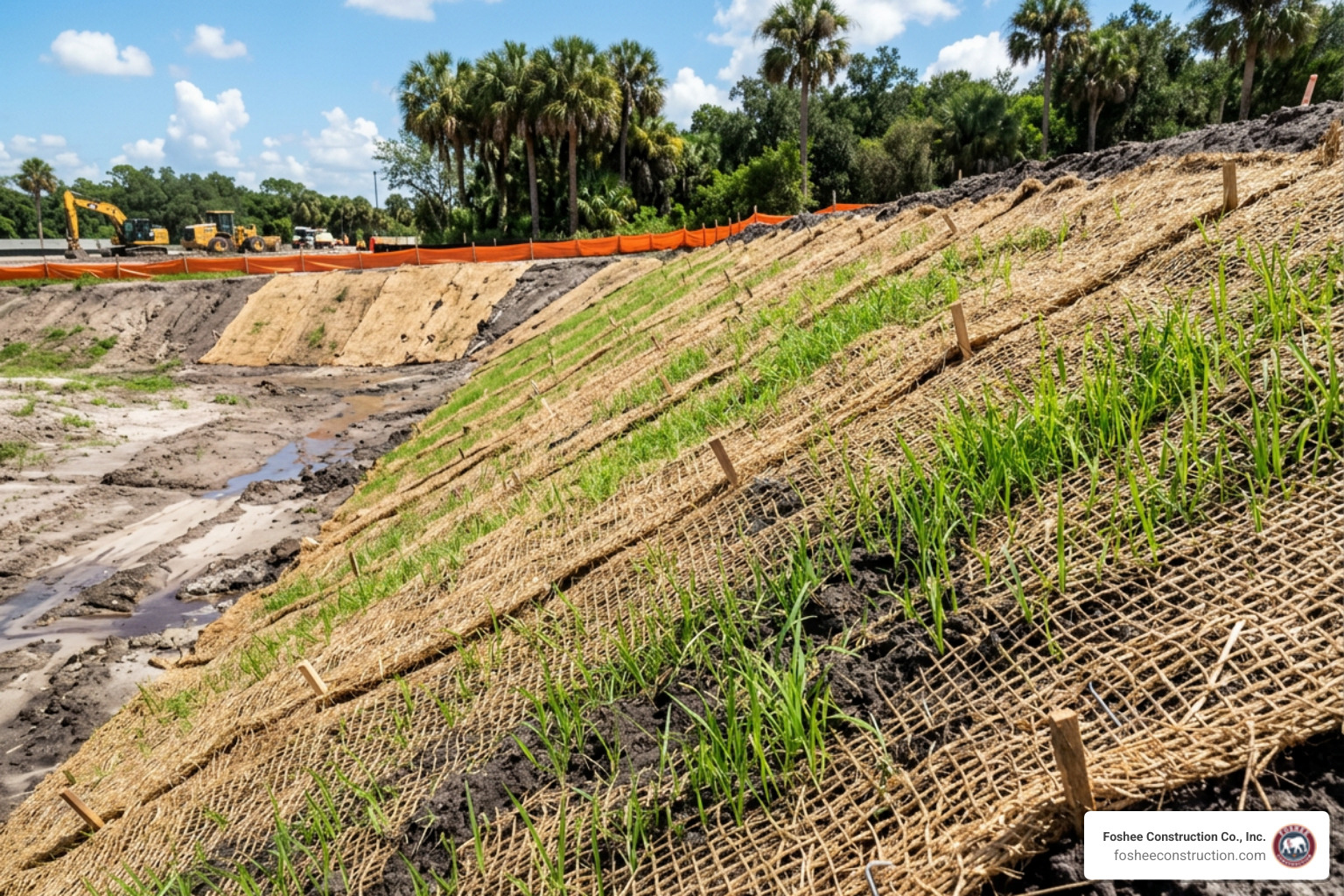
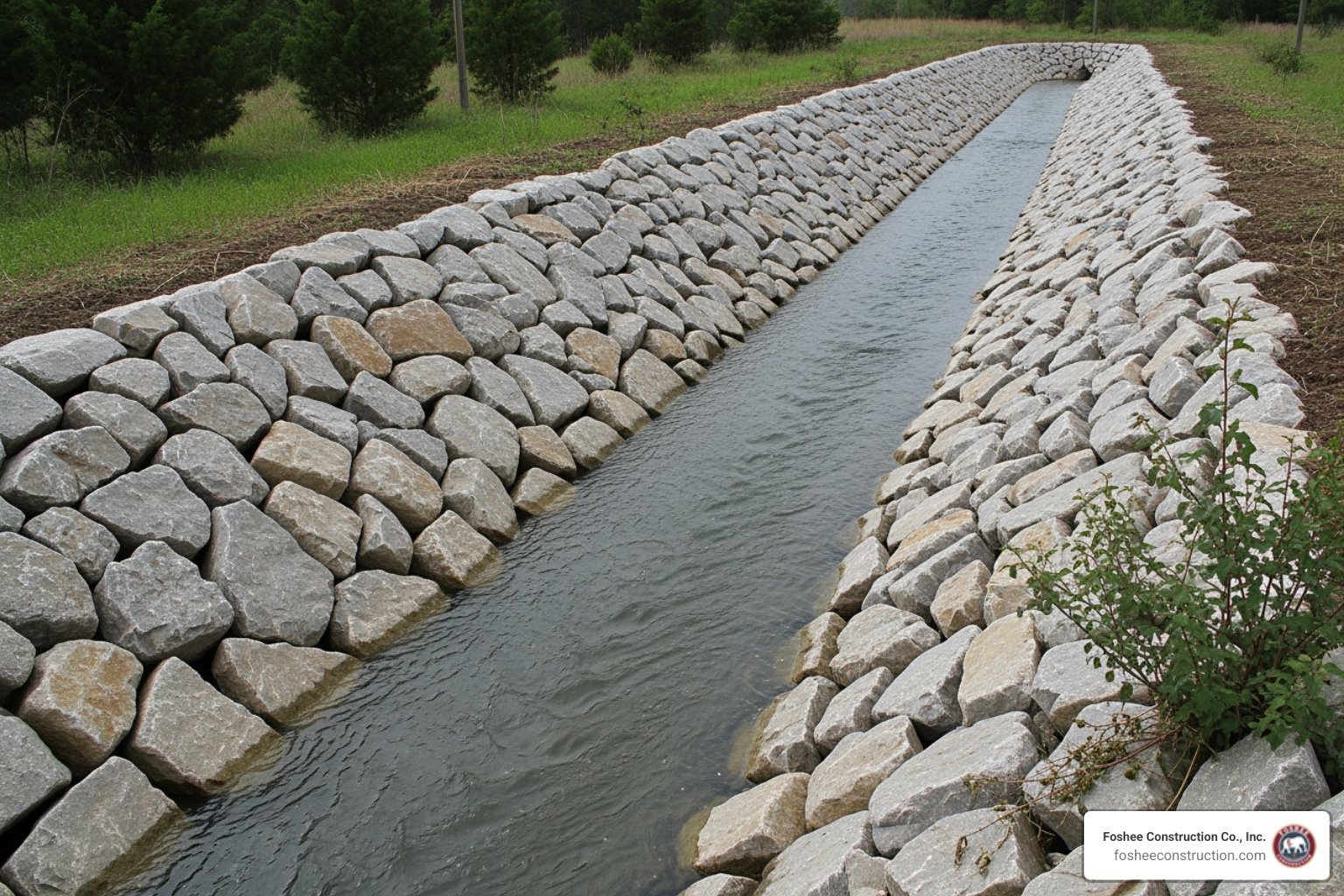
Understanding what is rip rap erosion control starts with looking at how heavy, angular aggregate forms a protective, flexible armor over vulnerable ground. Unlike rigid concrete slabs that can crack, undermine, and float under hydrostatic pressure, rock armor shifts slightly with natural ground settlement while maintaining surface contact. In active civil site work across Minneola, Lake County, and greater Florida, applying heavy rock revetments serves as a critical erosion prevention on construction sites strategy to stabilize cut-and-fill embankments, retention pond shorelines, and discharge swales before delicate turf can establish.
The primary civil engineering mechanism of rock riprap is increasing hydraulic surface roughness. In open channel hydraulics, the roughness coefficient (often quantified by Manning’s n) determines how much friction a surface applies against flowing water. Smooth soil or concrete allows stormwater to accelerate into high-velocity streams that quickly tear earth away.
By placing rough, angular stone along a waterway or bank, we intentionally introduce micro-turbulence:
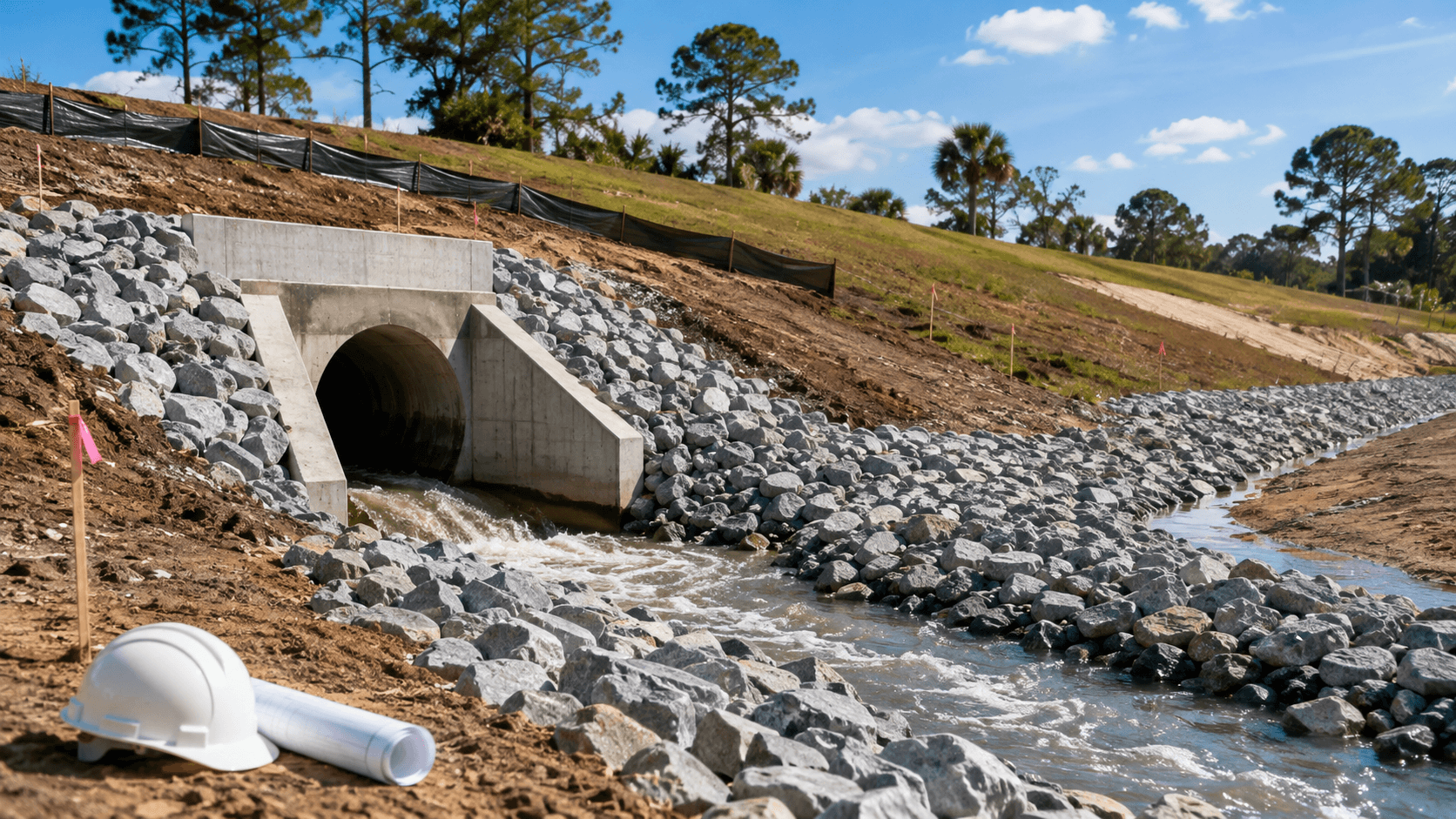
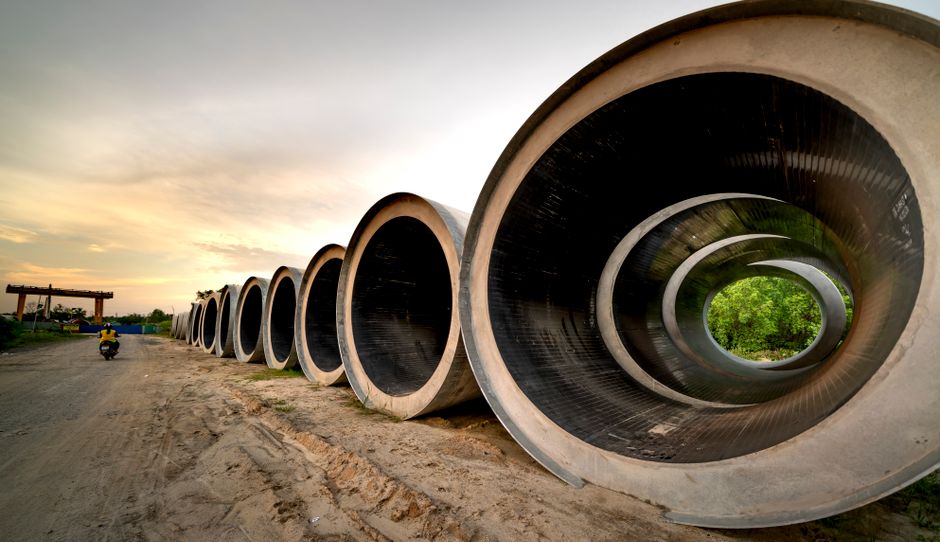
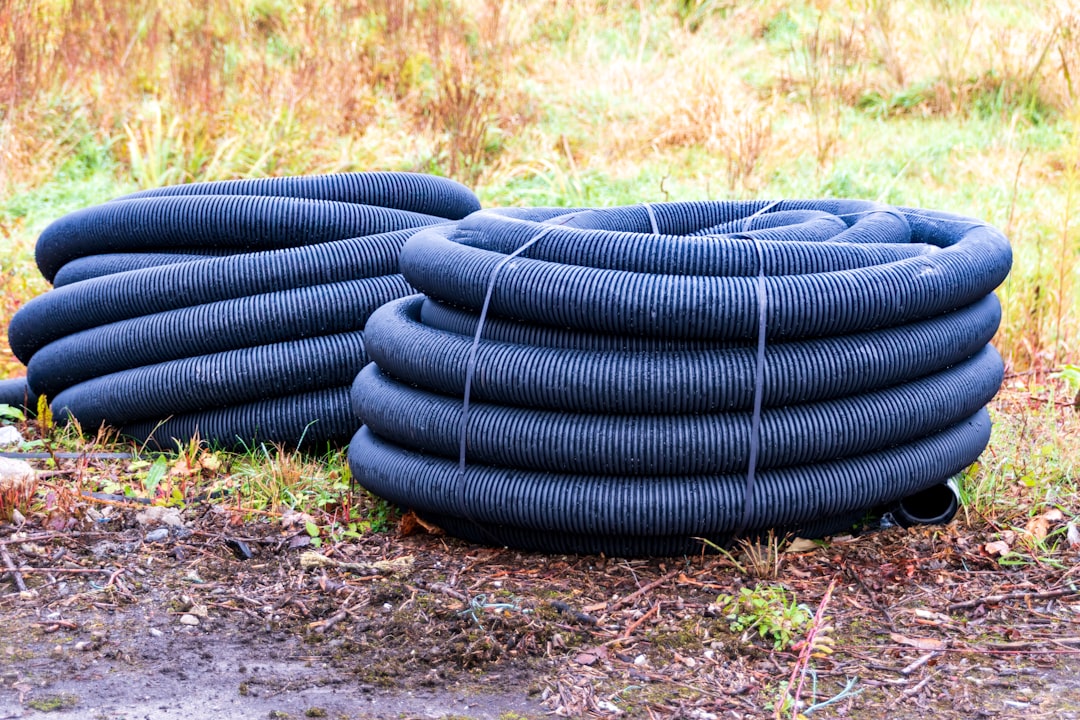
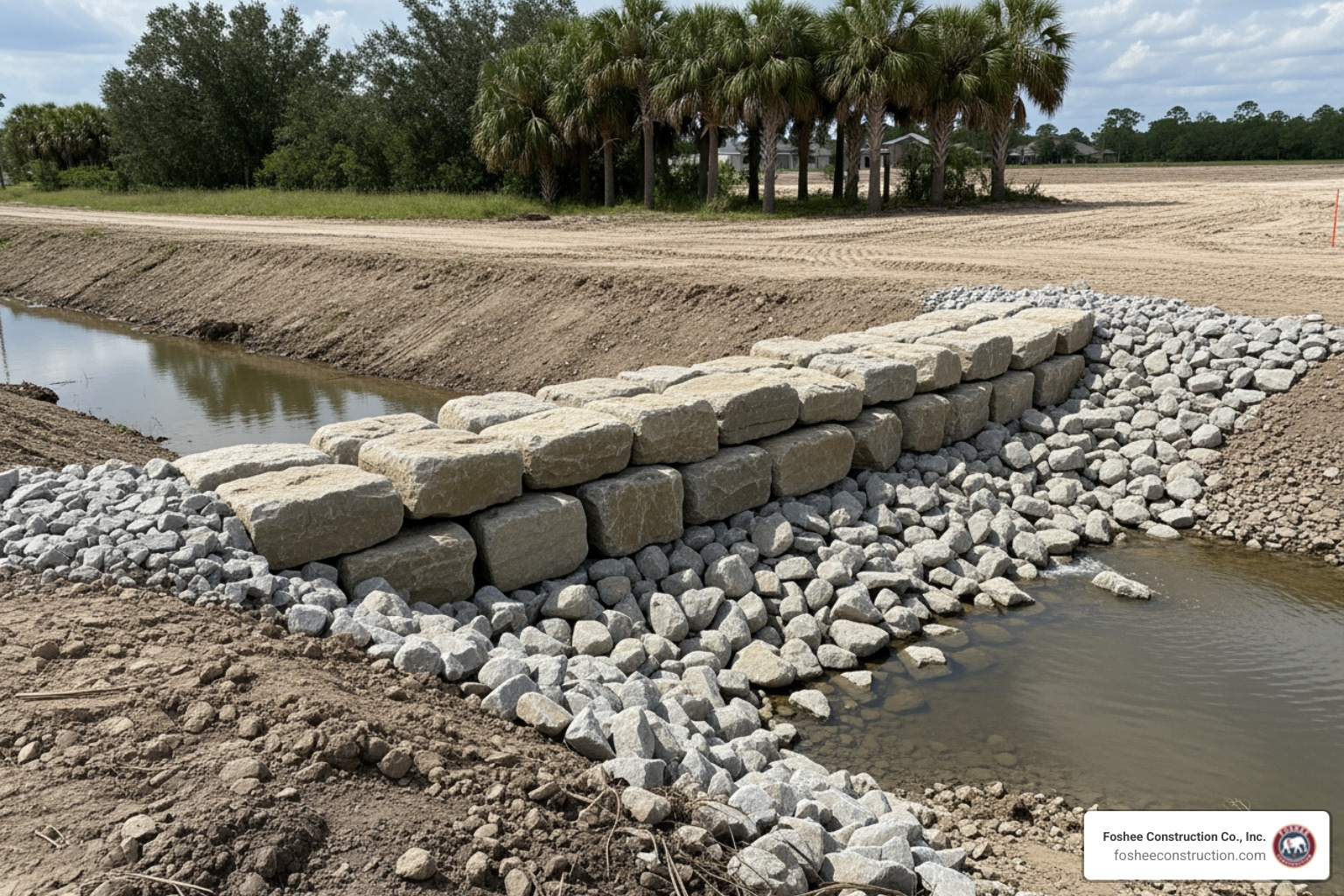
High-velocity discharge at pipe aprons is one of the most common causes of infrastructure washouts. When pressurized runoff exits a reinforced concrete pipe or corrugated metal culvert, it creates severe downstream scour holes that can quickly undercut the pipe headwall and destabilize road shoulders.
To halt this localized scour, contractors install rock aprons and erosion control rock check dams to knock down flow velocity. The design criteria outlined in the EPA Stormwater Best Management Practice for Riprap emphasize placing flexible rock blankets across discharge plunge pools and channel beds to absorb impact energy before the water enters municipal drainage networks.
Not all rock behaves the same way when placed on a slope. Proper engineering design relies on specific rock geometry, unit weight, and median stone size ($D_{50}$) to ensure the blanket stays anchored under intense hydrodynamic loads.
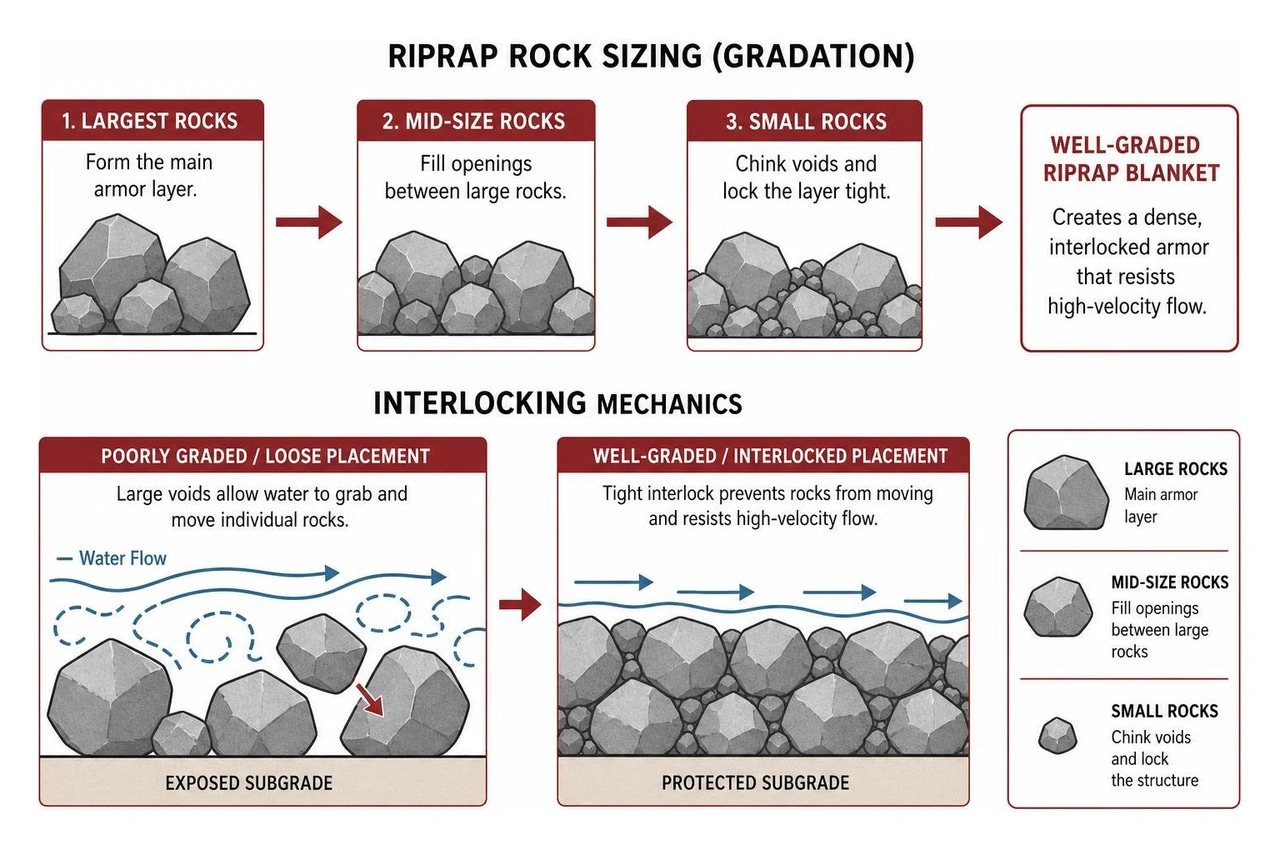
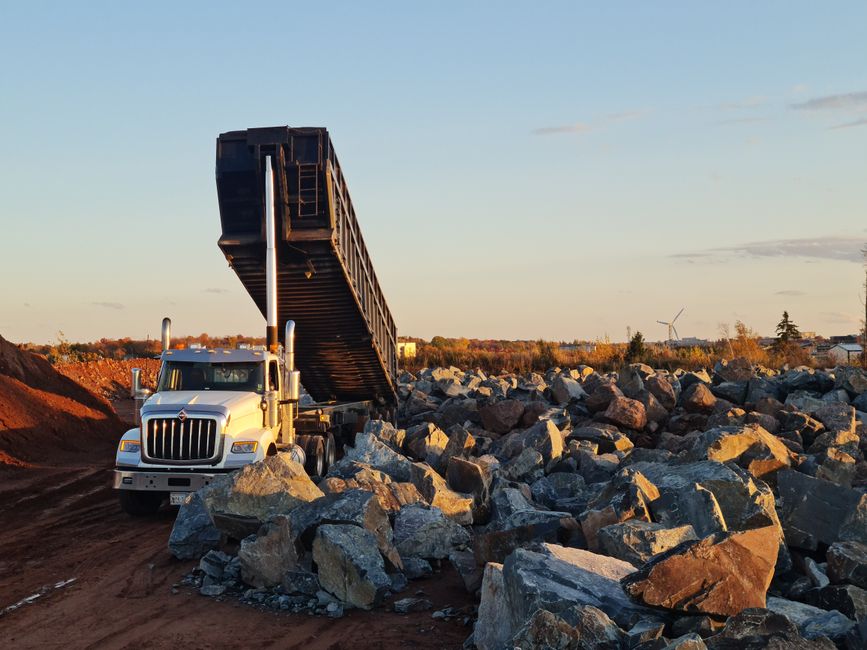
A functional revetment requires a well-graded mixture where stone sizes vary systematically. The largest rocks establish the main armor line, while mid-sized and smaller stones fill the gaps (chinking the voids). This tight interlocking structure prevents turbulent currents from catching an individual rock edge and dislodging it down the bank. Reviewing engineering guidelines on choosing the right riprap size for your drainage project ensures the specified material matches your site's peak design velocity.
| Classification | Median Size ($D_{50}$) | Maximum Diameter ($D_{max}$) | Approximate Piece Weight Range | Maximum Velocity Limit |
|---|---|---|---|---|
| Class I / Surge Rock | 4 – 6 inches | 8 inches | 2 – 15 lbs | Up to 5.0 ft/s |
| Class II / Ditch Liner | 6 – 9 inches | 12 inches | 15 – 50 lbs | Up to 8.5 ft/s |
| Class III / Standard | 9 – 12 inches | 18 inches | 50 – 150 lbs | Up to 10.0 ft/s |
| Class IV / Heavy | 12 – 18 inches | 24 inches | 150 – 400 lbs | Up to 12.0 ft/s |
| Class V / Armor Stone | 18 – 24+ inches | 36+ inches | 400 – 2,000+ lbs | 15.0+ ft/s |
Hydraulic engineers use standard HEC-15 design formulas to balance design flow depth, channel slope, and shear stress against rock mass. As water velocity increases, the required stone diameter scales up rapidly:
Rock durability is just as vital as size. Stones placed in high-moisture drainage zones must resist weathering, abrasion, and physical breakdown:
Standard construction specifications require sound, angular quarry stone containing less than 10% elongated or flat pieces (where thickness is less than 30% of length) and less than 10% cracked rocks to ensure the structural integrity of the revetment over decades.
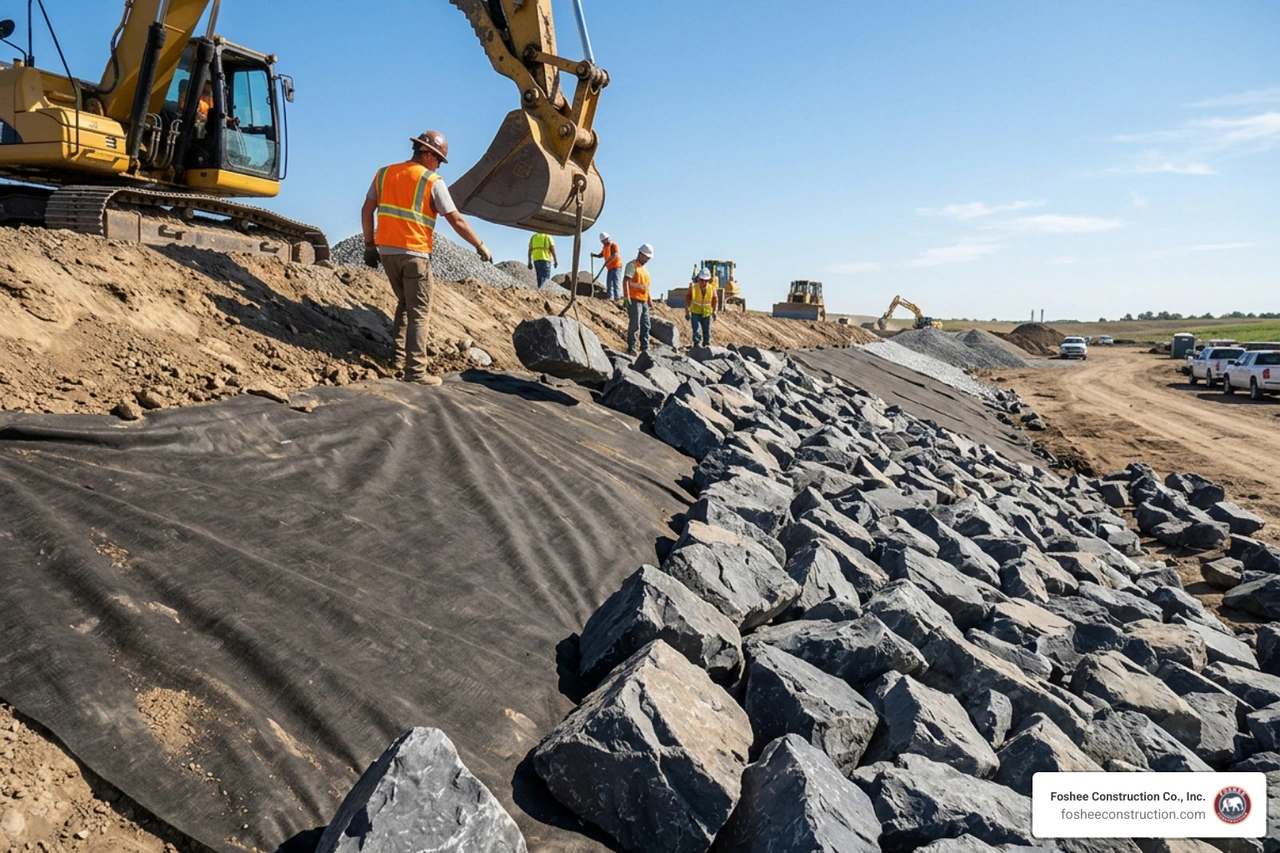
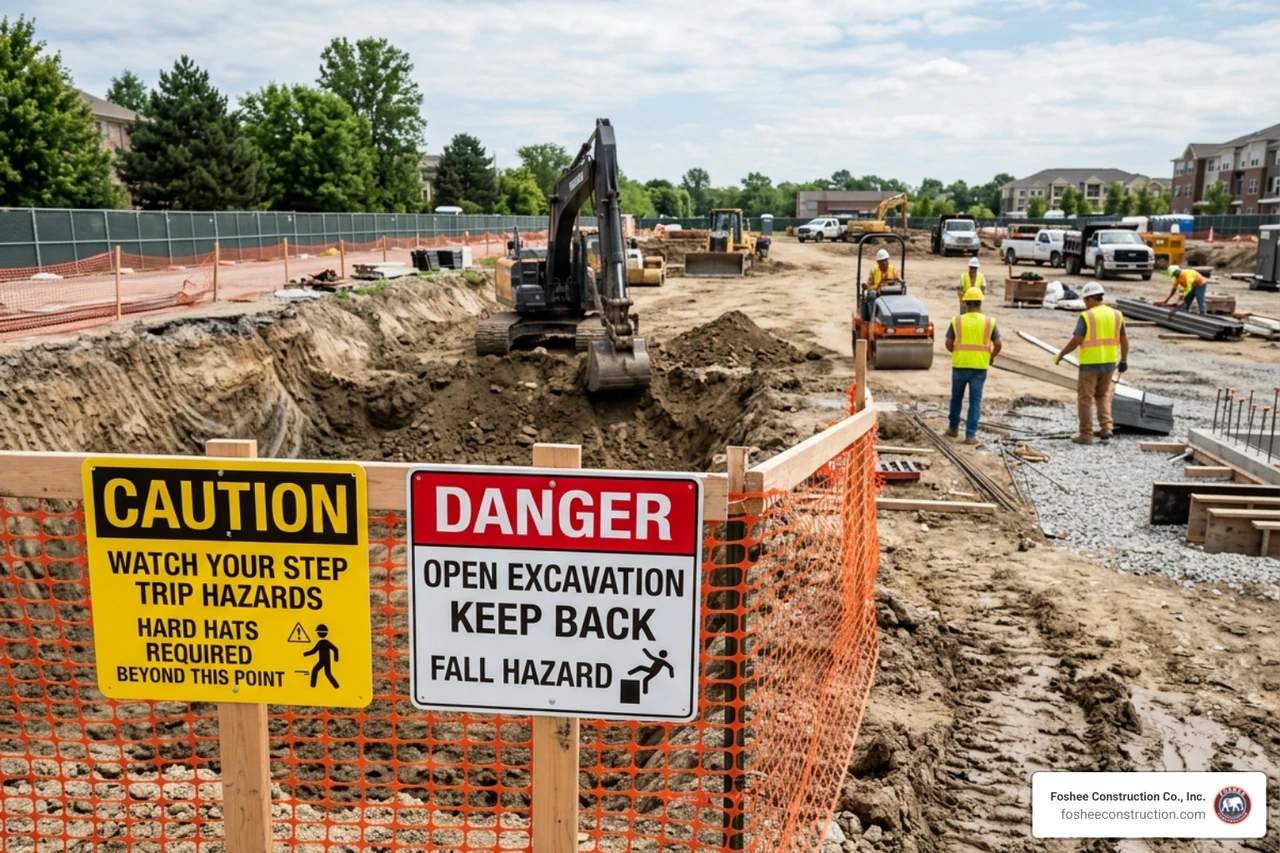
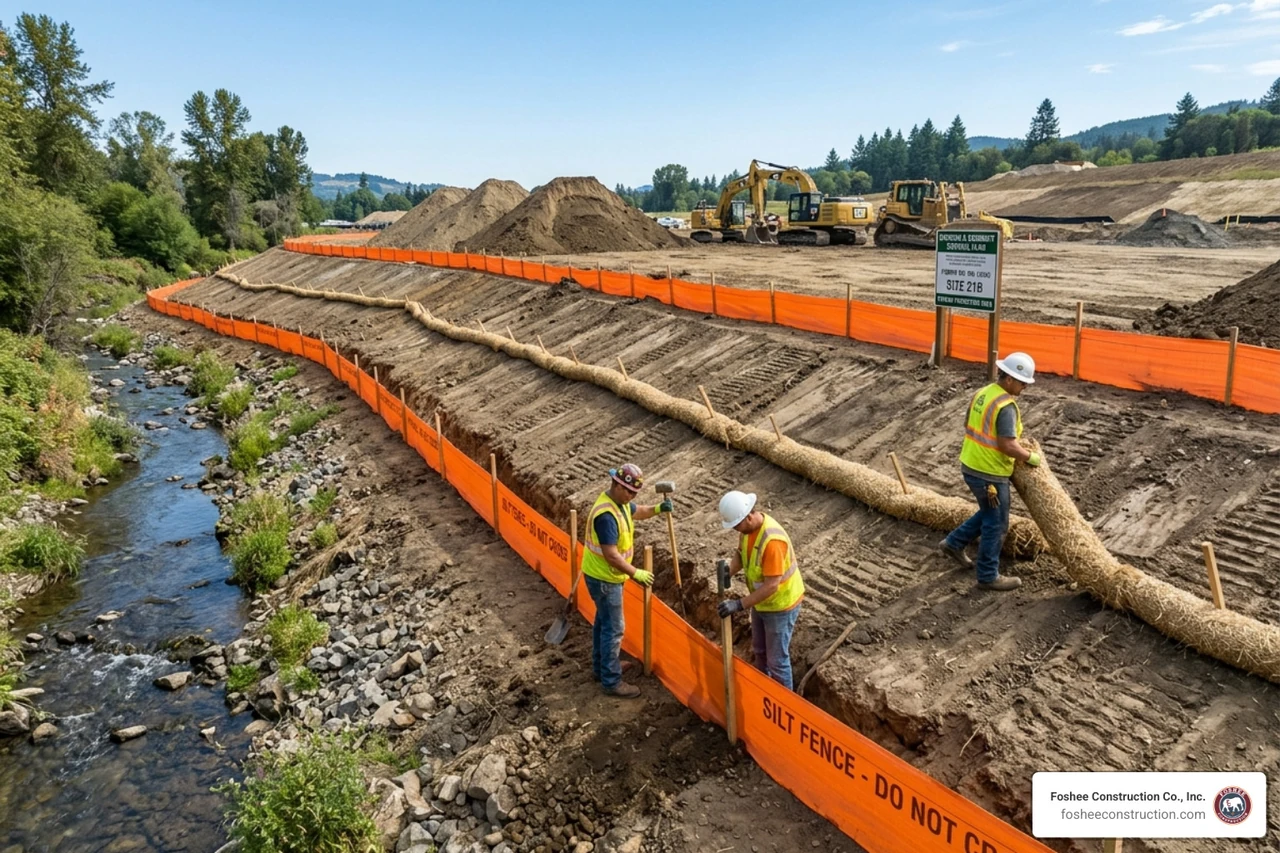
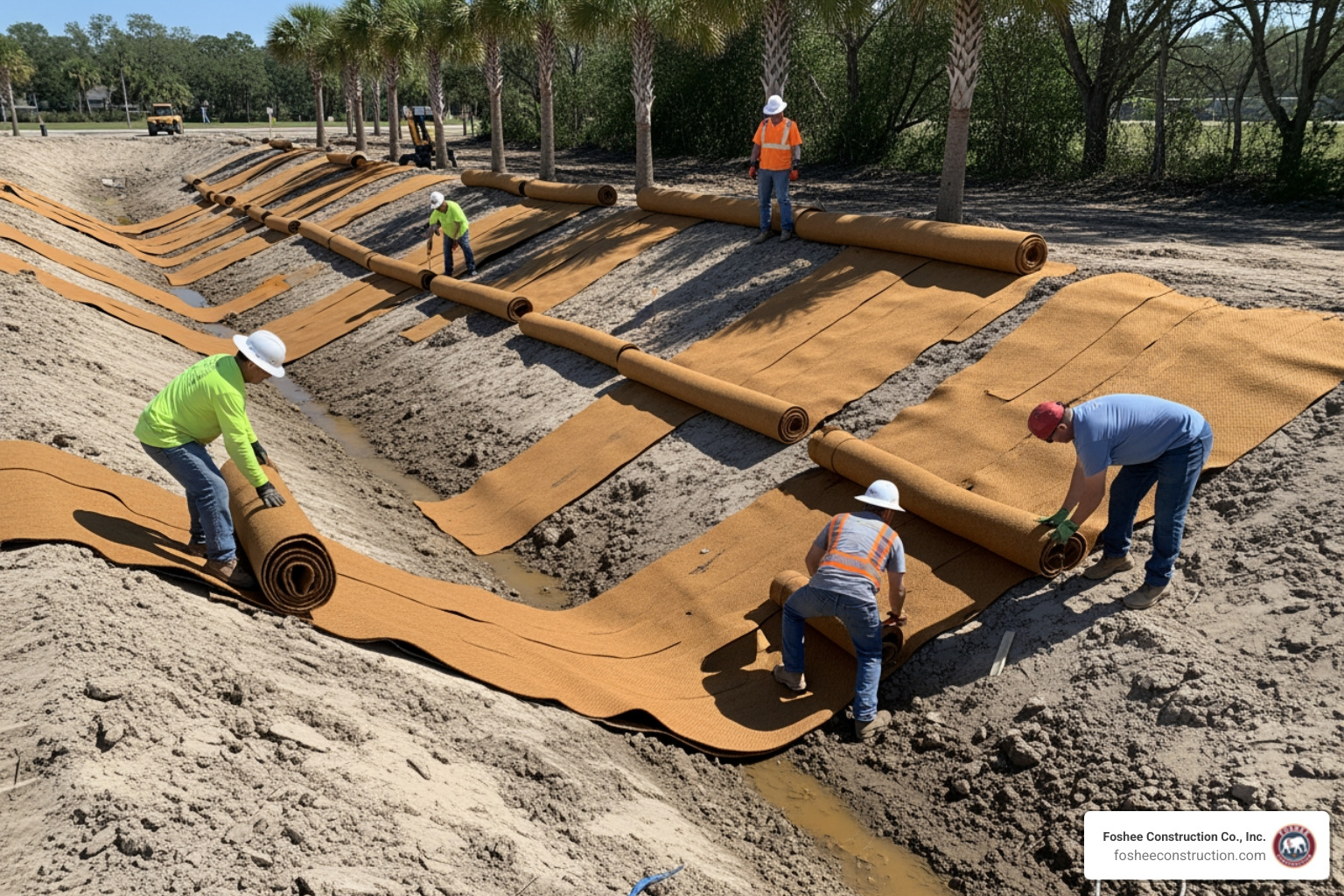
A riprap blanket is only as reliable as its subgrade foundation and geotextile underlayment. Even massive boulders will sink into saturated mud if the soil beneath them is unprotected. Establishing a comprehensive erosion control measure requires proper earthwork preparation, slope geometry limits, and correct underlayment selection.
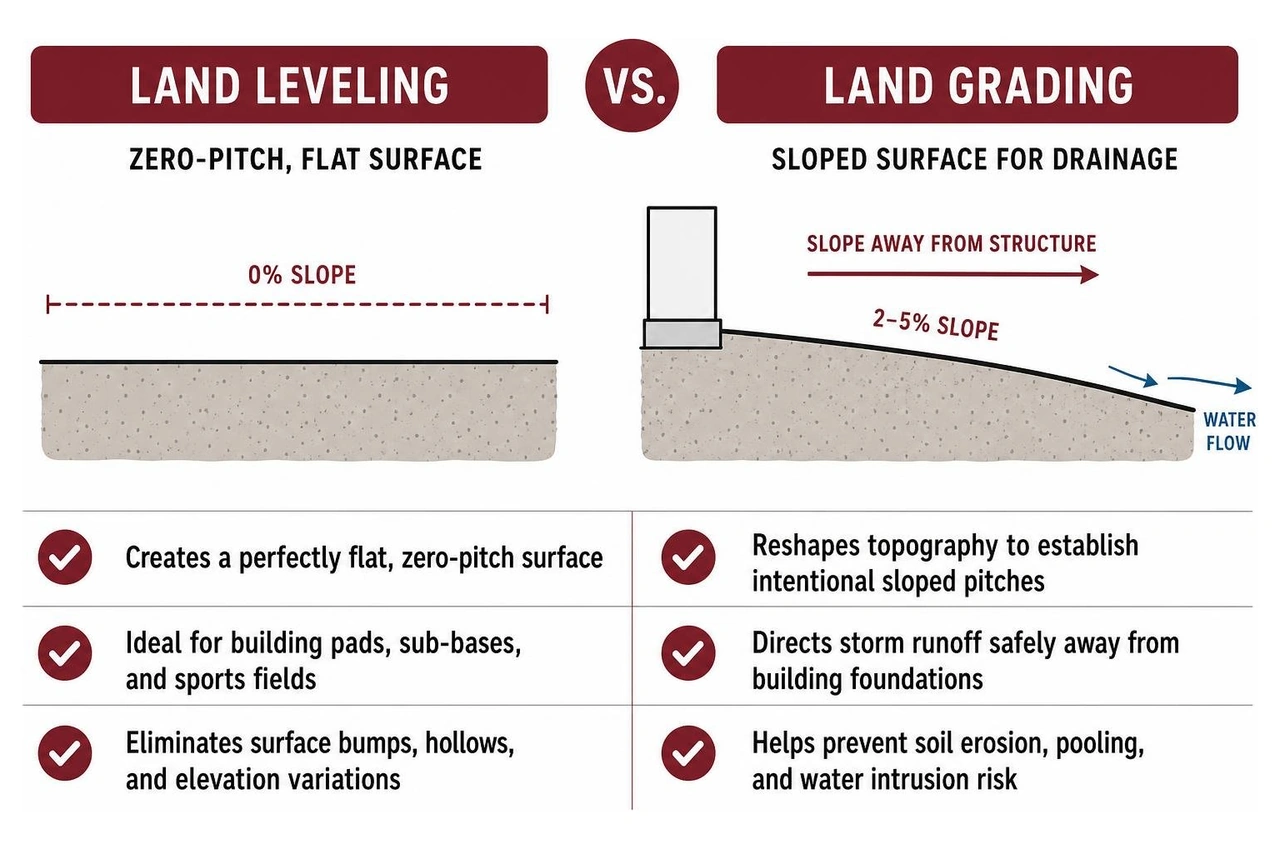
As detailed in the Minnesota Stormwater Manual on Riprap Practices, riprap becomes unstable when placed on unreinforced slopes steeper than 2:1 (horizontal to vertical). For embankments approaching or exceeding this steepness, alternative engineered solutions like articulated concrete mats, gabion baskets, or deep mechanical pinning become necessary to prevent the entire rock face from sliding downhill.
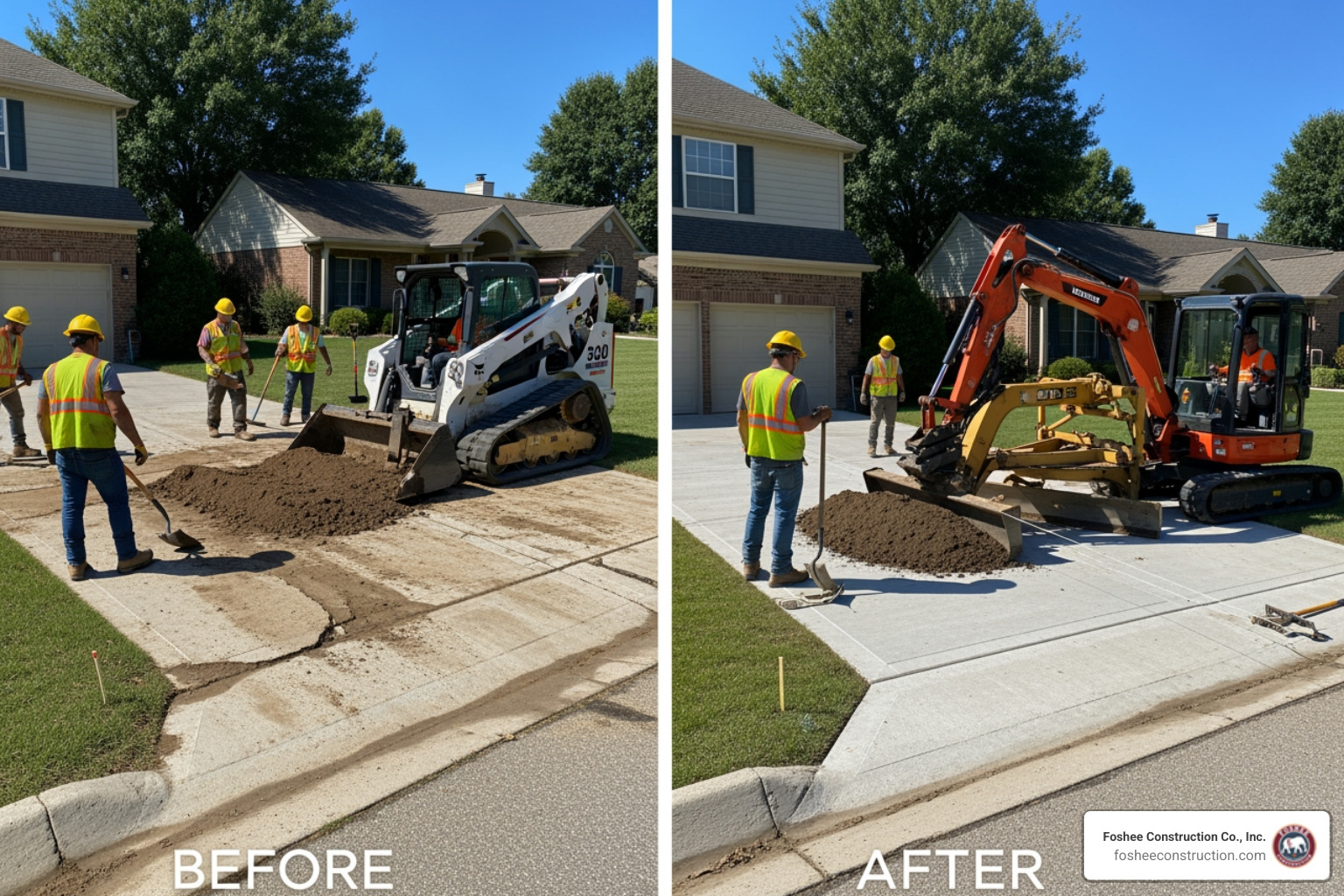
Proper placement follows a disciplined sequence to ensure the rock blanket performs as designed:
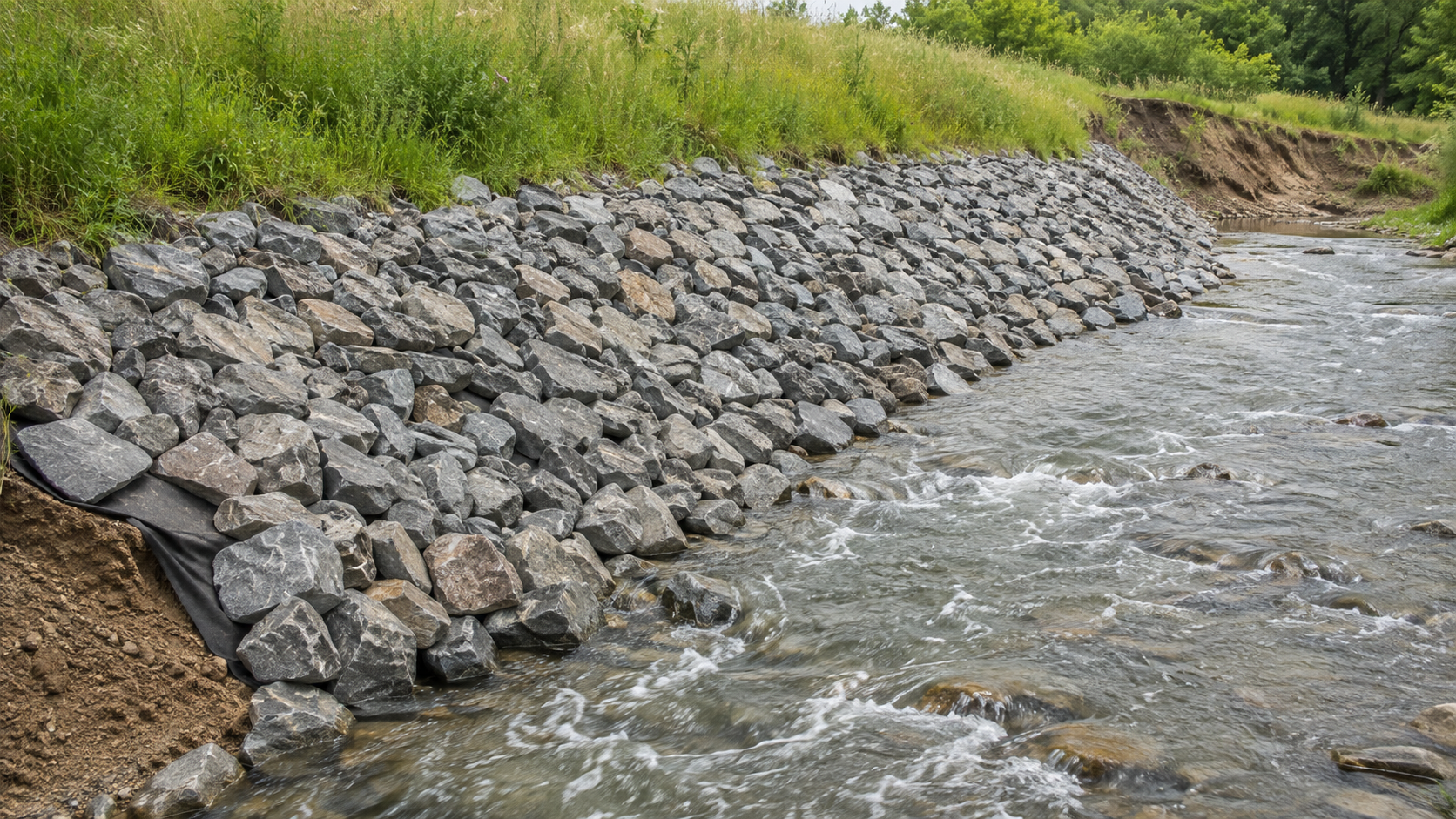
The structural anchor of any slope revetment is the toe trench. Without a properly keyed-in toe, hydraulic forces at the bottom of the bank will scour away the supporting soil, causing the entire rock blanket to slide downward into the channel bed.
While rock revetments solve acute erosion challenges, civil engineers and project planners must balance structural durability with local environmental and morphological effects. A complete strategy should be integrated during initial site design when developing an erosion control plan.
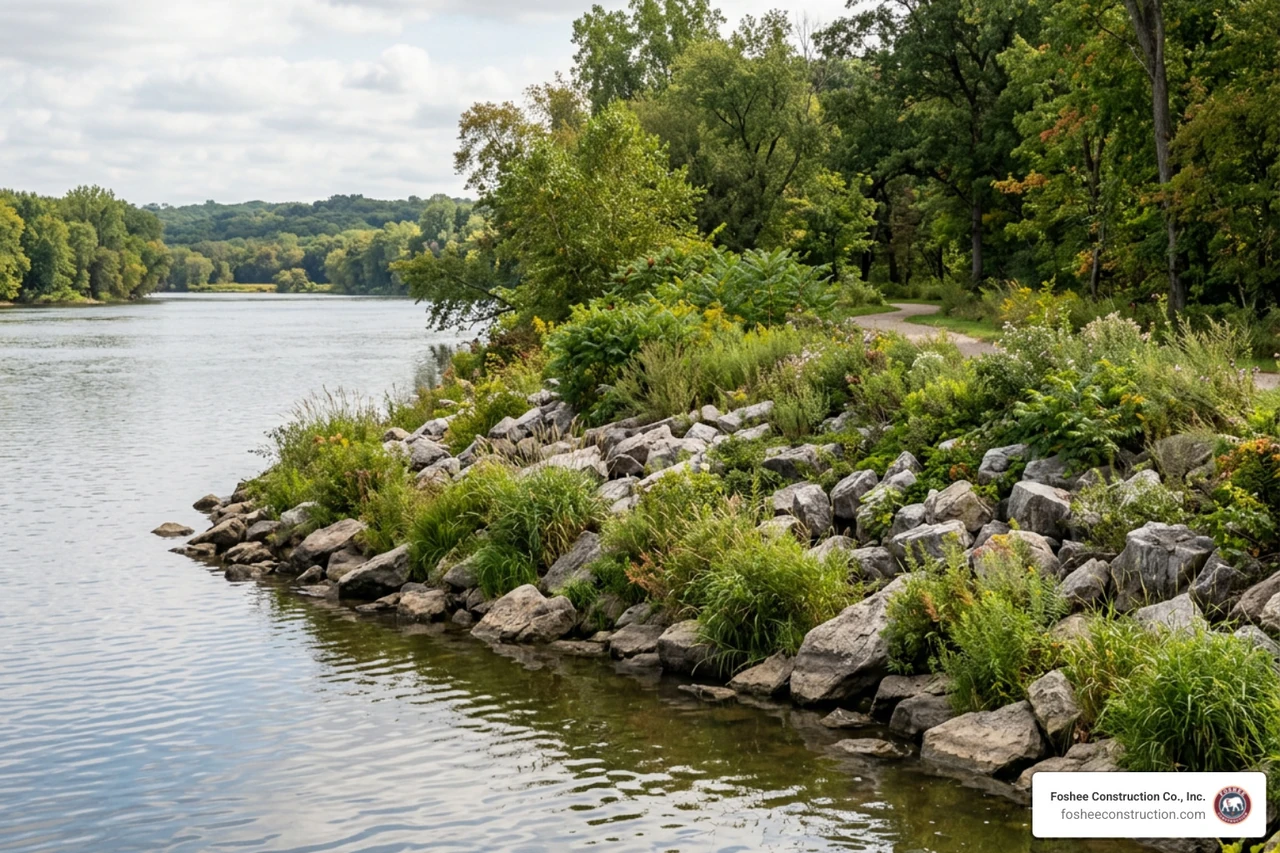
Installing continuous hard rock armor along shorelines and riverbanks changes natural channel dynamics:
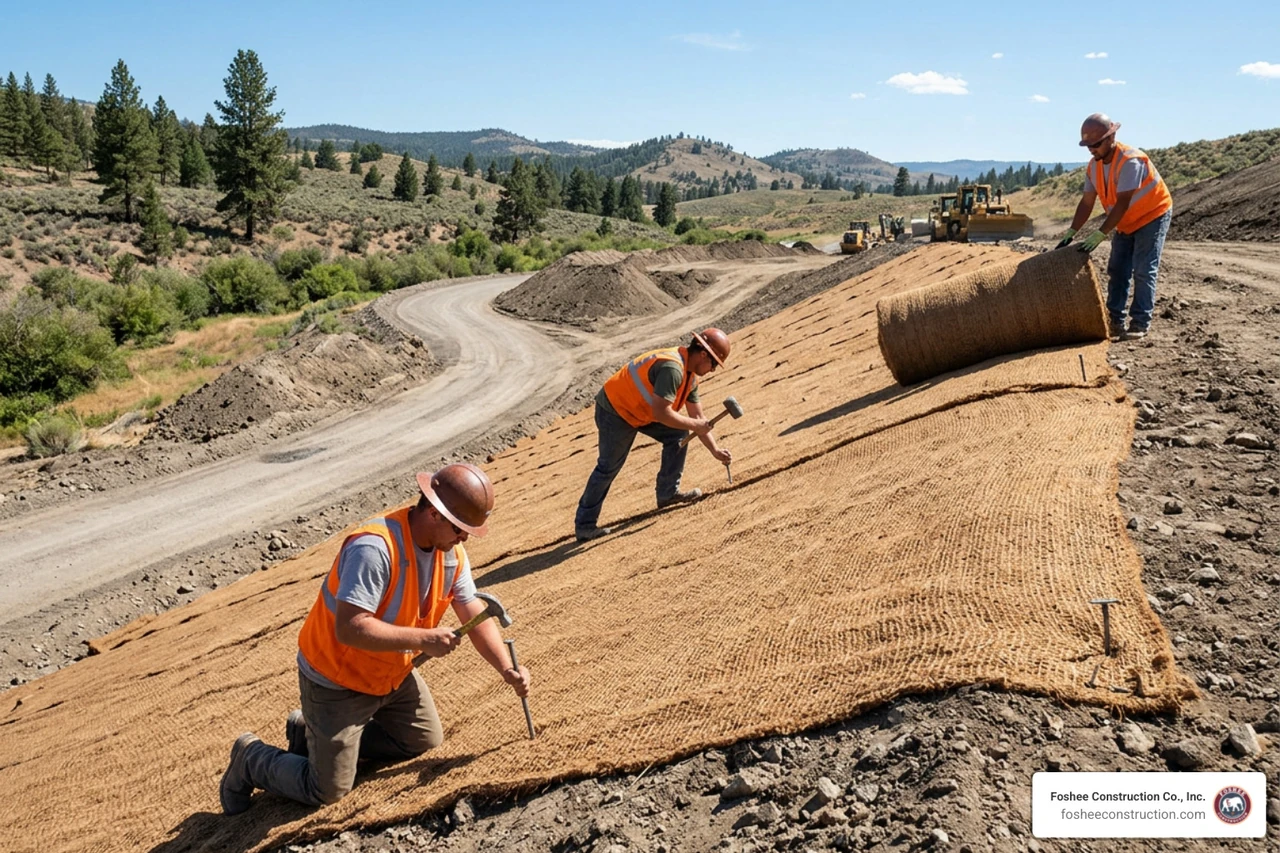
Where site conditions permit, blending structural rock with vegetative bioengineering provides long-term soil shear resistance while preserving natural aesthetics:
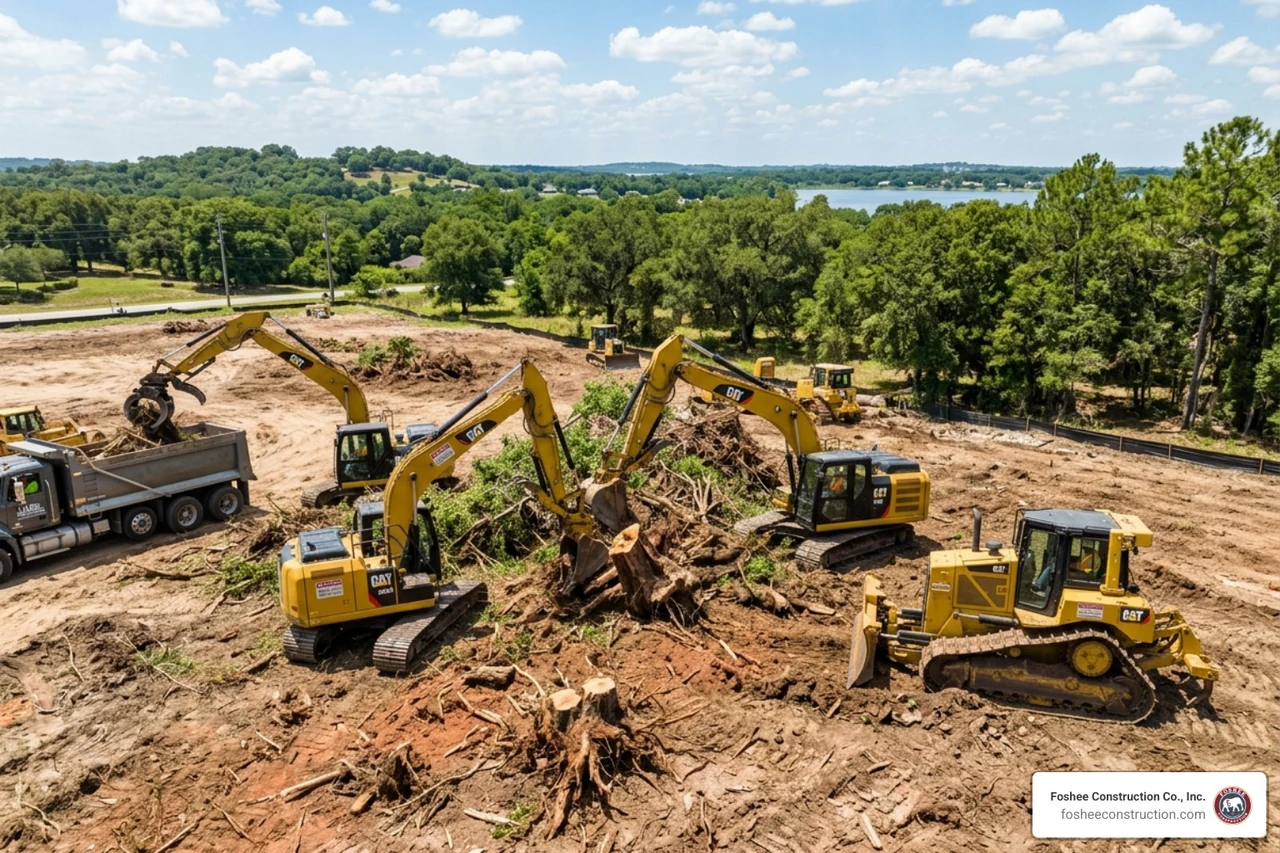
Sourcing and placing thousands of tons of aggregate requires careful logistical and financial planning. Partnering with an experienced grading and drainage contractor ensures material calculations, freight scheduling, and heavy machinery operations remain on budget.
The total cost of a rock revetment depends heavily on installation methodology and material transportation:
While rock revetments are durable, they require regular maintenance to preserve designed flow capacity:
Standard gravel consists of small, rounded or uniform crushed stones (typically 0.5 to 2 inches) designed for drainage beds, concrete mixes, and road base compaction. Riprap consists of much larger, heavy, angular quarry rocks (ranging from 4 inches to over 3 feet in diameter) specifically engineered to interlock and withstand hydrodynamic shear stresses and high-velocity water flows without washing away.
Without a nonwoven geotextile filter fabric or graded gravel bedding layer, water turbulence and subsurface groundwater seepage will wash fine sand and silt particles out through the large voids between the rocks. Over time, this soil piping hollows out the subgrade, causing the heavy rocks to sink into the mud and leading to total slope collapse.
Engineered alternatives—such as turf reinforcement mats, articulated concrete block matrices, or soil bioengineering—should be evaluated when:
Rock riprap remains one of the most dependable, time-tested tools in civil construction for armoring vulnerable earth against flowing water. By accurately calculating water velocity, selecting the appropriate stone gradation, anchoring the slope with a properly keyed toe, and installing a durable geotextile filter fabric, site developers can safeguard critical infrastructure from washouts and severe erosion for decades to come.
At Foshee Construction Co., Inc., we provide disciplined, high-standard site development across Minneola, Lake County, and Central Florida. Whether your civil project demands rough grading, stormwater ditch lining, underground utility infrastructure, or professional erosion control rip rap services, our team delivers transparent bids, dependable scheduling, and expert execution from ground break to final grade. Connect with our sitework specialists today to review your project plans.
We build bids using HeavyBid and AGTEK because the details matter long before the job starts. When the numbers are accurate and the scope is clearly defined, it sets the tone for how the entire project runs. Estimating isn’t just a step in the process, it’s the foundation we build on.
That same mindset carries into the field. Our crew is trained to work with purpose, follow the Civil Engineers’ Plan to the finest detail, and hold the line on quality. When expectations are clear from day one, there’s no need for shortcuts, and no confusion about how the work gets done.
Clients trust our bid packages because they’re complete and ready to use. Project managers know what we’re covering, what’s excluded, and how we plan to approach the job. That clarity removes friction and lets teams focus on execution instead of interpretation.
As part of our review process, we go into the plans before anything hits the site. We ask the questions early, resolve issues before they show up in the field, and keep RFIs moving. This approach prevents delays and protects the timeline.
Over time, that consistency builds trust. Many of the people we work with today came through referrals from past projects – engineers, GCs, and superintendents who’ve seen how we operate and want the same experience again.
In 2024, Foshee Construction was acquired by Saga Infrastructure Solutions, a national network of civil construction companies. Saga supports regional contractors by giving them access to better tools, long-term resources, and operational backing, without changing how they run day to day.
Foshee will continue to operate under its name, with the same team and field leadership in place.
“From the very time a project starts, we start that partnership. We try to catch as much as we can with the tools that we have. Not everybody is using the software platforms we are. That’s the differentiator: we’re not just bidding. We’re anticipating, problem-solving, and making sure the job runs right.”
— Don, CEO, Saga Infrastructure Solutions
Foshee is now part of a broader regional strategy that includes Florida, the Piedmont Atlantic, Texas, Colorado, and the Arizona Sun Corridor. The name, crews, and standards remain. What’s improving is the support behind it.