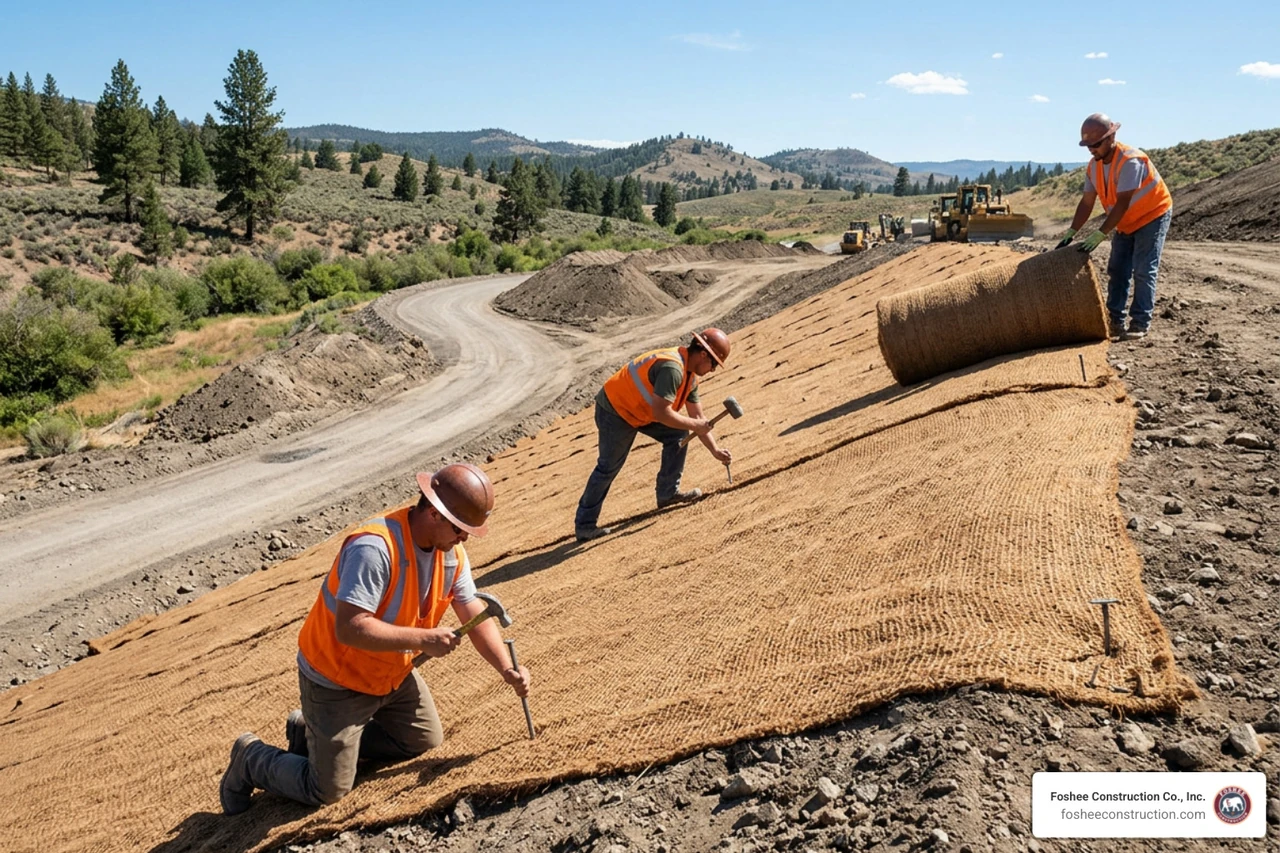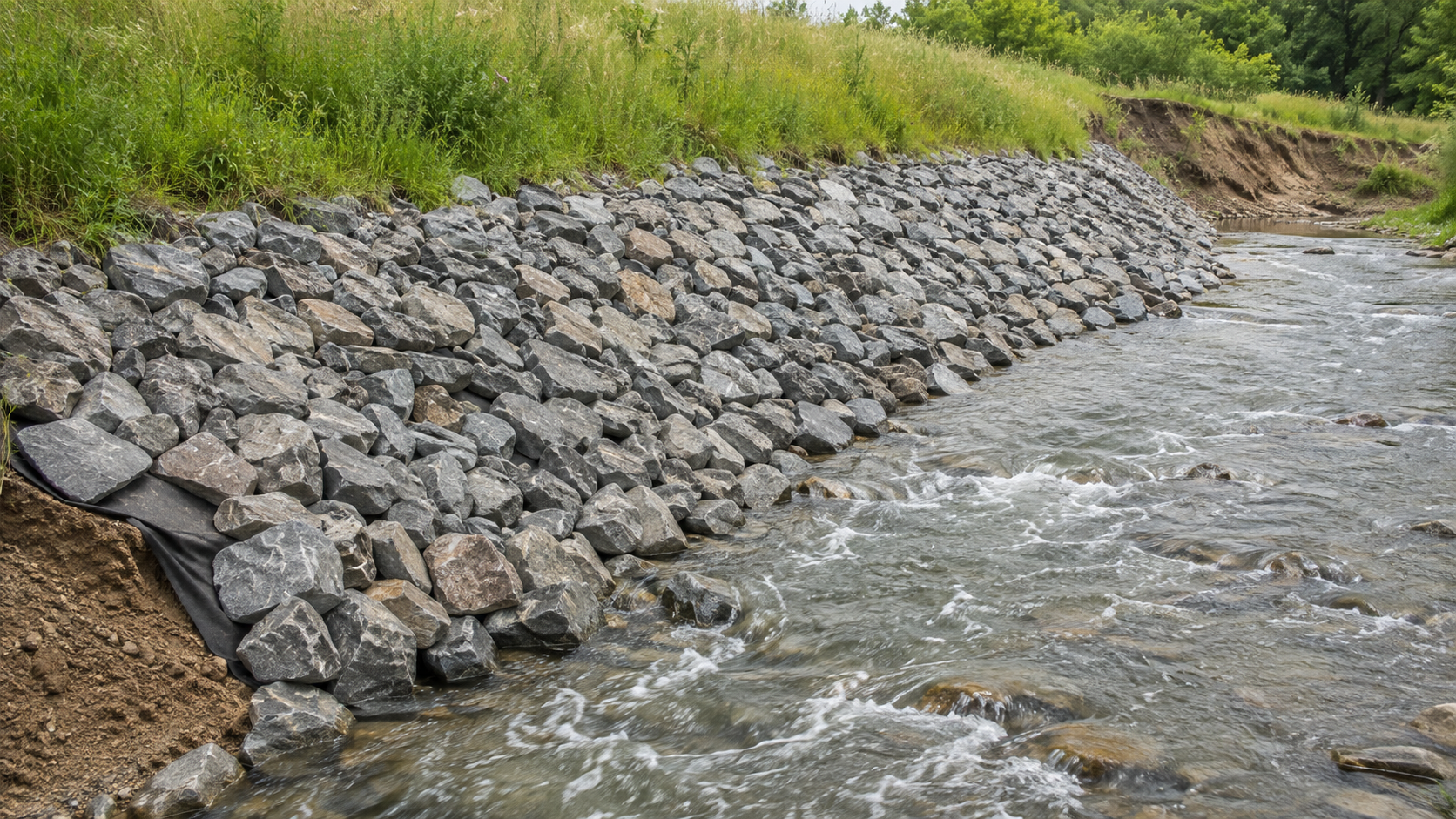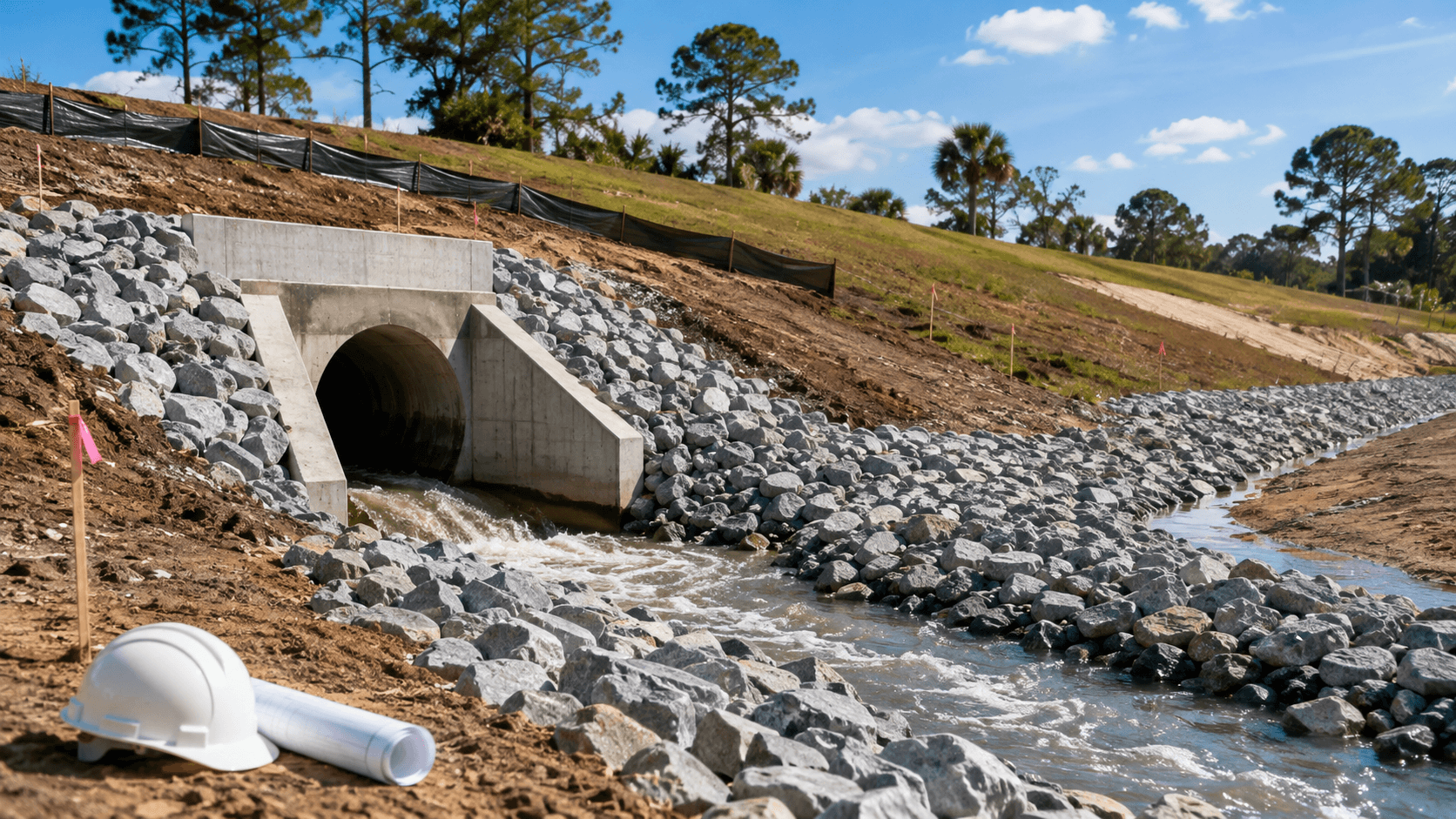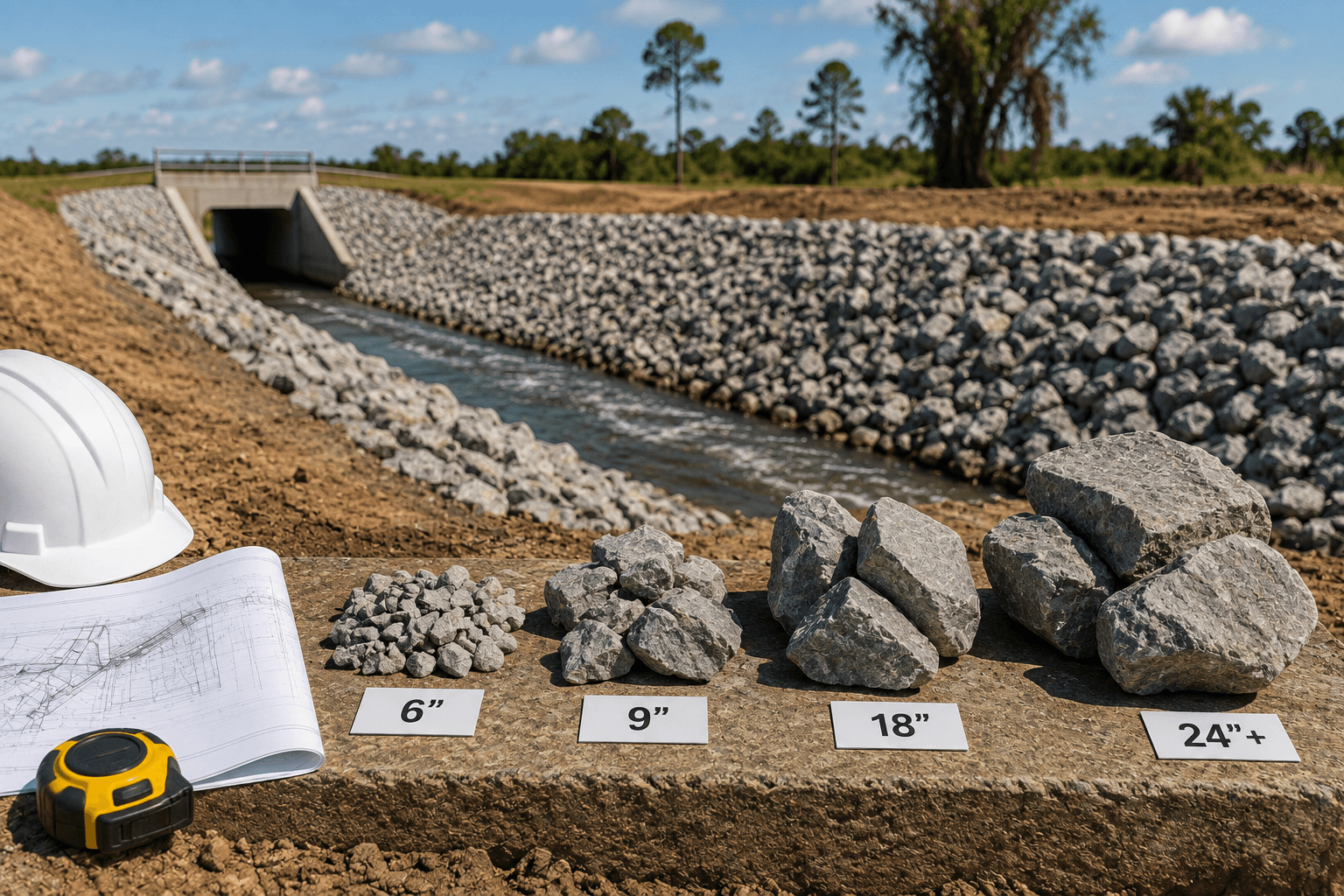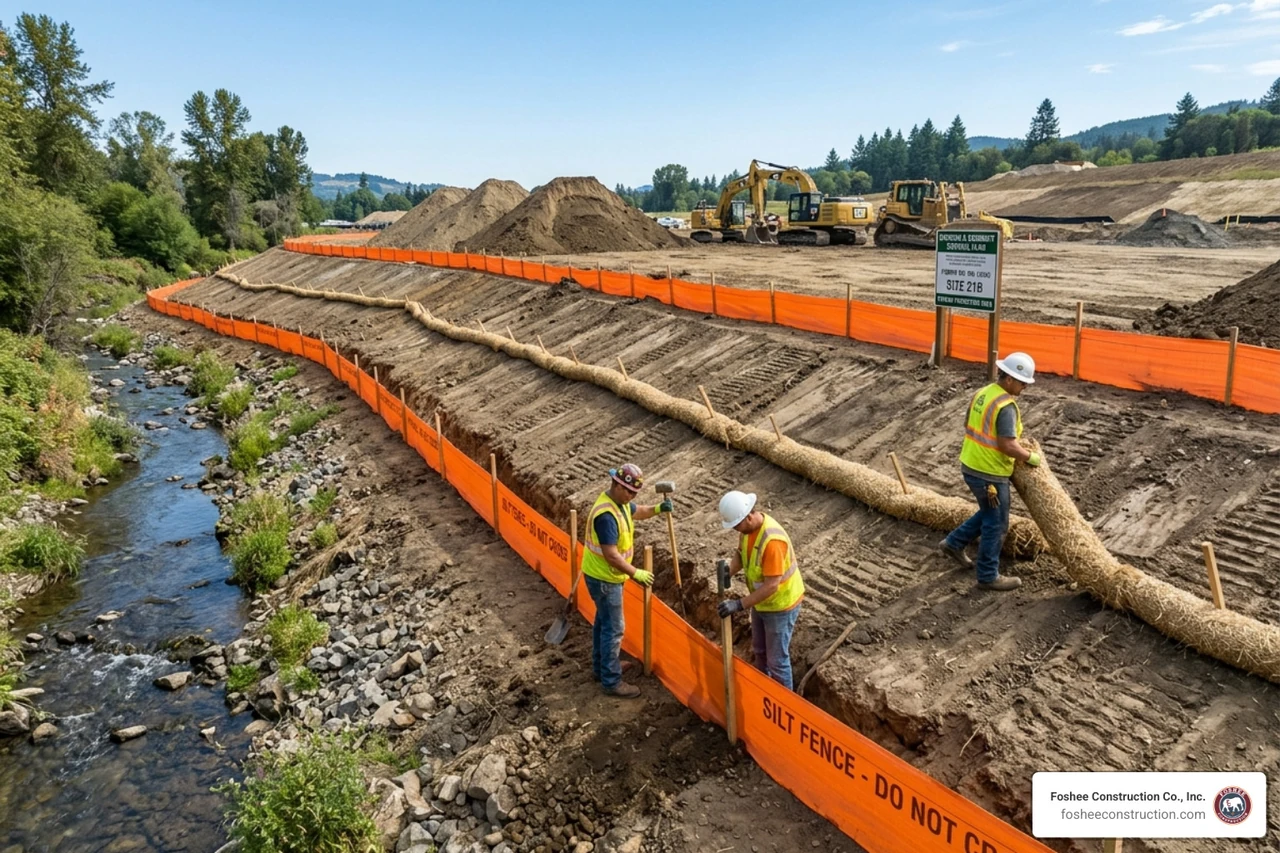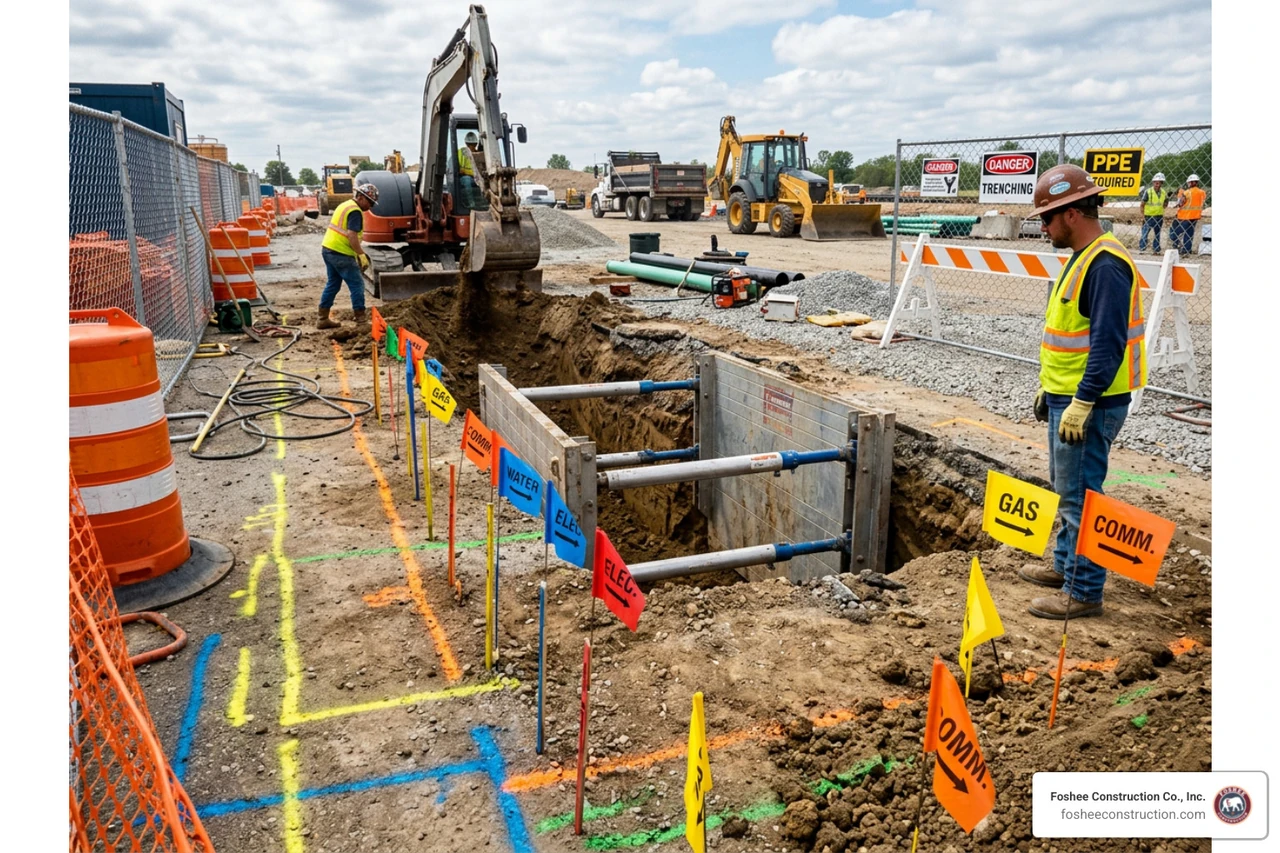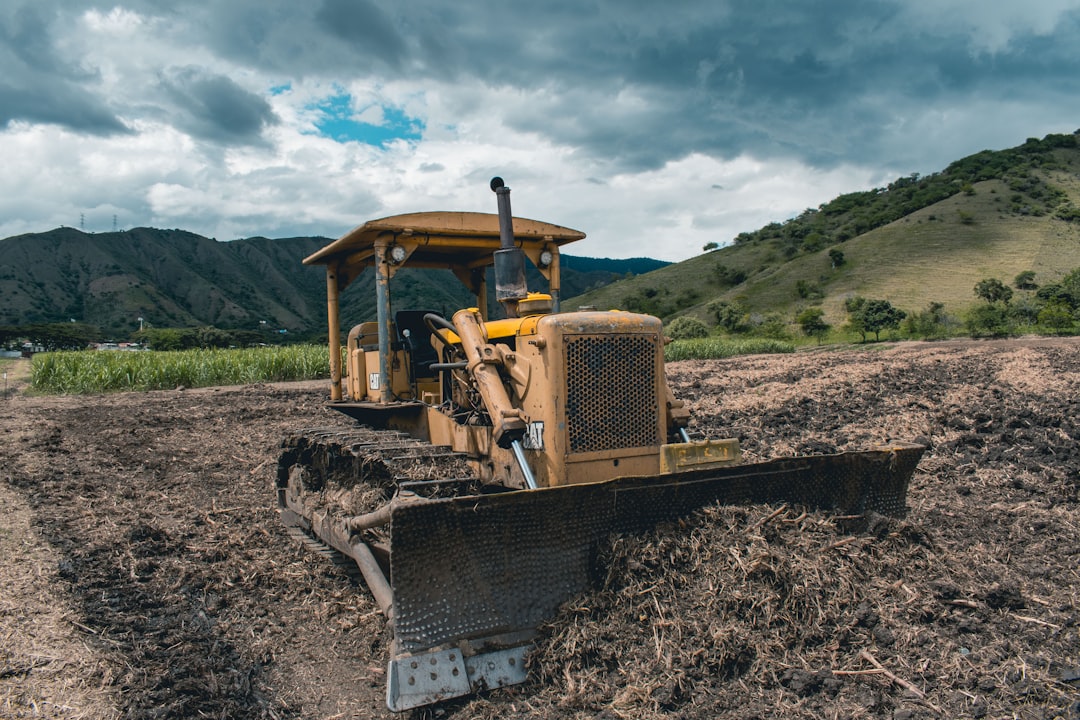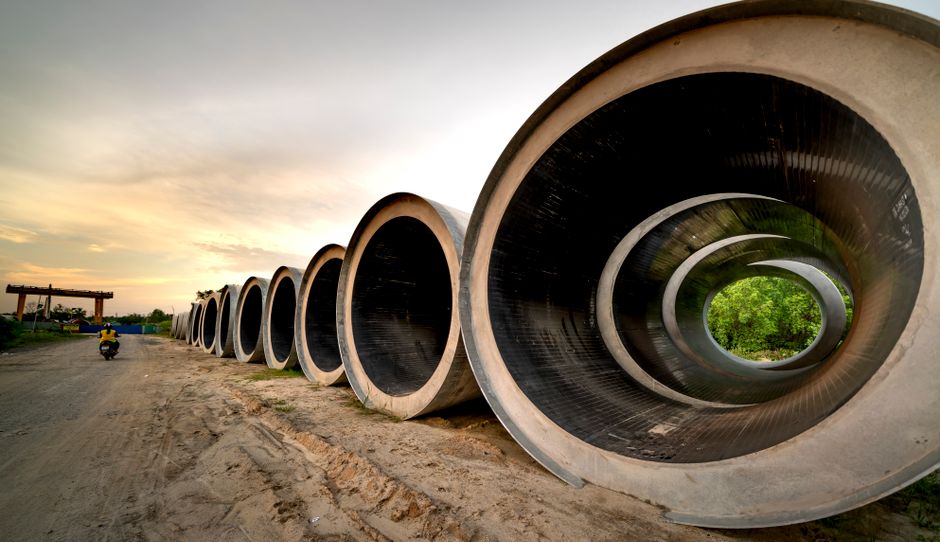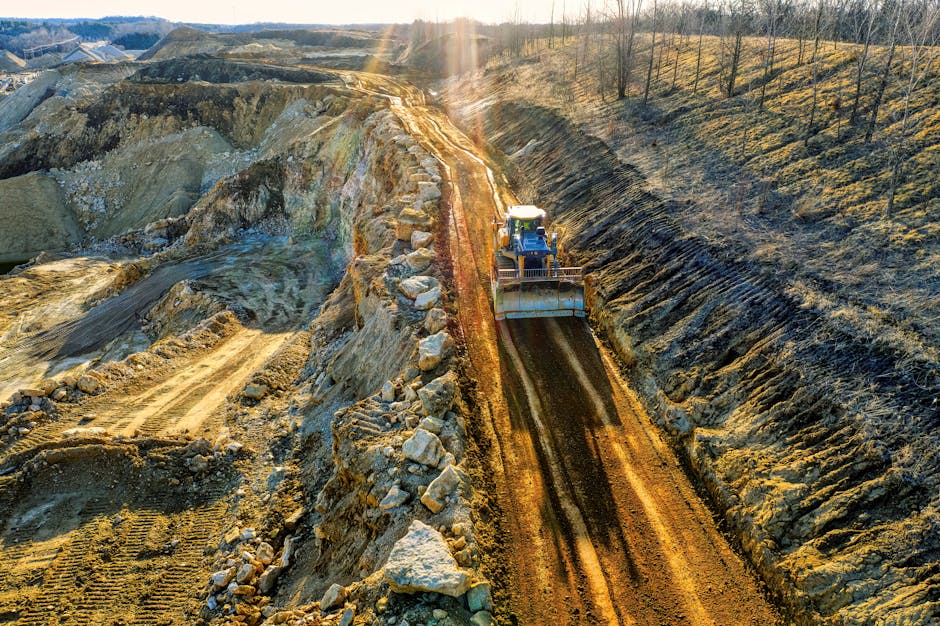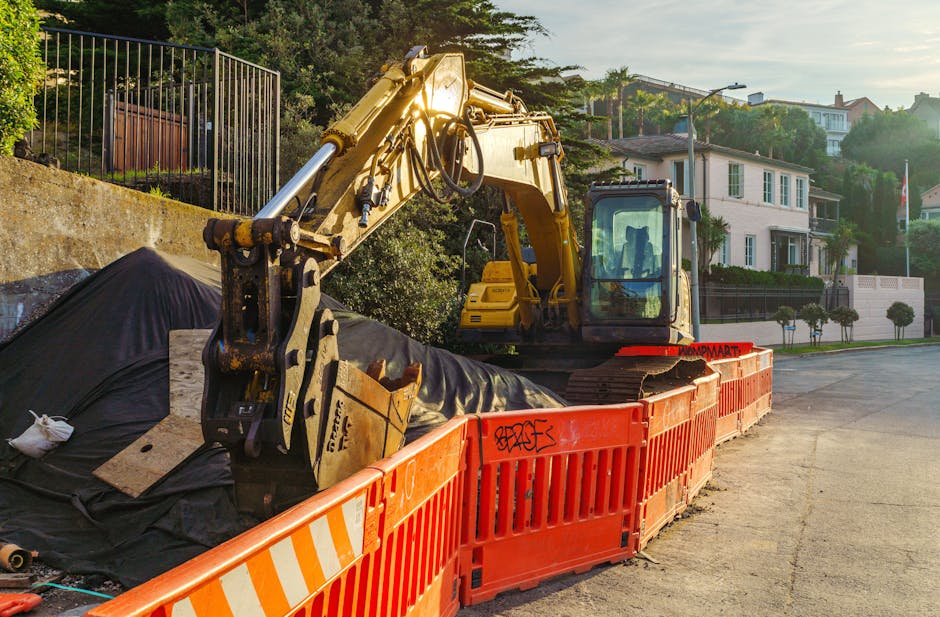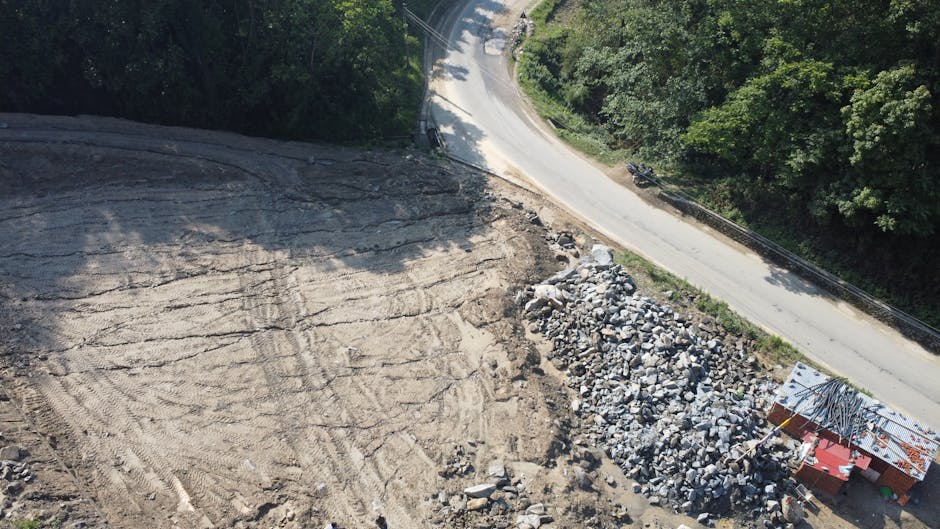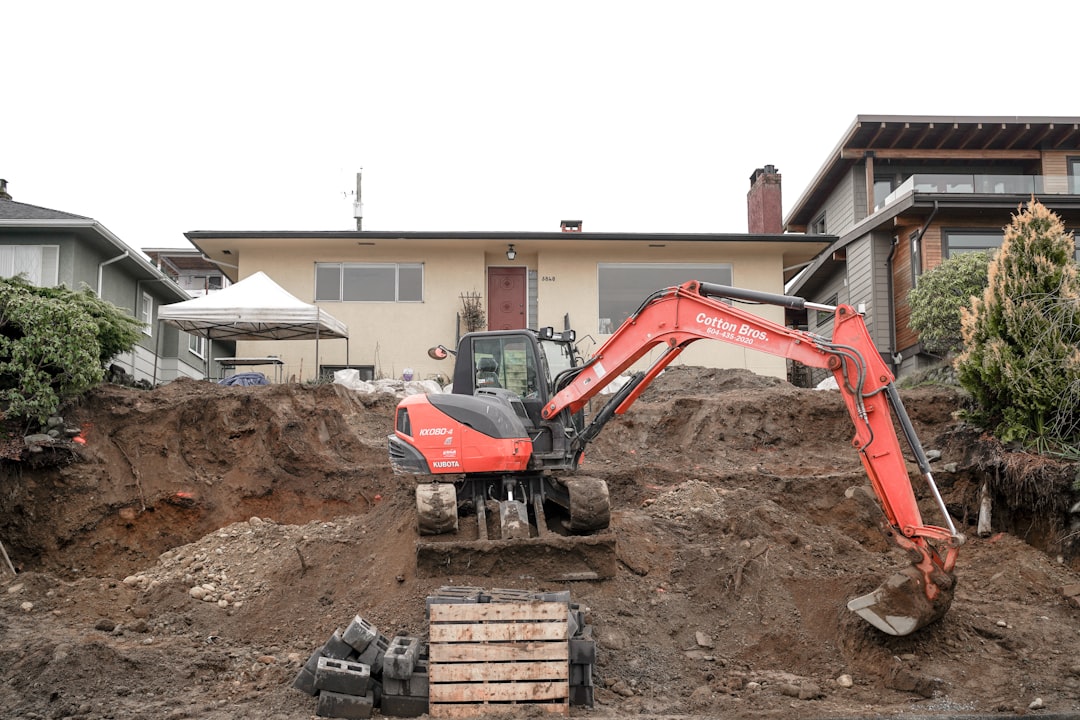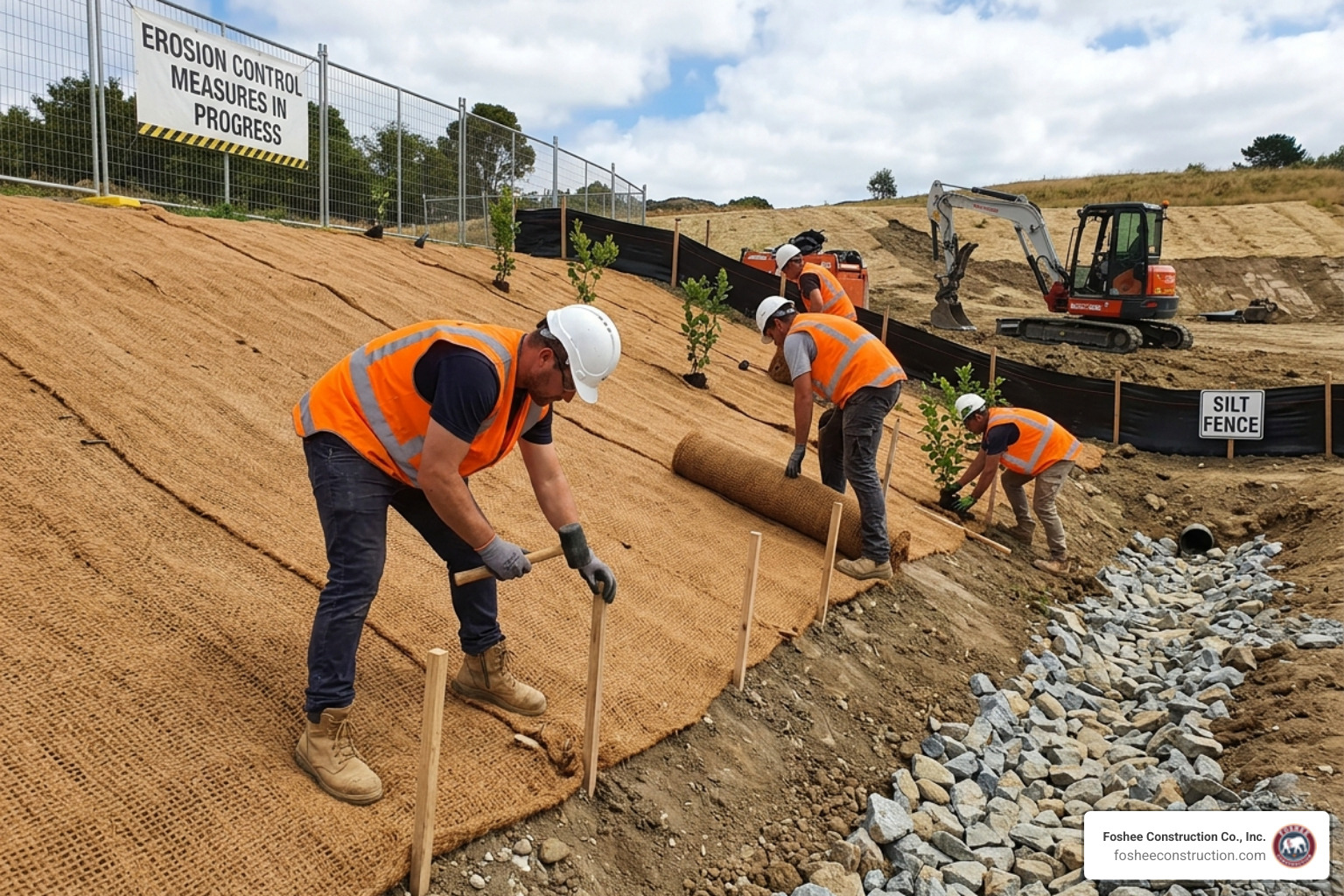
A grading and drainage contractor is a site preparation specialist who reshapes land, controls water flow, and installs drainage systems to protect your property from water damage, erosion, and foundation failure.
Here's what a grading and drainage contractor can do for your property:
Water is one of the most powerful forces acting on any property. When it has nowhere to go — or worse, when it flows toward your building — the damage builds quietly beneath the surface. Foundation cracks, soil erosion, basement leaks, and rotting structural elements are all common results of poor grading and drainage that went unaddressed for too long. By the time most property owners or developers notice the problem, the repair codes have already multiplied.
I'm Don Larsen, and at Foshee Construction Co., Inc. we've been delivering professional grading and drainage contractor services across Central Florida since 1994, building a track record with contractors, developers, and engineers who need site preparation done right — on schedule and on budget. In this guide, I'll walk you through everything you need to know to identify, fix, and prevent grading and drainage problems on your property.

Terms related to grading and drainage contractor:
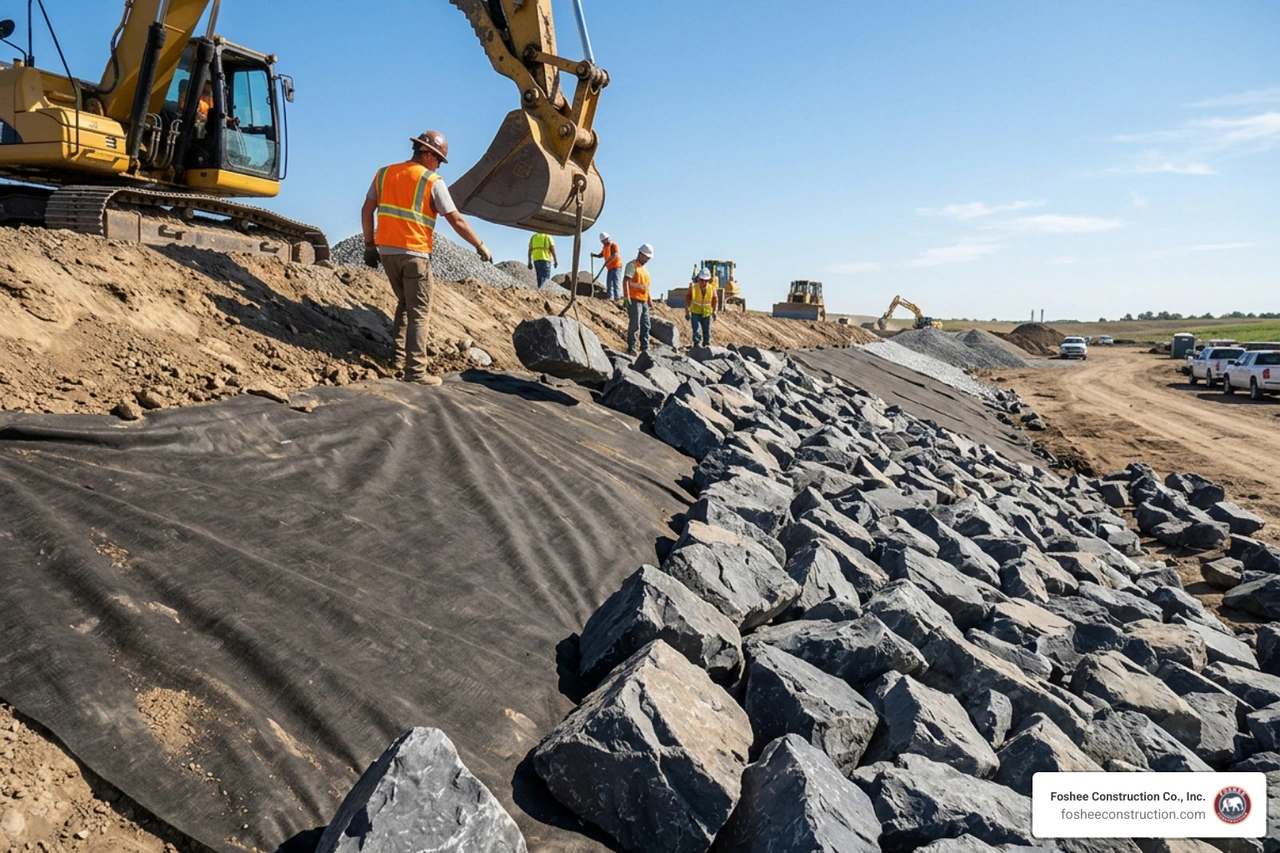
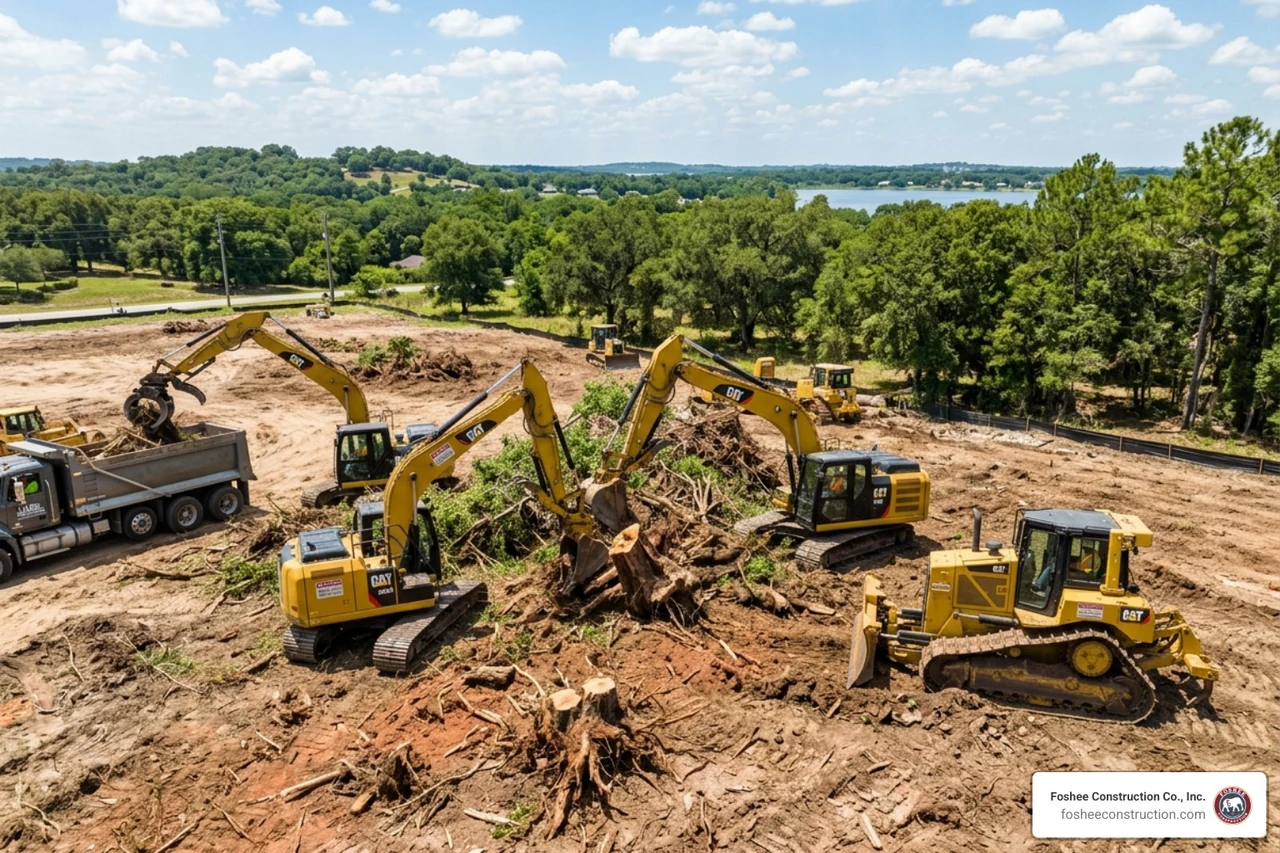
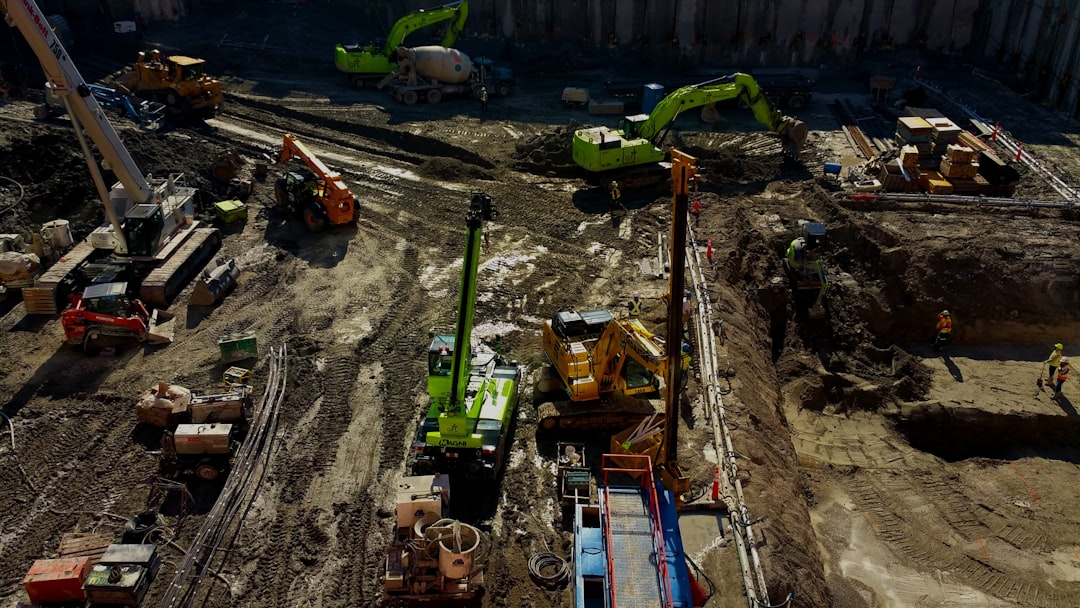
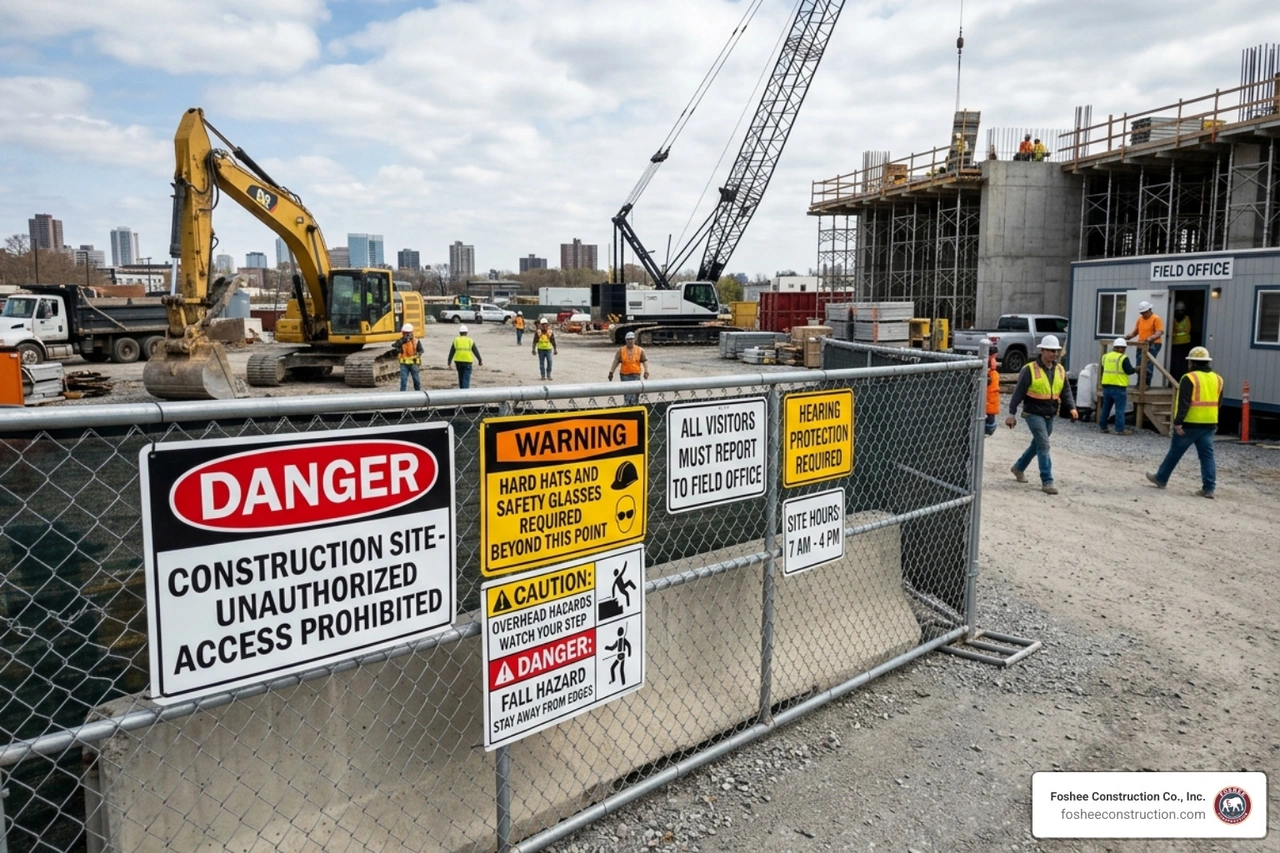
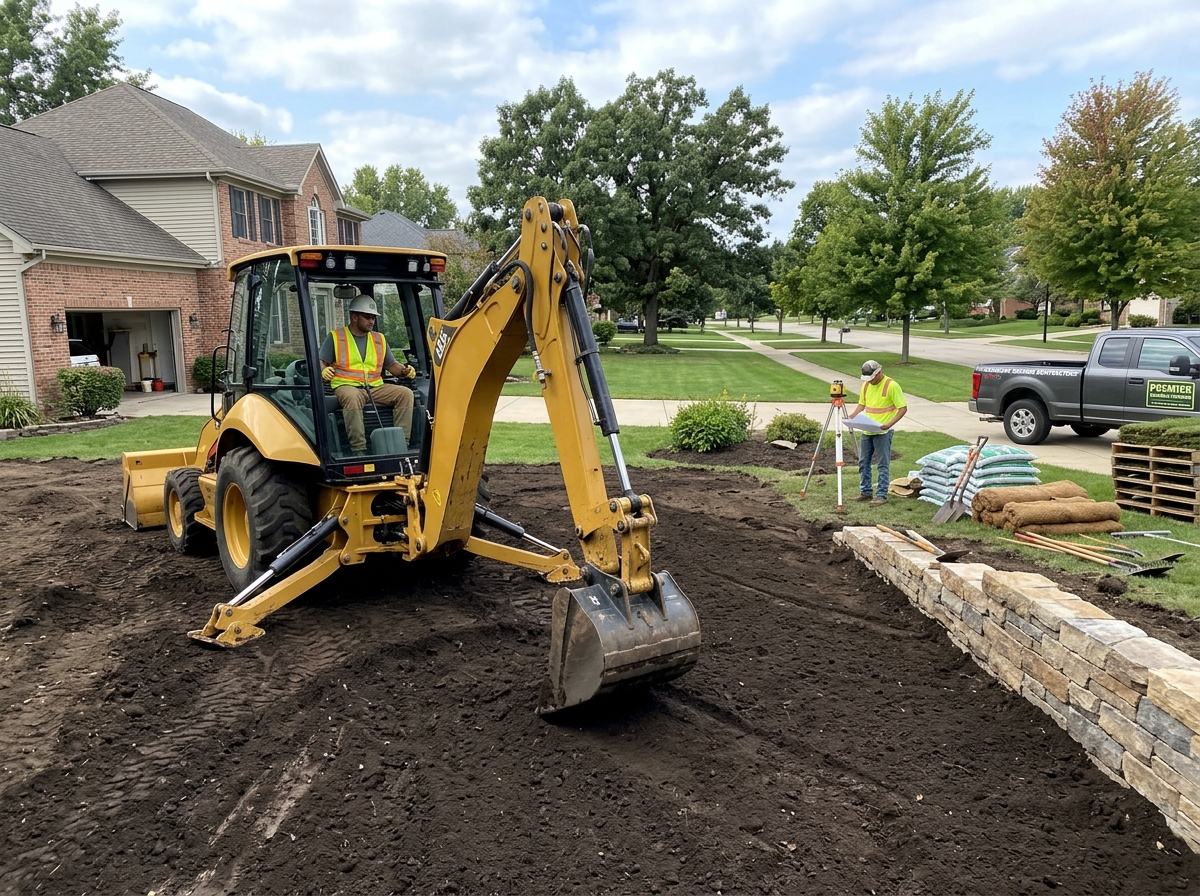
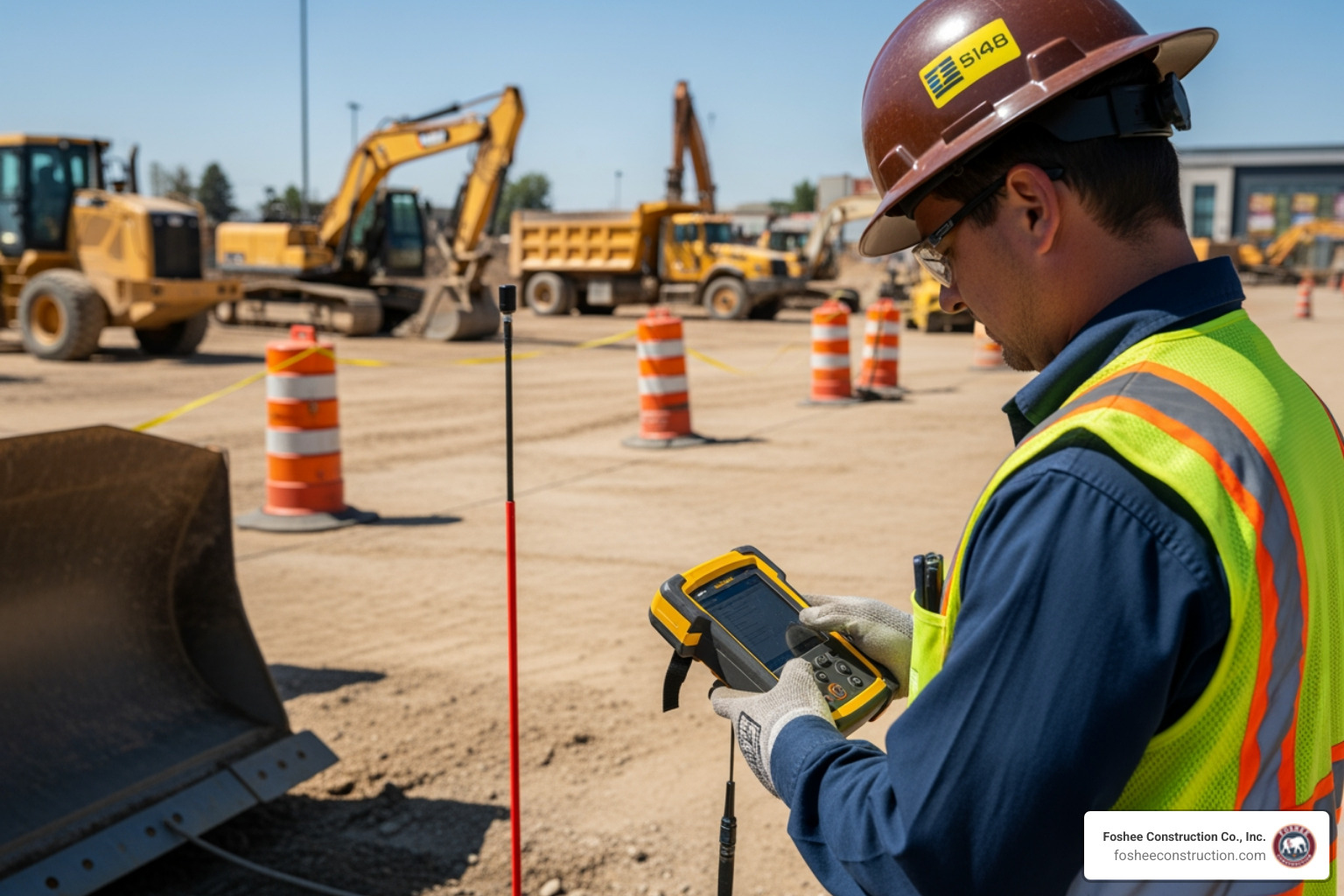
When you look at a construction site in Minneola or anywhere across Lake County, you see more than just dirt being moved. You are seeing the foundational stage of a project’s lifespan. A professional grading and drainage contractor is responsible for the technical "shaping" of the earth to ensure it is functional, safe, and resilient against Florida’s intense weather patterns.
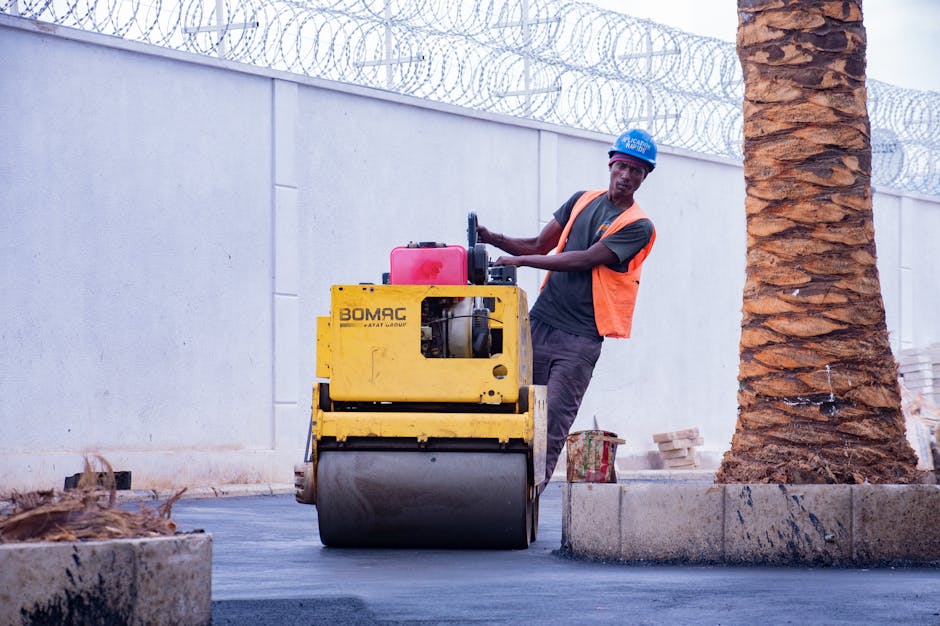
At Foshee Construction, we view site preparation as a comprehensive discipline. It isn't just about making the ground look flat; it’s about terrain shaping, soil compaction, and establishing the underground infrastructure that keeps a property dry. Whether it is a residential lot or a large-scale commercial development, the work of a grading and drainage contractor dictates how every other element of the build—from the foundation to the landscaping—will perform over time.
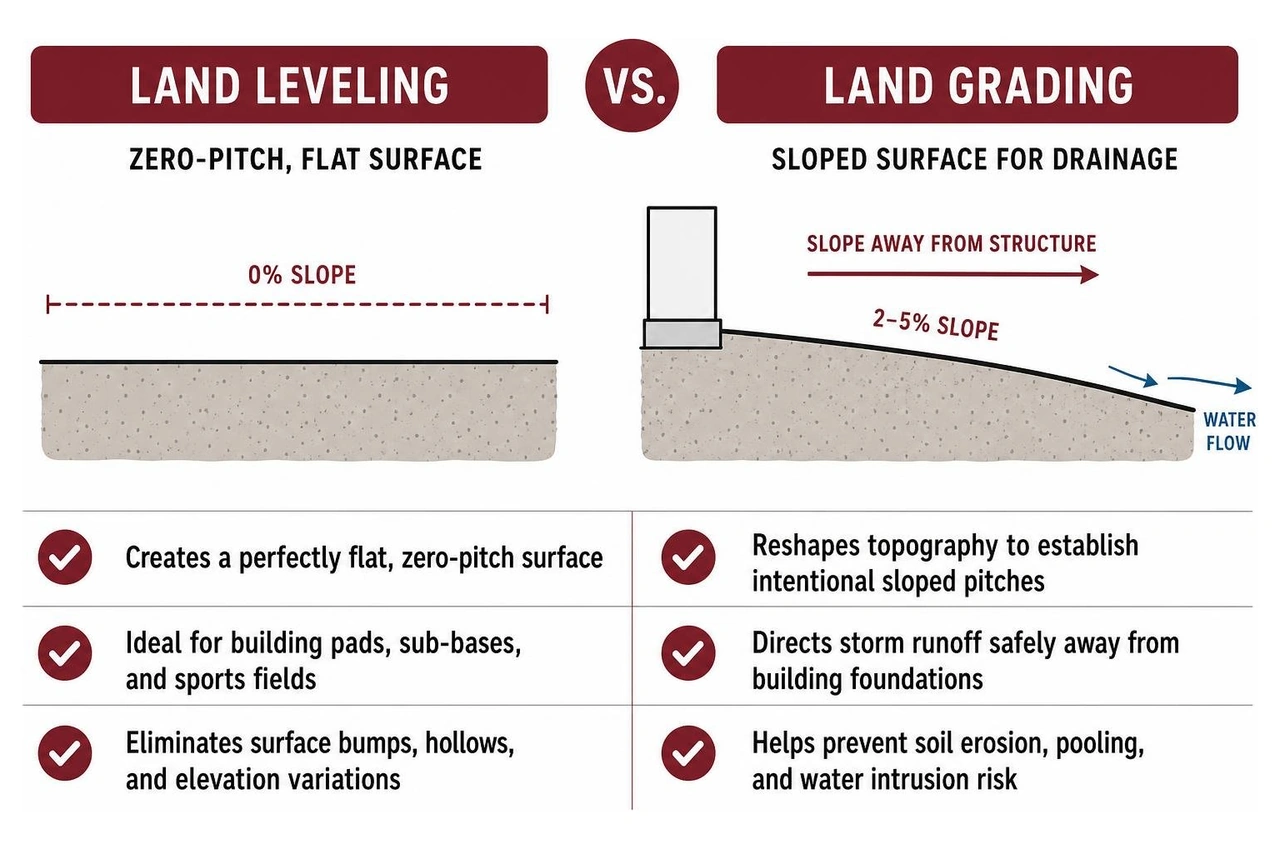
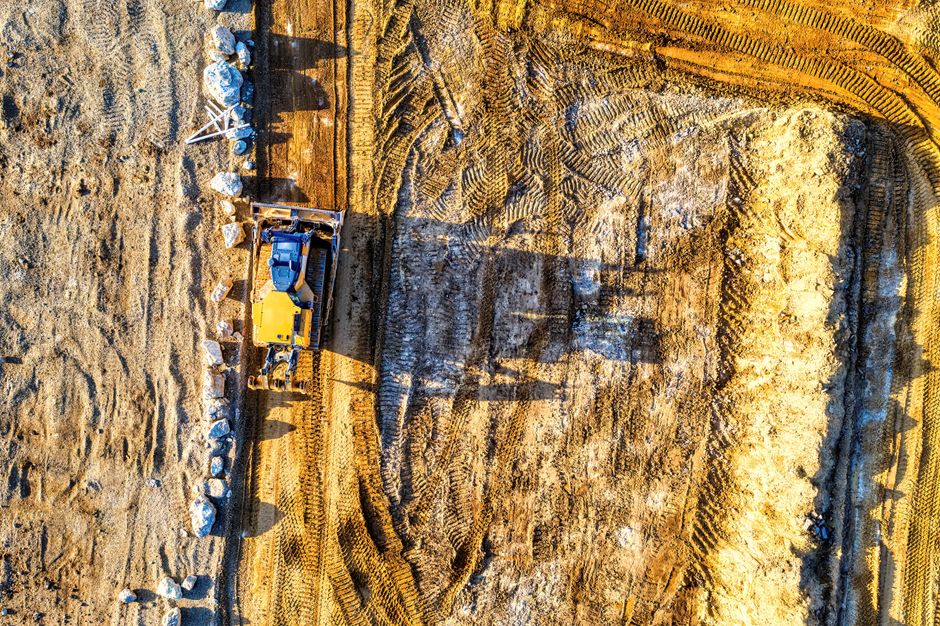
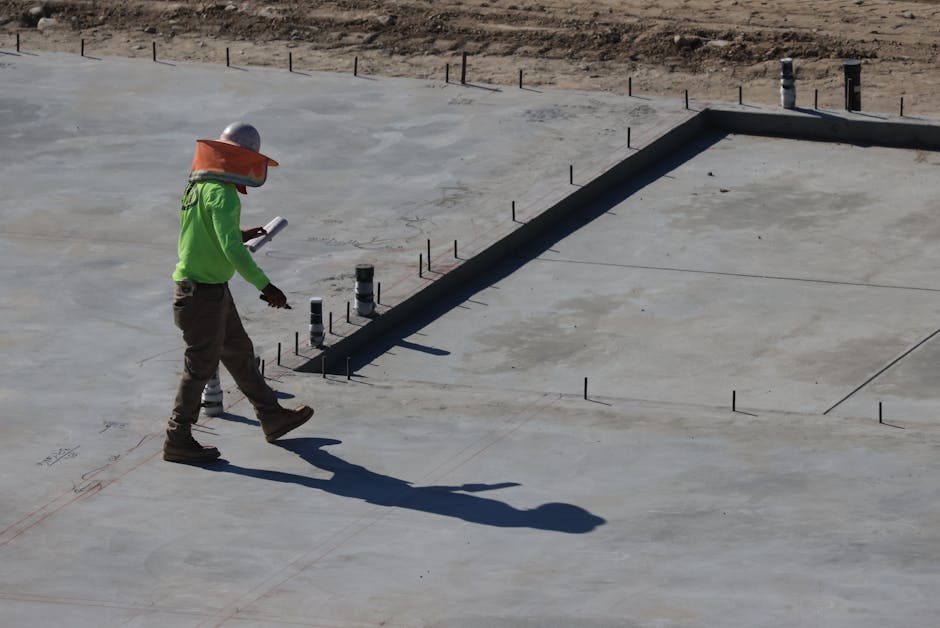
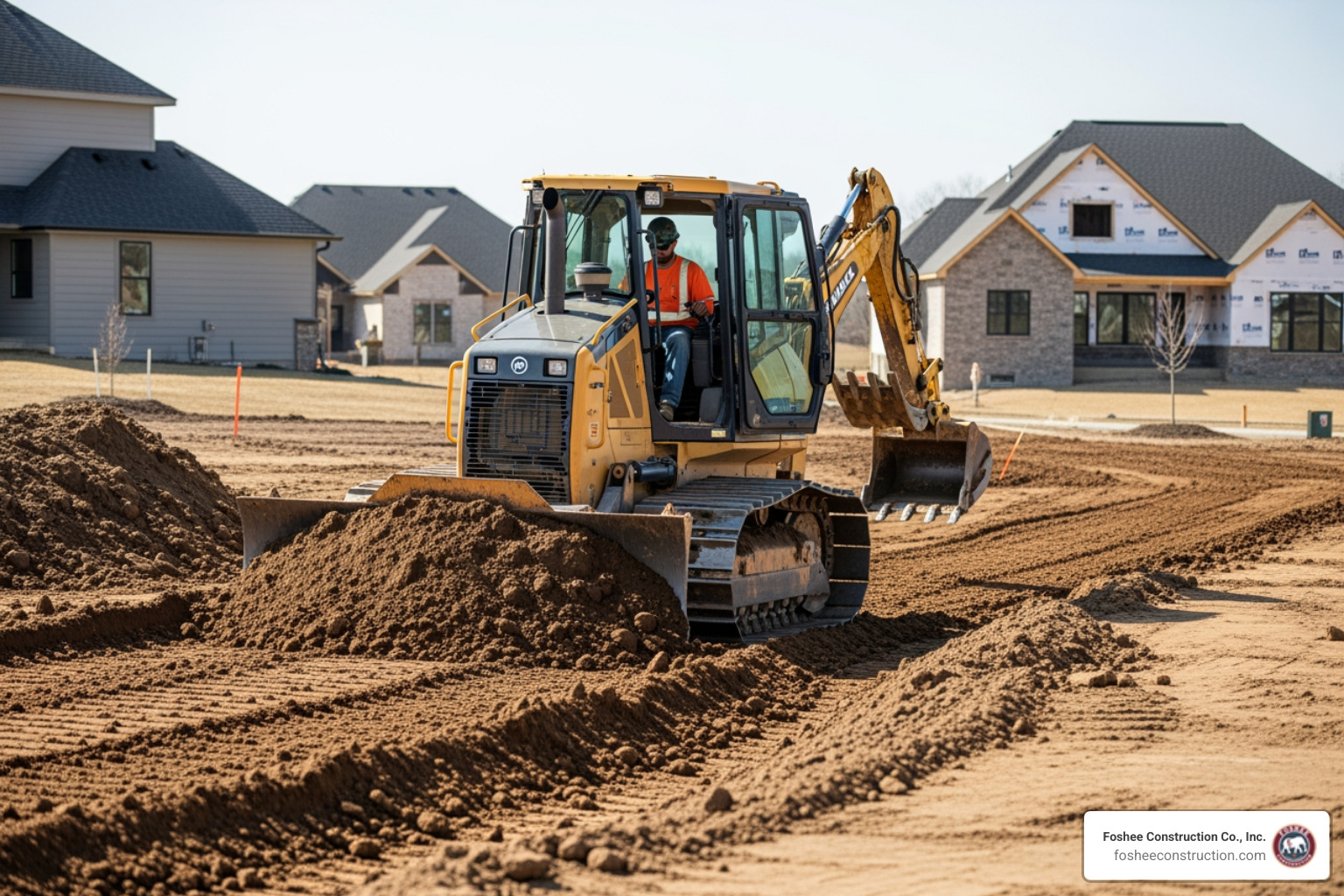
In simple terms, land grading is the process of adjusting the slope and level of the ground. However, "simple" is a bit of a misnomer. In Florida, where the terrain can be deceptively flat or filled with unexpected "peaks and valleys," grading requires precision.
We focus on several key goals during this process:
Your foundation is only as good as the soil it sits on. When a property has poor drainage, water collects against the foundation walls. This creates hydrostatic pressure—the force of standing water pushing against your home's structural base.
Over time, this pressure causes the soil to expand and contract violently. This "soil movement" is the primary culprit behind foundation cracks and structural instability. By implementing a professional grading and re-sloping plan, we redirect that water elsewhere. We act as the first line of defense, ensuring that water never has the chance to exert that dangerous pressure on your building envelope.
In Florida, we are no strangers to heavy rain. However, your property should be designed to handle a typical afternoon downpour without turning into a swamp. Identifying the warning signs of poor drainage early can save you tens of thousands of dollars in foundation repairs.
If you notice any of the following, it’s time to consult a grading and drainage contractor:
"Negative grading" is a term that strikes fear into the hearts of site inspectors. It occurs when the land slopes toward the building rather than away from it. This essentially turns your home into a bowl that collects every drop of runoff from your roof and yard.
Negative grading doesn't just cause "wet feet." It leads to structural rot, attracts wood-destroying organisms (like termites), and can even compromise the building's electrical and mechanical systems if they are located in low-lying areas. Professional drainage and grading work is the only permanent solution to reverse this flow and protect the building's integrity.
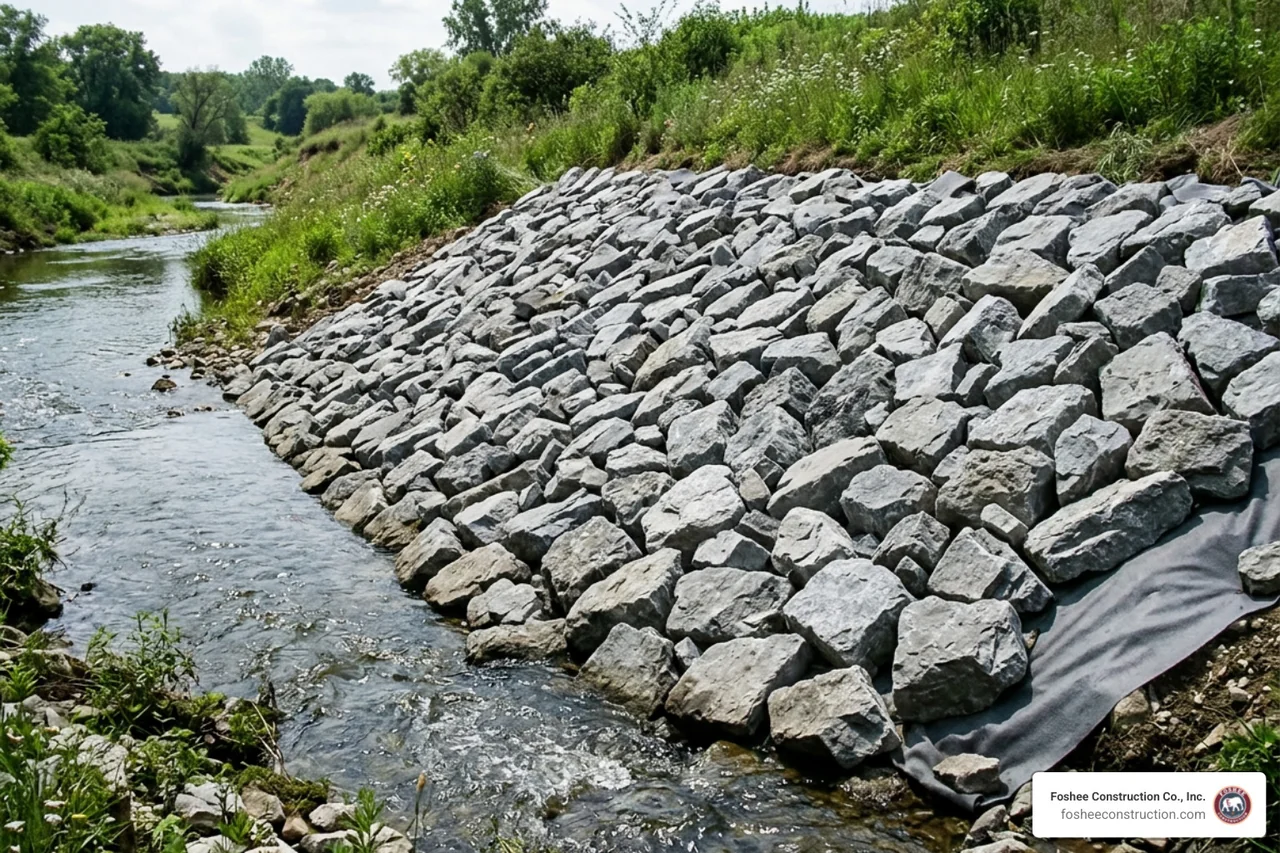
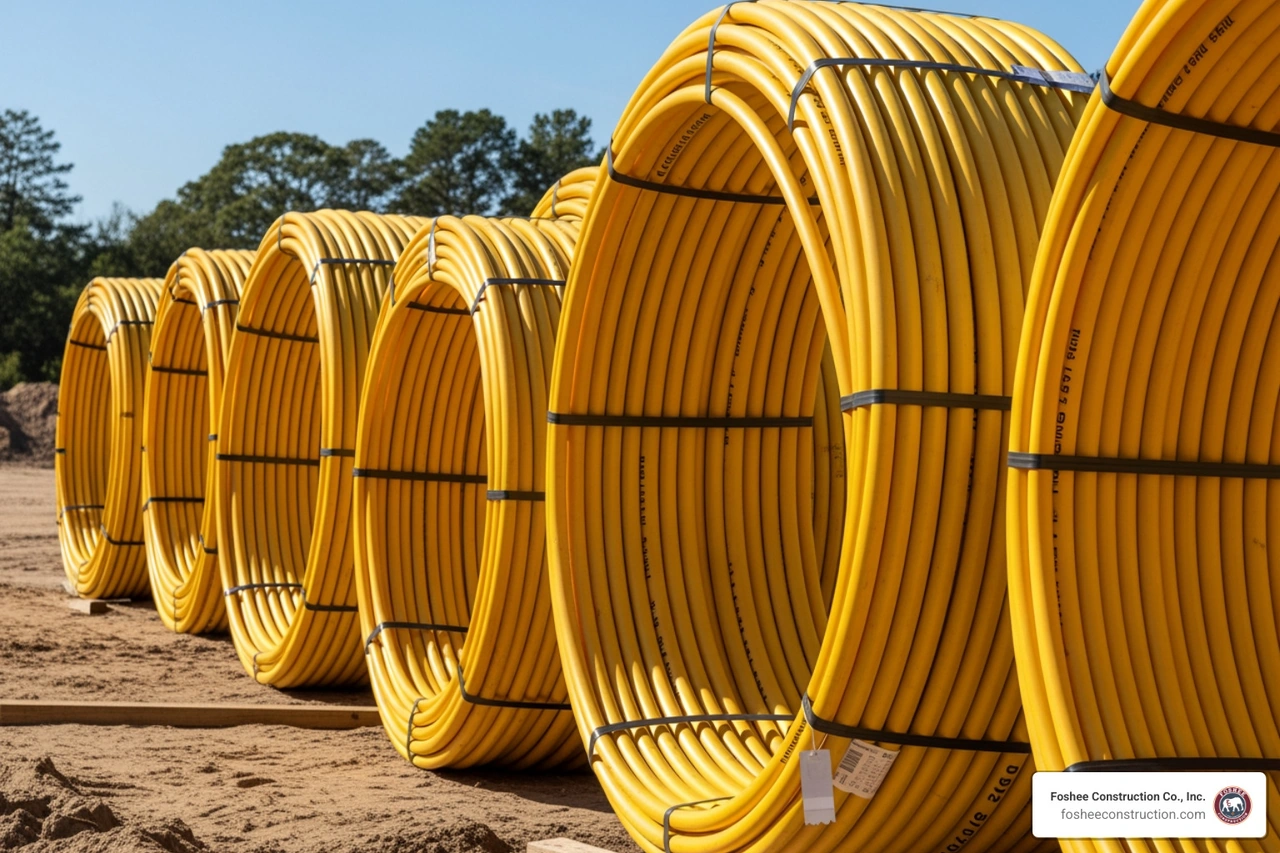
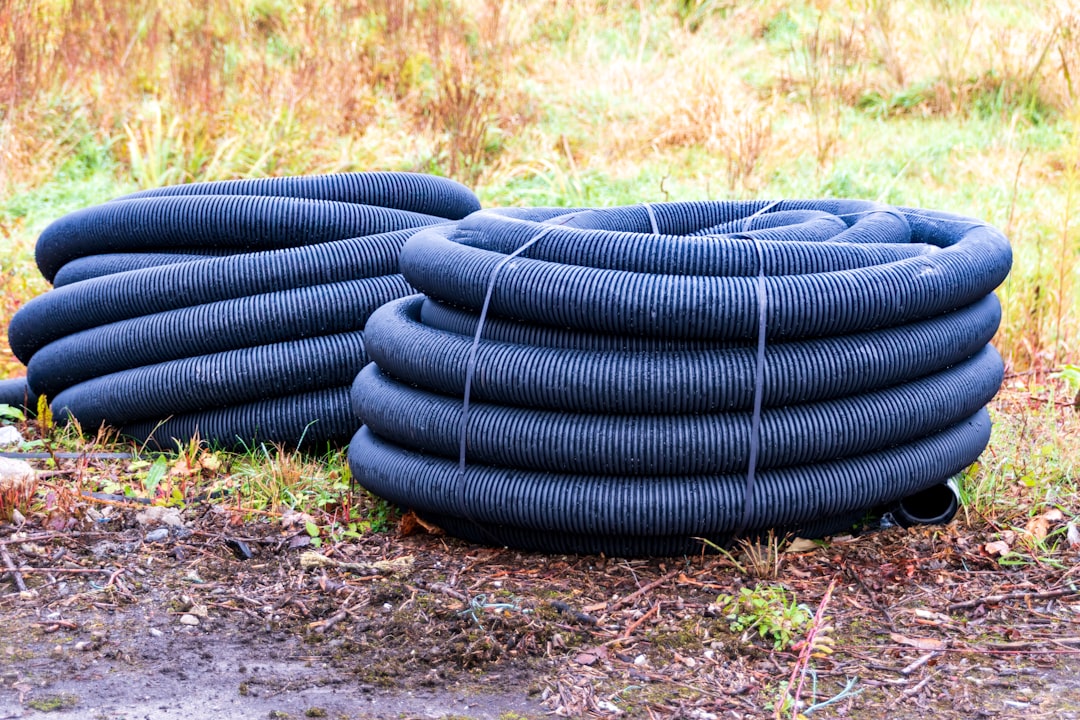
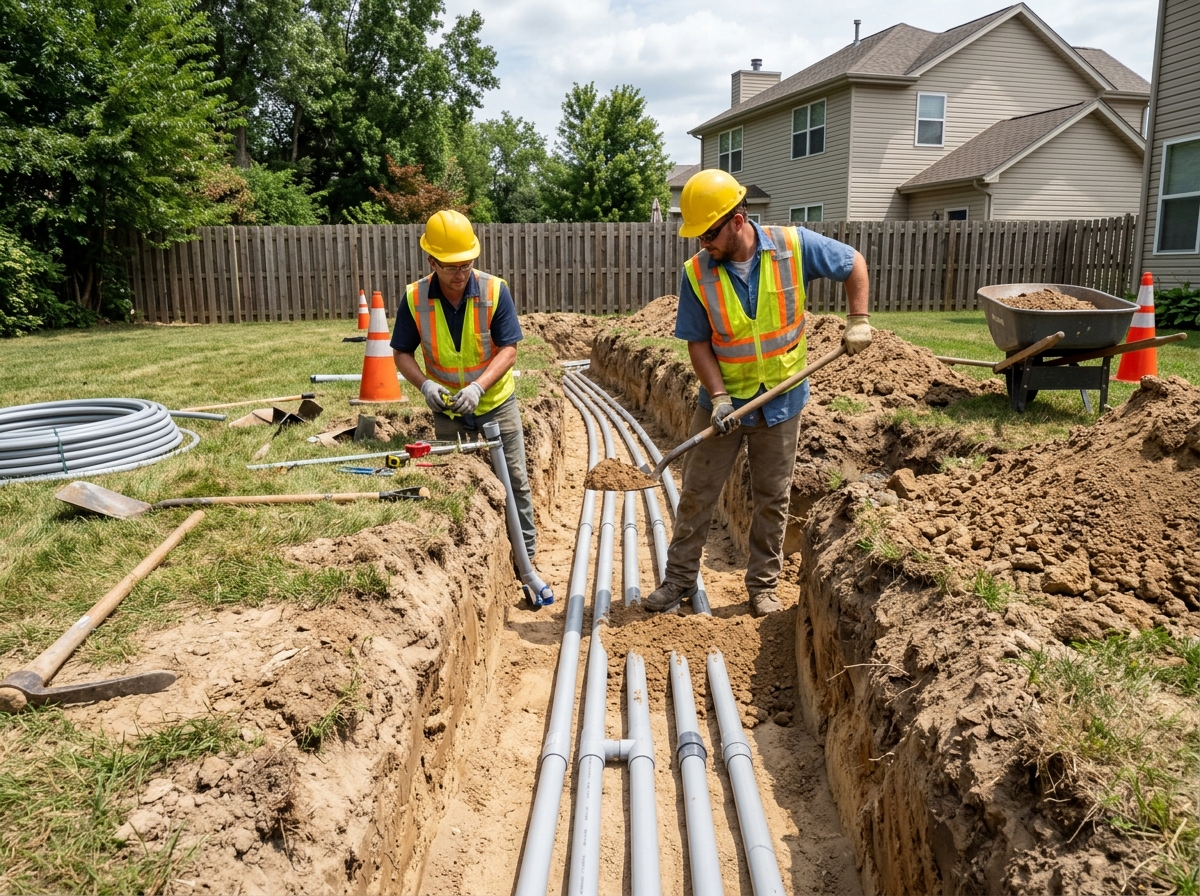
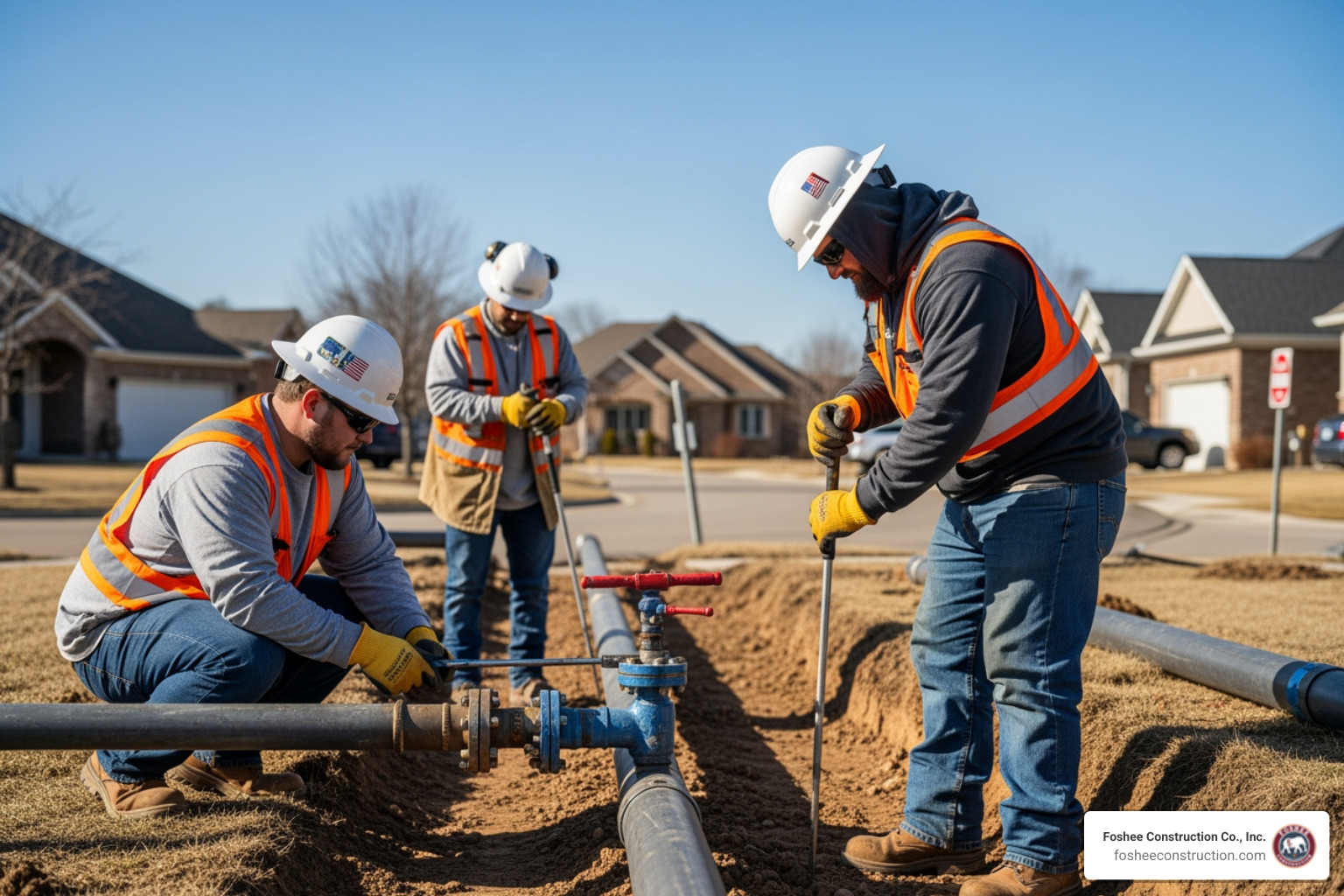
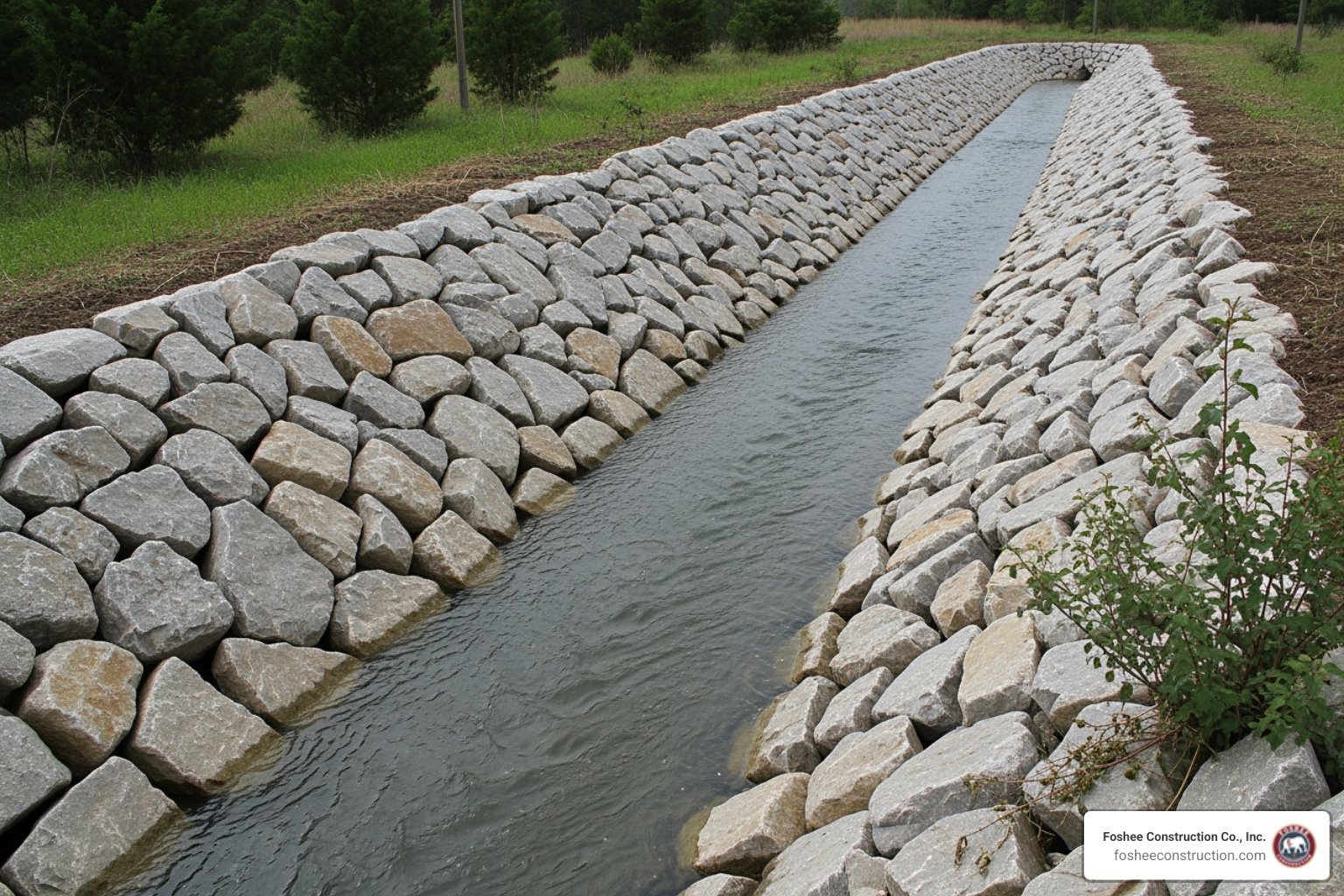
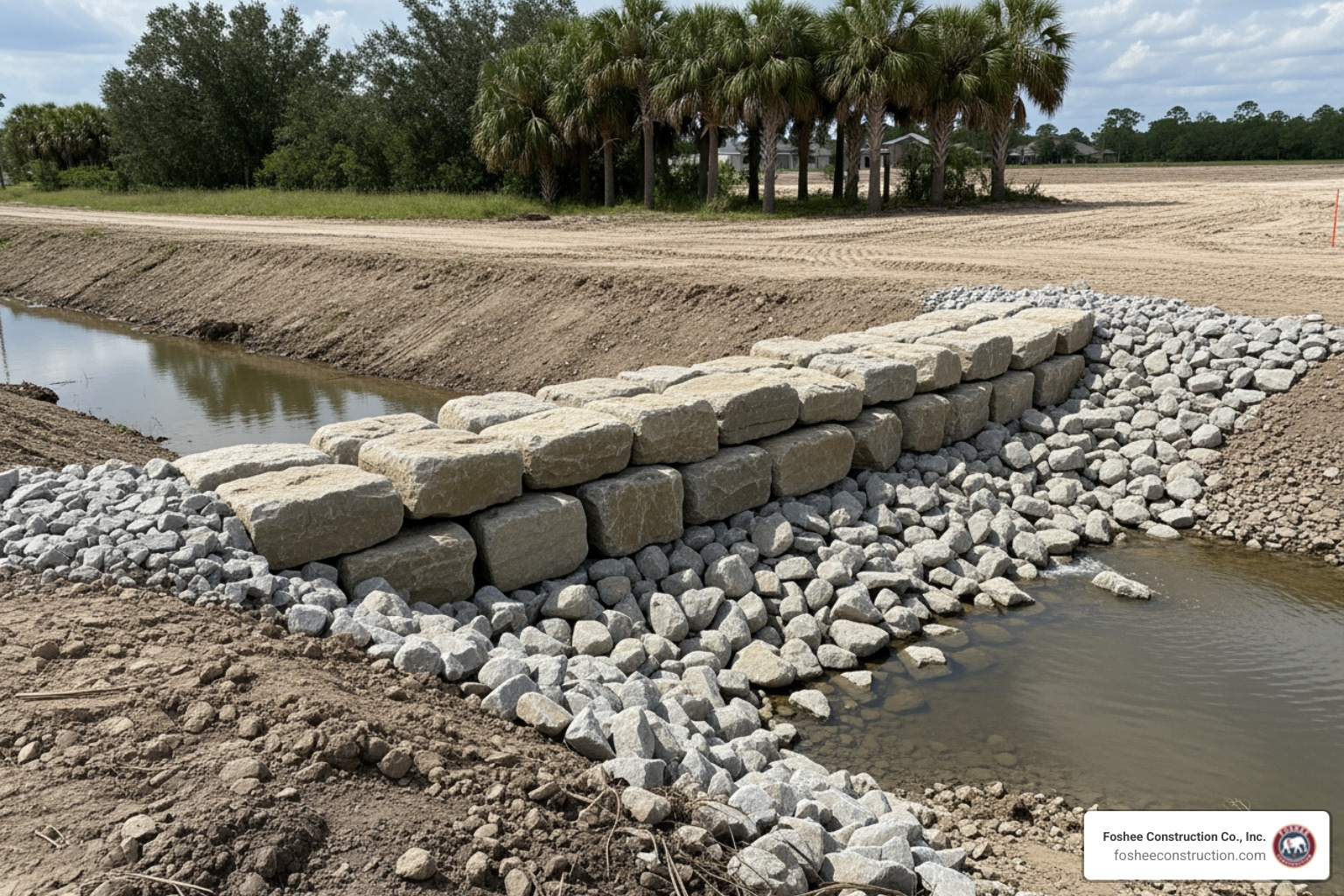
Once we identify a drainage problem, we don't just throw dirt at it. We design a system. Depending on the soil type in Minneola-which can range from sandy to heavy clay-we select the drainage solution that offers the best long-term performance.
Comparing Drainage Solutions

When you hire a team like Foshee Construction, you aren't just getting someone with a tractor. You are getting a disciplined engineering process:
We believe in transparent bids. When property owners ask why one quote is different from another, it usually comes down to the complexity of the site and the materials required.
Several factors influence the final price of a grading project:
For those in our local area, understanding regional expectations for grading and excavation can provide more context.
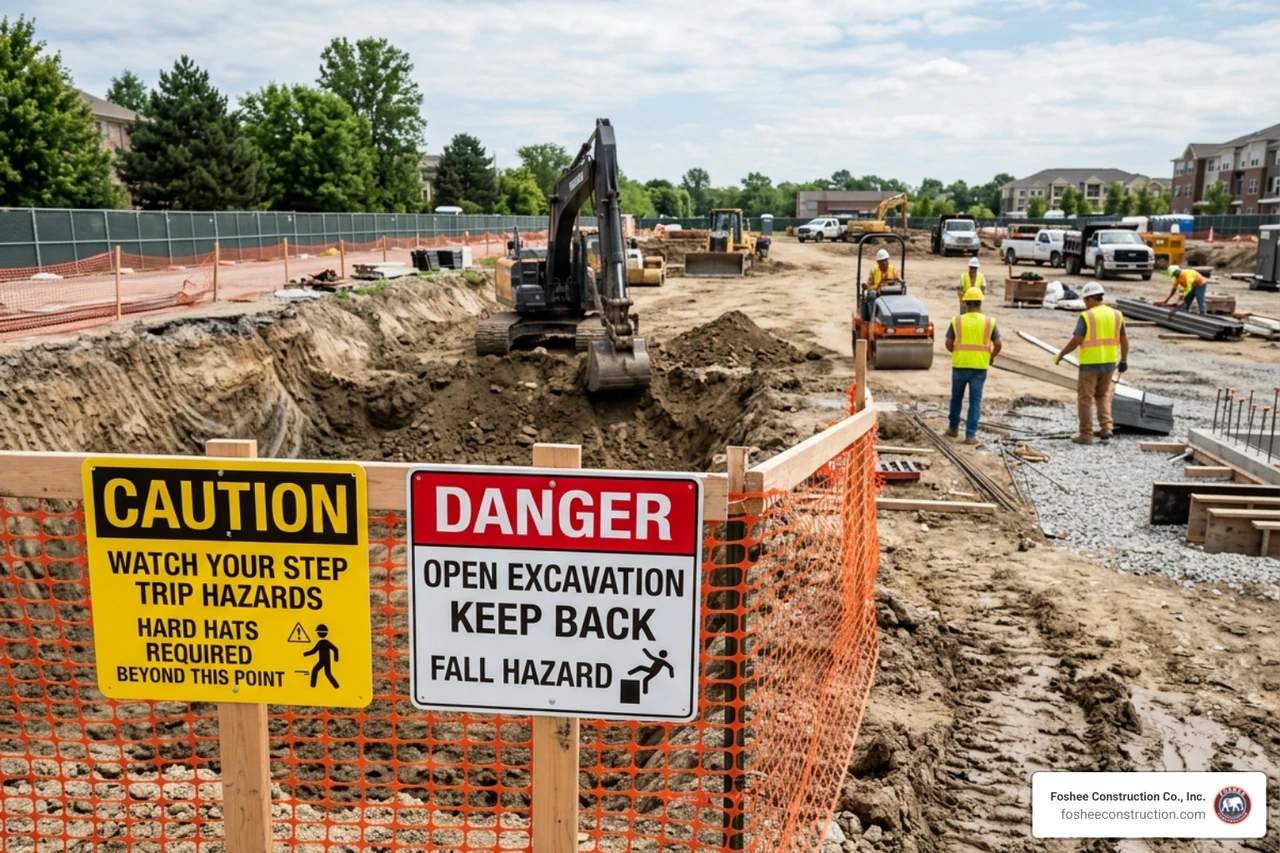
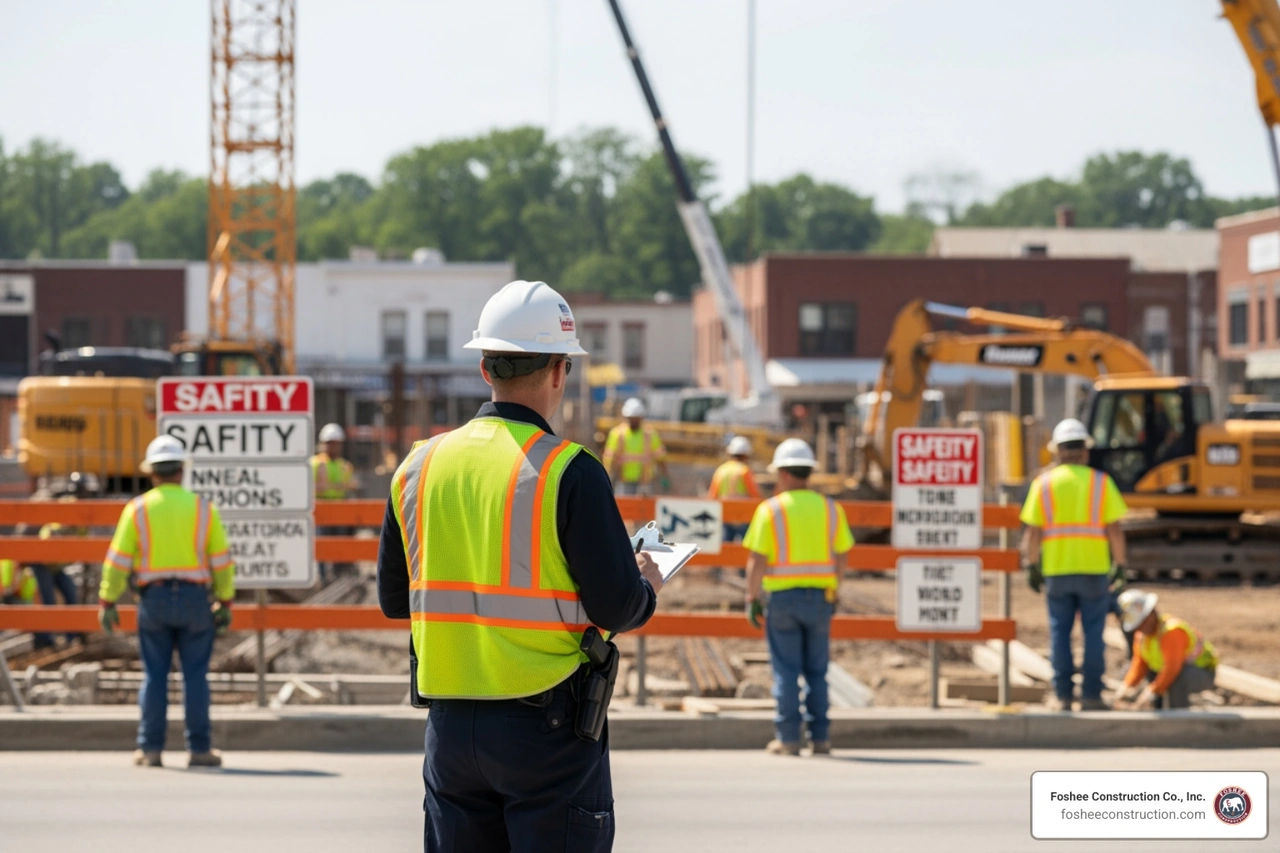
In Minneola and Lake County, you can't just move dirt wherever you want. There are strict local building codes and environmental standards to follow. If you redirect water onto your neighbor's property, you could face significant legal and financial liabilities.
A professional grading and drainage contractor ensures that your project is compliant with:
Rough grading is the "heavy lifting" phase where we establish the basic shape and slope of the land. It focuses on the sub-grade. Finish grading is the final smoothing process that prepares the soil for its final surface, like sod, seed, or pavement. Both are essential for safe, level, and well-drained yards.
We recommend a visual inspection after every major storm and a professional check-up once a year. You should clear debris from catch basin grates and ensure that swales haven't been blocked by overgrown landscaping or new garden beds.
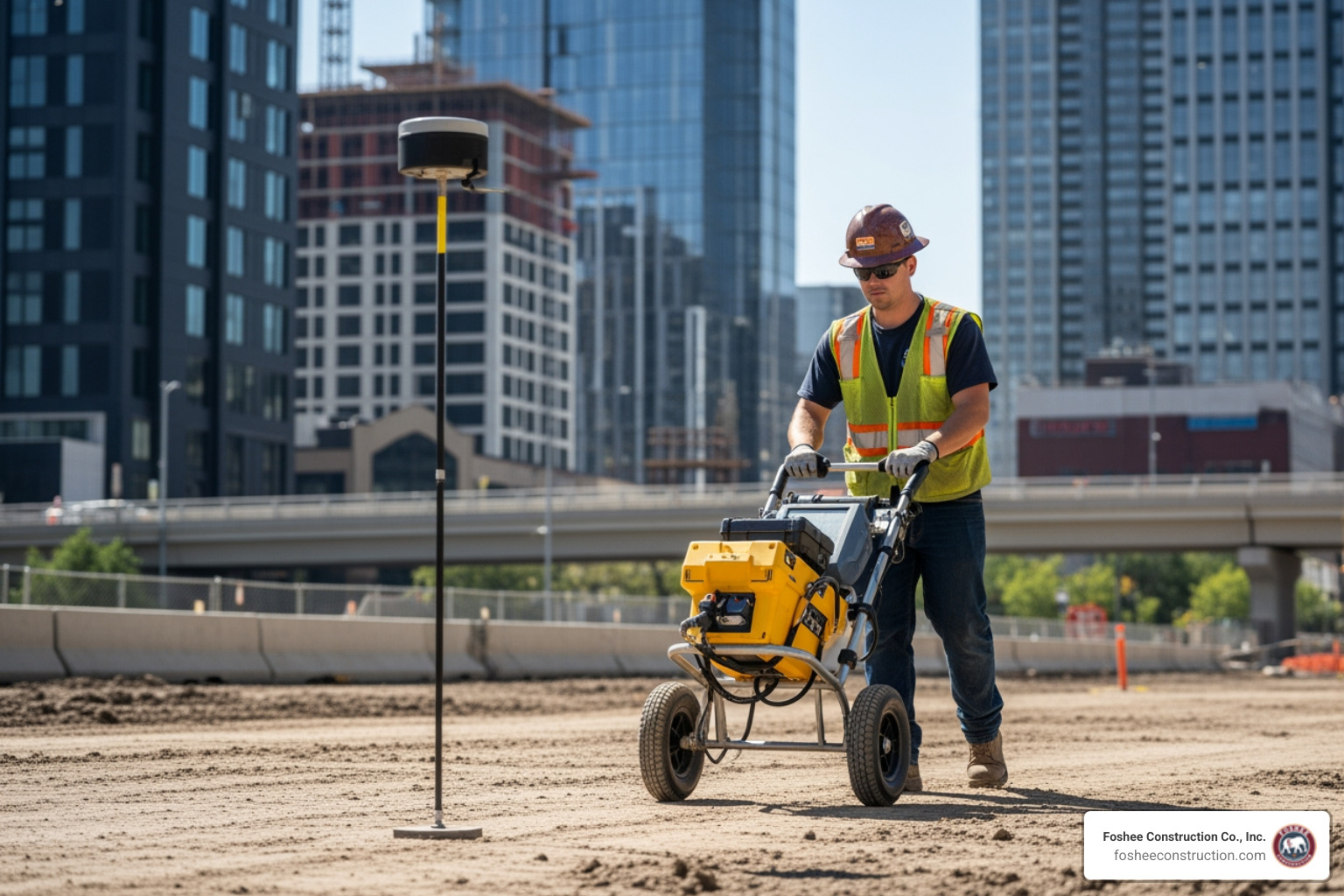
While a homeowner can certainly spread a few bags of topsoil, negative grading is often a systemic issue. Without a laser transit and an understanding of soil compaction, DIY fixes often just move the problem from one side of the house to the other. To ensure the long-term safety of your foundation, it is always best to consult a professional excavation and grading service.
Proper grading and drainage are the silent guardians of your property. They aren't as flashy as a new kitchen or a resort-style pool, but they are far more important. Without them, your investment is literally on shaky ground.
At Foshee Construction Co., Inc., we pride ourselves on being more than just a grading and drainage contractor. We are partners in your project's success. Based in Minneola, Florida, we bring decades of experience in site preparation, underground utilities, and erosion control to every job. Our commitment to transparent bids and disciplined scheduling means you’ll never be left wondering about the status of your site.
Ready to protect your foundation and reclaim your yard from standing water?
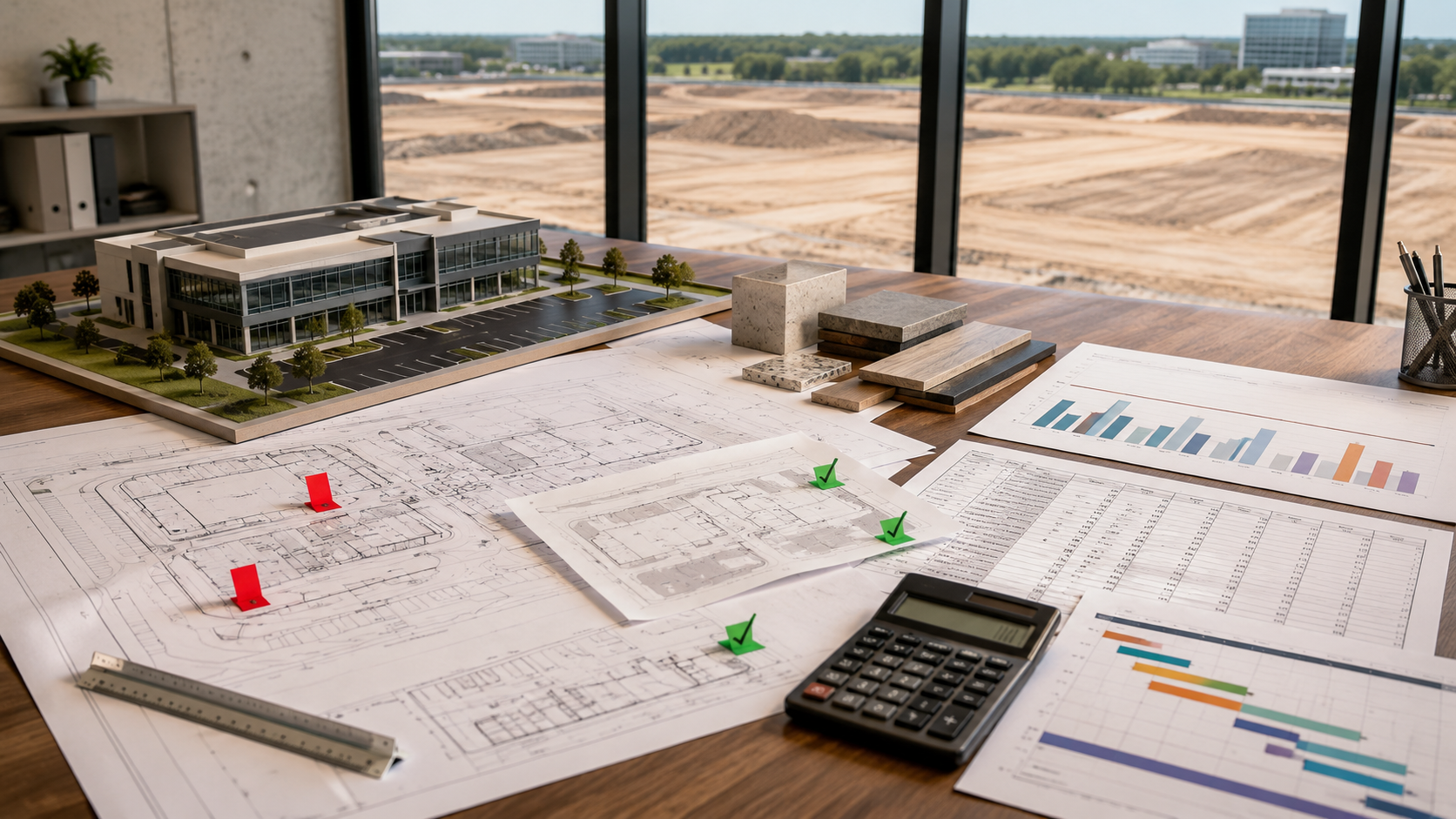
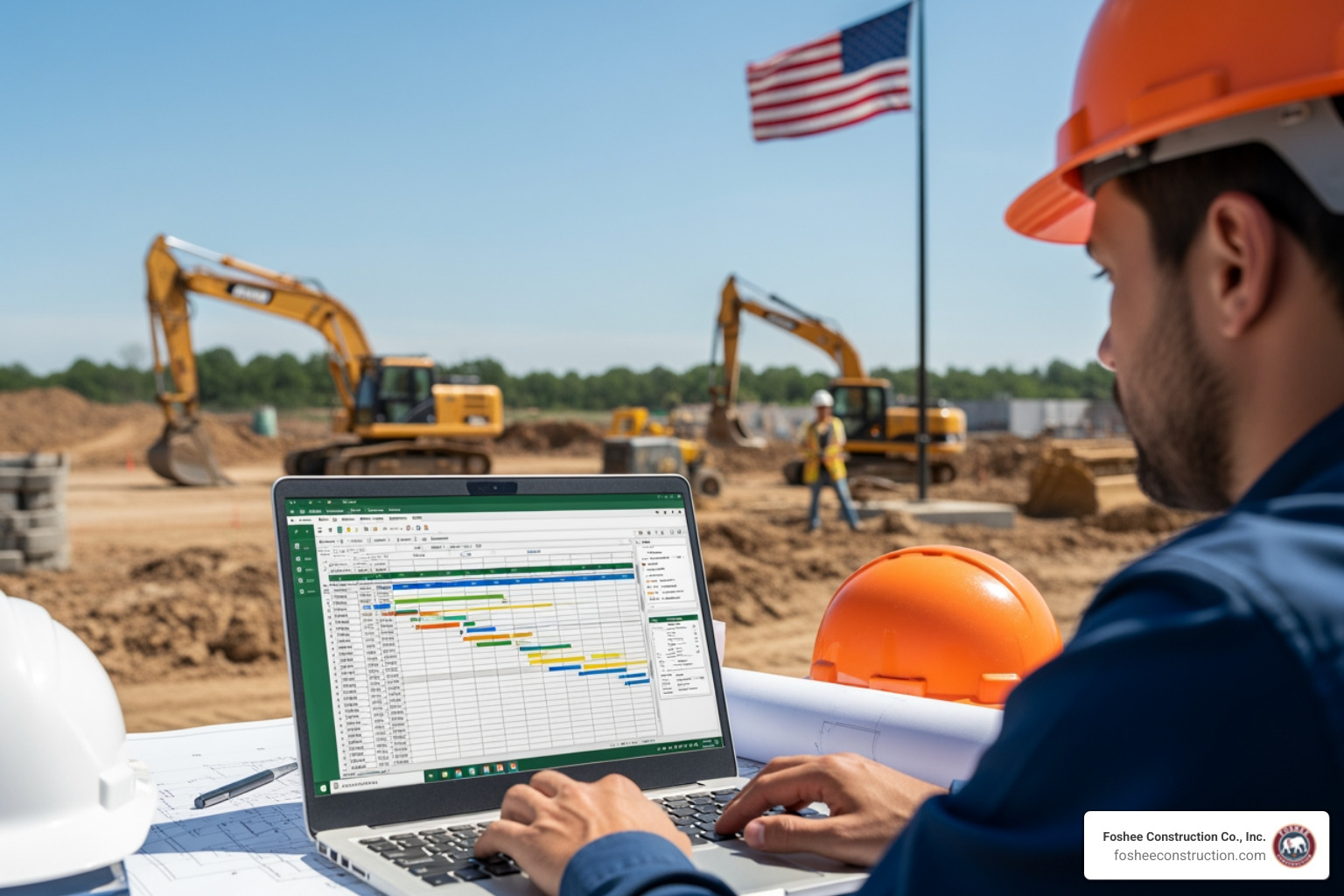
We build bids using HeavyBid and AGTEK because the details matter long before the job starts. When the numbers are accurate and the scope is clearly defined, it sets the tone for how the entire project runs. Estimating isn’t just a step in the process, it’s the foundation we build on.
That same mindset carries into the field. Our crew is trained to work with purpose, follow the Civil Engineers’ Plan to the finest detail, and hold the line on quality. When expectations are clear from day one, there’s no need for shortcuts, and no confusion about how the work gets done.
Clients trust our bid packages because they’re complete and ready to use. Project managers know what we’re covering, what’s excluded, and how we plan to approach the job. That clarity removes friction and lets teams focus on execution instead of interpretation.
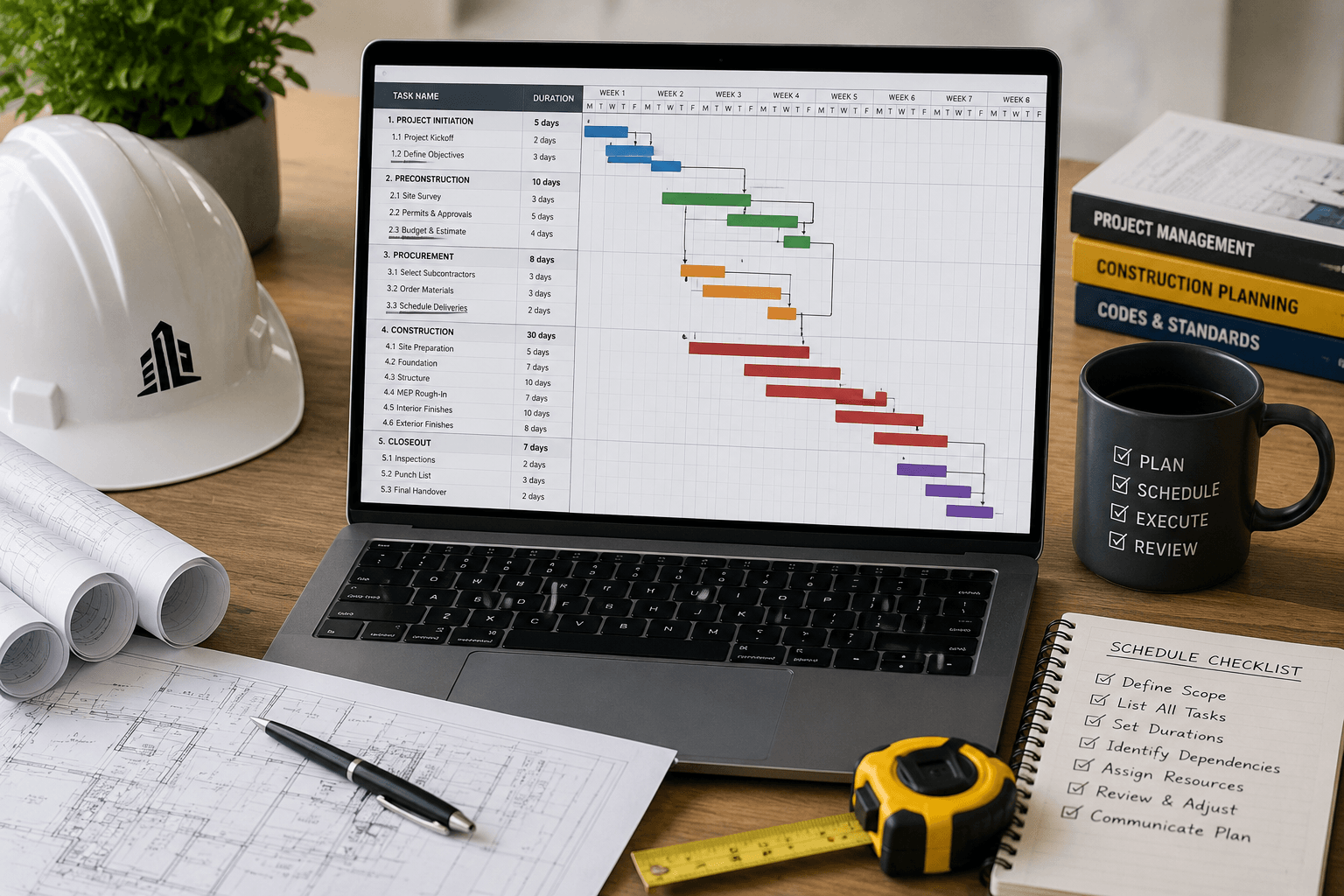
As part of our review process, we go into the plans before anything hits the site. We ask the questions early, resolve issues before they show up in the field, and keep RFIs moving. This approach prevents delays and protects the timeline.
Over time, that consistency builds trust. Many of the people we work with today came through referrals from past projects – engineers, GCs, and superintendents who’ve seen how we operate and want the same experience again.
In 2024, Foshee Construction was acquired by Saga Infrastructure Solutions, a national network of civil construction companies. Saga supports regional contractors by giving them access to better tools, long-term resources, and operational backing, without changing how they run day to day.
Foshee will continue to operate under its name, with the same team and field leadership in place.
“From the very time a project starts, we start that partnership. We try to catch as much as we can with the tools that we have. Not everybody is using the software platforms we are. That’s the differentiator: we’re not just bidding. We’re anticipating, problem-solving, and making sure the job runs right.”
— Don, CEO, Saga Infrastructure Solutions
Foshee is now part of a broader regional strategy that includes Florida, the Piedmont Atlantic, Texas, Colorado, and the Arizona Sun Corridor. The name, crews, and standards remain. What’s improving is the support behind it.