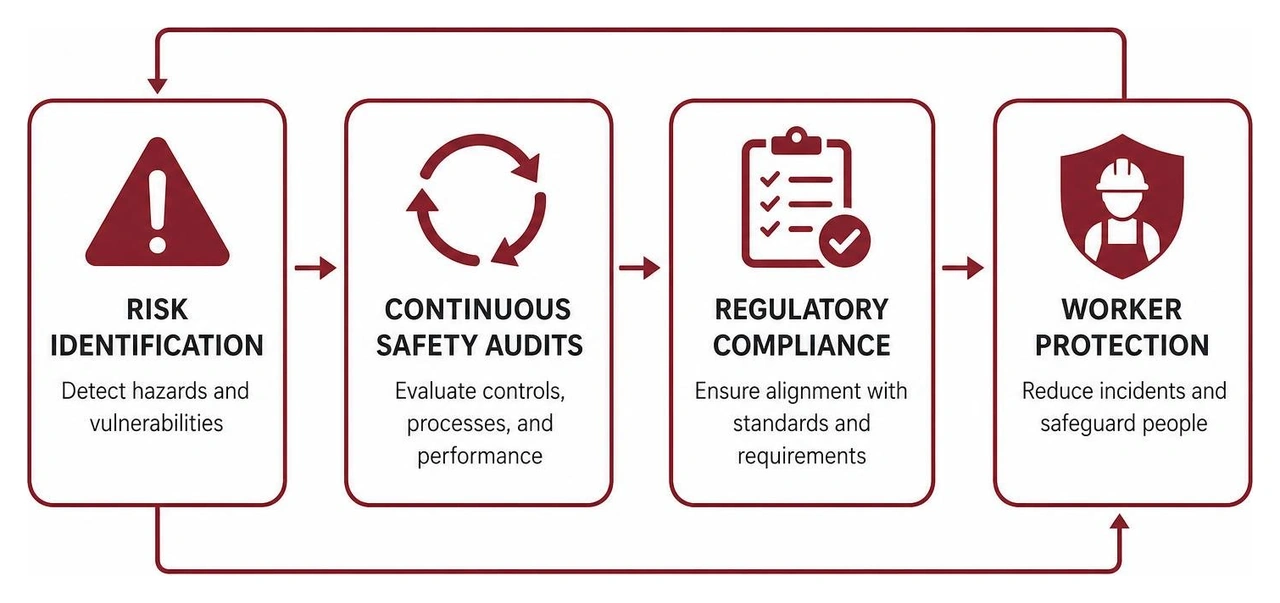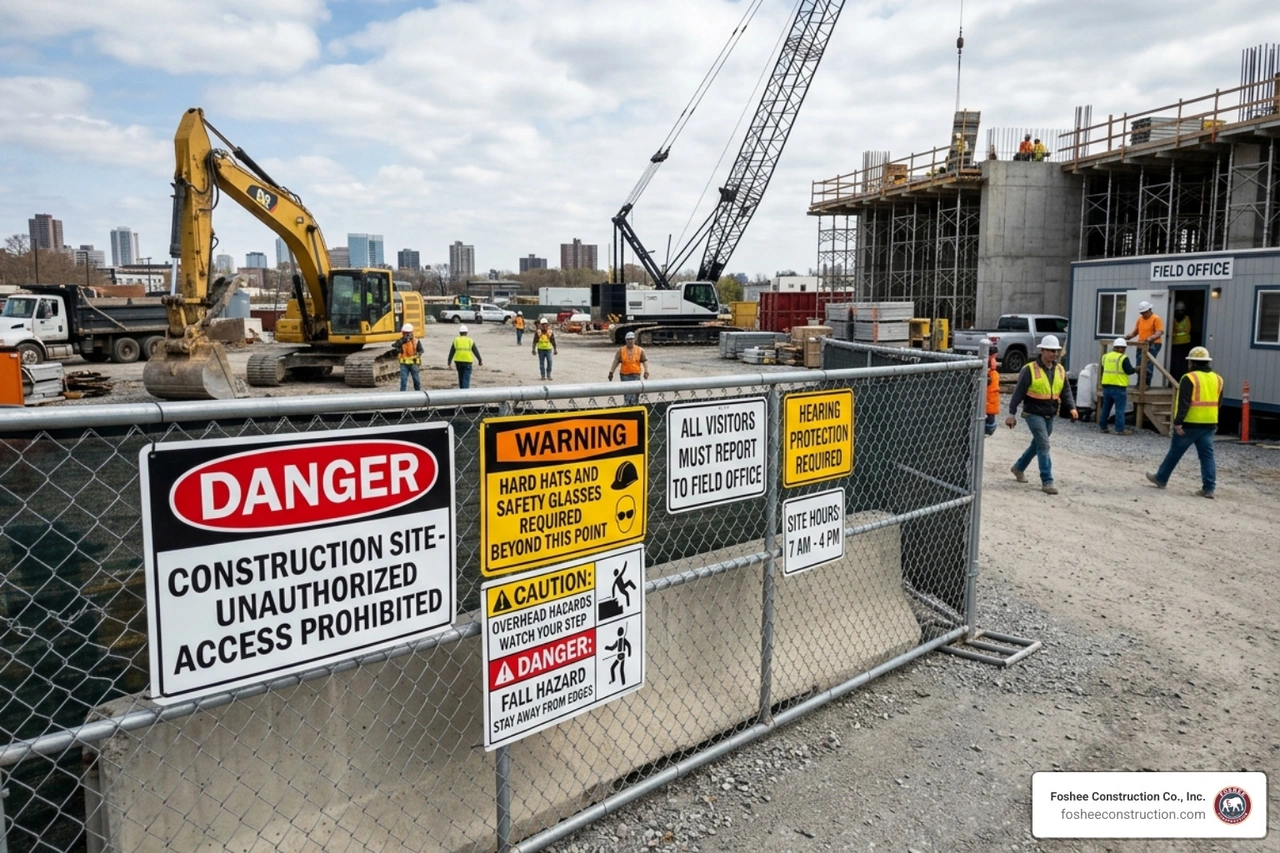

OSHA fall protection construction rules exist for one simple reason: falls kill more construction workers than anything else.
Here's a quick snapshot of what OSHA requires:
Approved fall protection systems include:
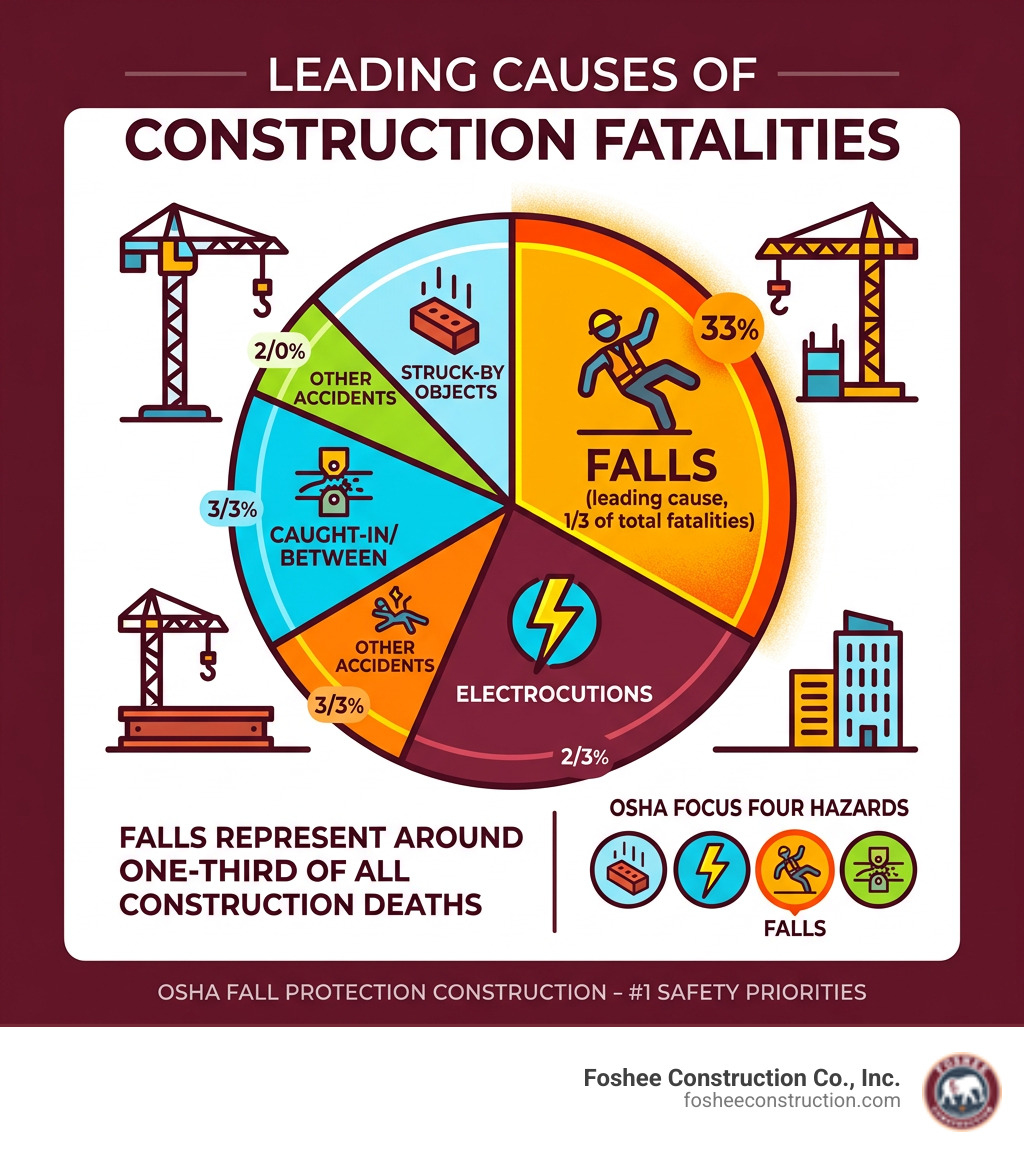
Falls account for roughly one-third of all construction fatalities — far higher than the 15% share they represent across all industries combined. In 2013 alone, 291 construction workers died from falls to a lower level, out of 828 total construction deaths that year.
OSHA treats fall protection as a Focus Four hazard — meaning inspectors pay close attention to it on every site visit. It's also one of the most frequently cited violation categories, with two fall-related standards consistently appearing in OSHA's top 10 violations list.
For Florida general contractors and developers, this isn't just a compliance checkbox. An unprotected edge or missing harness can mean a fatality, a project shutdown, and serious financial liability.
This guide breaks down every key OSHA fall protection requirement so you know exactly what's needed — and what equipment to have on site.
When we talk about osha fall protection construction standards, we are primarily looking at 29 CFR 1926 Subpart M. This is the "rulebook" that dictates how we keep workers safe when they are elevated.
The most important number to remember in our industry is 6 feet. Under 1926.501(b), OSHA requires fall protection for any employee on a walking-working surface that has an unprotected side or edge 6 feet or more above a lower level.
However, it isn't just about the height. Before any work begins, OSHA requires us to determine if the walking-working surfaces have the "strength and structural integrity" to support workers safely. If the roof or floor can't hold the weight, nobody should be on it—period.
Subpart M covers a wide range of scenarios, but there are a few specific triggers you should know:
While 6 feet is the standard for most of our site prep and general building work, some specialized activities have different thresholds:
For more detailed concepts, we often refer to resources like Fall Protection for Construction Activities, which explains these general concepts in a way that’s easy for the whole crew to digest.
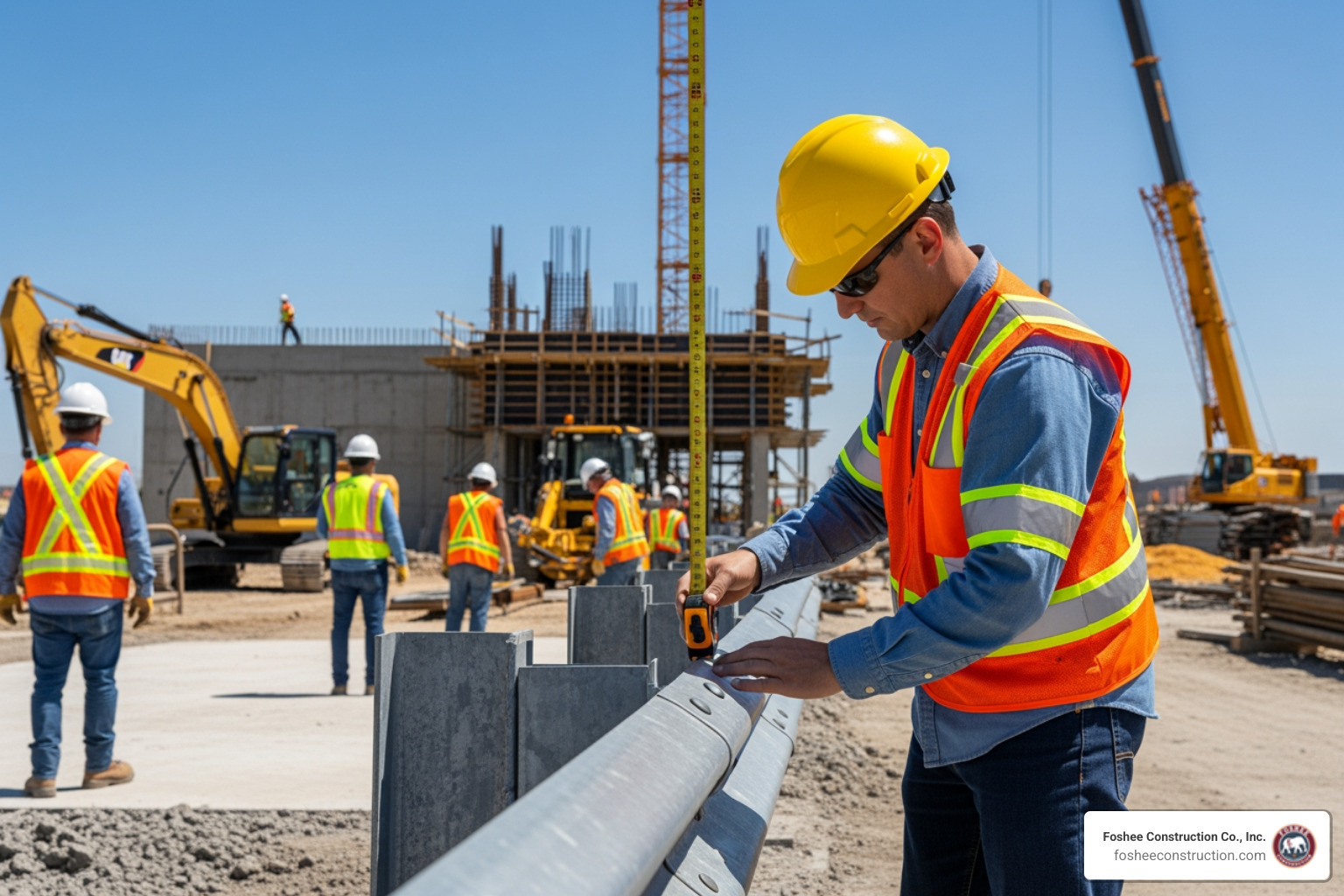
OSHA presumes that "conventional" fall protection is always feasible. If you choose not to use one of these three systems, the burden of proof is on you to explain why they would create a greater hazard.
SystemBest Used ForKey RequirementGuardrailsPerimeter protection, permanent edgesMust withstand 200 lbs of forceSafety NetsBridges, large open interior spansMust be drop-tested with 400 lbsPFASRoofing, leading edges, high-mobility tasksMax free fall of 6 feet
Guardrails are the gold standard because they are "passive"—once they are up, the worker doesn't have to do anything to stay safe. According to 1926.502 of Subpart M, a compliant guardrail system must include:
For more on railing specs, you can check the Fall Protection Publications landing page, which offers a wealth of technical diagrams.
We don't see safety nets on every job, but for bridge work or high-rise skeletons, they are lifesavers. They must be installed as close as possible under the walking surface—never more than 30 feet below.
A PFAS is what most people think of when they hear "safety gear." It consists of an anchorage, connectors, and a full-body harness.
Roofing is where things get complicated. The requirements shift depending on the slope of the roof and the type of work being done.
A warning line is a rope, wire, or chain used to alert workers that they are approaching an unprotected edge.
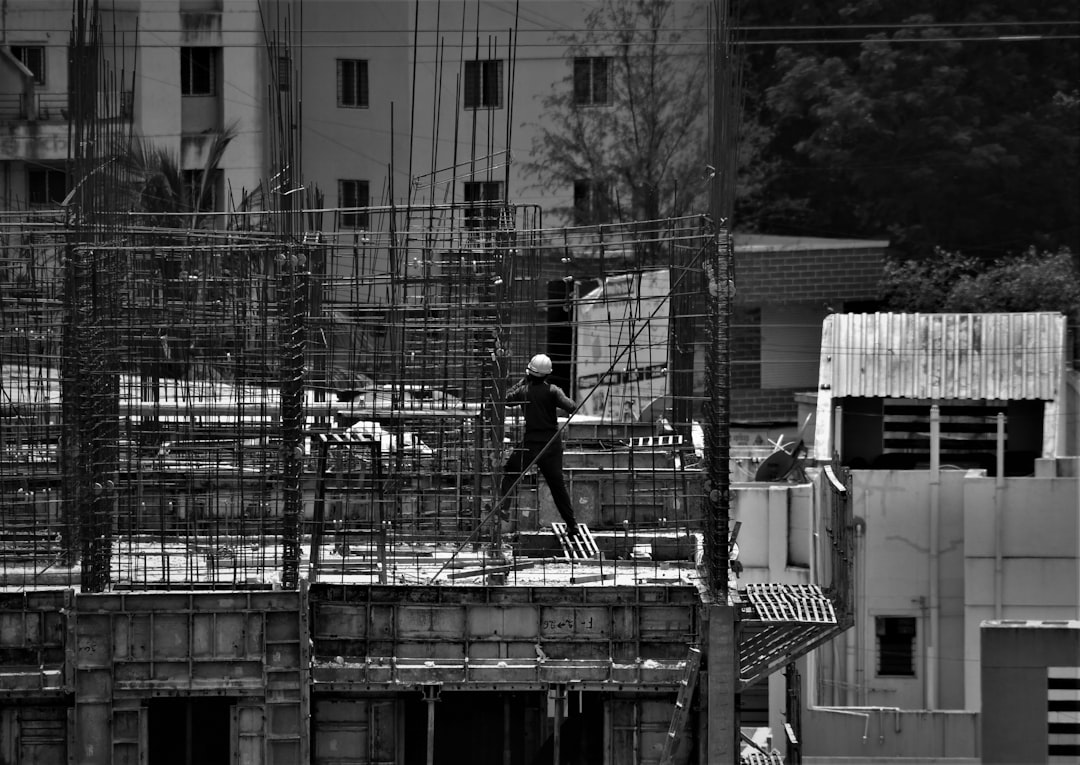
One of the most common "hidden" hazards on a site is a skylight. OSHA considers a skylight a "hole." We've seen tragic cases where a worker steps back onto a skylight, thinking it will hold their weight, only to fall through.
For more on this, the CDC offers a great resource on Preventing Worker Deaths from Falls Through Skylights.
In very rare cases—like precast concrete erection or residential roofing—where conventional systems are "infeasible" or create a "greater hazard," you can implement a site-specific Fall Protection Plan. This plan must be written by a "qualified person" and specifically document why normal systems won't work. It’s not a "get out of jail free" card; you still have to use Controlled Access Zones (CAZ) and safety monitors to keep people safe.
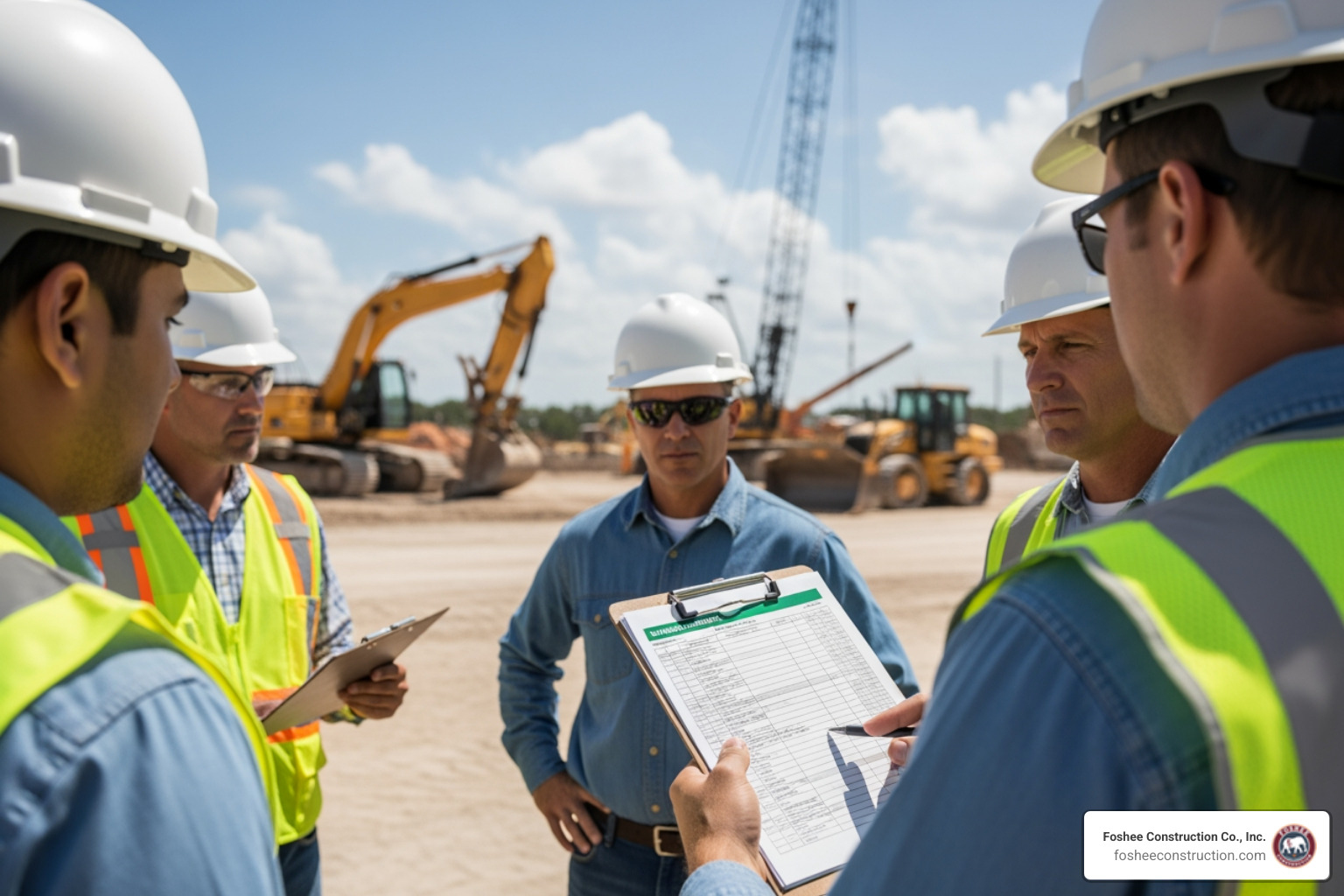
You can have the most expensive harnesses in the world, but they won't do a lick of good if your crew doesn't know how to use them. OSHA 1926.503 is very clear: employers must provide a training program for every employee who might be exposed to fall hazards.
Training must be conducted by a Competent Person. In OSHA-speak, this is someone who can identify existing and predictable hazards and has the authority to stop work to fix them. At Foshee Construction, we believe the competent person is the backbone of site safety. They aren't just there to check boxes; they are there to save lives.
You must keep a written certification record of the training. If you notice a worker isn't using their gear correctly, or if the workplace changes (new equipment, new hazards), you must retrain them immediately.
Fall protection isn't just about the person falling; it's about what they might drop on the people below. OSHA requires:
You can learn more about these initiatives through OSHA's Fall Prevention Campaign, which provides posters and factsheets for the job trailer.
The general rule for osha fall protection construction is 6 feet. However, remember the exceptions: 10 feet for scaffolding and 15 feet for steel erection. Also, if workers are over dangerous equipment (like a vat of acid or a conveyor belt), fall protection is required regardless of the distance.
As of 2018, OSHA phased out the requirement for "cages" on new ladders. For any fixed ladder over 24 feet, you must now provide a ladder safety system or a personal fall arrest system. Existing cages are being phased out entirely by 2036. The goal is to ensure that if a worker slips, they are caught by a cable or rail system rather than just bouncing down a cage.
Construction is much stricter because our environment changes every day.
At the end of the day, osha fall protection construction isn't about avoiding fines—though those can be massive. It’s about making sure every person who steps onto a Foshee Construction site goes home to their family in Lake County at the end of the shift.
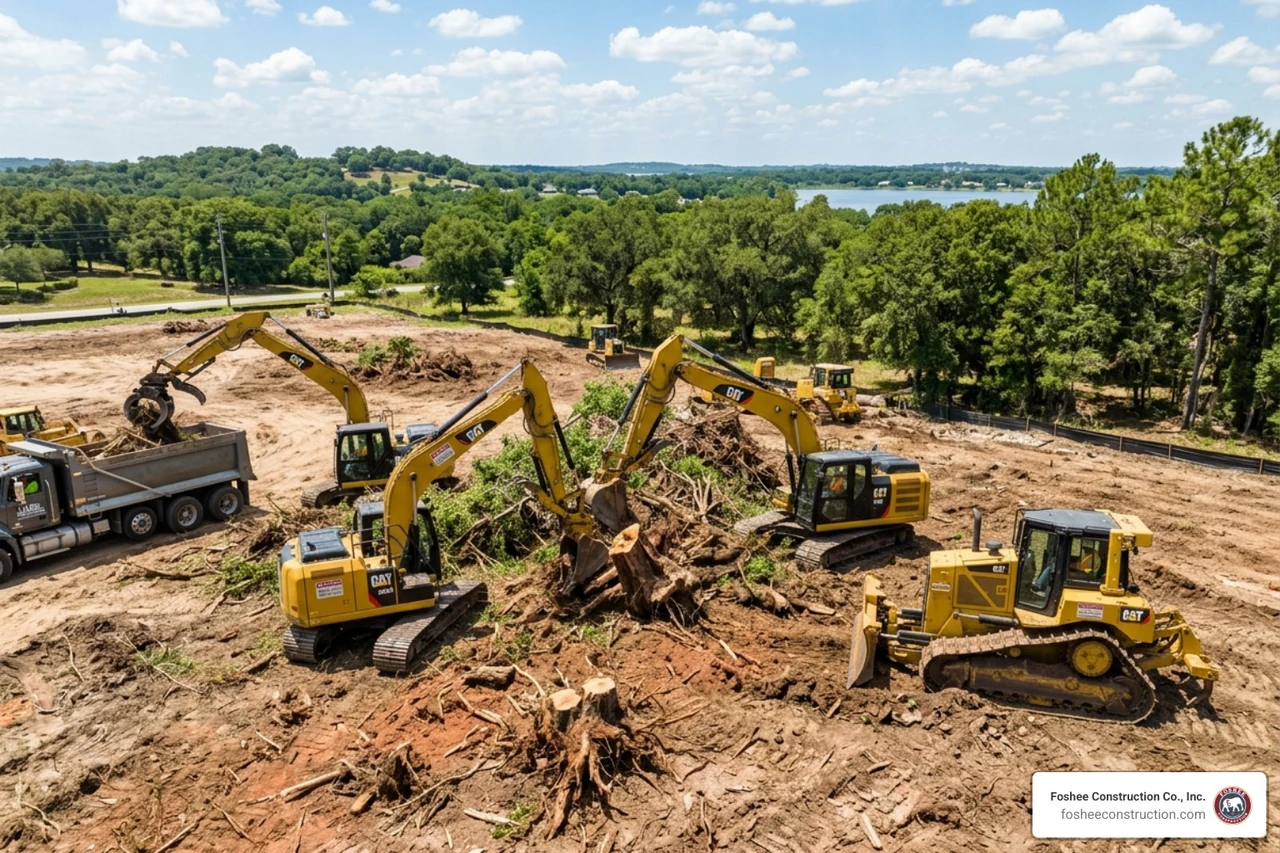
Whether we are handling site grading, underground utilities, or complete site prep in Minneola, safety is our "North Star." We pride ourselves on transparent bids and disciplined scheduling, but neither of those matters if the job isn't safe.
If you are looking for a reliable partner for your next Florida project—one that understands the complexities of OSHA compliance and the importance of reliable relationships—we are here to help.
We build bids using HeavyBid and AGTEK because the details matter long before the job starts. When the numbers are accurate and the scope is clearly defined, it sets the tone for how the entire project runs. Estimating isn’t just a step in the process, it’s the foundation we build on.
That same mindset carries into the field. Our crew is trained to work with purpose, follow the Civil Engineers’ Plan to the finest detail, and hold the line on quality. When expectations are clear from day one, there’s no need for shortcuts, and no confusion about how the work gets done.
Clients trust our bid packages because they’re complete and ready to use. Project managers know what we’re covering, what’s excluded, and how we plan to approach the job. That clarity removes friction and lets teams focus on execution instead of interpretation.
As part of our review process, we go into the plans before anything hits the site. We ask the questions early, resolve issues before they show up in the field, and keep RFIs moving. This approach prevents delays and protects the timeline.
Over time, that consistency builds trust. Many of the people we work with today came through referrals from past projects – engineers, GCs, and superintendents who’ve seen how we operate and want the same experience again.
In 2024, Foshee Construction was acquired by Saga Infrastructure Solutions, a national network of civil construction companies. Saga supports regional contractors by giving them access to better tools, long-term resources, and operational backing, without changing how they run day to day.
Foshee will continue to operate under its name, with the same team and field leadership in place.
“From the very time a project starts, we start that partnership. We try to catch as much as we can with the tools that we have. Not everybody is using the software platforms we are. That’s the differentiator: we’re not just bidding. We’re anticipating, problem-solving, and making sure the job runs right.”
— Don, CEO, Saga Infrastructure Solutions
Foshee is now part of a broader regional strategy that includes Florida, the Piedmont Atlantic, Texas, Colorado, and the Arizona Sun Corridor. The name, crews, and standards remain. What’s improving is the support behind it.