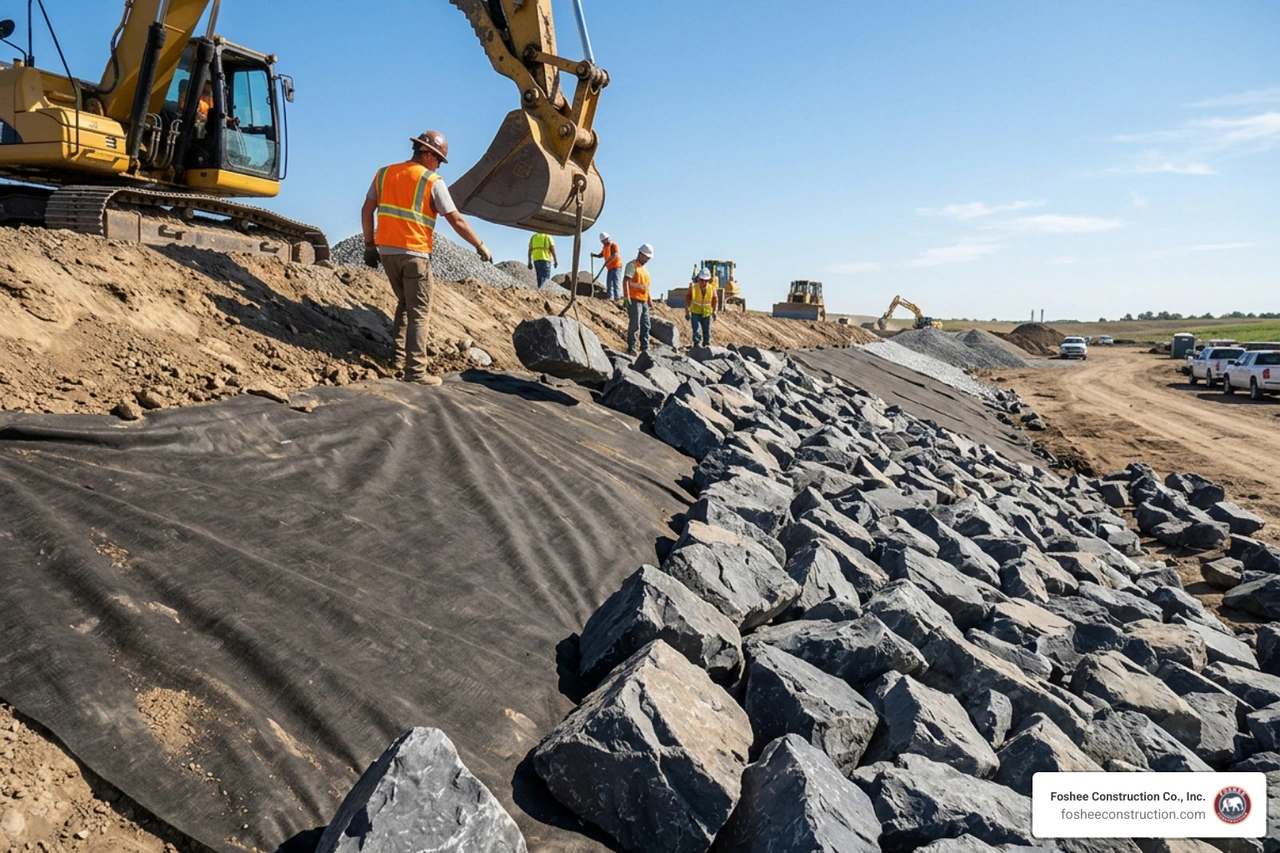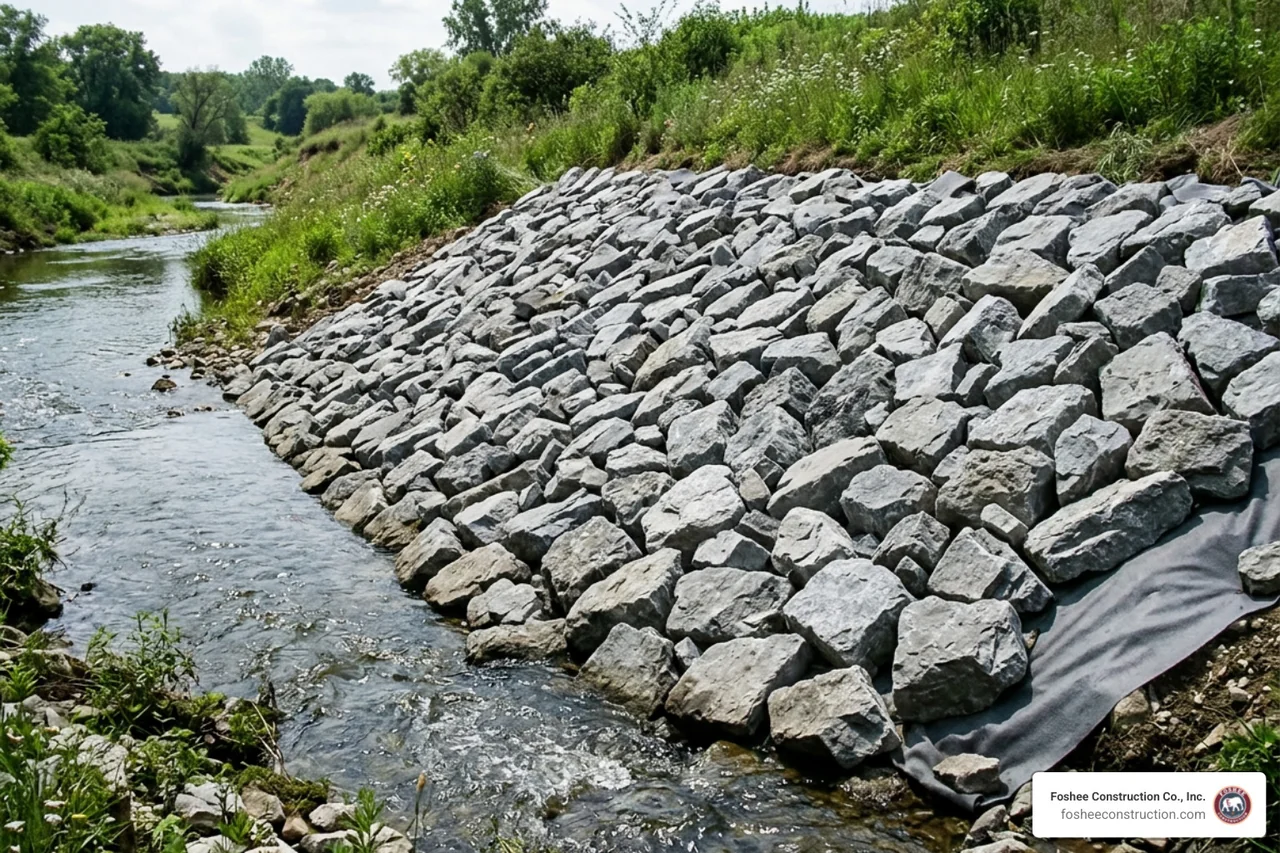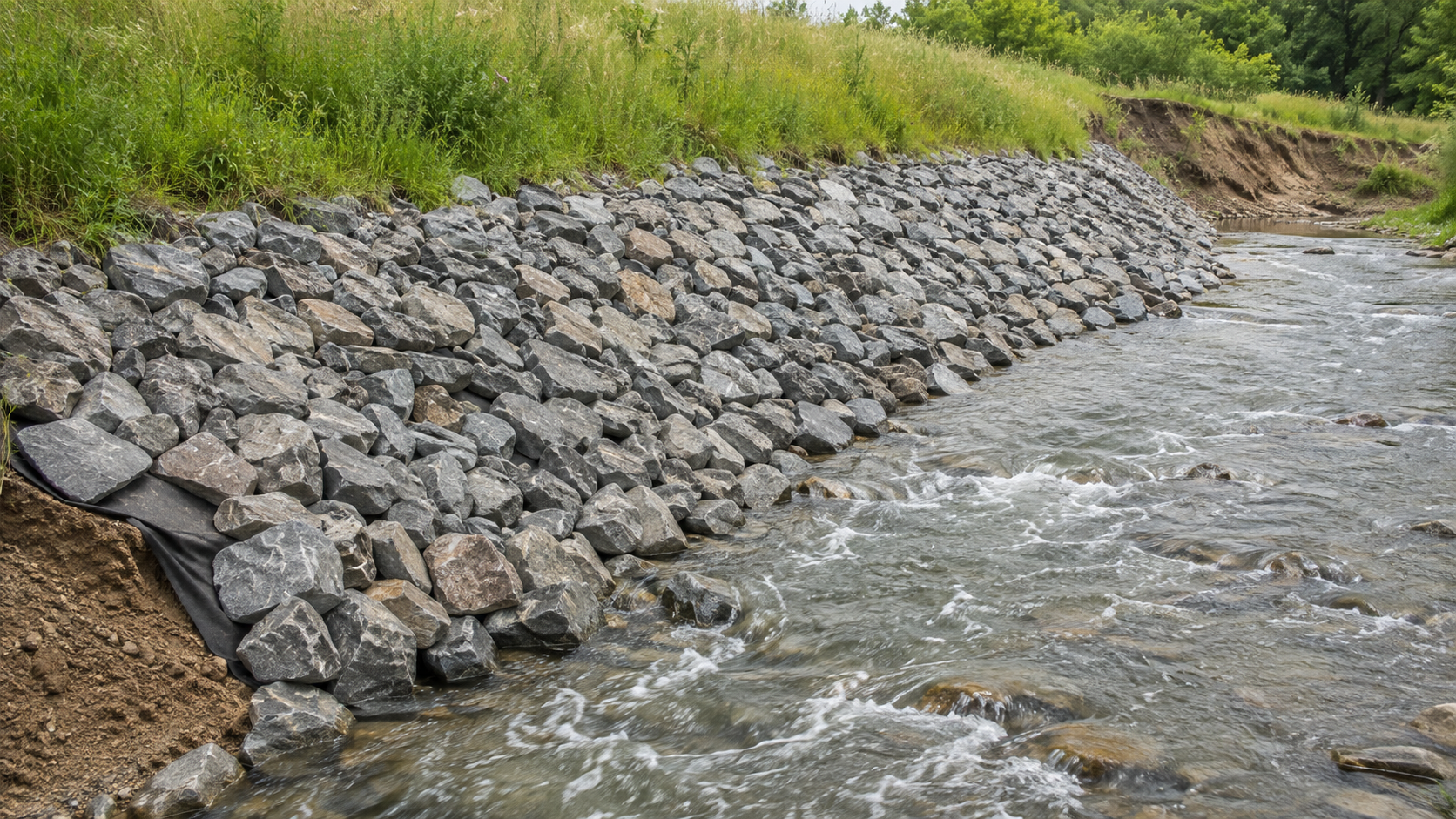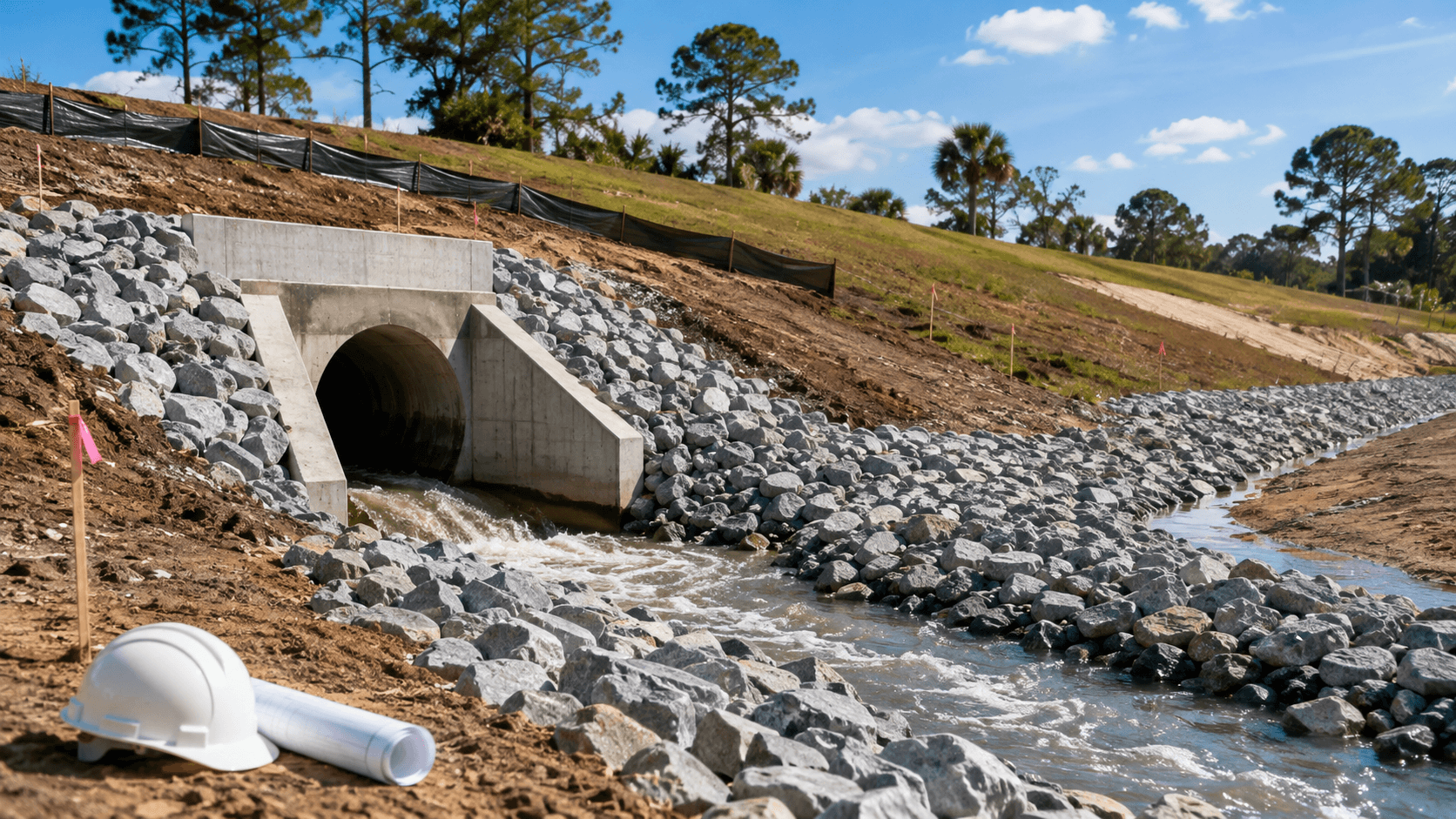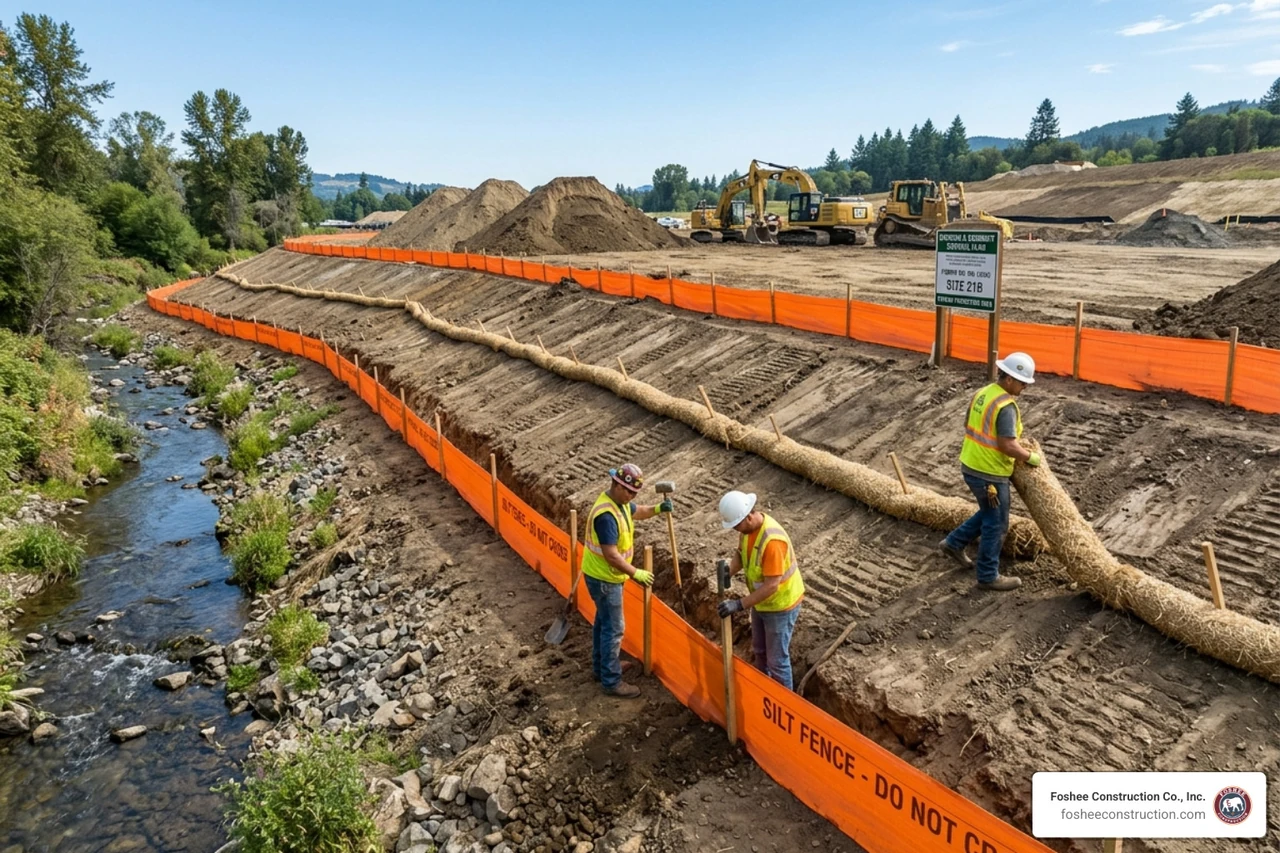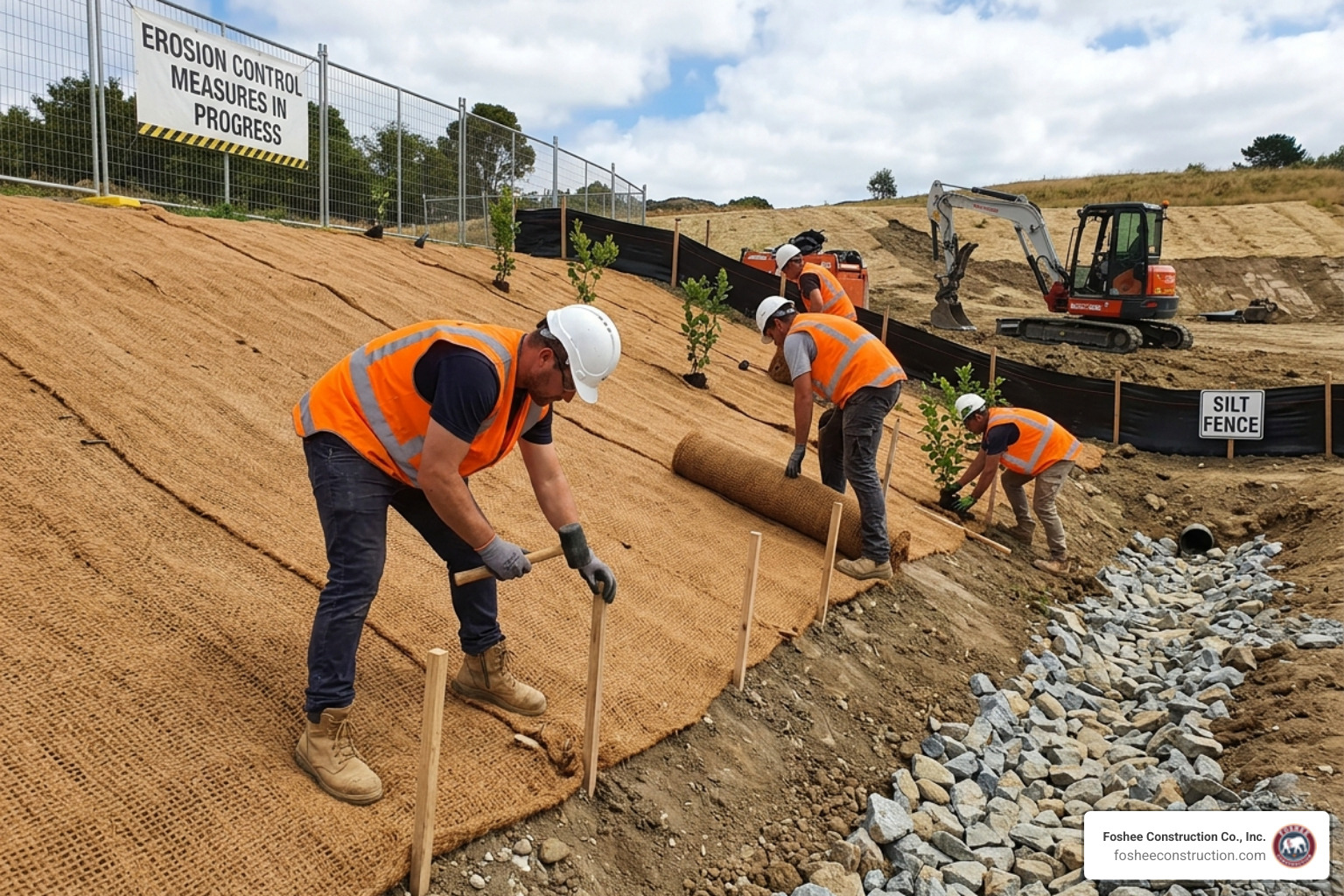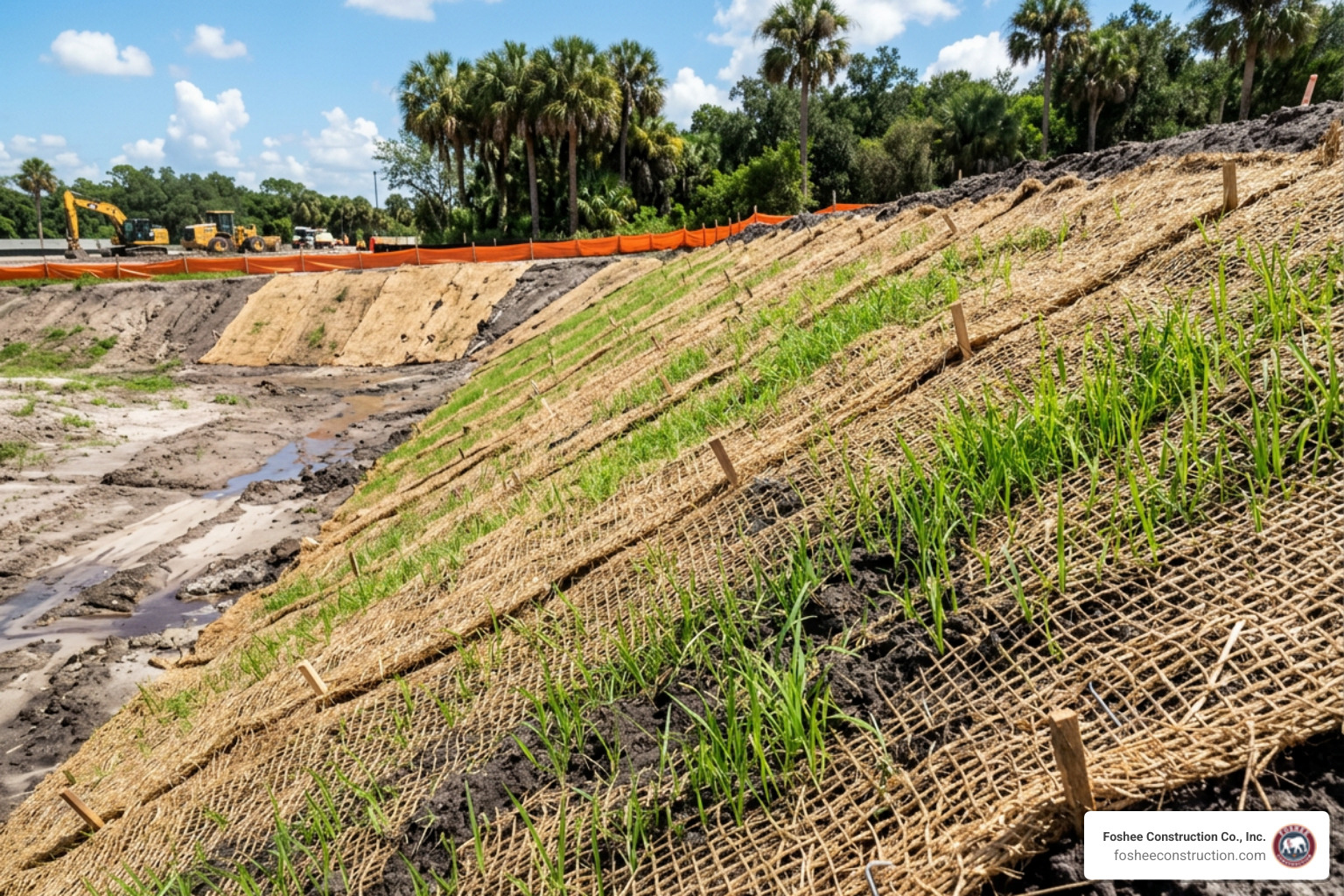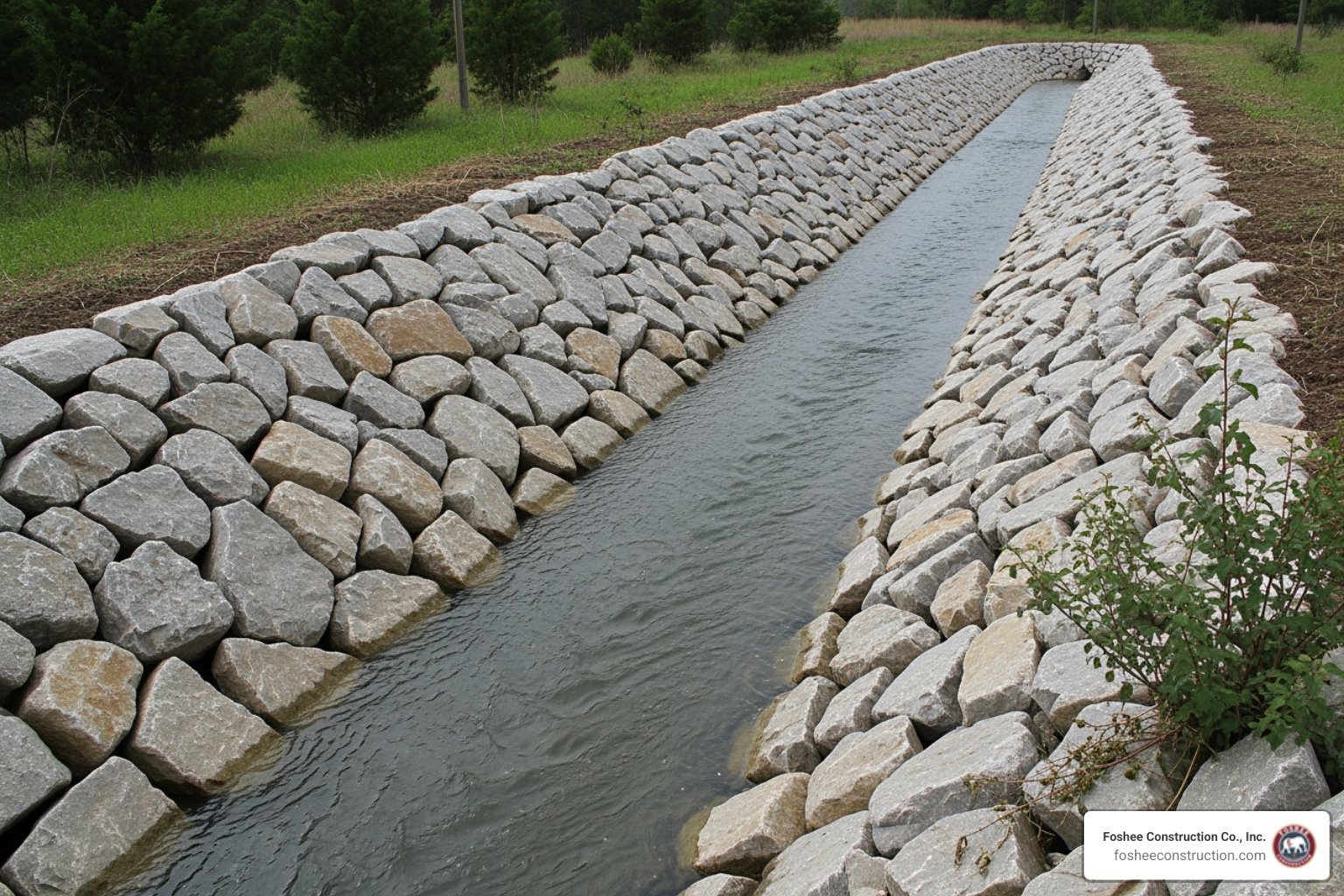
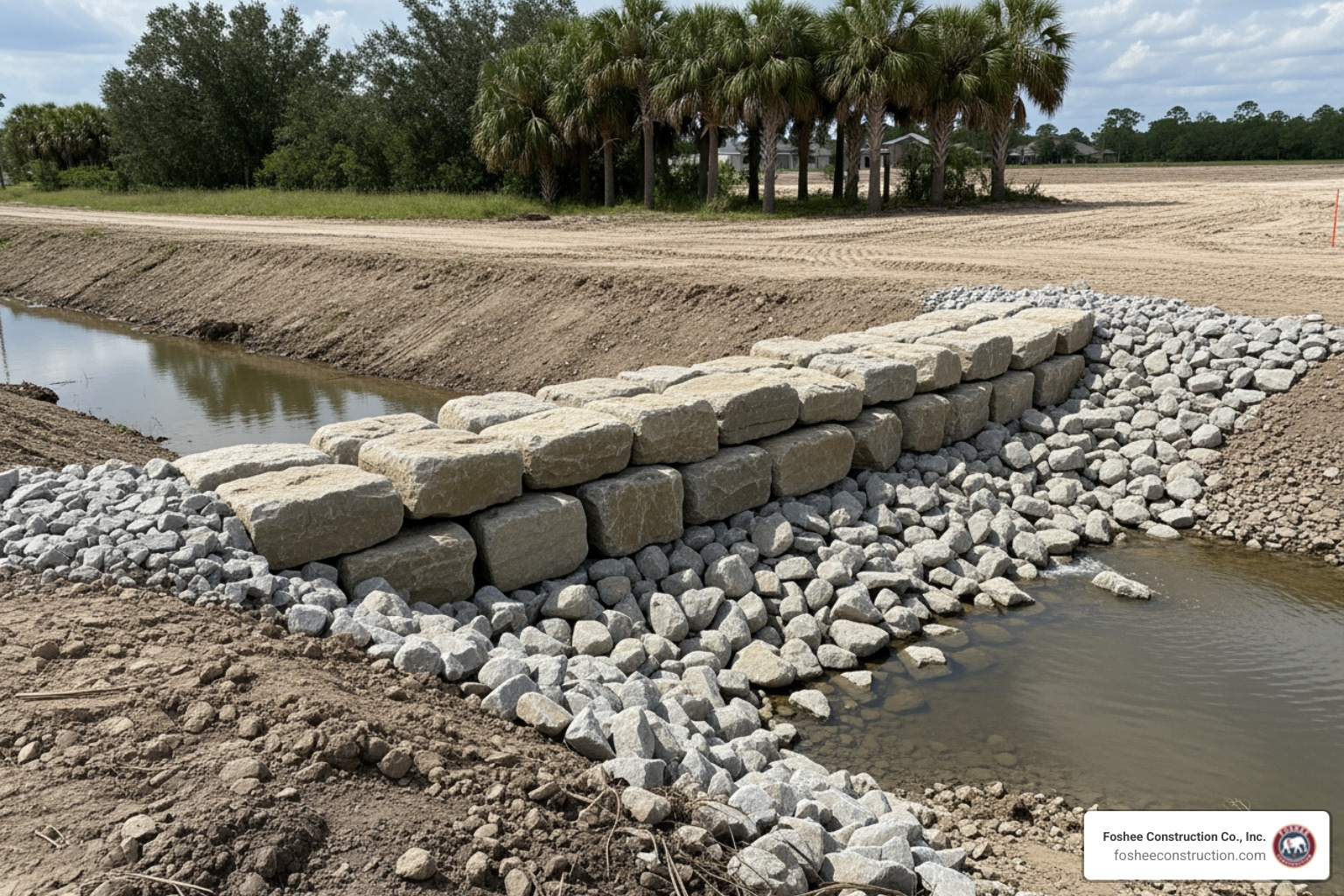
Erosion control rock check dams are small barriers of riprap stone placed across a drainage swale, ditch, or channel to slow water down and prevent the channel from eroding.
Here's a quick breakdown of what they do and when to use them:
On Florida construction sites, uncontrolled stormwater runoff is one of the fastest ways a project can fall behind. Heavy rain events are frequent, slopes get disturbed during grading, and bare soil erodes quickly. Without velocity control in your swales and ditches, you end up with gullied channels, downstream sediment violations, and costly rework.
Rock check dams are one of the most widely used and cost-effective tools to manage that risk. They're recognized as a best management practice (BMP) by the EPA and are included in erosion and sediment control guidelines across the country.
This guide walks through how they work, how to design and install them correctly, and how to keep them effective throughout your project.
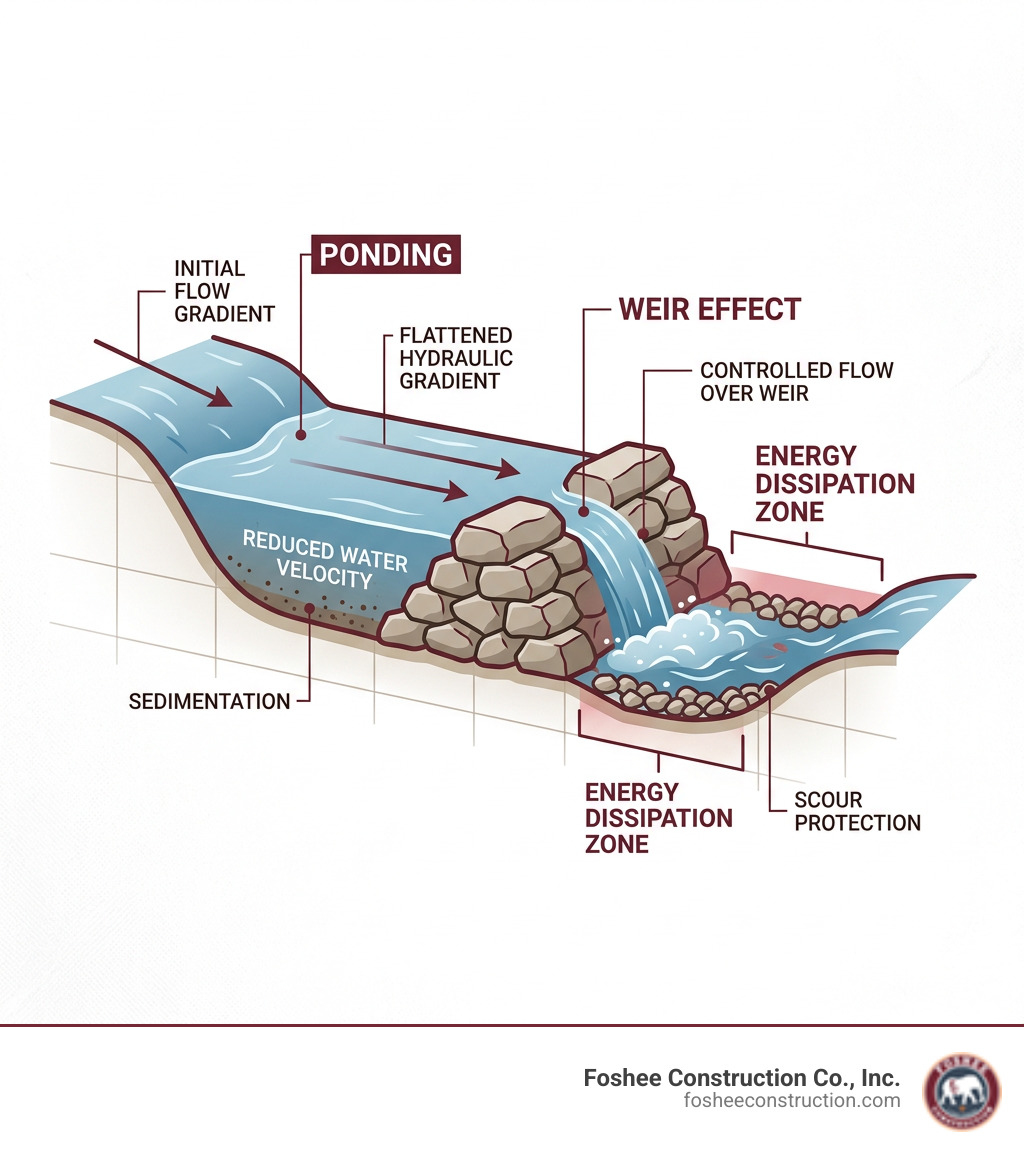
At their core, erosion control rock check dams are about energy management. When rain hits a disturbed construction site in Minneola or across Lake County, it gathers in swales and ditches. As that water gains volume and speed, it develops "shear stress"—the physical force that peels soil away from the channel bed.
By placing a rock barrier in the way, we force that water to settle into a pool. This ponding effect does two things: it dissipates the kinetic energy of the moving water and flattens the hydraulic gradient. Instead of one long, steep slide, the water sees a series of flat steps. According to the Minnesota Stormwater Manual on Sediment Control, this process is vital for protecting channels that aren't yet vegetated.
While their primary job is velocity reduction, they also provide a secondary benefit: sediment trapping. As water slows down behind the dam, coarse sediments like sand and gravel settle out. However, we always remind our clients that these aren't primary sediment basins; they are meant to support a larger erosion control plan. They are most effective for drainage areas of 10 acres or less, though for very small sites (under 2 acres), they are even more reliable.
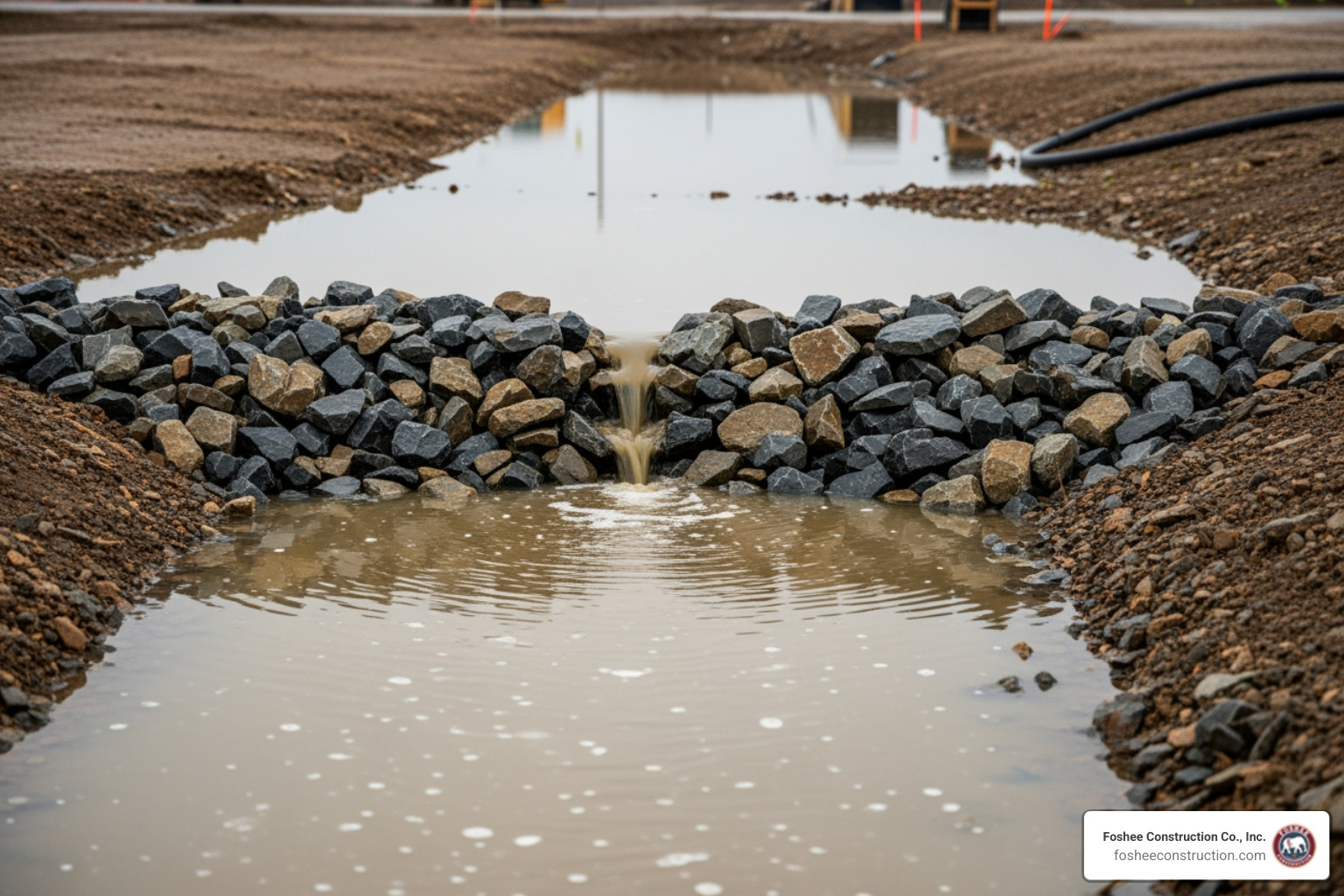
The "magic" happens through the weir design. A properly built rock check dam isn't just a pile of stones; it’s a shaped structure with a lower center point. This creates a parabolic flow pattern, directing water over the center of the dam rather than around the edges.
If water is allowed to flow around the sides, it will quickly scour the banks, bypassing the dam and making the erosion worse. By keeping the flow in the center, the water's energy is spent falling onto the rock apron below rather than eating away at the soil. This regulation of hydraulic capacity ensures that even during heavy Florida downpours, the channel remains stable.
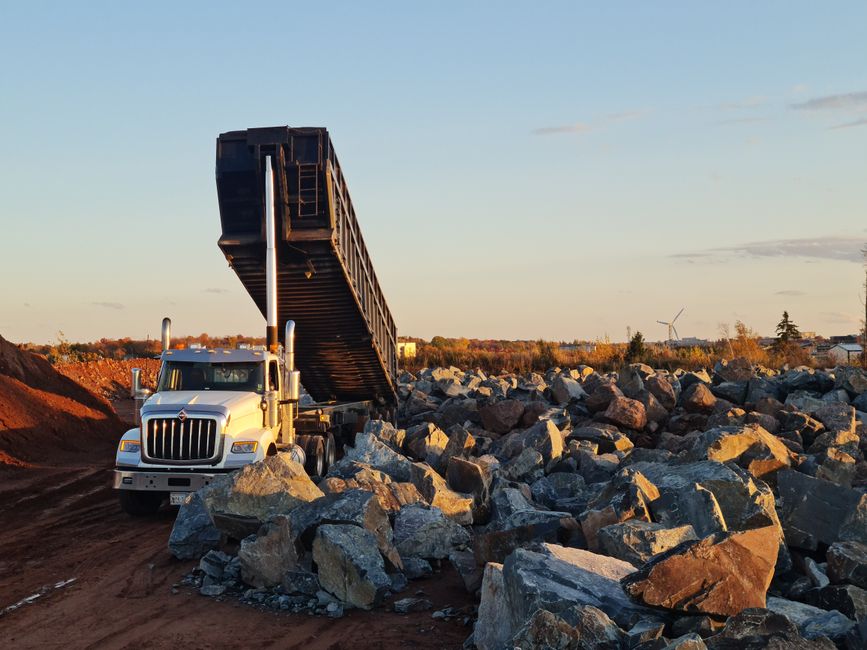
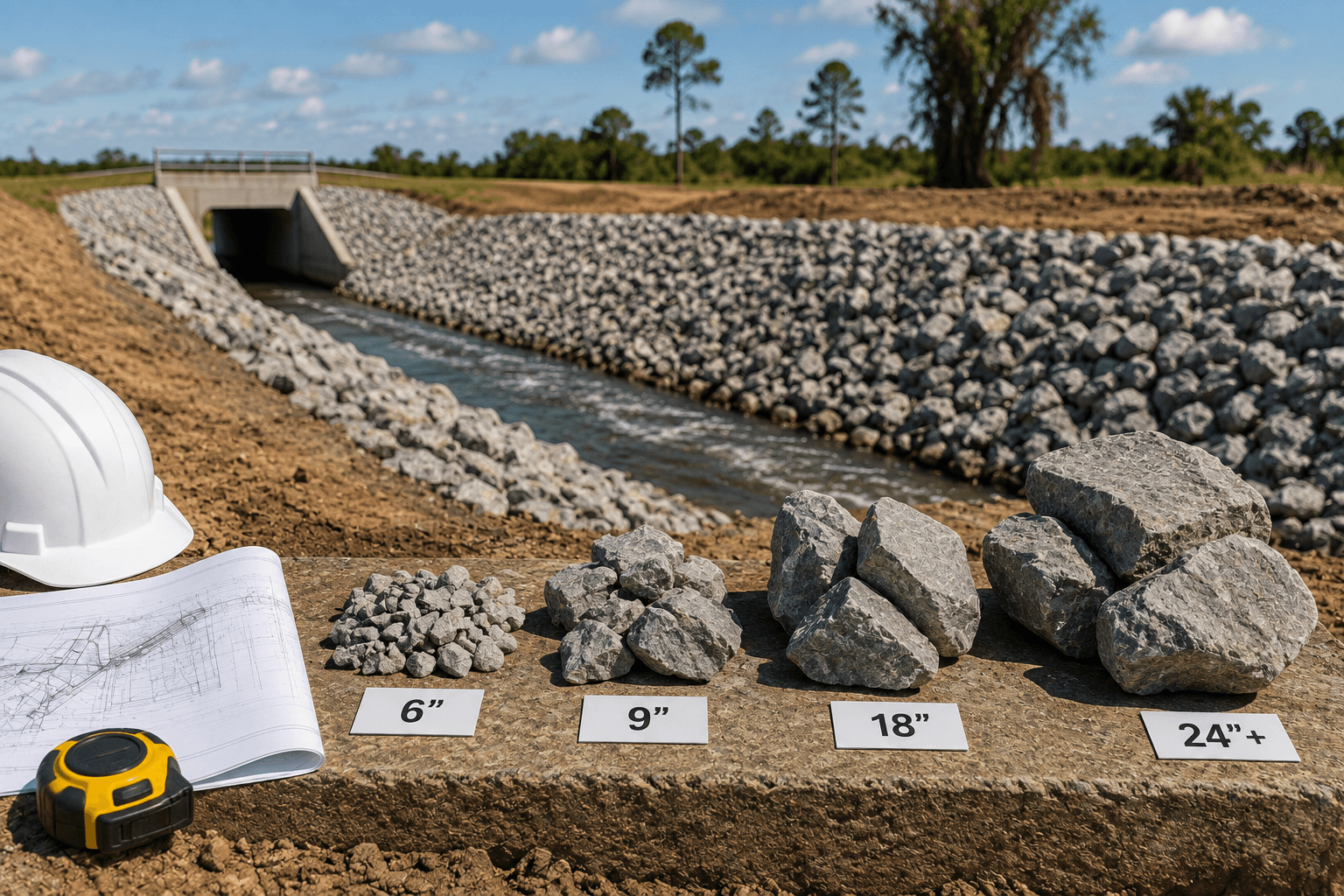
Choosing the right materials is the difference between a dam that holds and one that washes away during the first afternoon thunderstorm. In our experience at Foshee Construction, using the right stone size and shape is non-negotiable.
The spacing of your dams depends entirely on the slope of your channel. The goal is the "Toe-to-Crest Rule": the base (toe) of the upstream dam should be at the same elevation as the top (crest) of the downstream dam.
The maximum height for these structures is generally 2 feet for drainage areas under 5 acres. If the center is 24 inches high, the outer edges must be at least 6 inches higher to create that necessary weir effect. This "compensation gradient" ensures the water stays in the middle of the ditch.
Proper installation is a disciplined process. You can't just dump a truckload of rock into a ditch and call it a day. Here is how we ensure a professional, effective installation:
A check dam is only as good as its last inspection. Because these structures trap sediment, they eventually fill up. If a dam is full of dirt, it’s no longer a dam—it’s just a bump in the road that water will jump over.
We follow a strict maintenance schedule: inspect the dams every seven days and after every significant rain event. Once sediment reaches half the height of the dam, it must be removed. This ensures the dam maintains its hydraulic capacity for the next storm.
Once the site is permanently stabilized—meaning the grass is grown in or the permanent liner is installed—the temporary erosion control rock check dams should be removed. We take care to remove all stone so it doesn't interfere with future mowing or flow. Following removal, the area should be immediately seeded and mulched to prevent a new erosion point from forming. For more technical details on long-term care, the Natural Resources Conservation Service Rock Check Dam Guide provides excellent deep-dive data.
Generally, no. Erosion control rock check dams are designed for swales, ditches, and "dry" weather channels. Placing any structure in a live, flowing stream requires specific permits from the Florida Department of Environmental Protection (DEP) and often the U.S. Army Corps of Engineers. Doing so without permits can result in heavy fines and environmental damage to aquatic habitats.
Costs can vary based on the size of the channel and the type of rock used. According to 2014 data from MnDOT, the average installed cost is around $1,400 per dam. However, material costs alone for a standard 1-foot-deep dam can range from $100 to $400. At Foshee Construction, we pride ourselves on transparent bids, so you’ll know exactly what the materials and labor will cost before we break ground.
The most frequent mistake is the "flat top." If the center of the dam isn't lower than the edges, water will push toward the banks and cause a blowout. Other common errors include failing to "key" the dam into the soil and using silt fence in place of a rock check dam. Silt fence is not designed for concentrated flow and will almost always fail if used as a check dam.
Managing water on a Florida job site requires more than just moving dirt; it requires a disciplined approach to erosion control. Erosion control rock check dams are a reliable, time-tested solution for keeping your site compliant and your channels stable. Whether you are dealing with a small roadside swale in Minneola or a massive site preparation project in Lake County, getting the design and installation right is the key to success.
At Foshee Construction Co., Inc., we specialize in complete site preparation, from underground utilities to grading and erosion control. Our commitment to safety, disciplined scheduling, and reliable relationships with top contractors makes us the preferred choice for Florida developers.
If you need professional assistance with your next project, Request a quote for professional site preparation and erosion control from our team today. We’ll help you keep the water moving—and the soil staying put.
We build bids using HeavyBid and AGTEK because the details matter long before the job starts. When the numbers are accurate and the scope is clearly defined, it sets the tone for how the entire project runs. Estimating isn’t just a step in the process, it’s the foundation we build on.
That same mindset carries into the field. Our crew is trained to work with purpose, follow the Civil Engineers’ Plan to the finest detail, and hold the line on quality. When expectations are clear from day one, there’s no need for shortcuts, and no confusion about how the work gets done.
Clients trust our bid packages because they’re complete and ready to use. Project managers know what we’re covering, what’s excluded, and how we plan to approach the job. That clarity removes friction and lets teams focus on execution instead of interpretation.
As part of our review process, we go into the plans before anything hits the site. We ask the questions early, resolve issues before they show up in the field, and keep RFIs moving. This approach prevents delays and protects the timeline.
Over time, that consistency builds trust. Many of the people we work with today came through referrals from past projects – engineers, GCs, and superintendents who’ve seen how we operate and want the same experience again.
In 2024, Foshee Construction was acquired by Saga Infrastructure Solutions, a national network of civil construction companies. Saga supports regional contractors by giving them access to better tools, long-term resources, and operational backing, without changing how they run day to day.
Foshee will continue to operate under its name, with the same team and field leadership in place.
“From the very time a project starts, we start that partnership. We try to catch as much as we can with the tools that we have. Not everybody is using the software platforms we are. That’s the differentiator: we’re not just bidding. We’re anticipating, problem-solving, and making sure the job runs right.”
— Don, CEO, Saga Infrastructure Solutions
Foshee is now part of a broader regional strategy that includes Florida, the Piedmont Atlantic, Texas, Colorado, and the Arizona Sun Corridor. The name, crews, and standards remain. What’s improving is the support behind it.