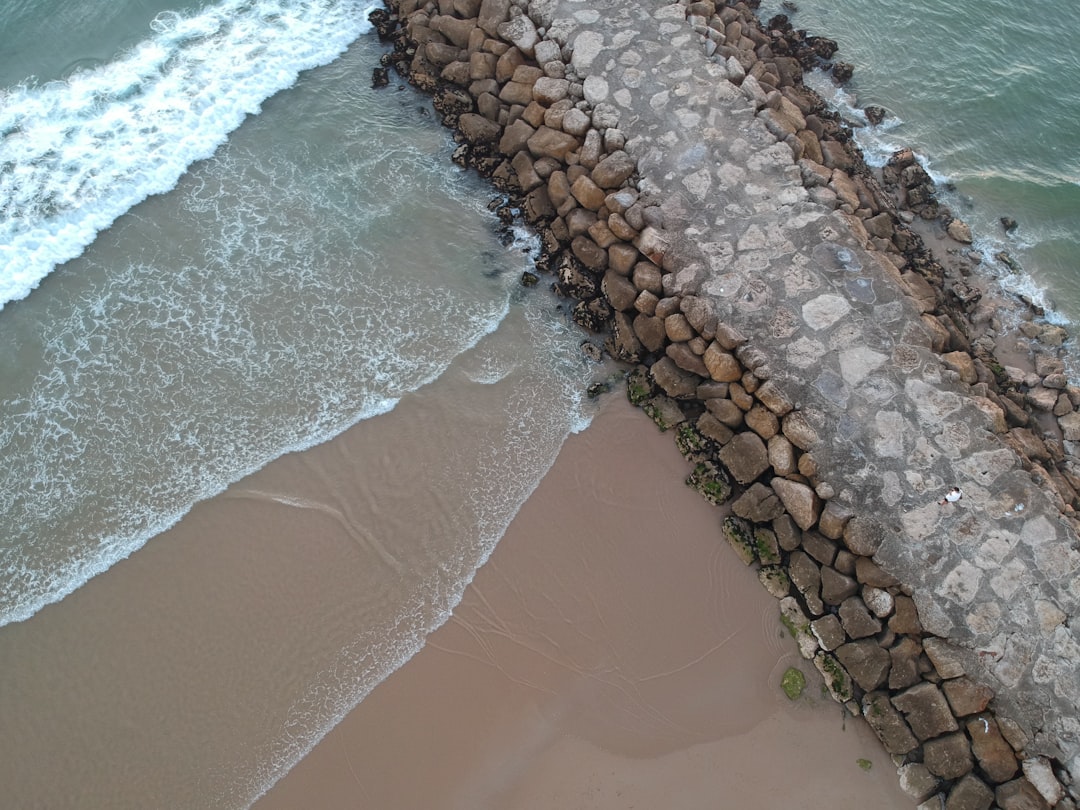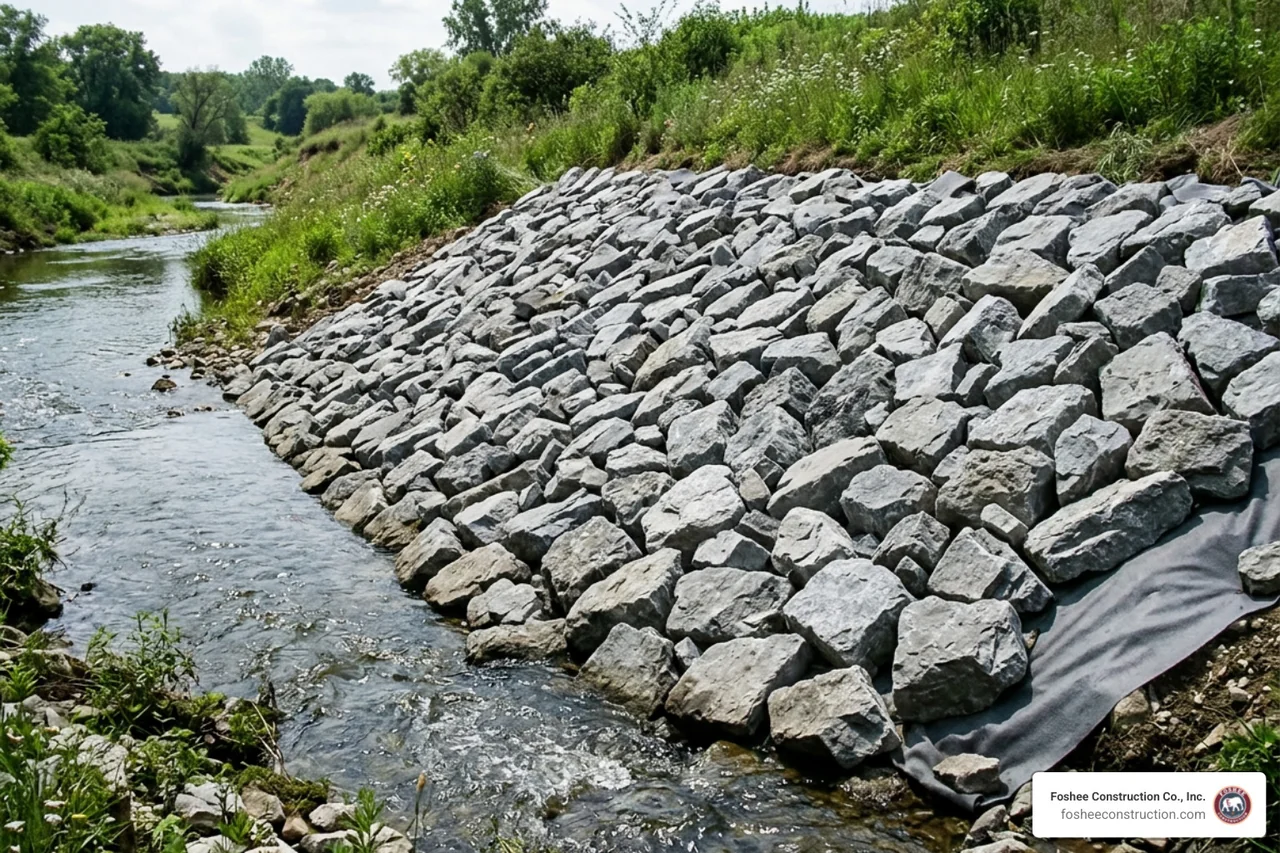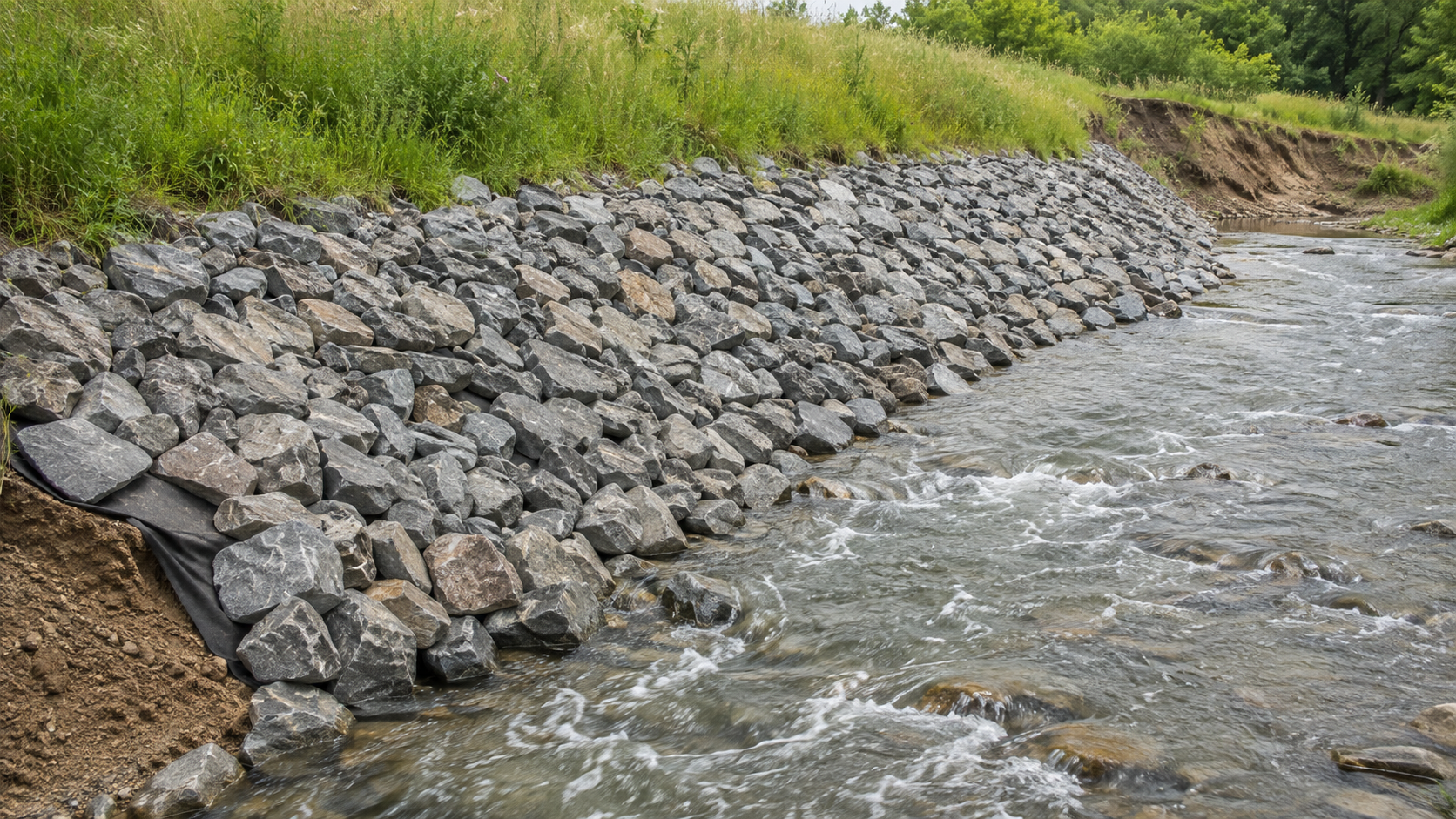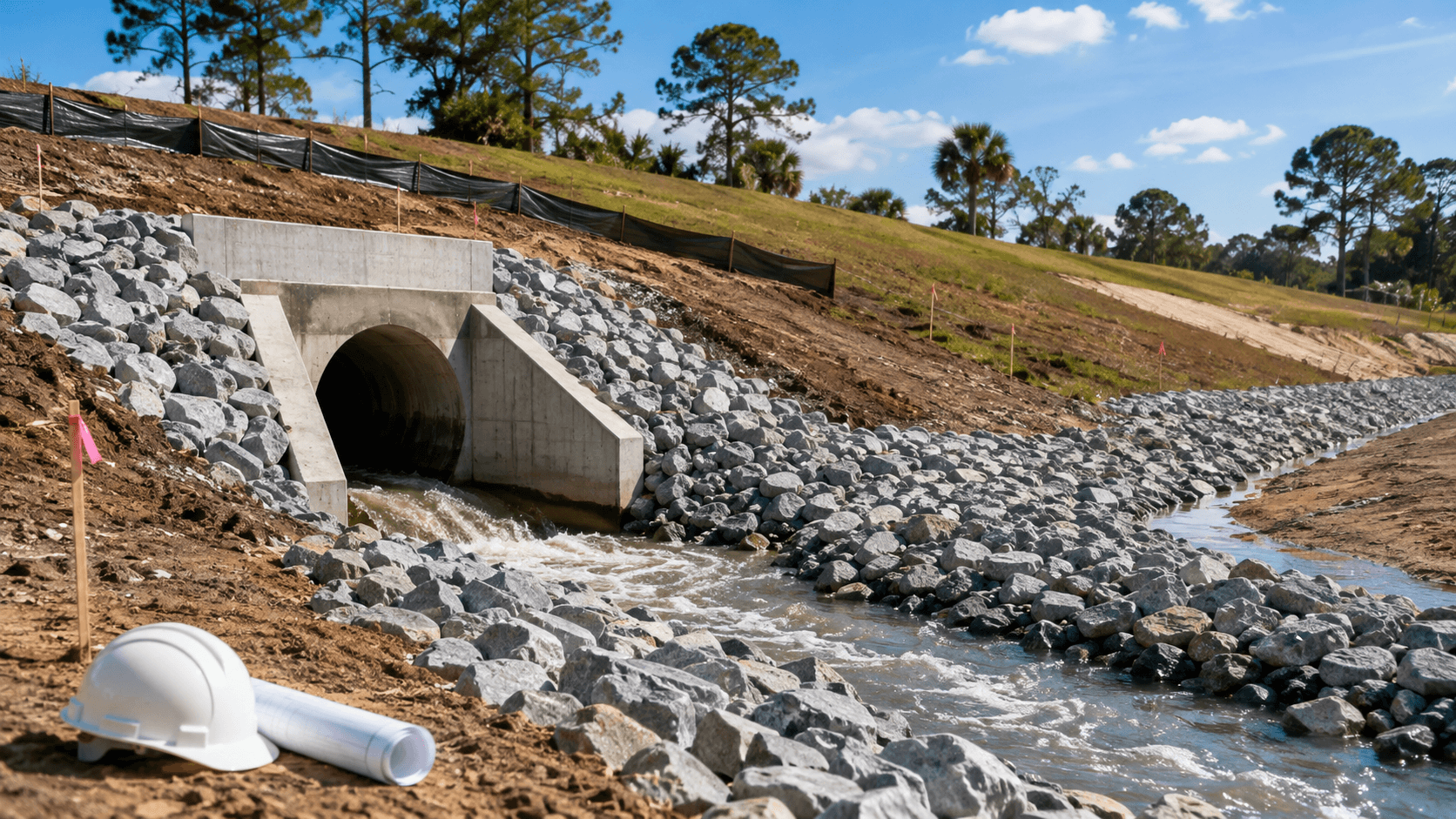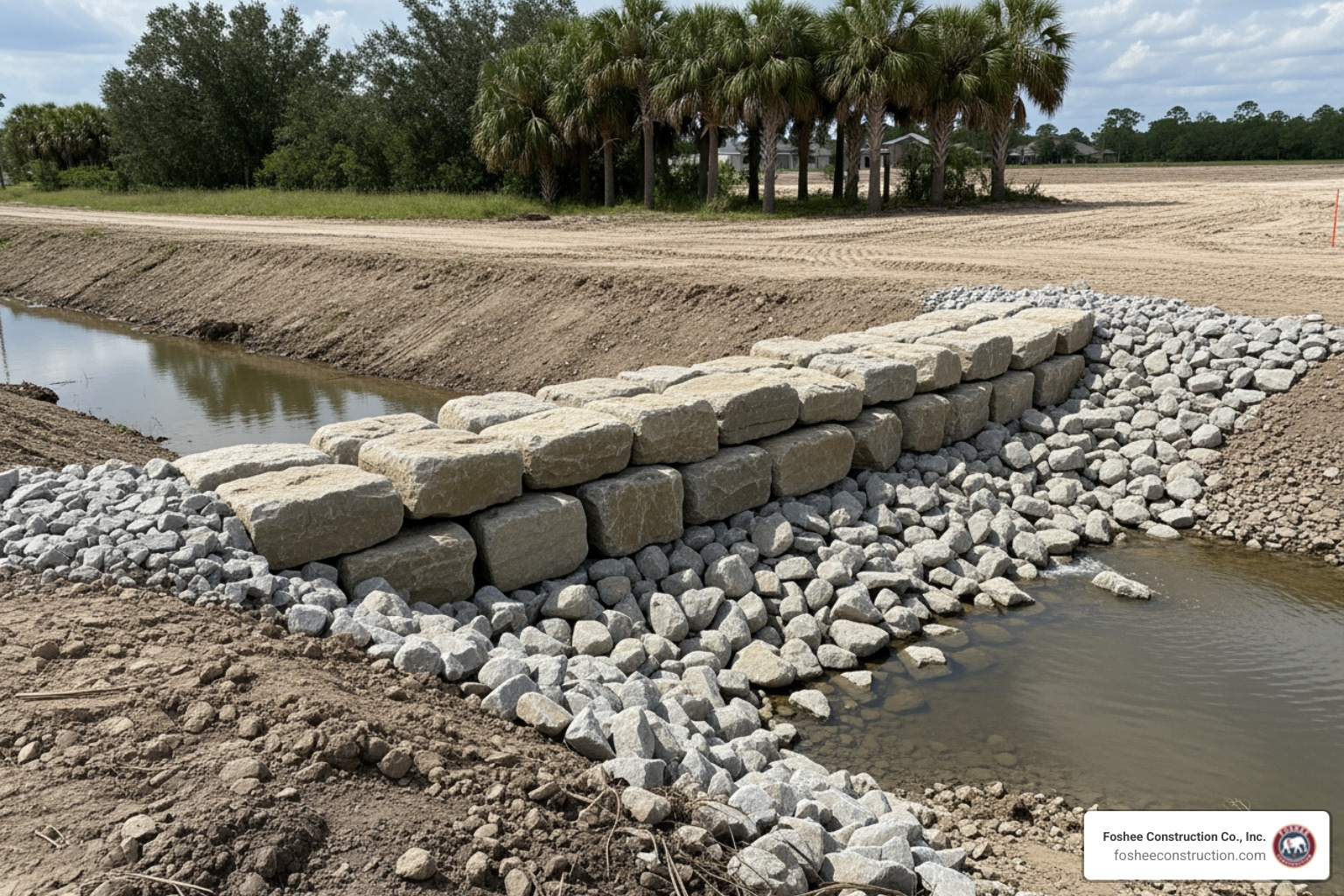
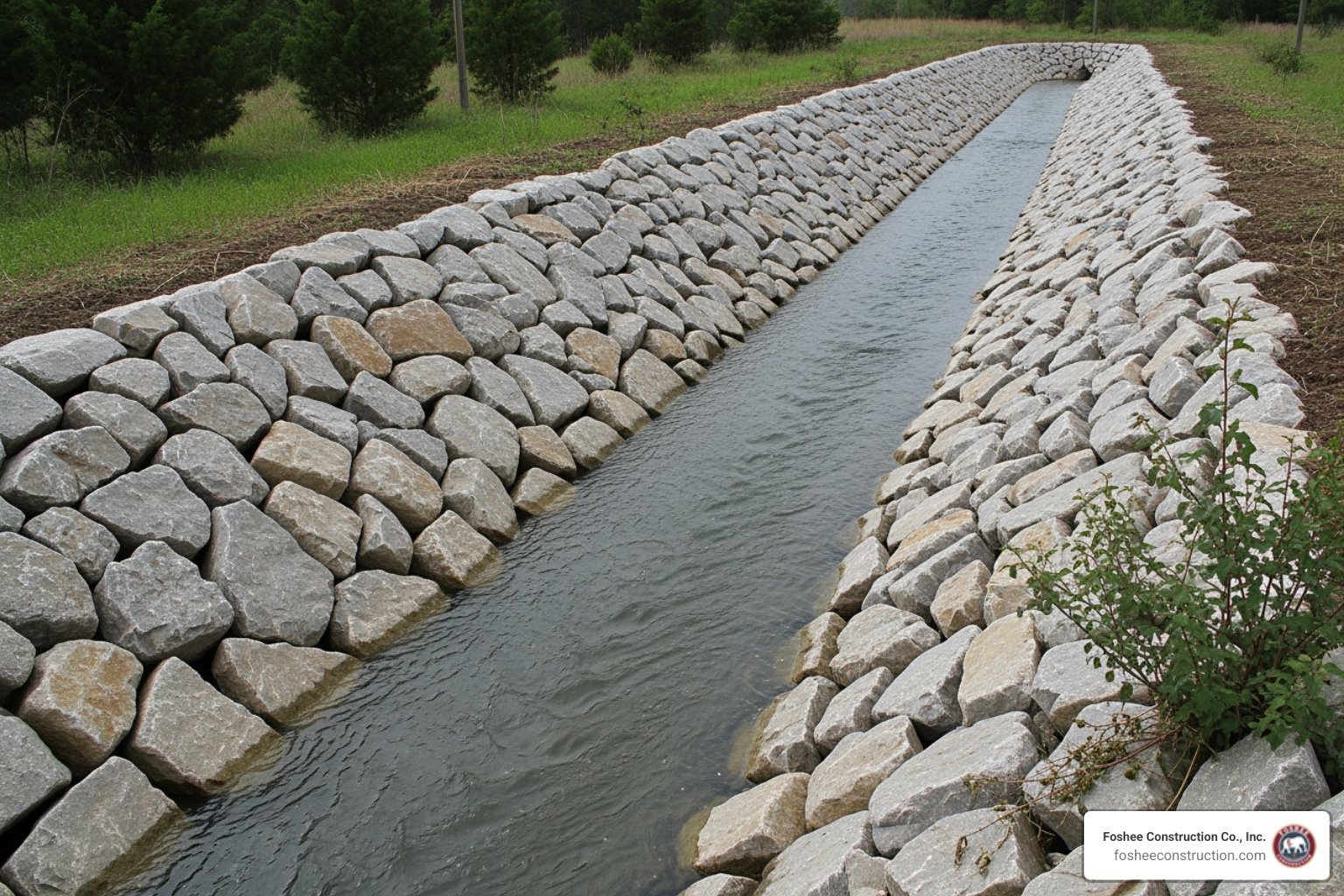
Erosion control rip rap is a layer of large, angular stones placed over soil to protect it from the erosive force of moving water — especially in drainage ditches, channel banks, and culvert outlets.
Here's a quick overview of how it works and when to use it:
If you're a contractor or developer in Florida, drainage ditch erosion is a real and costly problem. Heavy rainfall, high-velocity runoff, and disturbed soils on active construction sites create ideal conditions for rapid erosion. Left unchecked, an eroding ditch can undermine roads, destabilize slopes, and trigger costly rework — exactly the kind of mid-project headache that blows timelines and budgets.
Riprap has been a go-to solution in civil construction for decades. When it's properly designed and installed, it's durable, low-maintenance, and effective for the long haul. But get the sizing, slope, or filter layer wrong, and it can actually make erosion worse.
This guide walks through everything you need to know — from stone selection and design standards to installation steps, maintenance, and how riprap compares to alternatives like erosion control blankets.
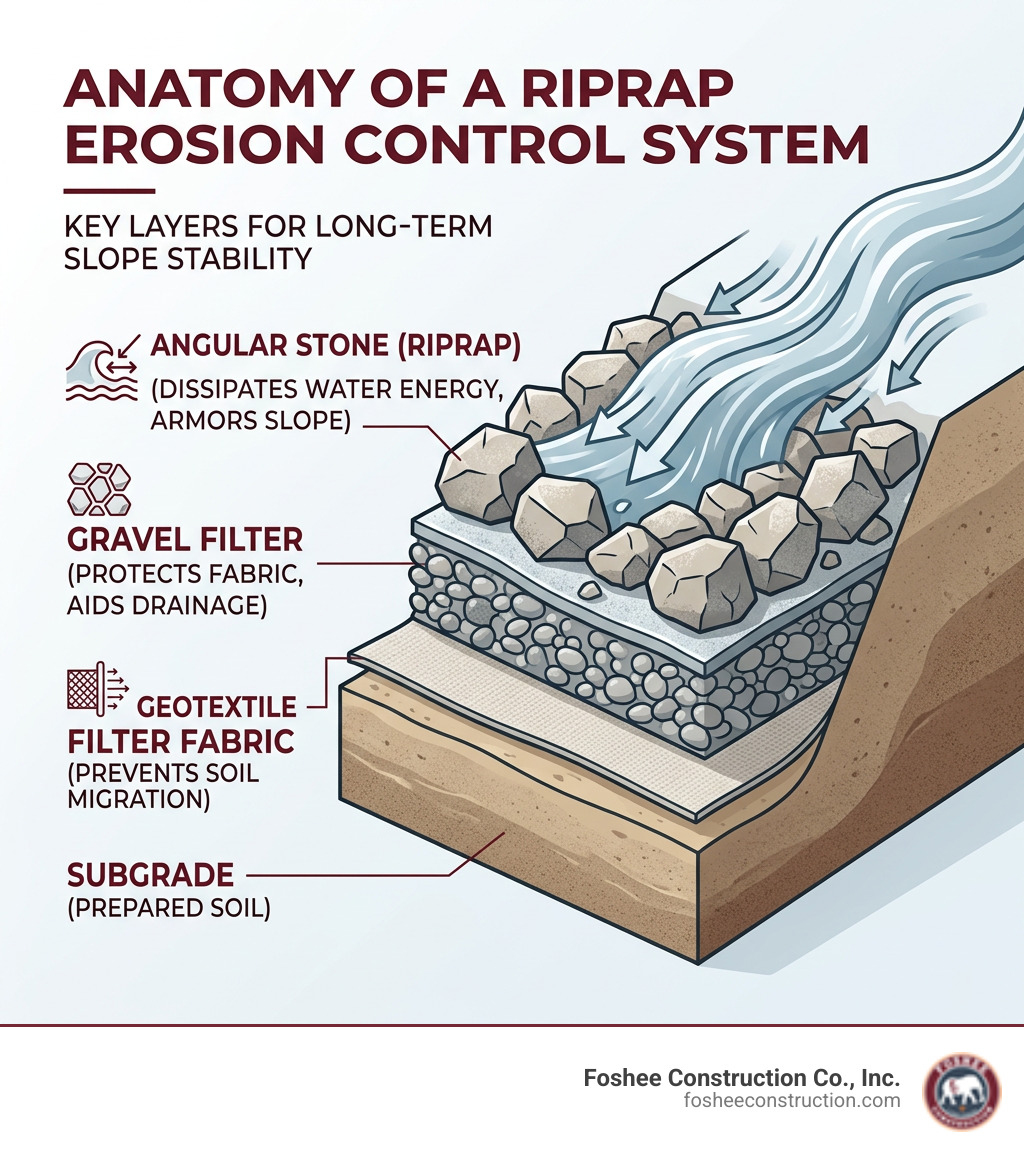
At its core, erosion control rip rap is a permanent, erosion-resistant ground cover. You might hear it called "rock armor," "rubble shot," or "rock slope protection." Regardless of the name, the goal is the same: to provide a "hard armor" solution for soil surfaces that are under constant attack by concentrated water flow.
In our work across Minneola and Lake County, we see riprap used most often to stabilize areas where vegetation simply can’t take root fast enough or where the water velocity is too high for grass to survive. It’s particularly effective for "scour protection"—preventing the swirling action of water from digging deep holes (scour holes) at the base of structures or in channel bends.
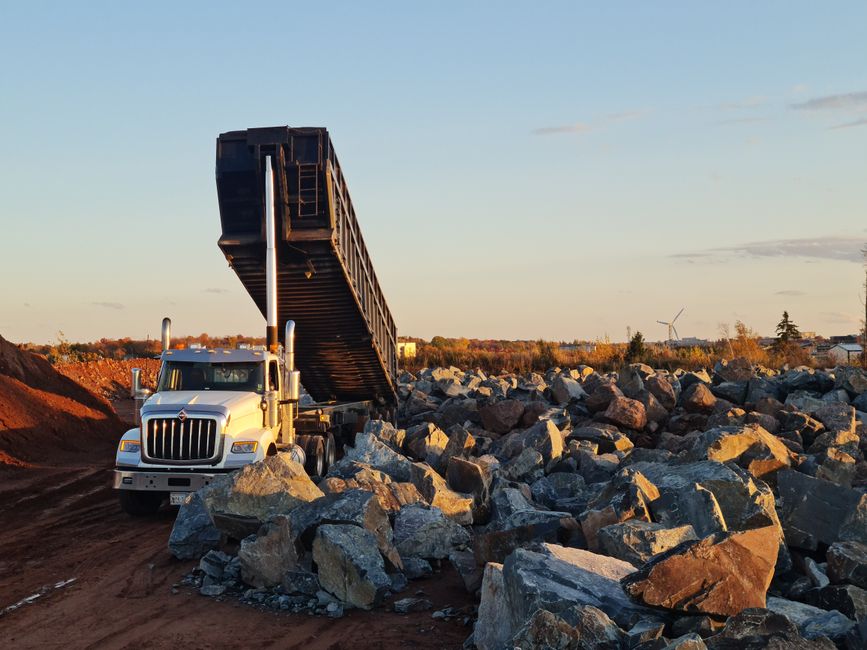
When we talk about riprap, we aren't talking about smooth river stones. We use large, angular stones that are designed to interlock. This interlocking capability is what keeps the stones from rolling away when a heavy Florida summer storm sends a surge of water through your drainage system. For those looking for official guidance, the Standard BMPs for Riprap provide a technical framework for how these systems should be integrated into stormwater management plans.
Why do we choose riprap over other methods? It comes down to physics and durability.
Not all rocks are created equal. If you use the wrong material, your "protection" will crumble into dust within a few years.
Designing a riprap-lined ditch isn't just about dumping rocks in a hole. It requires careful calculation to ensure the ditch can still carry the required volume of water.
One critical factor is the Manning’s n value, which represents the roughness of the channel. For riprap-lined channels, this value typically ranges from 0.020 to 0.048. The larger the rocks, the higher the roughness, and the slower the water moves. However, if the rocks are too big, they might take up too much space, reducing the "channel capacity" and causing the ditch to overflow during a big storm.
We have a golden rule in the industry: Riprap is generally unstable on slopes steeper than 2:1 (horizontal to vertical).
If your slope is steeper than that—meaning for every two feet of horizontal distance, it rises more than one foot—the stones are likely to slide down the hill. On slopes steeper than 2:1, we have to look at alternative solutions like turf reinforcement mats, open-cell concrete blocks, or even retaining walls. In some cases, we might use wire mesh or "gabions" (rock-filled wire baskets) to keep the stones in place on steeper inclines.
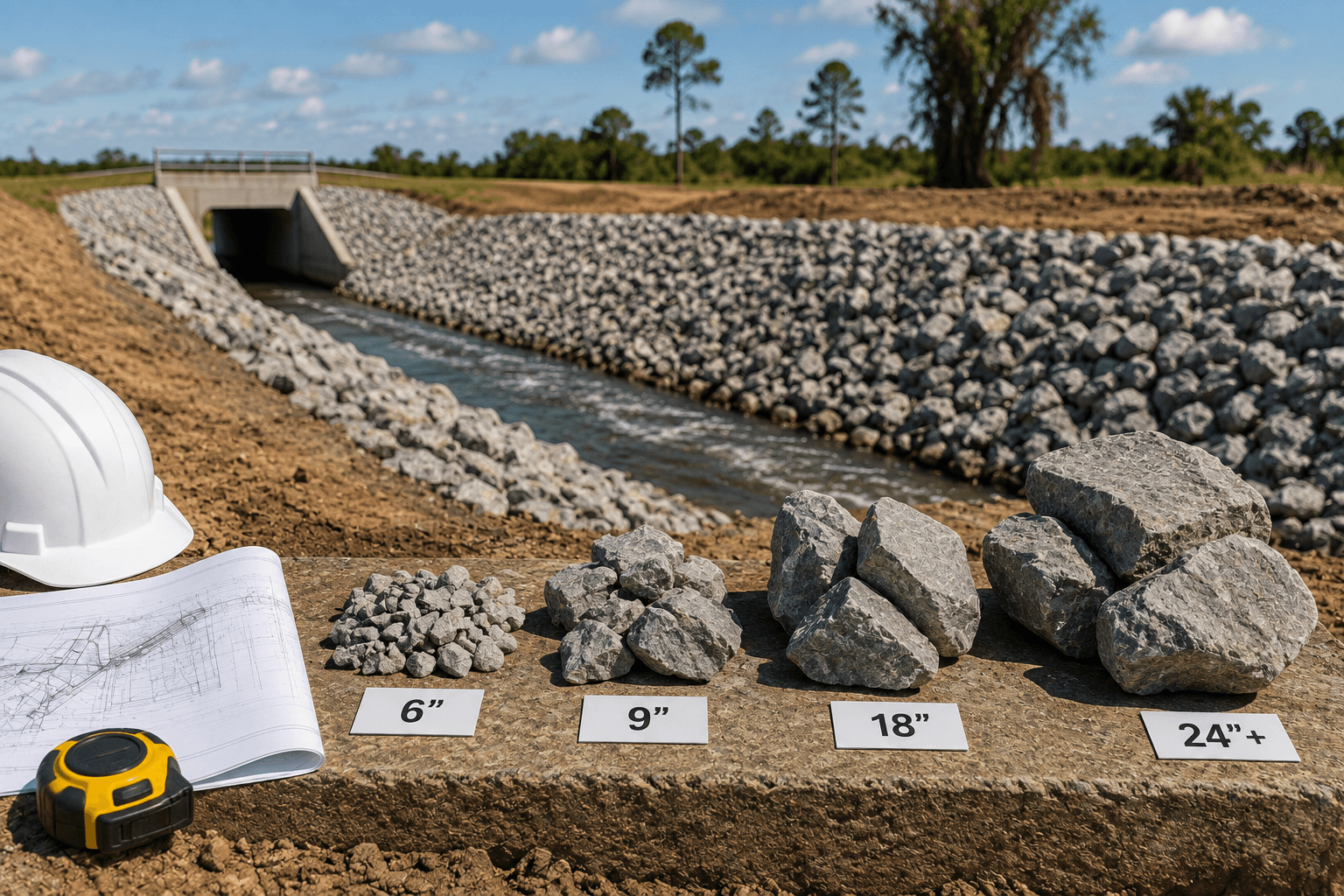
A good riprap installation uses a well-graded mixture of stone sizes. You don't want every rock to be exactly 12 inches. You want a mix where the smaller stones fill the "voids" (the gaps) between the larger stones. This creates a dense mass that water can't get under.
How thick should the rock layer be? There are two main rules we follow:
For bank protection, we extend the riprap up the side of the ditch to the "bank-full" flow height, or at least to the depth of a 10-year storm event. This ensures that even during heavy flooding, the water doesn't get behind the rocks and wash out the soil from the top down.
The secret to a riprap project that lasts 20 years versus one that fails in 20 days is subgrade preparation.
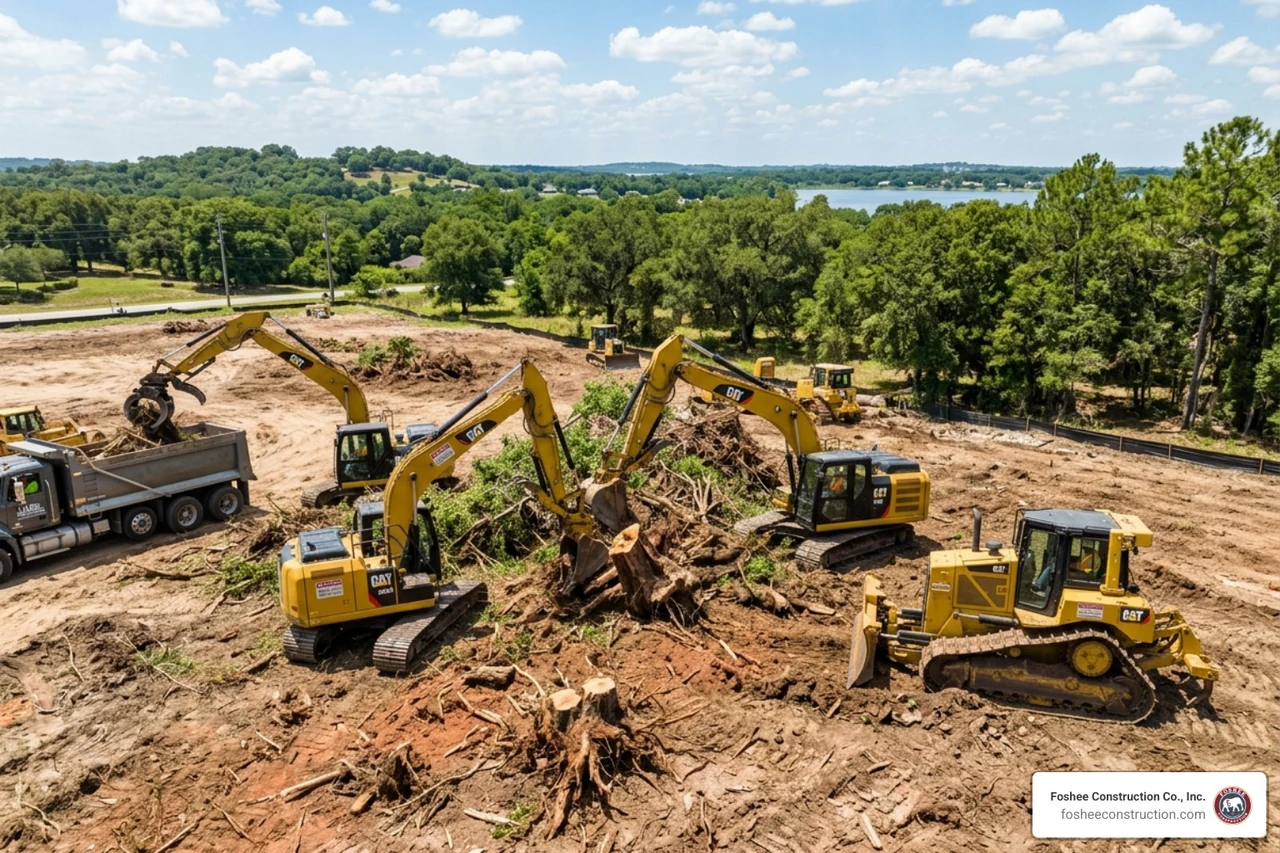
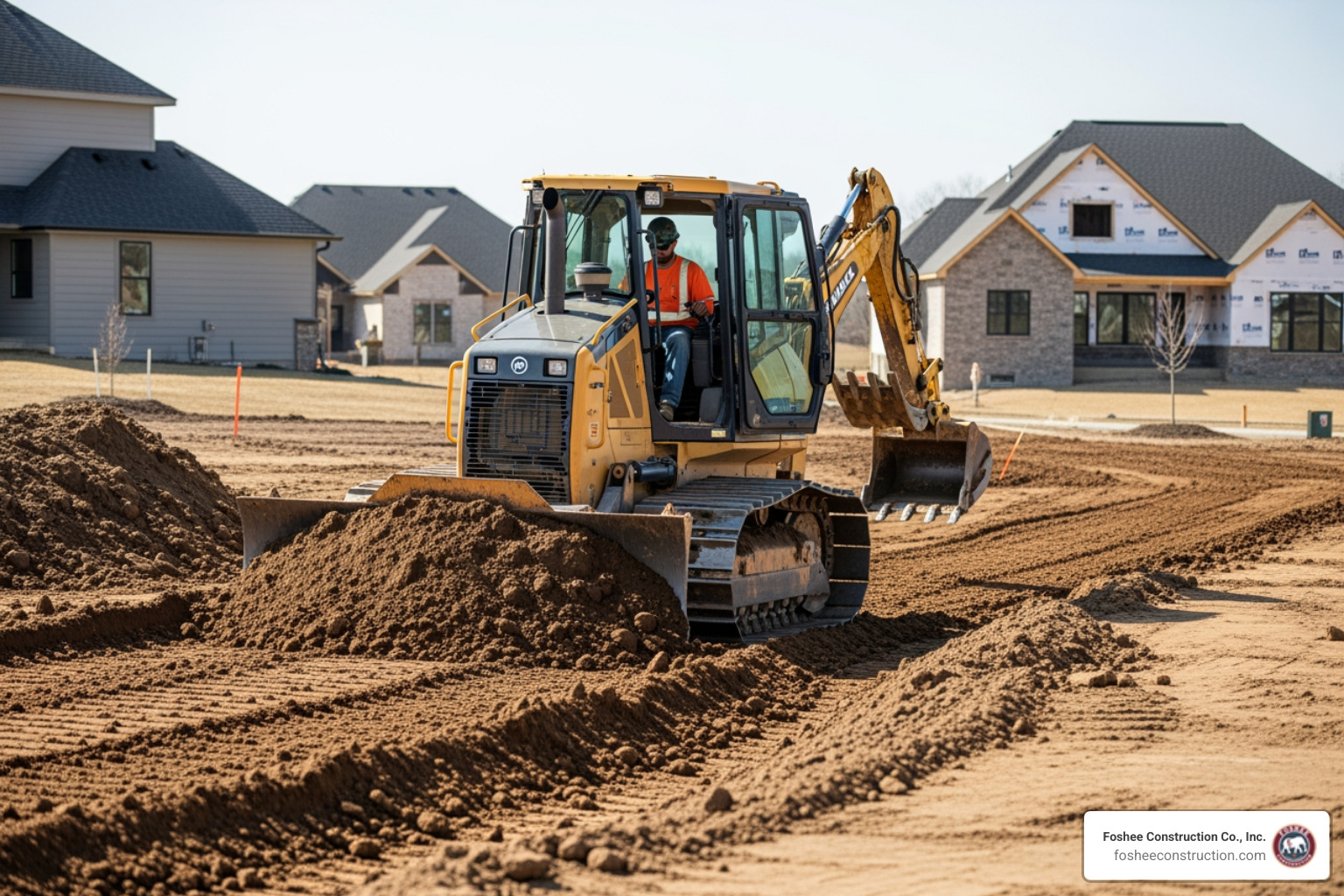
Before a single rock is moved, we clear the area of all organic material—roots, grass, and debris. If you leave a stump under your riprap, it will eventually rot, creating a void that causes the rocks above it to collapse. We then compact the soil to at least 95% Standard Proctor Density. This provides a firm "table" for the rocks to sit on.
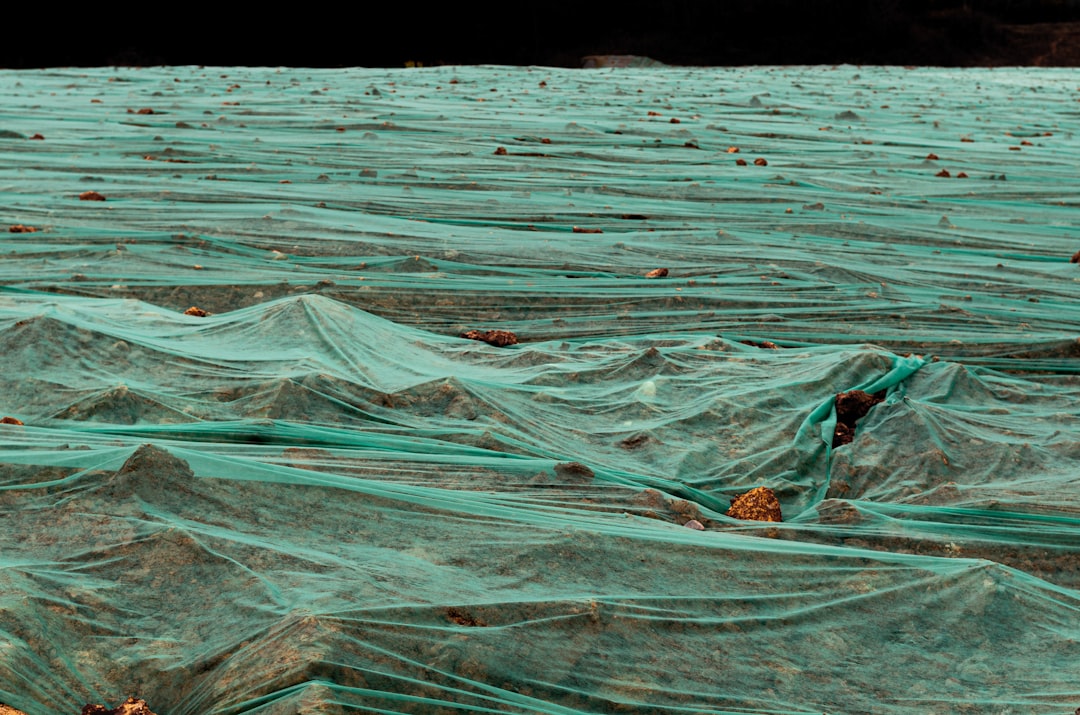
If you place heavy rocks directly onto soft Florida sand or clay, the rocks will eventually sink, and the soil will "pump" up through the gaps. To prevent this, we use a geotextile filter fabric. This fabric acts like a strainer: it lets water pass through but keeps the soil particles in place.
For most riprap projects, we use a non-woven needle-punched fabric. These are rated by weight:
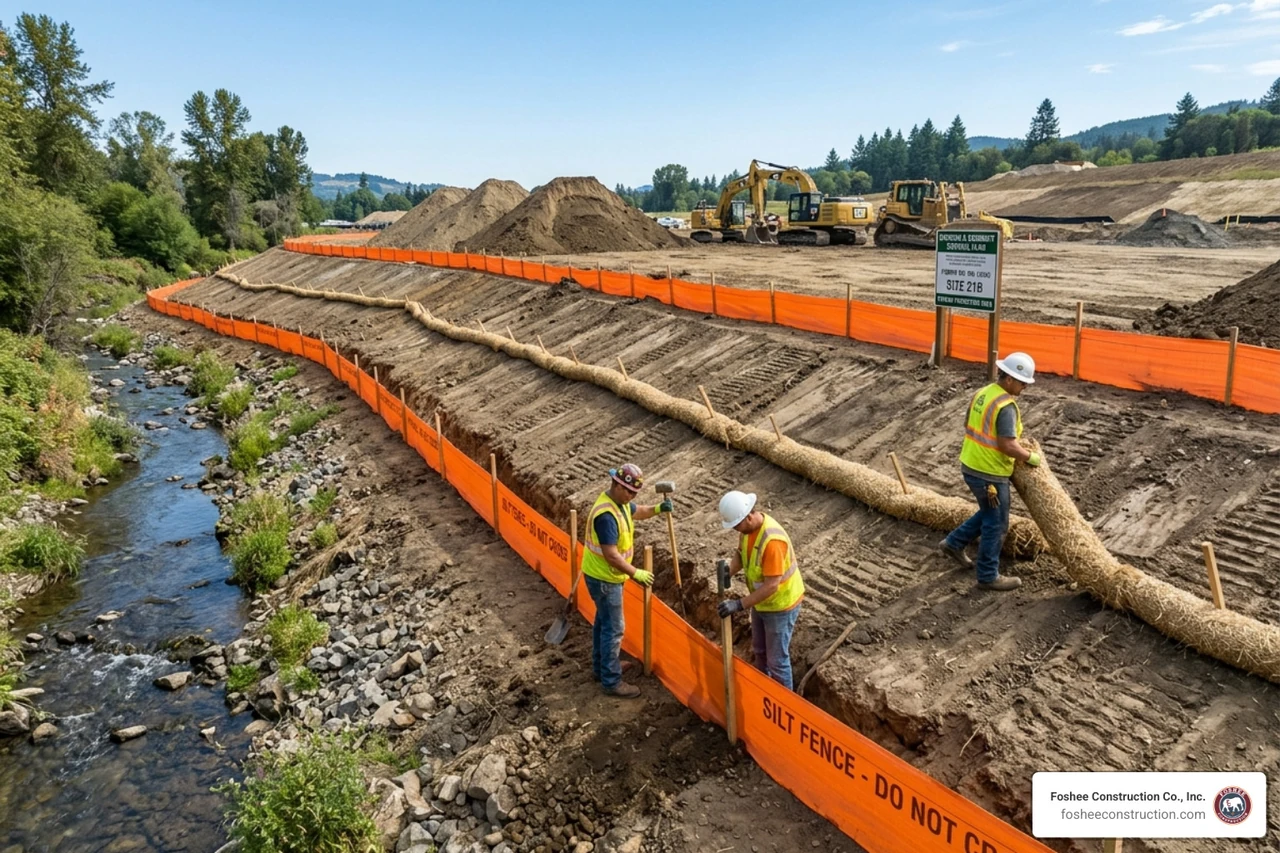
We anchor the fabric by digging "anchor trenches" at the top and bottom of the slope. We tuck the fabric into the trench and bury it with compacted soil. This prevents water from getting under the fabric and peeling it away like a rug.
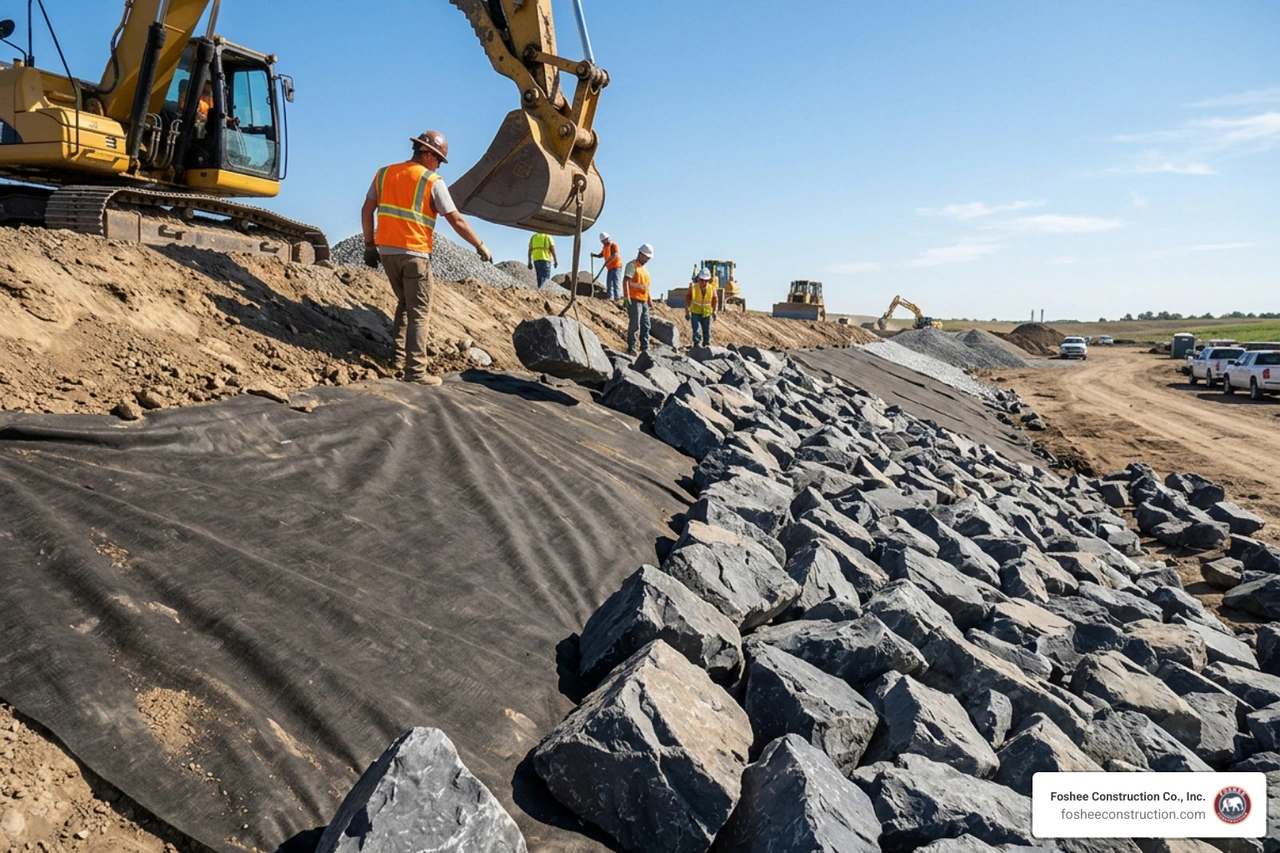
Once the fabric is down, it's time for the stone.
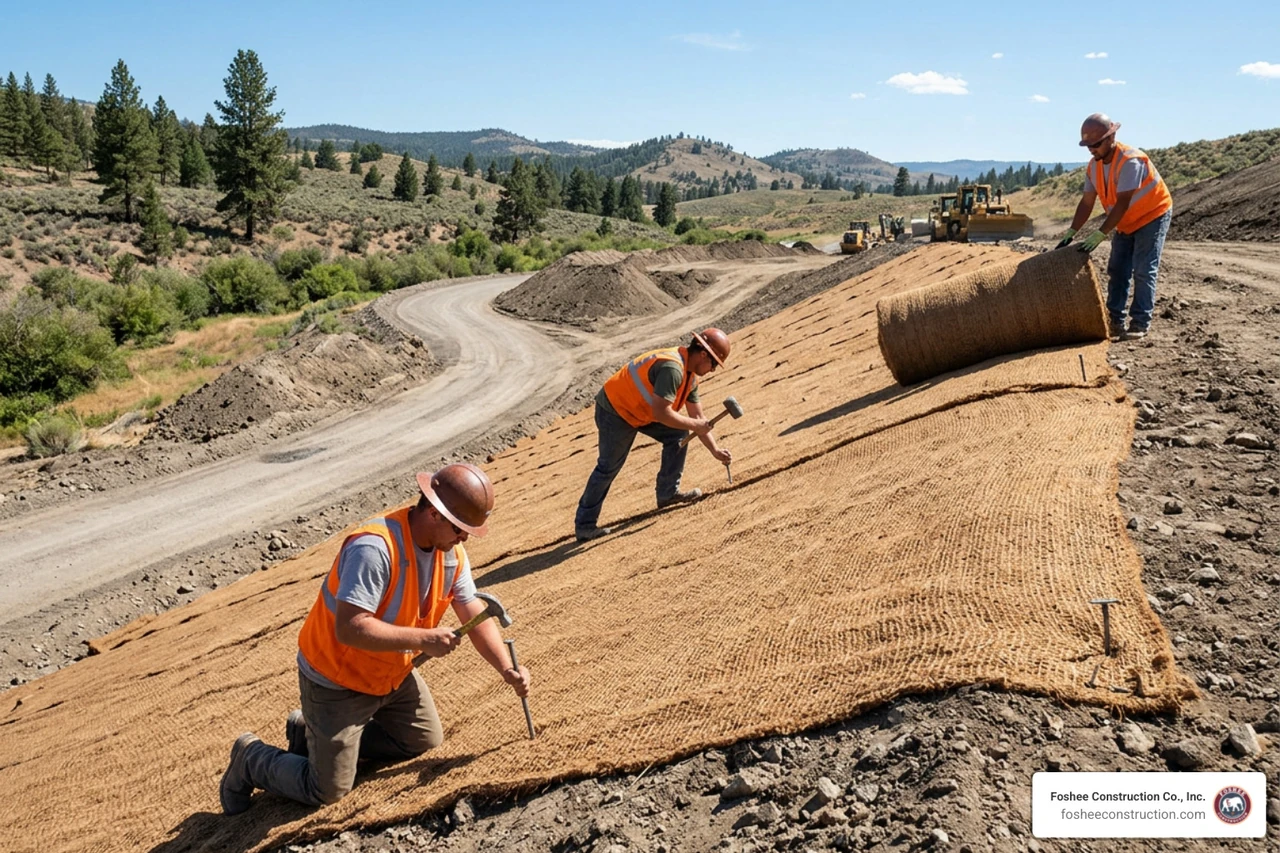
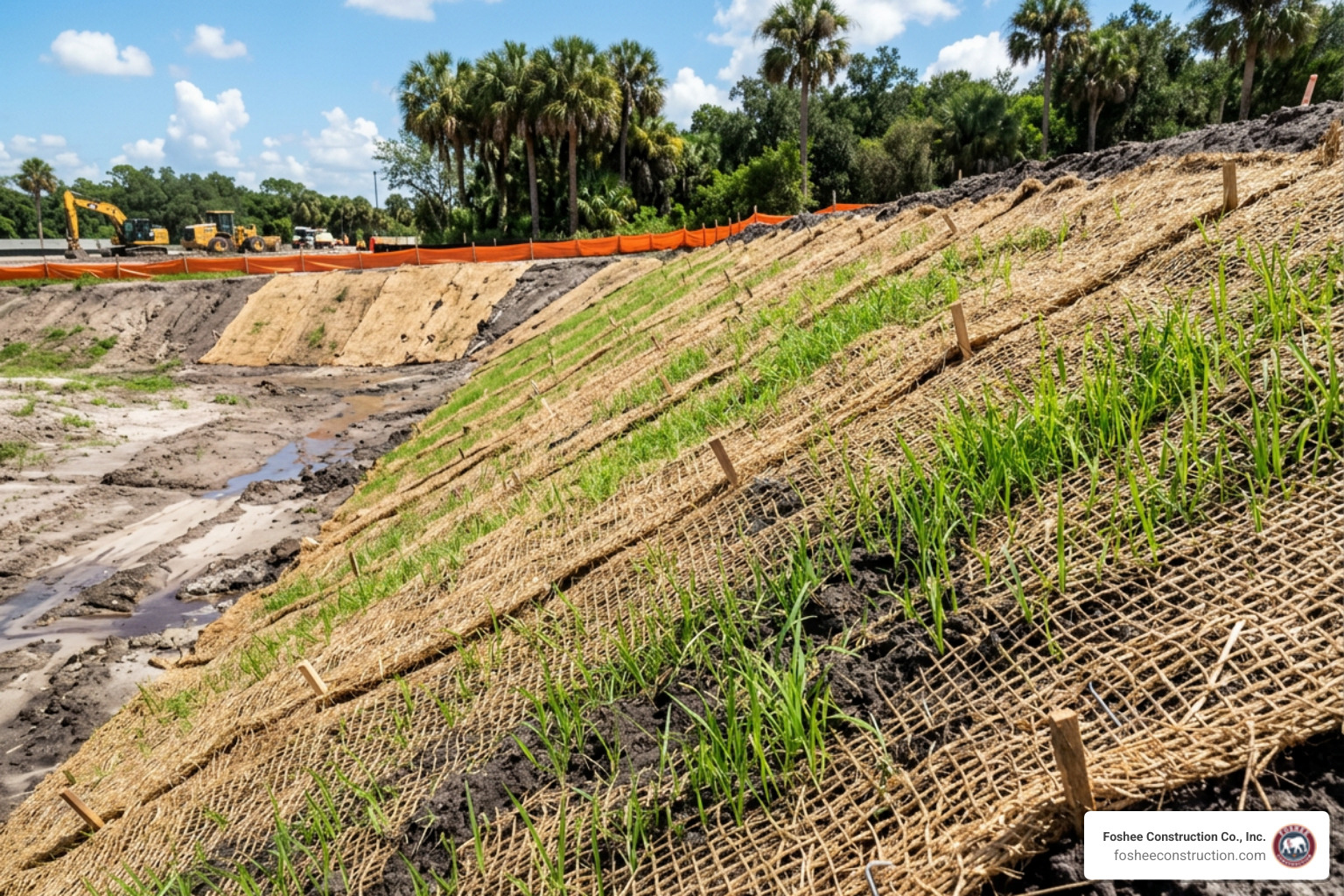
Riprap isn't always the right answer. Sometimes it's overkill, and sometimes it's just too expensive for the budget. In Florida, we often compare riprap to Rolled Erosion Control Products (RECPs), like erosion control blankets.
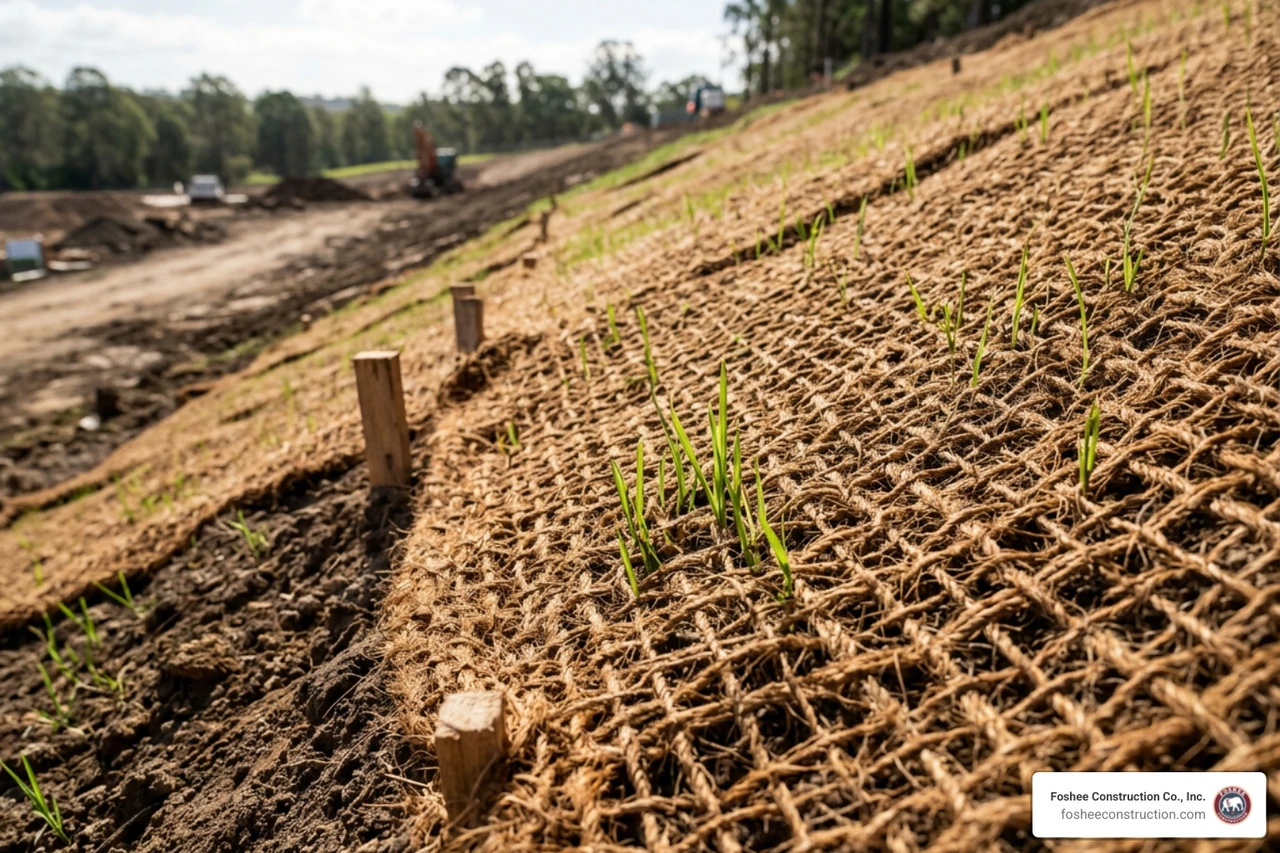
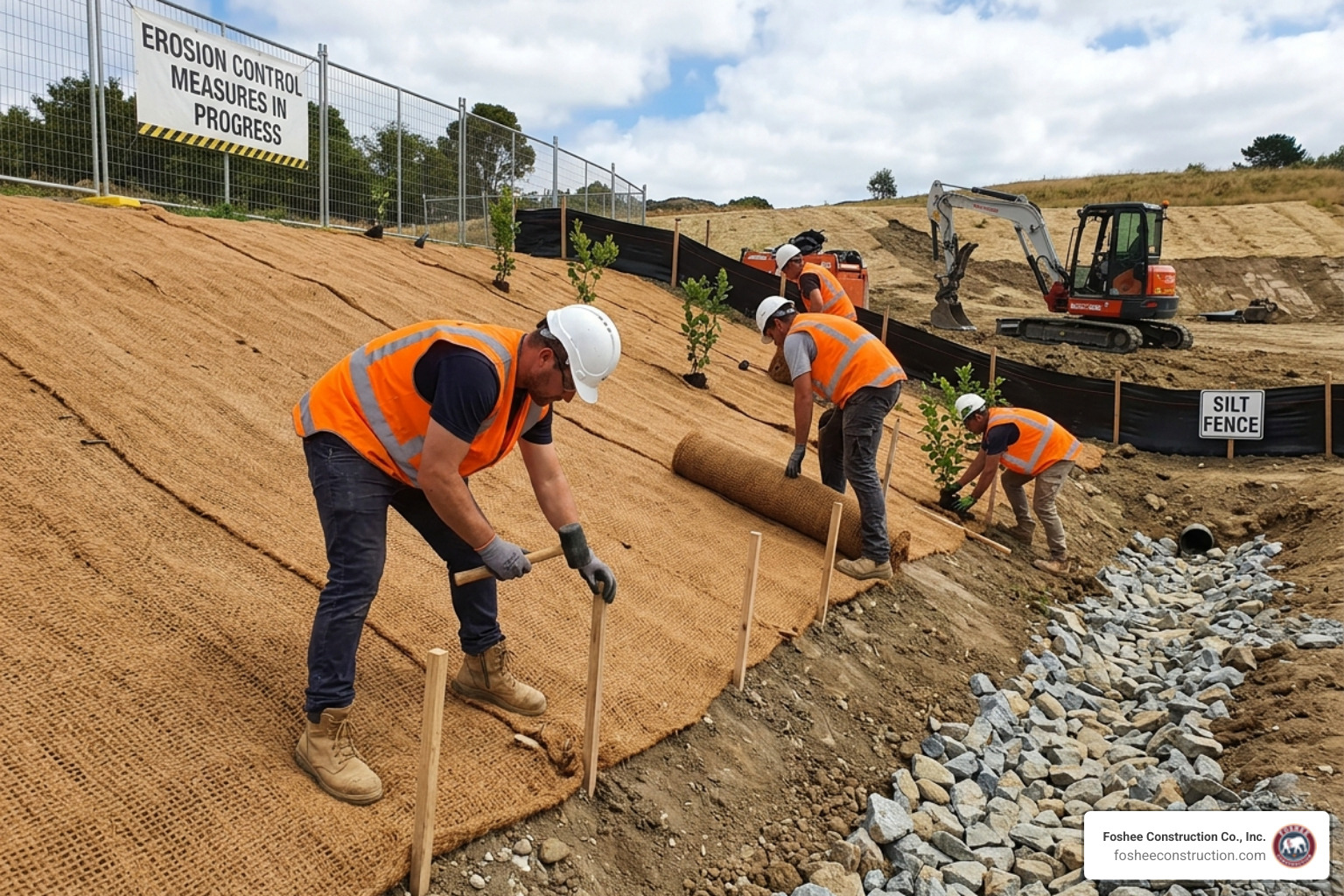
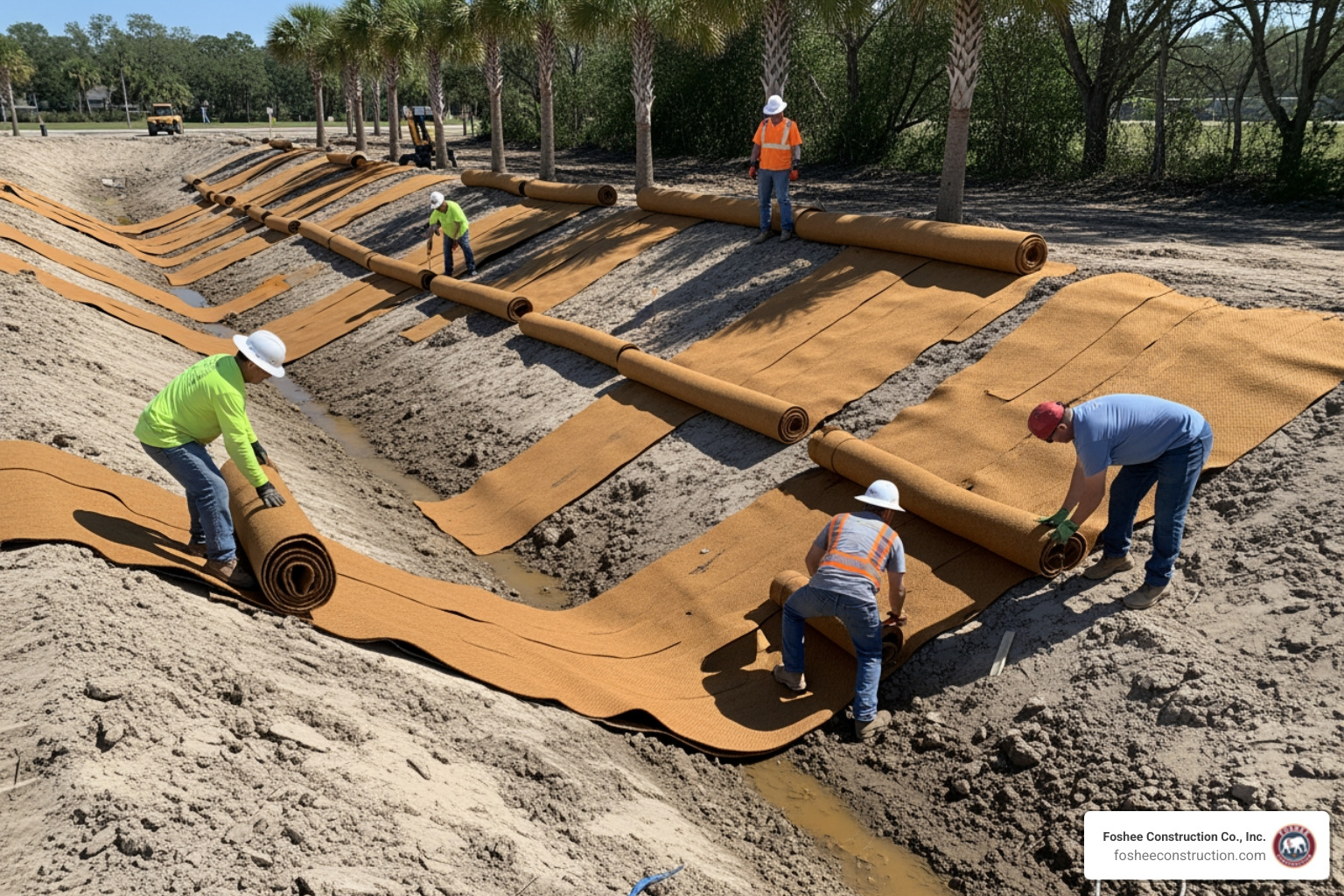
Erosion control blankets and Turf Reinforcement Mats (TRMs) are excellent for Low Impact Development (LID) projects. They are designed to hold the soil in place just long enough for grass to grow. Once the grass is established, the roots do the heavy lifting of holding the soil.
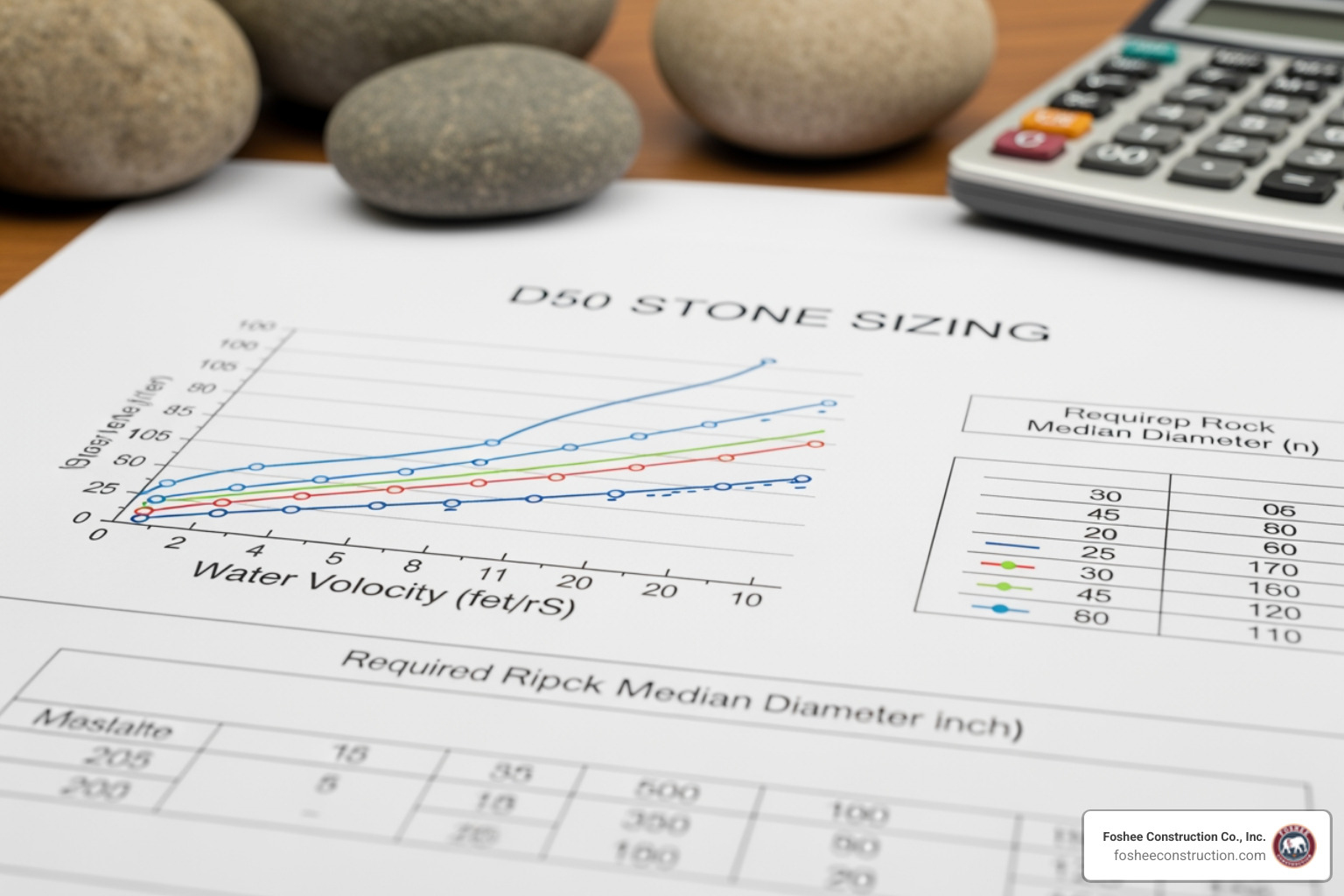
However, blankets have limits. If you have a ditch that carries water at 10 feet per second (fps) during a storm, grass will be ripped right out of the ground. That’s where erosion control rip rap is required. Riprap rock sizes correlate directly with velocity:
There is a growing trend toward "vegetated riprap" or "joint planting." This is a hybrid approach where we install the riprap as usual but then plant live willow bundles or "stakes" in the gaps between the rocks.
This offers the best of both worlds:
One of the biggest myths about riprap is that it's "set it and forget it." While it is low-maintenance, it's not no-maintenance.
We recommend an annual inspection and a mandatory check after every major storm event (like a hurricane or tropical storm). We look for:
The cost of riprap varies wildly based on your location and the type of stone. In Florida, hauling expenses are a major factor. Rock is heavy, and the further the quarry is from your site in Minneola or Lake County, the higher the price.
We recommend a comprehensive structural review every five years to ensure the system is still meeting the original design goals, especially if upstream development has changed the volume of water entering your drainage ditch.
Compared to throwing down some seed and straw, yes. It requires heavy machinery, expensive raw materials, and skilled labor. However, when you consider the cost of repairing a failed drainage ditch three times in five years, riprap often proves to be the most cost-effective long-term solution.
In our experience, angular granite or high-density limestone are the winners. The key isn't just the "type" of rock, but the angularity. You want jagged edges that lock together. Avoid rounded river rocks for any area with significant water flow.
Only up to a 2:1 ratio. If your slope is steeper than that, the rocks will likely slide. For steeper slopes, you need to look into gabions (wire baskets), "grouted riprap" (where concrete is poured into the gaps), or mechanical soil stabilization.
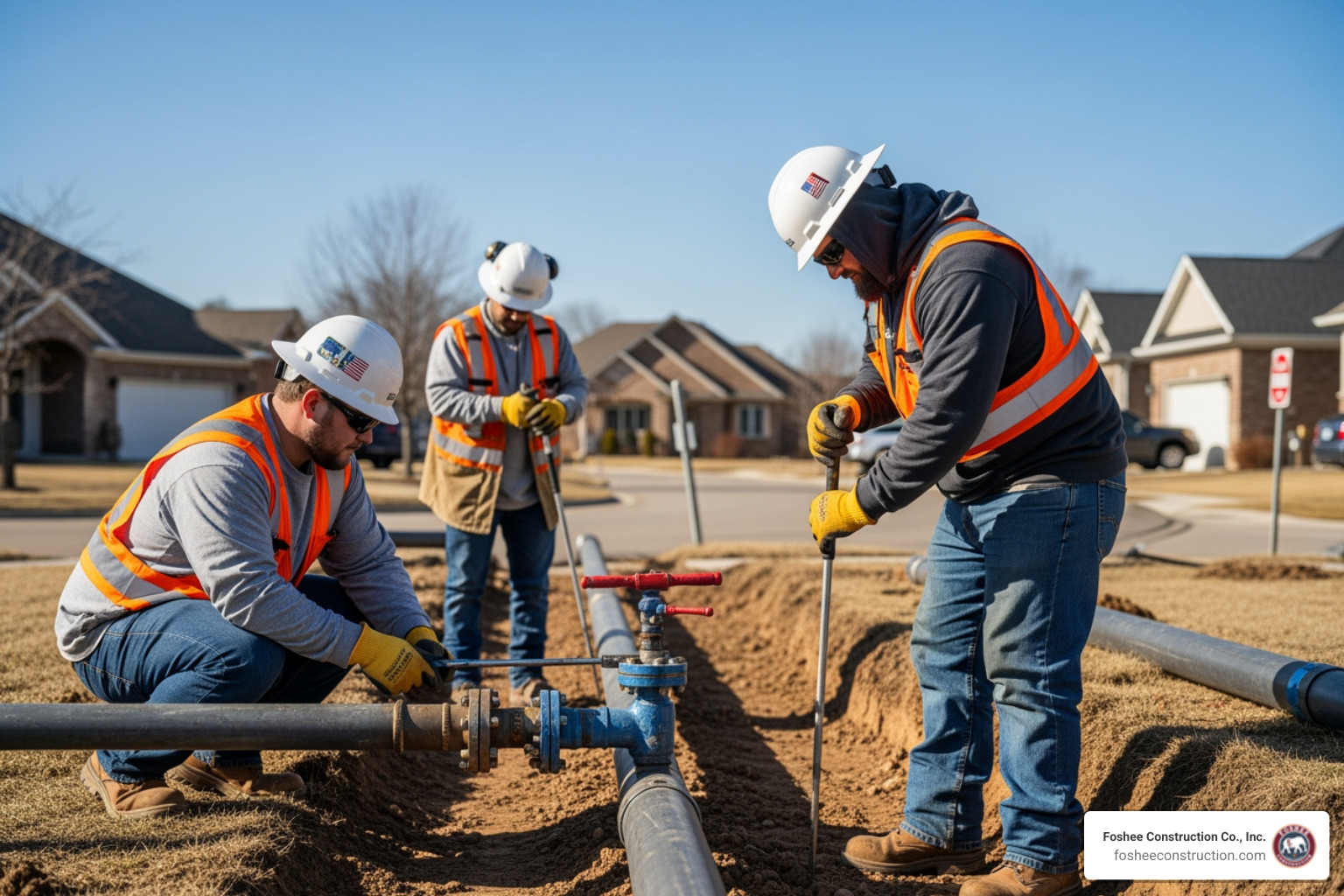
At Foshee Construction Co., Inc., we understand that site preparation is the foundation of every successful project. Whether you're managing a residential development in Minneola or a commercial site in Lake County, getting your drainage right the first time is essential.
Erosion control rip rap is a powerful tool in our arsenal, but it requires a disciplined approach to design and installation. From ensuring a 95% Proctor density on the subgrade to selecting the perfect d50 stone size for Florida's unique flow conditions, we pride ourselves on reliable relationships and safety-focused execution.
If you're dealing with a washing-out ditch or need a professional team to handle your complete site prep, we’re here to help. More info about site preparation services can be found on our website, where we offer transparent bids and a commitment to keeping your project on schedule. Let's make sure your next project stands on solid ground—and stays there.
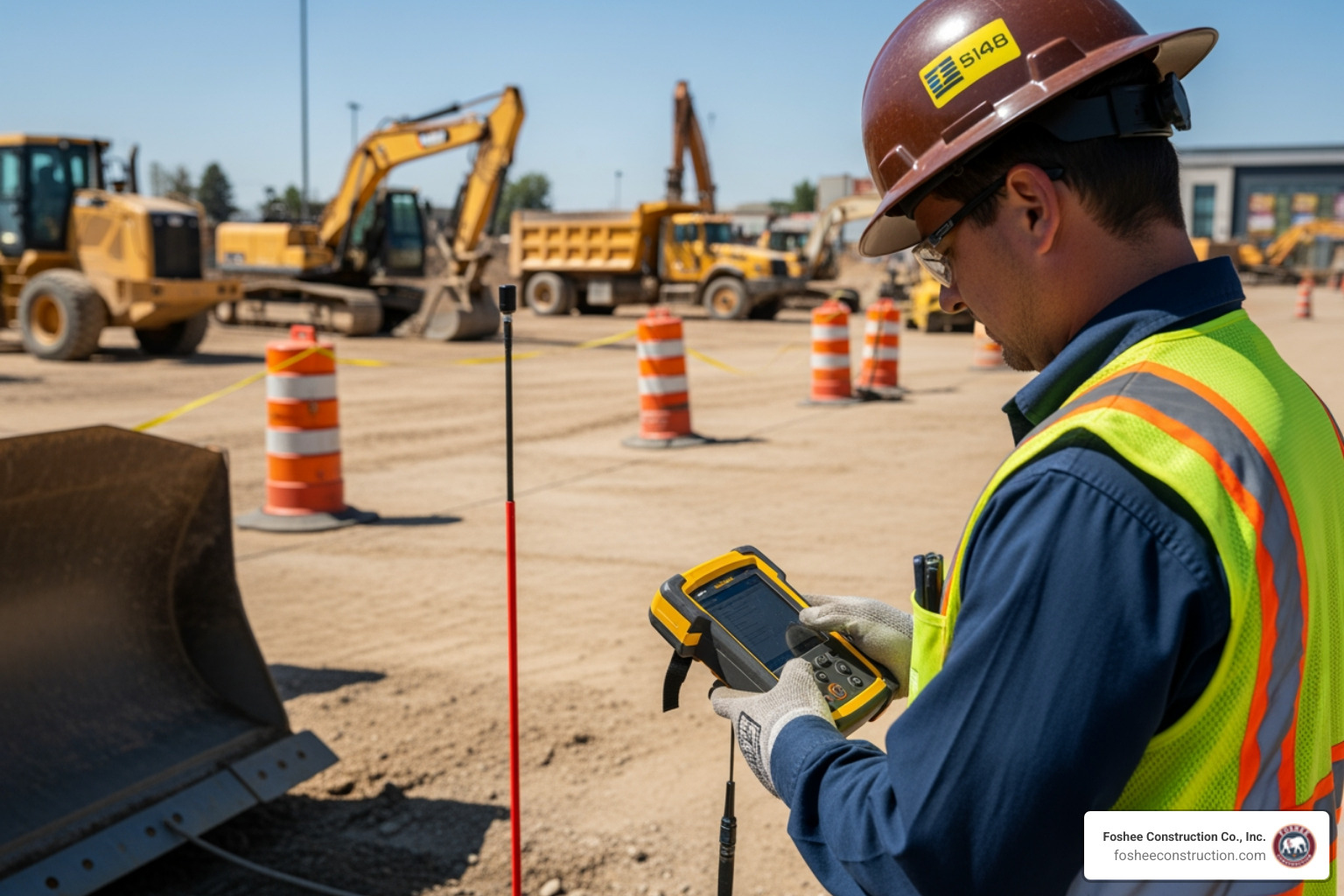
We build bids using HeavyBid and AGTEK because the details matter long before the job starts. When the numbers are accurate and the scope is clearly defined, it sets the tone for how the entire project runs. Estimating isn’t just a step in the process, it’s the foundation we build on.
That same mindset carries into the field. Our crew is trained to work with purpose, follow the Civil Engineers’ Plan to the finest detail, and hold the line on quality. When expectations are clear from day one, there’s no need for shortcuts, and no confusion about how the work gets done.
Clients trust our bid packages because they’re complete and ready to use. Project managers know what we’re covering, what’s excluded, and how we plan to approach the job. That clarity removes friction and lets teams focus on execution instead of interpretation.
As part of our review process, we go into the plans before anything hits the site. We ask the questions early, resolve issues before they show up in the field, and keep RFIs moving. This approach prevents delays and protects the timeline.
Over time, that consistency builds trust. Many of the people we work with today came through referrals from past projects – engineers, GCs, and superintendents who’ve seen how we operate and want the same experience again.
In 2024, Foshee Construction was acquired by Saga Infrastructure Solutions, a national network of civil construction companies. Saga supports regional contractors by giving them access to better tools, long-term resources, and operational backing, without changing how they run day to day.
Foshee will continue to operate under its name, with the same team and field leadership in place.
“From the very time a project starts, we start that partnership. We try to catch as much as we can with the tools that we have. Not everybody is using the software platforms we are. That’s the differentiator: we’re not just bidding. We’re anticipating, problem-solving, and making sure the job runs right.”
— Don, CEO, Saga Infrastructure Solutions
Foshee is now part of a broader regional strategy that includes Florida, the Piedmont Atlantic, Texas, Colorado, and the Arizona Sun Corridor. The name, crews, and standards remain. What’s improving is the support behind it.