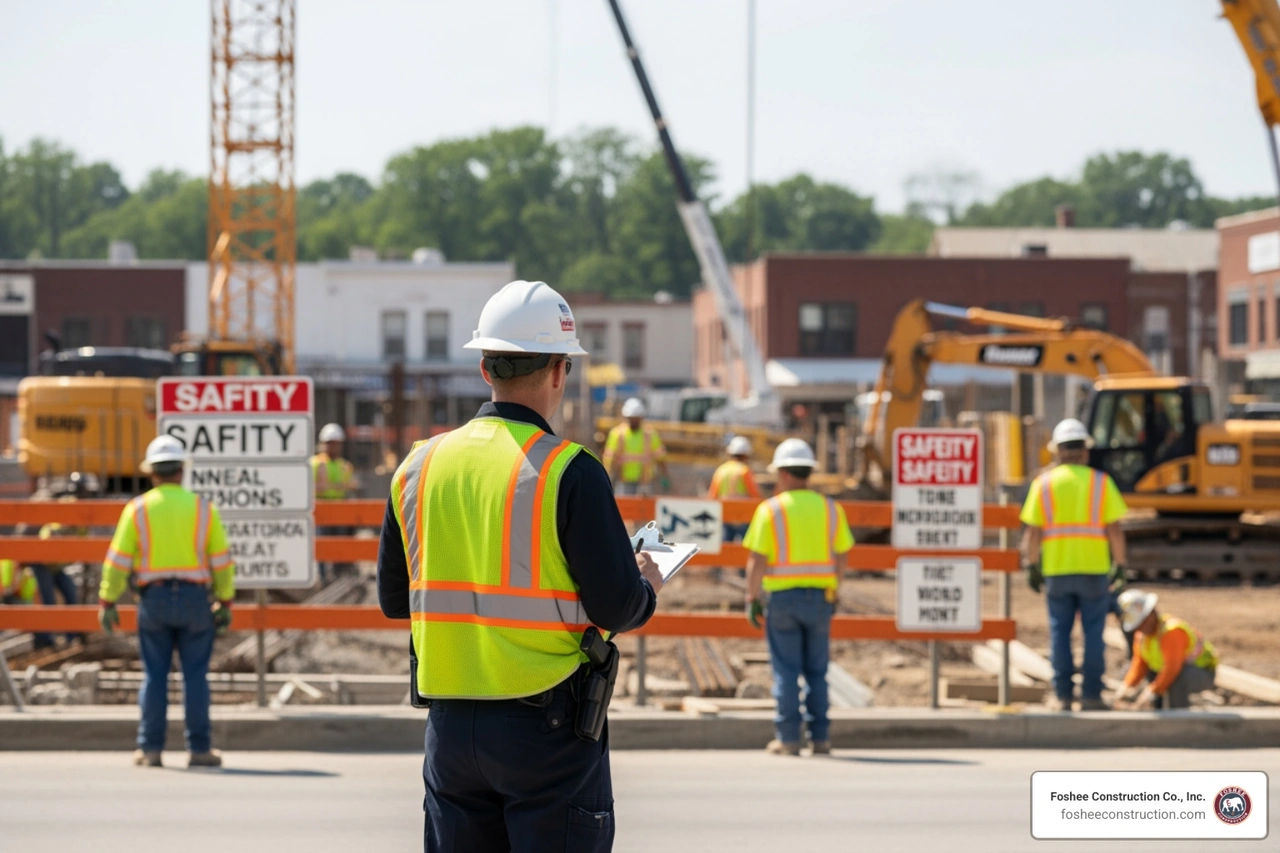

Construction fall protection is the set of systems, equipment, and practices used to prevent workers from falling — or to stop a fall before it causes serious injury.
Here's a quick overview of what you need to know:
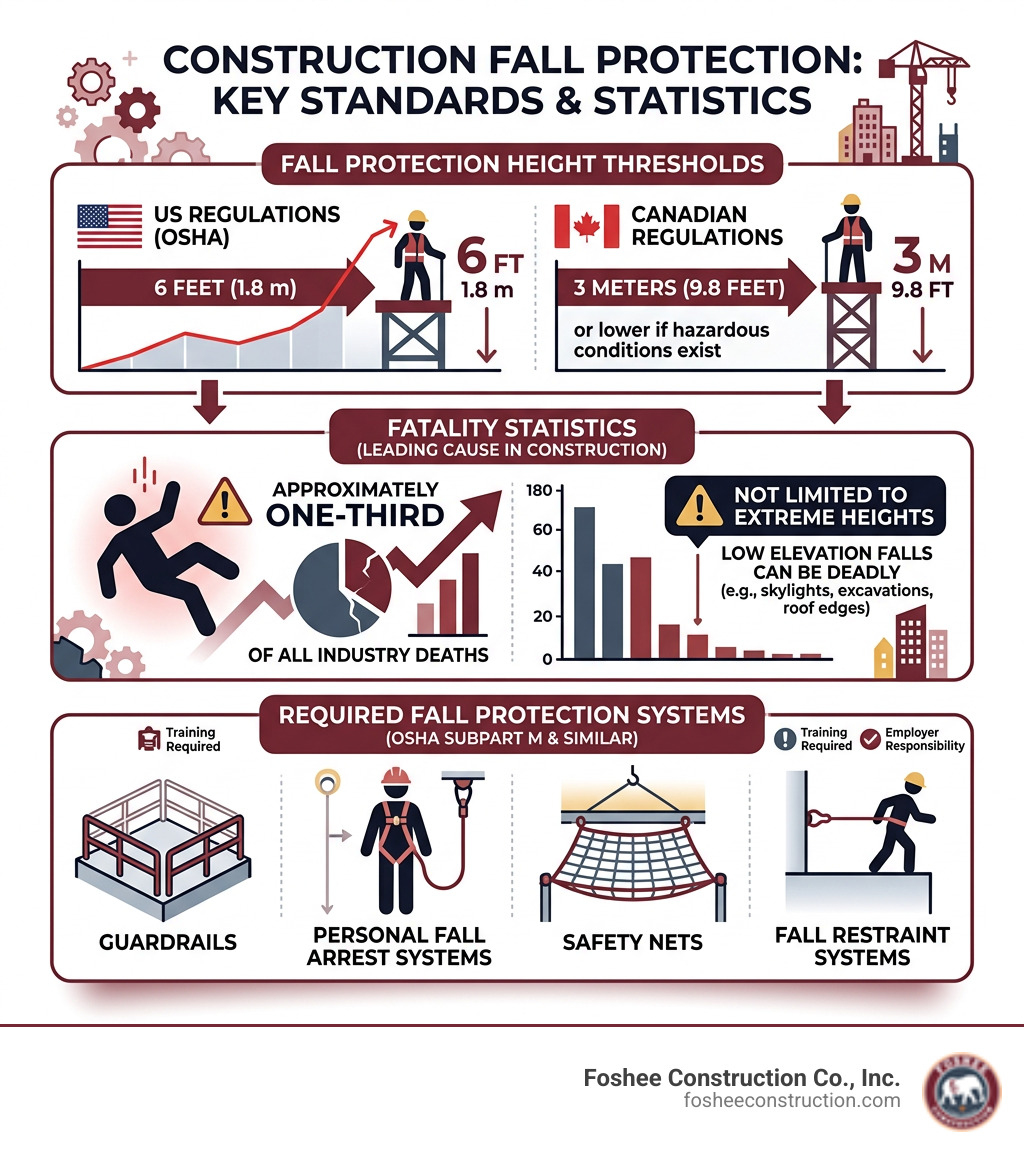
Falls are the leading cause of fatalities in construction — accounting for roughly one-third of all deaths in the industry. That's not a rounding error. It's a persistent, preventable crisis.
And the danger isn't limited to extreme heights. Falls from relatively low elevations can be just as deadly. A worker can fall through a skylight opening, trip into an excavation, or slip off an unguarded roof edge — and none of those scenarios require a multi-story drop to end a career or a life.
For Florida general contractors and developers, this isn't just a safety issue. It's a project risk issue. A serious fall incident can shut down a jobsite, trigger OSHA investigations, inflate insurance costs, and blow your schedule entirely. The projects that run on time and on budget are almost always the ones where safety discipline is baked in from day one — not bolted on after something goes wrong.
This guide walks you through everything you need to know: the regulations, the systems, the equipment, and the site-specific plans that keep workers safe and projects moving.
In site preparation and heavy construction, we don’t just throw a harness at a problem and call it a day. Safety experts follow a specific "Hierarchy of Controls" to manage risks. Think of it like a filtered funnel: we try the most effective methods first and only move down the list if the top options aren't "practicable."
When choosing between personal systems, it is vital to understand the difference between restraint and arrest. Fall Protection Overview | Occupational Safety and Health Administration provides a foundation for these choices.
FeatureFall RestraintFall ArrestGoalPrevents the worker from reaching the edge.Stops the worker after they have fallen.Fall DistanceZero.Can be several feet.EquipmentHarness and fixed-length lanyard.Harness, shock absorber, and anchor.Risk of InjuryExtremely low.High (due to arresting forces).
At Foshee Construction, we prefer fall restraint whenever possible. Why? Because it’s much better to never fall in the first place than to rely on equipment to catch you mid-air.
Fall restraint (or travel restriction) uses a lanyard of a specific length that physically prevents you from walking over the edge. It’s like a leash for safety. Work positioning is a similar concept often used by rebar workers or those on sloped surfaces; it holds the worker in place so they can use both hands, but it must be backed up by a fall arrest system if there is any chance of a free fall.
Fall arrest, on the other hand, is designed to stop a fall in progress. This system must limit the "free fall distance" to 6 feet or less and ensure the worker doesn't hit the ground or any lower level. Because the body takes a hit when the rope snaps taut, these systems require energy absorbers (shock packs) to keep the force on the body under 1,800 pounds. You can find more technical details on these setups at the eTool : Construction - Falls - Personal Fall Arrest Systems.
If you can walk around a site without thinking about falling, it’s probably because of guardrails. These are considered "passive" protection because they don't require the worker to wear equipment or receive specialized "active" training to be protected.
A compliant guardrail isn't just a couple of 2x4s nailed together. According to 1910.28 - Duty to have fall protection and falling object protection, a system must include a top rail, a midrail, and a toeboard. The toeboard is crucial—it prevents your hammer or a loose brick from sliding off the edge and knocking out a coworker on the ground.
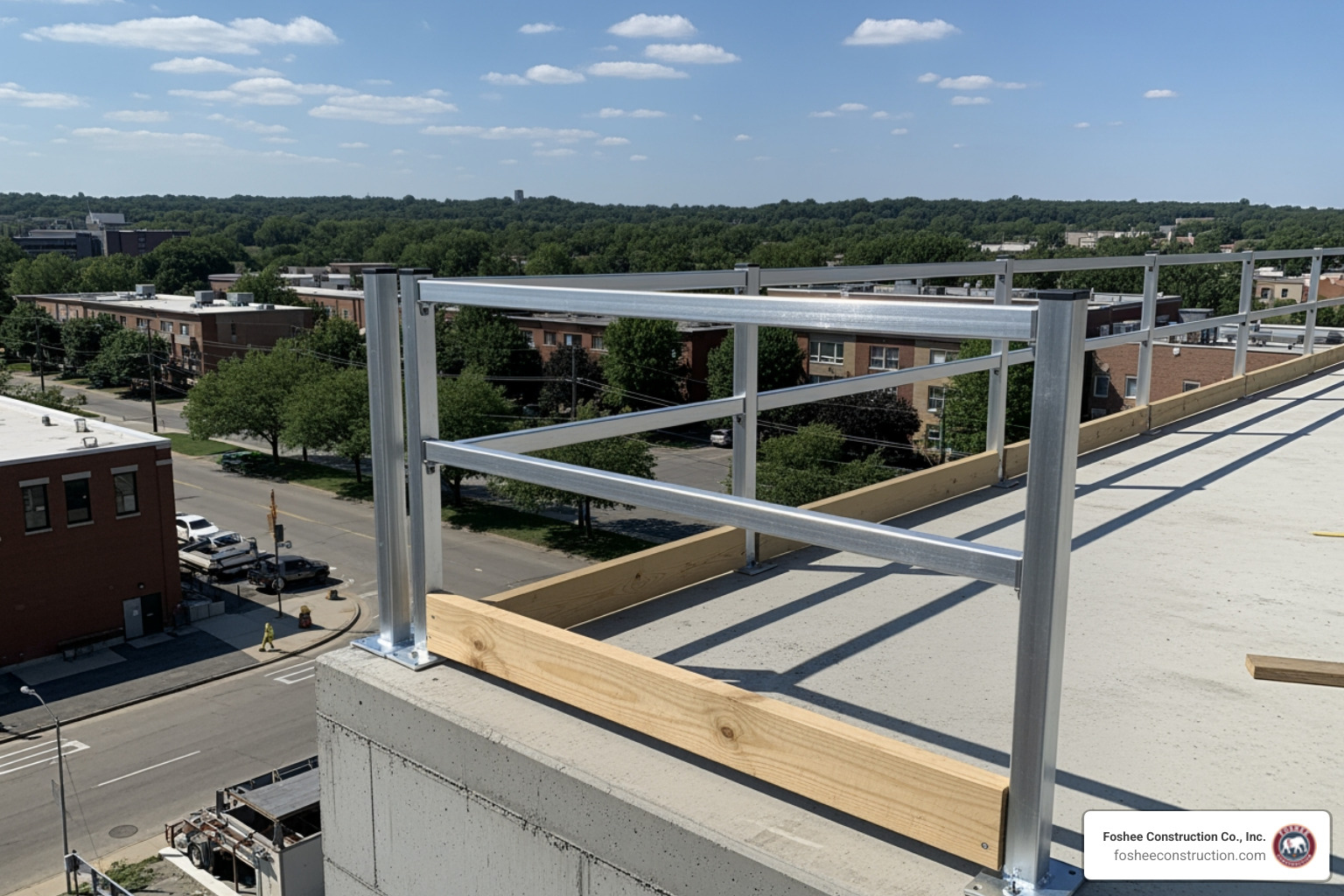
One of the most overlooked hazards on a site is the "hole." OSHA defines a hole as any gap or void 2 inches or more in its least dimension. This includes floor drains, HVAC duct openings, and—most dangerously—skylights. Many workers mistakenly believe a skylight "cover" (the plastic dome) will hold their weight. It won't. In the eyes of safety law, an unguarded skylight is just a hole in the roof.
To be legal and safe, guardrails and covers must meet strict engineering specs:
When guardrails aren't an option—like when we're doing leading-edge work or initial steel erection—we turn to construction fall protection PPE. A personal fall arrest system (PFAS) consists of three essential parts: the anchorage, the body harness, and the connector (like a lanyard).
Full-body harnesses are the only acceptable body wear for fall arrest. Body belts were banned for fall arrest back in 1998 because they can cause internal organ damage or even "fold" a worker in half during a fall. The harness distributes the force across the thighs, pelvis, chest, and shoulders.
Connectors often include Self-Retracting Devices (SRDs) or lifelines. An SRD works like a car seatbelt; it allows for smooth movement but locks instantly if a fall occurs, minimizing the free-fall distance. All this equipment must meet rigorous standards, such as ANSI A10.32 or CSA Z259, to ensure they won't fail when you need them most.
The best harness in the world is useless if it’s tied to something that can’t hold the weight. This is where the "5,000-pound rule" comes in.
Never tie off to a PVC pipe, a conduit, or a guardrail. If it isn't designed to be an anchor, it isn't an anchor.
In Florida, we generally follow the OSHA "6-foot rule." If a worker is 6 feet or more above a lower level, they must have fall protection. However, there are exceptions. In steel erection, the threshold can be 15 feet for most work and 30 feet for "connectors."
But safety isn't just about heights. If you are working over "dangerous equipment" (like a vat of chemicals or a spinning auger), you need fall protection regardless of the height.
A critical part of compliance is the written fall protection plan. While OSHA allows for some flexibility in residential construction or leading-edge work where conventional systems are "infeasible," you must document why they are infeasible and what alternative measures you are taking.
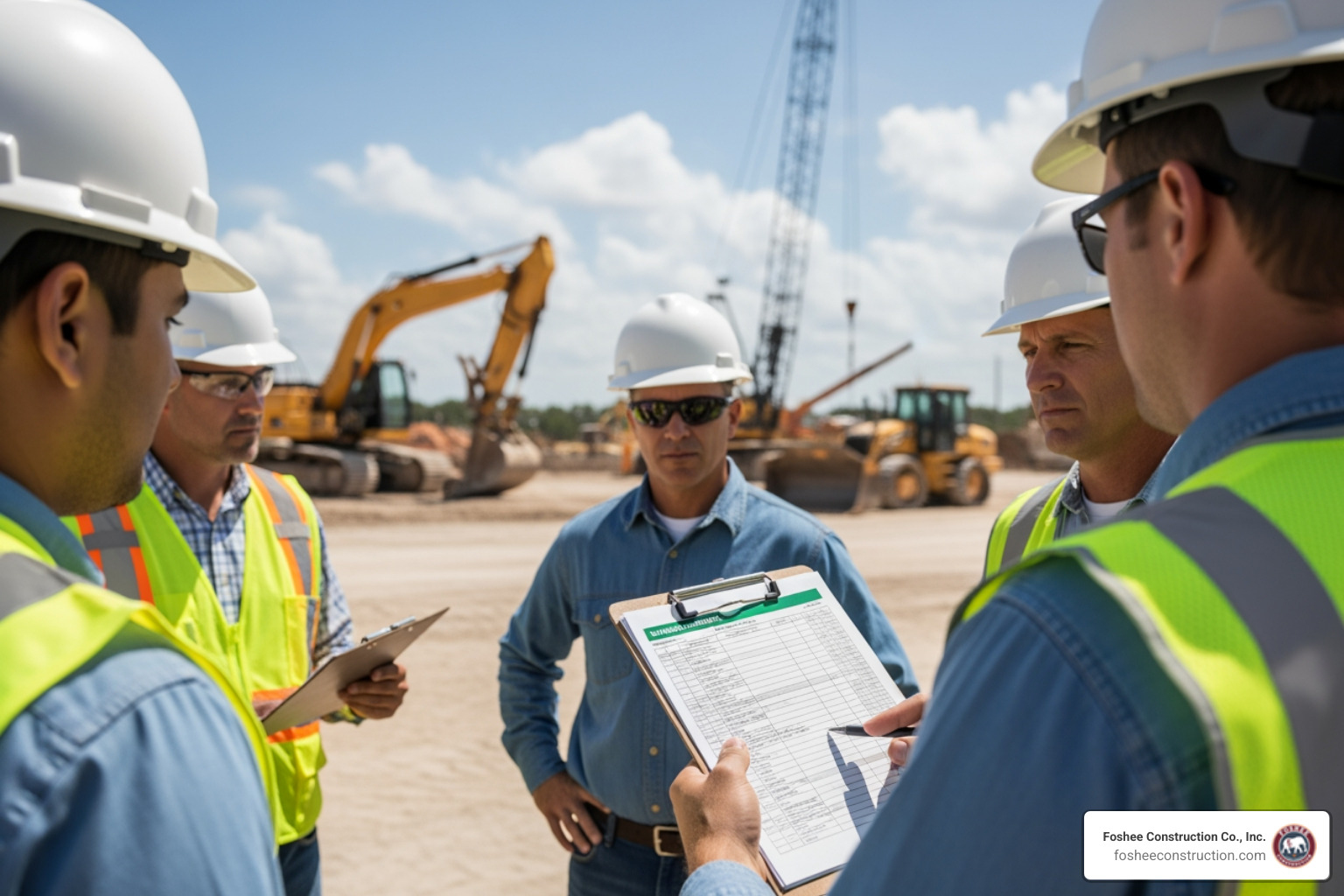
You can't just hand a guy a harness and say, "Good luck." Employers must provide a training program that covers:
Training must be provided in a language the worker understands. At Foshee Construction, we keep meticulous records. If it isn't documented, it didn't happen. Most standards, like 1926.501 - Duty to have fall protection, require a written certification record that includes the worker's name, the date, and the signature of the trainer. We recommend a "refresher" every 3 years or whenever the equipment or site conditions change significantly.
Every jobsite is different. A flat parking lot is one thing, but what about a sloped roof or a deep trench?
Sloped Roofs: The "pitch" of a roof dictates the danger. A "low-slope" roof has a rise of 4 units or less for every 12 units of run. Anything steeper is a "steep roof" and requires more aggressive protection, like roof brackets (toe boards) or a full PFAS.
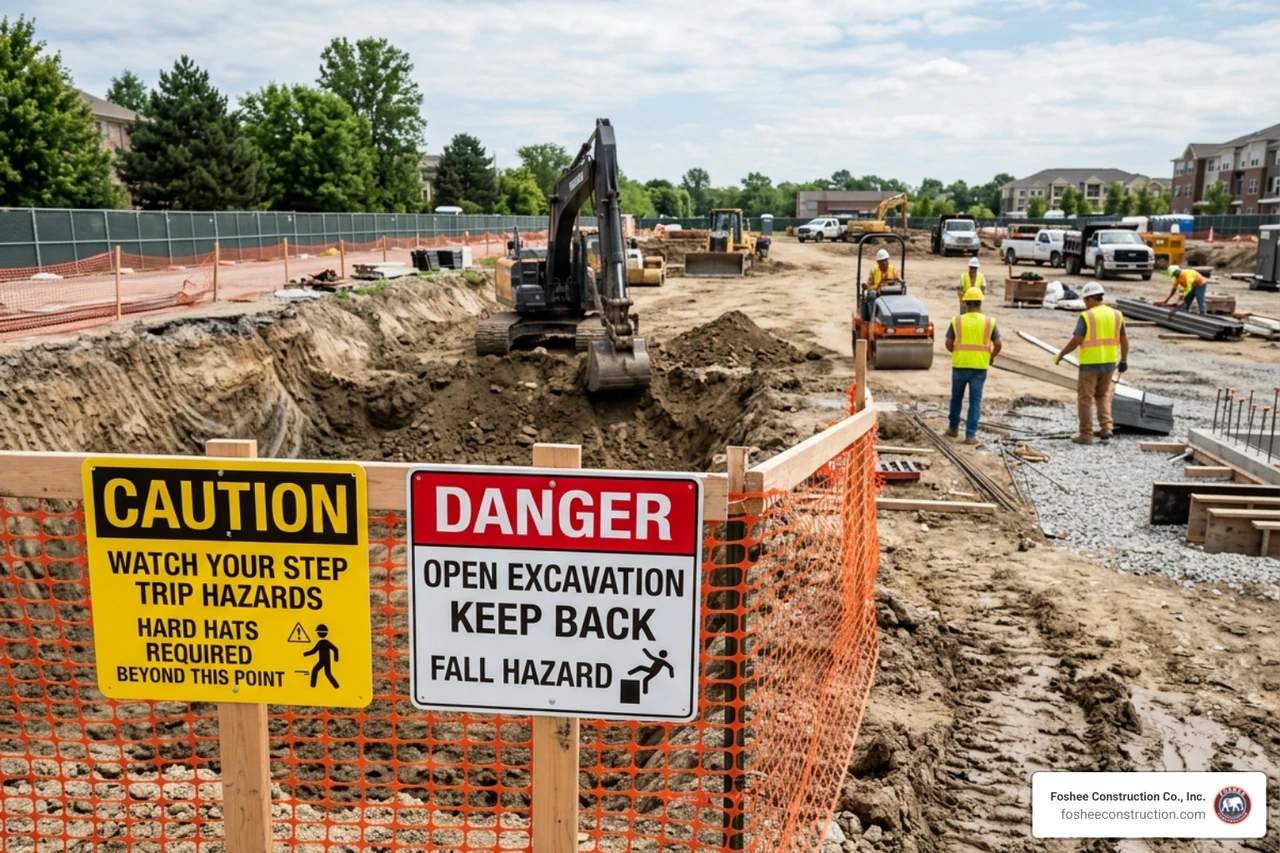
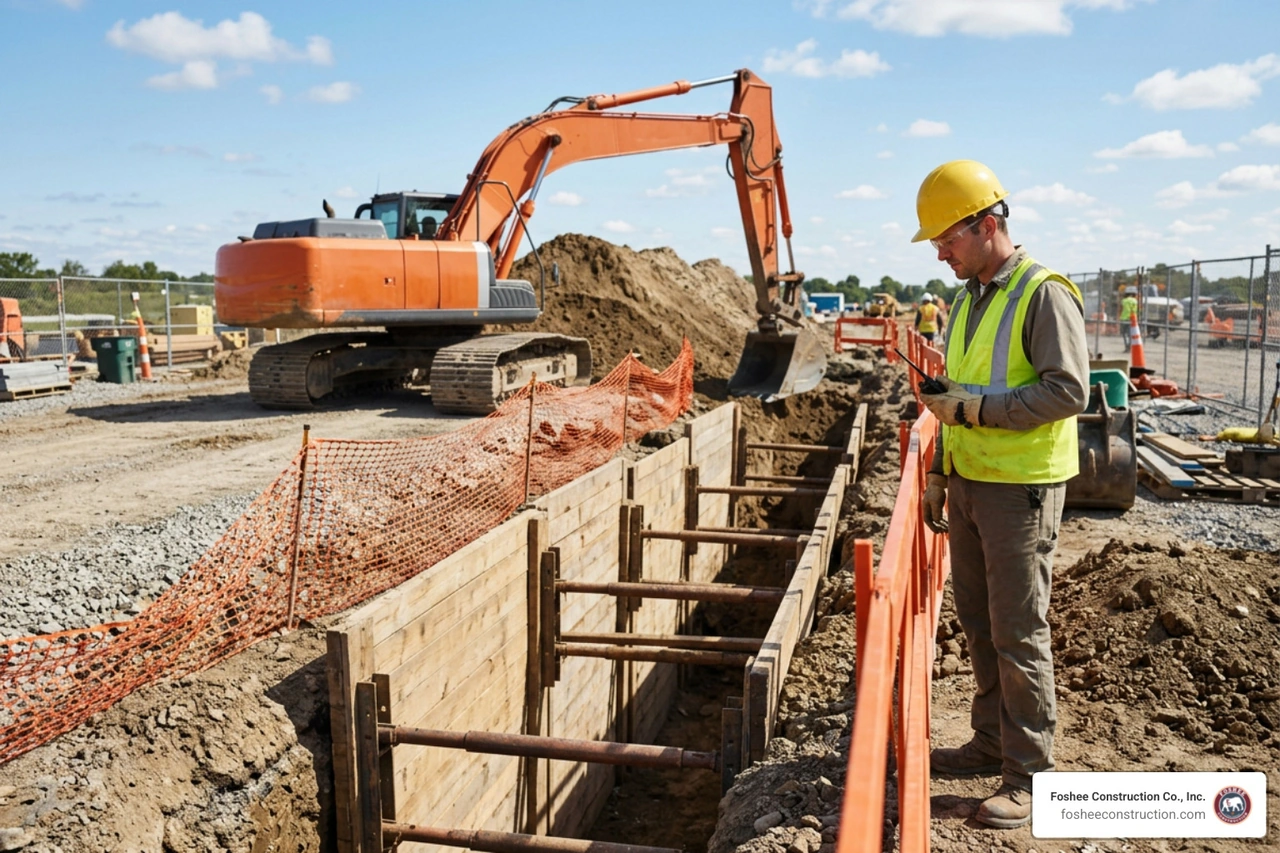
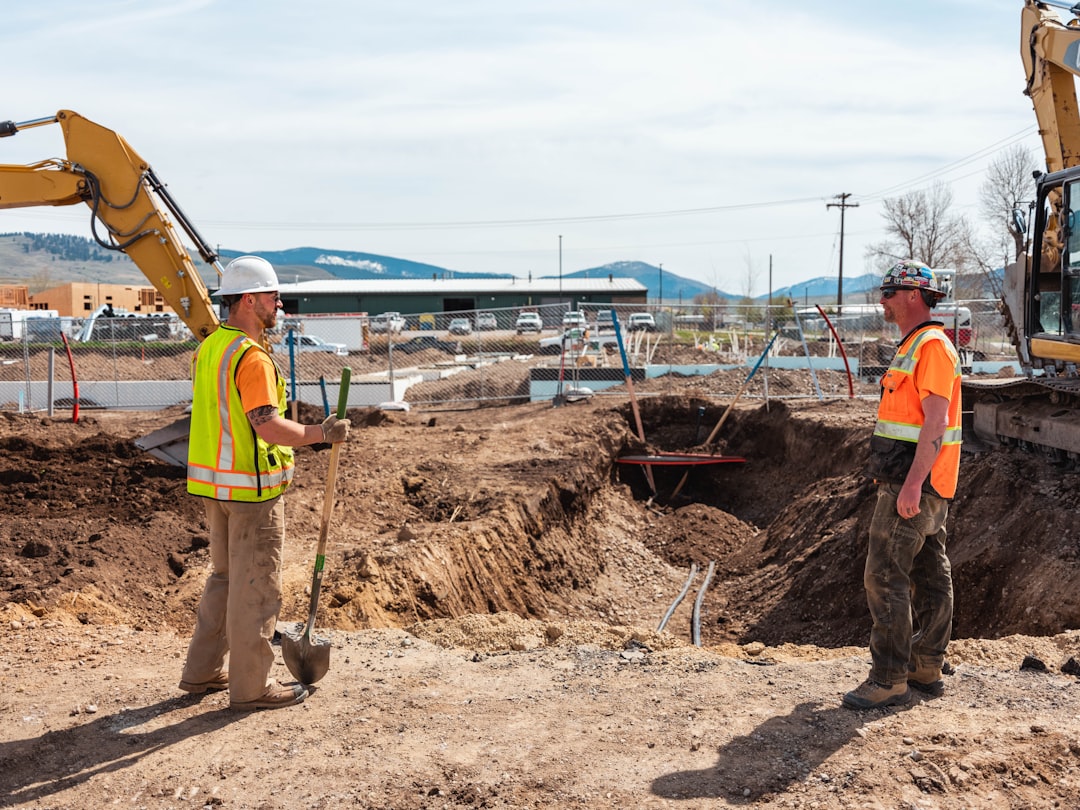
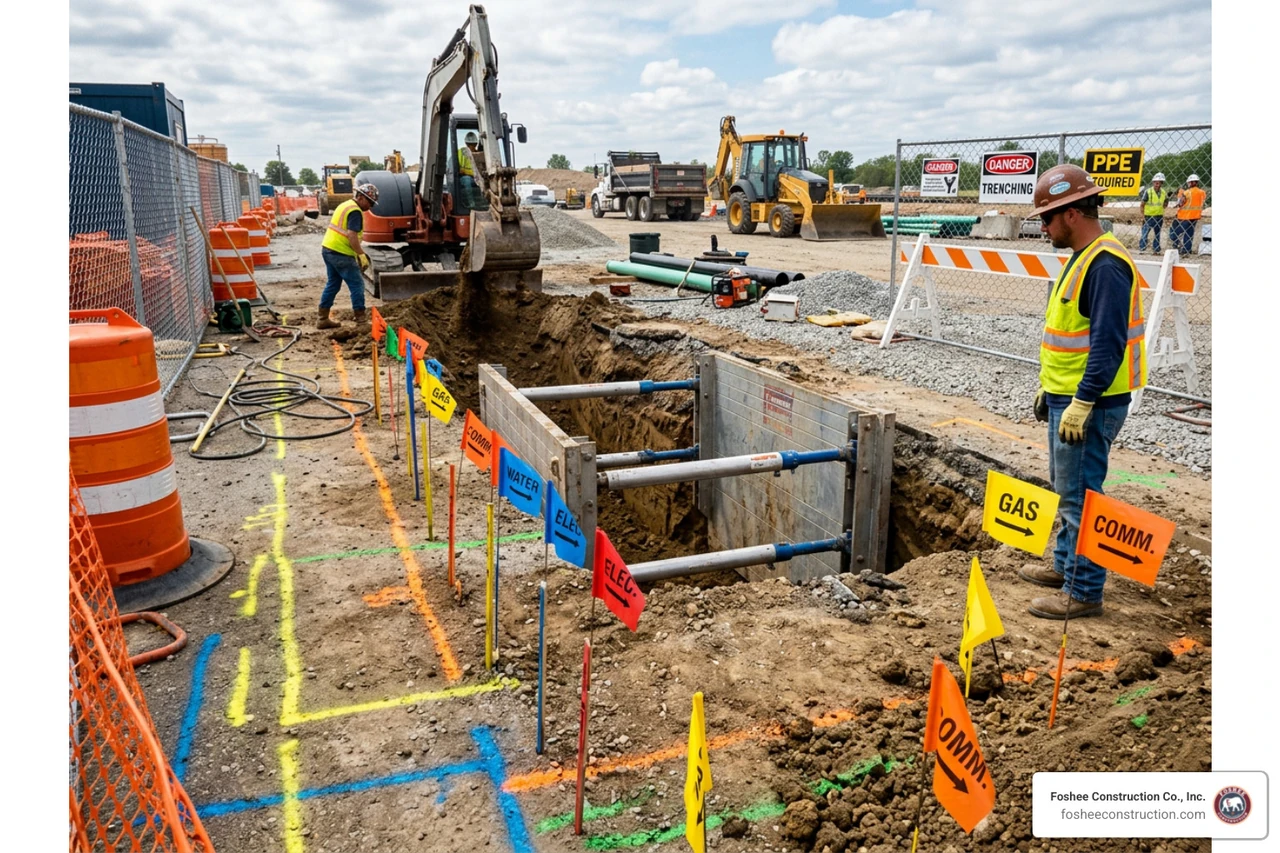
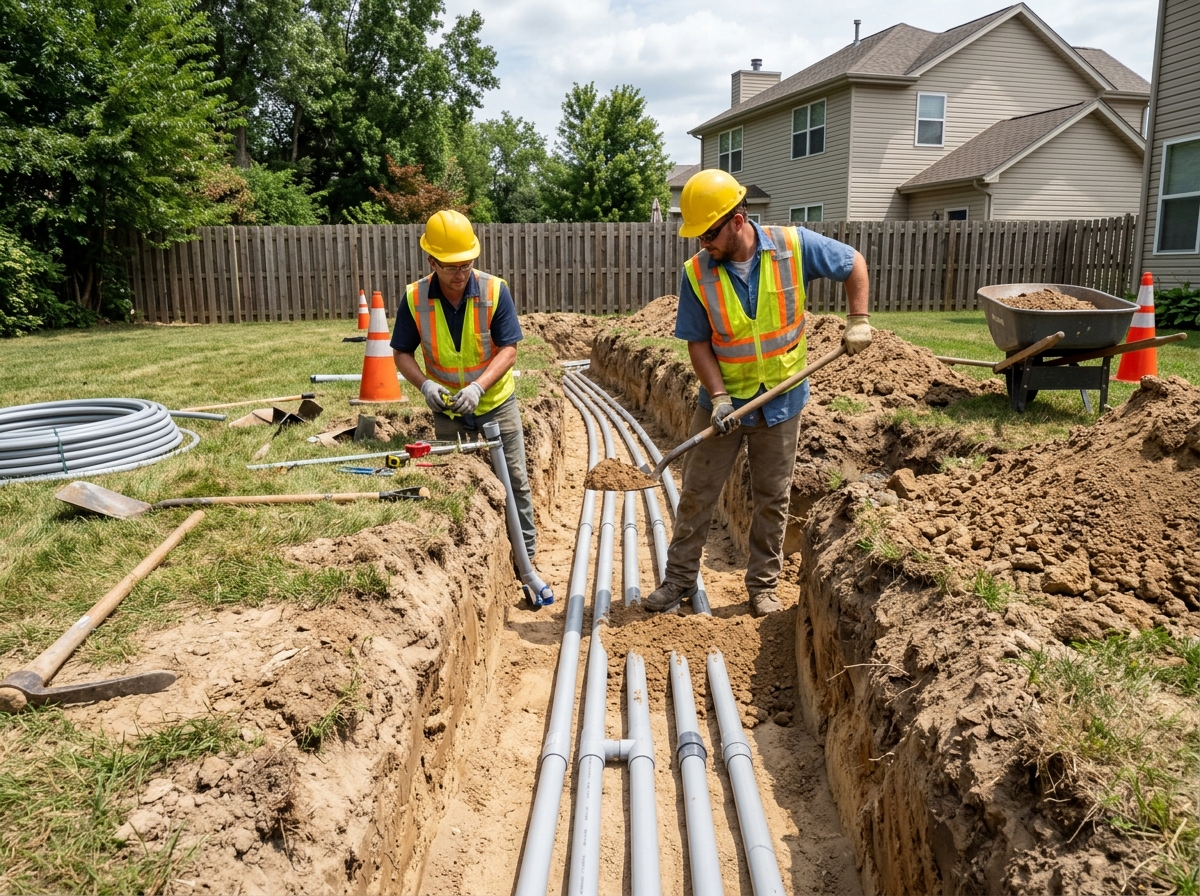
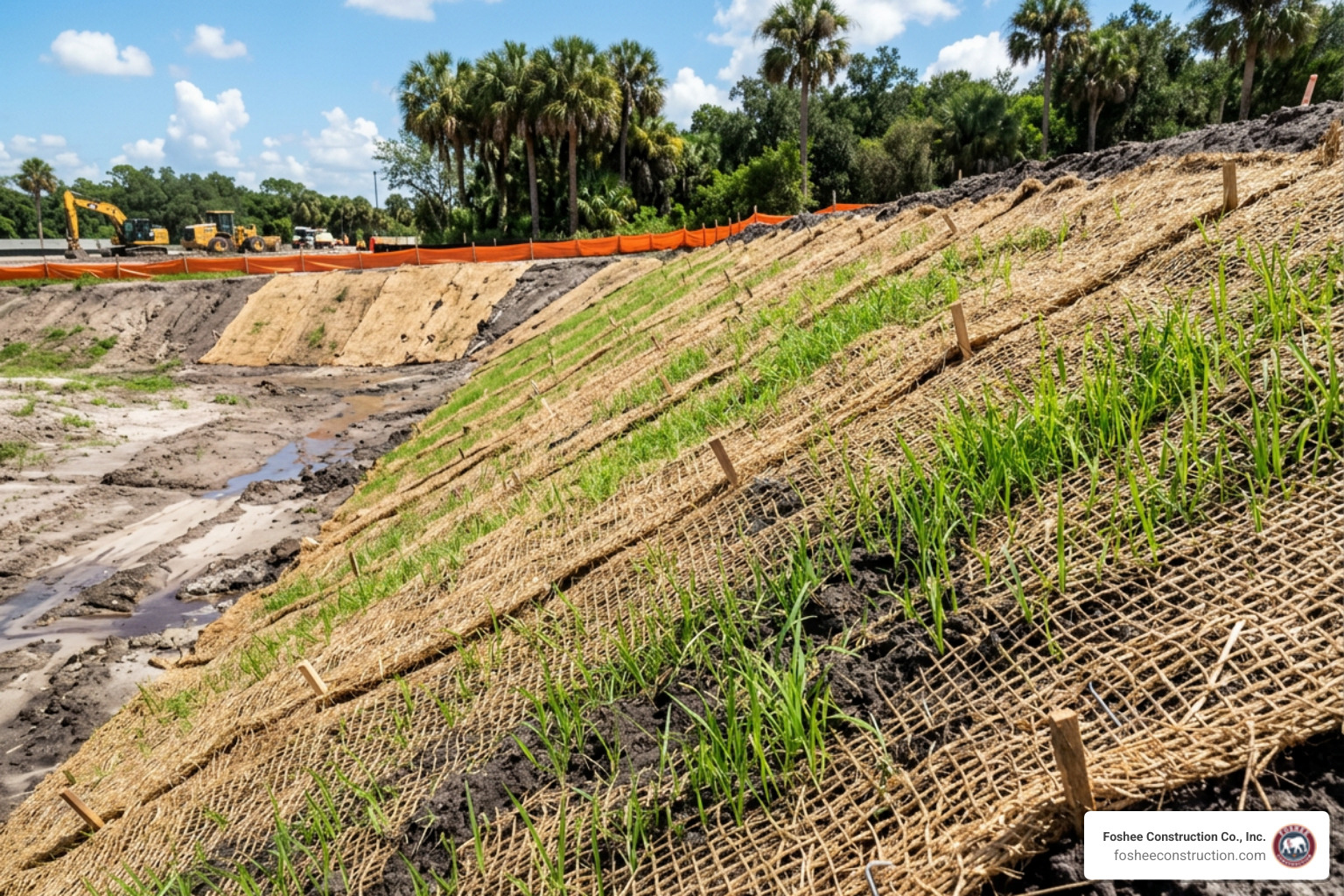
Excavations: We specialize in underground utilities and grading, so we know excavations. If a trench is 6 feet deep or more, and it isn't readily visible, you need a guardrail or a fence to keep people from falling in.
Leading Edge Work: This is when the edge is "moving" as you install floor or roof panels. This is high-risk work that often requires a "Controlled Access Zone" (CAZ) to keep unauthorized workers away from the danger area.
As mentioned earlier, skylights are a major hazard. During the construction phase, a skylight opening should be treated exactly like a hole in the floor. Once the skylight is installed, it still isn't safe to walk on.
We calculate the Total Fall Distance to ensure a worker won't hit the ground. This calculation includes:
If your math says you need 18 feet of clearance and you're only 12 feet up, your fall arrest system won't save you—you'll hit the ground before the rope goes taut. In those cases, you must use fall restraint.
You must measure the "plumb elevation difference" from the anchorage point to the nearest obstruction below. Add up your free fall (6 ft), deceleration (3.5 ft), worker height (6 ft), and a safety factor (2 ft). If the total (17.5 ft) is greater than your actual height, you need a different system, like a self-retracting lifeline that stops the fall in inches rather than feet.
"Practicable" means it is capable of being done. In safety law, cost alone doesn't make a guardrail "impracticable." You have to prove that installing a guardrail would be physically impossible or would create a greater hazard than not having one. It requires a formal risk-benefit analysis and often an engineering justification.
Under OSHA, you need a site-specific written plan if you are not using "conventional" fall protection (nets, rails, or PFAS). This is common in 1926.760 - Fall protection in steel erection, precast concrete erection, or residential roofing. The plan must be prepared by a "qualified person" and supervised by a "competent person."
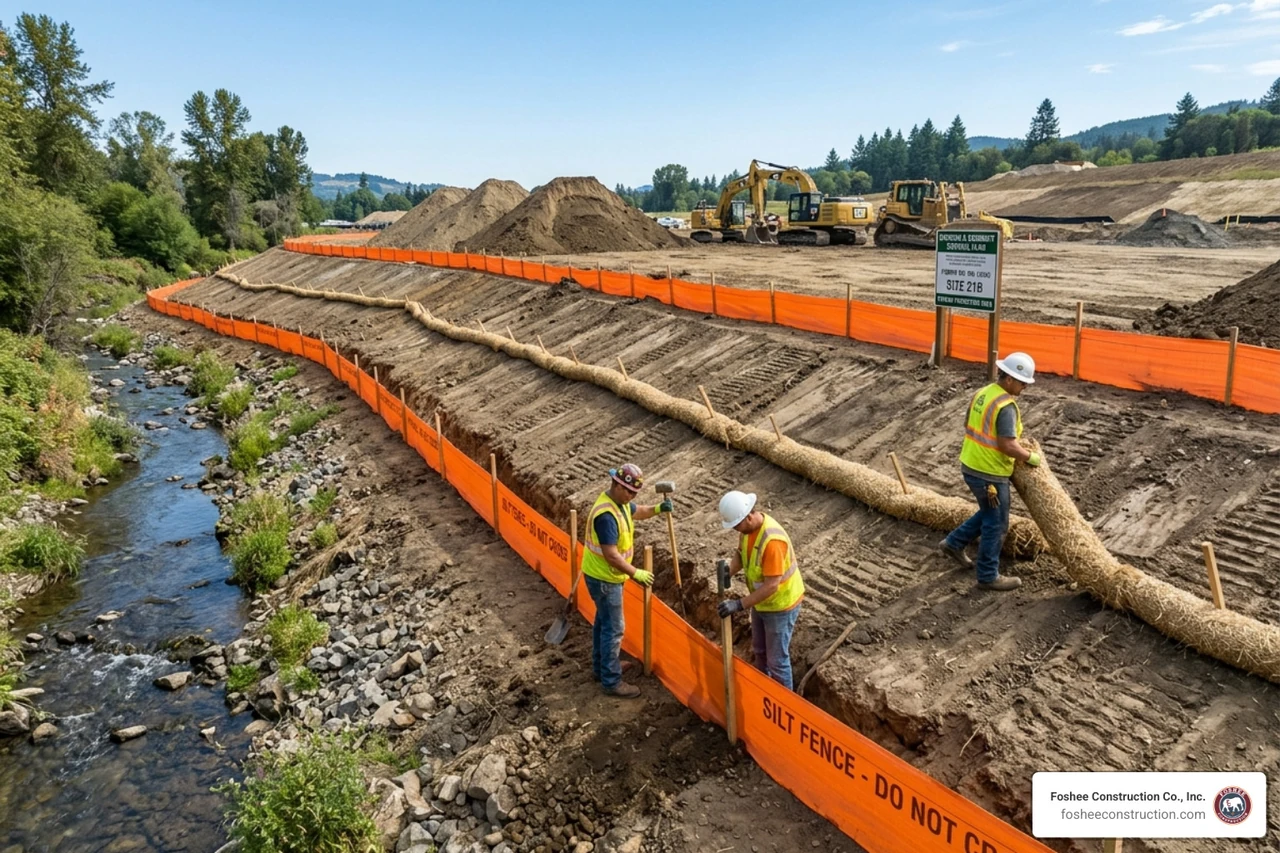
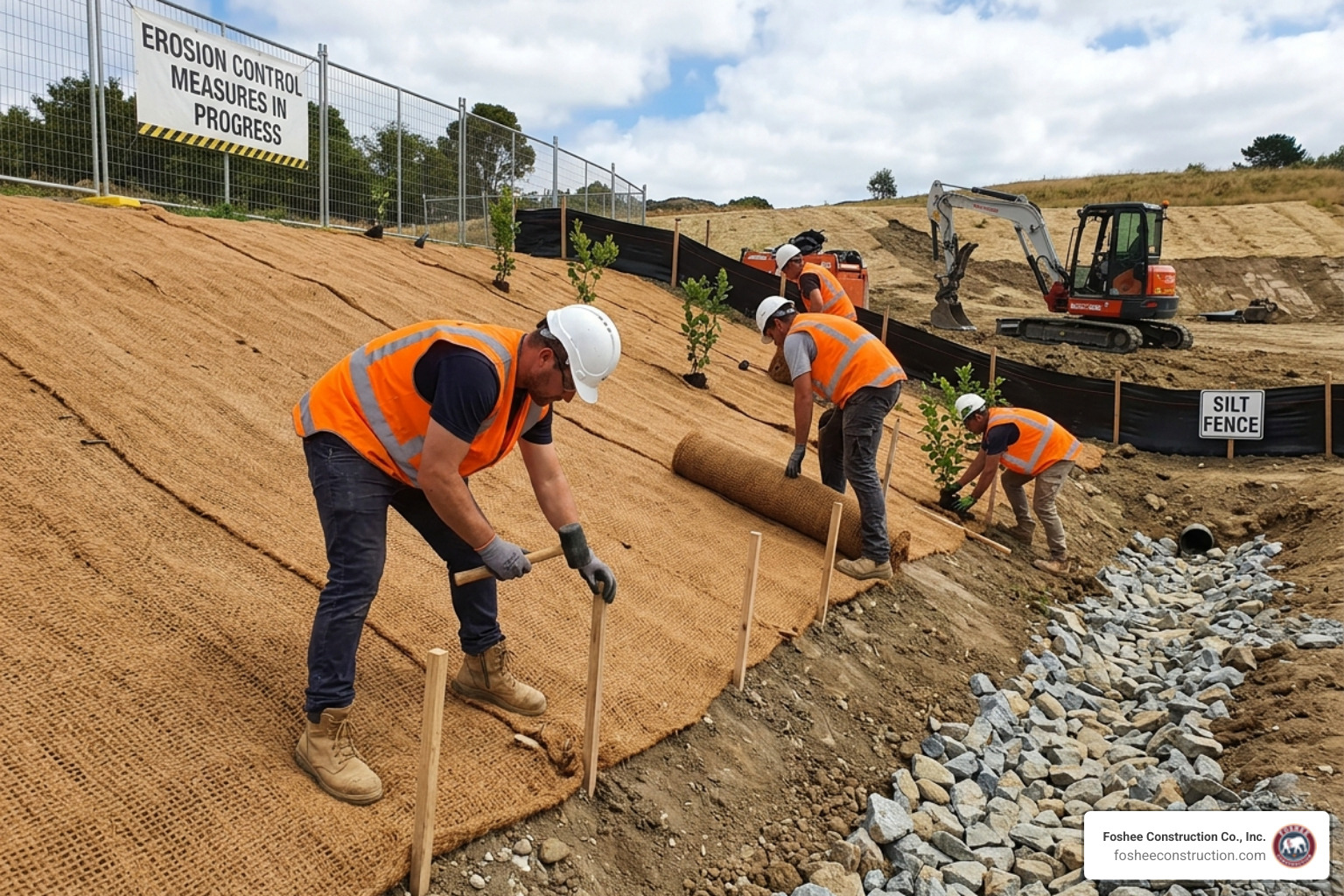
At Foshee Construction Co., Inc., we know that site preparation is the foundation of every successful project. Whether we are handling erosion control, grading, or underground utilities in Minneola or across Lake County, Florida, our focus on safety is what allows us to build reliable relationships with Florida's top contractors.
We pride ourselves on transparent bids and disciplined scheduling. But more than that, we pride ourselves on the fact that our team goes home every night. By mastering construction fall protection, we keep our feet on the ground—and your business in the air.
If you're looking for a partner in Florida who values safety as much as productivity, check out our site preparation services and let's get to work.
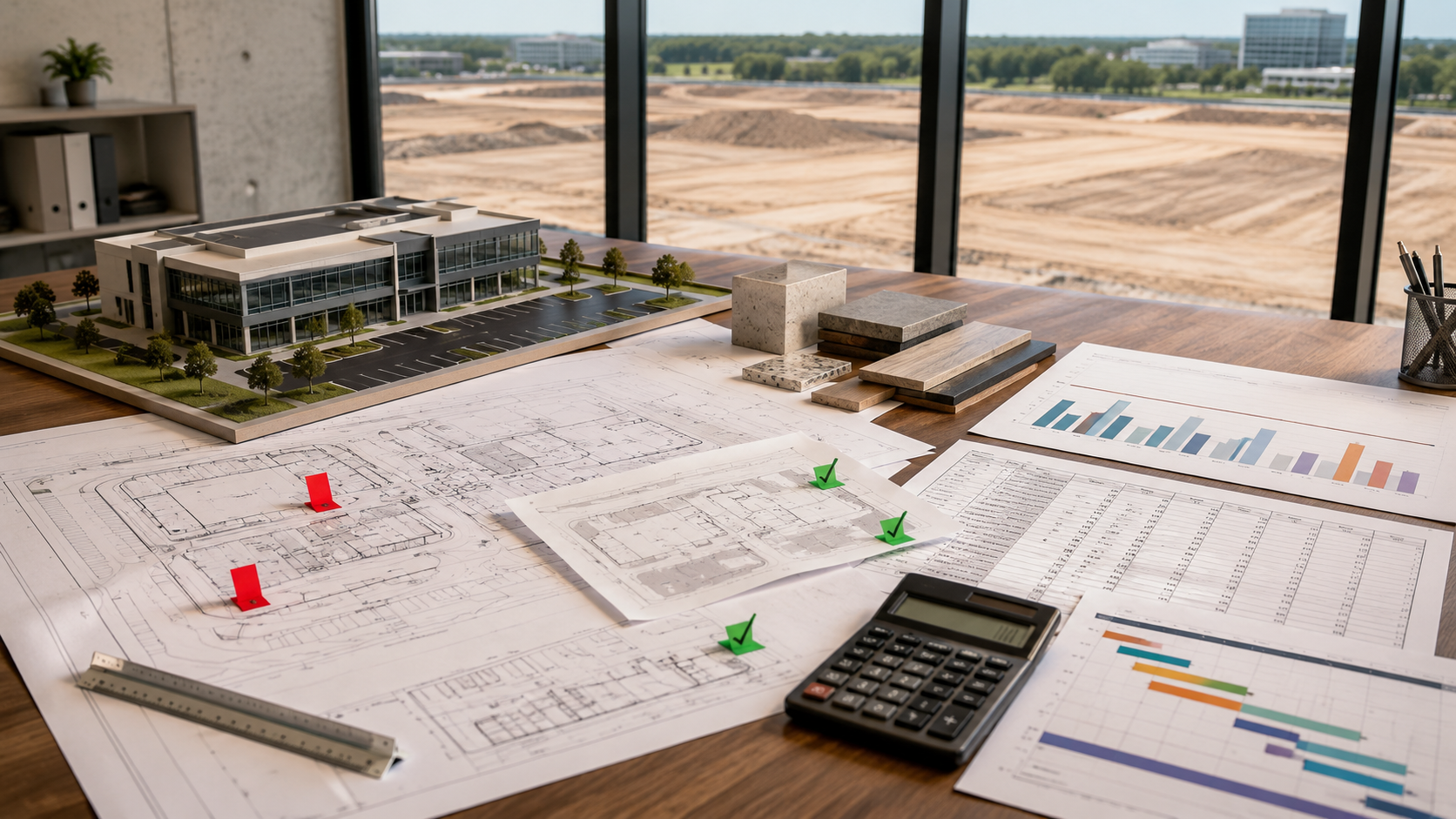
We build bids using HeavyBid and AGTEK because the details matter long before the job starts. When the numbers are accurate and the scope is clearly defined, it sets the tone for how the entire project runs. Estimating isn’t just a step in the process, it’s the foundation we build on.
That same mindset carries into the field. Our crew is trained to work with purpose, follow the Civil Engineers’ Plan to the finest detail, and hold the line on quality. When expectations are clear from day one, there’s no need for shortcuts, and no confusion about how the work gets done.
Clients trust our bid packages because they’re complete and ready to use. Project managers know what we’re covering, what’s excluded, and how we plan to approach the job. That clarity removes friction and lets teams focus on execution instead of interpretation.
As part of our review process, we go into the plans before anything hits the site. We ask the questions early, resolve issues before they show up in the field, and keep RFIs moving. This approach prevents delays and protects the timeline.
Over time, that consistency builds trust. Many of the people we work with today came through referrals from past projects – engineers, GCs, and superintendents who’ve seen how we operate and want the same experience again.
In 2024, Foshee Construction was acquired by Saga Infrastructure Solutions, a national network of civil construction companies. Saga supports regional contractors by giving them access to better tools, long-term resources, and operational backing, without changing how they run day to day.
Foshee will continue to operate under its name, with the same team and field leadership in place.
“From the very time a project starts, we start that partnership. We try to catch as much as we can with the tools that we have. Not everybody is using the software platforms we are. That’s the differentiator: we’re not just bidding. We’re anticipating, problem-solving, and making sure the job runs right.”
— Don, CEO, Saga Infrastructure Solutions
Foshee is now part of a broader regional strategy that includes Florida, the Piedmont Atlantic, Texas, Colorado, and the Arizona Sun Corridor. The name, crews, and standards remain. What’s improving is the support behind it.