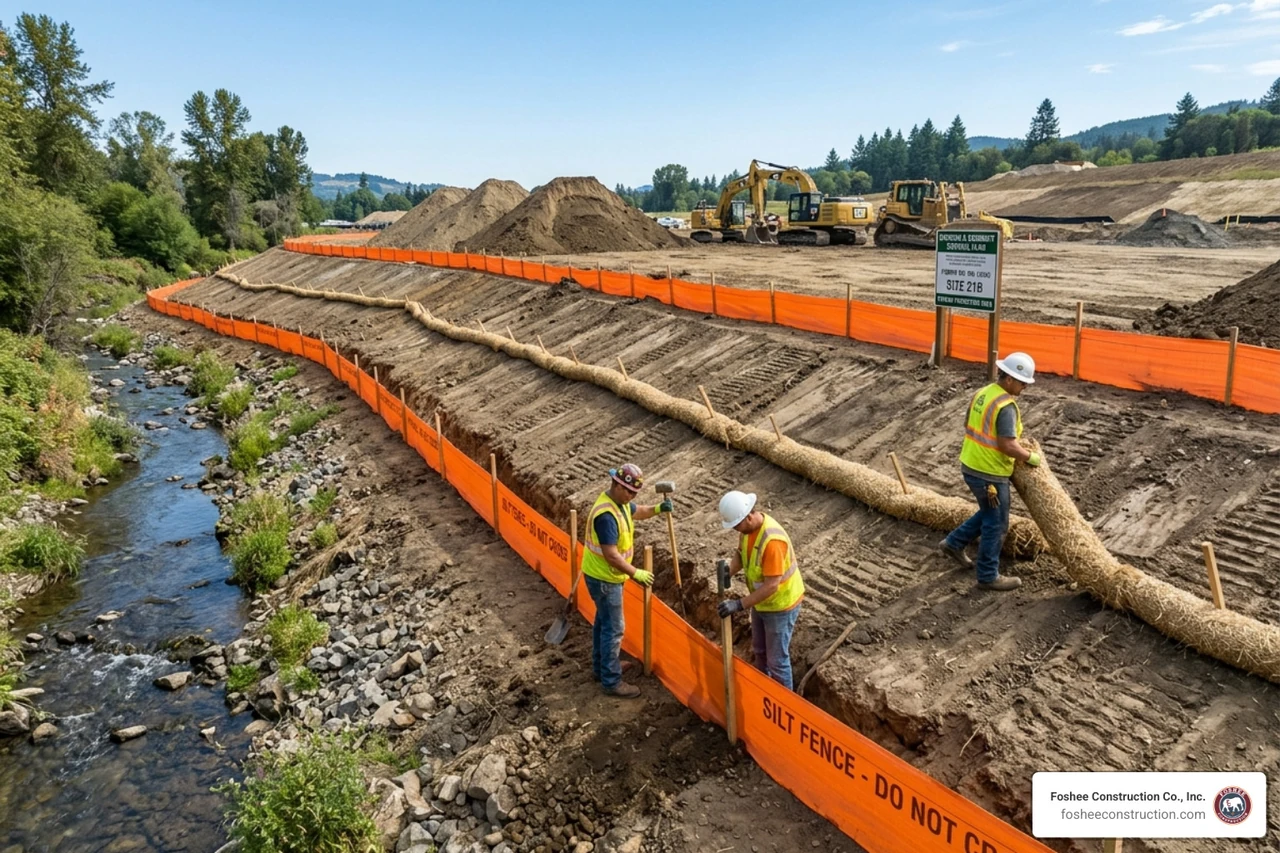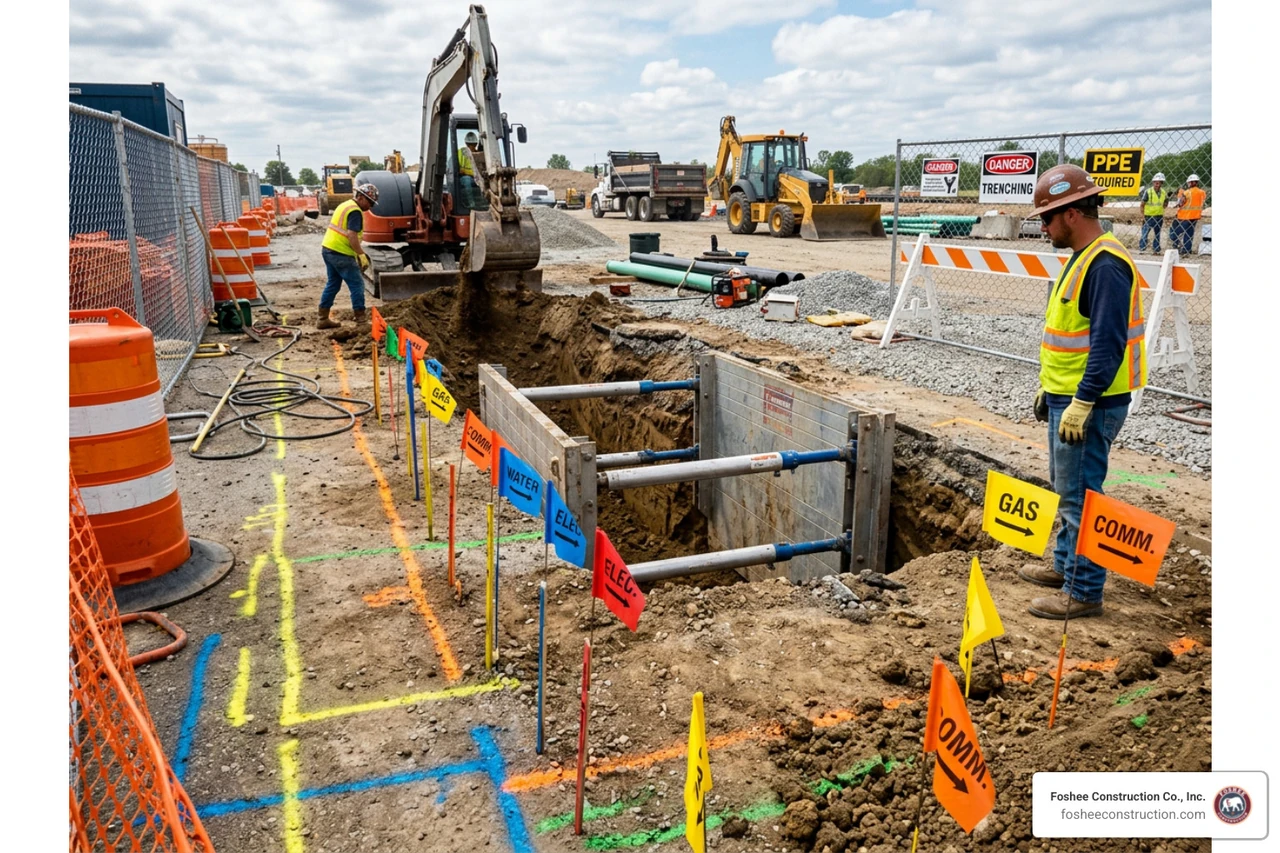
An erosion control plan is a formal document that outlines how a construction site will prevent soil loss, contain sediment, and protect nearby water resources during and after building activity. Here's what it typically covers at a glance:
| Element | Purpose |
|---|---|
| BMP locations and details | Shows where controls like silt fences and fiber rolls are installed |
| Total disturbance area | Defines how much soil will be exposed |
| Drainage control measures | Manages stormwater flow across the site |
| Soil stabilization methods | Prevents erosion through seeding, mulching, or matting |
| Inspection and maintenance schedule | Keeps controls working throughout the project |
| Responsible person contact | Names who is accountable on-site |
For most projects, a plan is required before any ground is broken — and it stays active until the site reaches final stabilization.
Here's a sobering fact: for every acre of land under active construction, roughly a dump truck and a half of soil can wash into a nearby lake or stream if no controls are in place. That sediment doesn't just cloud the water — it carries pollutants, smothers aquatic habitats, and can trigger costly regulatory action against the contractor or developer responsible.
In Florida, where heavy rain events are frequent and unpredictable, the stakes are even higher. A missing or poorly executed plan isn't just an environmental problem — it's a project risk that causes delays, rework, and budget overruns that hit your bottom line hard.
I'm Don Larsen, and through my work at Foshee Construction Co., Inc. — a site development and earthmoving contractor serving Central Florida since 1994 — I've seen how a well-built erosion control plan protects both the environment and the construction schedule. In the sections ahead, I'll walk you through everything you need to know to plan for rain before it arrives.

Erosion control plan terminology:
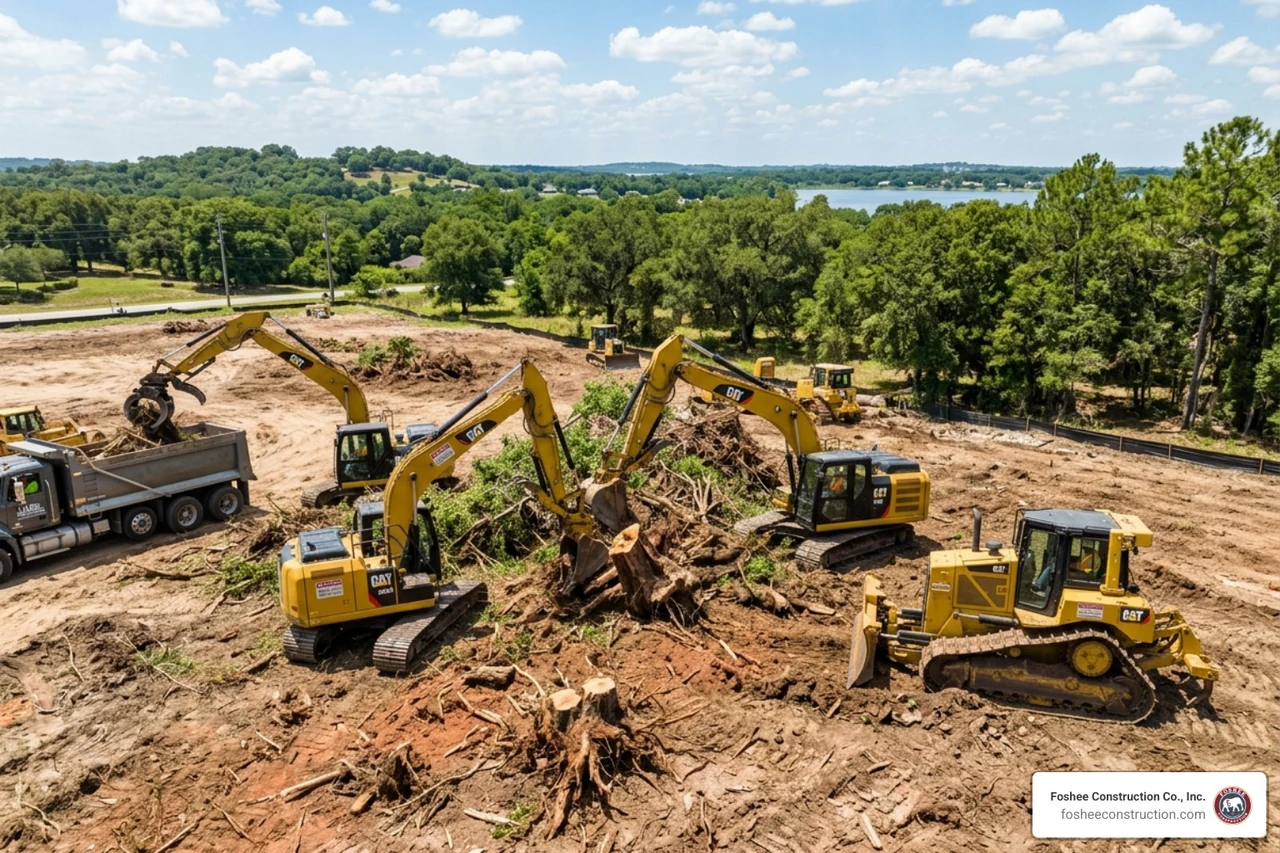
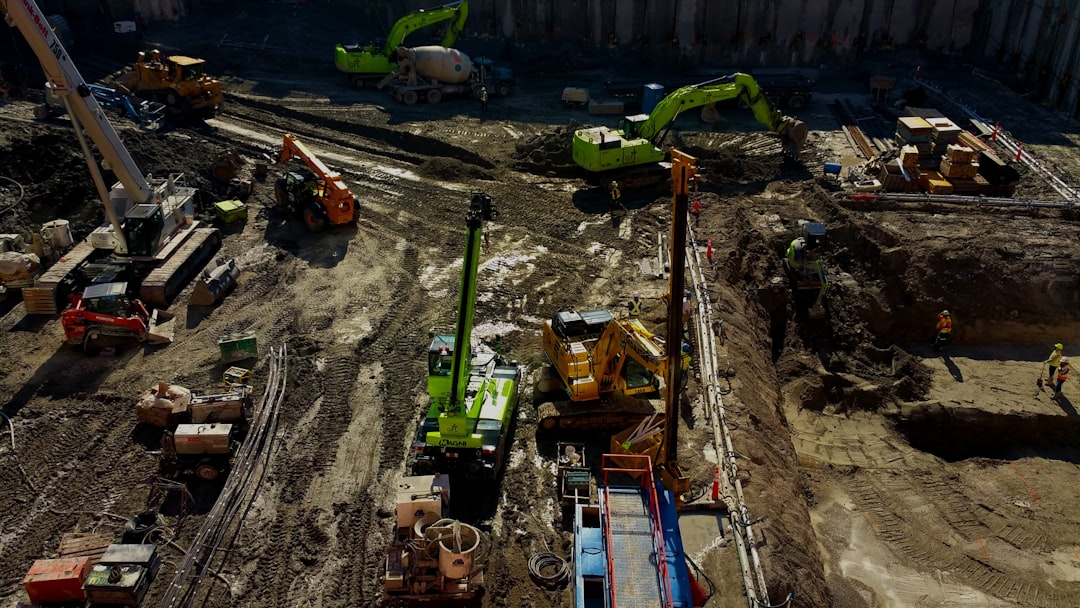
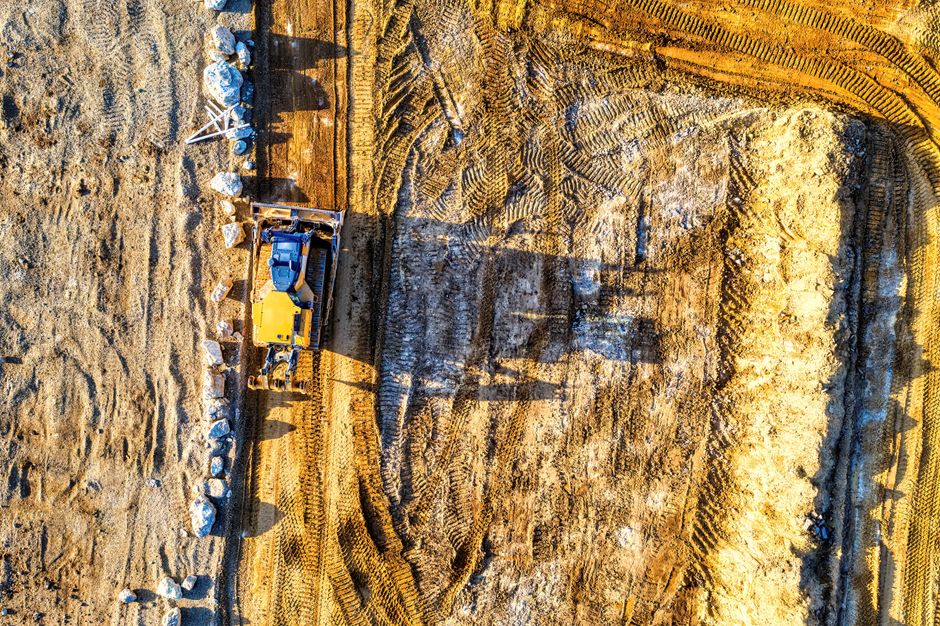
At its heart, an erosion control plan is your site’s playbook for fighting the elements. When we strip away the grass and trees during site preparation services, we leave the earth vulnerable. Without a plan, the first heavy Florida downpour will turn your profitable job site into a muddy mess that migrates straight into the nearest storm drain.
Developing this plan isn't just about checking a box for the county; it's about erosion prevention on construction sites. We use it to identify exactly how we will keep dirt where it belongs. This involves a combination of structural and non-structural Best Management Practices (BMPs).
| BMP Type | Description | Examples |
|---|---|---|
| Structural | Physical barriers or diversions built to trap sediment or redirect water. | Silt fences, sediment basins, rock check dams, and gravel exit pads. |
| Non-Structural | Operational practices or natural methods to prevent soil from moving. | Phased clearing, preserving existing trees, temporary seeding, and mulching. |
According to Wisconsin DNR standards, these plans are primarily narrative documents supported by engineered drawings. They address the discharge of pollutants in runoff and ensure the site remains stable from the first shovel in the ground until the last piece of sod is laid.
It’s easy to think "it’s just a little dirt," but the cumulative effect is massive. Statistic about the dump truck and a half of soil? That sediment acts like a sponge for other pollutants, including oils, heavy metals, and chemicals from construction materials. When this reaches our Florida lakes, it blocks sunlight for aquatic plants and can lead to toxic algae blooms. By following a strict erosion control plan, we aren't just following the law; we're being good neighbors to the Florida environment we all enjoy.
In our neck of the woods, compliance is a multi-layered cake. You have federal requirements under the Clean Water Act, state-level oversight, and local Lake County ordinances. Failing to have a certified Florida Stormwater, Erosion, and Sedimentation Control Inspector overseeing your project can result in "Stop Work" orders that can paralyze a project for weeks.
In April 2026, the rules for when you need a permit are clearer than ever. While specific triggers can vary slightly between municipalities like Minneola and greater Lake County, there are industry-standard thresholds that almost always require a formal erosion control plan.
Typically, you’ll need a permit and a plan if your project:
If you are planning a project this year, our landscape grading contractors guide 2026 offers a deep dive into how these thresholds impact your timeline.
Not all plans are created equal. A "Simplified" or "Small Project" plan might suffice for a single-family home on a flat lot. However, "Full Erosion Control Permits" are usually triggered if:
For these larger projects, you’ll often need a site-specific plan certified by a Professional Engineer, as outlined in the Florida DEP checklist.
Even for 1-2 family dwellings, you can't just wing it. A standard plan for a small project requires a site diagram showing the north arrow, property boundaries, and where you intend to put your soil stockpiles. Even if you don't need a full-scale engineering firm, you still need to show how you'll protect the street from mud tracking.

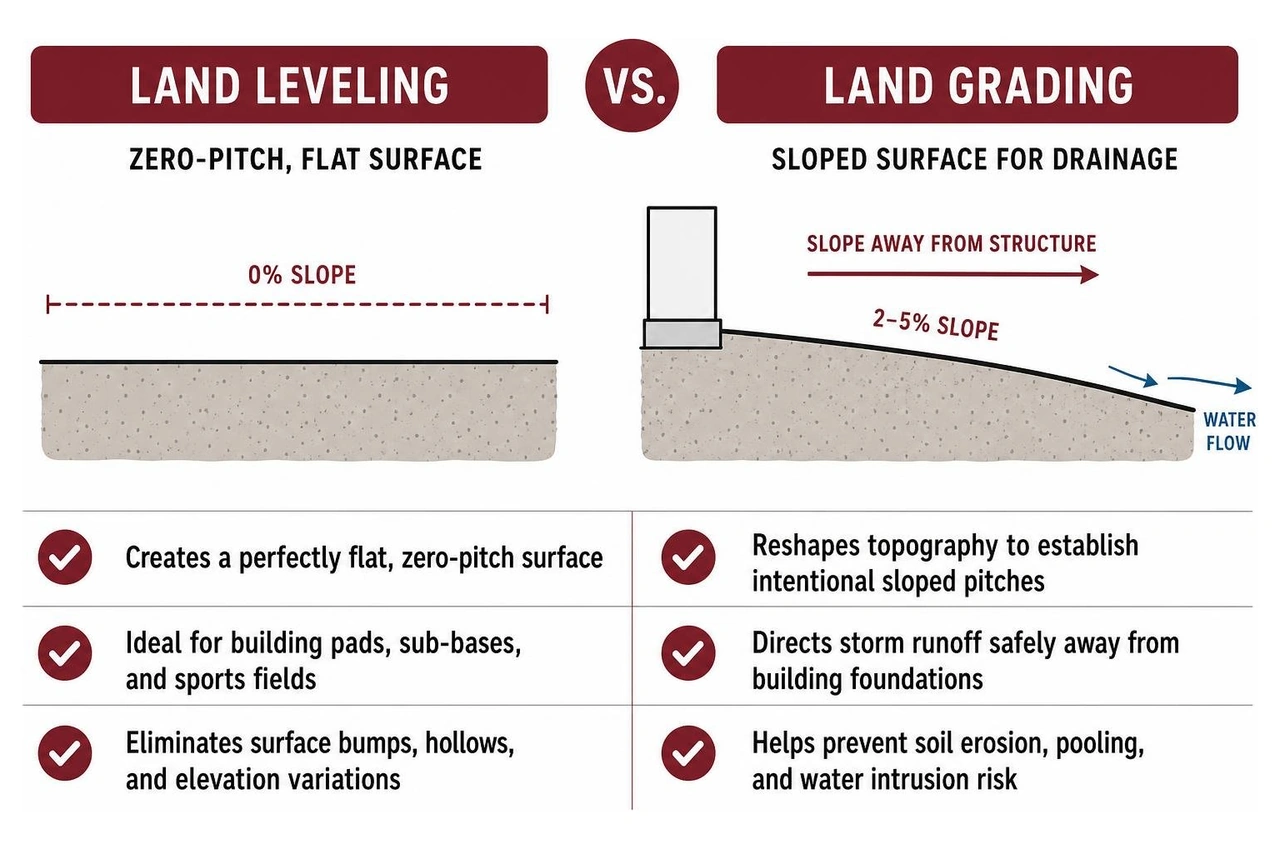
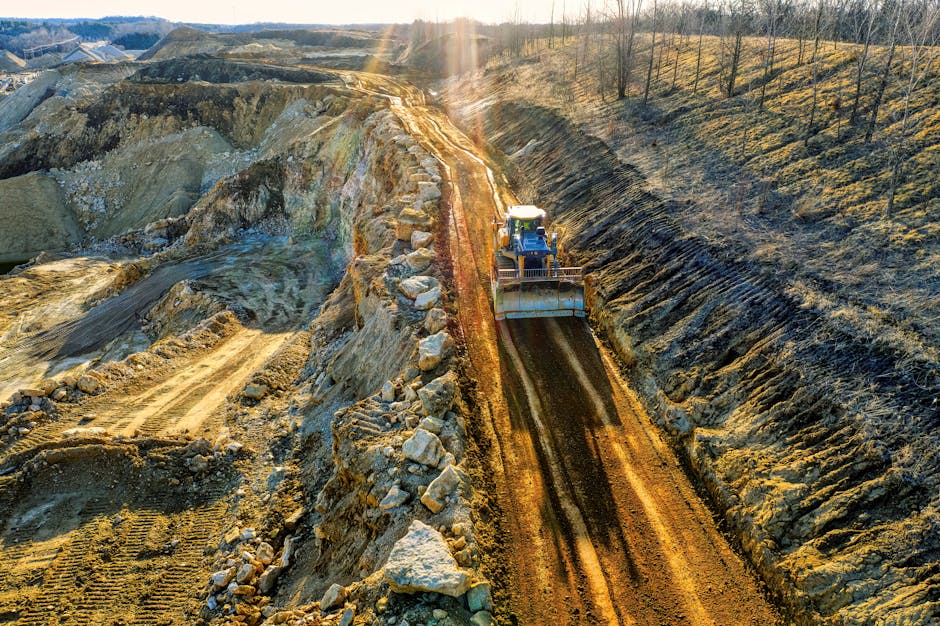
A professional erosion control plan is more than just a map with some squiggly lines representing silt fences. It’s a comprehensive strategy based on a detailed site assessment. We look at the topography (where the water goes), the soil types (how easily it washes away), and the existing drainage patterns.
According to the Vermont EPSC checklist, a solid plan must prioritize erosion prevention over sediment control. It’s much easier (and cheaper) to keep the soil in place than it is to catch it once it’s moving.
Your plan should be overlaid directly onto your grading or site plan. It needs to include:
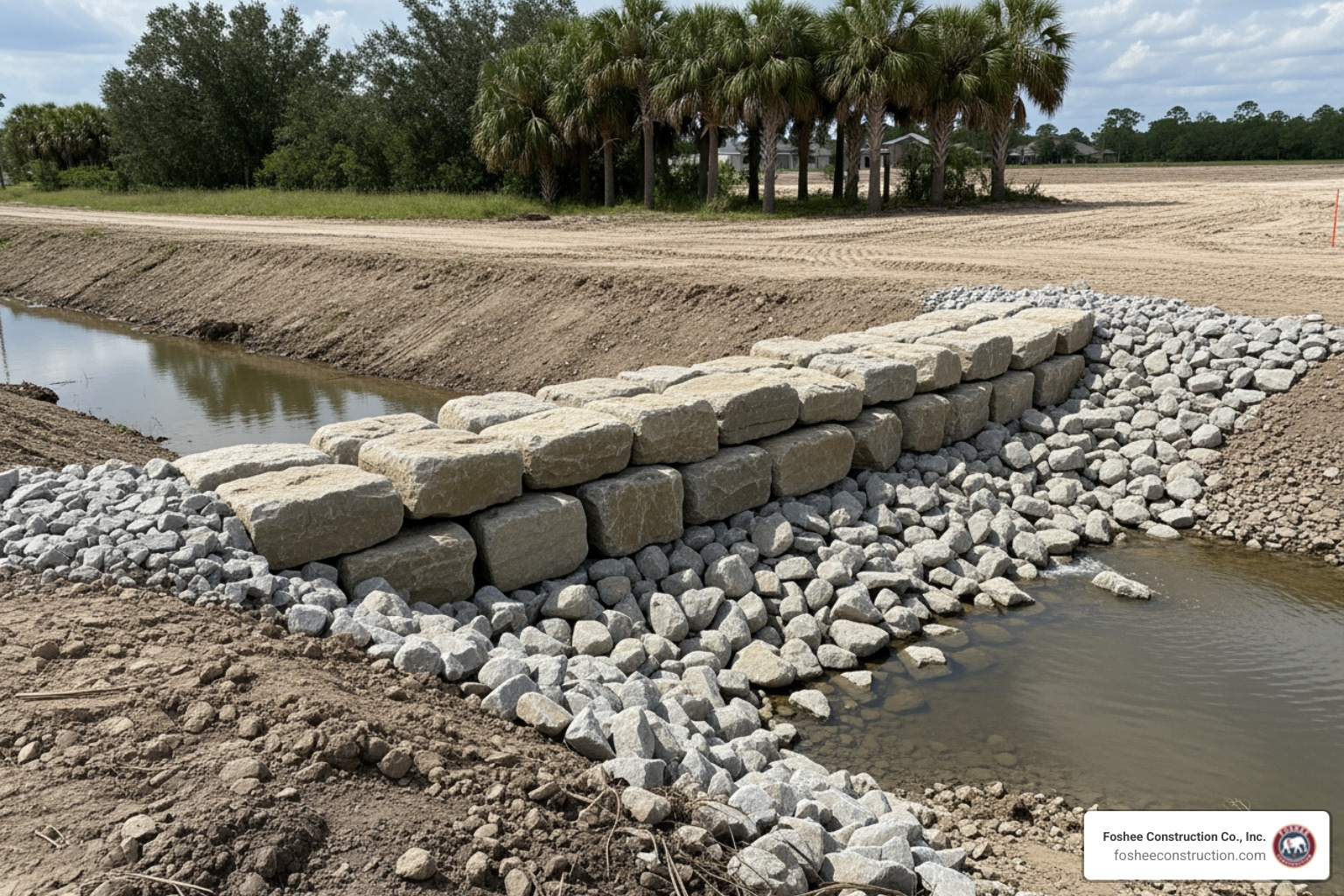
Construction is fluid. The site looks different on Day 1 than it does on Day 60. A common mistake is treating the erosion control plan as a static document. In reality, it requires adaptive management. If a specific area is washing out despite your silt fence, the plan needs to be updated with a more robust solution, like erosion control rock check dams.
When it comes to implementation, we rely on a "toolbox" of BMPs. Each tool has a specific job.
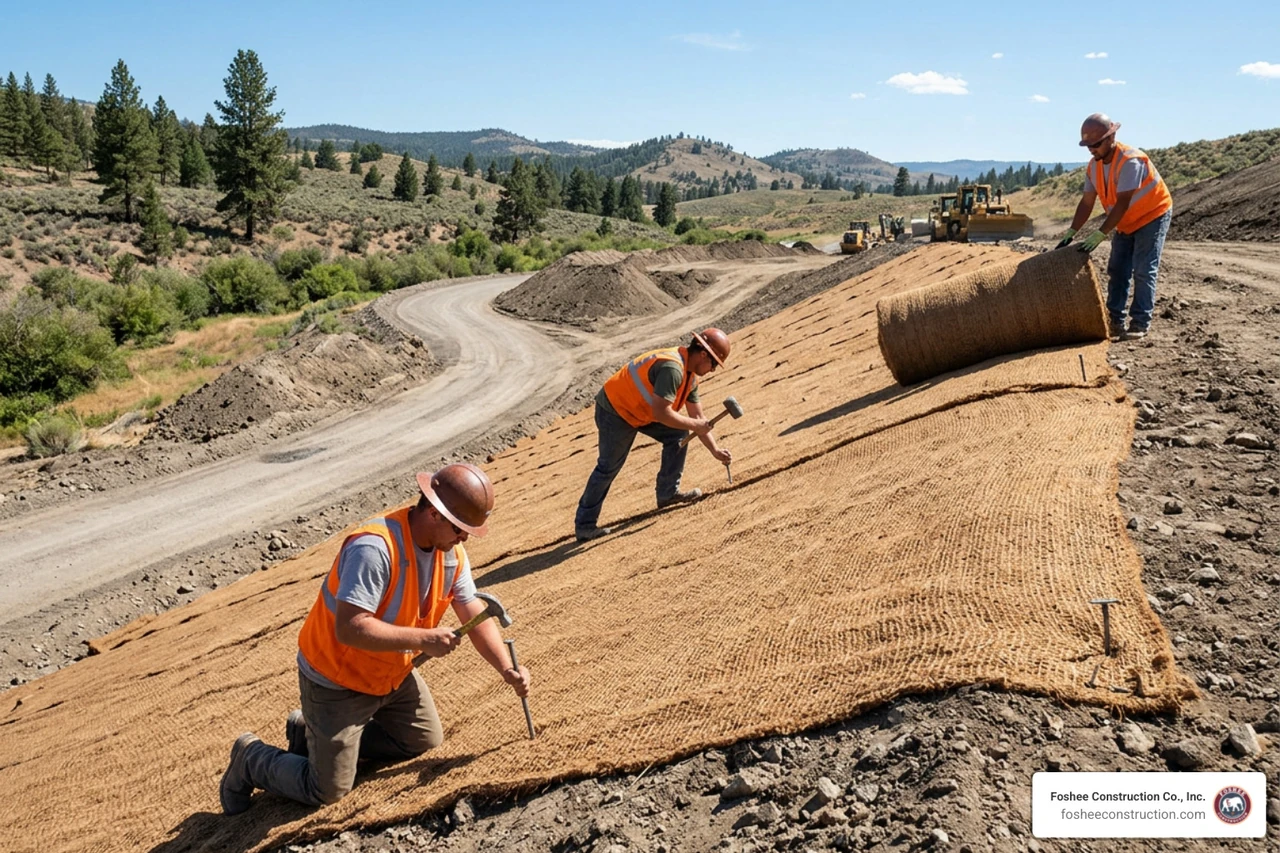
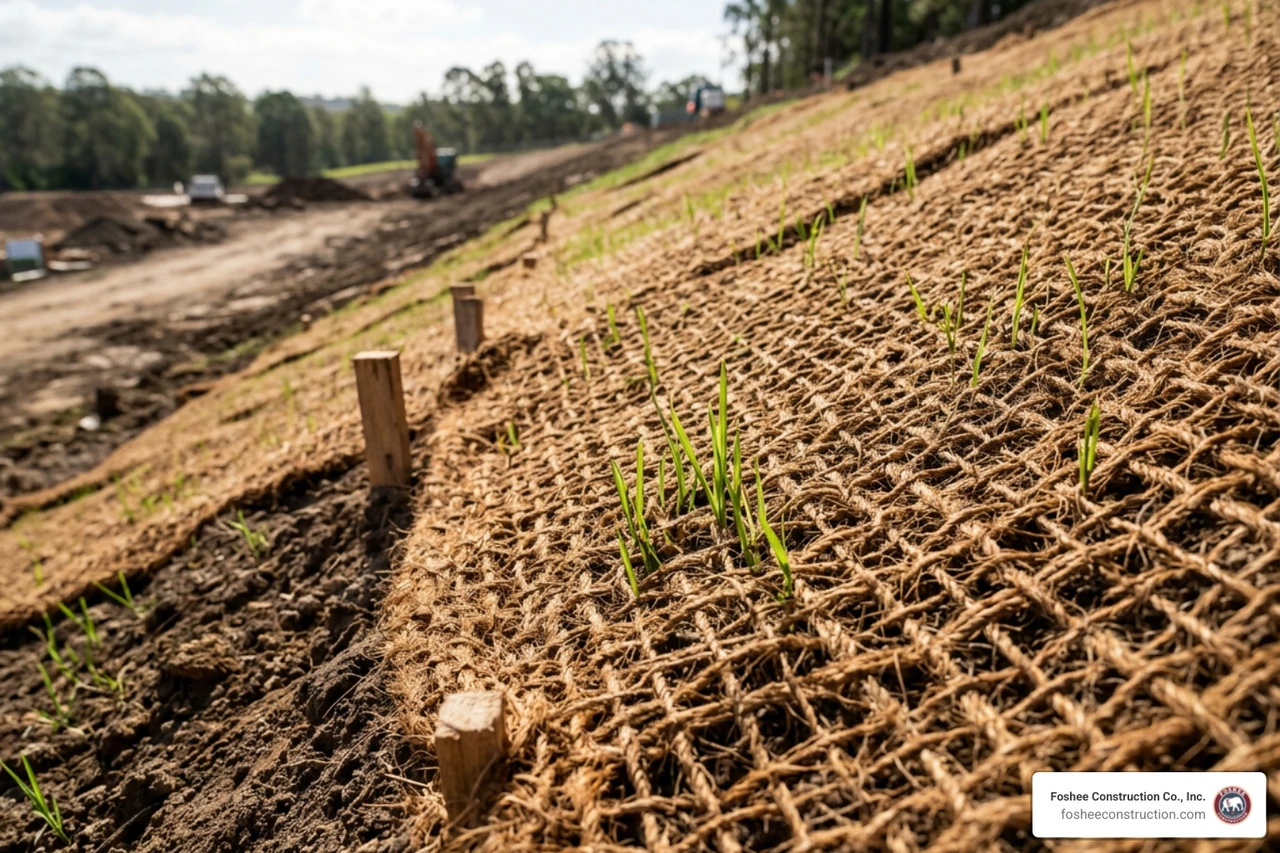
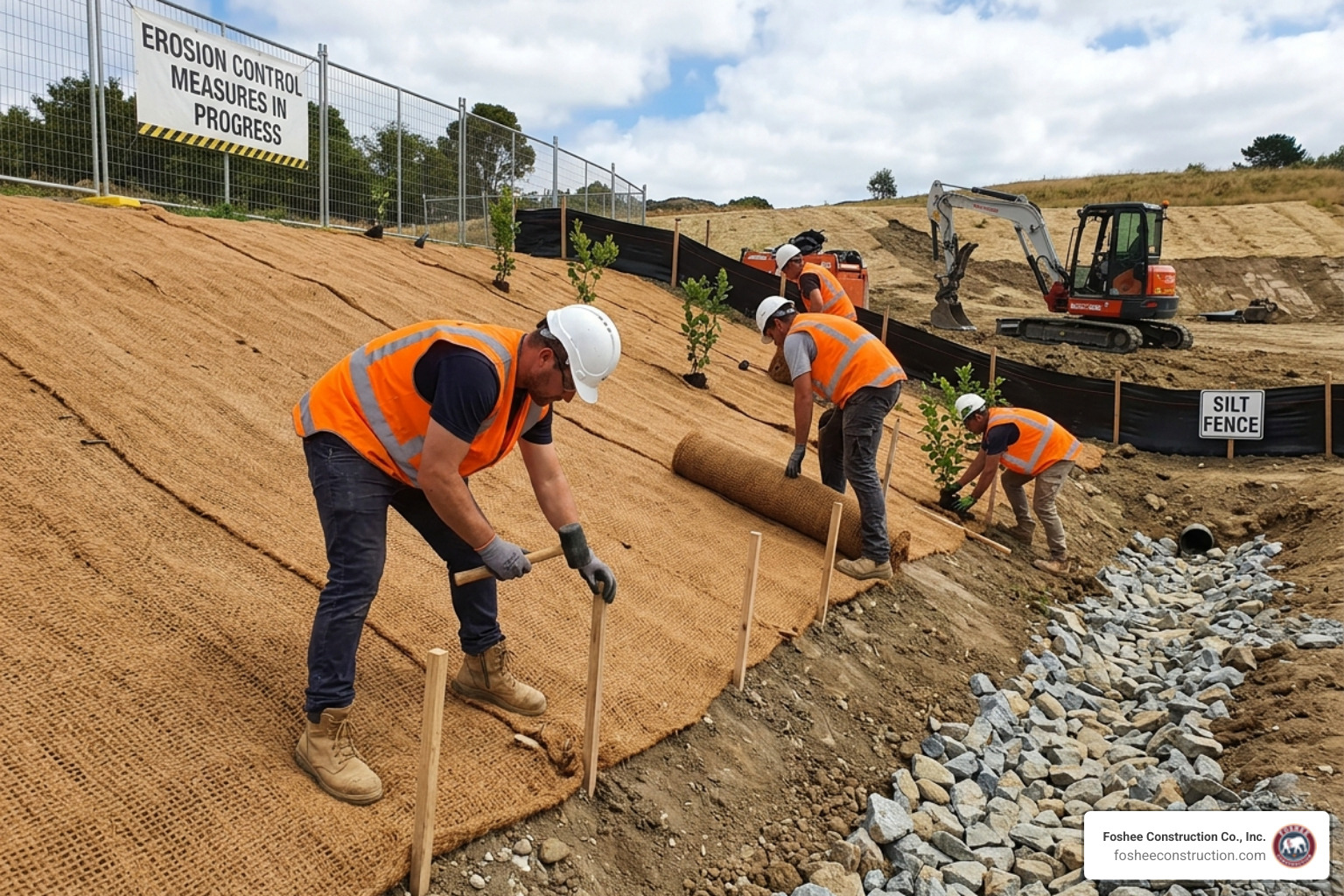
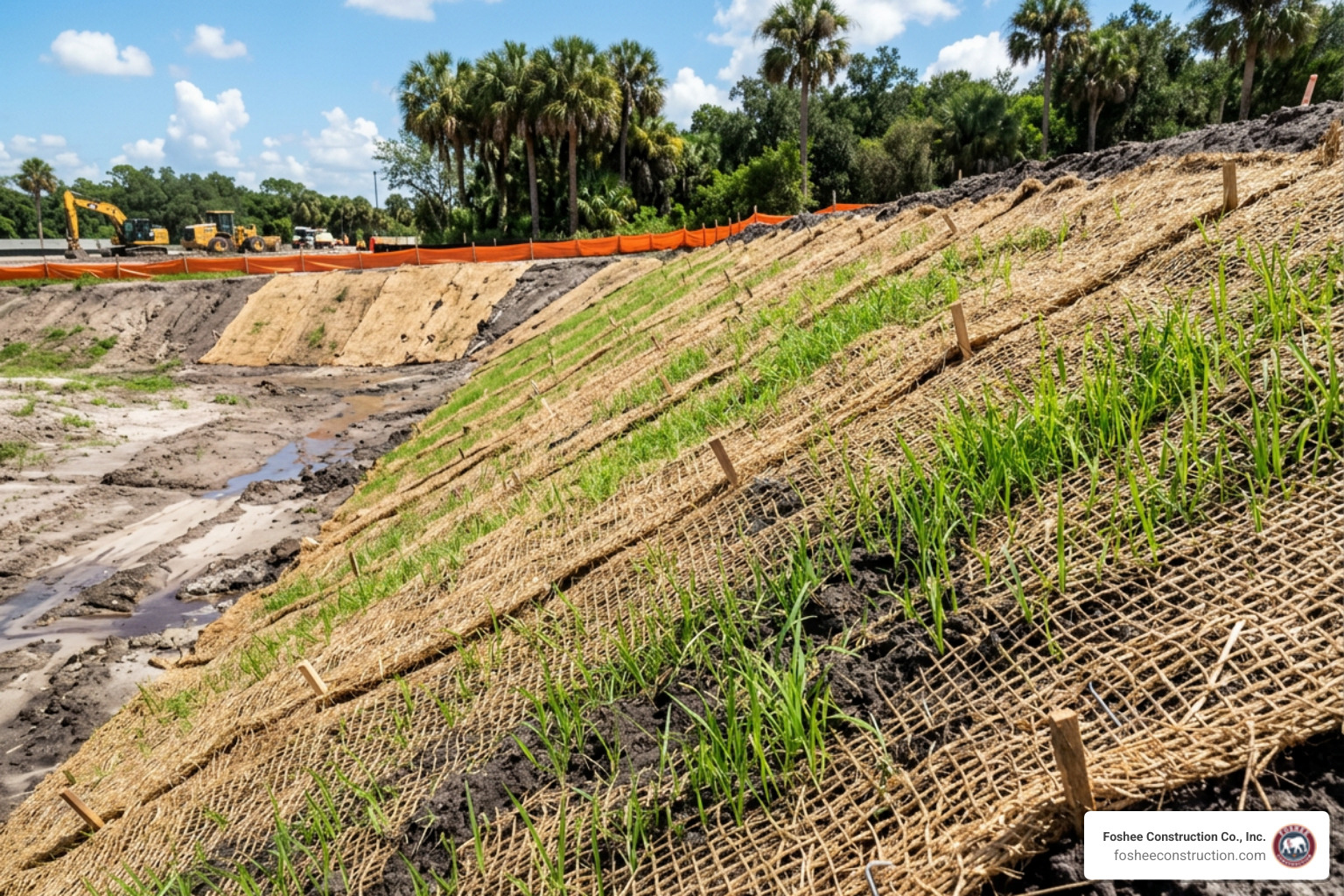
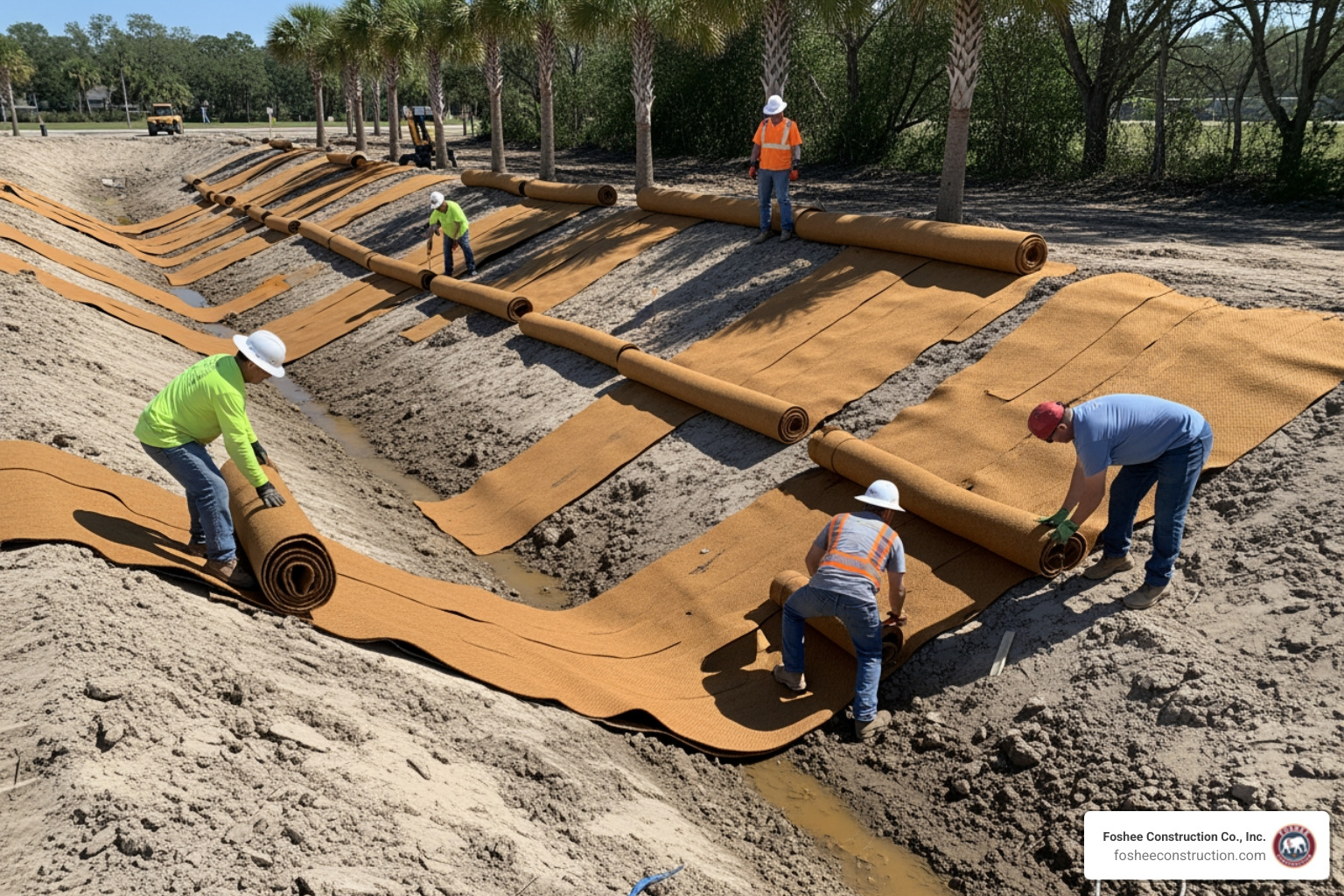
Slopes are the most dangerous areas for erosion. If you have a slope steeper than 3:1, standard seeding won't cut it—the rain will wash the seeds away before they can take root. This is where we use an erosion control matting installation to lock the soil in place.
Other stabilization methods include:
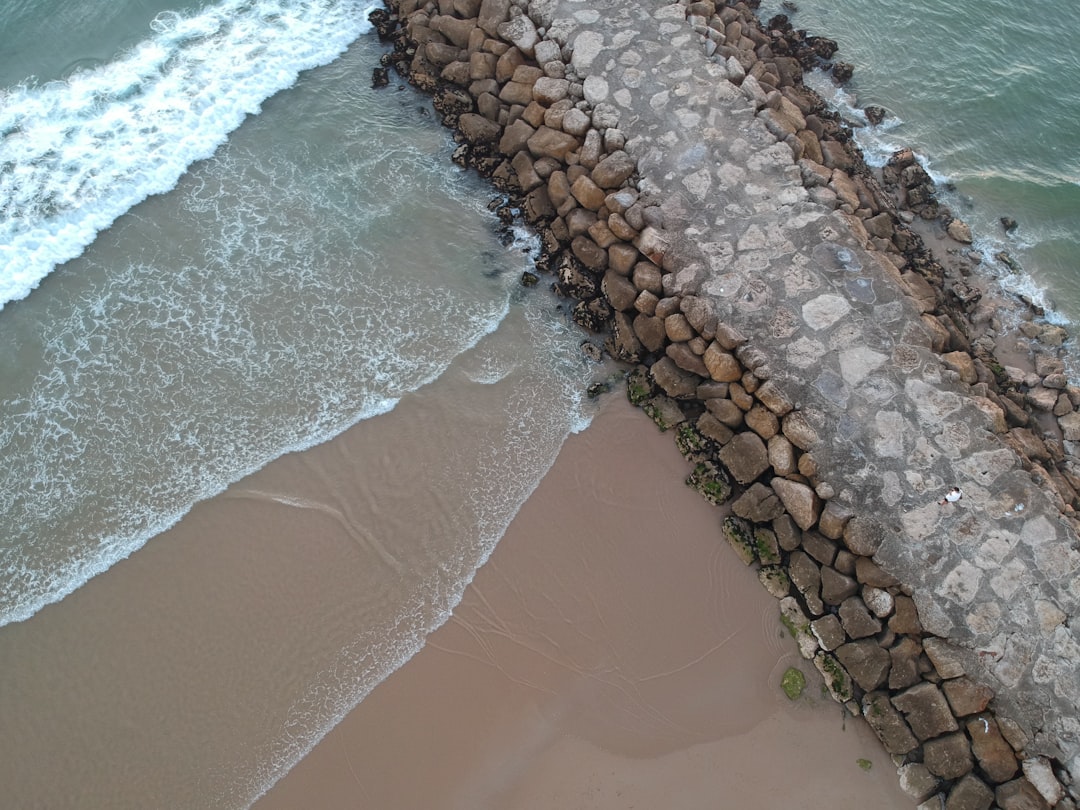
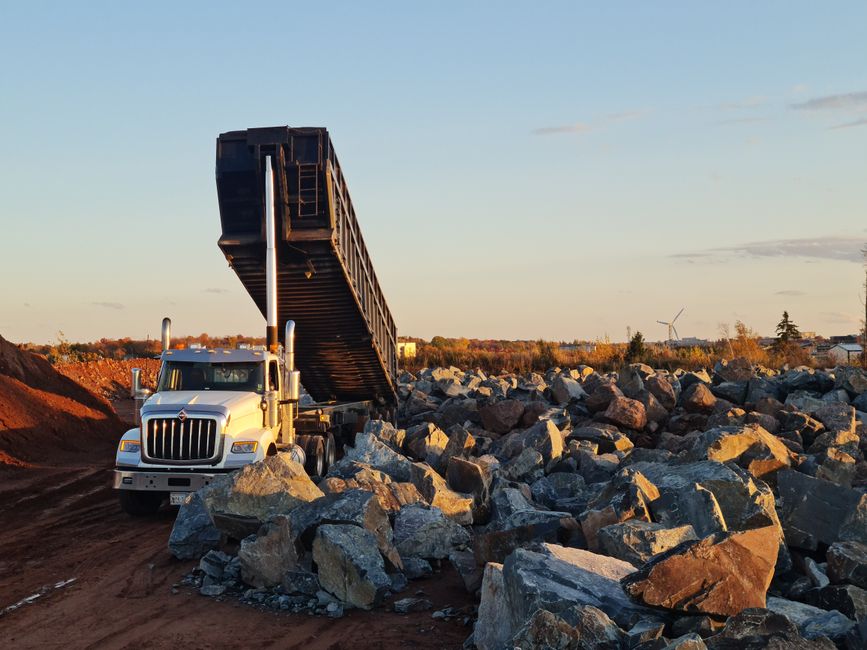
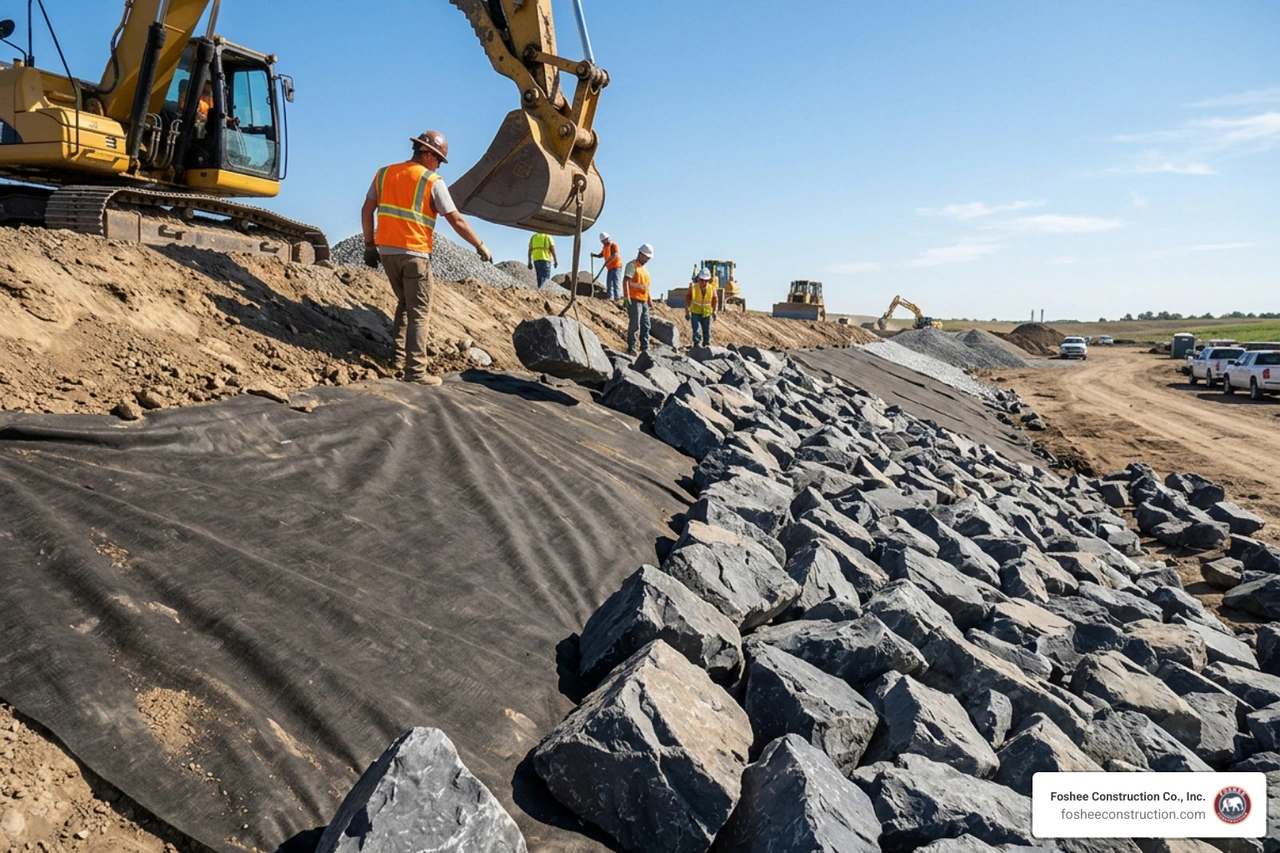
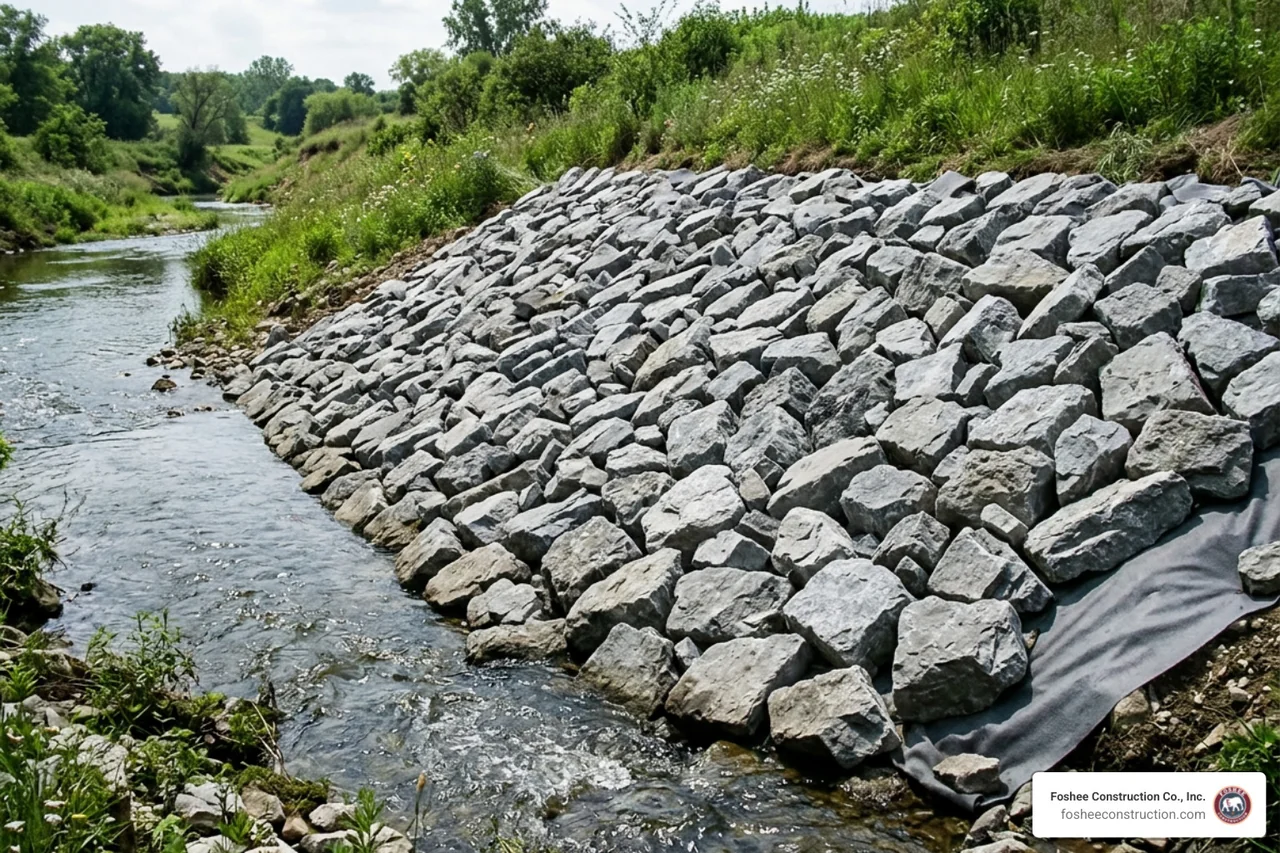
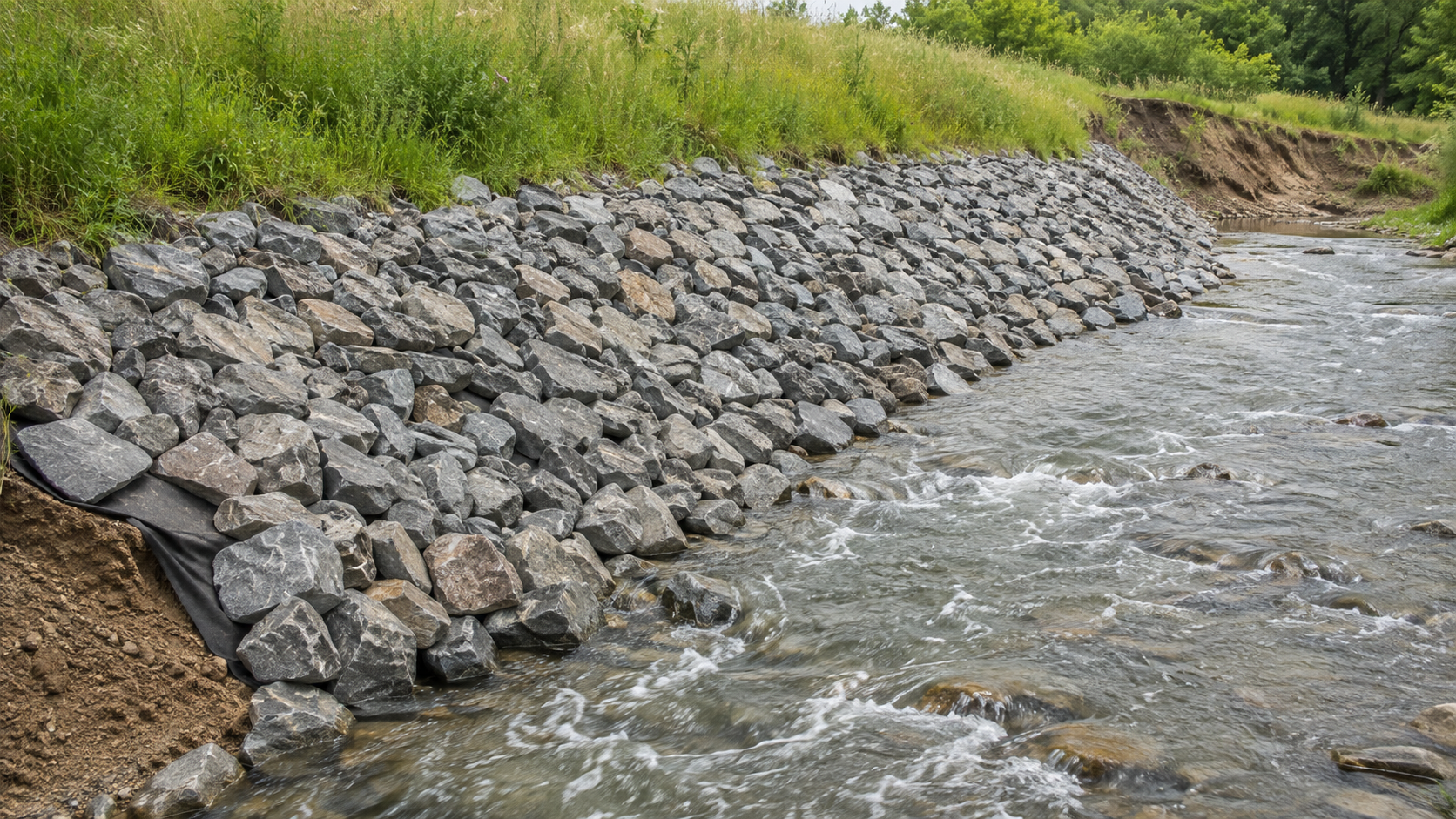
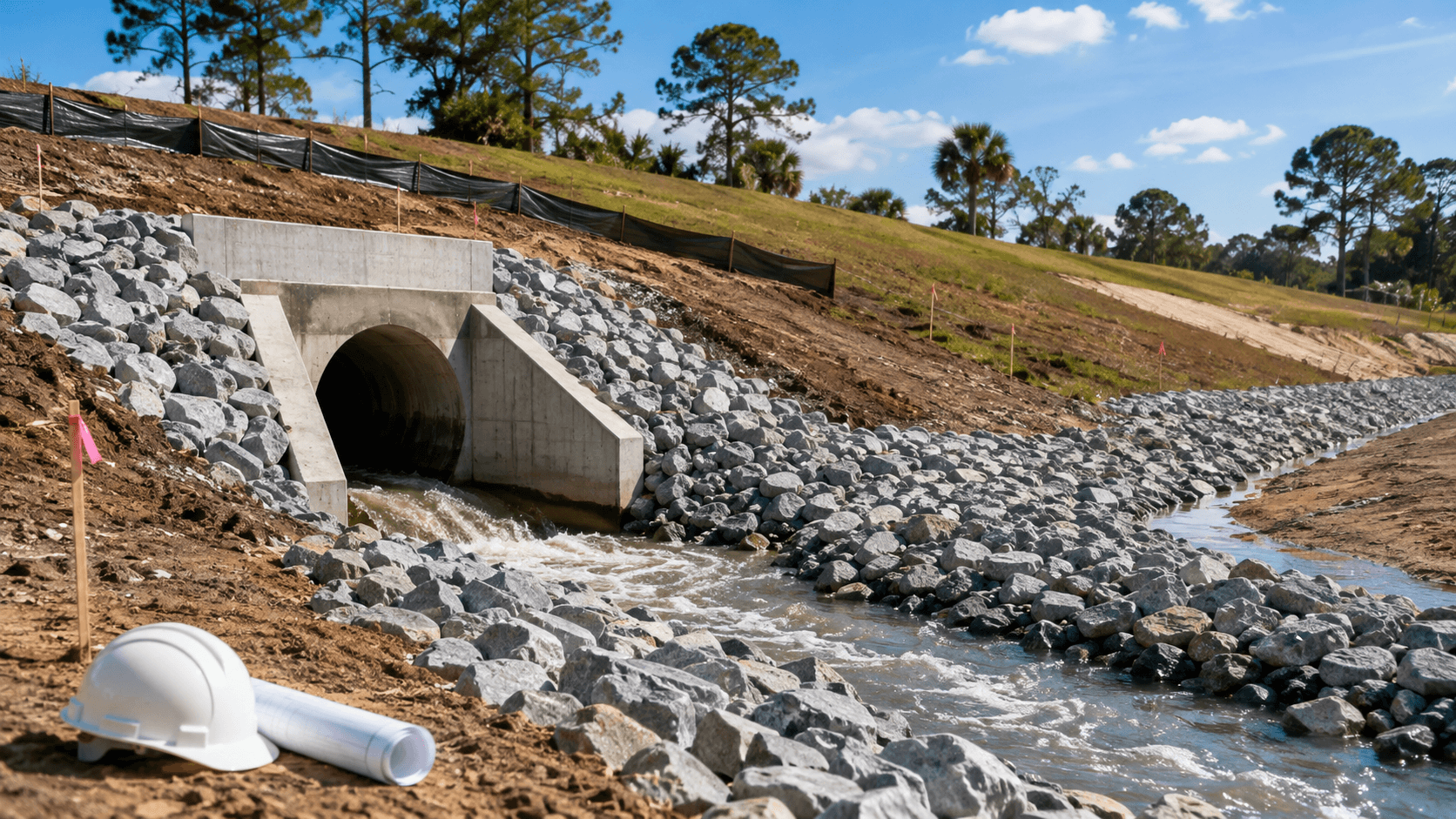
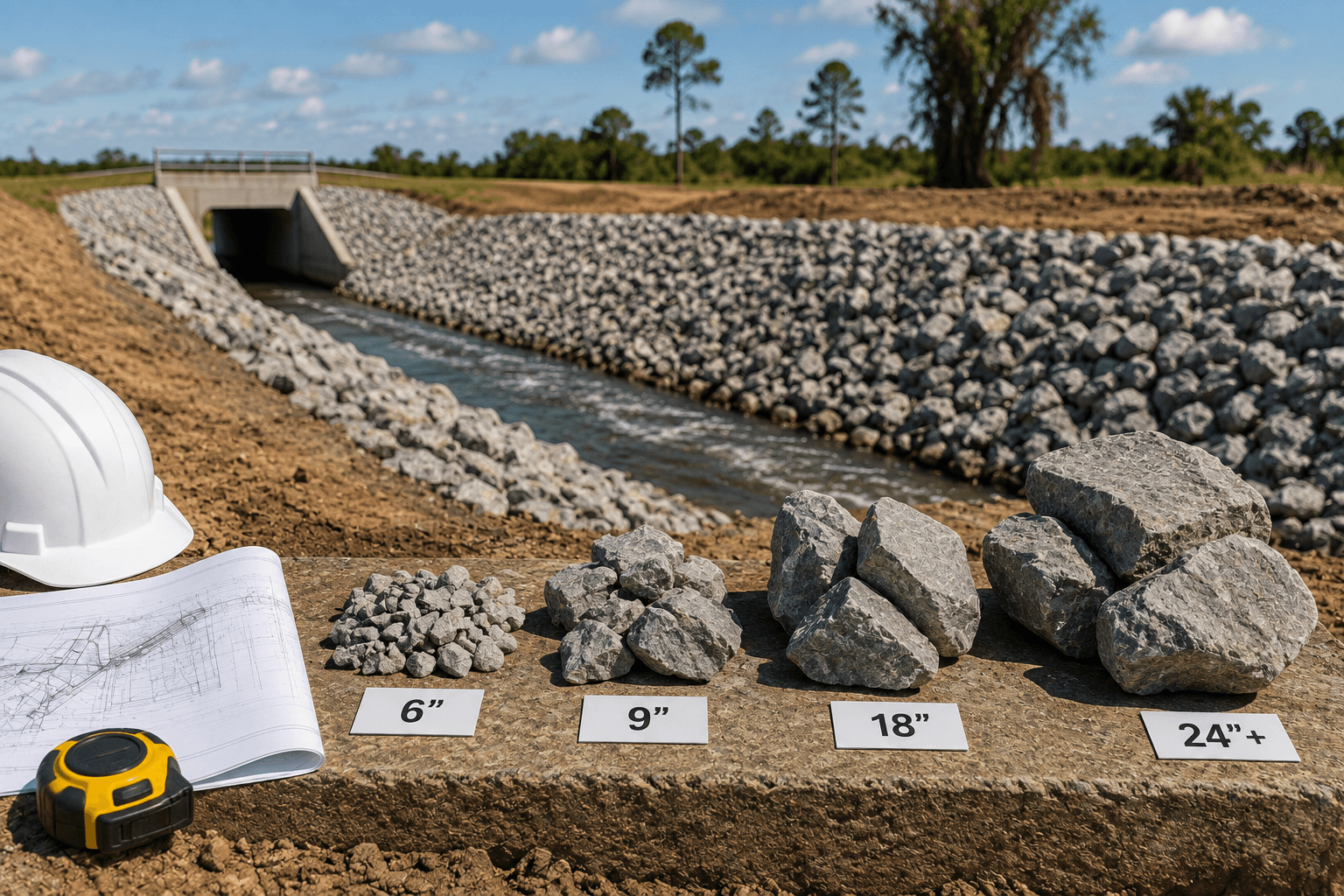
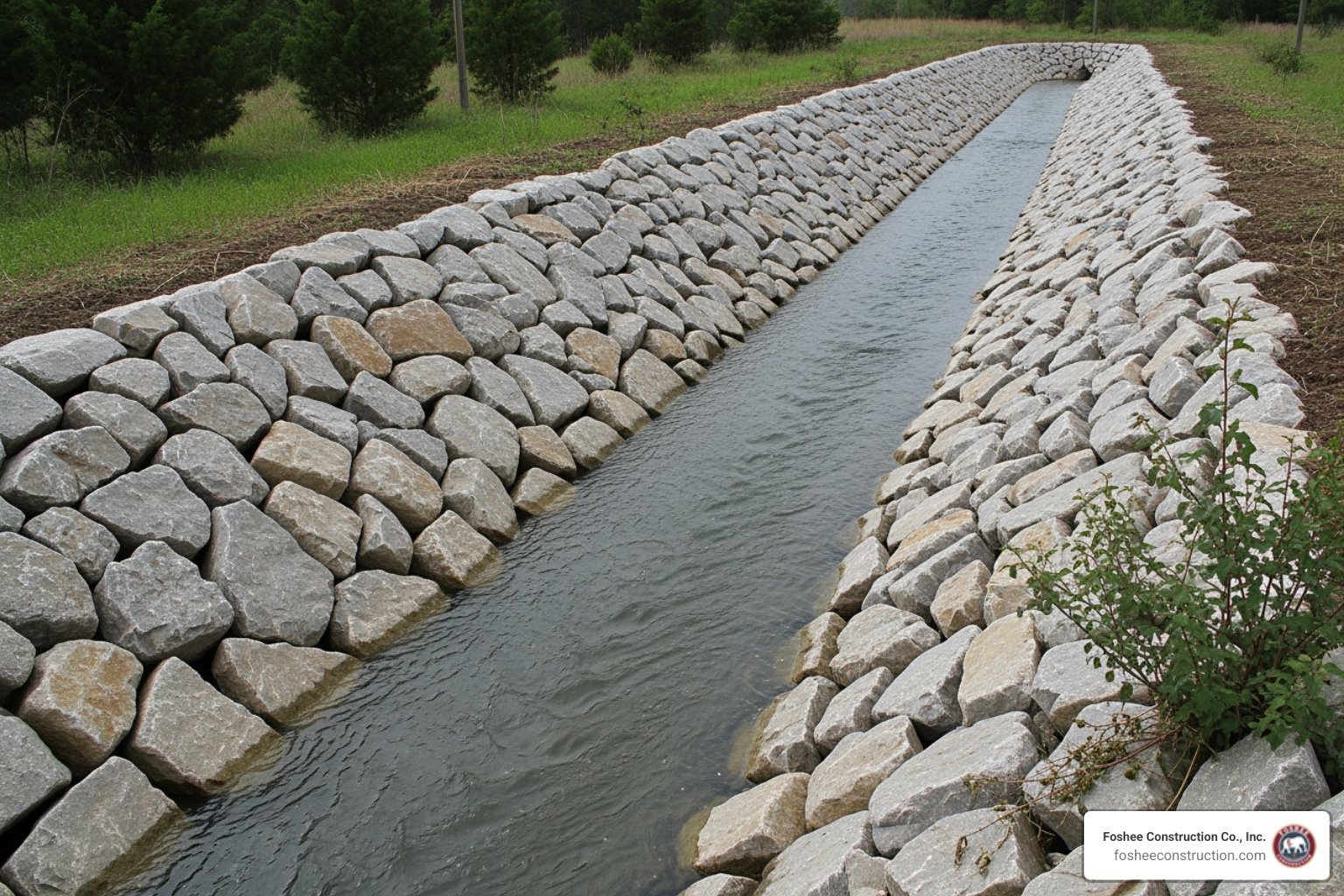
Once water starts moving, you have to control its speed and direction. We use erosion control rip rap to line channels and prevent scouring.
One of the most critical BMPs is storm drain inlet protection. If sediment enters the city’s storm sewer, you're looking at heavy fines and expensive clean-up costs. We use filter fabric inserts or gravel bags to ensure only clean water enters the pipes. Our landscape grading contractors emphasize that these filters must be cleaned whenever they reach one-third capacity to stay effective.
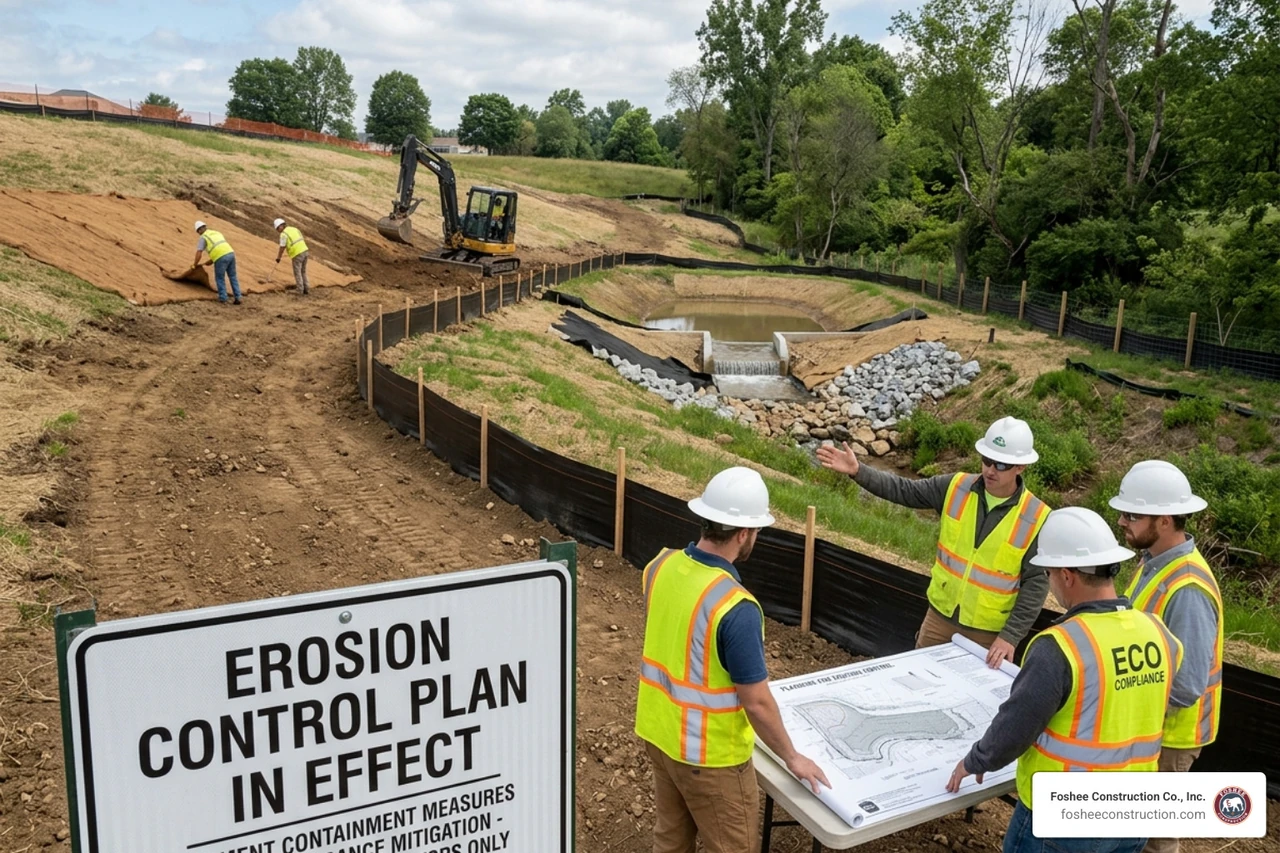
The best erosion control plan in the world is useless if it’s installed in the wrong order. You don't clear the whole site and then put up the silt fence. You install the perimeter controls and the stabilized construction exit first.
In Florida, we pay close attention to the "rainy season" (traditionally October 15th through April 15th in some jurisdictions, though in Central Florida, our summer monsoons are equally concerning). During these periods, measures must be in place and fully functional before any rain is forecasted. As per Lake County design standards, all controls must be inspected regularly.
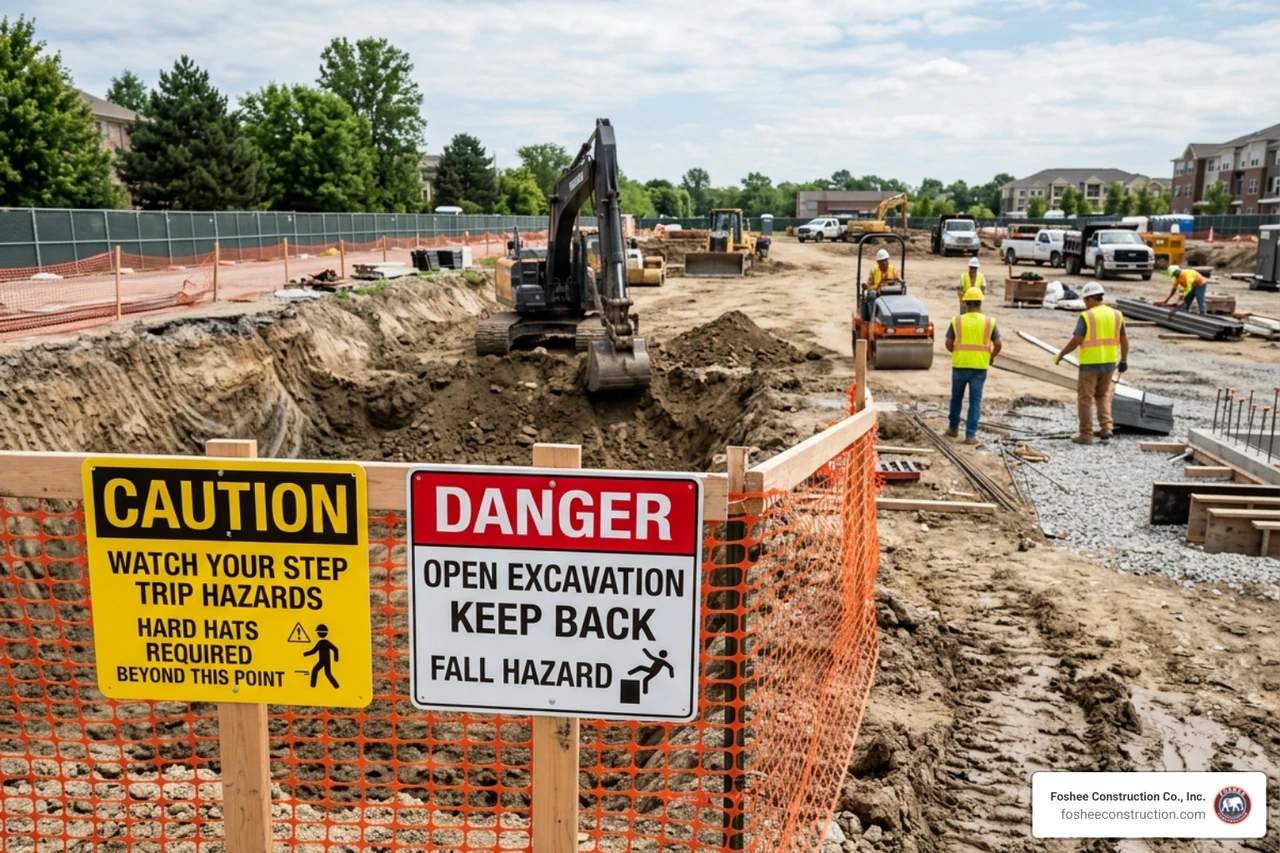
Maintenance is where many projects fail. A silt fence that has fallen over is just a trip hazard; it’s no longer an erosion control device.
You can't just pull the silt fences and leave once the building is done. To close out your permit and stop the inspections, you must achieve "Final Stabilization." This typically means that a uniform perennial vegetative cover (like grass) with a density of at least 70% is established over all unpaved areas. Once that’s achieved, you file a Notice of Termination, remove the temporary BMPs, and ensure all storm drains are clear of debris.
An erosion control plan must clearly display the total area of disturbance, the location of all BMPs, drainage flow directions, and specific installation details (like how deep a silt fence is buried). It must also list the name and 24-hour contact information for the person responsible for erosion control on-site.
Perimeter controls, such as silt fences and stabilized exits, must be installed before any land-disturbing activity begins. If rain is in the forecast, all active work areas must be stabilized or protected by the end of the workday.
Stockpiles should never be placed in a drainage way or within 25 feet of a road. They should be protected by a silt fence perimeter and covered with tarps if they are going to remain inactive for more than a few days. In Florida, covering active stockpiles before a forecasted storm is a best practice to prevent "pancaking" of the pile across the site.
Planning for rain isn't just about carrying an umbrella; it's about building a site that can weather the storm without losing its foundation. A solid erosion control plan is the difference between a professional, compliant project and a regulatory nightmare.
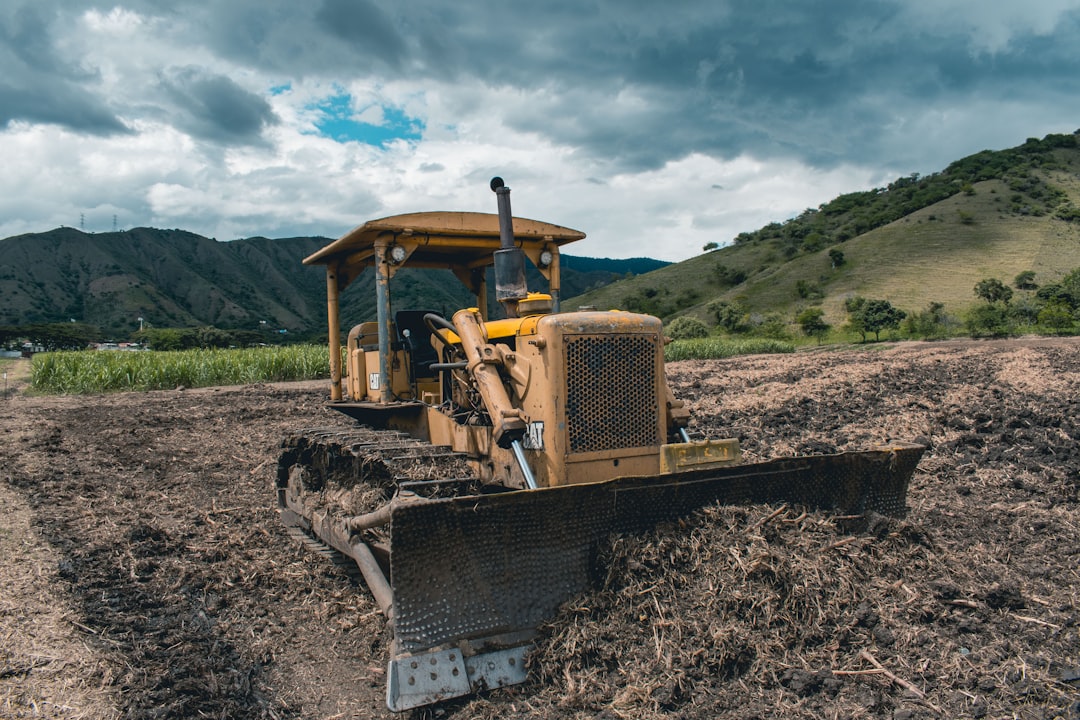
At Foshee Construction Co., Inc., we pride ourselves on being more than just guys with bulldozers. Based in Minneola, Florida, we bring over three decades of experience in site preparation, grading, and underground utilities to every project in Lake County. Our focus on safety, disciplined scheduling, and transparent bidding means you get a reliable partner who understands the local Florida dirt and the regulations that govern it.
If you’re ready to break ground on a project and want to ensure your erosion strategy is rock solid, we’re here to help. Request a Project Bid today and let's get your site ready for whatever the Florida sky decides to drop on us.
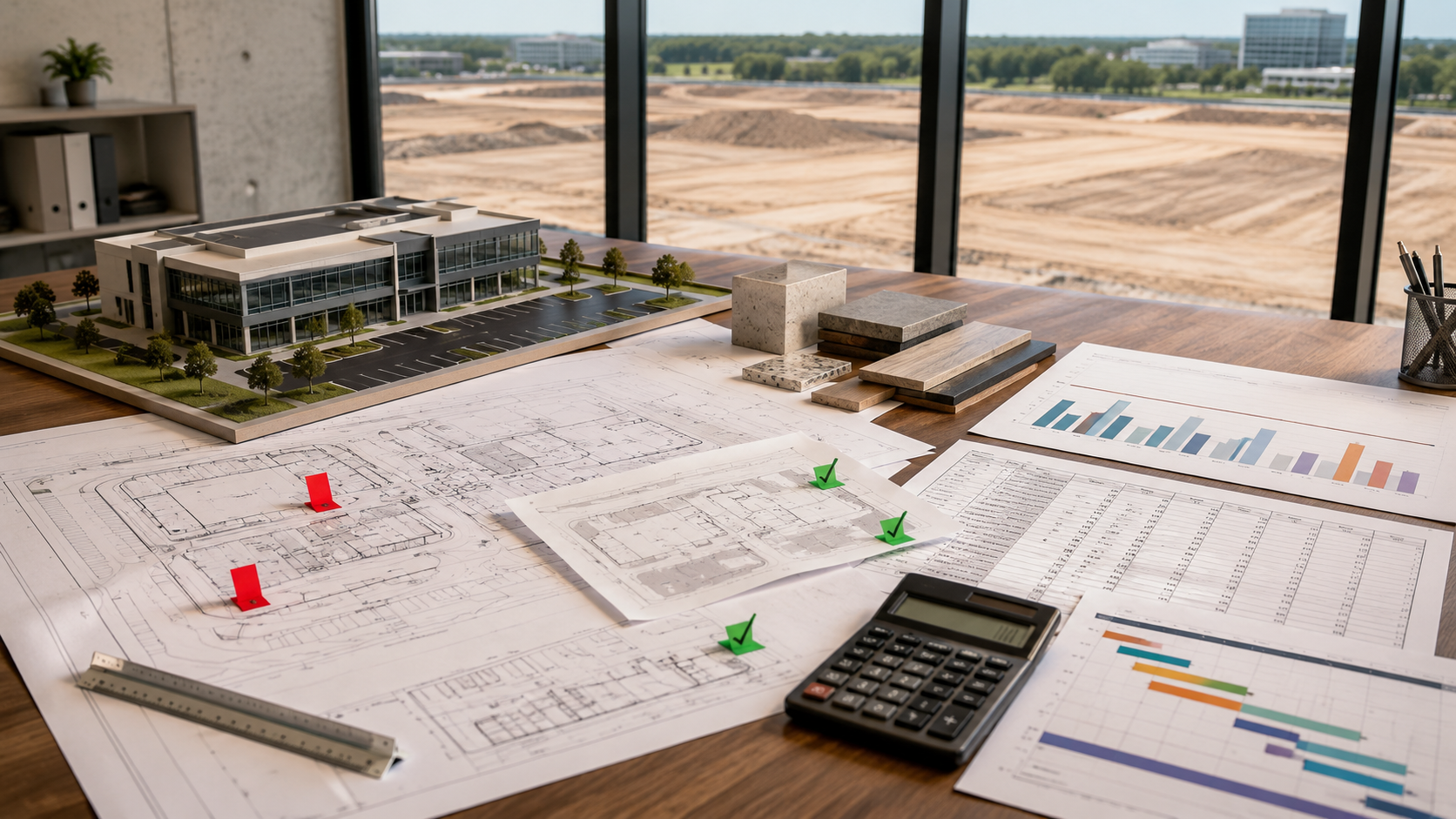
We build bids using HeavyBid and AGTEK because the details matter long before the job starts. When the numbers are accurate and the scope is clearly defined, it sets the tone for how the entire project runs. Estimating isn’t just a step in the process, it’s the foundation we build on.
That same mindset carries into the field. Our crew is trained to work with purpose, follow the Civil Engineers’ Plan to the finest detail, and hold the line on quality. When expectations are clear from day one, there’s no need for shortcuts, and no confusion about how the work gets done.
Clients trust our bid packages because they’re complete and ready to use. Project managers know what we’re covering, what’s excluded, and how we plan to approach the job. That clarity removes friction and lets teams focus on execution instead of interpretation.
As part of our review process, we go into the plans before anything hits the site. We ask the questions early, resolve issues before they show up in the field, and keep RFIs moving. This approach prevents delays and protects the timeline.
Over time, that consistency builds trust. Many of the people we work with today came through referrals from past projects – engineers, GCs, and superintendents who’ve seen how we operate and want the same experience again.
In 2024, Foshee Construction was acquired by Saga Infrastructure Solutions, a national network of civil construction companies. Saga supports regional contractors by giving them access to better tools, long-term resources, and operational backing, without changing how they run day to day.
Foshee will continue to operate under its name, with the same team and field leadership in place.
“From the very time a project starts, we start that partnership. We try to catch as much as we can with the tools that we have. Not everybody is using the software platforms we are. That’s the differentiator: we’re not just bidding. We’re anticipating, problem-solving, and making sure the job runs right.”
— Don, CEO, Saga Infrastructure Solutions
Foshee is now part of a broader regional strategy that includes Florida, the Piedmont Atlantic, Texas, Colorado, and the Arizona Sun Corridor. The name, crews, and standards remain. What’s improving is the support behind it.