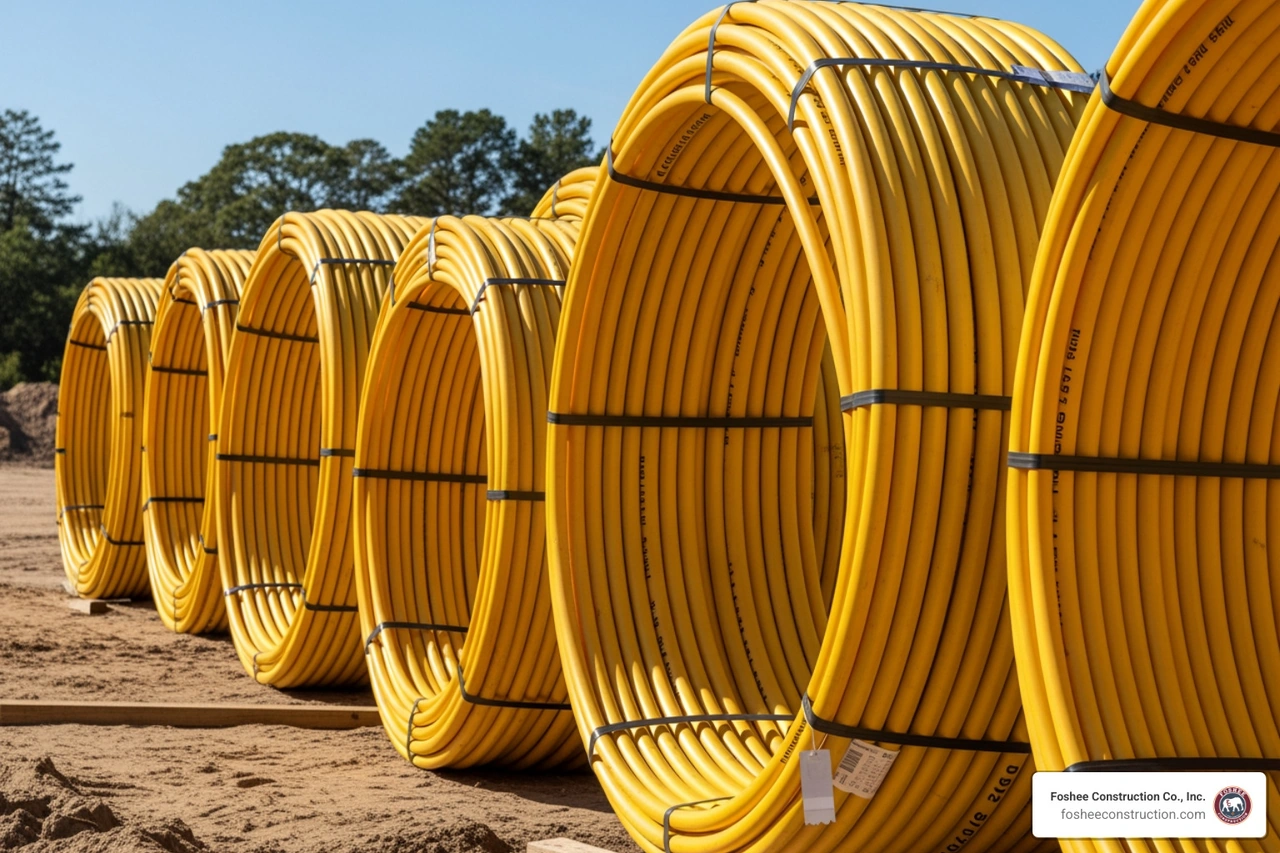
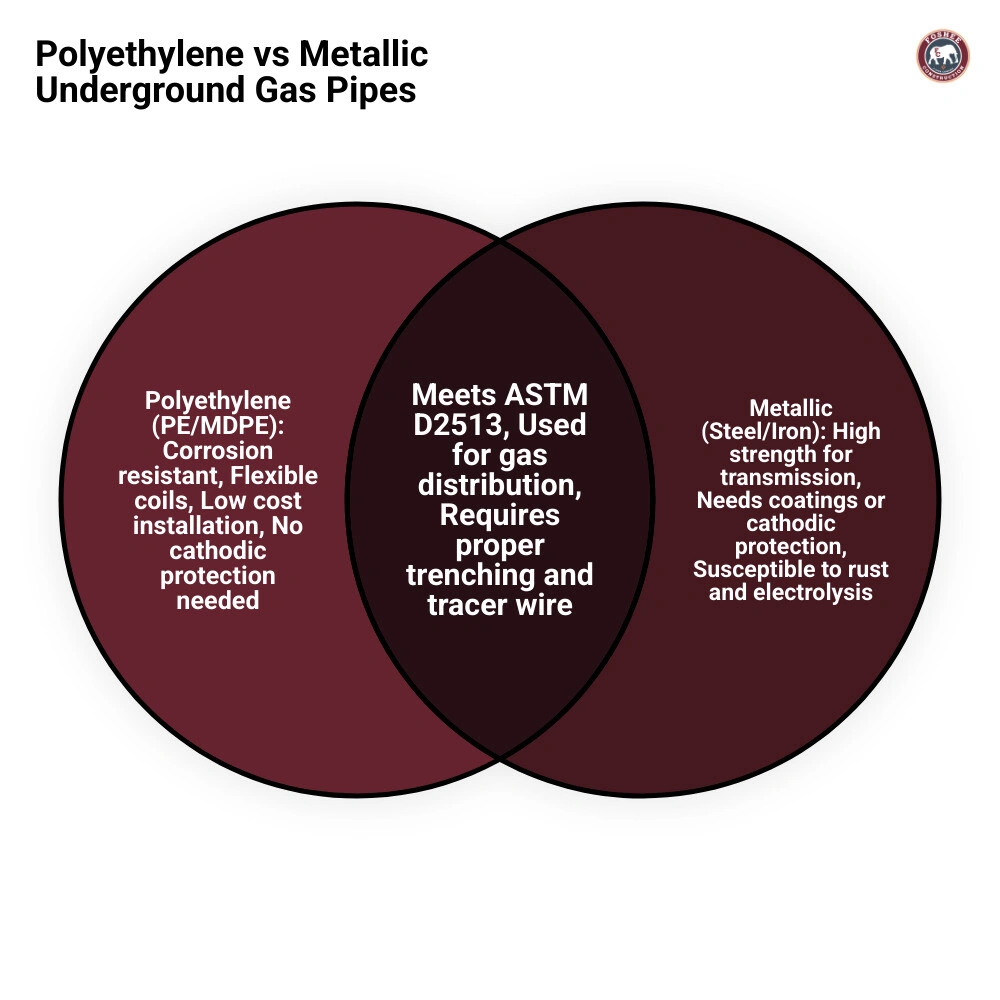
When we talk about underground gas pipes in May 2026, the conversation almost always starts with material selection. Historically, metallic pipes like black iron or galvanized steel were the standard. However, the industry has shifted dramatically toward polyethylene (PE), specifically Medium Density Polyethylene (MDPE) like PE 2708.
The primary reason for this shift is simple: corrosion. Metallic pipes buried in the soil are subject to chemical reactions that lead to rust and eventual leaks. To prevent this, steel pipes require expensive factory coatings or double-wrapping, and in many cases, cathodic protection systems to ward off electrolysis. Polyethylene, on the other hand, is naturally inert. It doesn't rust, rot, or corrode when exposed to the damp, sandy soils we often encounter here in Lake County, FL.
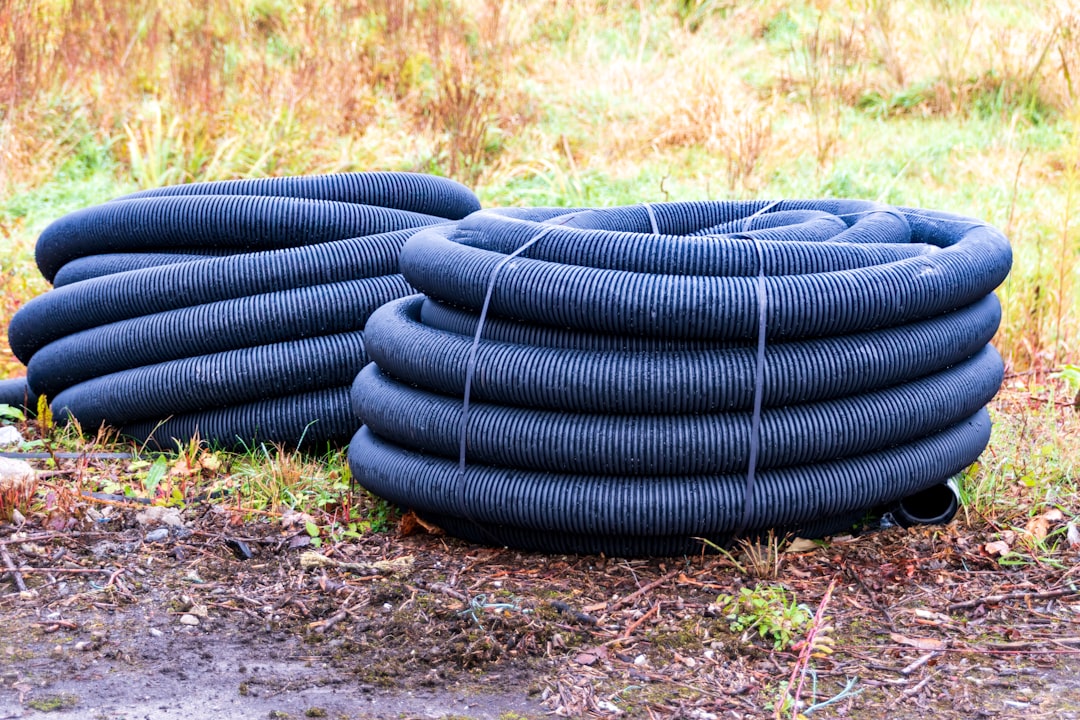
Modern underground gas pipes must meet the ASTM D2513 standard. This certification ensures the pipe is engineered specifically for gas distribution. You will often see a rating like SDR 11 on these pipes. SDR stands for Standard Dimension Ratio; it’s the ratio of the pipe diameter to the wall thickness. An SDR 11 rating provides a robust wall thickness that can handle the pressures required for residential and commercial service lines while remaining flexible enough to be coiled and pulled through trenches.
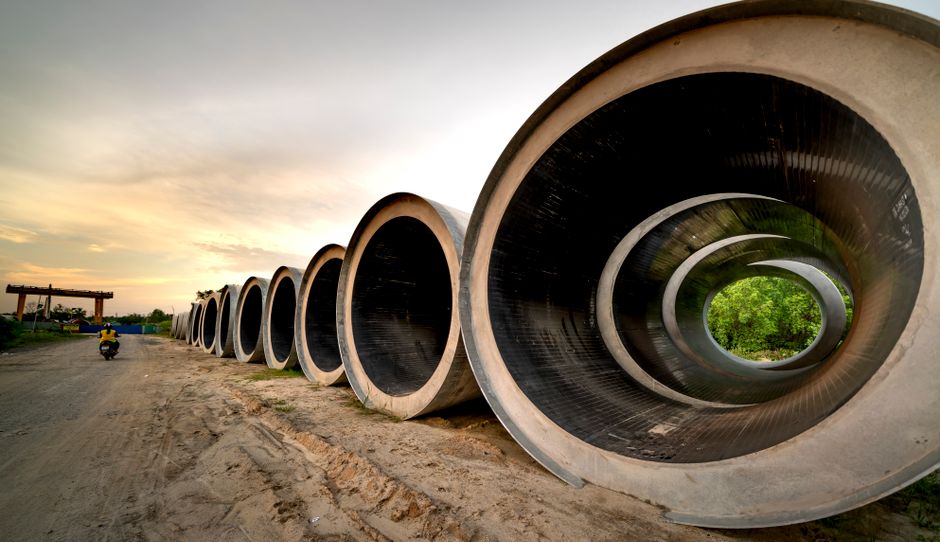
While massive projects like the Humber Gas Tunnel—the longest pipe-in-tunnel in Europe—rely on massive steel sections for high-pressure transmission, local distribution is the domain of PE. For developers and homeowners looking for Gas Line Contractors Near Me, choosing PE is usually the most cost-effective and durable long-term solution.
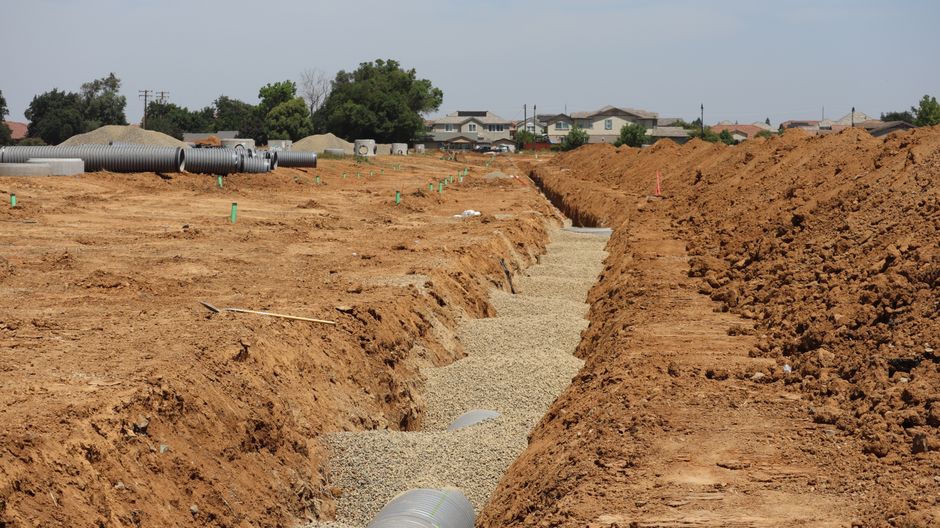
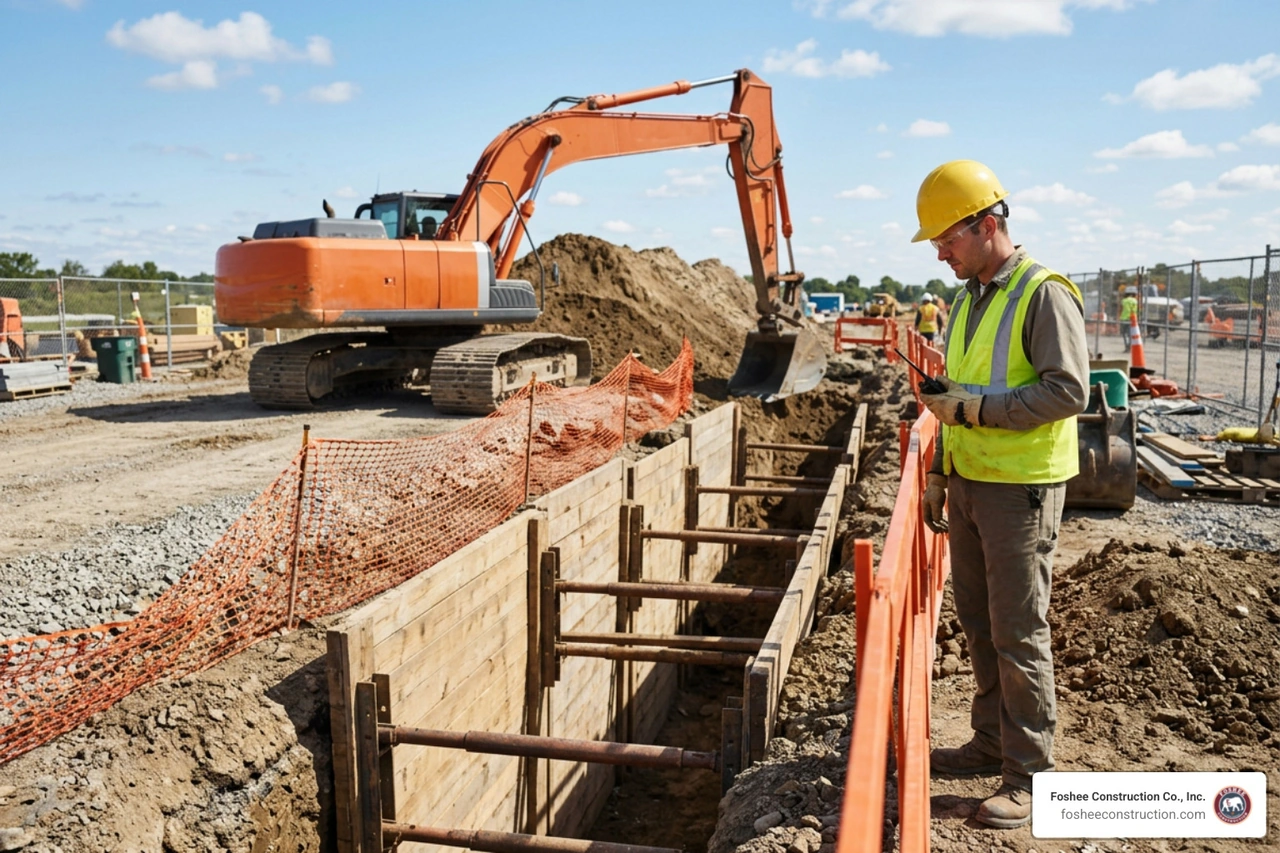
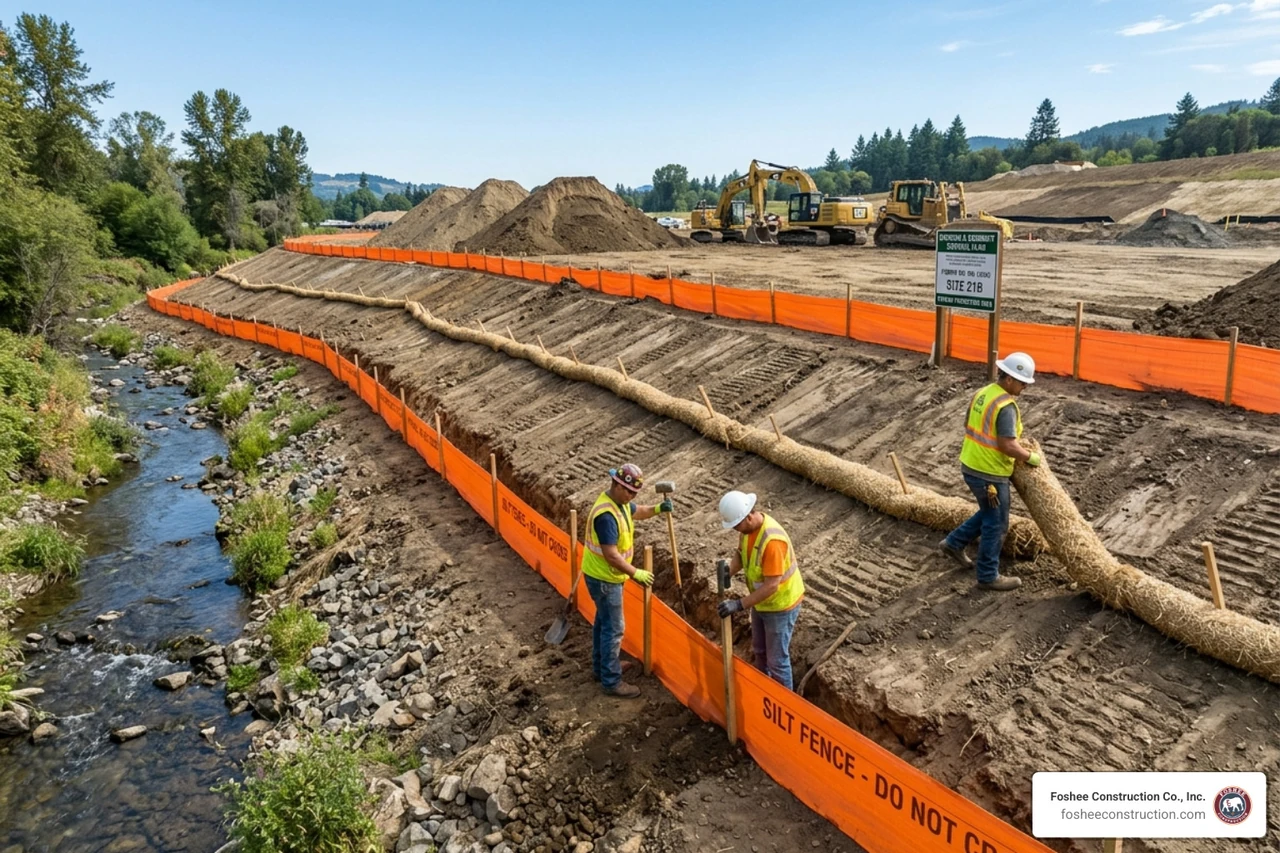
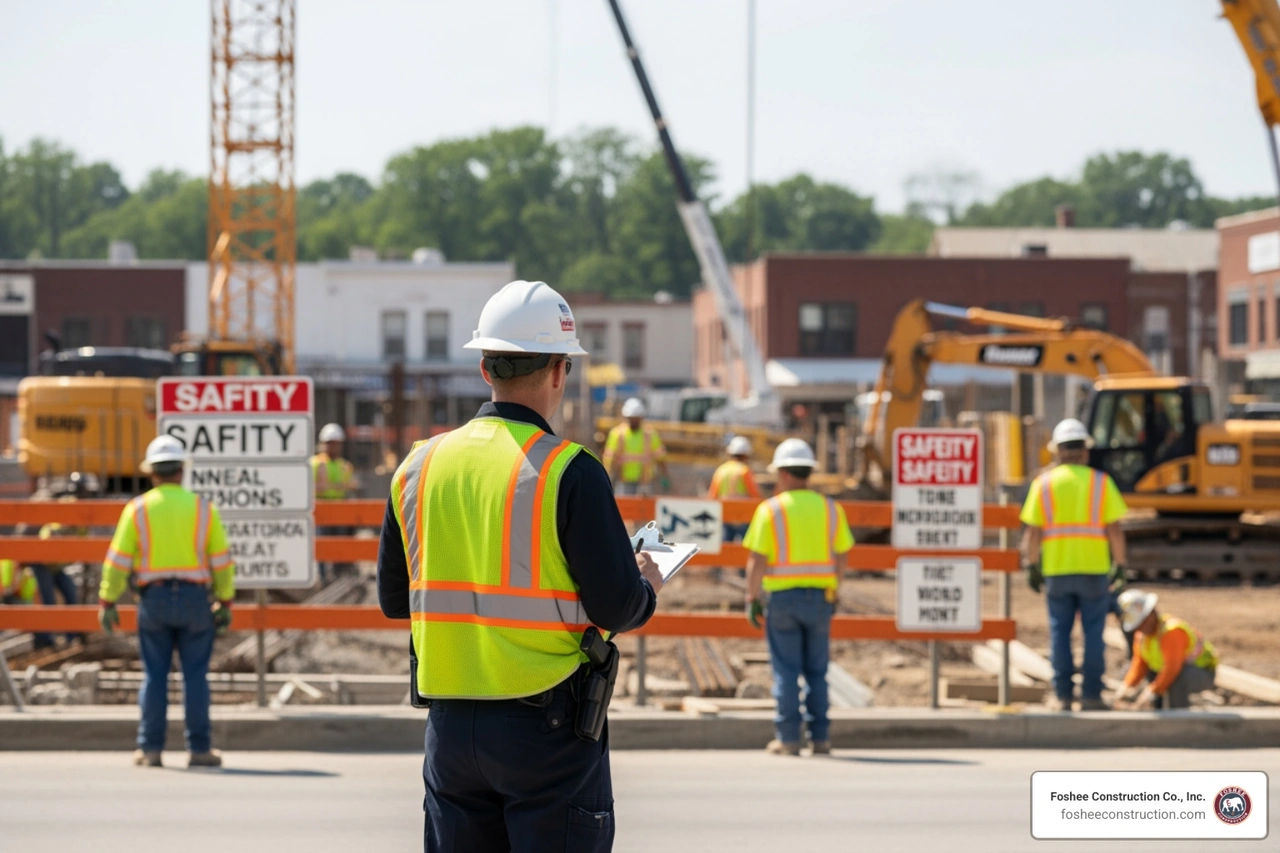
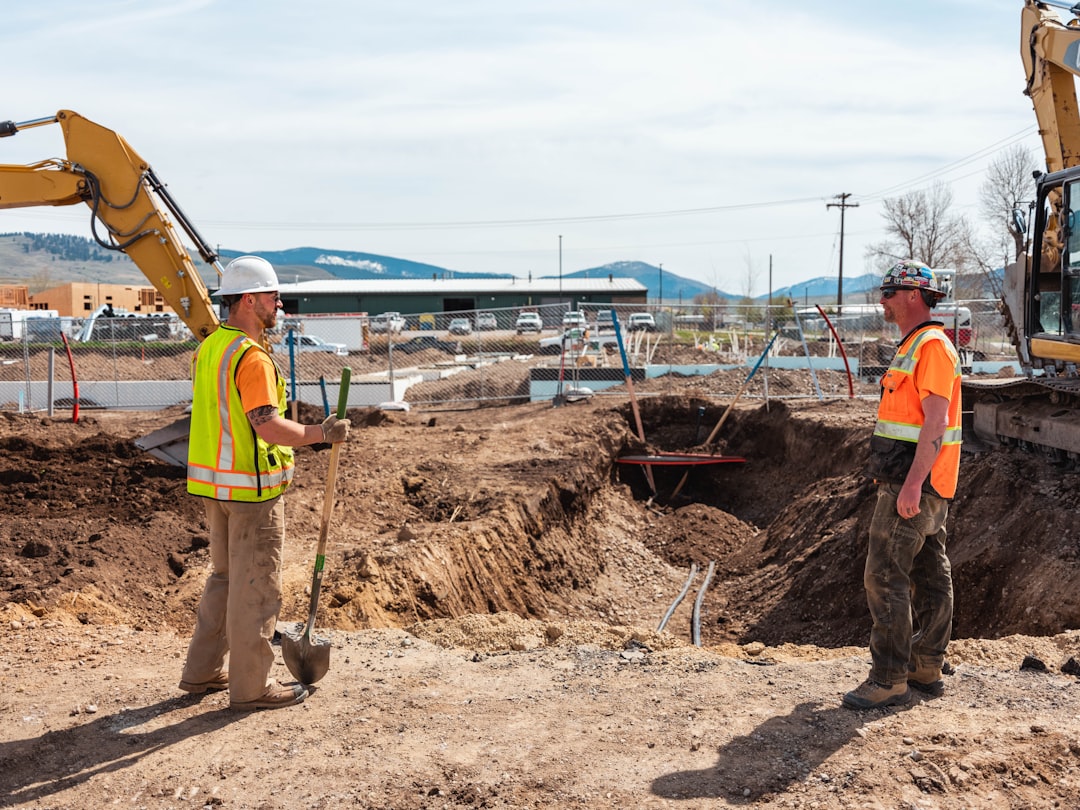
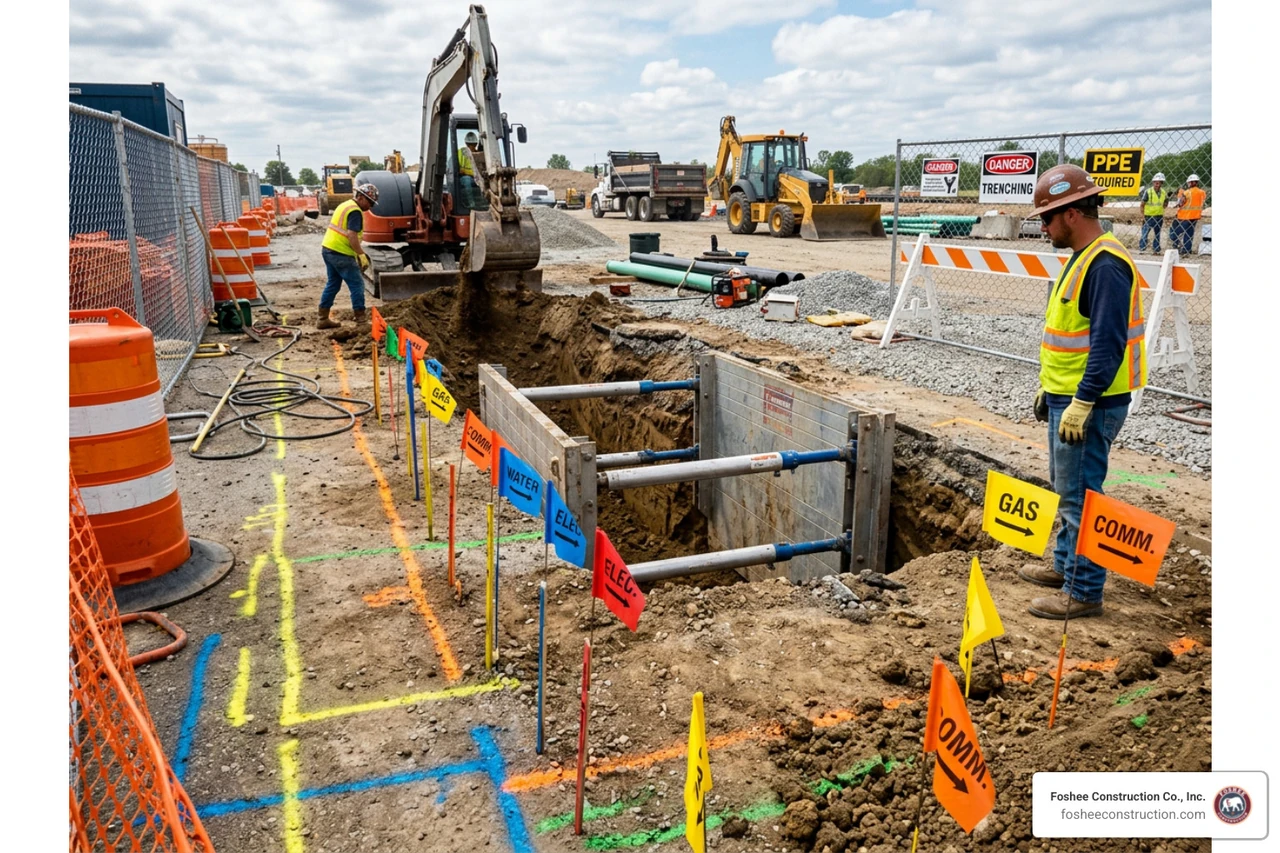
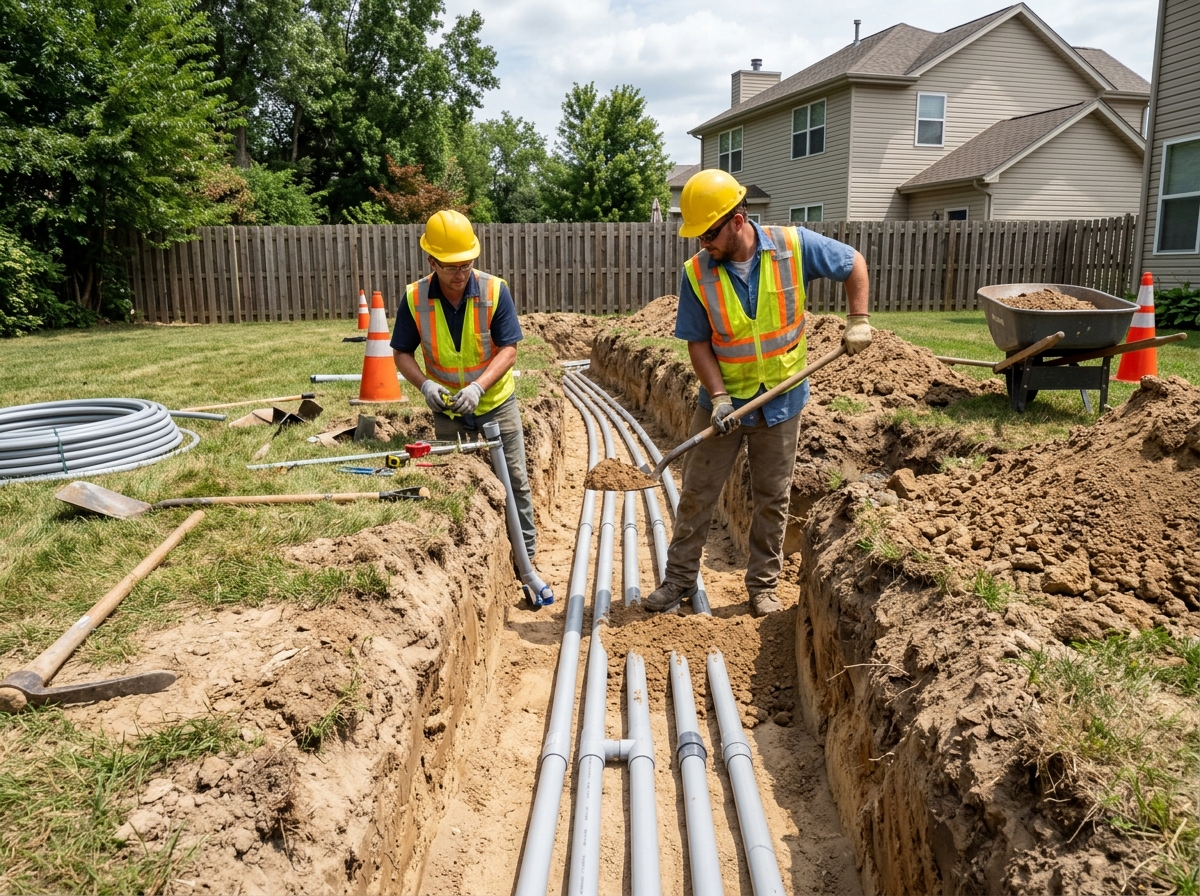
At Foshee Construction, we believe that a gas line is only as good as the trench it sits in. Proper installation isn't just a suggestion; it’s a federal requirement governed by 49 CFR § 192.361. These regulations are designed to protect the pipe from external loads and environmental stress.
The depth of your underground gas pipes is non-negotiable. Federal standards require:
In some cases, if underground structures or rocky terrain prevent these depths, the pipe must be encased in a bridge or conduit capable of withstanding any anticipated external loads (like a heavy truck driving over it).
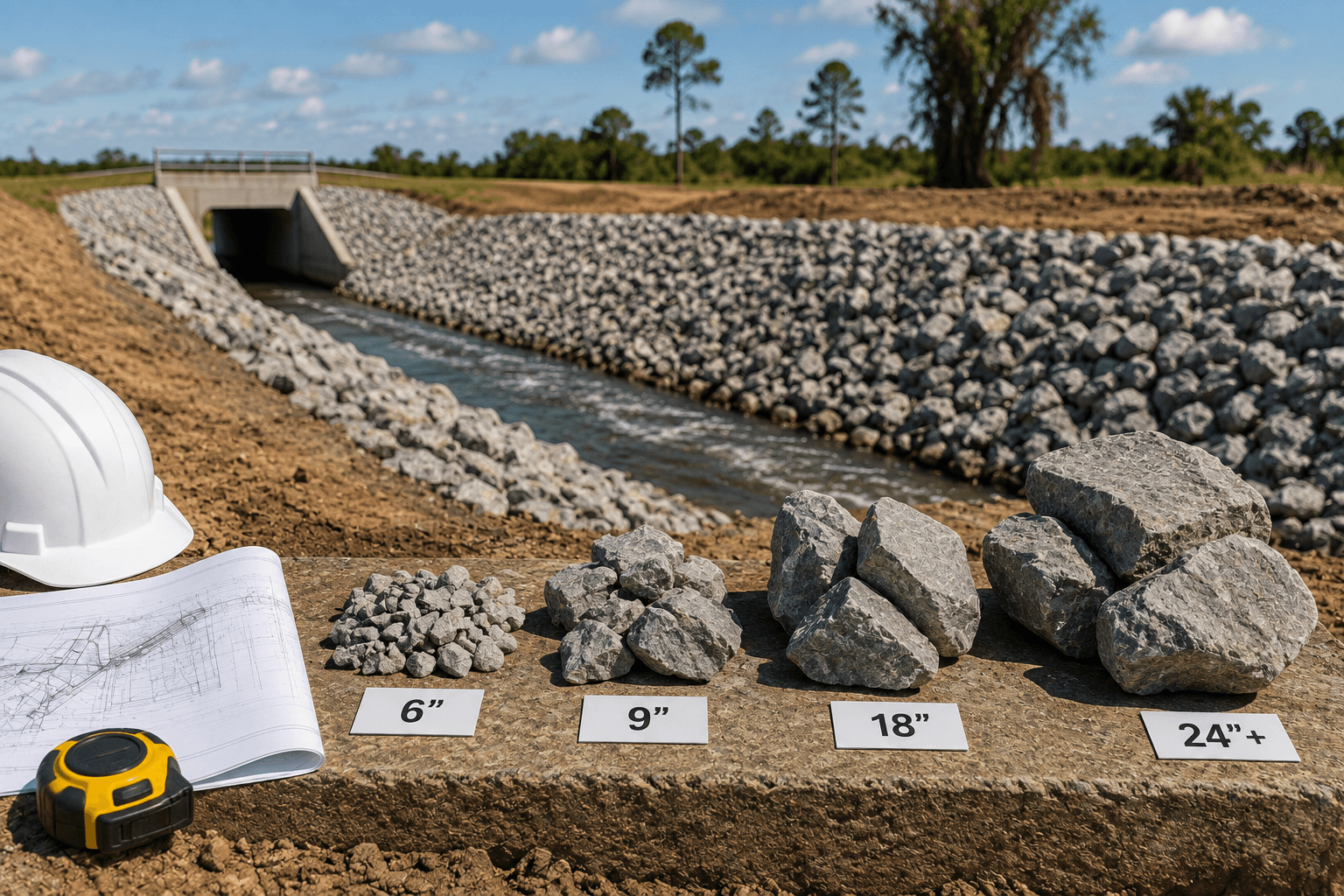
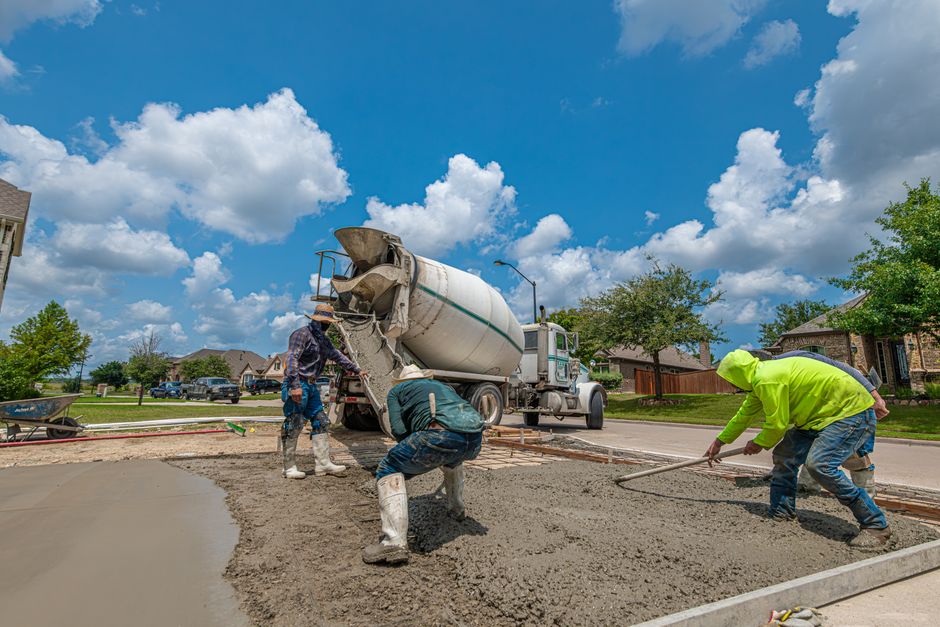
The soil used to cover the pipe is just as important as the depth. We always ensure the pipe is supported on undisturbed or well-compacted soil. The backfill material must be free of large rocks, frozen chunks, or debris that could "point-load" the pipe and cause a puncture or shear over time. This is a similar philosophy to what we use when Trenching for Electrical Conduit—protecting the utility from the weight of the earth above it is priority number one.
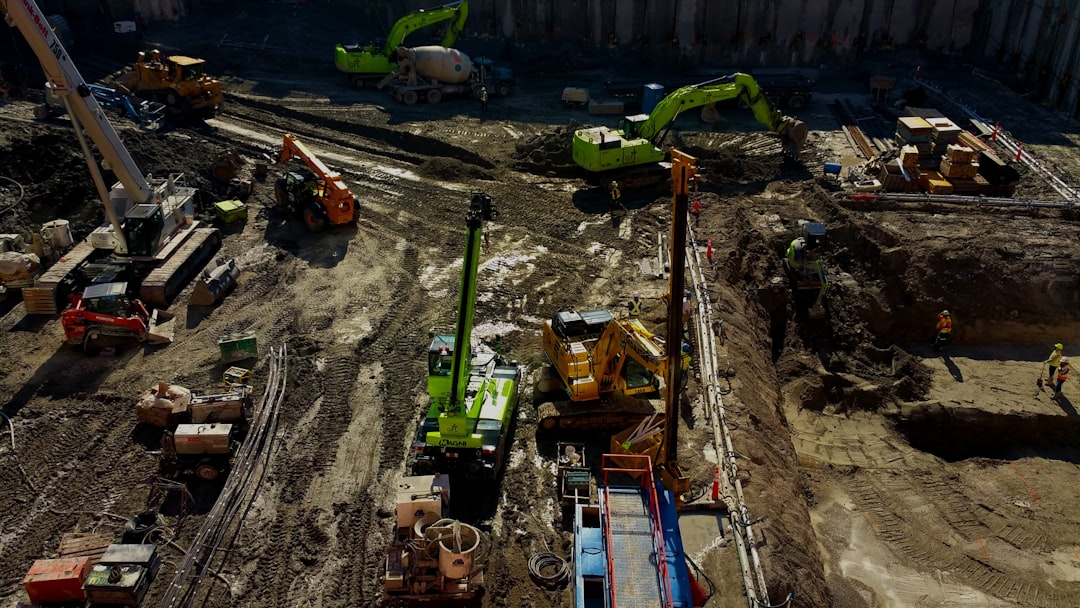
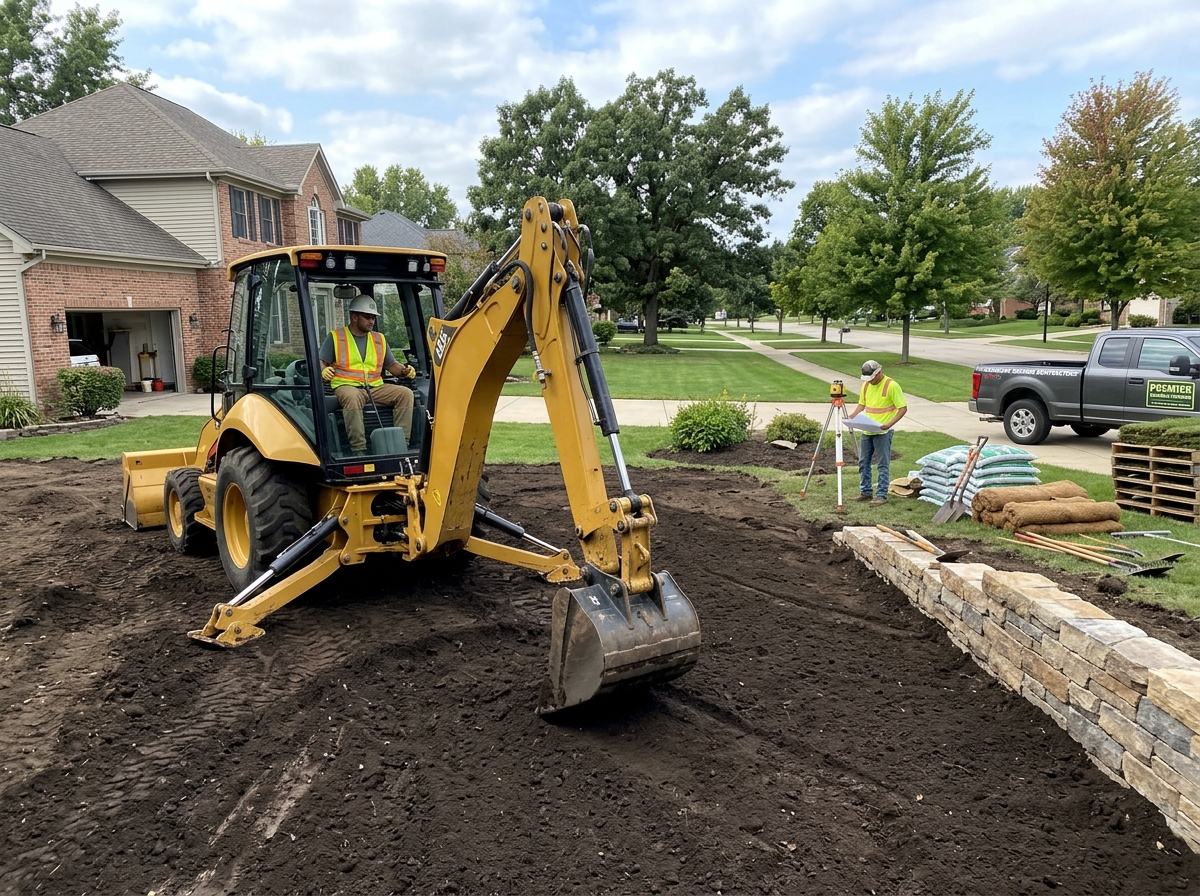
Depending on the site, we use different methods to get the pipe in the ground.
Regardless of the method, professional Utility Installation Contractors must ensure the pipe remains stress-free and properly graded to allow any potential condensate to drain back toward the main.
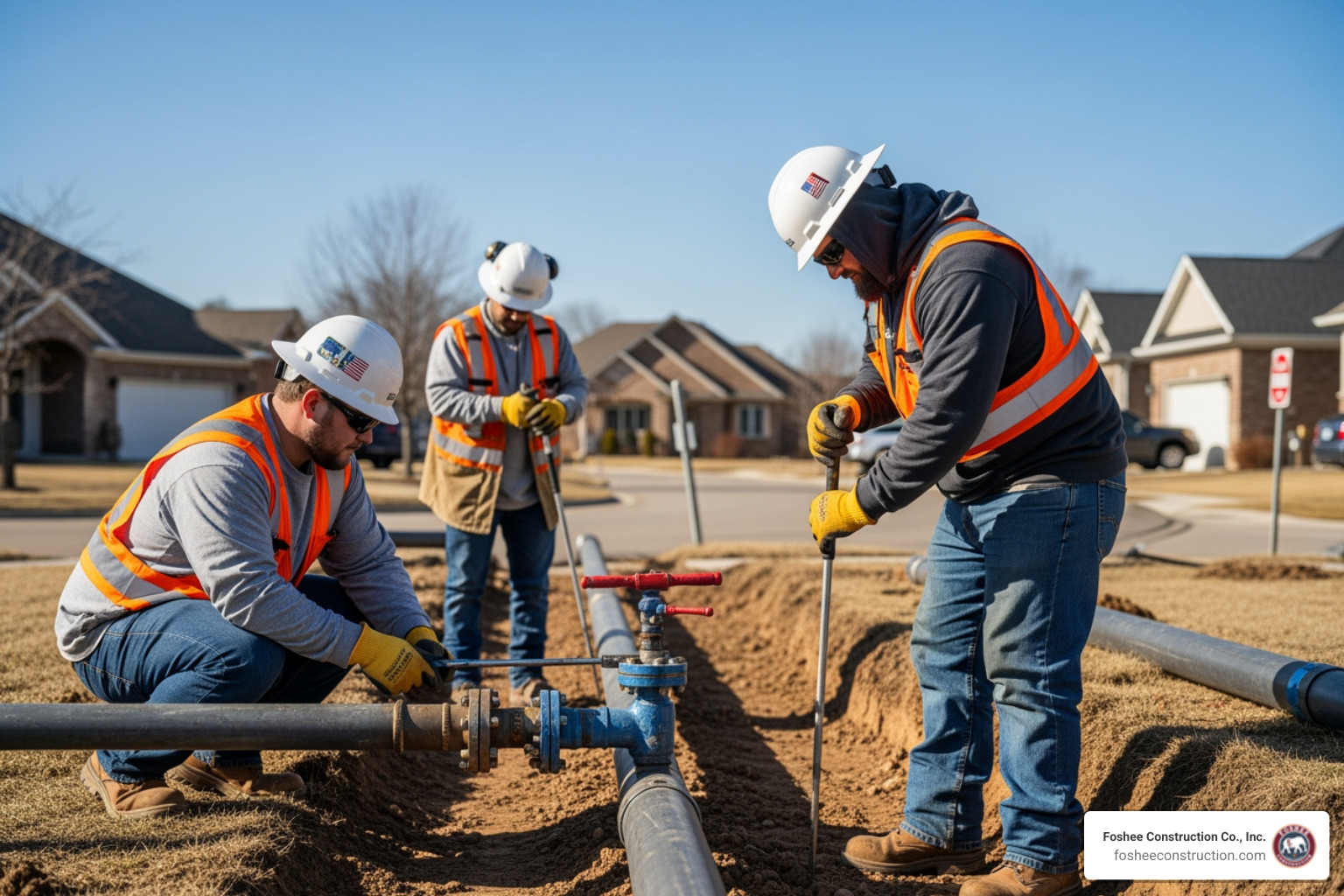
Since polyethylene is plastic, it cannot be found by a standard metal detector. This is why a tracer wire is a strict requirement. We install a minimum 14-gauge insulated copper wire alongside the underground gas pipes.
This wire must:
Safety organizations like Dial Before You Dig (DBYD) | Gas Networks Ireland emphasize that without this wire, the risk of a "third-party strike" (someone hitting the line with a backhoe) increases exponentially.

You can't just run a yellow plastic pipe straight into a house. Because PE is sensitive to UV rays and physical damage, it must stay underground. This is where components like anodeless risers come in.
An anodeless riser is a factory-assembled component that transitions the PE pipe from a horizontal underground position to a vertical above-grade position. The "anodeless" part means it has a protective coating or sleeve that eliminates the need for cathodic protection (anodes) on the metallic portion of the riser.
When ordering fittings, you’ll encounter two sizing standards:
There are three main ways to join underground gas pipes:
For more technical details on how these components integrate into larger systems, you can review A-75, "Gas Service and Mains in Plastic Casing". Interestingly, the layout and protection of gas lines often mirror the logic used for Underground Electrical Conduit, focusing on separation and protection from external forces.
Before we ever backfill a trench, the system must be proven leak-free. In Florida, we follow strict guidelines, including those found in CHAPTER 4 GAS PIPING INSTALLATIONS - 2020 FLORIDA.
Standard practice for residential underground gas pipes involves a pressure test:
While the pipes are under pressure, we use a non-corrosive leak-detection solution (essentially high-tech soapy water) on all mechanical joints. Once the system is live, safety depends on Mercaptan. Natural gas and propane are naturally odorless; Mercaptan is the chemical added by utilities that gives gas its "rotten egg" smell. As noted by Pipeline Awareness | Michigan Gas Utilities, if you ever smell this near a buried line, or see blowing dirt or bubbling water, you must evacuate the area and call 911 immediately.
It is vital to remember what PE pipe cannot do:
Proper maintenance, as outlined by Maintaining Your Natural Gas Pipes - Florida City Gas, includes keeping the area around your meter clear of vegetation and ensuring the tracer wire leads remain accessible.
Absolutely not. Building codes and fire safety standards prohibit the use of PE pipe inside any structure or under a foundation. The pipe must transition to a metallic material (like steel or CSST) via an anodeless riser before entering the building. For larger projects, like the Gas Feeder Line 148 | Projects | Enbridge Gas, these transitions are carefully engineered to ensure no plastic is exposed to the interior environment.
Most residential yellow PE pipe is rated for a maximum of 80 psi, while the mechanical fittings are often rated up to 125 psi. However, your actual operating pressure will be much lower. Most residential systems run at 1/4 to 10 psi. If the utility main is high-pressure, a "step-down" regulator is used at the meter to bring the pressure down to a safe level for your appliances (usually 0.25 psi for natural gas).
Directional boring is a "blind" installation method, meaning we can't see the pipe as it goes in. To compensate for this, we perform a rigorous pressure test after the pull is complete. We also ensure the pipe is "over-sleeved" or that the soil conditions are verified to prevent gouging during the pull. Large-scale utility projects, such as those mentioned in the Florida Power and Light Plans New Natural Gas Pipeline Project, often use X-ray or "smart pig" technology to inspect the integrity of pipes that cannot be visually confirmed.
Burying underground gas pipes doesn't have to be a high-stress endeavor if you follow the standards and work with the right team. At Foshee Construction Co., Inc., we take the guesswork out of site preparation and utility installation. Based in Minneola, Florida, we serve Lake County and the surrounding regions with a disciplined focus on safety and scheduling.
Whether you are a developer starting a new subdivision or a contractor needing reliable Utility Installation Contractors for a complex site, we bring transparent bids and professional expertise to every trench. We don't just dig holes; we build the infrastructure that keeps Florida moving safely. If you’re ready to start your next project with a team that values reliable relationships and precision, reach out to us today.
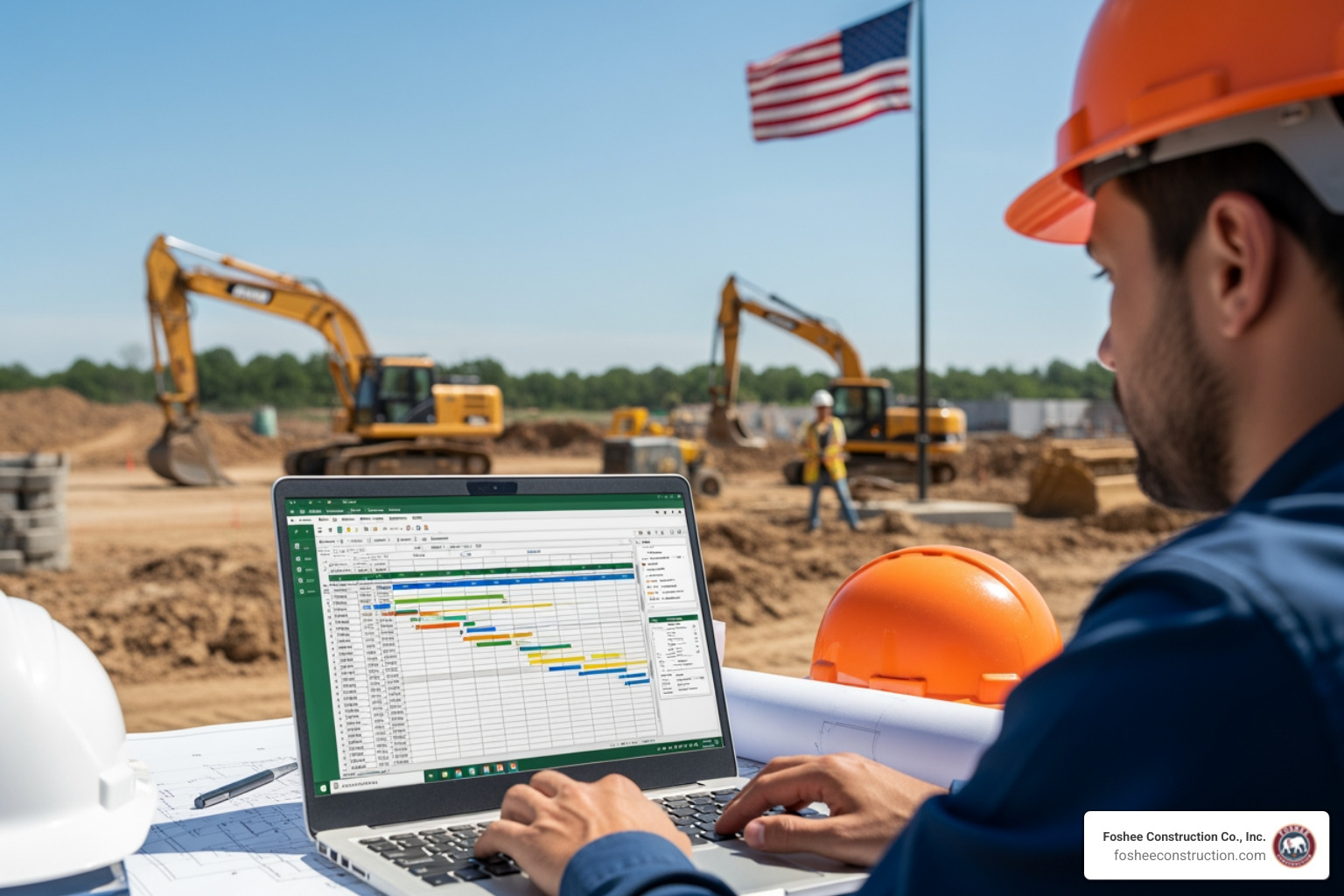
We build bids using HeavyBid and AGTEK because the details matter long before the job starts. When the numbers are accurate and the scope is clearly defined, it sets the tone for how the entire project runs. Estimating isn’t just a step in the process, it’s the foundation we build on.
That same mindset carries into the field. Our crew is trained to work with purpose, follow the Civil Engineers’ Plan to the finest detail, and hold the line on quality. When expectations are clear from day one, there’s no need for shortcuts, and no confusion about how the work gets done.
Clients trust our bid packages because they’re complete and ready to use. Project managers know what we’re covering, what’s excluded, and how we plan to approach the job. That clarity removes friction and lets teams focus on execution instead of interpretation.
As part of our review process, we go into the plans before anything hits the site. We ask the questions early, resolve issues before they show up in the field, and keep RFIs moving. This approach prevents delays and protects the timeline.
Over time, that consistency builds trust. Many of the people we work with today came through referrals from past projects – engineers, GCs, and superintendents who’ve seen how we operate and want the same experience again.
In 2024, Foshee Construction was acquired by Saga Infrastructure Solutions, a national network of civil construction companies. Saga supports regional contractors by giving them access to better tools, long-term resources, and operational backing, without changing how they run day to day.
Foshee will continue to operate under its name, with the same team and field leadership in place.
“From the very time a project starts, we start that partnership. We try to catch as much as we can with the tools that we have. Not everybody is using the software platforms we are. That’s the differentiator: we’re not just bidding. We’re anticipating, problem-solving, and making sure the job runs right.”
— Don, CEO, Saga Infrastructure Solutions
Foshee is now part of a broader regional strategy that includes Florida, the Piedmont Atlantic, Texas, Colorado, and the Arizona Sun Corridor. The name, crews, and standards remain. What’s improving is the support behind it.