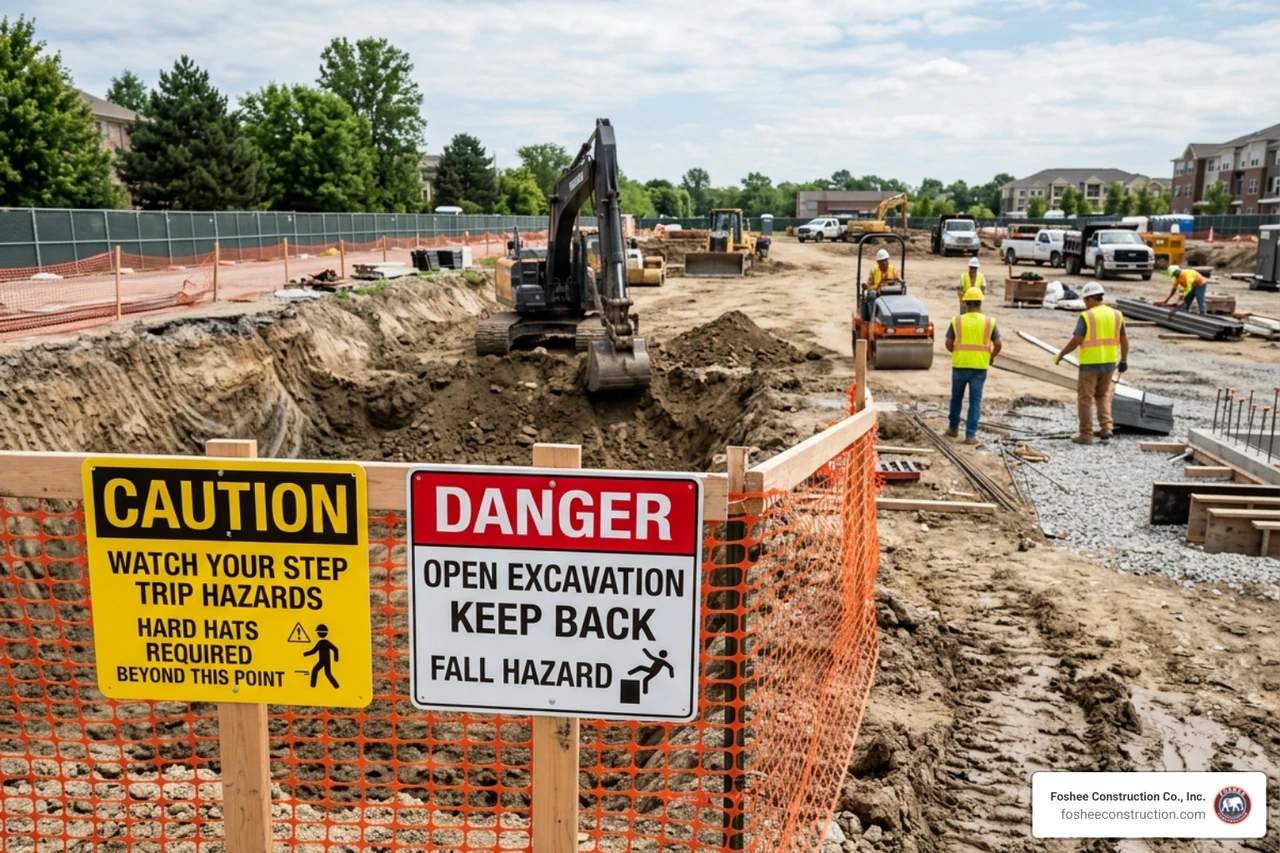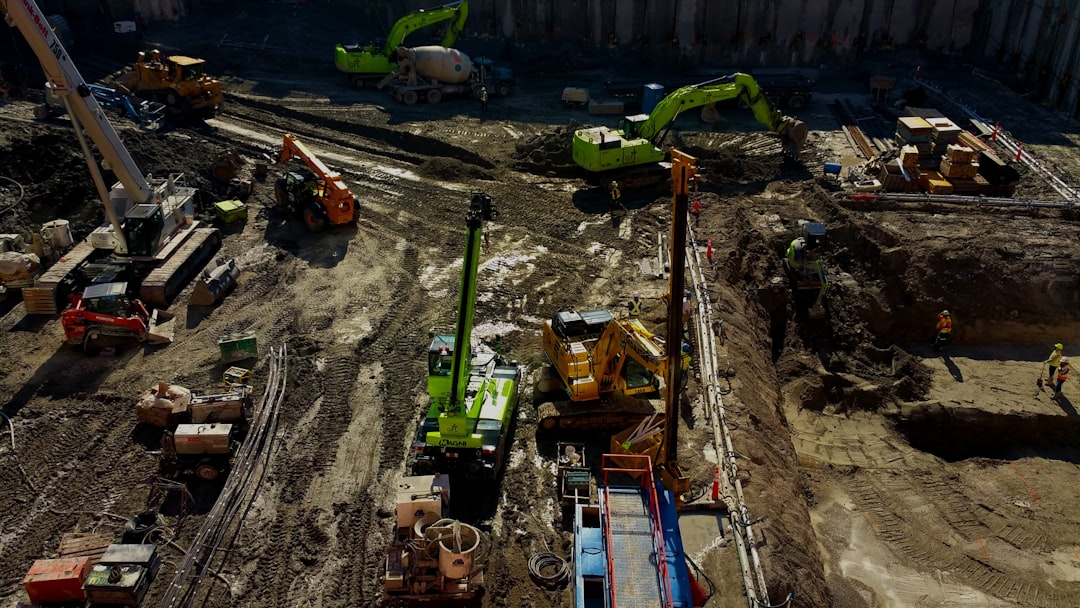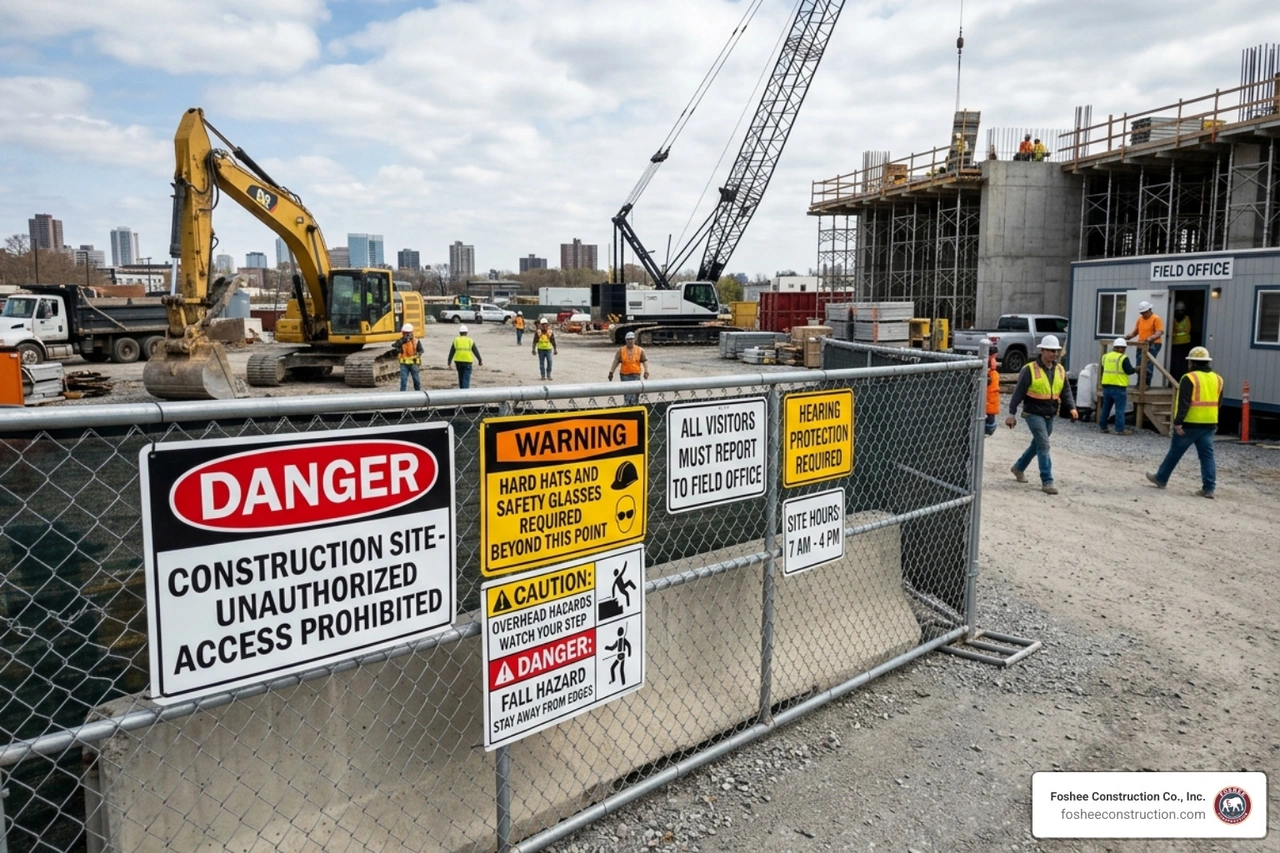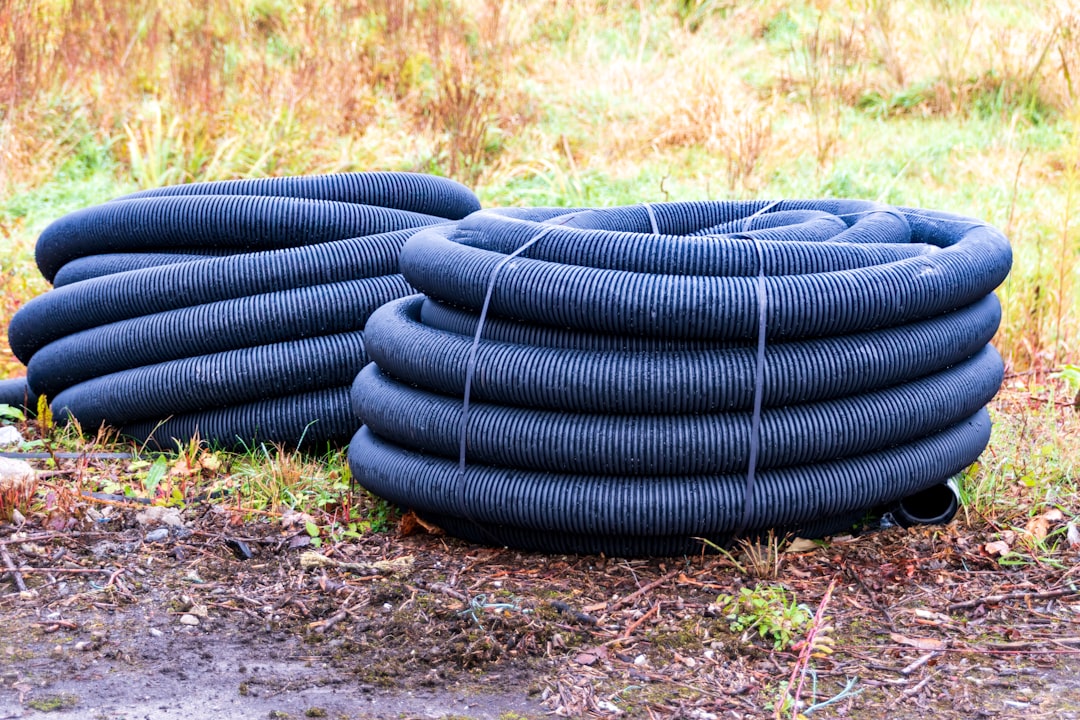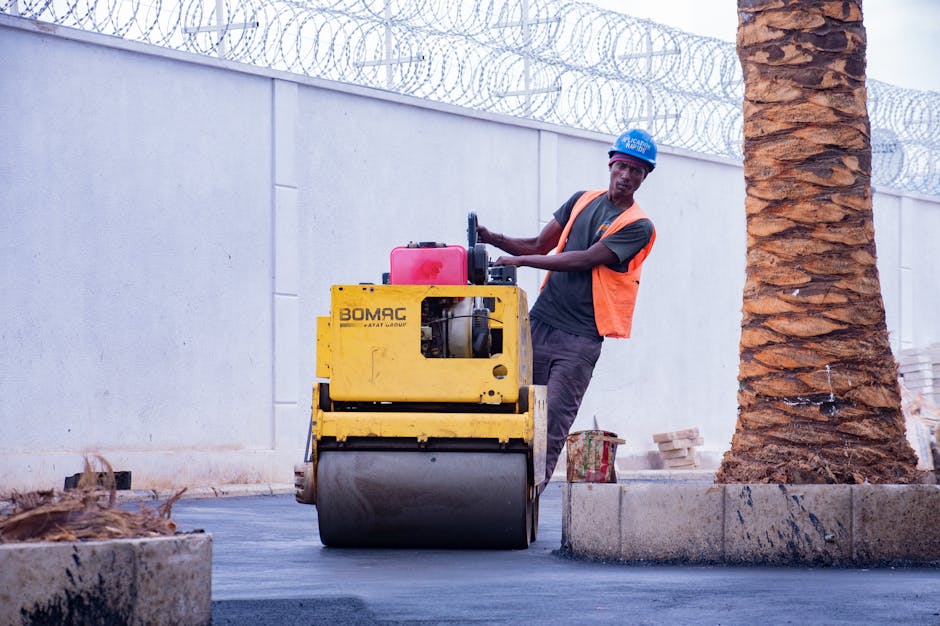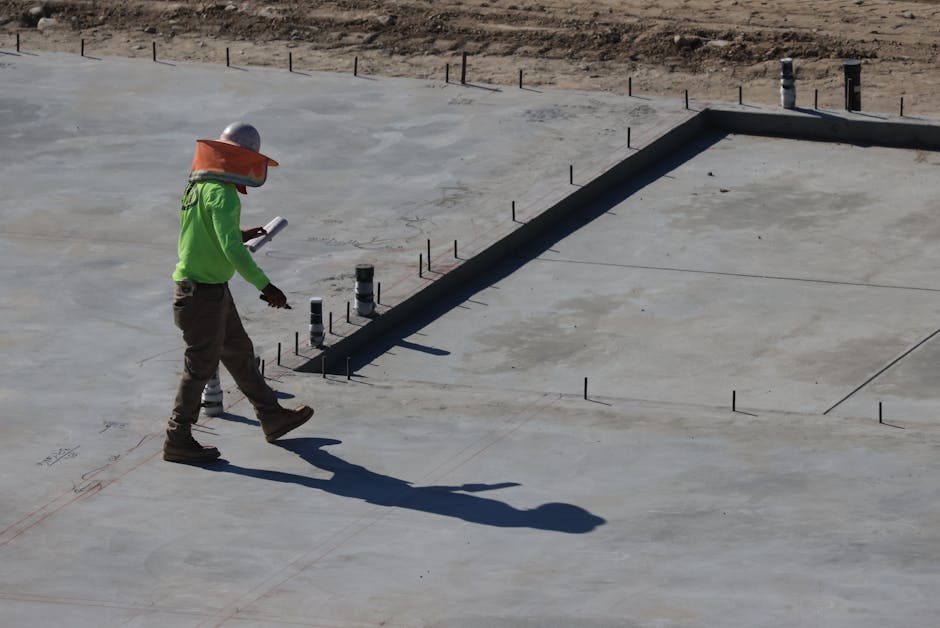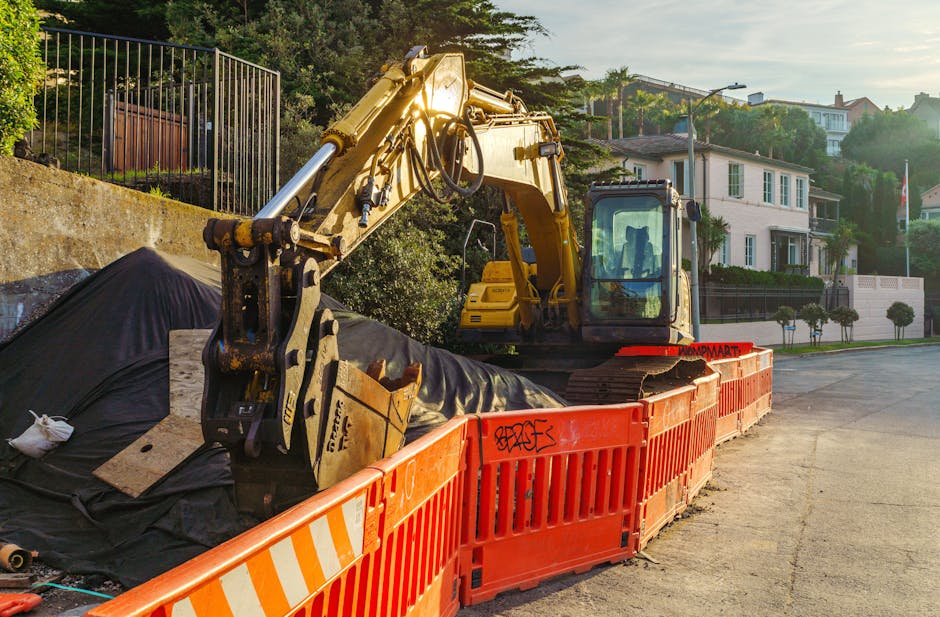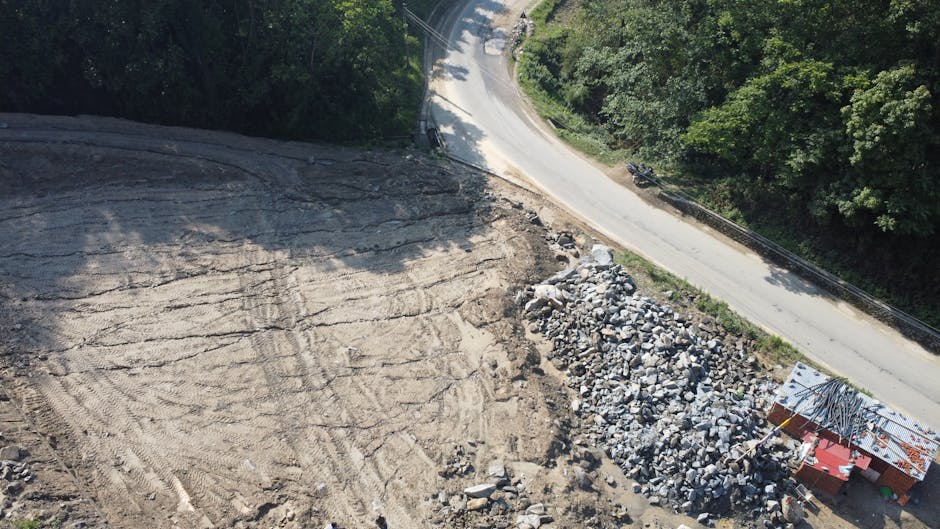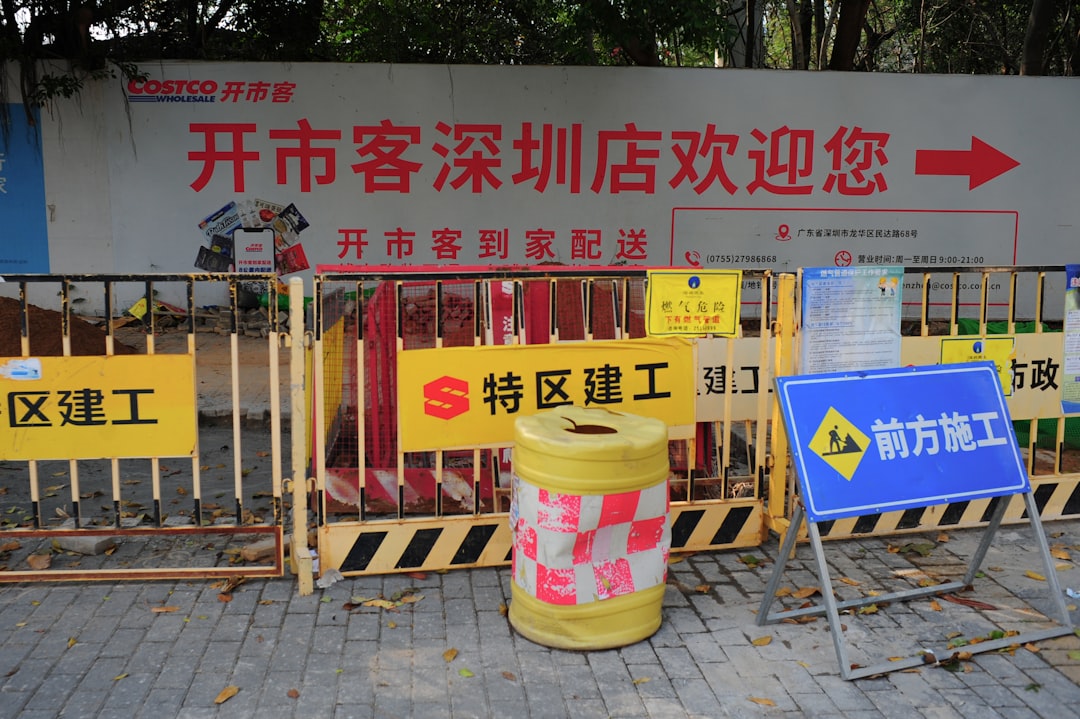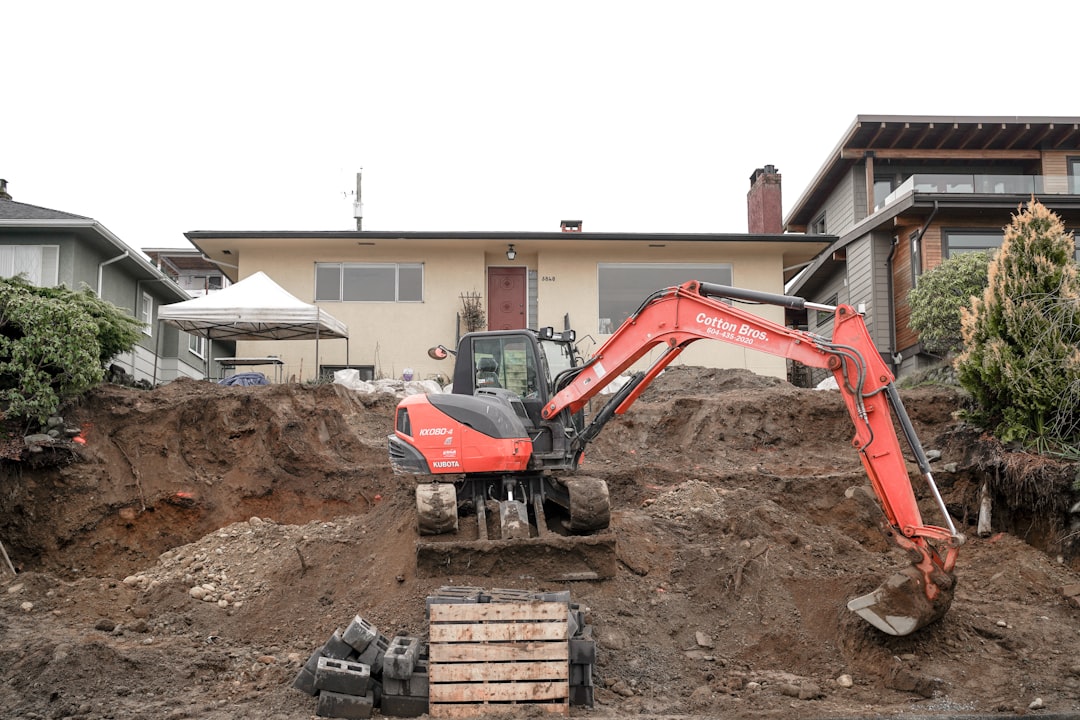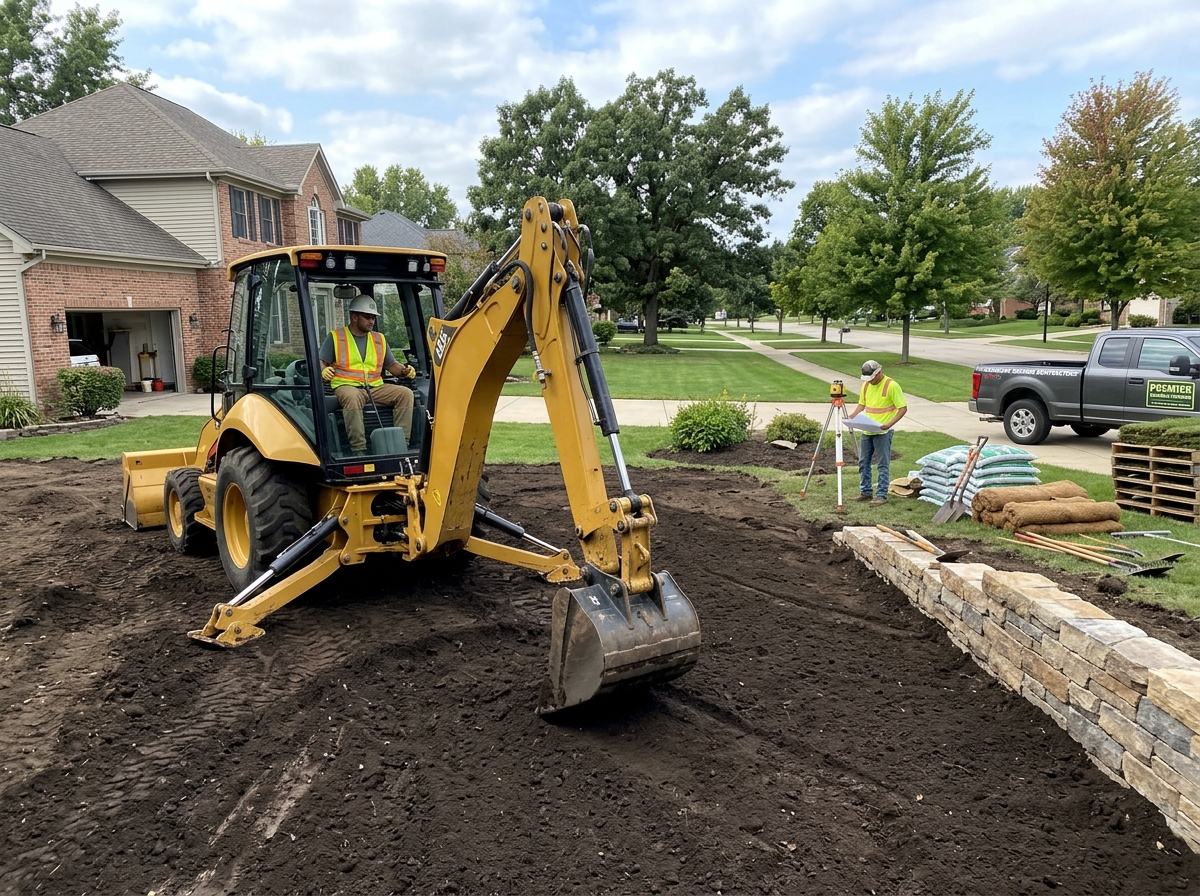
Trenching and civil earthmoving are among the most high-risk operations on any construction project. Soil stability can change in an instant due to vibration, moisture, or weight load shifts. Because a single cubic yard of dirt weighs between 2,000 and 3,000 pounds, a cave-in creates extreme crushing forces. While the Bureau of Labor Statistics reported roughly a 70% decline in trench collapse fatalities in 2022 thanks to expanded enforcement and improved employer safety protocols, cave-ins remain the leading cause of death in excavation activities. Maintaining rigid safety standards is essential on every site.
Understanding federal safety requirements begins with knowing the exact physical definitions used by regulatory agencies:
If forms, utilities, or structural supports installed inside an excavation reduce the open width to 15 feet or less (measured between the forms), that area is evaluated as a trench under safety regulations.
Federal compliance for earthwork falls under 1926.651 - Specific Excavation Requirements. This standard outlines mandatory rules for structural stability, utility line location, environmental hazard controls, and protective systems. Adhering to these federal rules works hand-in-hand with standard OSHA Construction Site Requirements to keep job sites compliant and workers out of danger.
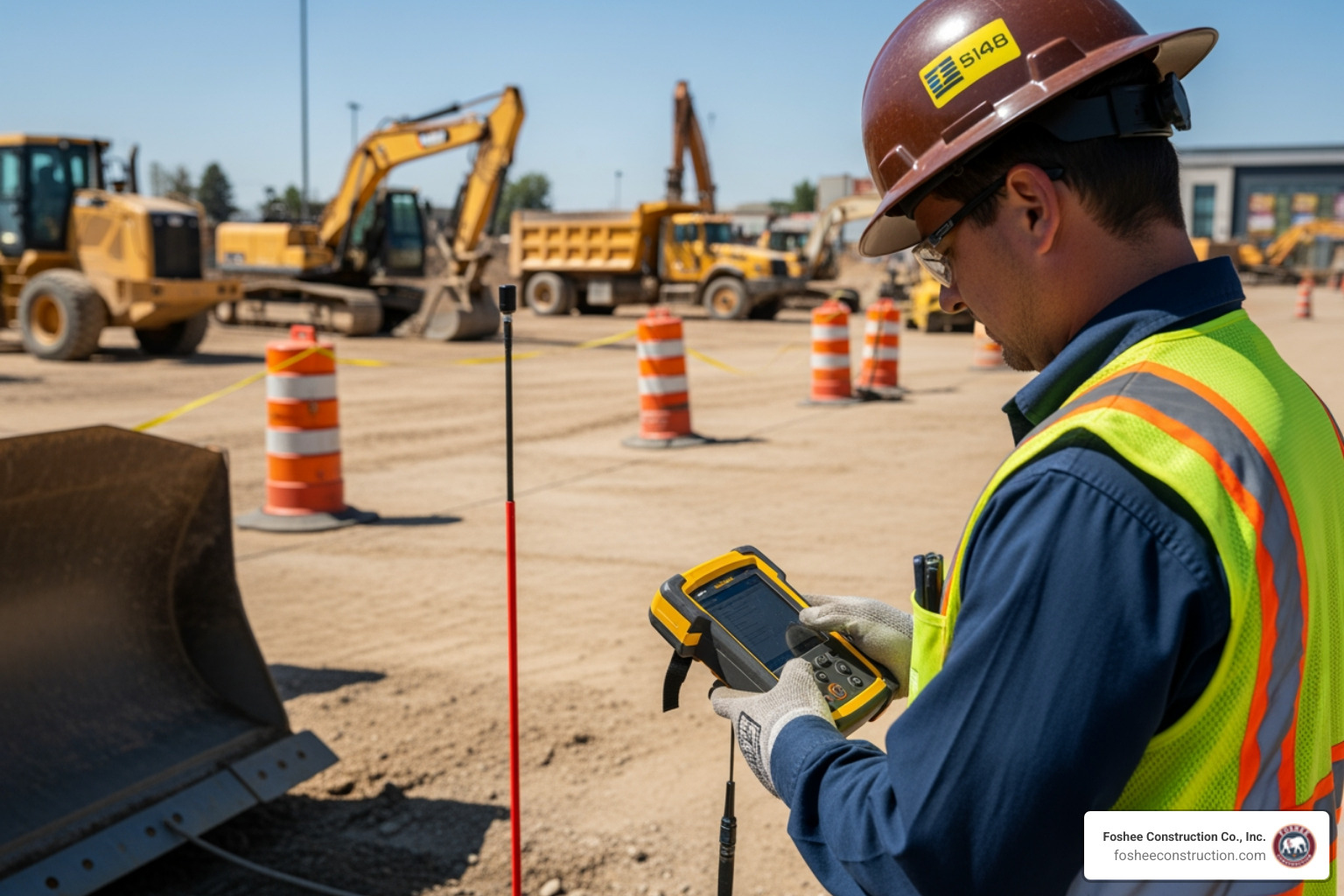
Equipment operators, spotters, utility installers, and grade checkers must understand the specific risks associated with earthmoving. Standard worker safety training covers:
Investing in comprehensive hazard training establishes a strong culture of Construction Site Safety that keeps every crew member alert on the job site.
Soil dynamics dictate how an excavation behaves. To prevent structural failure, ground conditions must be scientifically analyzed rather than guessed.
OSHA categorizes soil into four primary tiers based on unconfined compressive strength, cohesion, and stability:
In Central Florida, sandy soils, high water tables, and previously backfilled site areas mean crews frequently encounter Type C soil conditions.
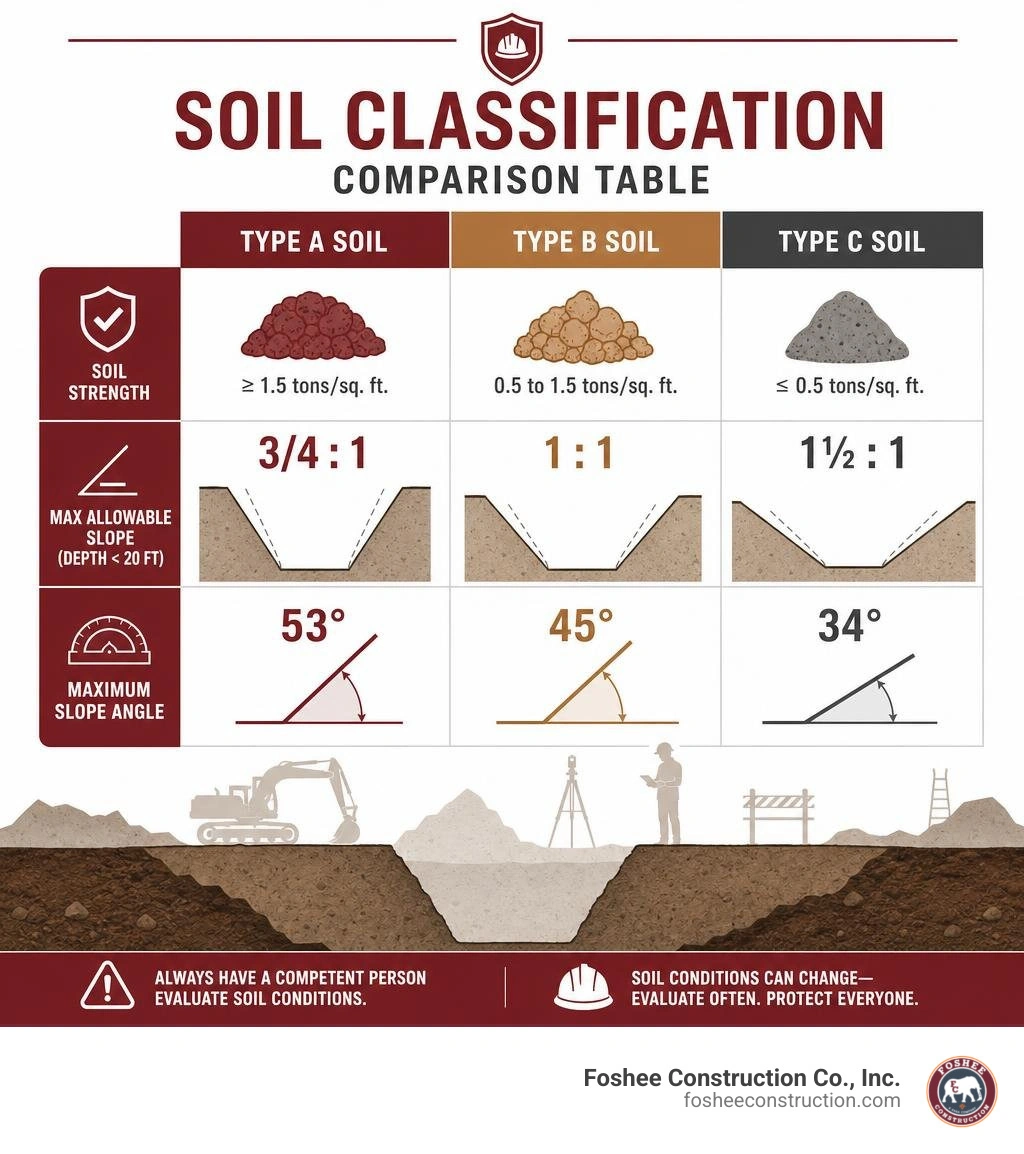
| Soil Classification | Unconfined Compressive Strength | Max Allowable Slope (Depth < 20 ft) | Maximum Slope Angle |
|---|---|---|---|
| Stable Rock | Solid Mineral | Vertical ($90^\circ$) | $90^\circ$ |
| Type A Soil | $\ge 1.5$ tons/sq. ft. | $3/4 : 1$ | $53^\circ$ |
| Type B Soil | $0.5$ to $1.5$ tons/sq. ft. | $1 : 1$ | $45^\circ$ |
| Type C Soil | $\le 0.5$ tons/sq. ft. | $1.5 : 1$ | $34^\circ$ |
To accurately classify soil on-site, a designated expert conducts at least one visual test (examining soil grain size and spalling) alongside manual field tests, such as using a pocket penetrometer, thumb penetration tests, or ribbon tests.
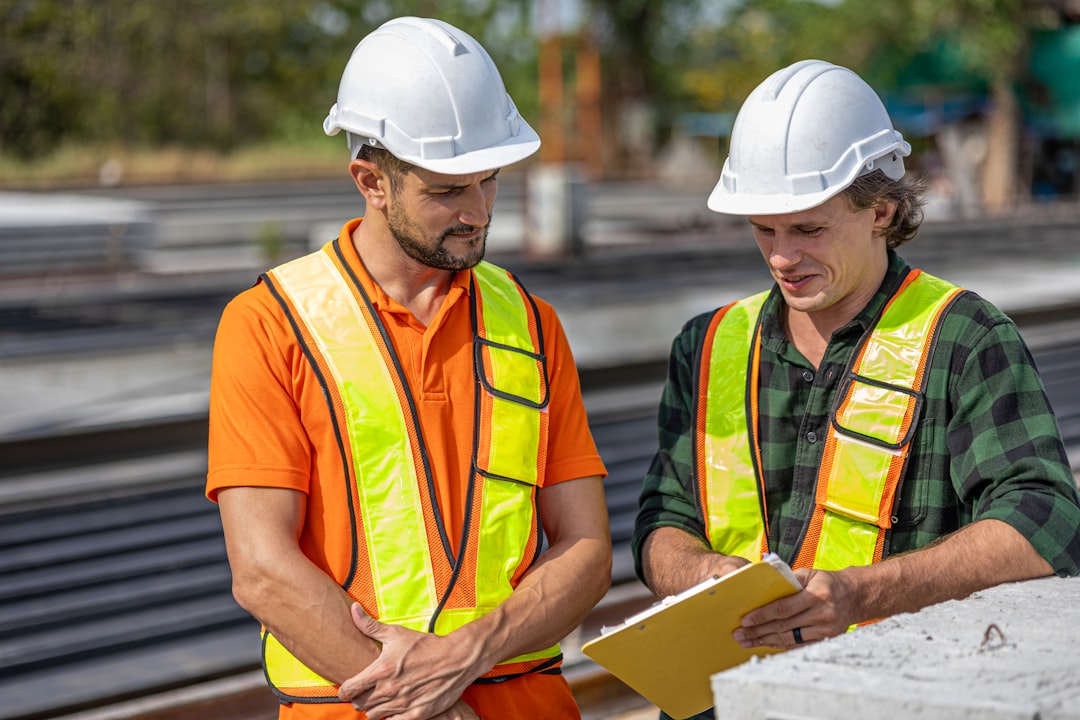
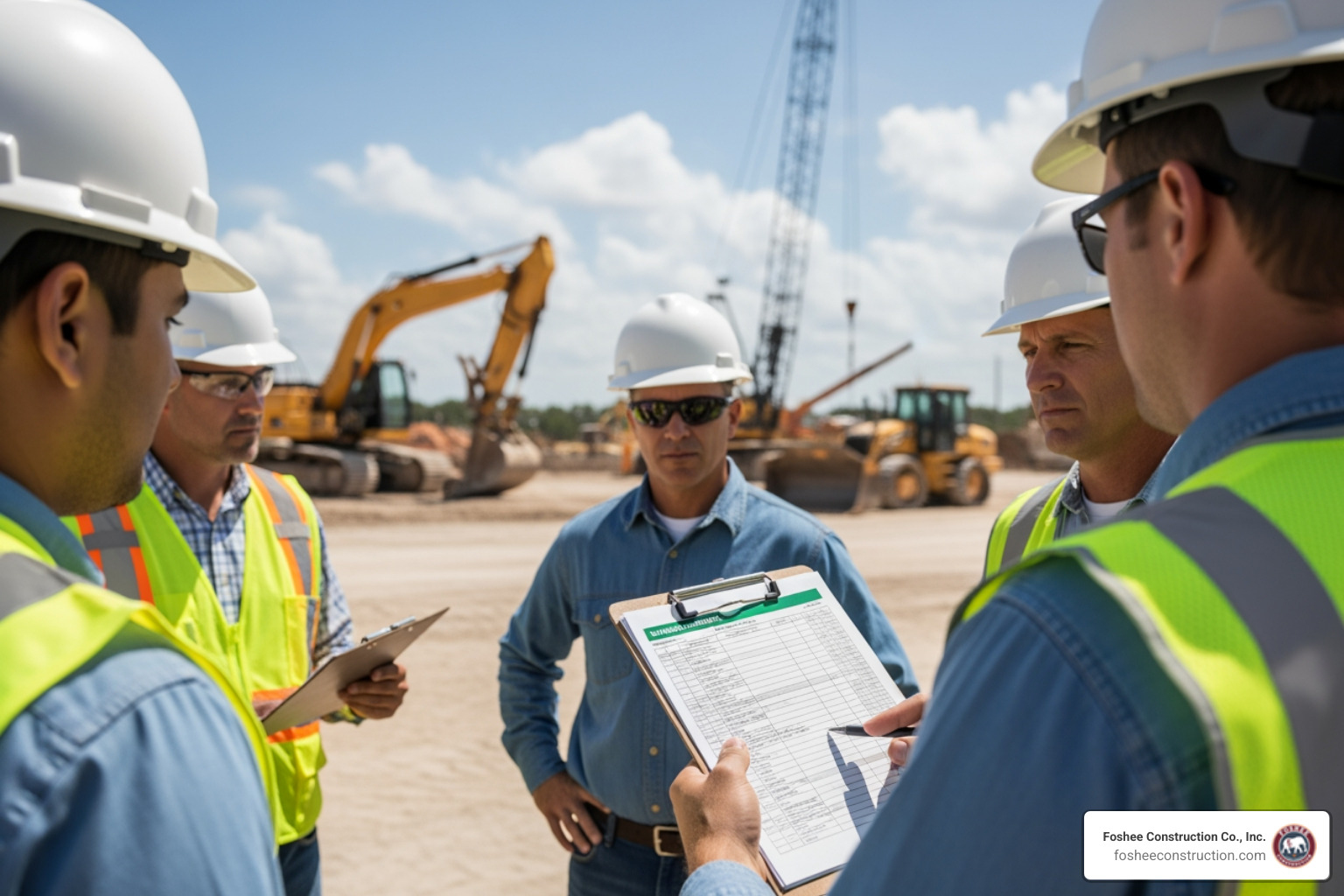
A "Competent Person" is an individual trained to identify existing and predictable excavation hazards, analyze soil conditions, and evaluate protective systems. Crucially, the employer must give this person the explicit authority to take immediate corrective measures, including stopping work and evacuating the trench.
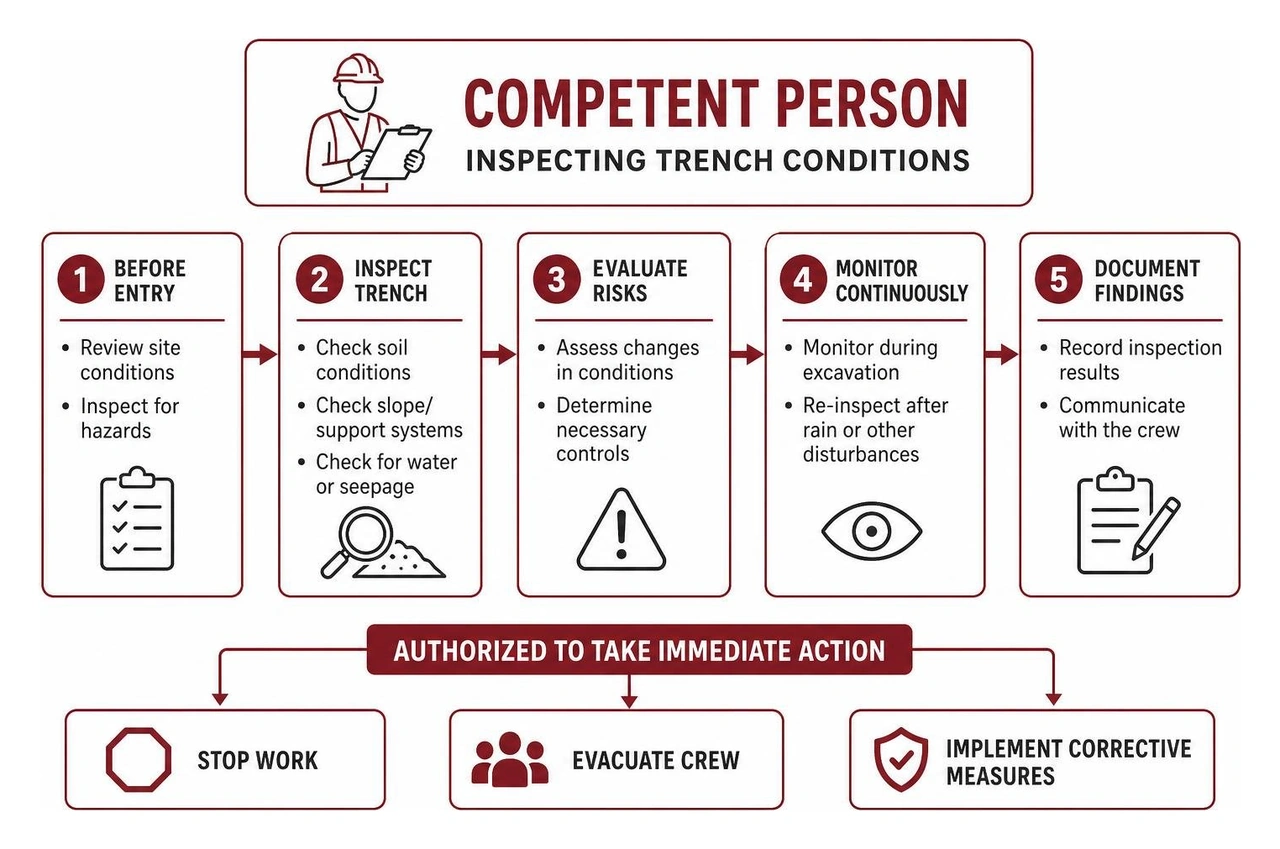
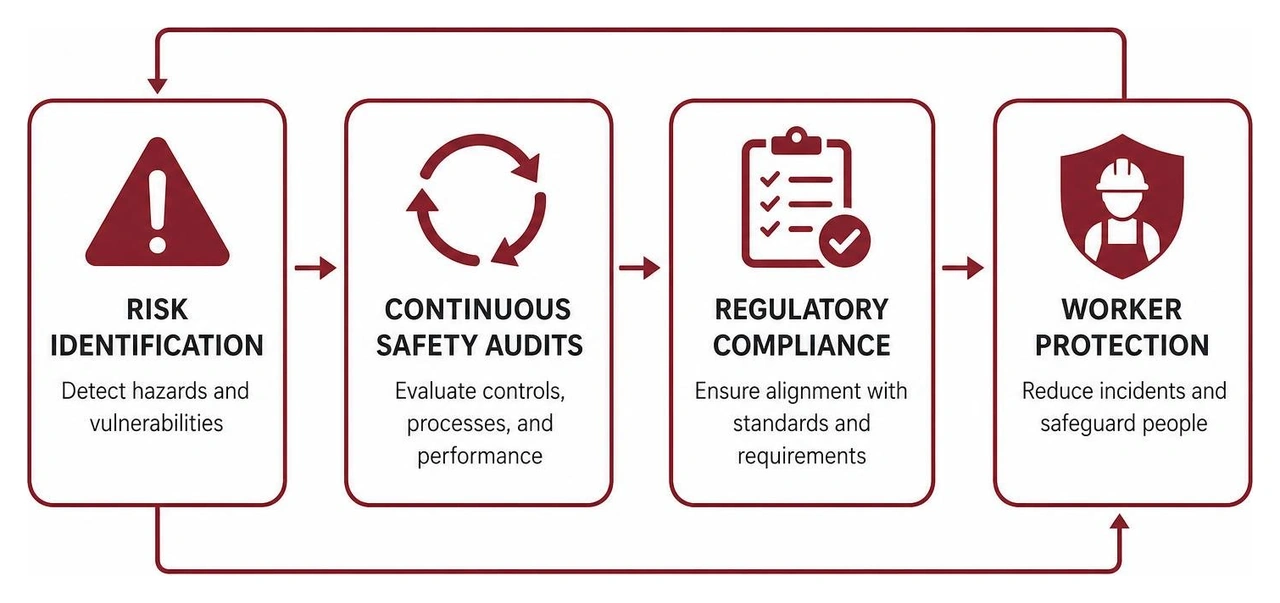
Daily duty cycles for the competent person include mandatory site audits before every shift, continuous monitoring during active digging, and immediate re-inspections after rainstorms, environmental shifts, or soil-disturbing events. Reviewing a structured Construction Site Inspection Guide 2026 helps ensure these daily site checks remain rigorous and documented.
Preventing cave-ins and utility strikes requires systematic planning before any excavator bucket touches the ground.
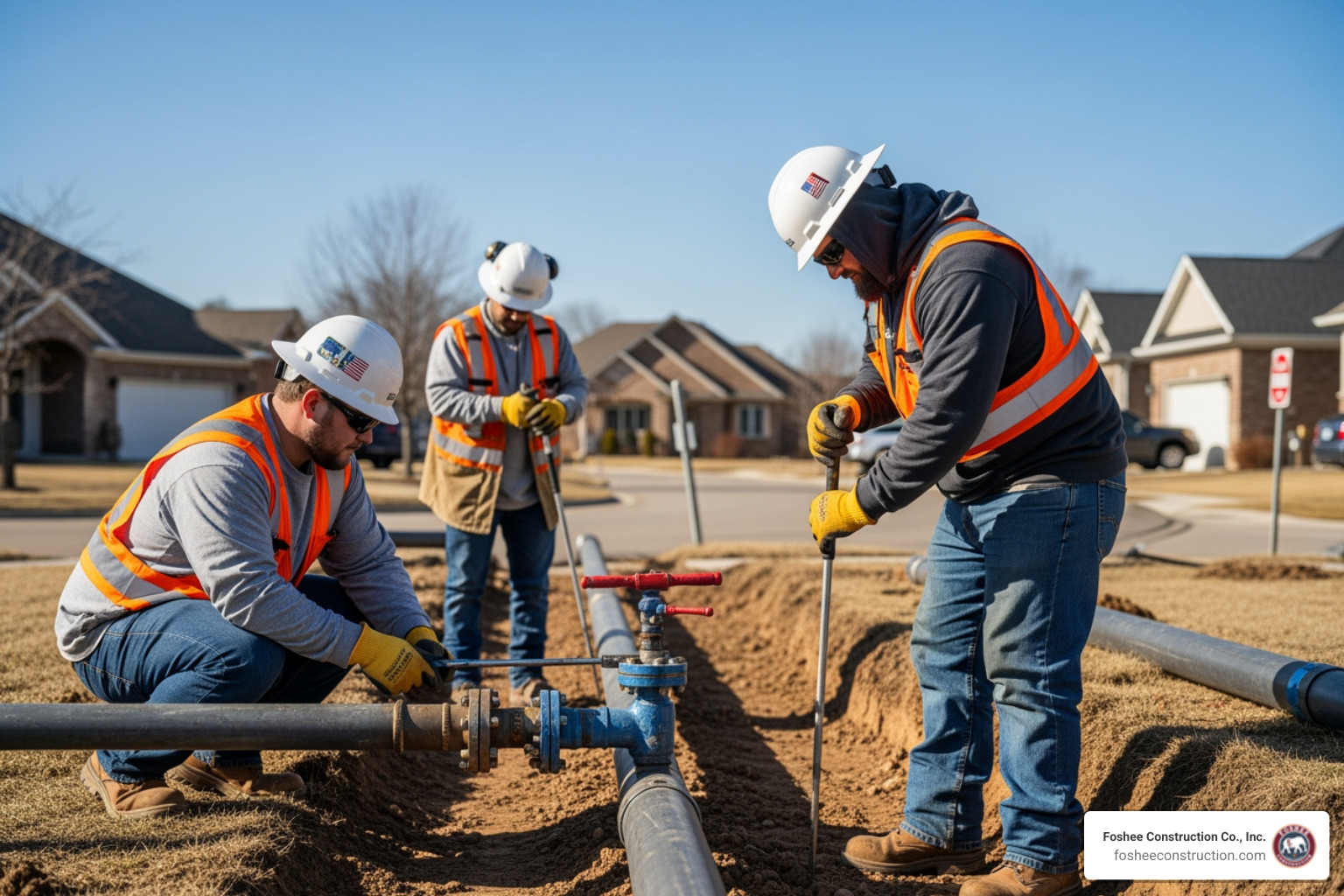
Hitting an underground gas line, power cable, or water main can result in electrocution, explosions, site flooding, or project shutdowns.
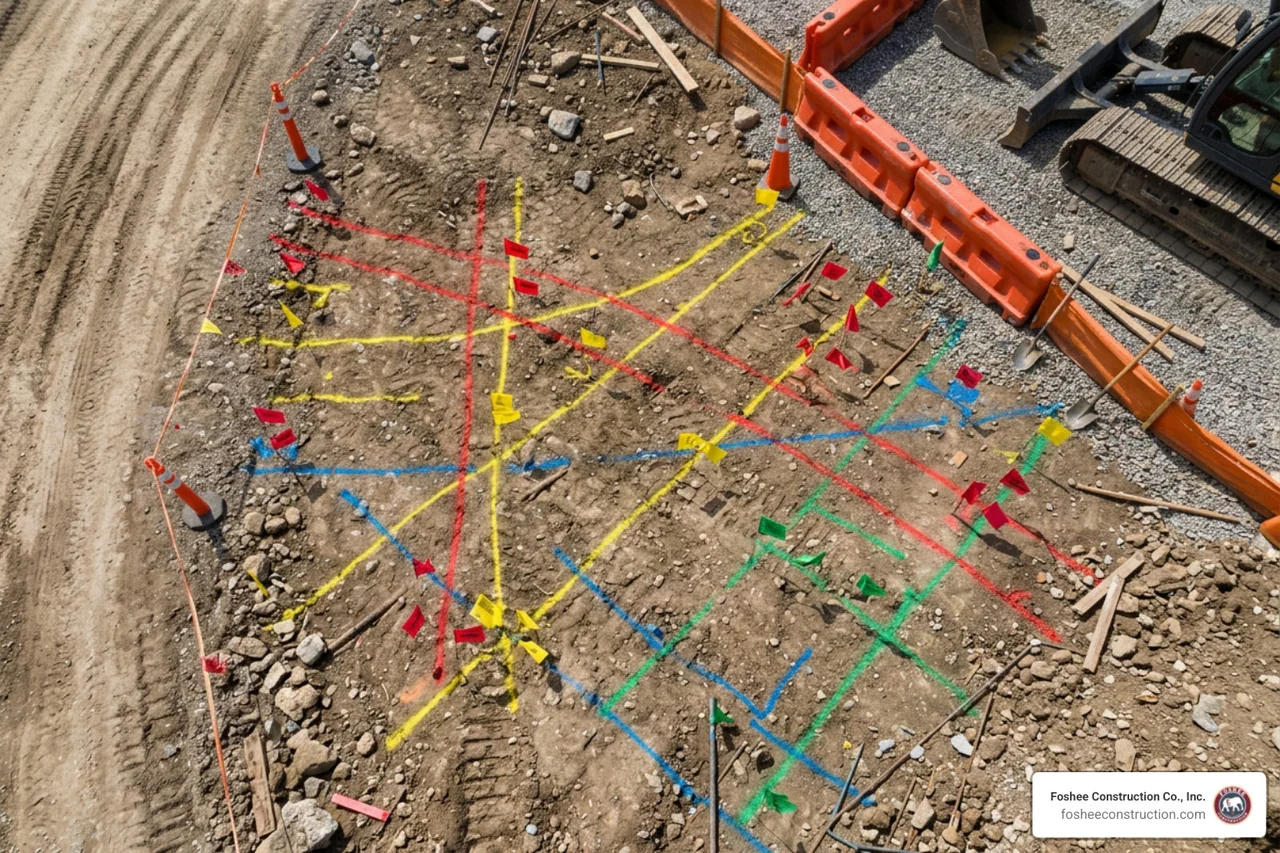
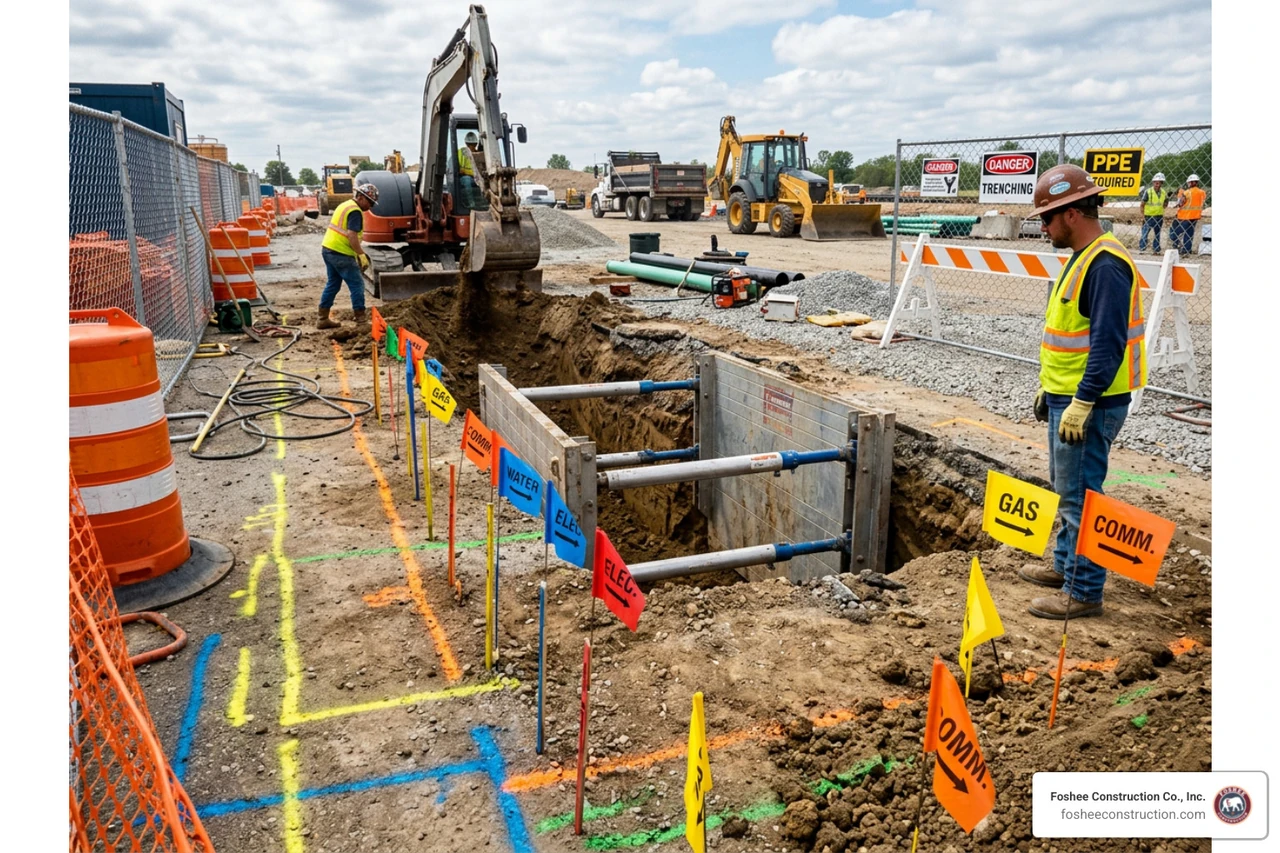
Before beginning earthwork, contractors must submit a locate request by calling 811 ("Call Before You Dig") or using online portal systems at least 2 to 3 business days in advance.
Following these steps protects underground infrastructure. Detailed operational guidelines can be reviewed in OSHA's Trenching and Excavation Safety Guide, as well as our field guides on 811 Utility Lines and Underground Utilities Complete Guide.
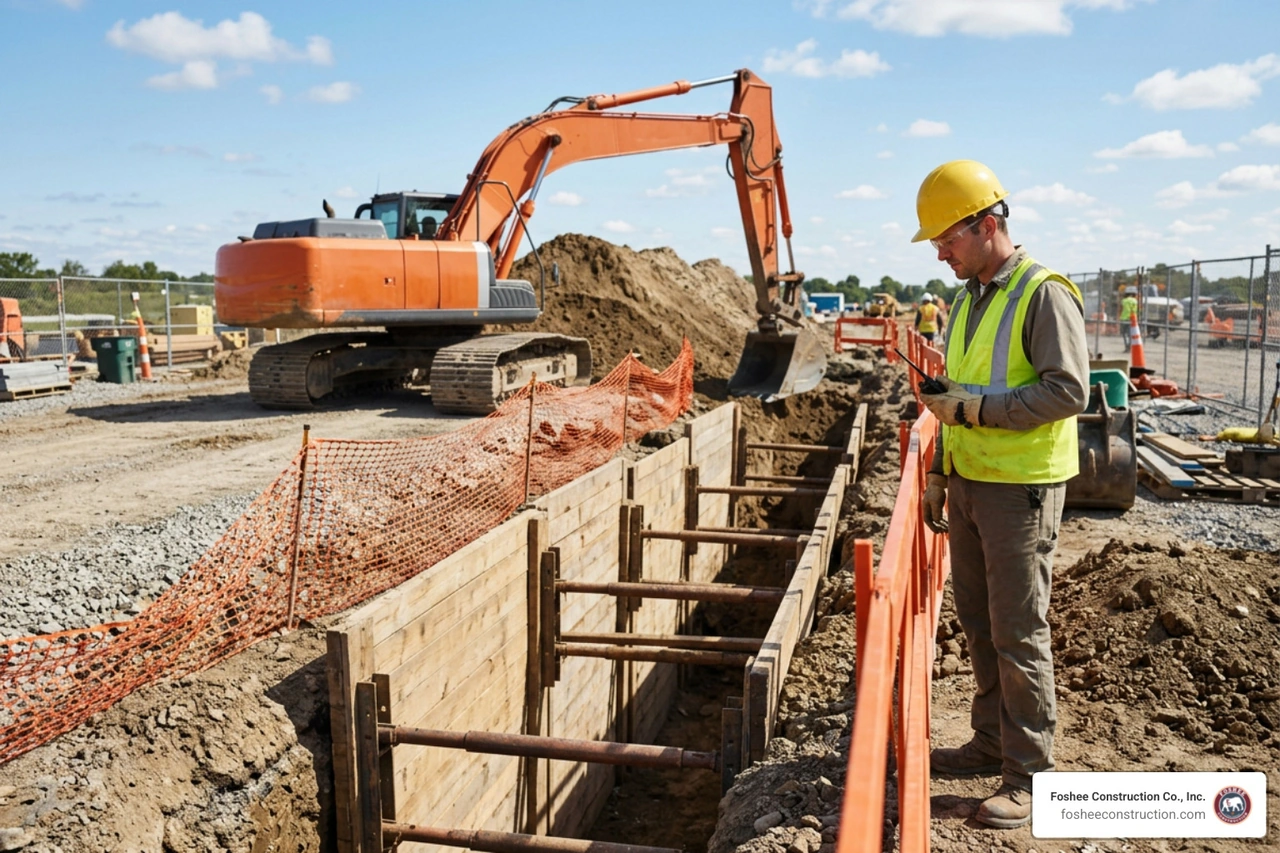
For trenches 5 feet deep or greater (or shallower if a competent person identifies collapse hazards), employers must implement one of four main protective systems:
Refer to federal standard 1926.652 - Requirements for protective systems for full structural specifications.
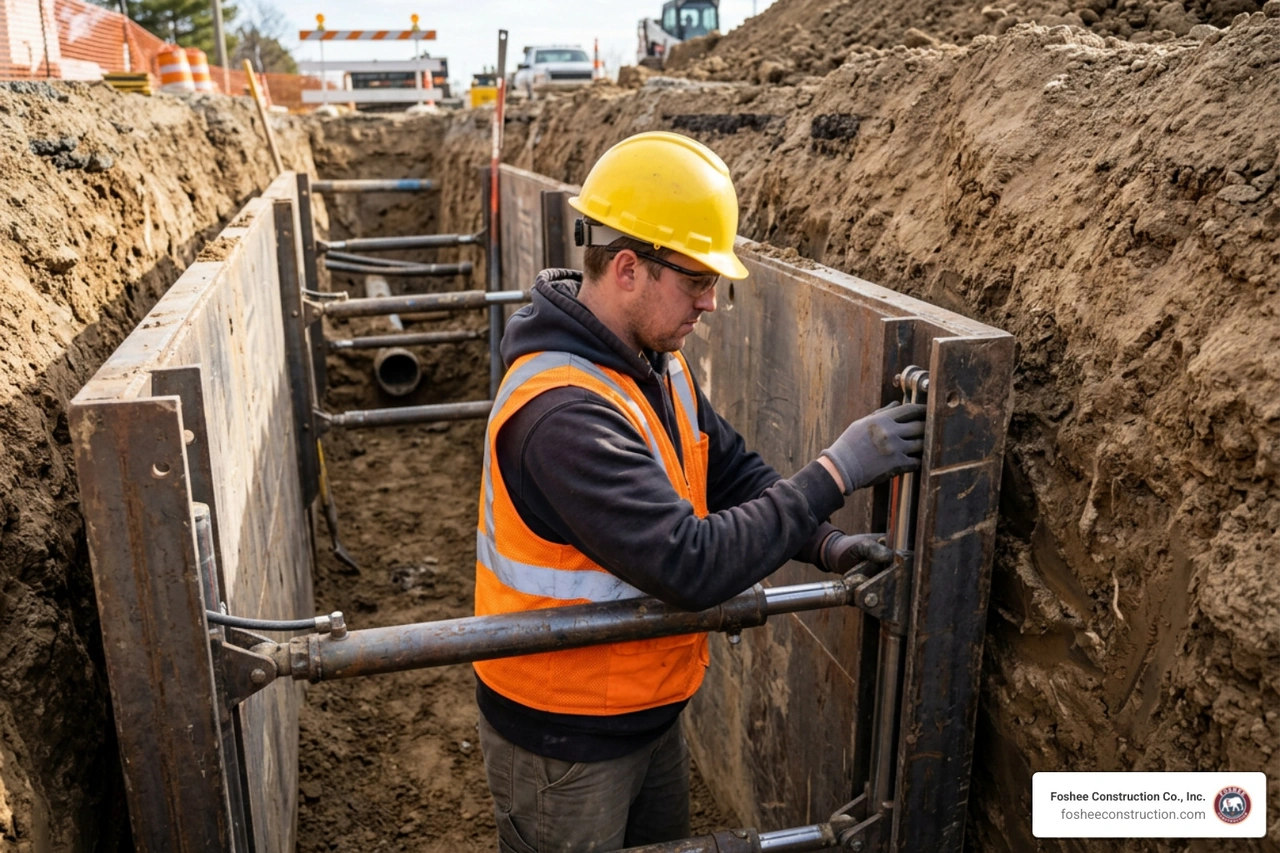
When removing shoring or protective systems, work must progress from the bottom of the trench upward while backfilling occurs simultaneously. Workers must never step outside the protected zone of a trench box while inside an un-sloped cut.
Trench boxes, hydraulic shoring cylinders, and spreader bars must be kept in prime condition. Damaged components—such as bent spreaders, cracked welds, or leaking hydraulic lines—compromise system rating capacities.
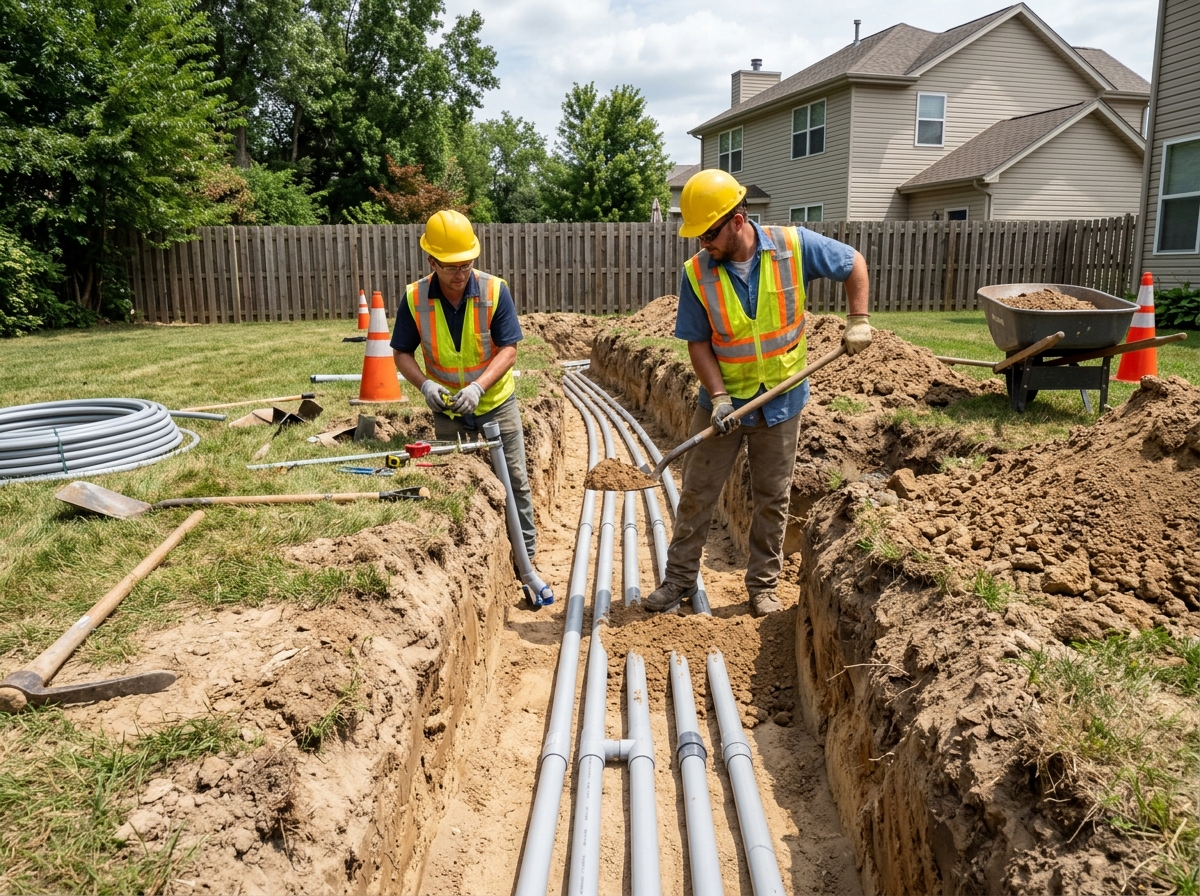
Any custom-designed protective system used in trenches deeper than 20 feet must be engineered, approved, and stamped by a Registered Professional Engineer (RPE). Tabulated data sheets provided by system manufacturers must remain on-site during installation. Following these rules is critical during specialized utility tasks, such as Trenching for Electrical Conduit.
Beyond cave-ins, civil site work involves environmental hazards that require active safety management.
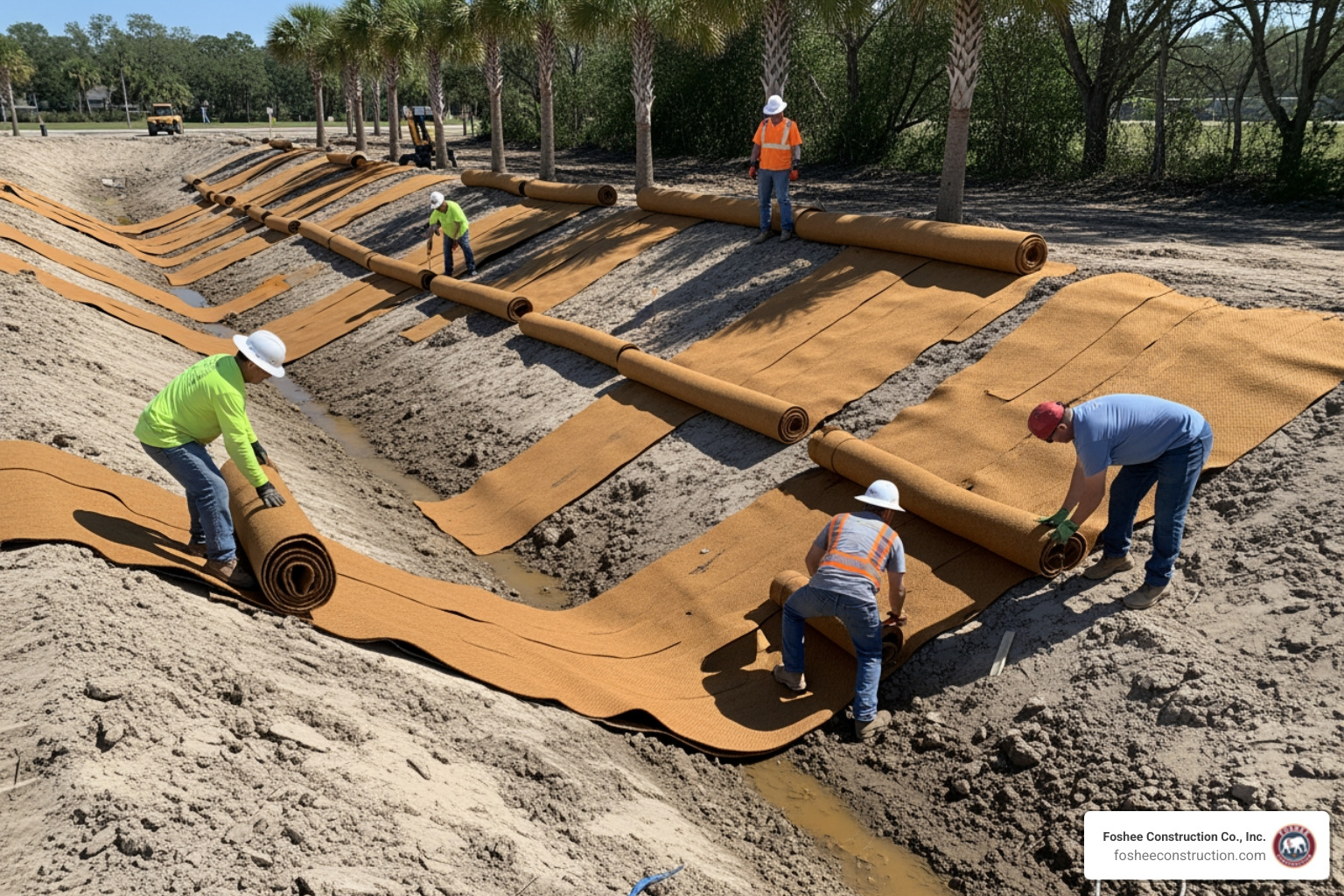
Standing or seeping water erodes soil strength, converts firm ground into quicksand, and significantly increases cave-in risks.
Getting in and out of a trench safely requires properly designed egress points:
Workers must never stand beneath suspended loads handled by excavators, cranes, or backhoes.
When a trench collapse occurs, seconds count, but panicking creates secondary victims:
The 5-foot rule mandates that any excavation 5 feet deep or greater must utilize an approved protective system (sloping, benching, shoring, or trench shields) to protect workers from cave-ins. The only exception is an excavation made entirely in stable rock. If a competent person identifies soil instability in trenches less than 5 feet deep, protective systems are required there as well.
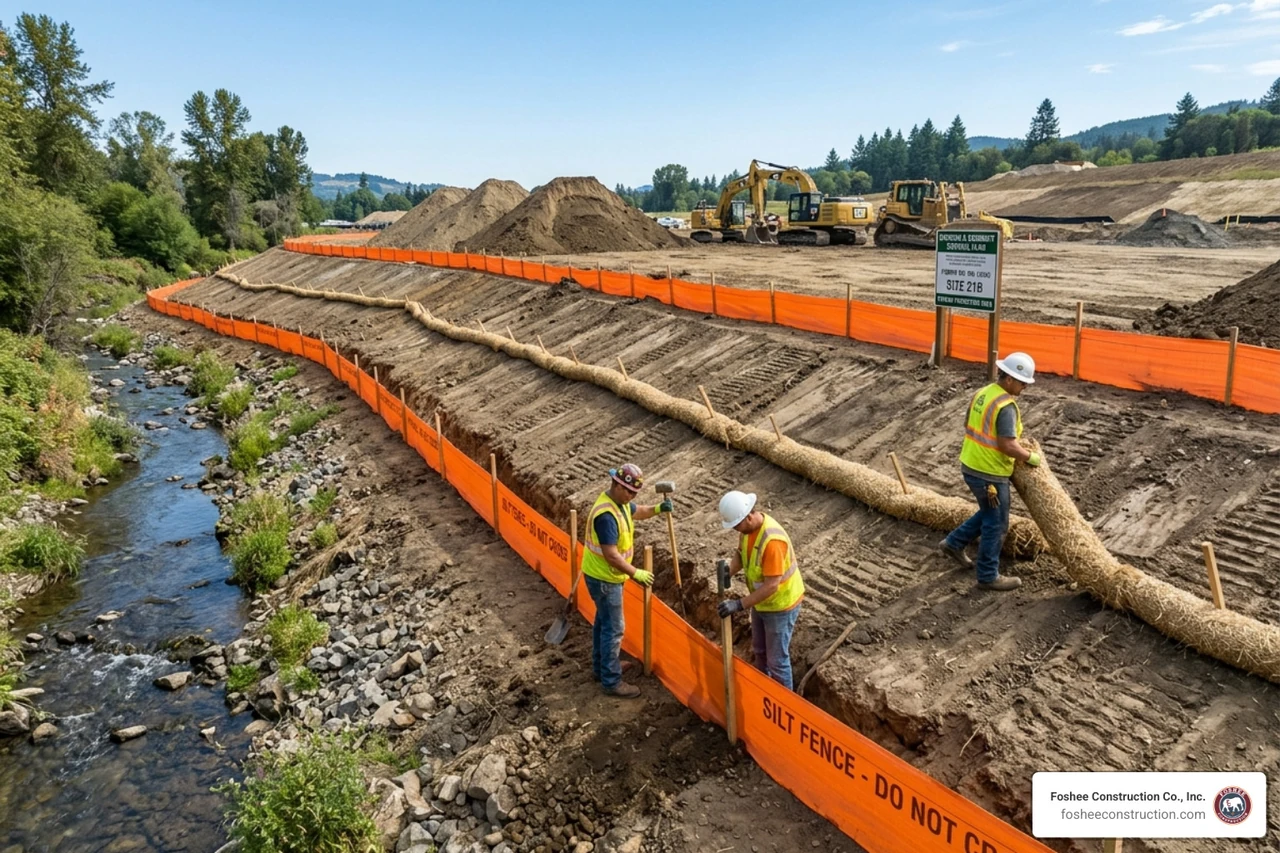
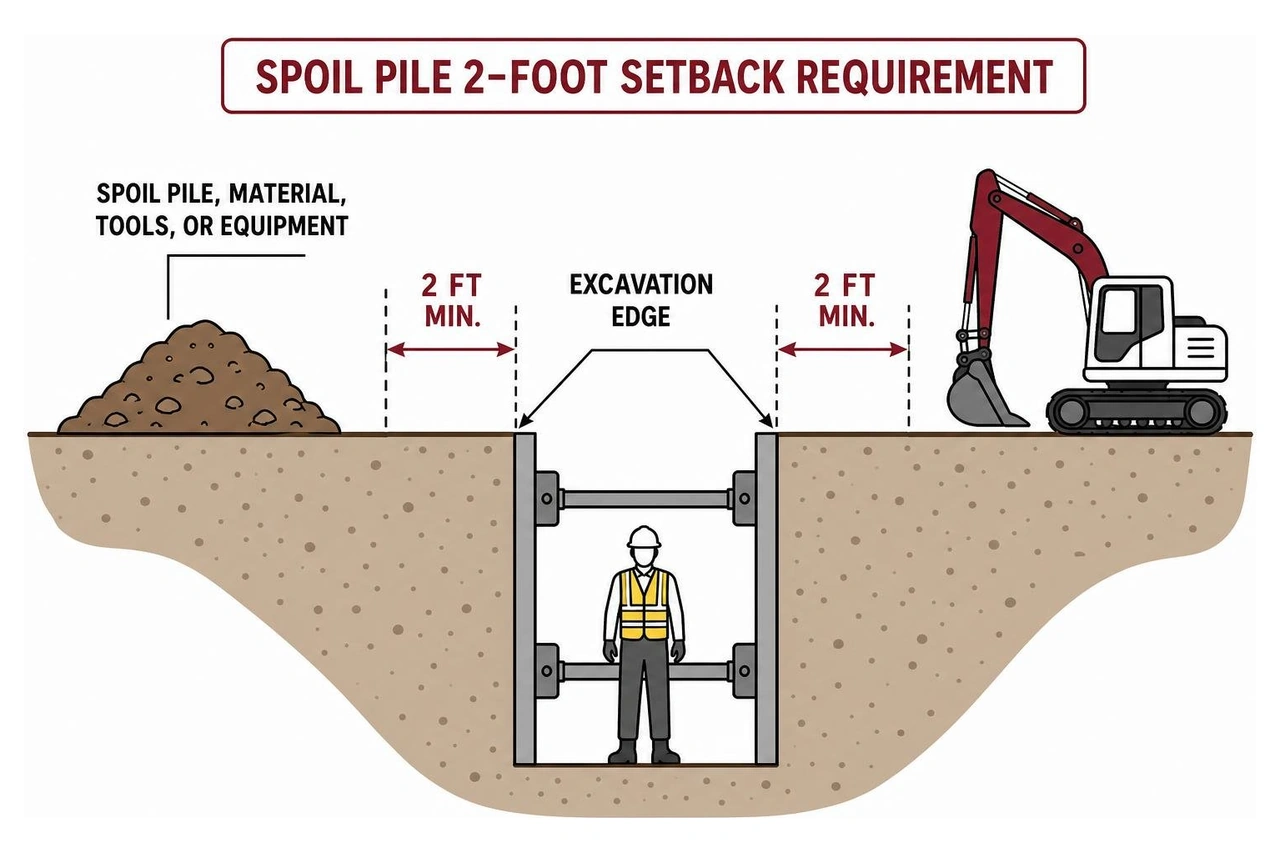
Excavated soil, equipment, and materials must be placed at least 2 feet away from the excavation edge. This setback prevents materials from falling into the trench and reduces external structural weight on the upper soil walls.
Previously disturbed soil has lost its natural geological cohesion and internal shear strength due to prior digging and backfilling. Because its stability cannot be guaranteed over time, regulations require previously disturbed ground to be classified as Type C soil (unless laboratory testing proves otherwise), requiring maximum sloping angles of 1.5:1 or protective shielding.
Maintaining rigorous safety protocols in civil construction requires technical planning, proper machinery, clear site management, and trained field personnel. When working in complex soil conditions, partnering with experienced site prep professionals helps ensure projects stay compliant, efficient, and secure from the ground up.
At Foshee Construction Co., Inc., we bring decades of hands-on expertise to commercial and residential projects across Central Florida. To learn more about our complete civil site prep capabilities, explore our full range of Site Preparation Services or contact our project team directly at Foshee Construction.
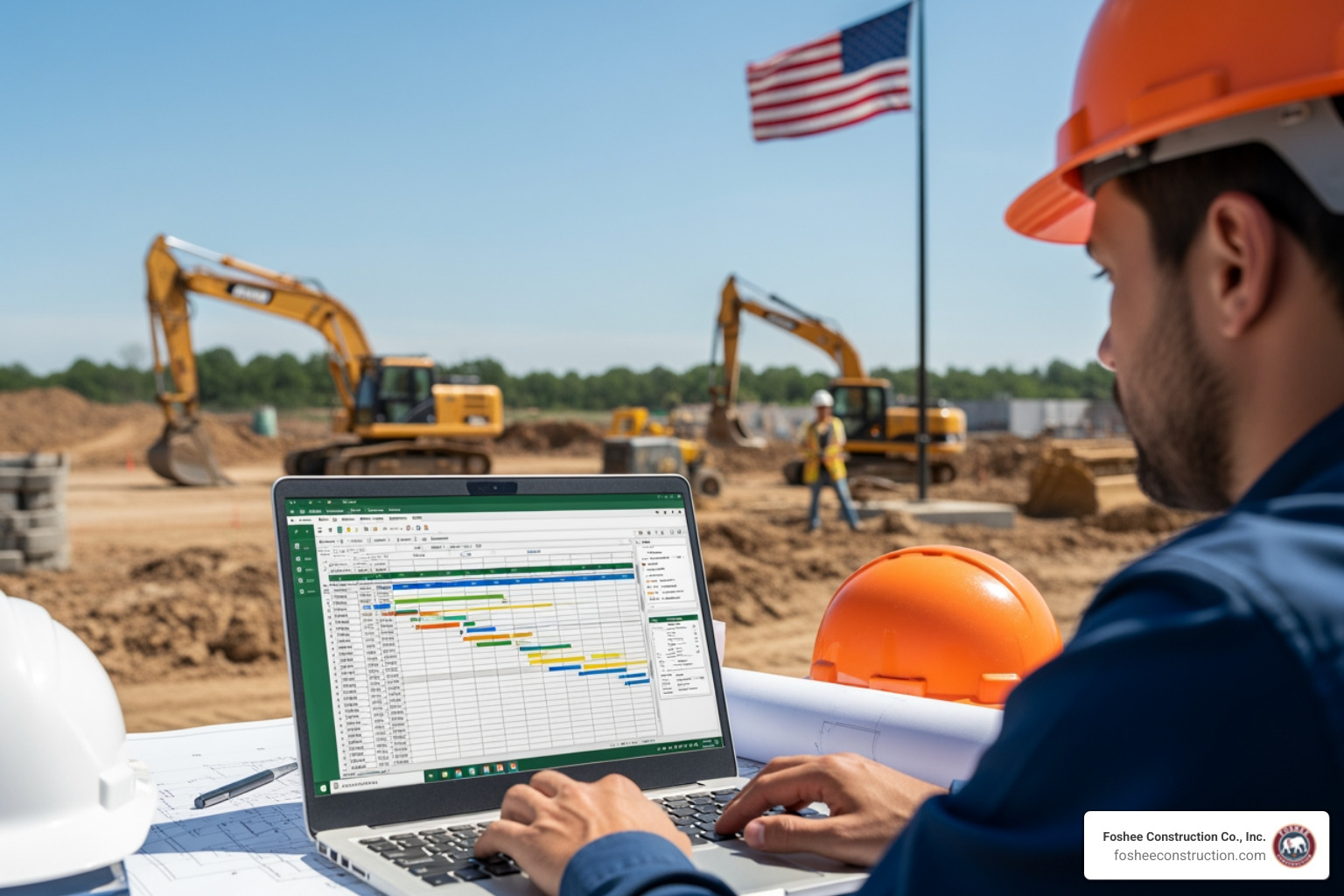
We build bids using HeavyBid and AGTEK because the details matter long before the job starts. When the numbers are accurate and the scope is clearly defined, it sets the tone for how the entire project runs. Estimating isn’t just a step in the process, it’s the foundation we build on.
That same mindset carries into the field. Our crew is trained to work with purpose, follow the Civil Engineers’ Plan to the finest detail, and hold the line on quality. When expectations are clear from day one, there’s no need for shortcuts, and no confusion about how the work gets done.
Clients trust our bid packages because they’re complete and ready to use. Project managers know what we’re covering, what’s excluded, and how we plan to approach the job. That clarity removes friction and lets teams focus on execution instead of interpretation.
As part of our review process, we go into the plans before anything hits the site. We ask the questions early, resolve issues before they show up in the field, and keep RFIs moving. This approach prevents delays and protects the timeline.
Over time, that consistency builds trust. Many of the people we work with today came through referrals from past projects – engineers, GCs, and superintendents who’ve seen how we operate and want the same experience again.
In 2024, Foshee Construction was acquired by Saga Infrastructure Solutions, a national network of civil construction companies. Saga supports regional contractors by giving them access to better tools, long-term resources, and operational backing, without changing how they run day to day.
Foshee will continue to operate under its name, with the same team and field leadership in place.
“From the very time a project starts, we start that partnership. We try to catch as much as we can with the tools that we have. Not everybody is using the software platforms we are. That’s the differentiator: we’re not just bidding. We’re anticipating, problem-solving, and making sure the job runs right.”
— Don, CEO, Saga Infrastructure Solutions
Foshee is now part of a broader regional strategy that includes Florida, the Piedmont Atlantic, Texas, Colorado, and the Arizona Sun Corridor. The name, crews, and standards remain. What’s improving is the support behind it.