Construction safety is the foundation of every successful build — and in an industry where nearly 1 in 5 workplace deaths occur, getting it right isn't optional.
Here's a quick overview of what construction safety covers:
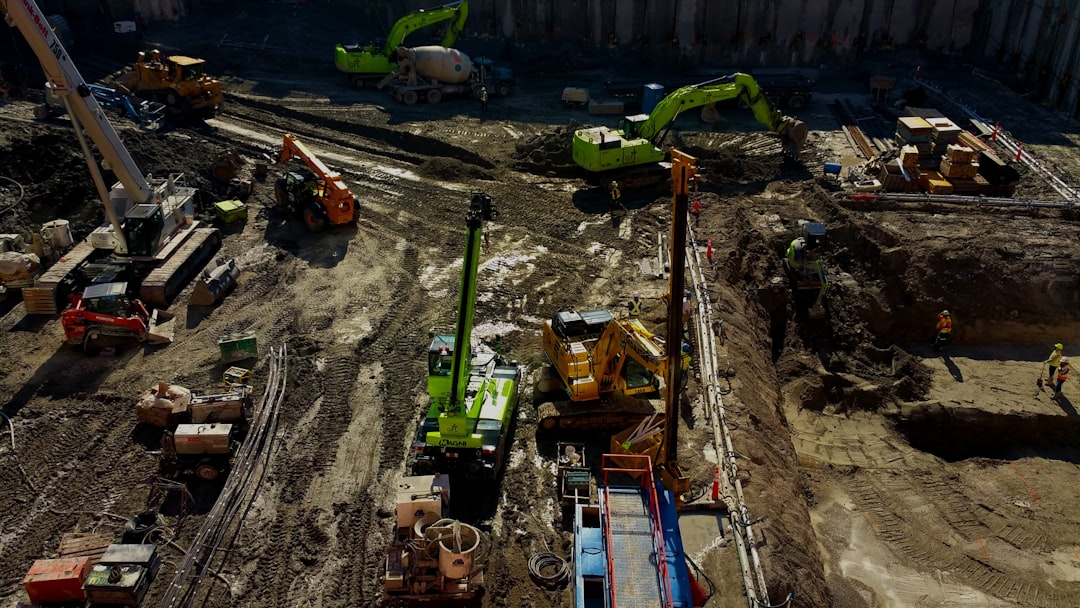
Construction is formally classified as a high-hazard industry. It covers a wide range of activities — new builds, alterations, repairs, demolition, and site preparation — each carrying its own set of serious risks. On any given day, workers face falls from height, buried utilities, heavy equipment, airborne silica, extreme Florida heat, and more.
The cost of getting it wrong is steep. A single missed morning walkthrough led one crew to a worker falling eight feet from an unsecured scaffold — resulting in a broken collarbone, a two-week shutdown, and a $16,000 OSHA fine. That's before counting indirect costs, which research estimates at at least 2.7 times the direct costs of any incident.
This guide covers everything you need to manage construction safety effectively — from regulatory requirements and PPE to excavation protocols, emergency planning, and the latest safety technology.
I'm Don Larsen, and at Foshee Construction Co., LLC we've built our entire operation around rigorous construction safety practices since 1994, serving general contractors and developers across Central Florida with site preparation, grading, excavation, and underground utility work. Our crews participate in industry safety initiatives and follow strict regulatory standards on every active site — because protecting people is how we protect your project.
Related content about construction safety:
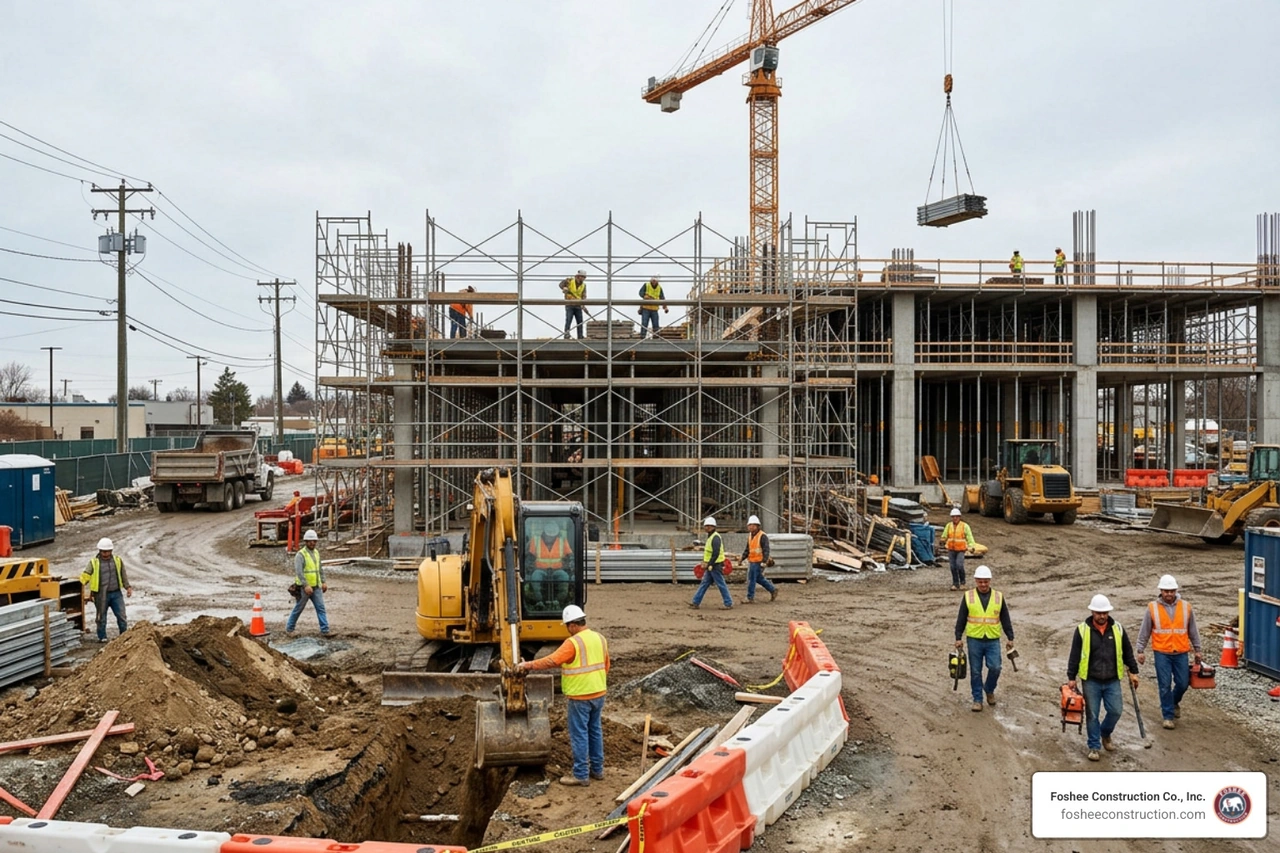
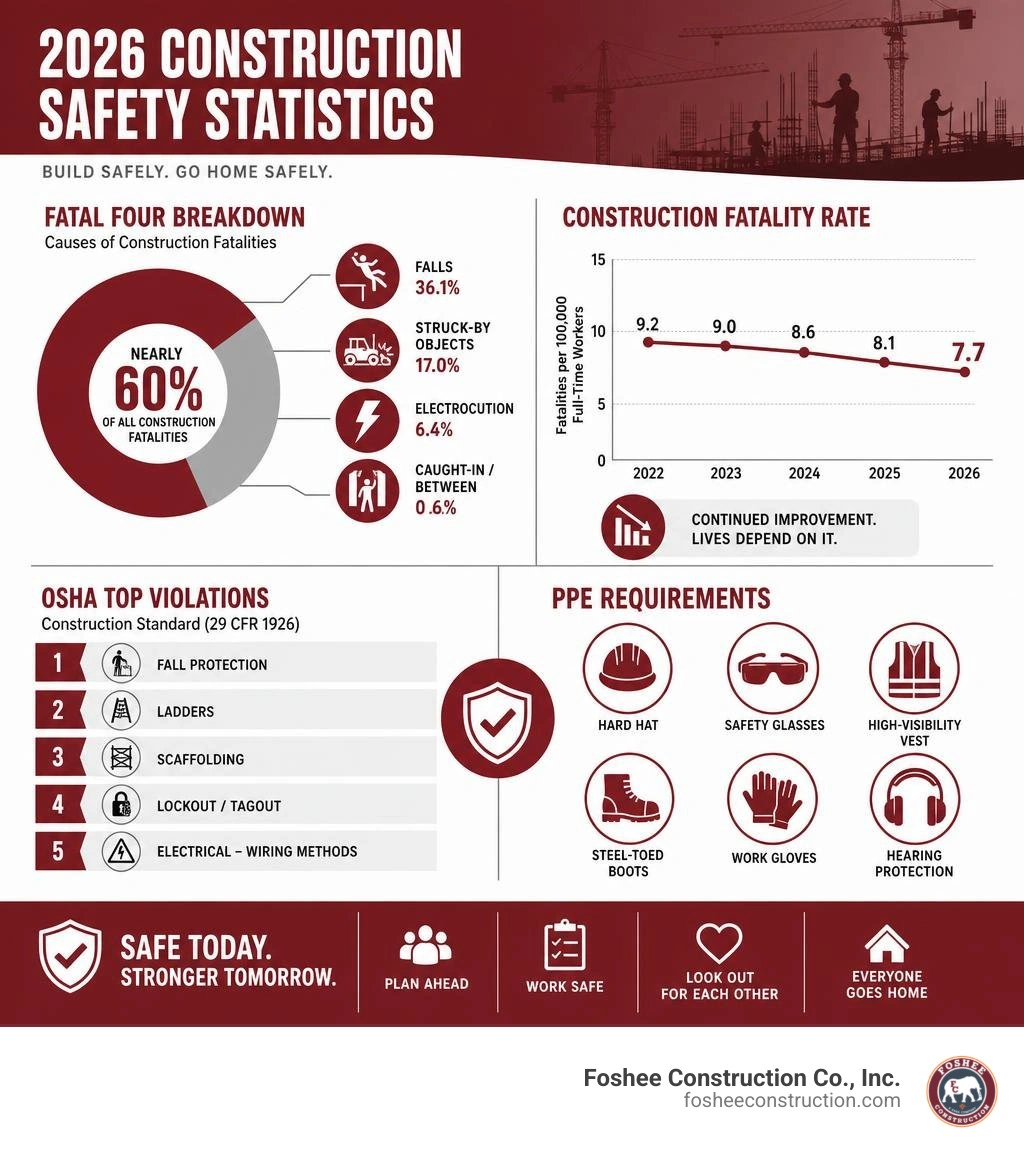
To protect workers from harm and ensure projects stay on schedule, we must first understand the primary threats on a construction site. OSHA identifies the leading causes of private-sector worker fatalities in the construction industry as the "Fatal Four." These four hazards are responsible for nearly 60% of all construction-related deaths.
Addressing these hazards requires a proactive "find and fix" mentality rather than a reactive compliance mindset. By understanding how these incidents occur, we can implement rigorous engineering controls, administrative policies, and personal protective equipment (PPE) to eliminate risks before they lead to injuries.
To keep our crews safe, we strictly enforce OSHA Fall Protection Construction protocols and adhere to the strict requirements of 1926.501 - Duty to have fall protection. | Occupational Safety and Health Administration .
The table below outlines the Fatal Four hazards, their statistical impact, and the primary engineering controls used to mitigate them:
| Hazard Type | % of Construction Deaths | Common Site Scenarios | Primary Engineering Controls |
|---|---|---|---|
| Falls | ~33.5% | Unprotected edges, roof work, scaffolding, ladders | Guardrails, safety nets, personal fall arrest systems (PFAS) |
| Struck-by | ~11.4% | Flying objects, falling tools, moving heavy machinery | Debris nets, toe boards, vehicle backup alarms, physical barricades |
| Electrocution | ~8.4% | Overhead power lines, damaged extension cords, wet conditions | Ground Fault Circuit Interrupters (GFCIs), lockout/tagout (LOTO) |
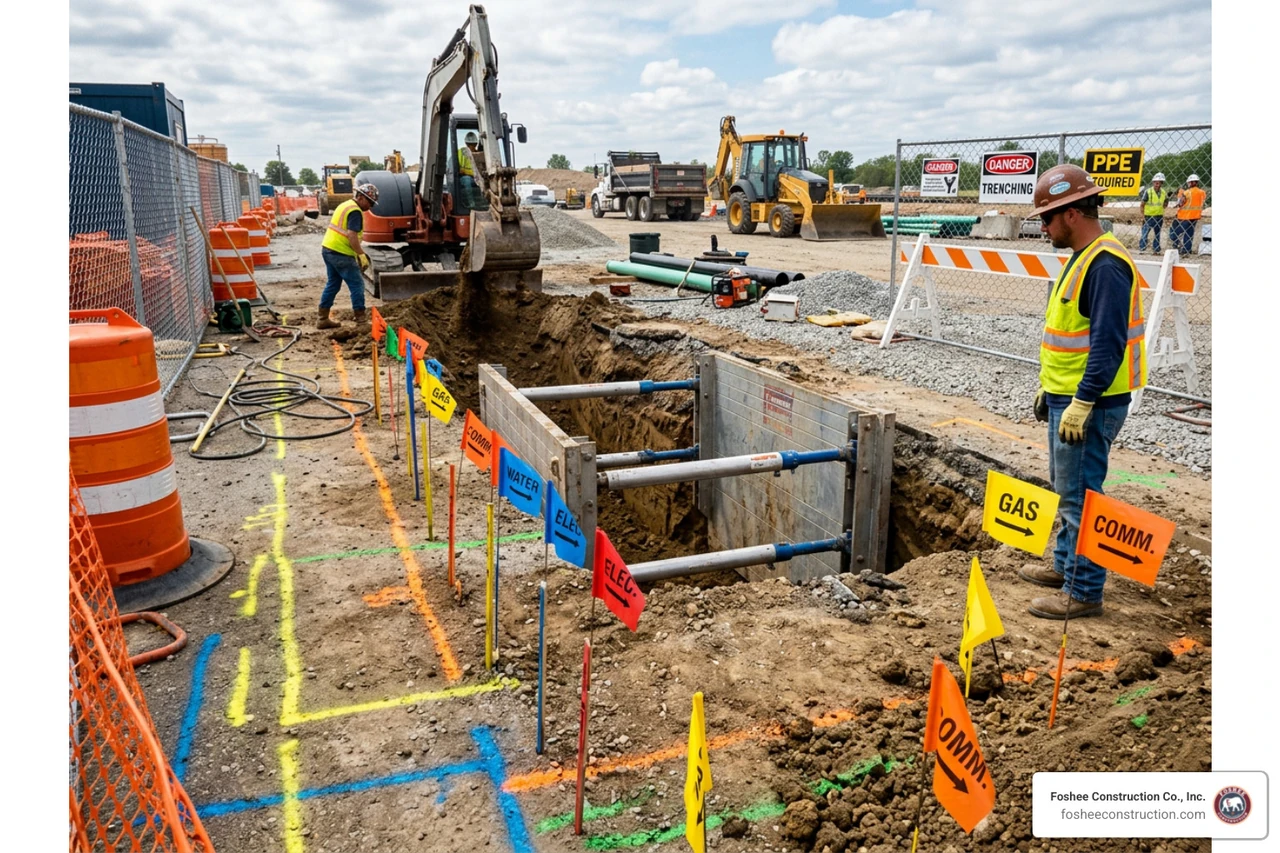
| Caught-in/between | ~5.4% | Trench cave-ins, rotating machinery, moving parts | Trench shoring, shielding, sloping, machine guarding |
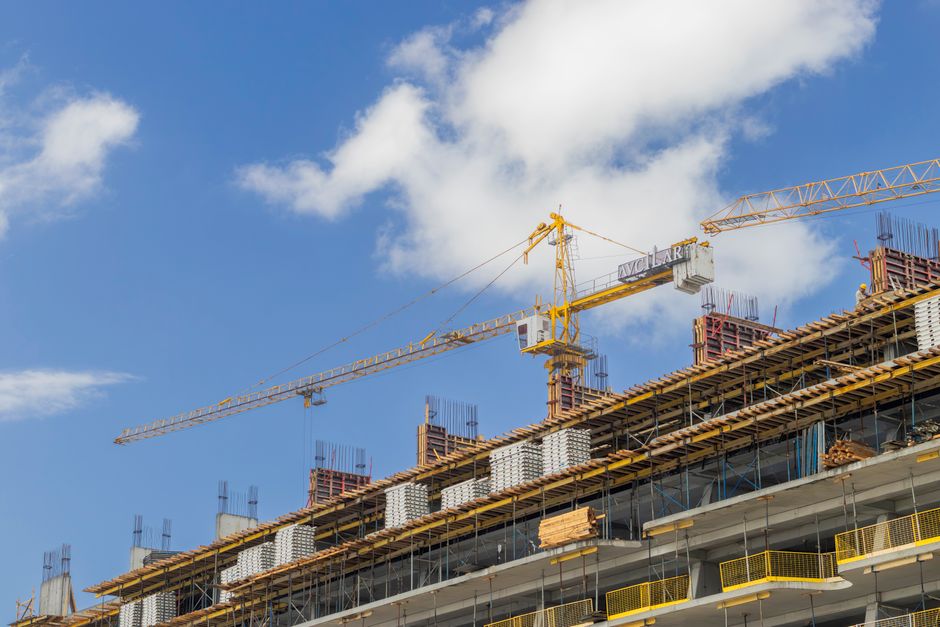
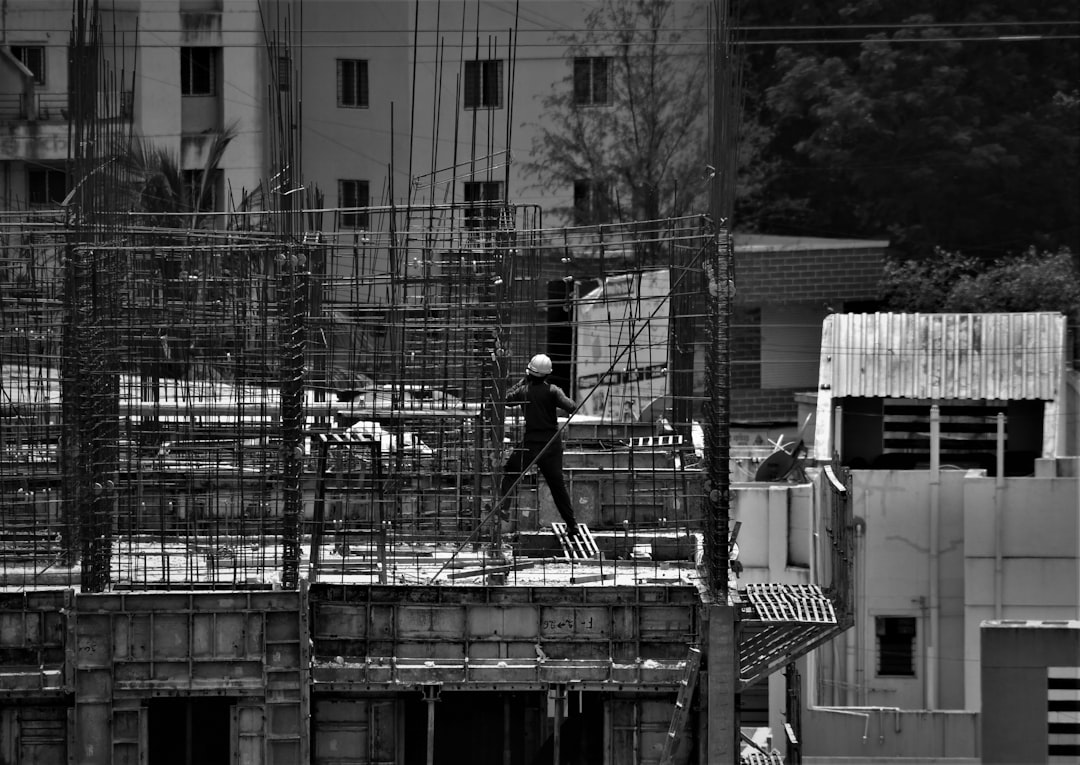
Falls remain the single largest cause of injury and death in the construction sector. Year after year, fall protection ranks as OSHA’s most frequently cited violation. Preventing these incidents requires a multi-layered approach.
First, walking and working surfaces must be inspected daily to verify their structural integrity. When workers are operating at heights of six feet or more, employers must provide adequate Construction Fall Protection.
This includes:
While physical injuries from falls or heavy machinery are immediately apparent, health hazards from chemical and airborne exposures are often slow-acting but equally devastating.

A safe job site does not happen by accident. It requires a structured, intentional culture where safety is woven into every phase of a project — from the initial design and site preparation to the final walkthrough. Building a strong safety culture means moving past simple rule-following and fostering an environment where every worker feels empowered to stop work if they spot a hazard.
To establish this foundation, we apply general prevention principles across all operations. Whether managing a short-term commercial build or a massive infrastructure layout, having a clear plan ensures that everyone on-site knows exactly what is expected of them. For a comprehensive look at how we manage these daily operations, explore our guide on Construction Site Safety.
While local and federal regulations dictate our daily actions in Florida, safety is a global priority. International guidelines, such as those summarized in the directive on Temporary and mobile work sites | EUR-Lex , emphasize the value of integrating health and safety considerations into the very design and organization of projects. This global perspective proves that a clear chain of responsibility is universally recognized as the best way to prevent workplace risks.
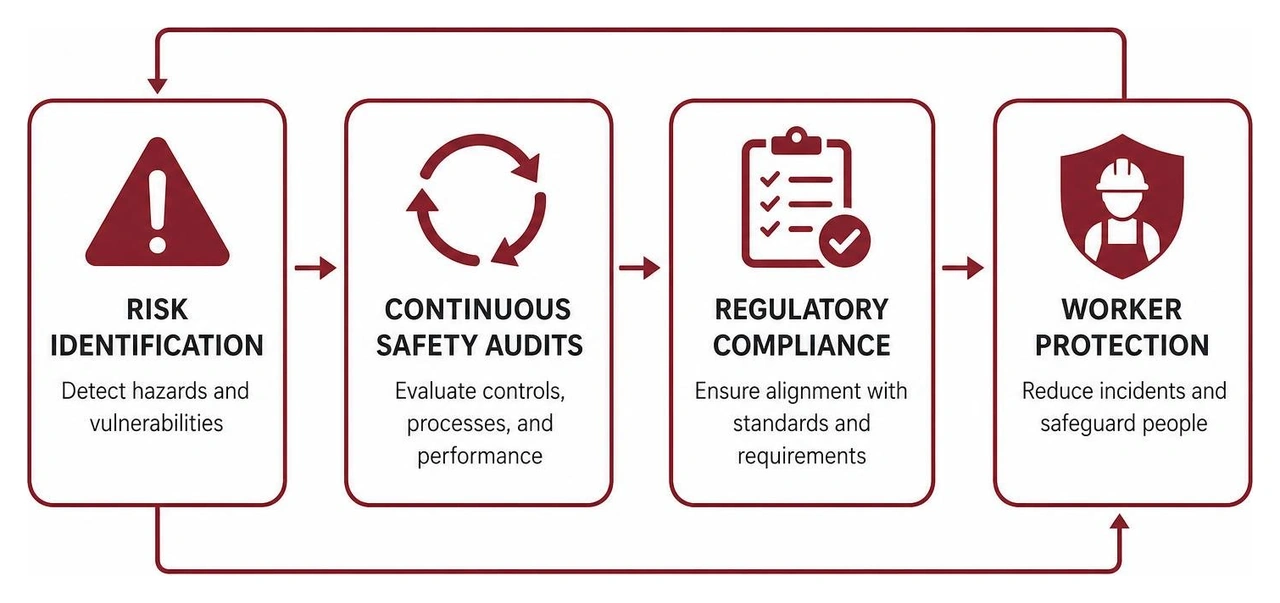
An effective Occupational Safety and Health (OSH) management system provides the roadmap for identifying, controlling, and eliminating hazards. According to the Recommended Practices for Safety and Health Programs in Construction , a successful safety program relies on seven core elements:
A safe job site requires clear coordination and defined duties for every party involved:
While we operate under strict US OSHA standards in Florida, looking at foreign frameworks illustrates the universal importance of structured responsibility. For example, the legal requirements outlined in S.I. No. 291/2013 - Safety, Health and Welfare at Work (Construction) Regulations 2013. assign specific, legally binding duties to project supervisors for both the design and construction phases. This structured division of labor ensures that safety is never treated as an afterthought, regardless of where the work takes place.
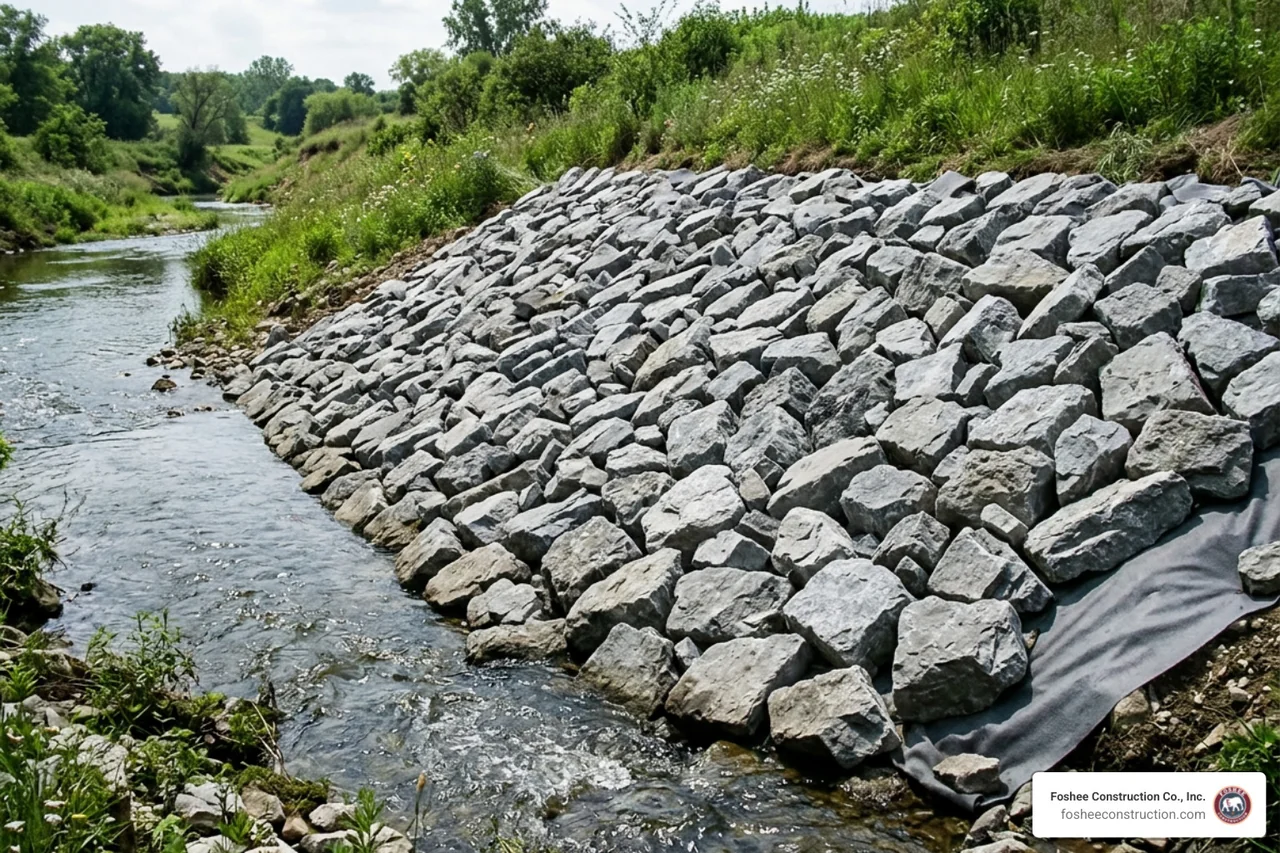
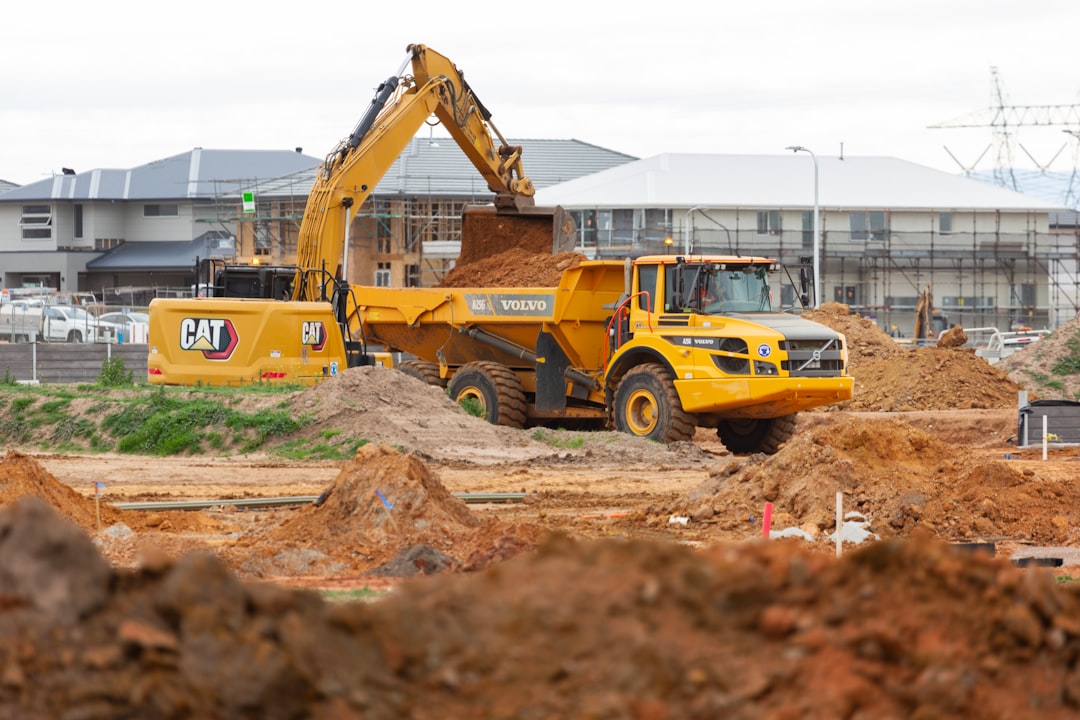
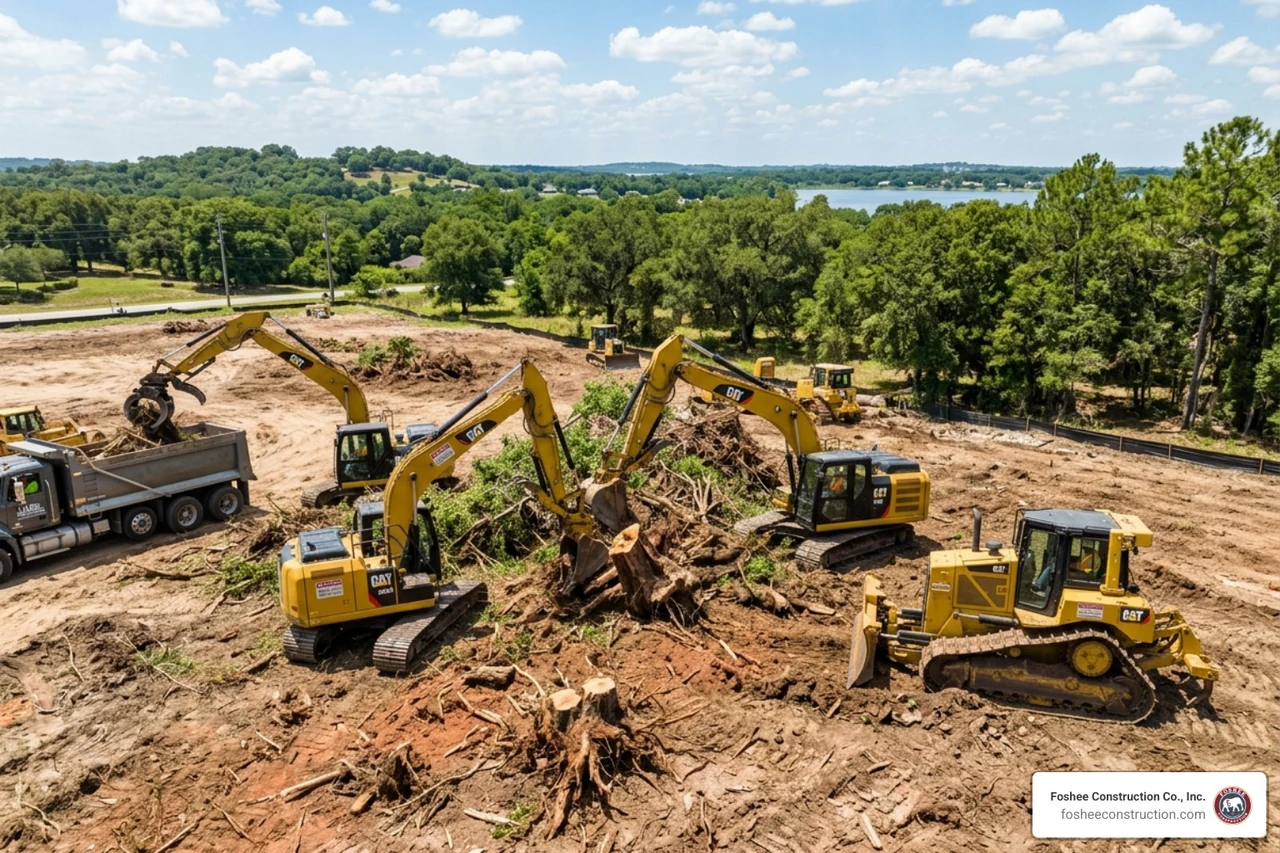
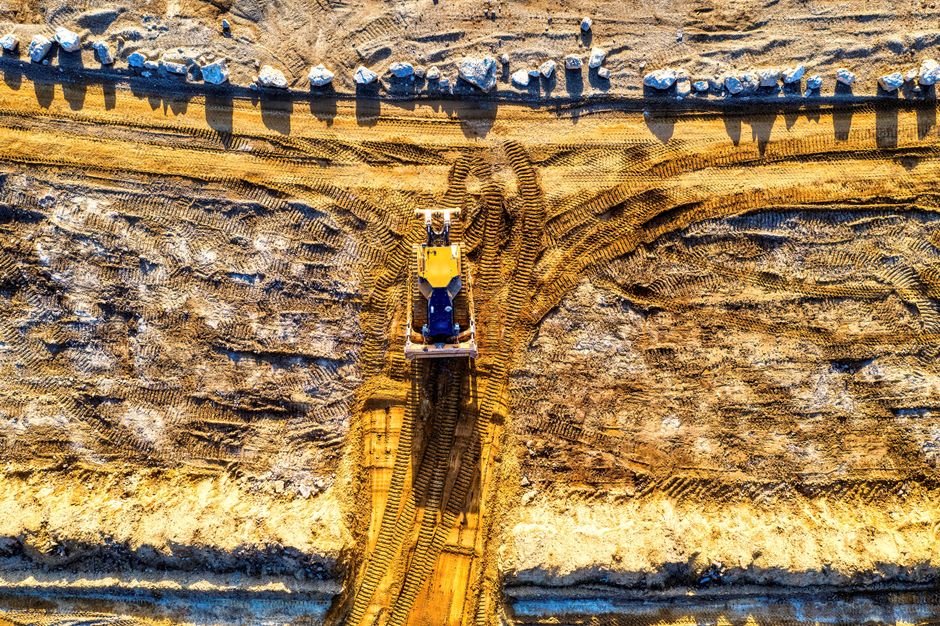
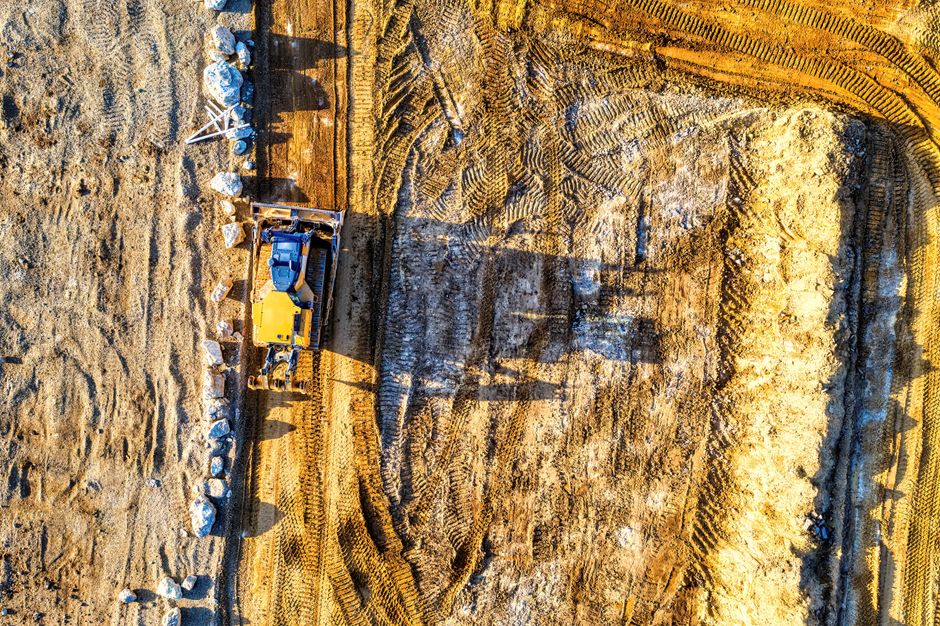
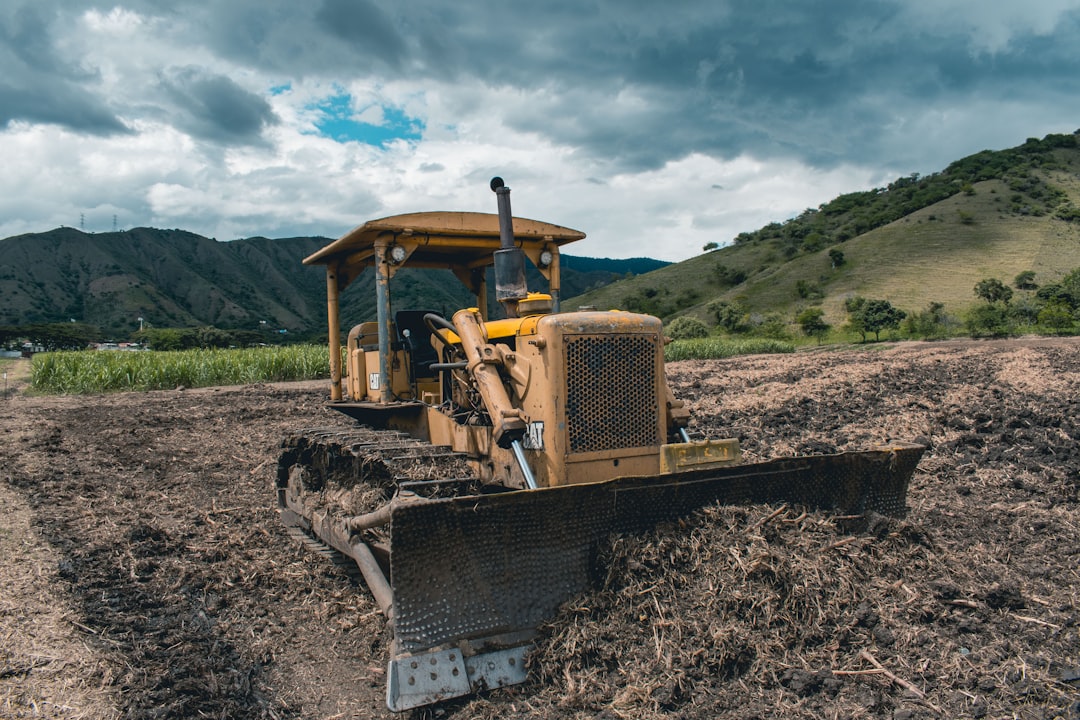
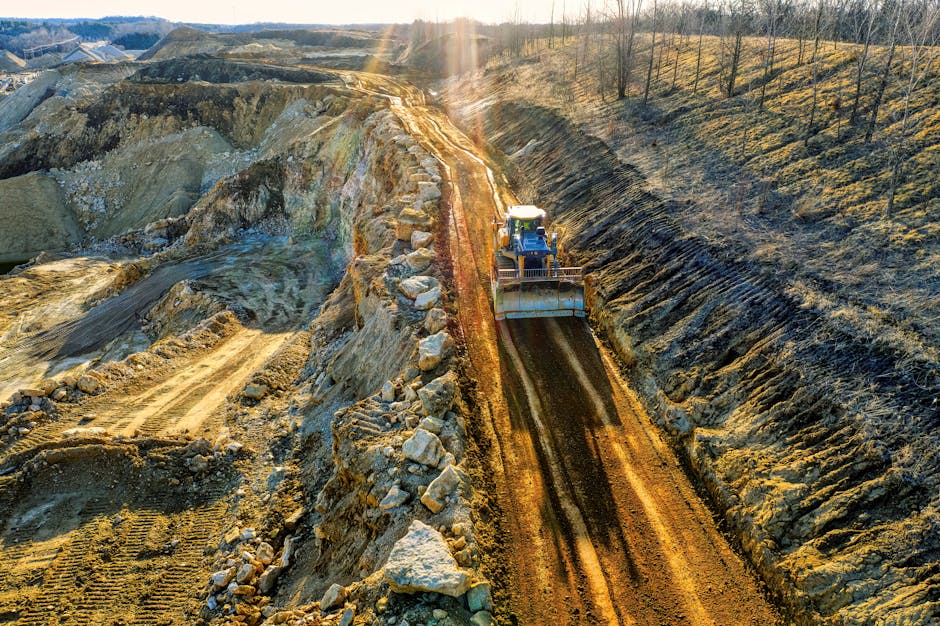
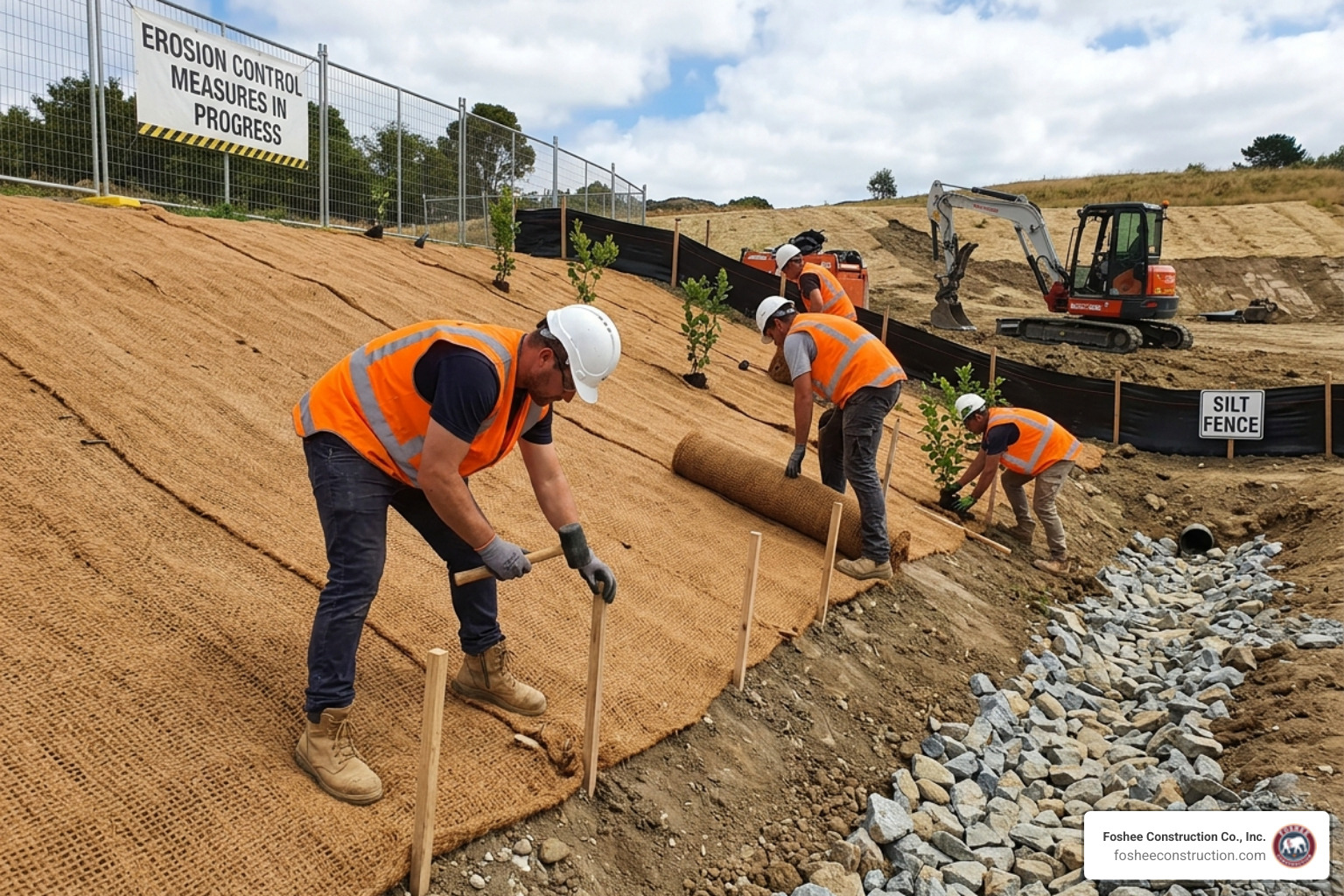
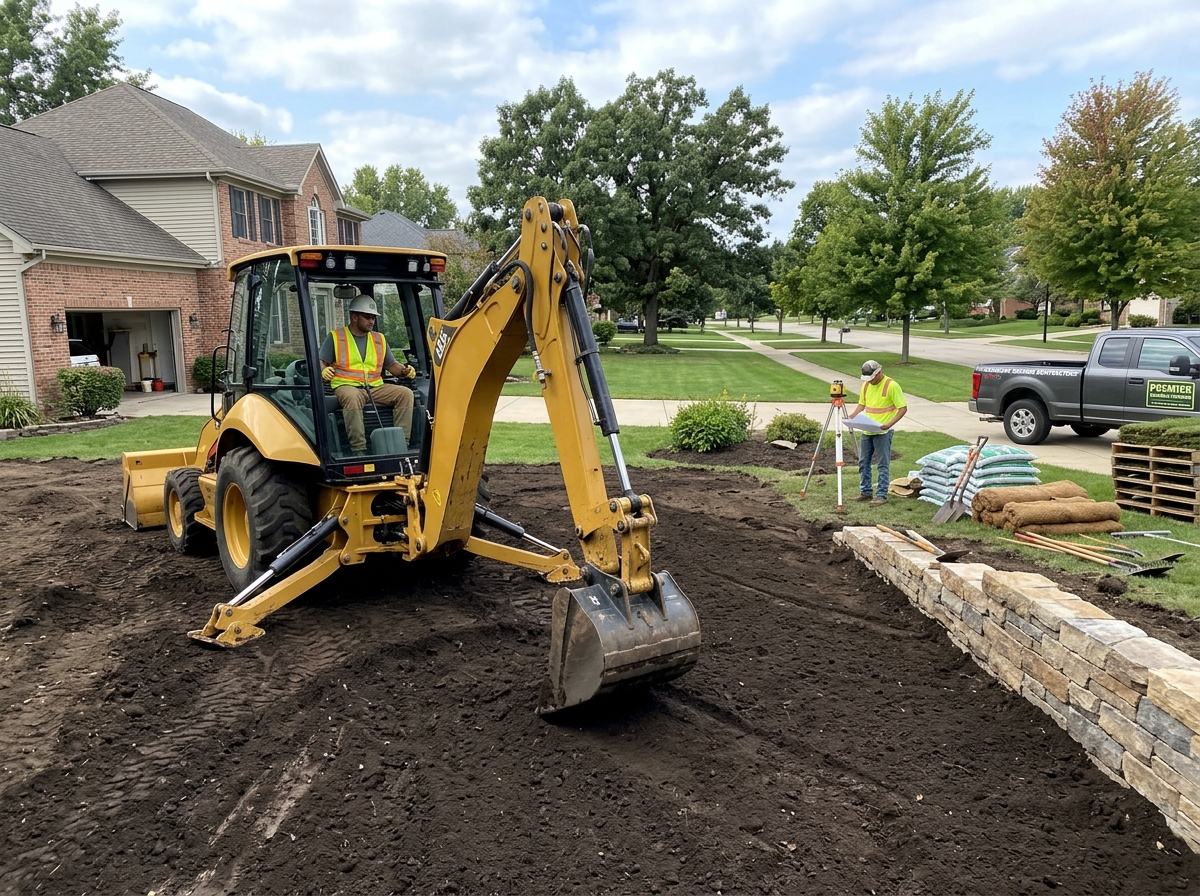
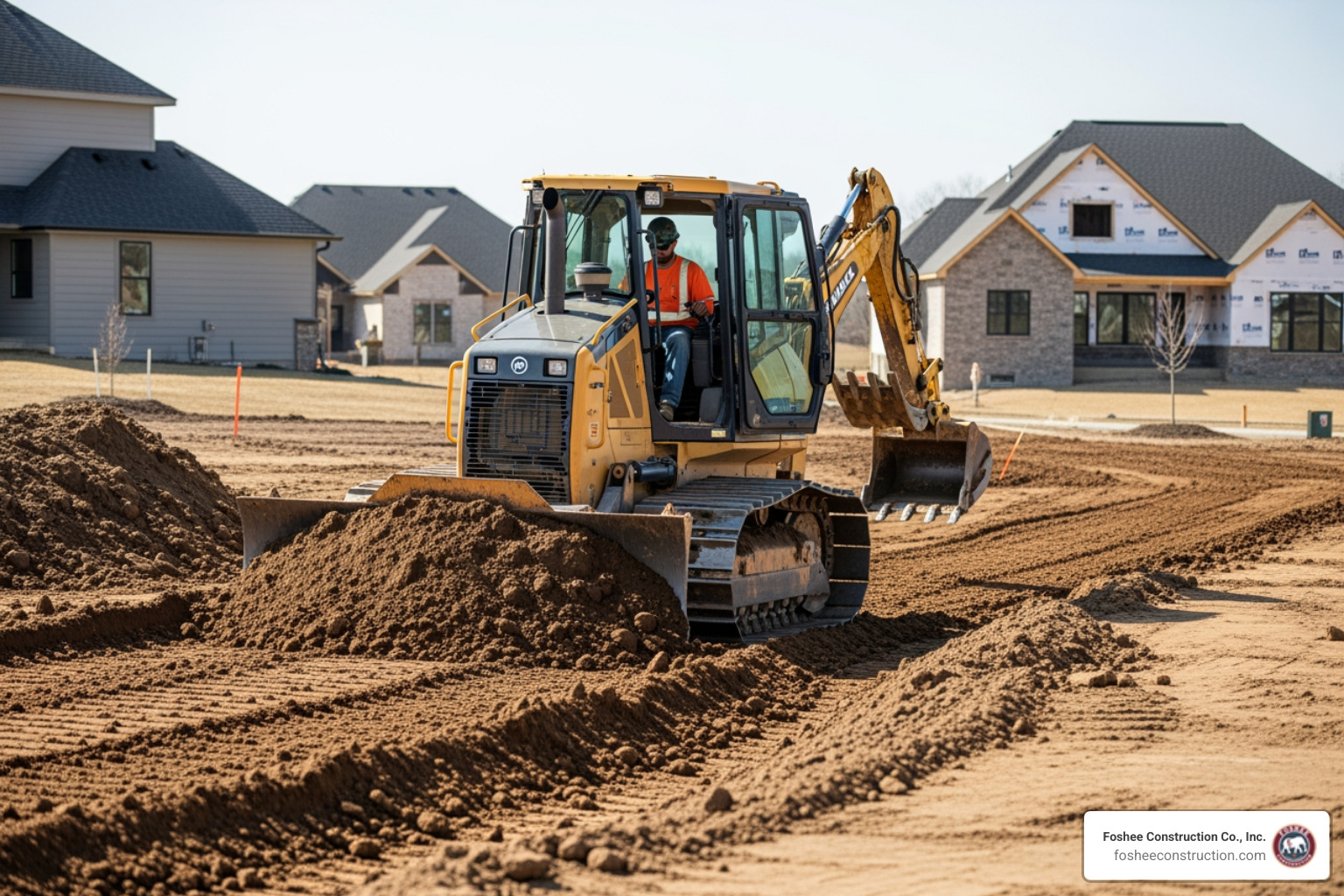
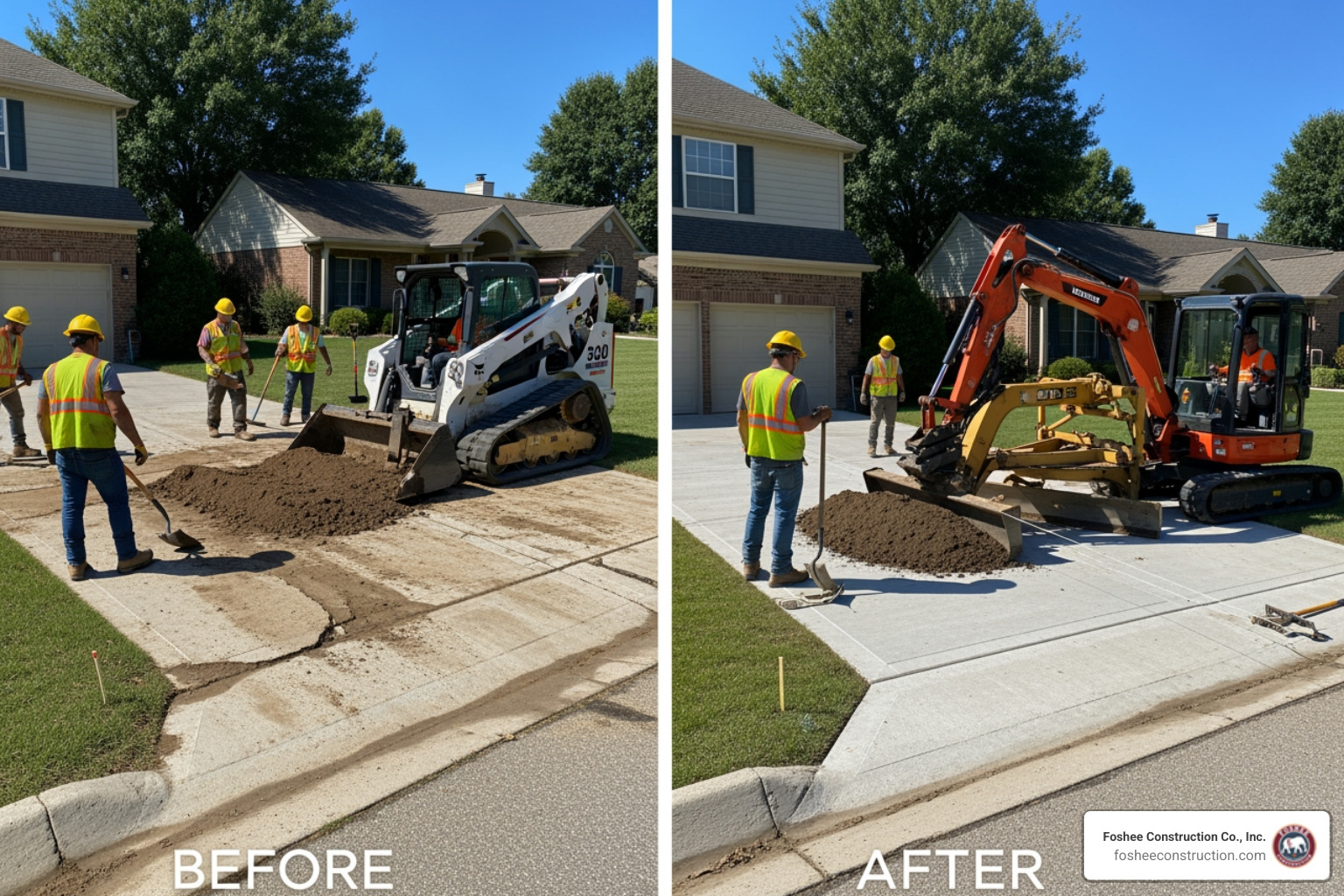
At Foshee Construction, our daily work involves heavy earthwork, land clearing, and grading. These site preparation activities carry unique safety challenges that require specialized knowledge and strict adherence to industry standards, such as those promoted by the Construction Safety - AGC of Greater Florida .
Working around massive earthmoving equipment, managing soil stability, and coordinating underground utility lines require careful planning and continuous monitoring to keep our crews safe.
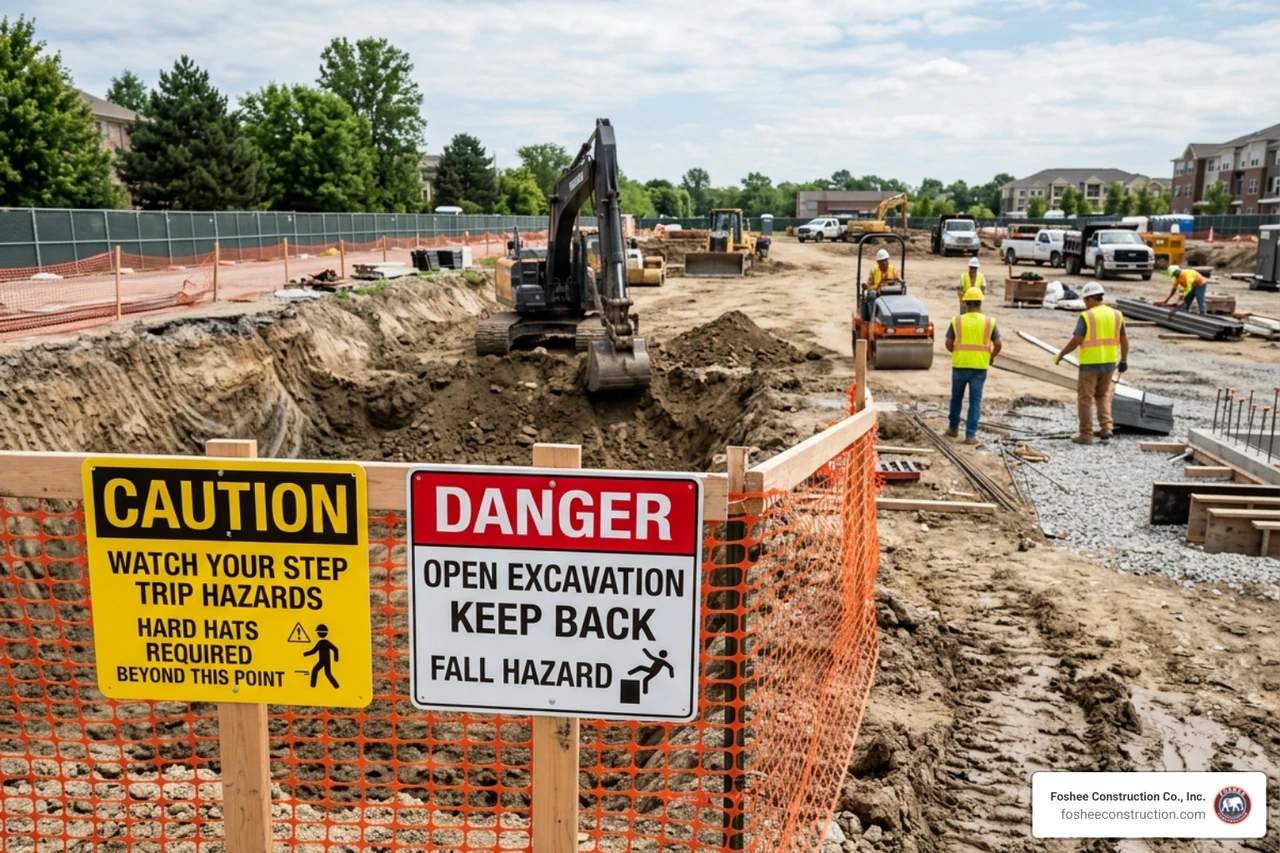
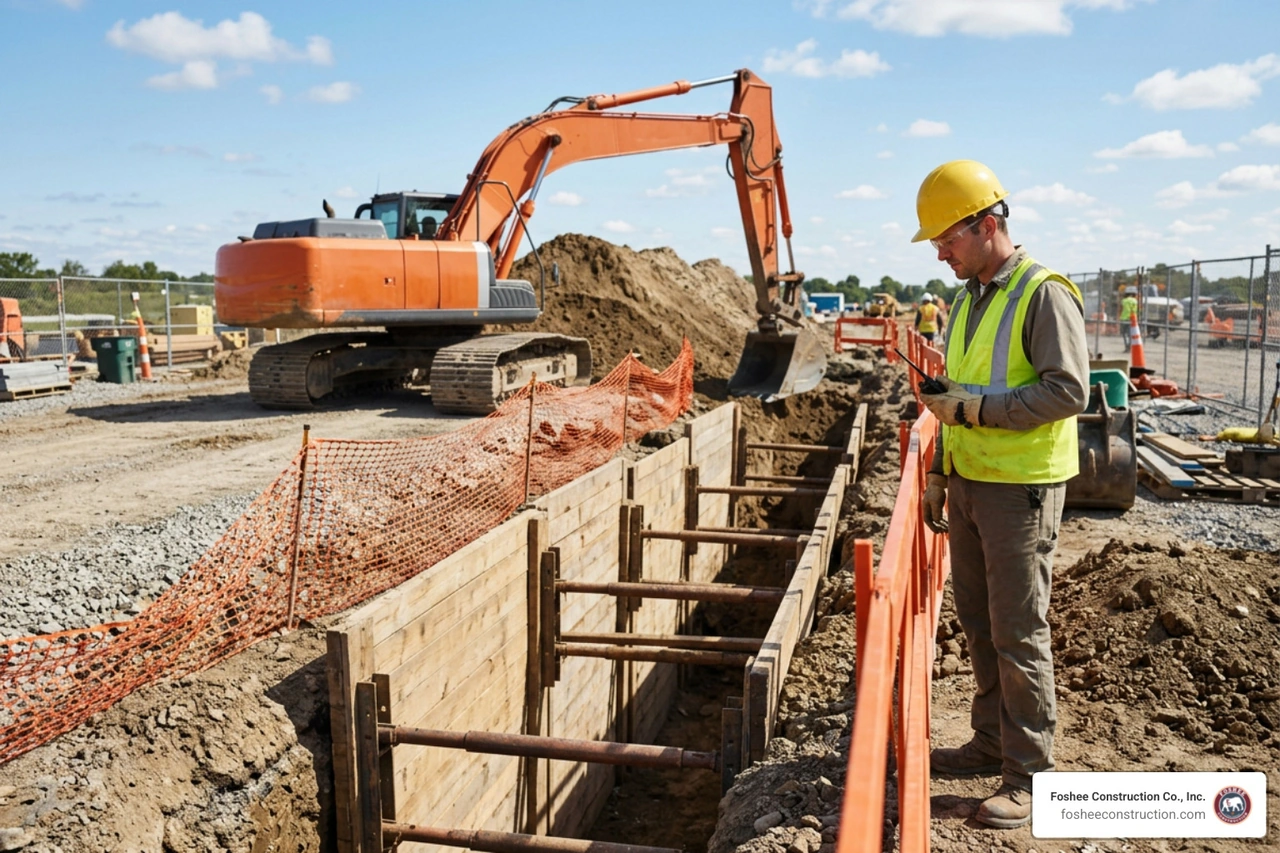
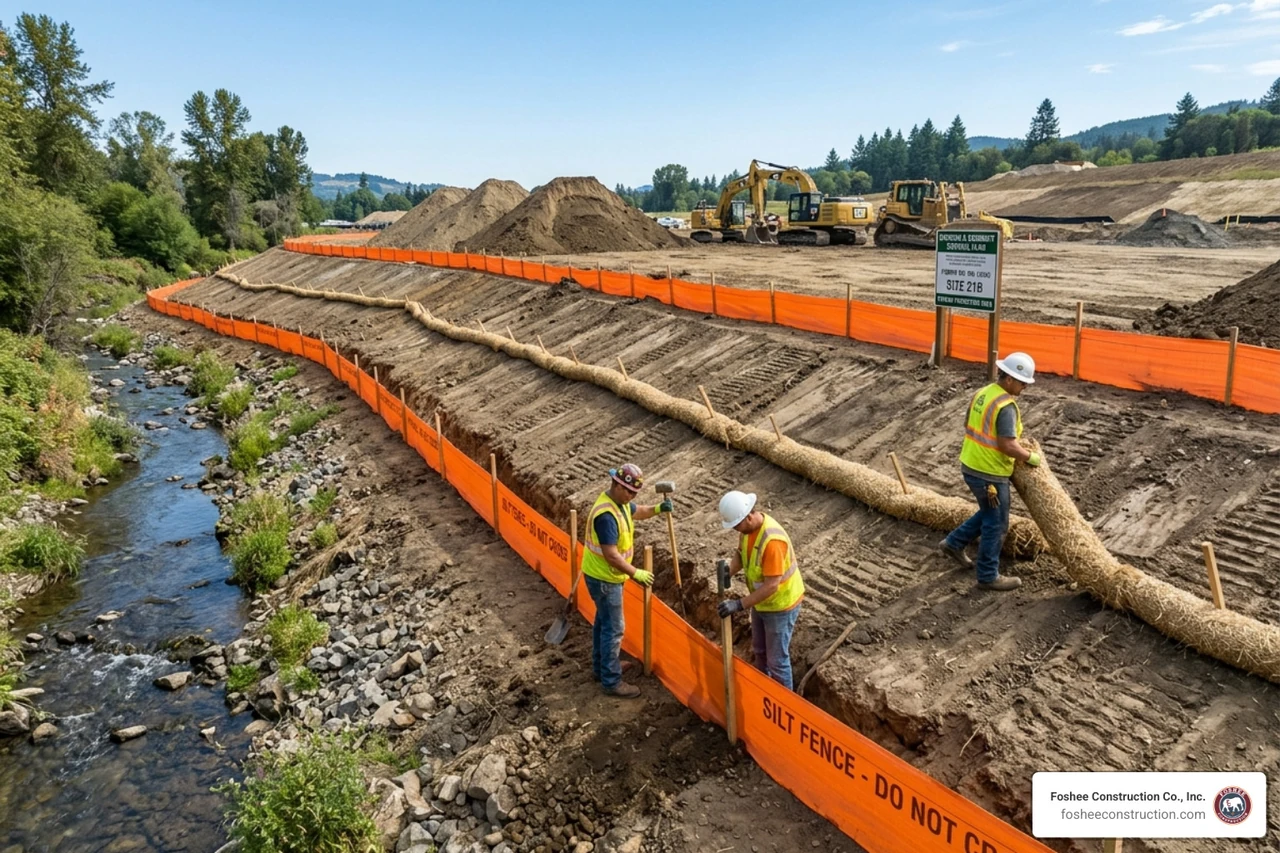
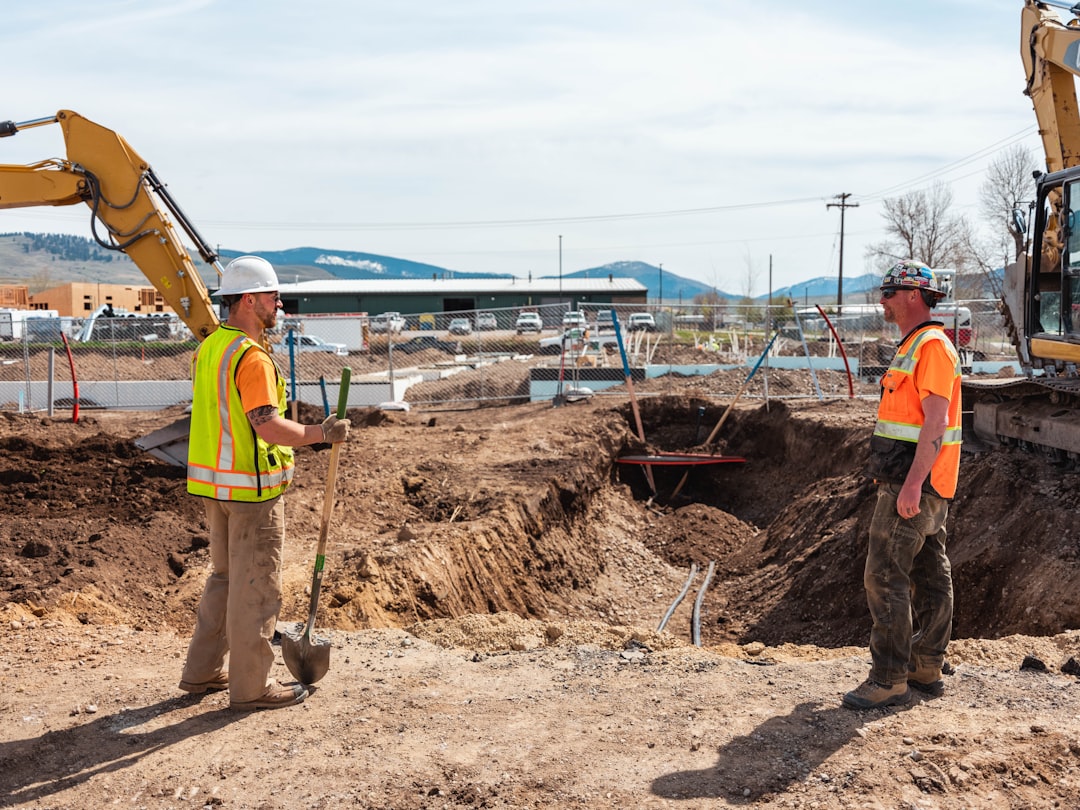
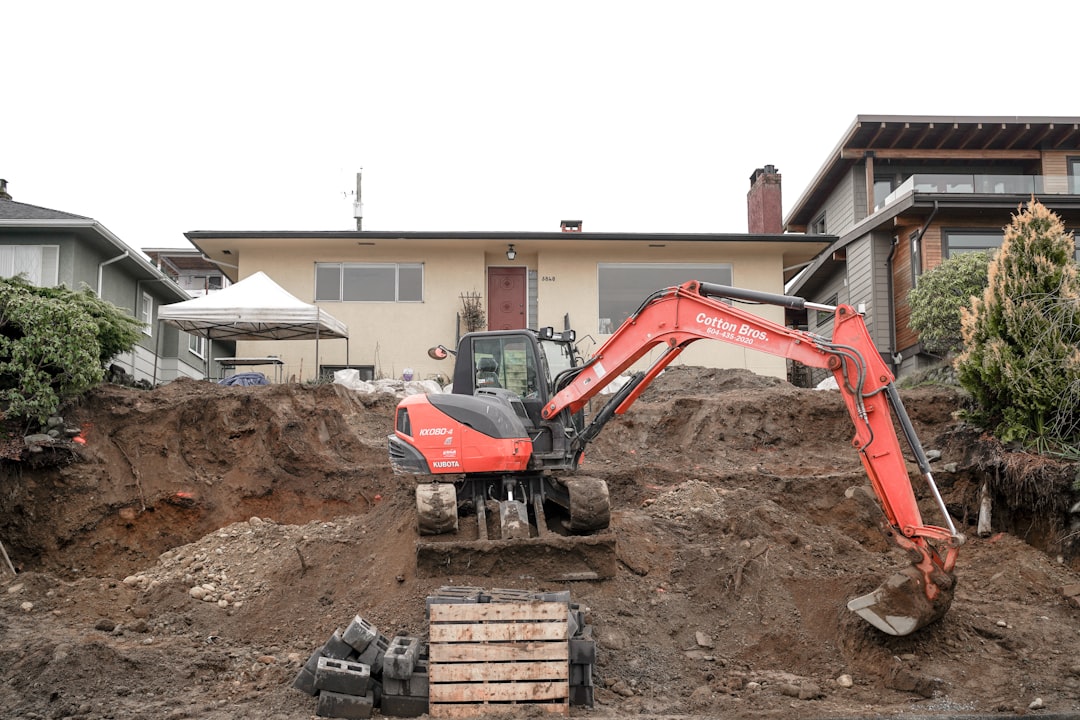
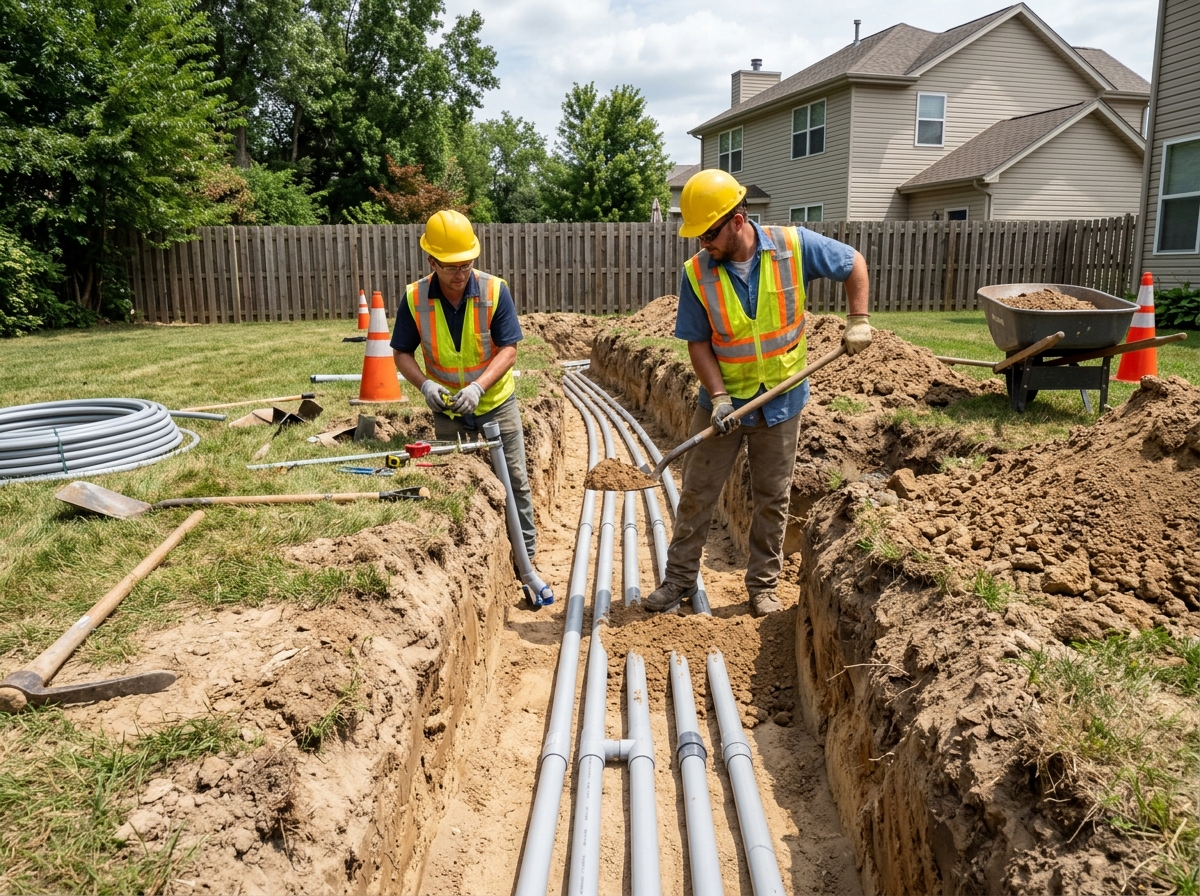
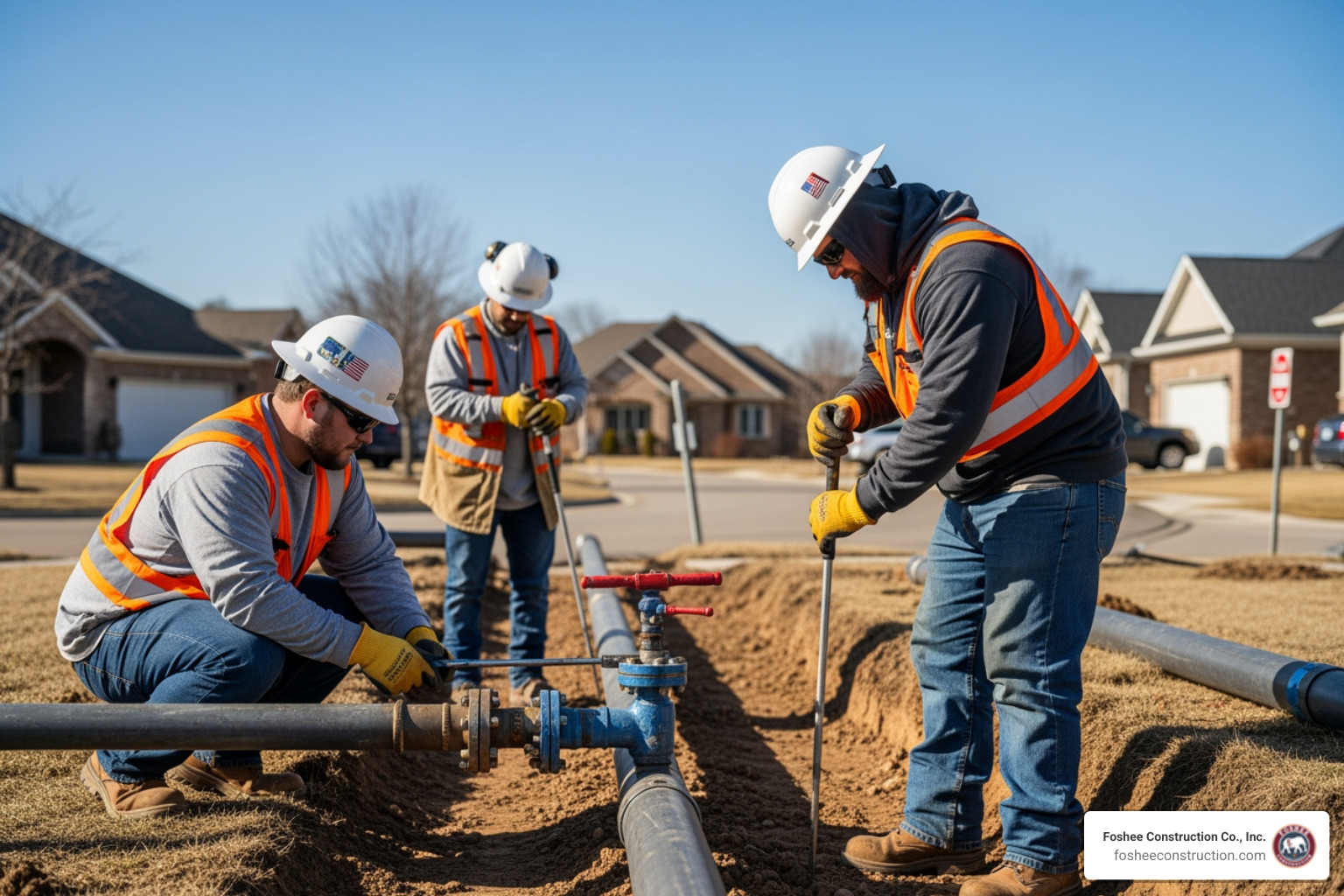
Excavations are among the most hazardous construction operations. A single cubic yard of soil can weigh as much as a car (about 3,000 pounds), meaning a trench cave-in can instantly crush or suffocate a worker.
To prevent tragedy, we follow strict excavation and trenching protocols:
Operating at heights and moving heavy materials require disciplined coordination:
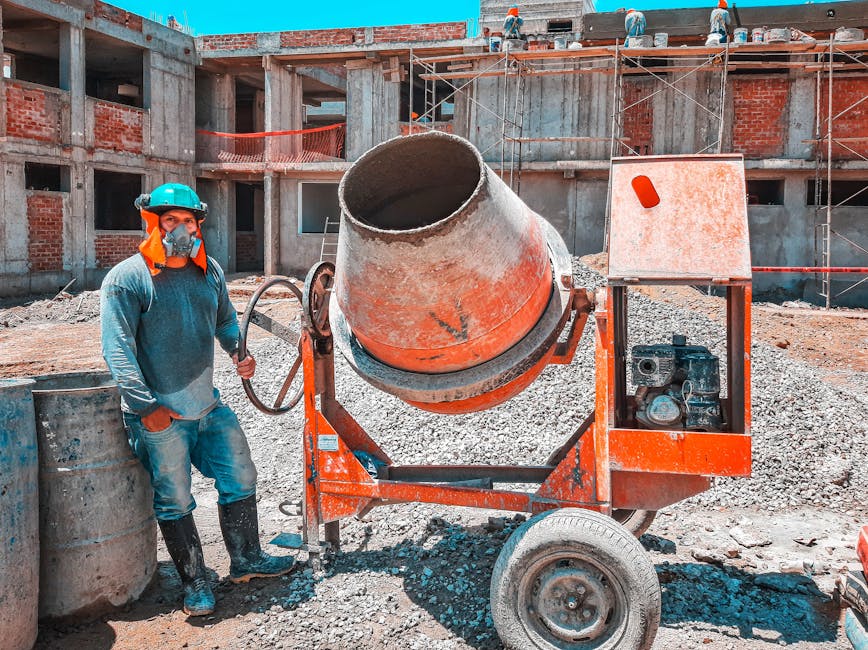
A successful safety program protects workers from both sudden accidents and long-term health complications. Providing high-quality PPE, comfortable welfare facilities, and proactive weather-related safety protocols keeps our teams healthy, focused, and productive.
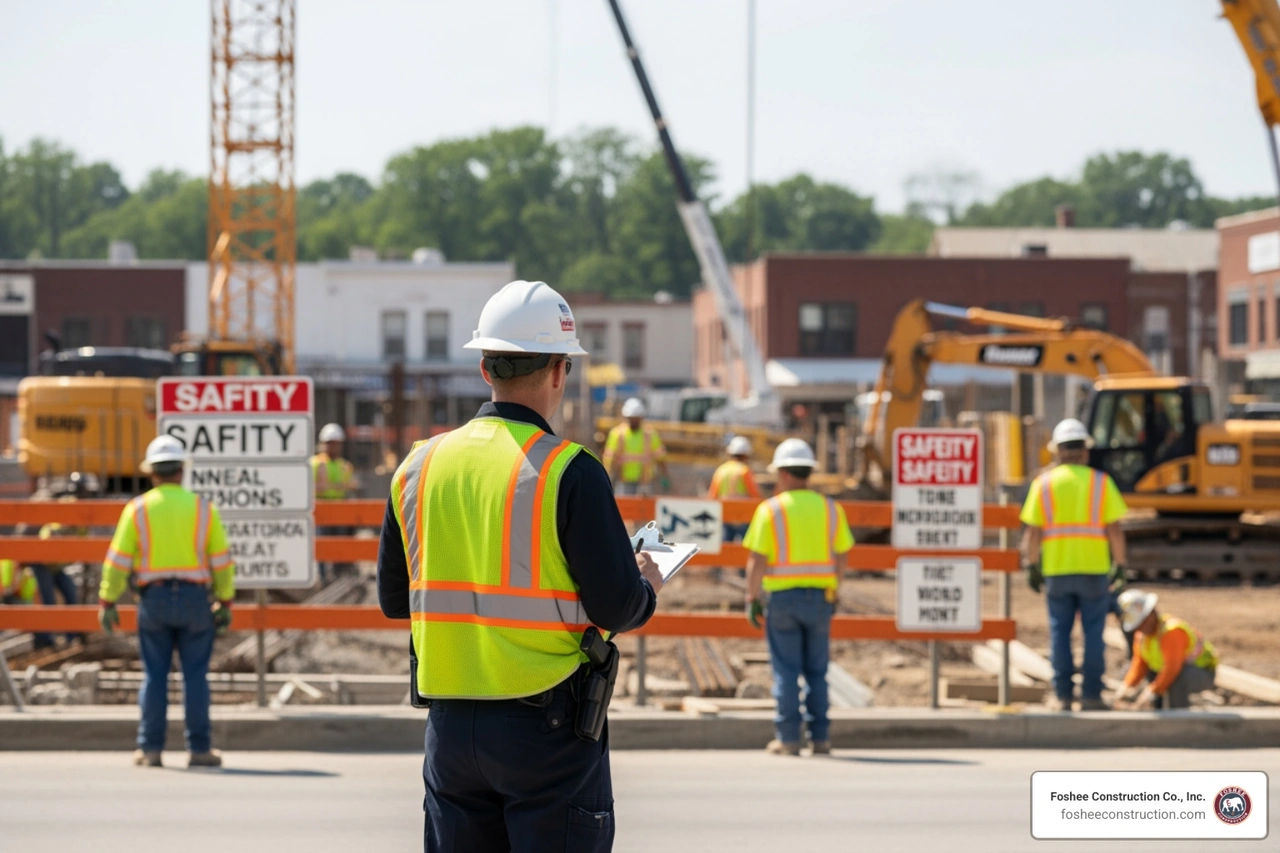
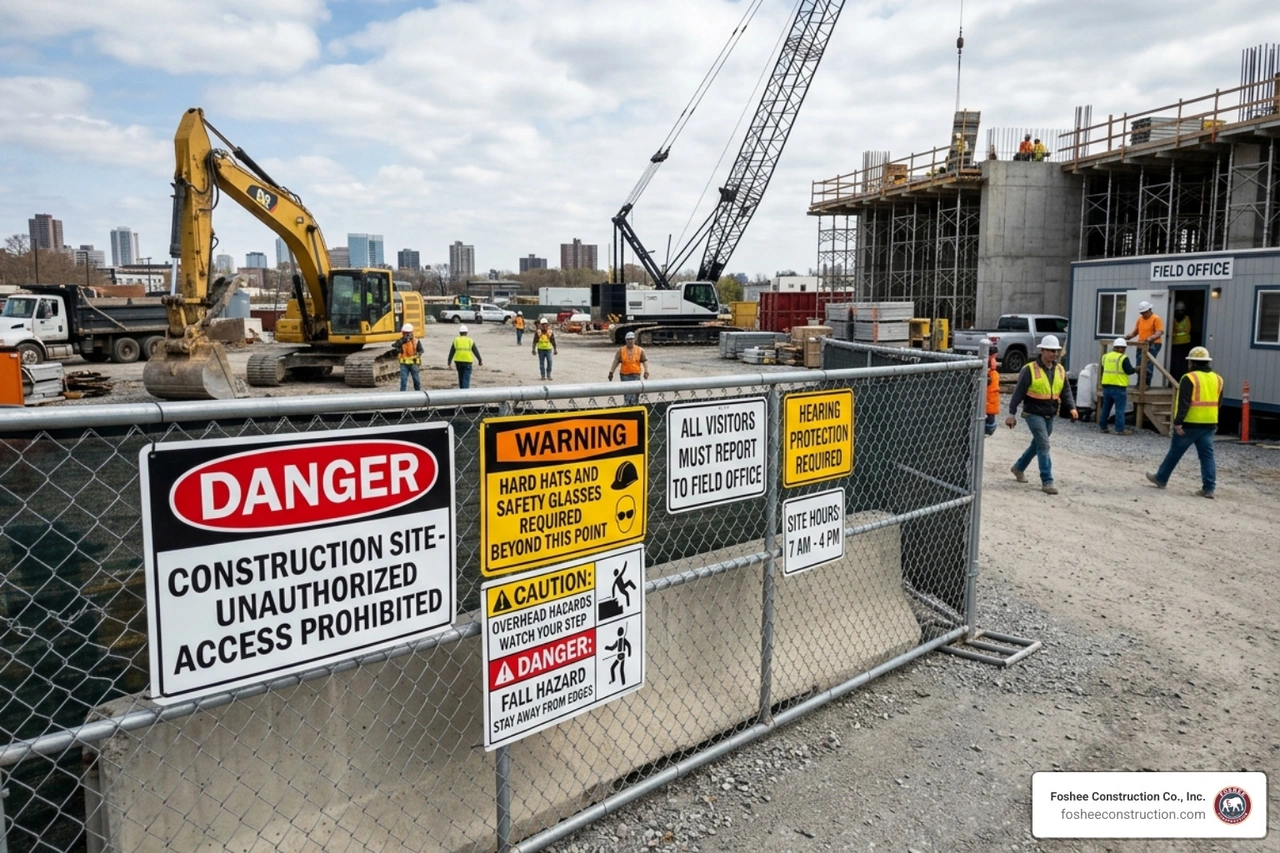
To keep our sites safe and organized, we use visible safety signs as detailed in our Construction Site Safety Signage Guide. These signs warn workers and visitors of active hazards, highlight mandatory PPE zones, and mark emergency exit routes.
A safe site must support the basic physical needs of its workers. This includes providing clean drinking water, sanitary facilities, shaded rest areas, and mental health support to manage job-related stress and fatigue.
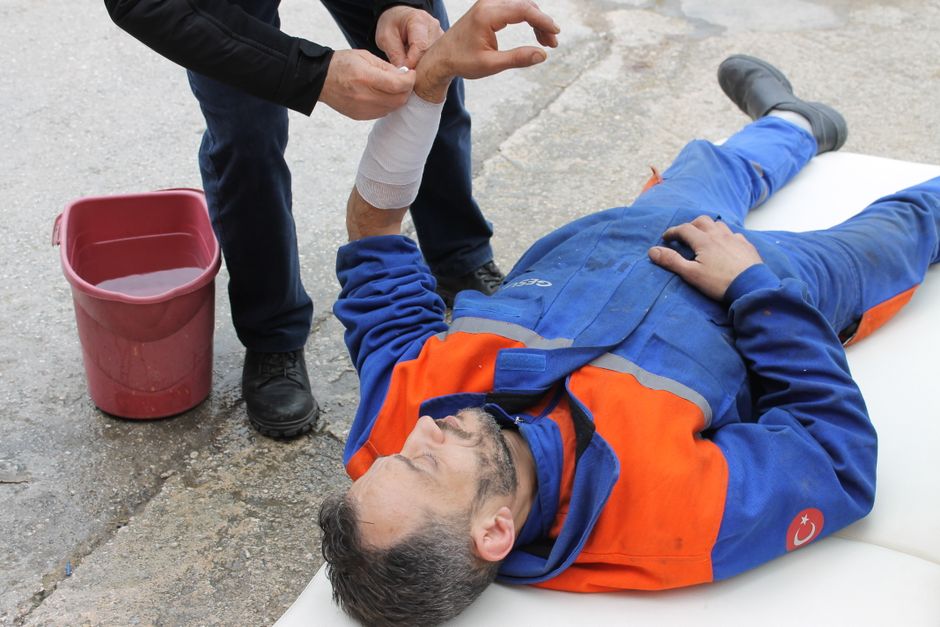
Furthermore, minor injuries must be treated immediately to prevent complications. Having a fully stocked first aid kit and trained personnel on-site is essential. Learn more about emergency preparedness in our guide to First Aid in Construction Site.
Operating in Central Florida means managing intense heat, frequent thunderstorms, and the threat of tropical storms or hurricanes.
Education is our most powerful tool for preventing accidents. By training workers to recognize hazards and using modern safety technology, we can drastically reduce risk on our sites.
A key component of our program is the use of regular, brief safety meetings. We also utilize the Energy Wheel model during hazard discussions, which has been shown to improve hazard recognition rates by 30% by helping workers identify different forms of energy (gravity, mechanical, electrical, thermal) present on site.
To access official resources and tools for identifying and eliminating hazards, visit the Construction Industry | Occupational Safety and Health Administration portal.
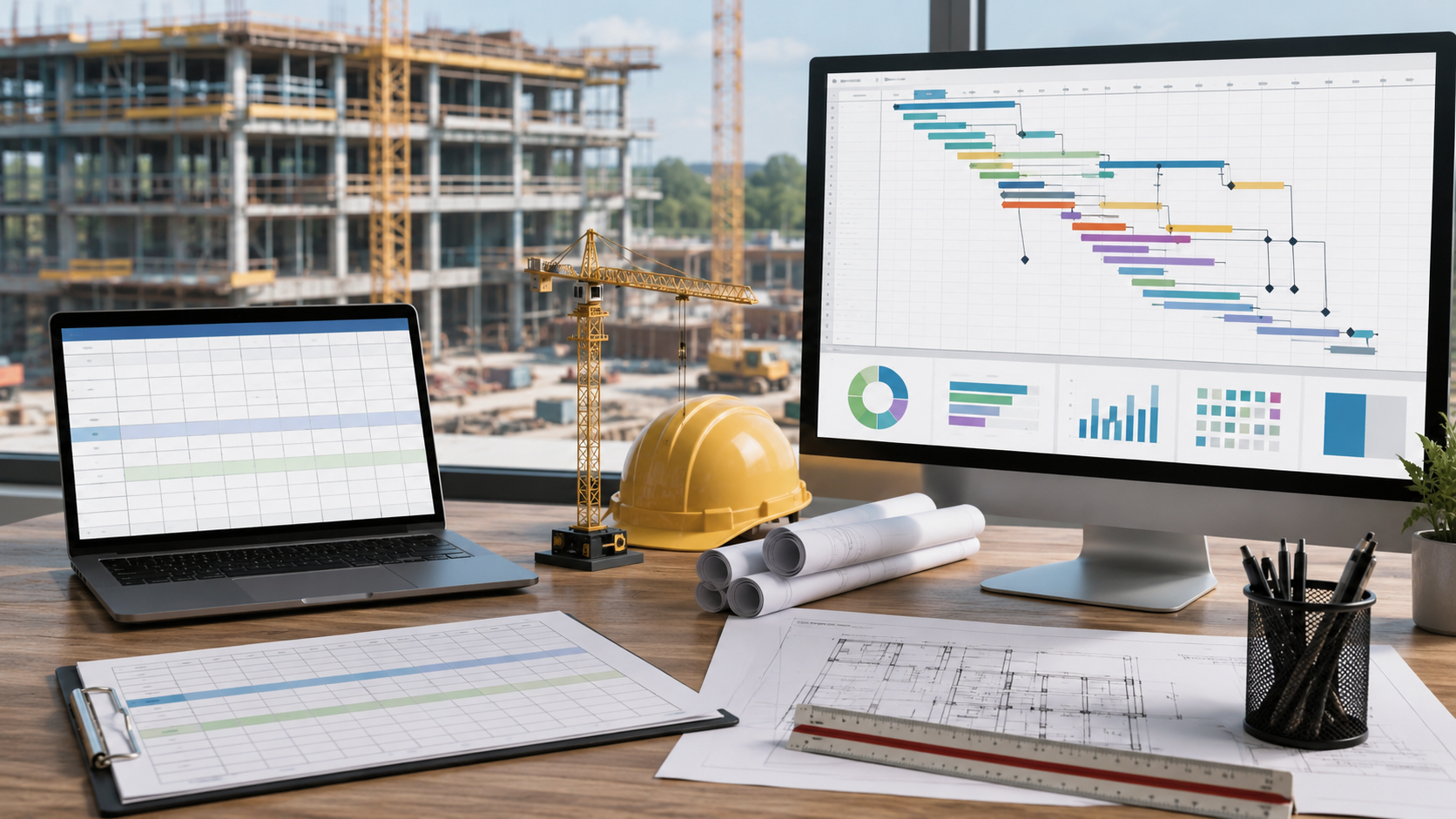
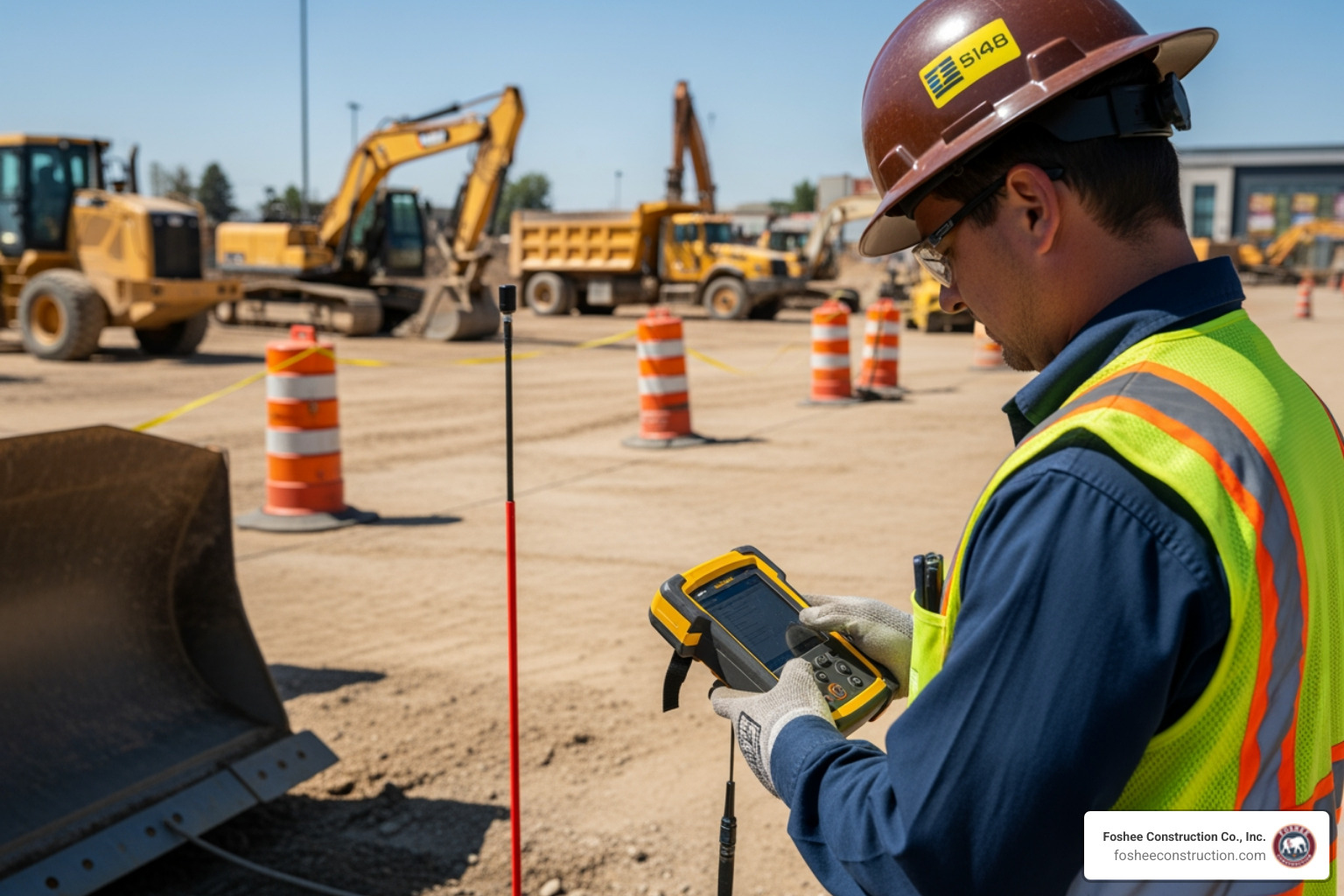
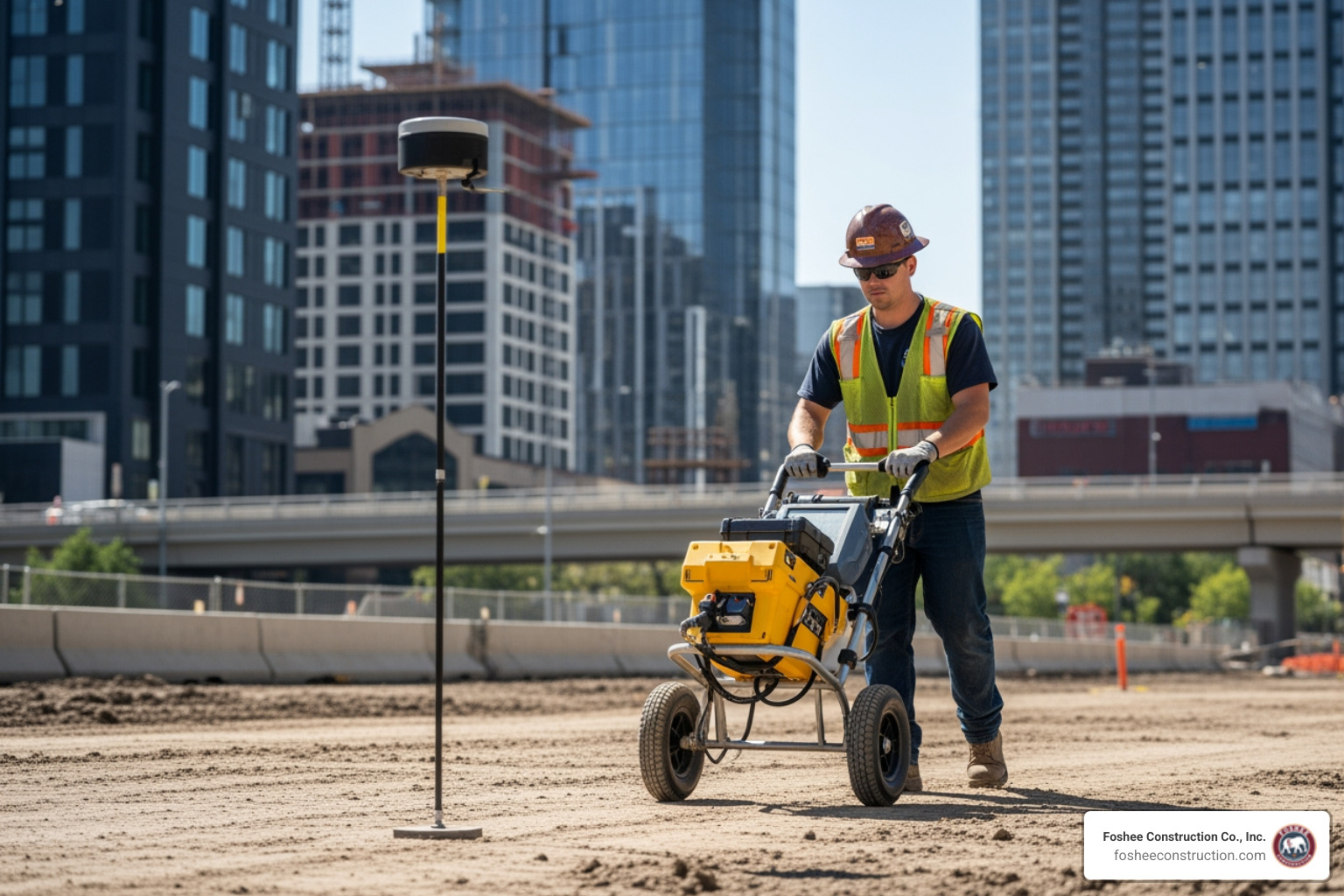
The construction industry is rapidly adopting digital tools to improve safety compliance. Modern sites utilize:
For a comprehensive checklist of modern safety standards, refer to the Construction Site Safety Checklist: OSHA Guide 2026 | OSHA Workplace Safety .
The Fatal Four are the leading causes of death in the construction industry:
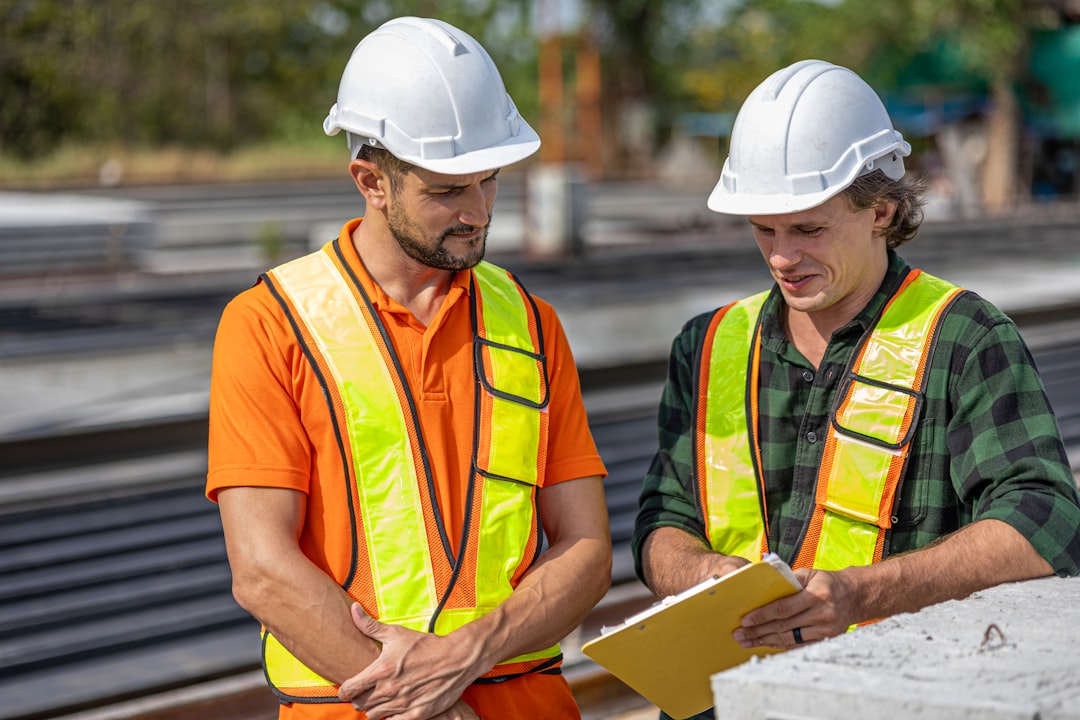
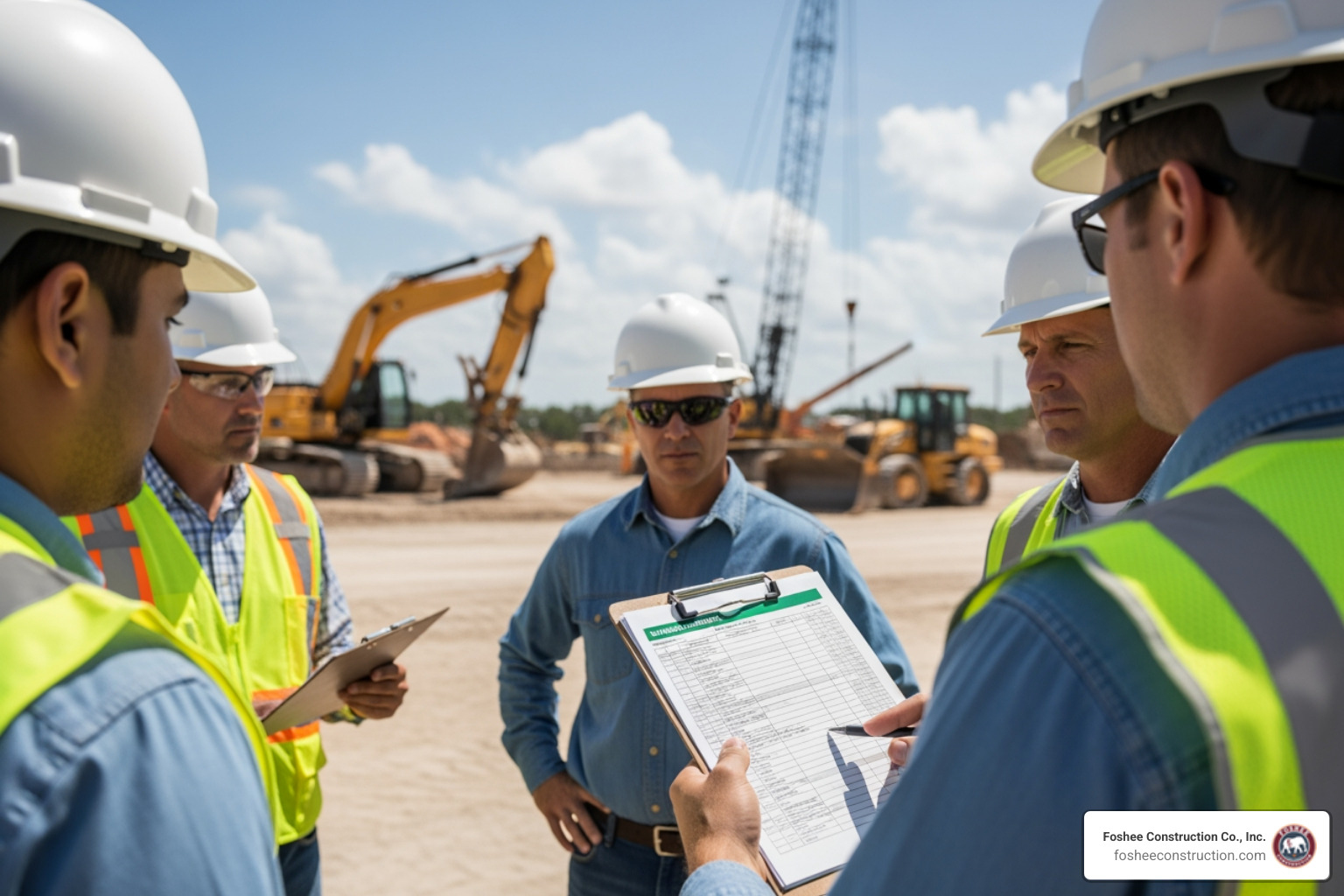
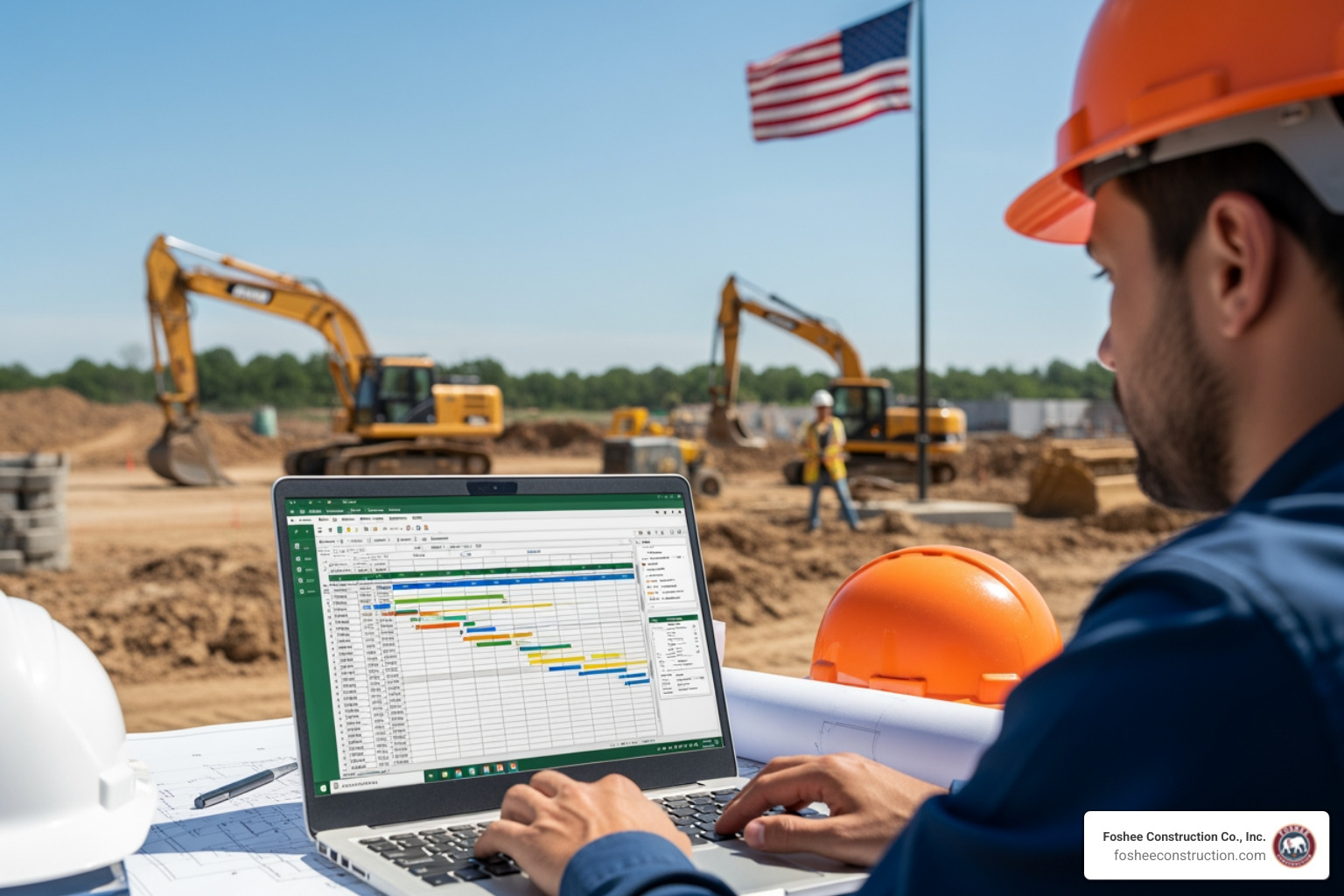
High-risk areas must undergo daily pre-shift walkthroughs lasting 10 to 15 minutes. In addition, comprehensive weekly audits should review fire extinguishers, electrical connections, and housekeeping, while formal monthly reviews should verify training records and emergency response systems.
OSHA requires employers to provide guardrails, safety nets, or personal fall arrest systems (PFAS) for any work being performed at a height of six feet or more above a lower level.
At Foshee Construction Co., Inc., we believe that an efficient job site is, first and foremost, a safe job site. Serving Minneola, Lake County, and the broader Central Florida region, we combine our site preparation expertise with transparent bids, disciplined scheduling, and a relentless focus on safety. By prioritizing the health of our workers and the integrity of our sites, we deliver high-quality grading, excavation, and utility installations that support long-term performance.
Learn more about our safety-first approach and see how we can make your next construction project a safe, successful reality.
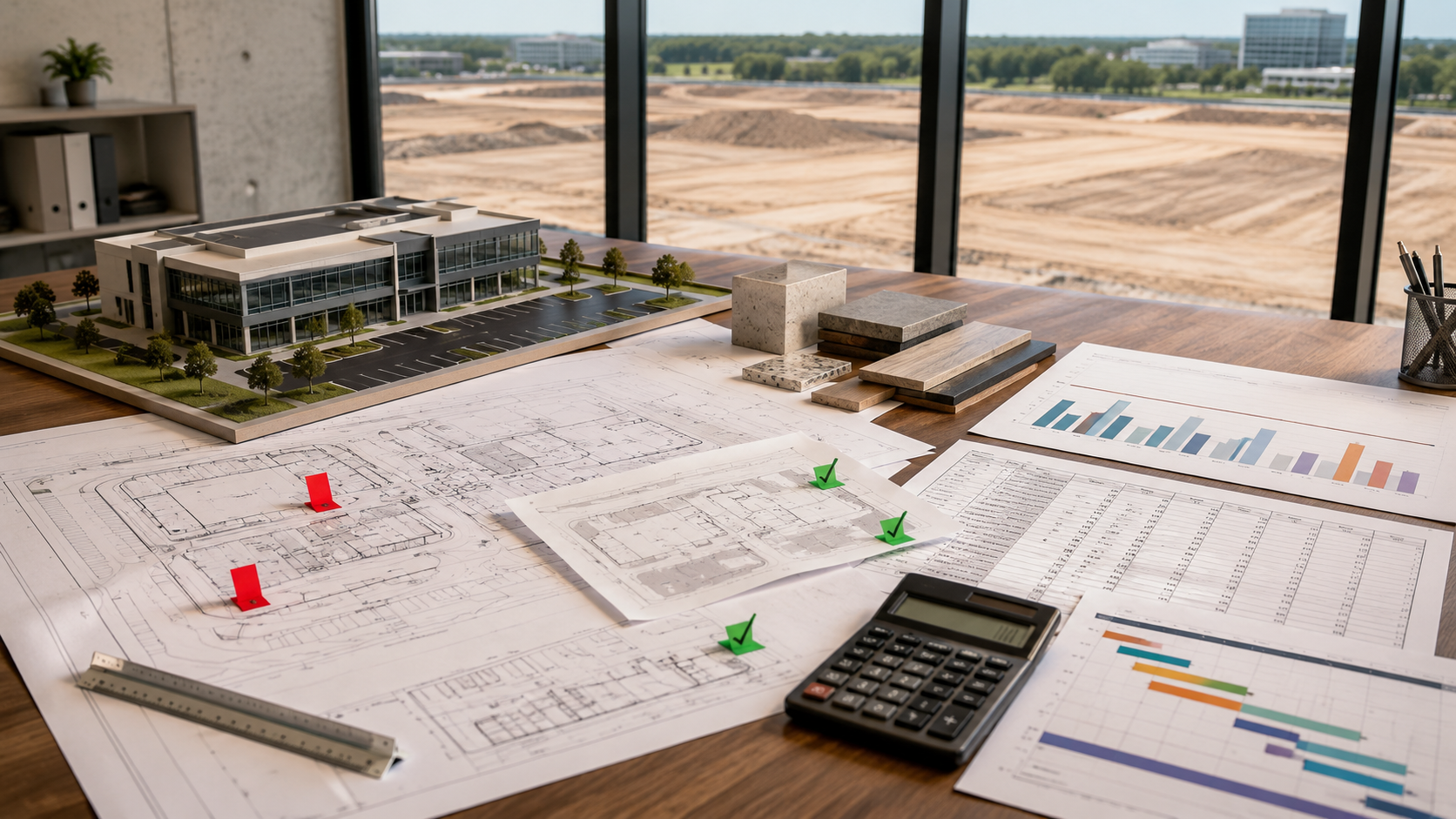
We build bids using HeavyBid and AGTEK because the details matter long before the job starts. When the numbers are accurate and the scope is clearly defined, it sets the tone for how the entire project runs. Estimating isn’t just a step in the process, it’s the foundation we build on.
That same mindset carries into the field. Our crew is trained to work with purpose, follow the Civil Engineers’ Plan to the finest detail, and hold the line on quality. When expectations are clear from day one, there’s no need for shortcuts, and no confusion about how the work gets done.
Clients trust our bid packages because they’re complete and ready to use. Project managers know what we’re covering, what’s excluded, and how we plan to approach the job. That clarity removes friction and lets teams focus on execution instead of interpretation.
As part of our review process, we go into the plans before anything hits the site. We ask the questions early, resolve issues before they show up in the field, and keep RFIs moving. This approach prevents delays and protects the timeline.
Over time, that consistency builds trust. Many of the people we work with today came through referrals from past projects – engineers, GCs, and superintendents who’ve seen how we operate and want the same experience again.
In 2024, Foshee Construction was acquired by Saga Infrastructure Solutions, a national network of civil construction companies. Saga supports regional contractors by giving them access to better tools, long-term resources, and operational backing, without changing how they run day to day.
Foshee will continue to operate under its name, with the same team and field leadership in place.
“From the very time a project starts, we start that partnership. We try to catch as much as we can with the tools that we have. Not everybody is using the software platforms we are. That’s the differentiator: we’re not just bidding. We’re anticipating, problem-solving, and making sure the job runs right.”
— Don, CEO, Saga Infrastructure Solutions
Foshee is now part of a broader regional strategy that includes Florida, the Piedmont Atlantic, Texas, Colorado, and the Arizona Sun Corridor. The name, crews, and standards remain. What’s improving is the support behind it.