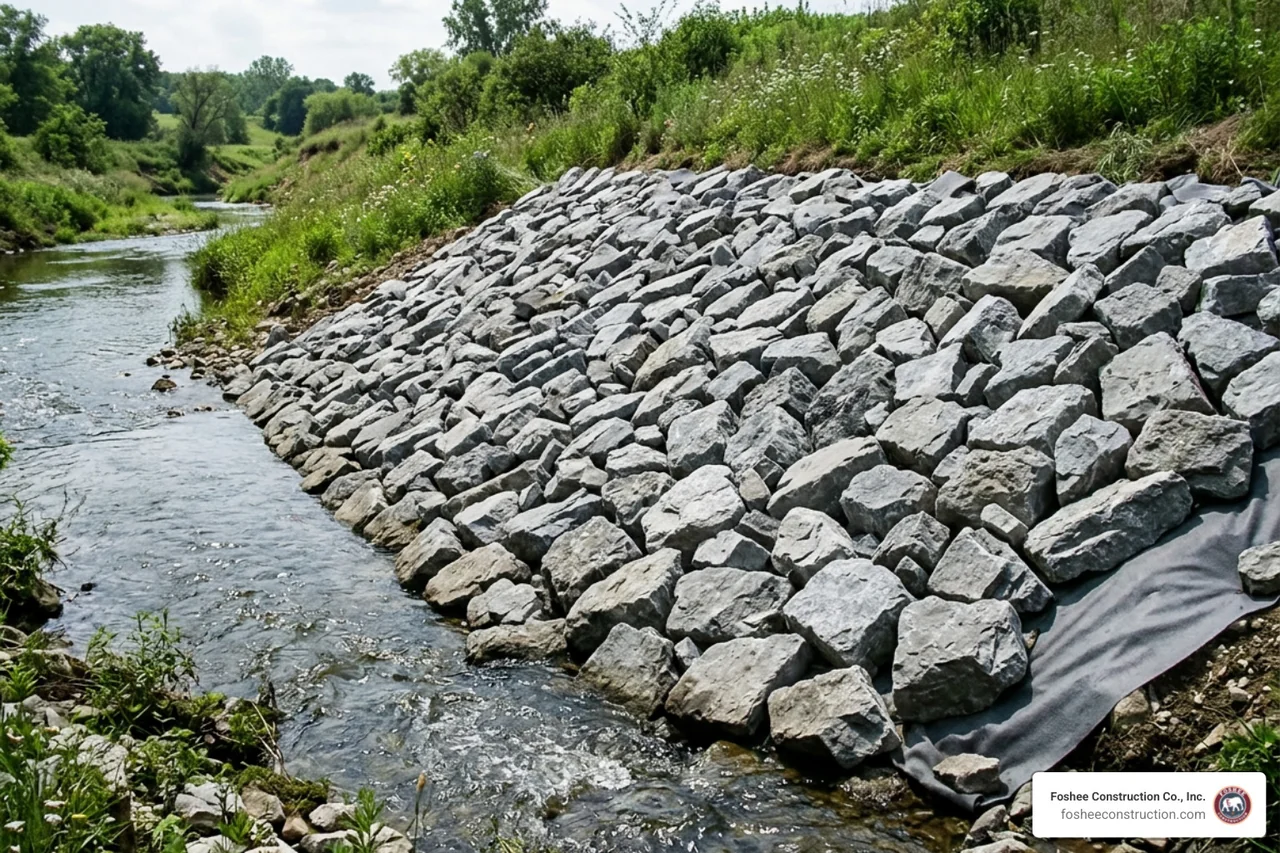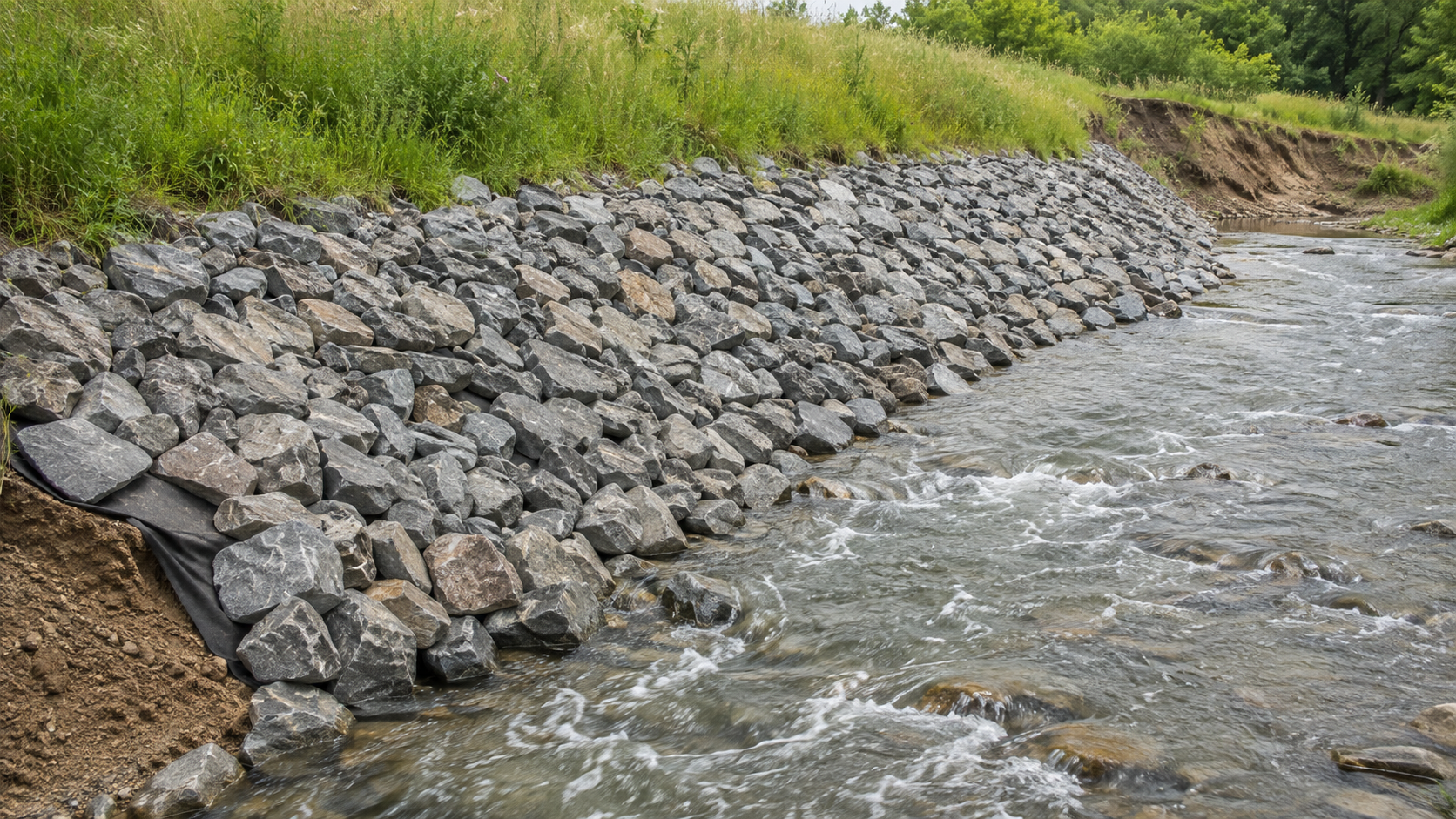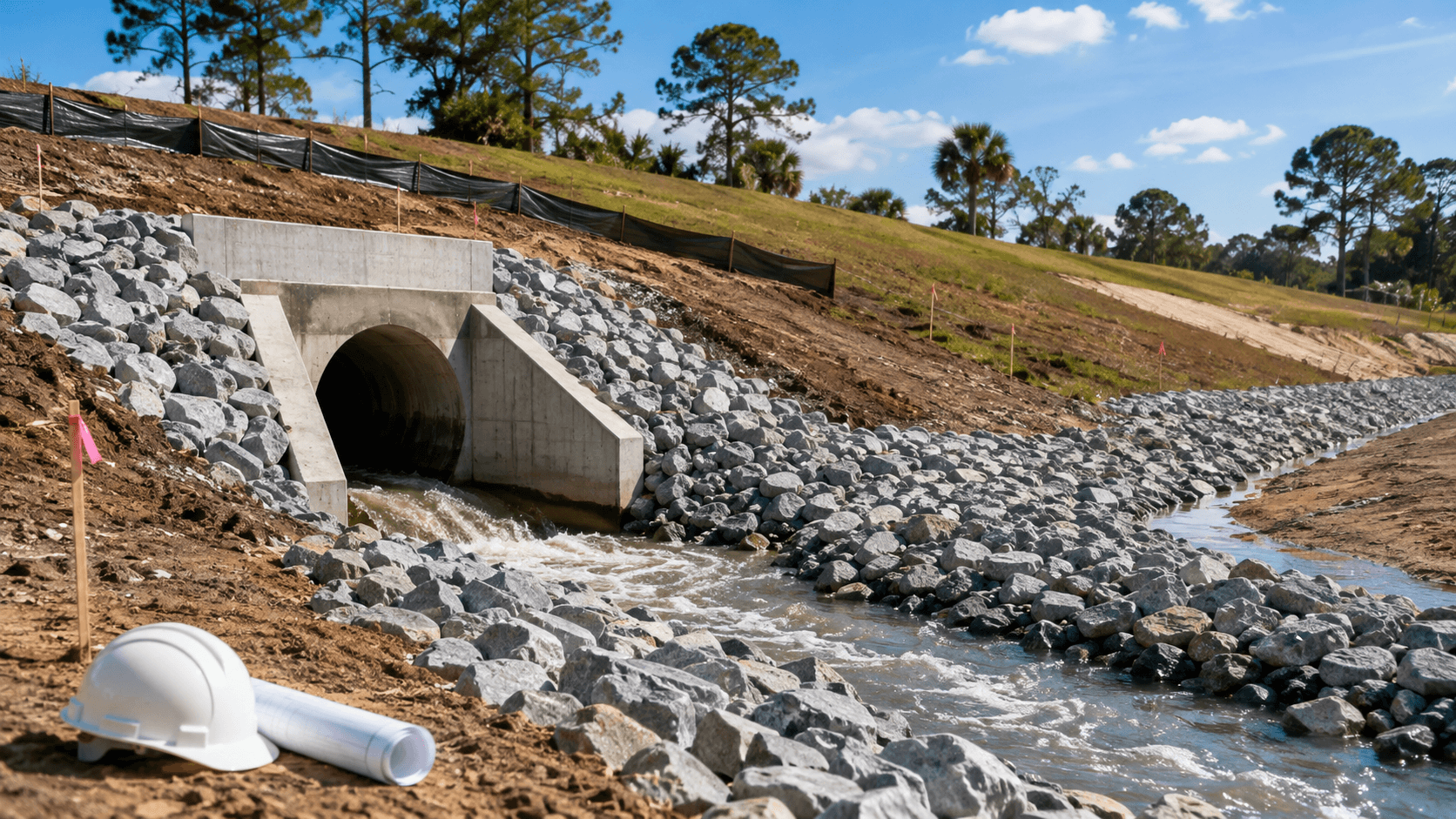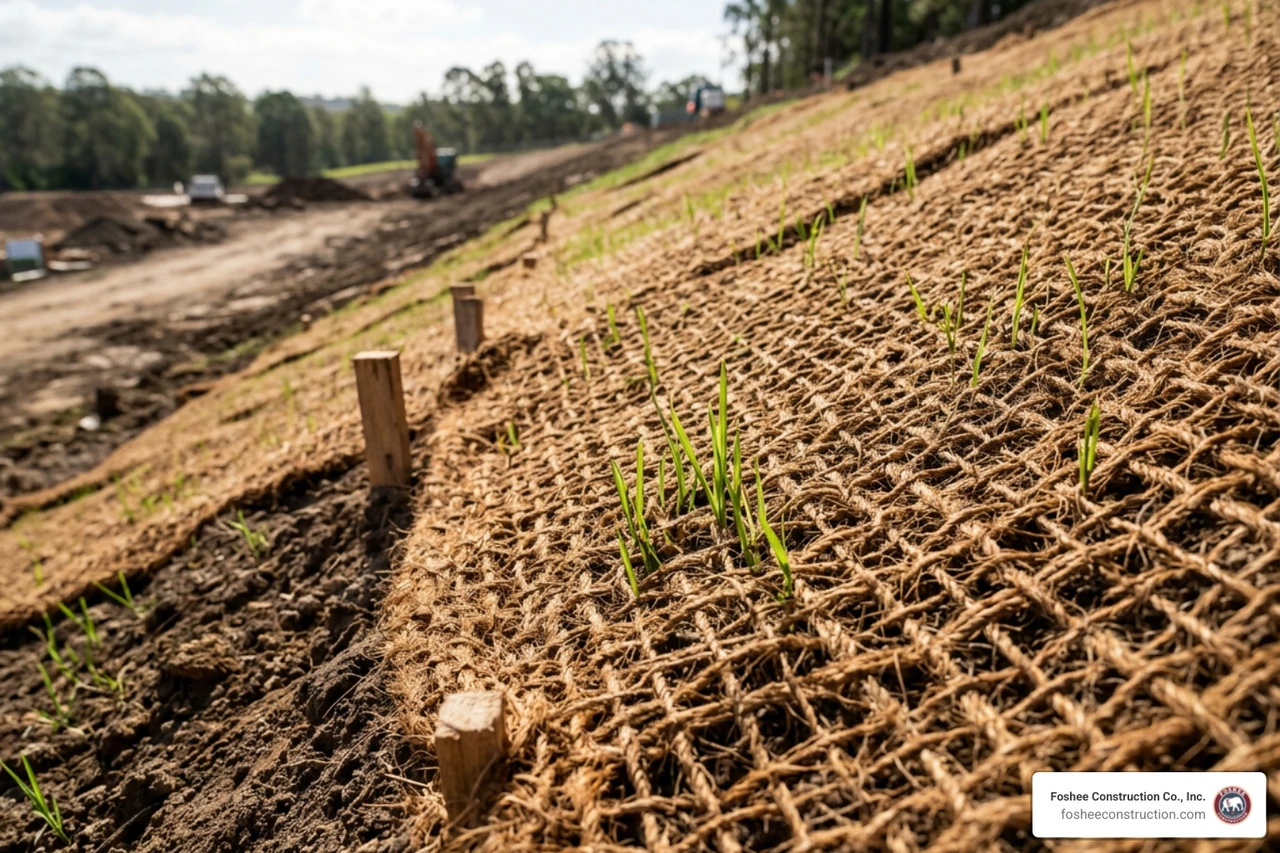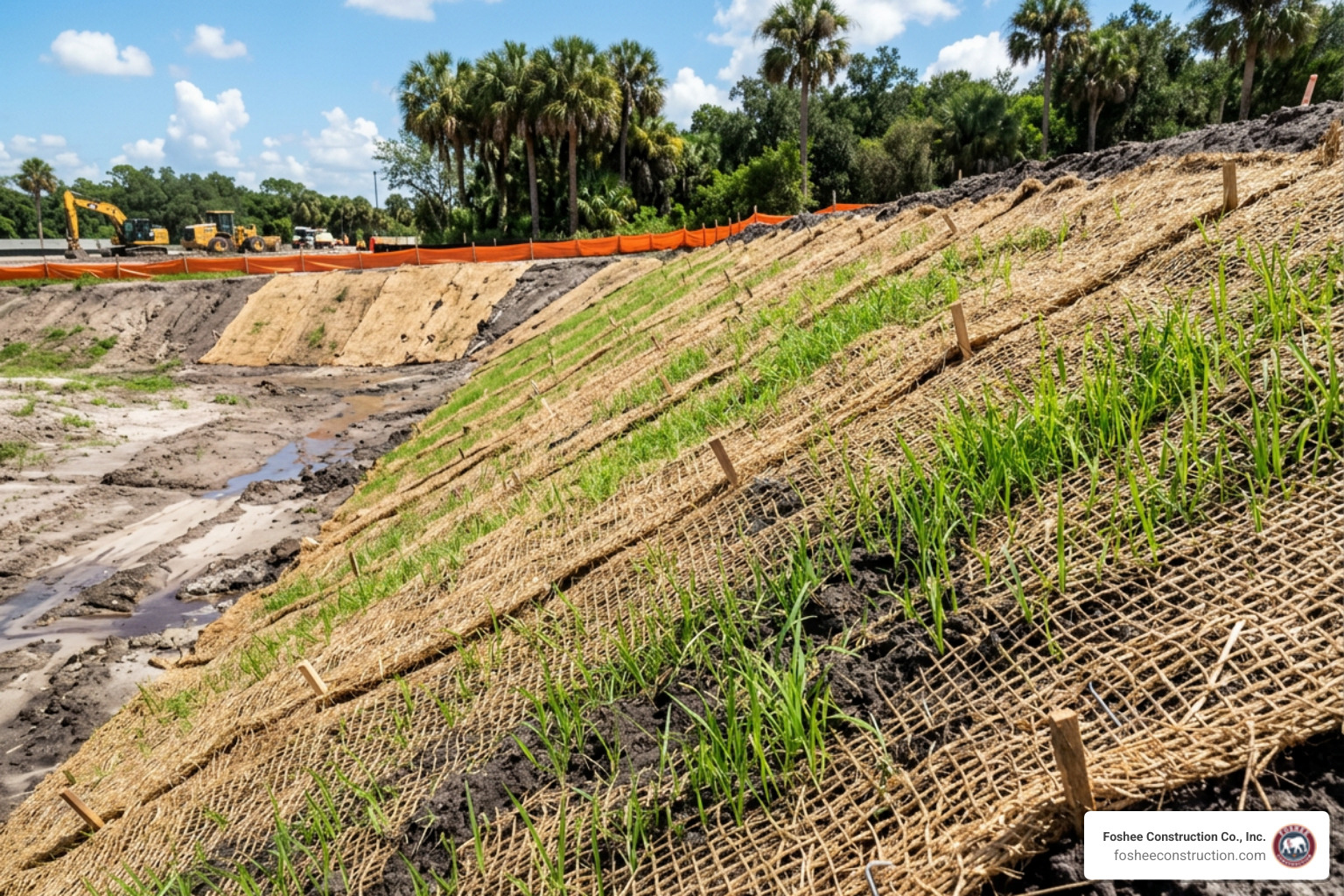
Coir blanket erosion control is one of the most effective biodegradable methods for stabilizing slopes, protecting seeded soil, and preventing washouts on construction sites.
Here's a quick snapshot of what you need to know:
| Feature | Details |
|---|---|
| Material | 100% coconut (coir) fiber, double jute netting |
| Standard roll size | 8 ft x 112.5 ft (900 sq ft per roll) |
| Lifespan | 24 months (blanket) up to 4-6 years (heavy matting) |
| Slope rating | Up to 1:1 (steep) |
| Max flow velocity | Up to 12 fps (700 GSM grade) |
| Best for | Riverbanks, wetlands, highway slopes, drainage channels |
| Biodegradable? | Yes — 100%, no microplastics |
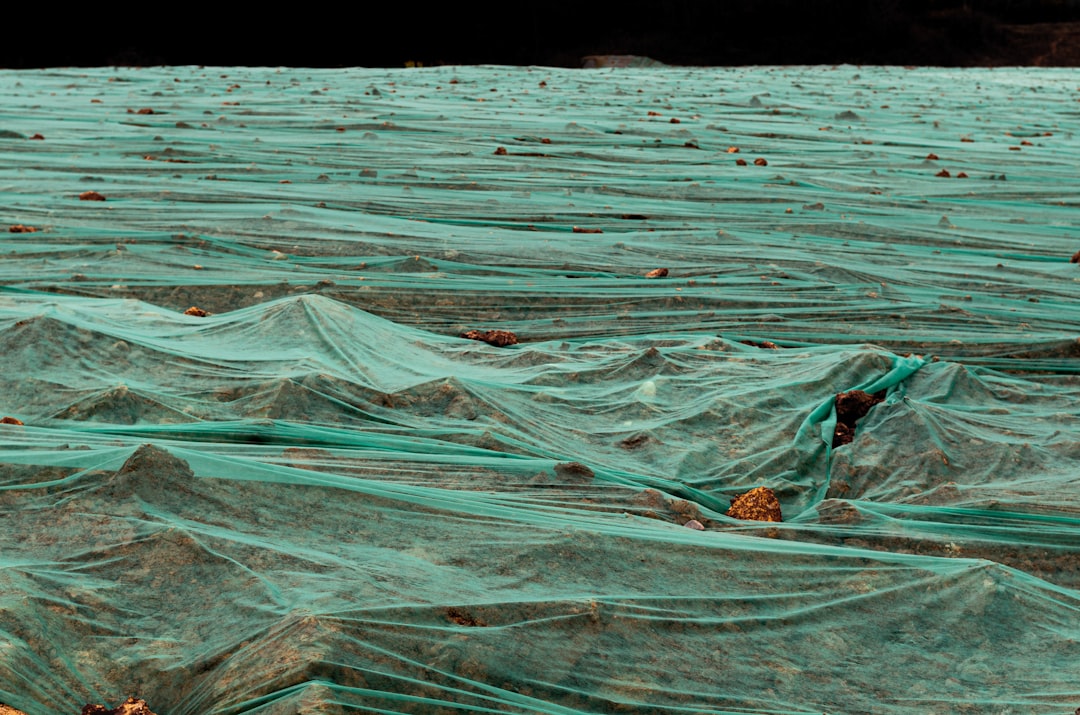
Coir blankets — also called coconut blankets or coir mats — are rolled erosion control products made from natural coconut husk fibers. They protect bare soil and seeds from rainfall impact, runoff, and shear stress while vegetation takes root. Once plants establish, the blanket naturally breaks down and enriches the soil.
They're a go-to solution for Florida contractors dealing with steep slopes, high-flow channels, and environmentally sensitive areas where synthetic materials aren't ideal.
I'm Don Larsen with Foshee Construction Co., Inc., and our team has extensive hands-on experience deploying coir blanket erosion control across grading and site preparation projects throughout Central Florida. In the sections below, I'll walk you through everything you need to select, specify, and install the right product for your site.
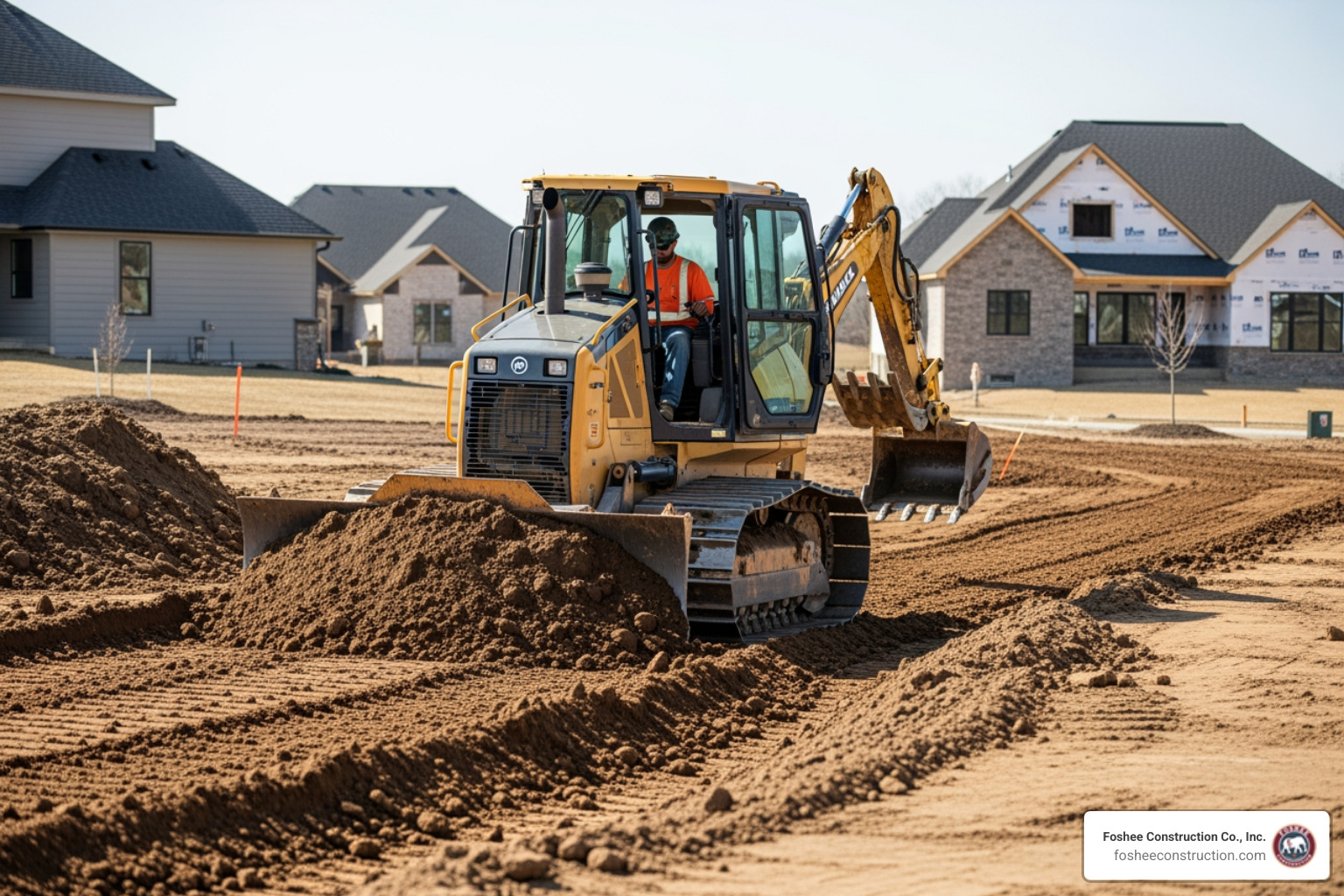
Managing topsoil displacement during earthmoving operations is a major challenge for civil engineering and site development projects across Lake County and Central Florida. When land is cleared and graded, intense sub-tropical rainstorms can quickly carve gullies into exposed banks, turning expensive site prep into a muddy washout.

Implementing a sustainable, temporary erosion control measure is essential to protecting exposed slopes while root networks mature. Natural soil stabilization relies on materials that buffer direct environmental forces without harming the surrounding ecosystem. Among all organic geotextile options, coconut coir stands out due to its unmatched physical strength, moisture absorption, and slow rate of organic decomposition.
Coconut coir fibers are harvested from the tough outer husks of coconuts (Cocos nucifera). These high-strength bristle fibers are high in lignin content, making them naturally resistant to water damage, mold, and premature decay compared to agricultural straw or wood excelsior.
When woven or mechanically needle-punched into an organic matrix, coir blankets serve four essential functions on a construction site:
By suppressing soil erosion while facilitating natural plant establishment, coir blanket erosion control forms a reliable bridge between raw earthworking and permanent bio-stabilization.
Coir rolled erosion control products (RECPs) come in two main structural forms: stitch-bonded matrix blankets and woven open-mesh mats. Understanding their technical composition helps ensure you choose the right material for your project site.
For detailed technical guidelines on product configurations, reference technical data sheets like the Coir Blankets | Biodegradable Coconut Blankets | Specs guide. Standard coir blanket specifications usually feature:
This 100% organic combination means no synthetic netting or plastic fishing line is left behind to snag lawnmower blades or entangle local wildlife.
Selecting the correct coir density is critical when engineering an effective site stabilization strategy. Using a mat that is too light on a steep cut bank can lead to structural failure, while deploying an excessively dense mat on a mild slope increases material costs unnecessarily.
Density is measured in grams per square meter (g/m² or GSM). The primary density grades used in modern civil and marine construction are detailed below.
Light-duty coir mats—often specified as Coir Mat 40—feature a weight of 400 g/m² (approx. 11.8 oz/yd²). Designed with an open area percentage around 65%, these lightweight mats balance soil stabilization with an open matrix that promotes rapid plant growth.
For projects needing light-duty open-mesh options, products like the Coir Fiber Mat | Natural Erosion Control Matting offer an ideal balance of soil contact and open space for seeds.
Heavy-duty 700 GSM coir matting (approx. 20.6 oz/yd²) represents the industry workhorse for demanding civil construction projects. Engineered with a tighter weave (50% to 65% open area), 700 GSM matting offers impressive structural integrity.
Many state transportation departments approve high-density matrices such as 700 Gram Coir Matting - Erosion Control Netting (DOT Approved) – Sandbaggy or Coir Matting 70 | Coir mat erosion control for slopes & banks for critical infrastructure protection.
When site conditions present intense hydrodynamic forces or extreme topography, high-performance 900 GSM coir blankets (approx. 26.5 oz/yd²) deliver maximum structural reinforcement.
For severe hydraulic installations, ultra-dense matrices like BioD-Mat® 60 - Rolanka International, Inc demonstrate how tightly woven bristle coir twines deliver long-term protection while remaining completely non-synthetic.
With various Rolled Erosion Control Products (RECPs) on the market, choosing the right material involves balancing functional lifespan, slope limitations, flow resistance, and environmental impact.

The functional longevity of an erosion control blanket refers to how long it provides mechanical soil protection before degrading. The table below outlines how coconut coir compares to common alternatives:
| Material Type | Functional Longevity | Max Slope Rating | Flow Velocity Limit | Primary Application |
|---|---|---|---|---|
| Straw Blankets | 60 days – 12 months | 3:1 slopes | 4.5 - 6.0 fps | Low-slope residential lawns, mild flat grading |
| Jute Netting | 6 – 9 months | 3:1 slopes | 6.0 fps | Short-term garden beds, gentle swales |
| Straw-Coconut Blends | 12 – 24 months | 2:1 slopes | 7.0 - 9.0 fps | Moderate embankments, roadside ditches |
| Coir Fiber Blankets | 24 – 36 months | 1:1 slopes | 8.0 - 12.0 fps | Steep banks, high-flow drainage channels |
| Woven Coir Matting | 4 – 6 years | 1:1 and steeper | Up to 12+ fps | Riverbanks, shorelines, wetland restoration |
| Synthetic TRMs | Permanent (Non-bio) | Steeper than 1:1 | 15–20+ fps | Extreme spillways, structural channels |
While straw blankets work well for quick, short-term lawn establishment, their rapid breakdown leaves steep slopes exposed before root systems fully develop. Woven coir products provide reliable protection for several years, giving deep-rooting species time to mature on challenging embankments.
Environmental safety is a major consideration on construction sites today, especially when working near wetlands, lakes, and natural waterways.

Key environmental benefits of using 100% natural coir mats include:
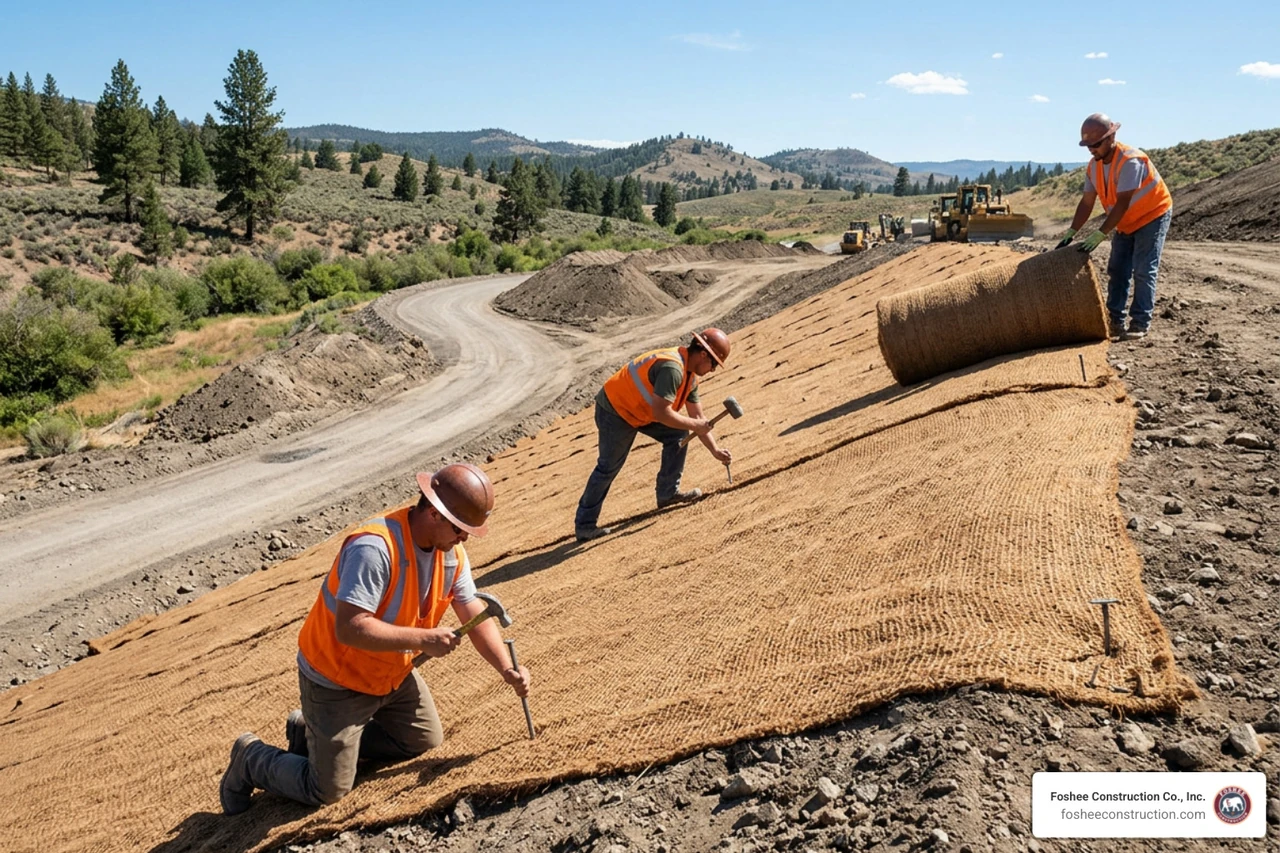
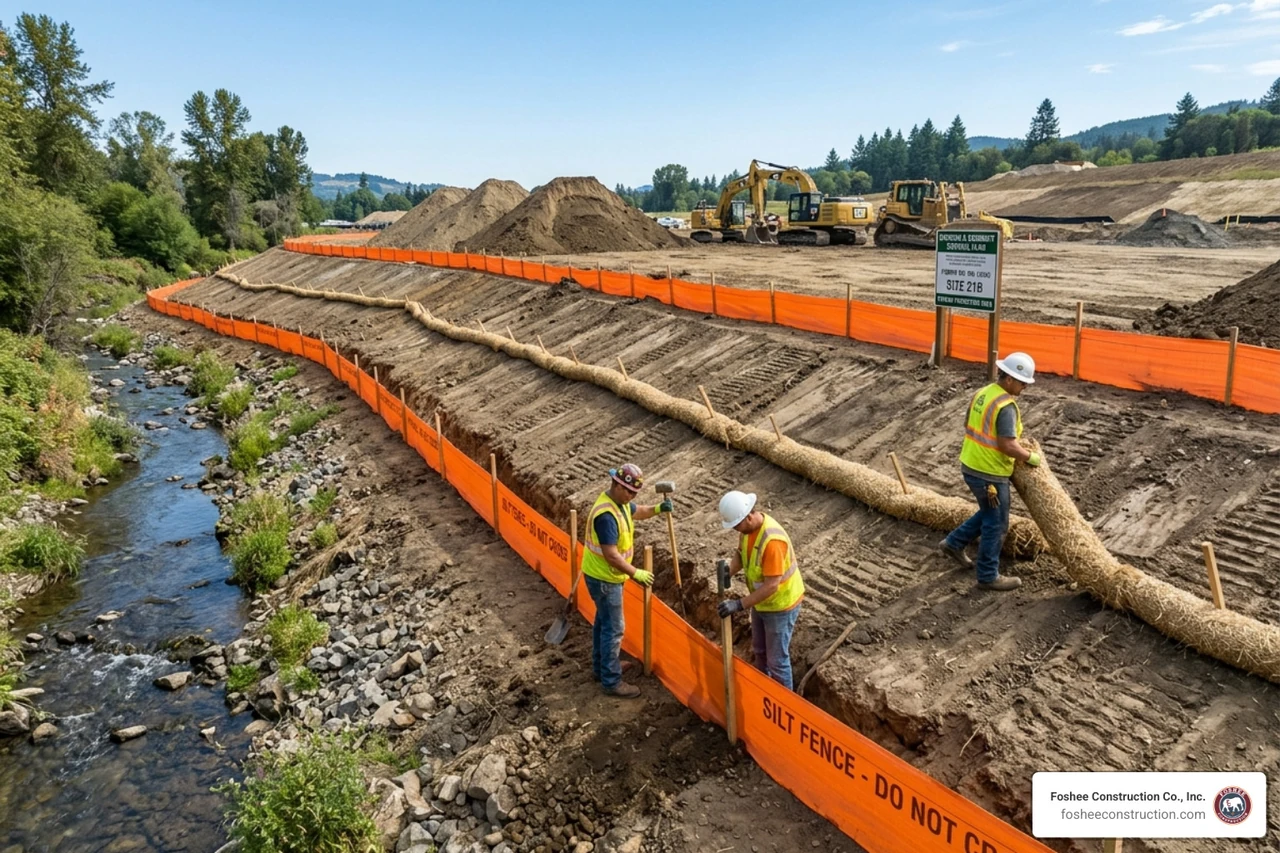
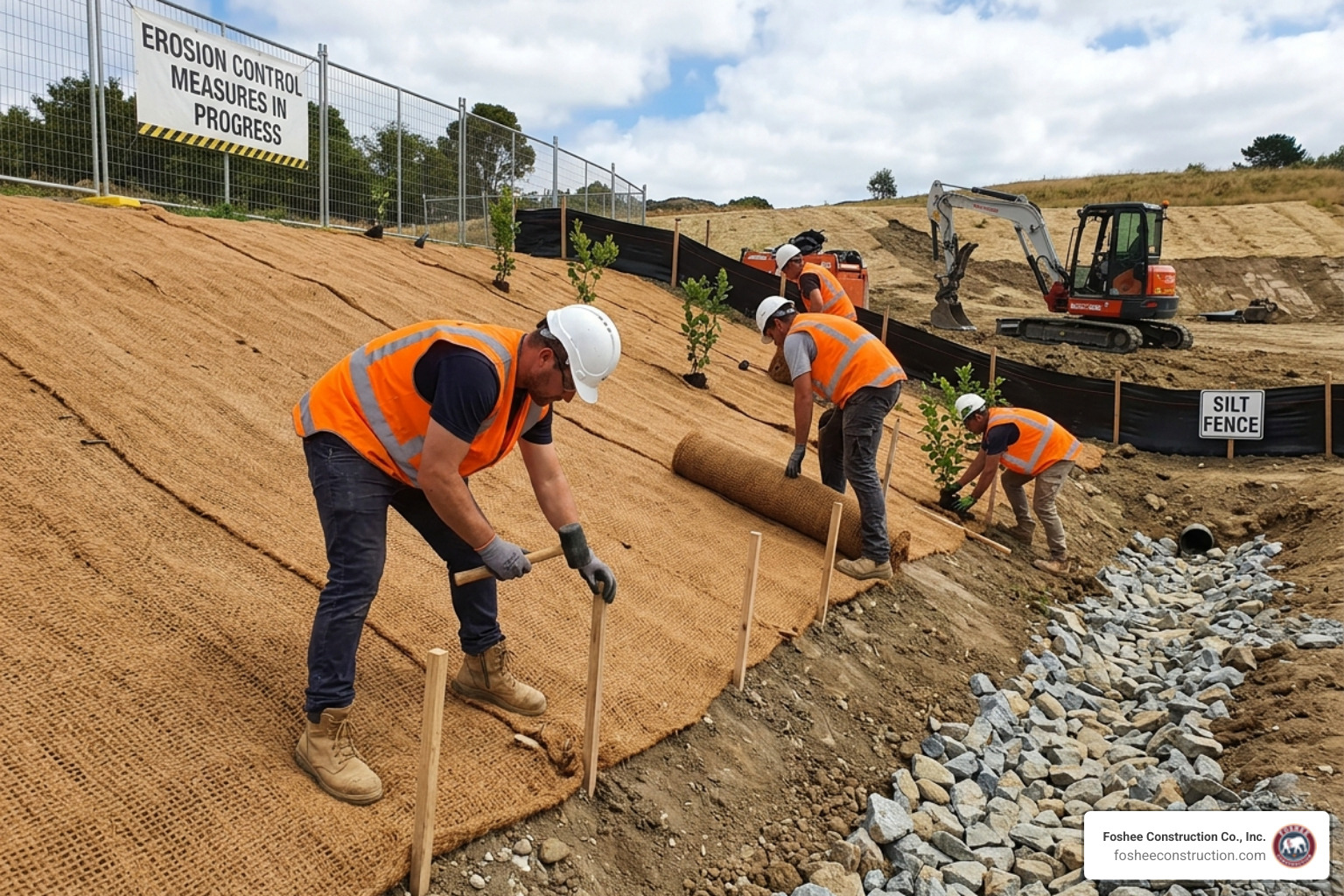
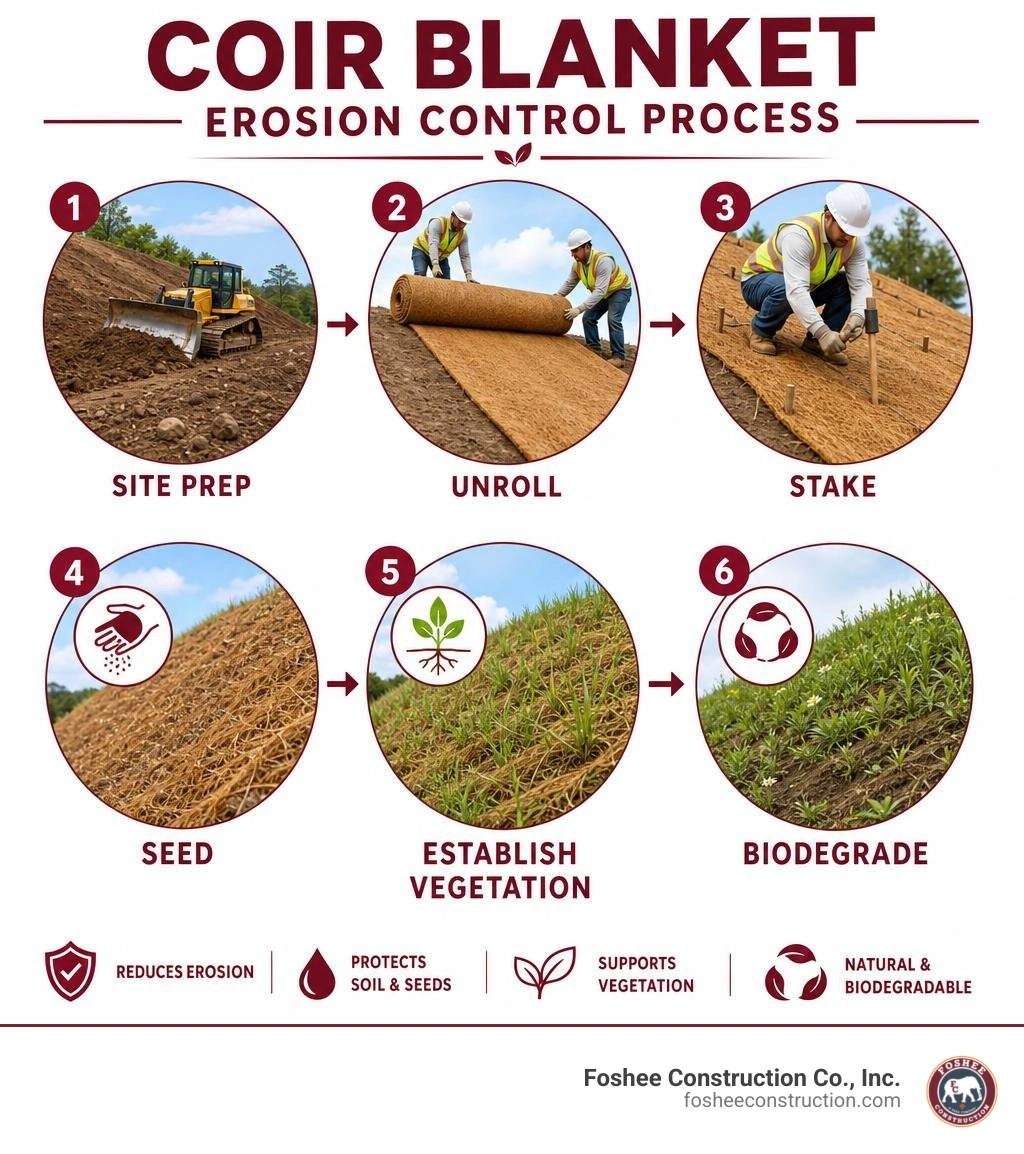
Even the highest-grade coir matting will fail if it isn't properly anchored to the soil. Water can easily carve channels beneath loose matting, causing internal sub-surface washouts. Following a detailed erosion control blanket installation guide ensures continuous soil contact and long-term stability.
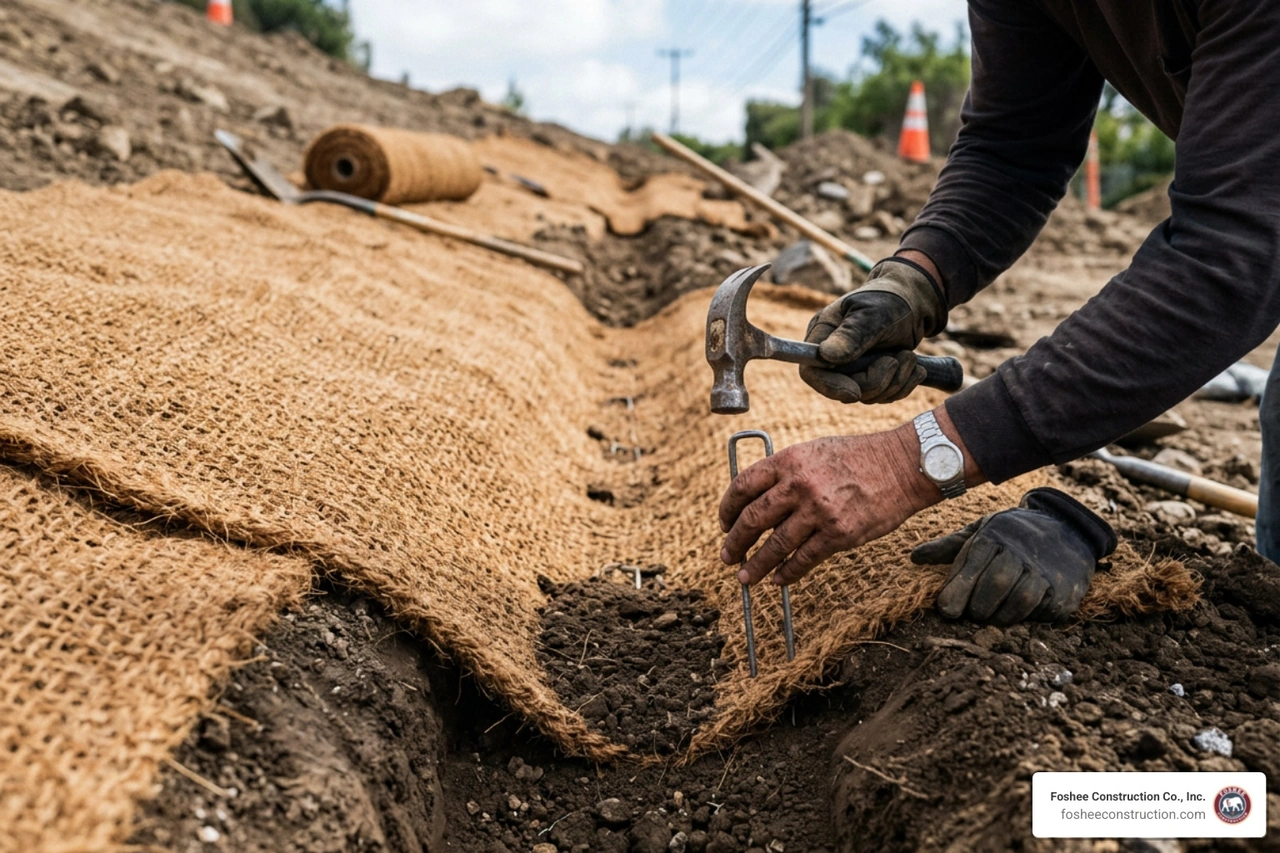
Before unrolling any material, correct ground preparation is required. A proper erosion control matting installation starts with these critical steps:
Completing proper trenching prevents water from entering underneath the blanket and causing undercutting erosion.
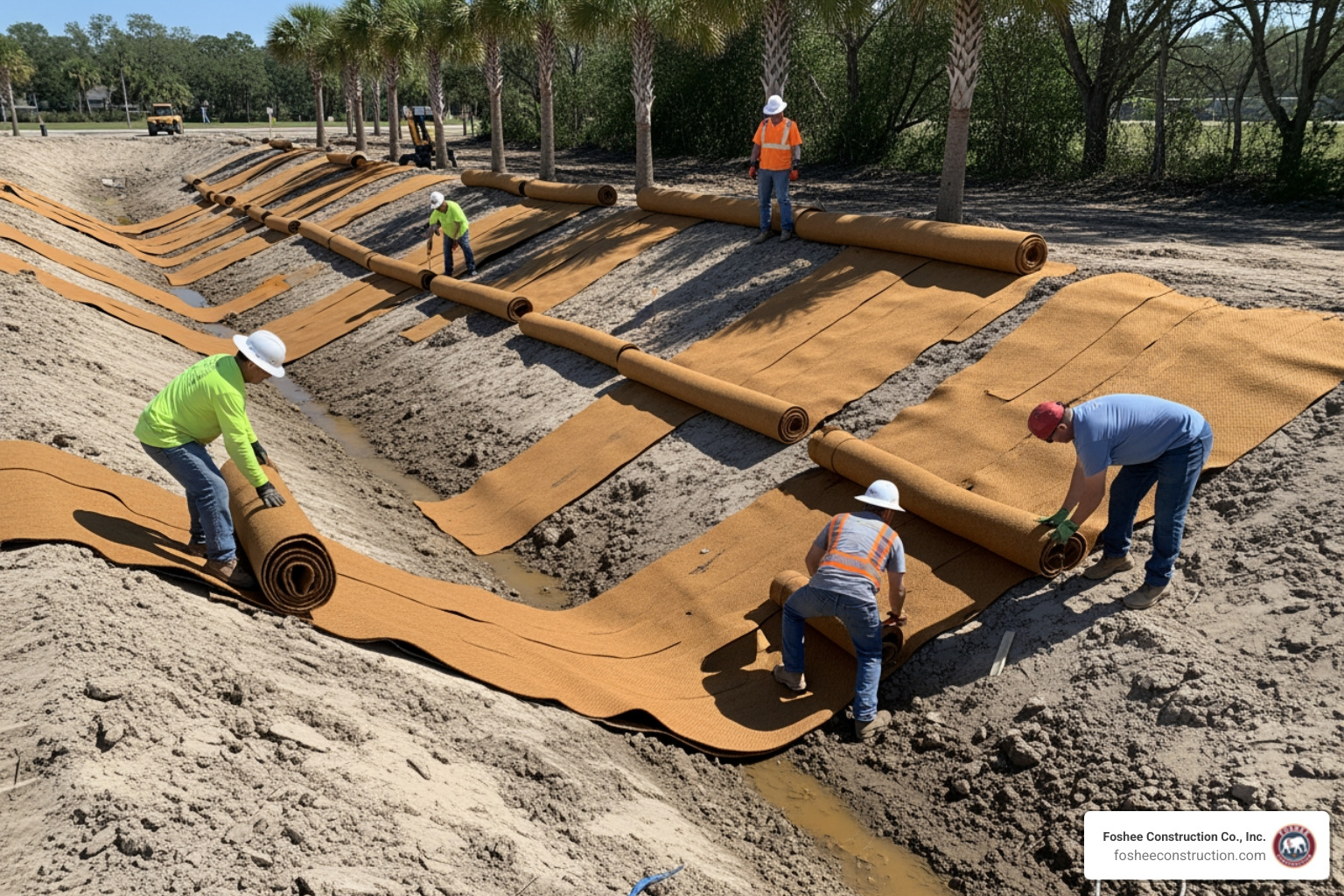
Unroll the coir blankets parallel to the direction of water flow (down the slope or along the channel length).
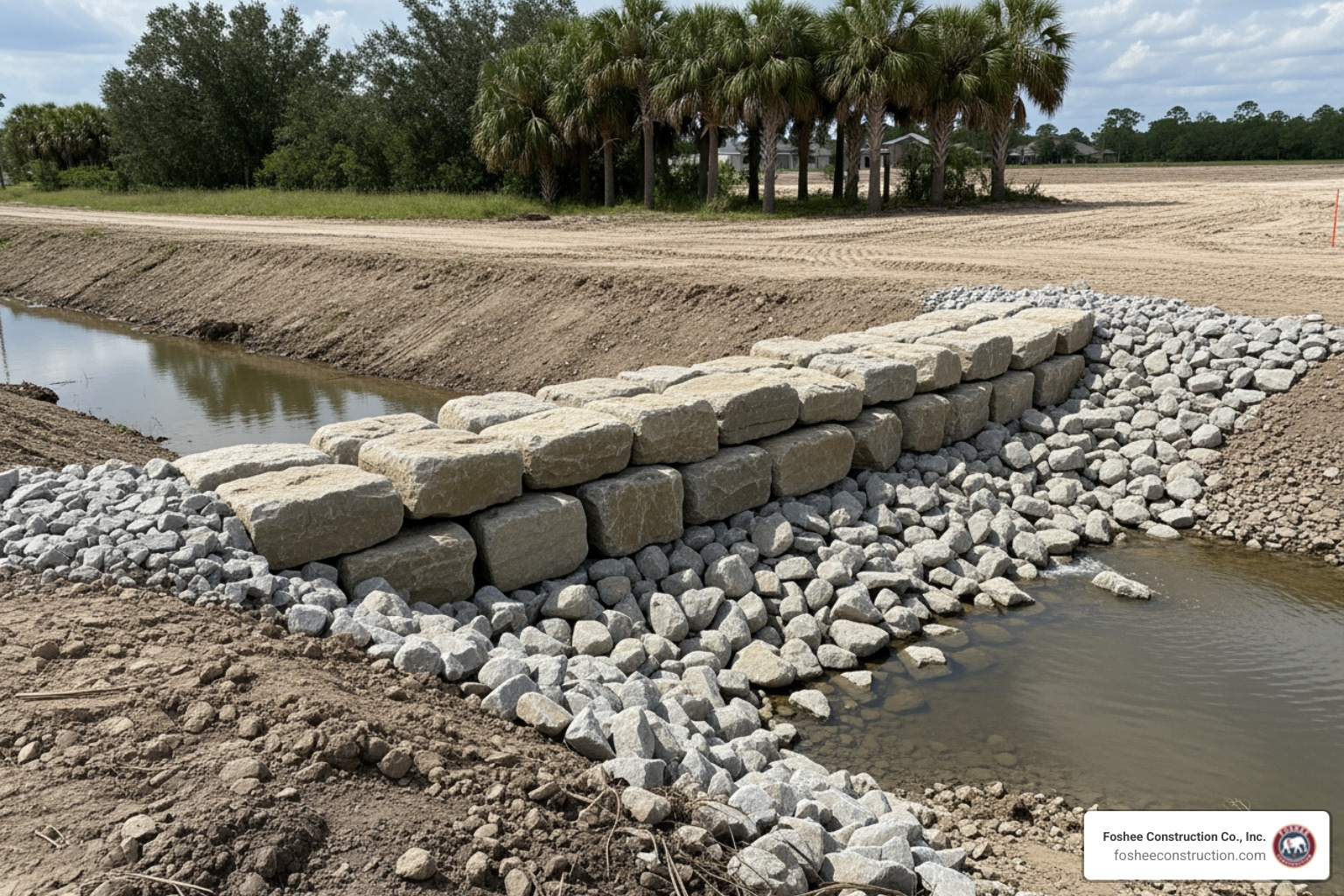
Because coir withstands heavy moisture and high flow rates, coir blanket erosion control is ideal for challenging site conditions, including:
Pairing high-density coir matting with deep-rooting native plants creates a robust biological bio-engineering system. Explore ideal vegetative species in our erosion control plants ultimate guide.
Coir erosion control blankets generally last between 24 months and 5 years, depending on blanket construction, weave density, soil moisture, and site conditions.
Standard stitch-bonded coconut blankets featuring organic jute netting typically last up to 24 months—long enough for seeds to take root and form dense vegetation. Heavy-duty woven bristle coir matting (such as 700 GSM or 900 GSM grades) maintains structural integrity for 4 to 6 years. As coir breaks down, it enriches the soil with natural organic matter.
Permissible slope gradients and water flow limits depend on the selected mat density:
Always verify that your selected product matches the slope steepness and hydraulic conditions outlined in your project's erosion control plan ultimate guide.
Yes! Open-mesh coir blankets allow you to plant seeds or live plant plugs directly through the fabric matrix.
Grass seeds can be broadcast over the soil before laying down the blanket, growing naturally through the mesh openings. For live containerized plants or wetland plugs, cut a small slit directly through the matrix (or gently part the woven twines) and insert the root ball into the underlying soil. The open weave holds soil firmly in place while plants grow around the mat.
Proper slope stabilization requires combining high-quality materials with expert site preparation and field installation. Whether you are managing commercial land clearing, preparing residential site development, installing temporary stormwater controls, or constructing a sediment basin installation fl project, our experienced team delivers reliable performance every step of the way.
At Foshee Construction Co., Inc., based in Minneola, Florida, we specialize in complete site preparation, including earthwork grading, utility installation, stormwater infrastructure, and comprehensive erosion prevention construction sites services. Our reputation across Lake County and Central Florida is built on transparent bids, disciplined project scheduling, strict safety standards, and reliable contractor relationships.
Ready to secure your project site with effective erosion control blanket solutions? Contact Foshee Construction Co., Inc. today to speak with our site preparation team and request a detailed estimate for your next development project!
We build bids using HeavyBid and AGTEK because the details matter long before the job starts. When the numbers are accurate and the scope is clearly defined, it sets the tone for how the entire project runs. Estimating isn’t just a step in the process, it’s the foundation we build on.
That same mindset carries into the field. Our crew is trained to work with purpose, follow the Civil Engineers’ Plan to the finest detail, and hold the line on quality. When expectations are clear from day one, there’s no need for shortcuts, and no confusion about how the work gets done.
Clients trust our bid packages because they’re complete and ready to use. Project managers know what we’re covering, what’s excluded, and how we plan to approach the job. That clarity removes friction and lets teams focus on execution instead of interpretation.
As part of our review process, we go into the plans before anything hits the site. We ask the questions early, resolve issues before they show up in the field, and keep RFIs moving. This approach prevents delays and protects the timeline.
Over time, that consistency builds trust. Many of the people we work with today came through referrals from past projects – engineers, GCs, and superintendents who’ve seen how we operate and want the same experience again.
In 2024, Foshee Construction was acquired by Saga Infrastructure Solutions, a national network of civil construction companies. Saga supports regional contractors by giving them access to better tools, long-term resources, and operational backing, without changing how they run day to day.
Foshee will continue to operate under its name, with the same team and field leadership in place.
“From the very time a project starts, we start that partnership. We try to catch as much as we can with the tools that we have. Not everybody is using the software platforms we are. That’s the differentiator: we’re not just bidding. We’re anticipating, problem-solving, and making sure the job runs right.”
— Don, CEO, Saga Infrastructure Solutions
Foshee is now part of a broader regional strategy that includes Florida, the Piedmont Atlantic, Texas, Colorado, and the Arizona Sun Corridor. The name, crews, and standards remain. What’s improving is the support behind it.