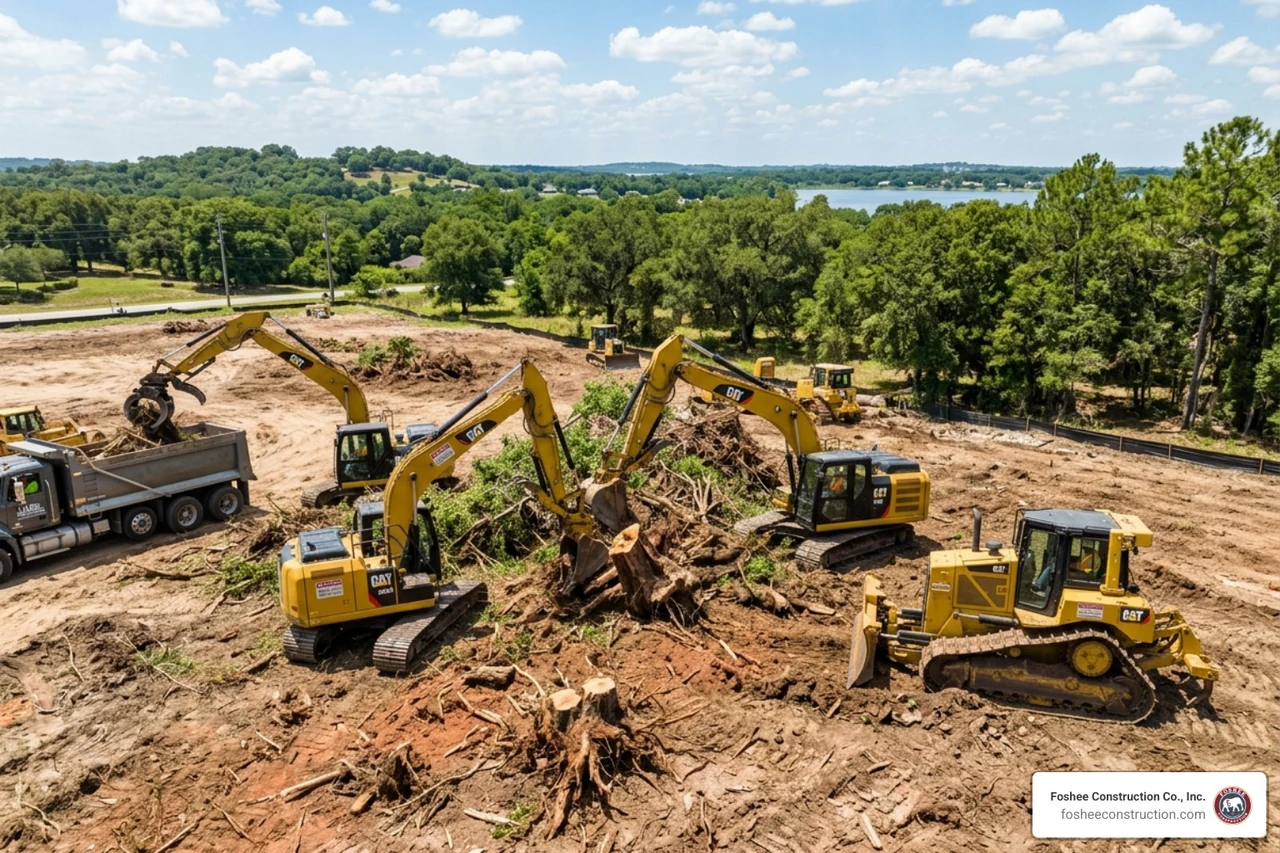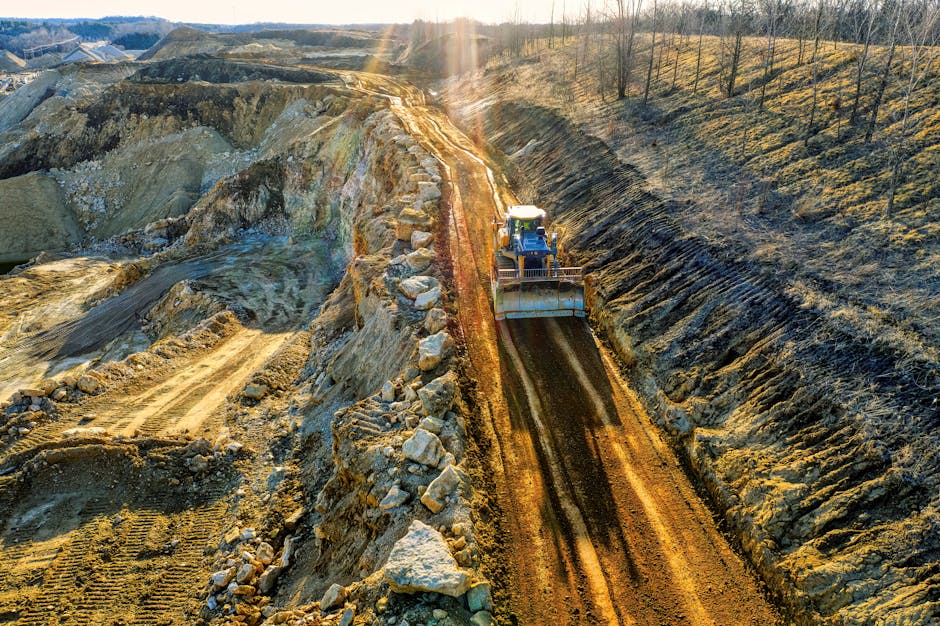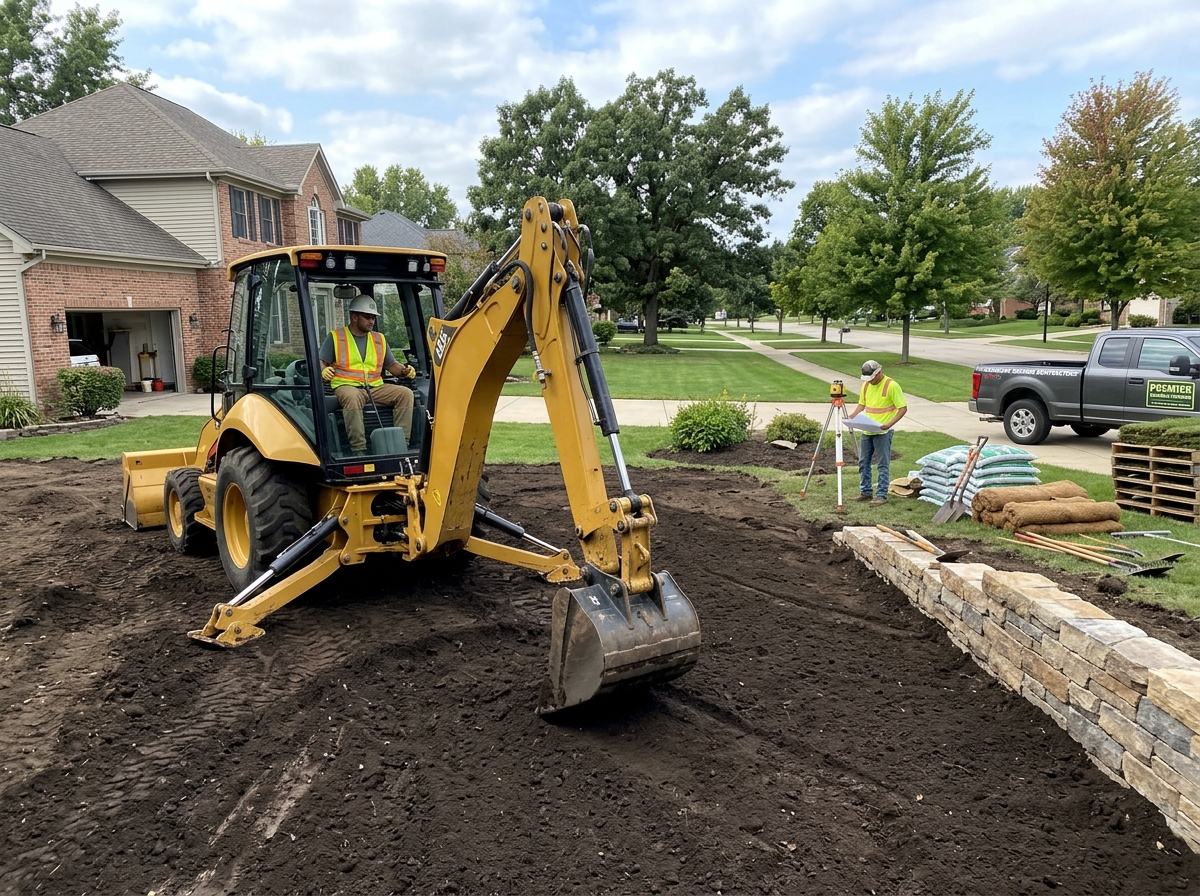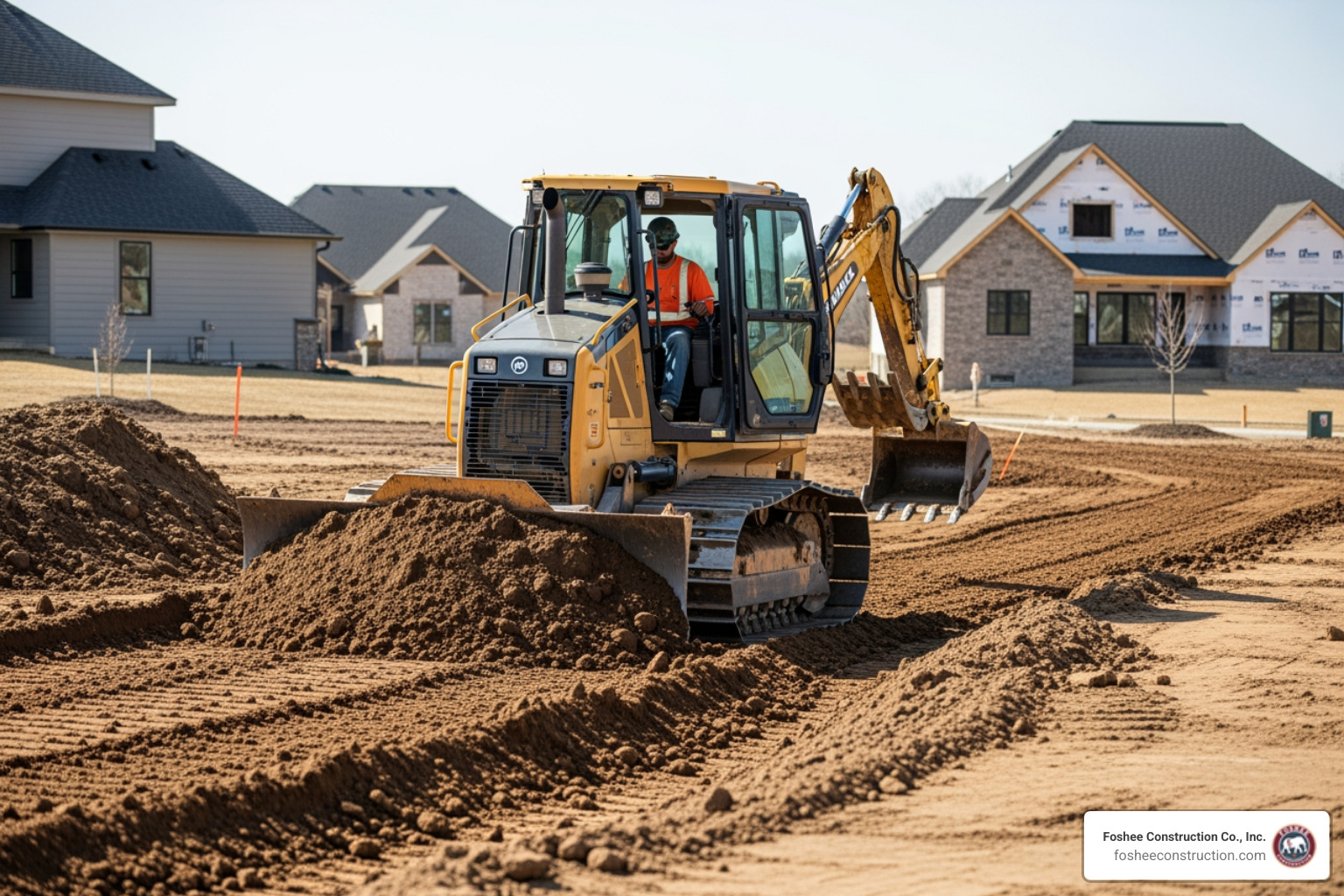
A cleared site and a grubbed site are not the same thing, and the difference matters more than most schedules give it credit for. Clearing takes down the trees and brush. Grubbing goes after what's left behind — stumps, root balls, and the mat of smaller roots woven through the topsoil — and that second step is where a lot of future problems either get solved or get buried, literally, under six inches of fill.
Central Florida's mix of pine, oak, and palmetto growth means root systems run wide and deep in sandy soil. Leave them in place and they don't stay put. Wood decomposes, voids open underground, and a slab, driveway, or roadway that looked fine at final walk-through can settle unevenly a year or two later.
Foshee approaches root removal as a defined sequence, not a single mobilization day. On a typical parcel, the order looks like this:
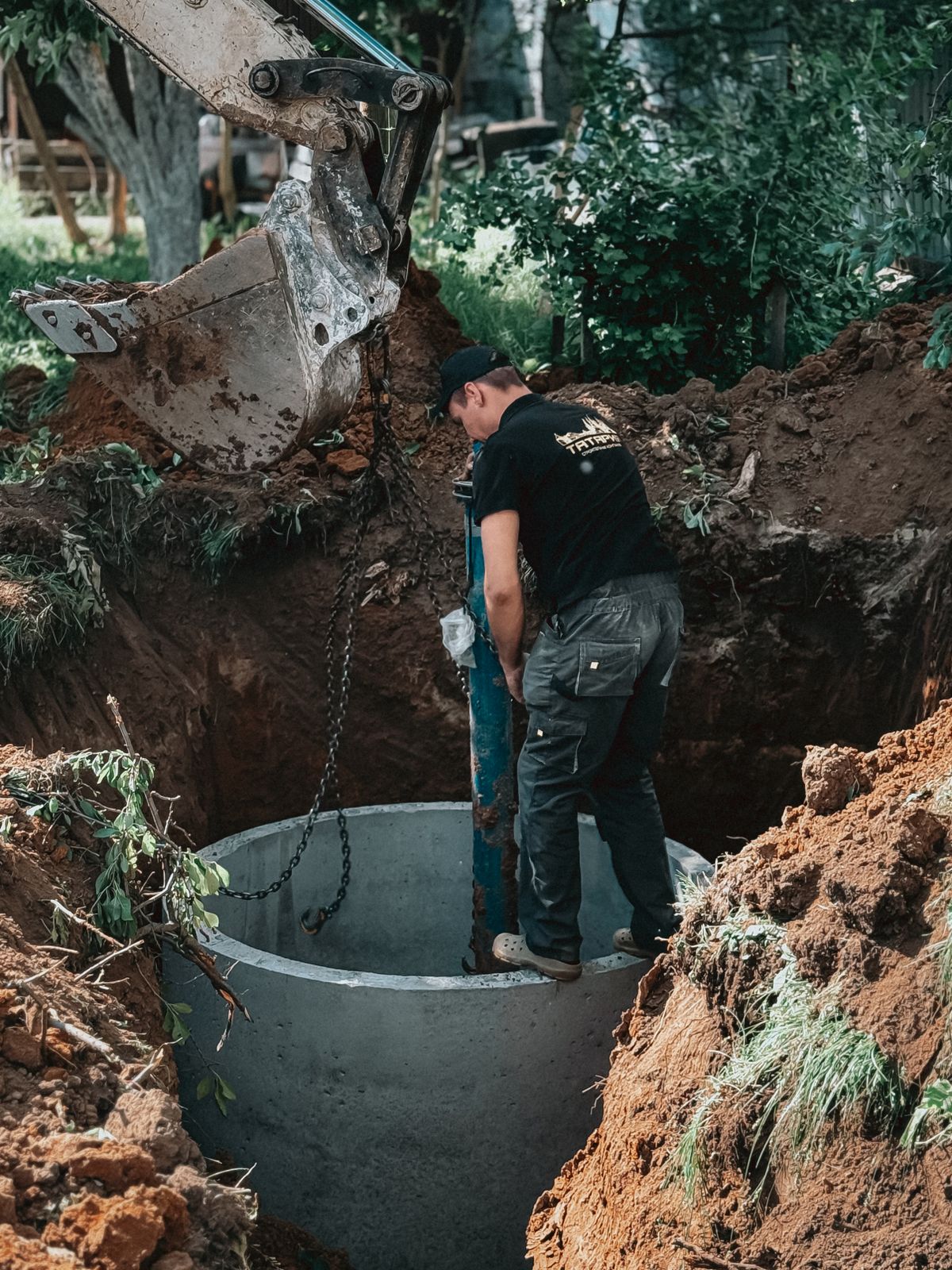
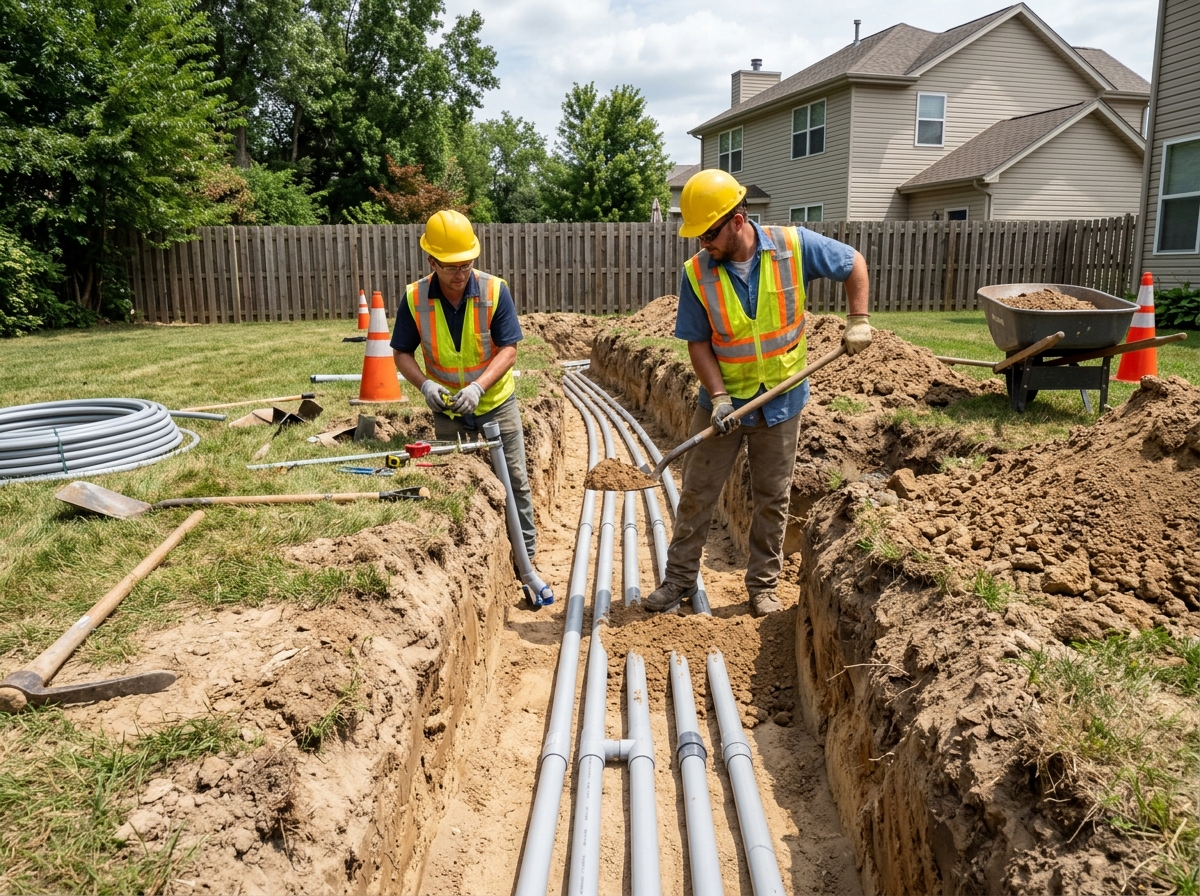
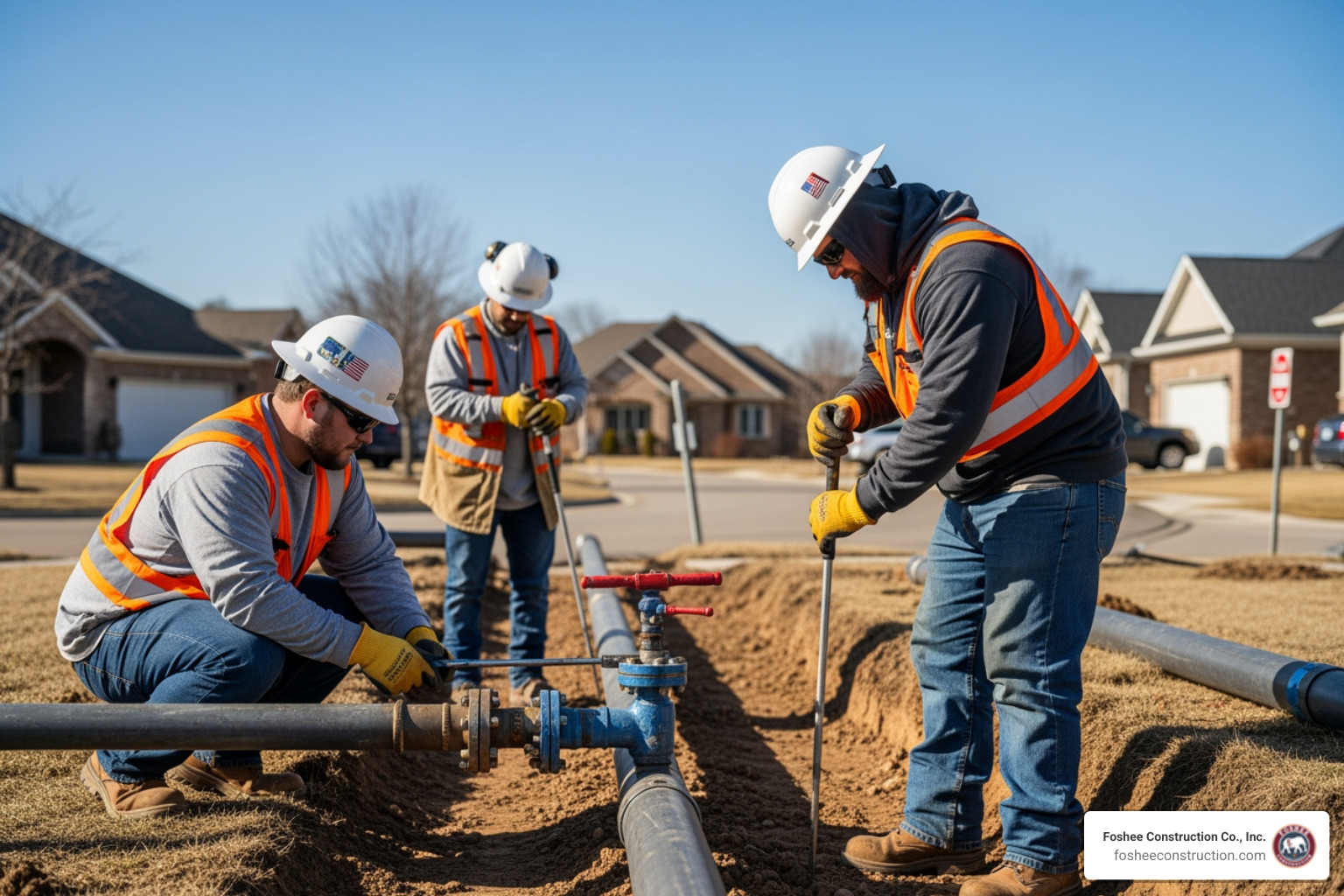
Foshee is currently working with Habitat for Humanity on a 5-lot community in Eustis, where clearing and site prep are happening ahead of underground utility installation scheduled to start in December 2025. On a project like this, the sequencing matters twice over: the lots have to be cleared and grubbed cleanly enough that trenching for water and sewer service doesn't run into buried root systems, and the timeline has to hold so utility crews can mobilize on schedule. It's a good example of why grubbing isn't a cosmetic step — it's groundwork for everything that comes after it.
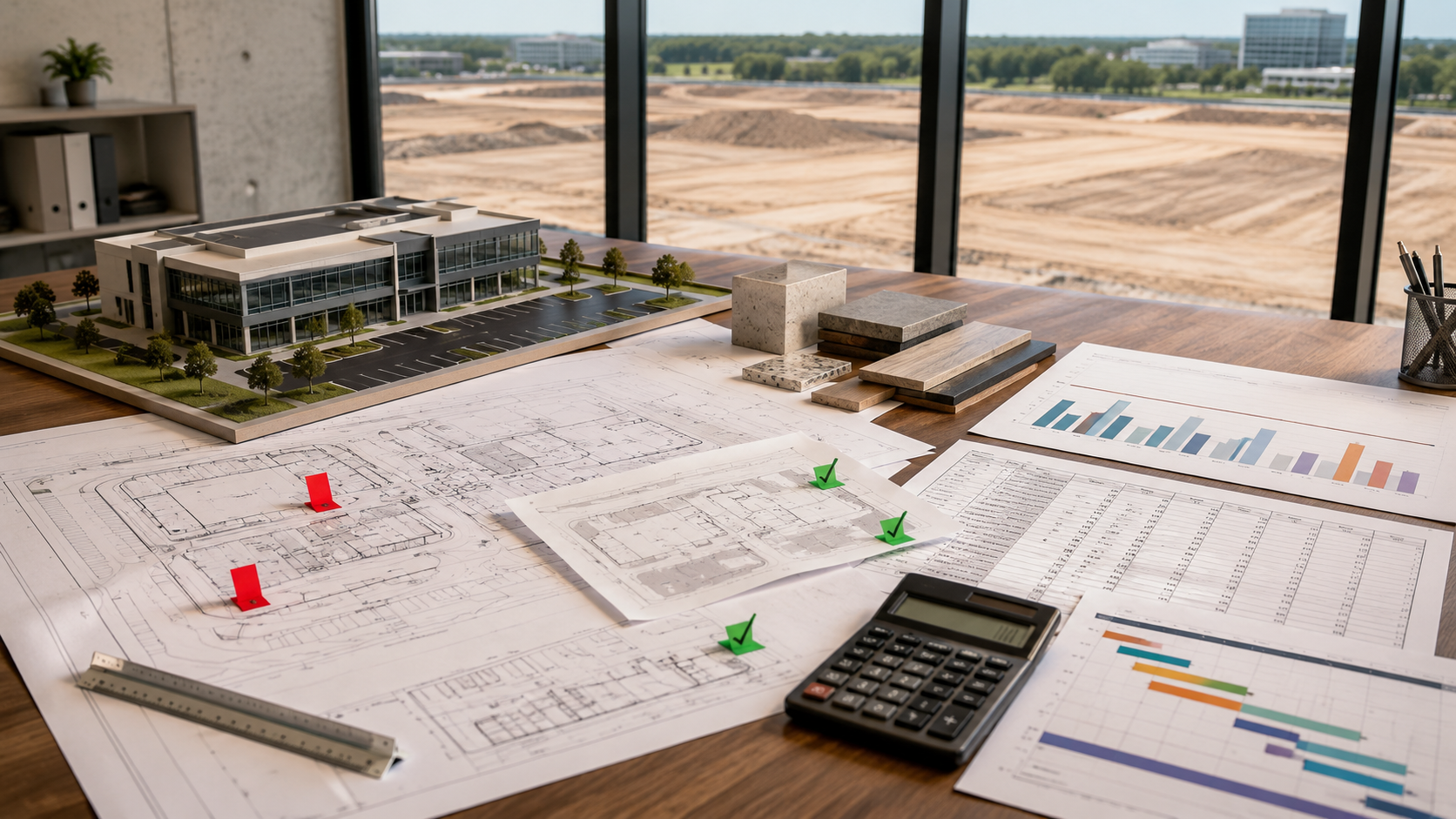
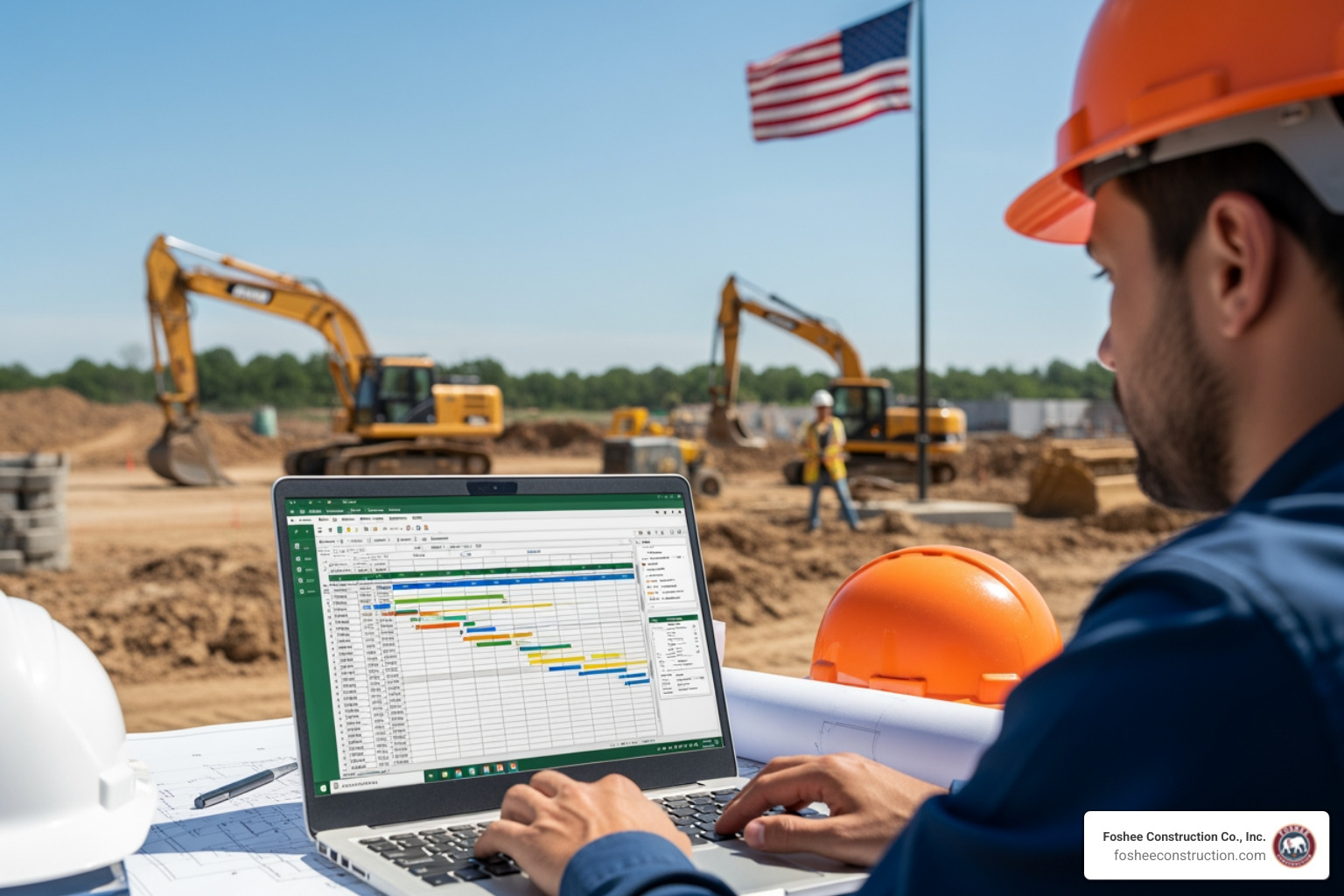
Foshee's estimating team uses HeavyBid and AGTEK to quantify clearing and grubbing scope up front, so root removal is priced and scheduled as its own line item rather than folded vaguely into "site prep."
Clearing removes what's above ground — trees, brush, vegetation. Grubbing removes what's below it: stumps, root balls, and root mats that would otherwise decay and create voids under a finished surface.
Deep enough that no significant root material remains within the zone that will support a slab, pavement section, or compacted fill. The right depth depends on species and root structure, which is why an early tree and root assessment matters.
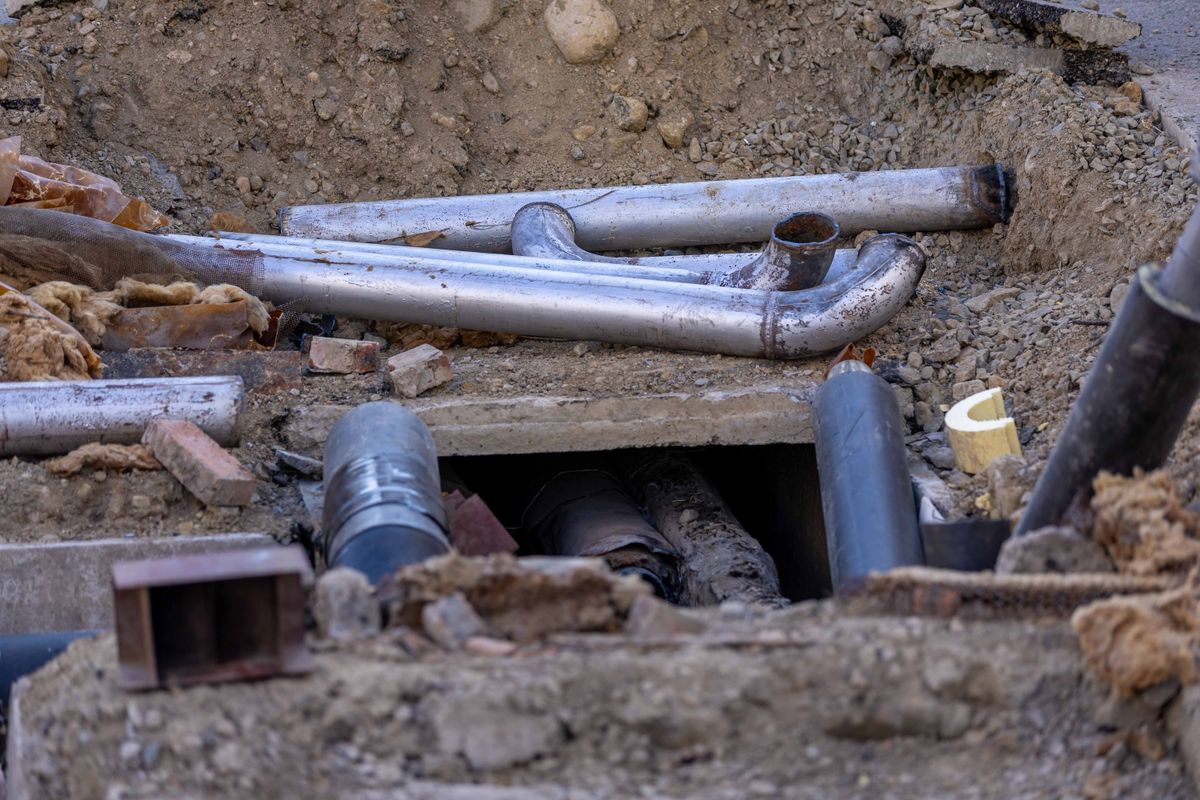
Buried organic material decomposes over months or years, leaving voids. Those voids eventually cause settlement — cracked slabs, dipping pavement, or uneven drives — often long after the original contractor is off the job.
Yes, and on projects with utility work or Habitat-style builds happening in phases, it often should be. Clearing and grubbing a site correctly ahead of time keeps trenching, grading, and utility crews from running into surprises later.
Root removal is one of the least visible parts of sitework and one of the most consequential. A site that's cleared but not properly grubbed can look ready to build on and still fail underneath a slab or a roadway two years later. Foshee treats grubbing as its own step, verified before grading begins, because a hidden void today is a warranty call tomorrow.
Foshee Construction has built Florida sitework since 1994 from its base in Minneola, with full-scope site development that includes clearing, grubbing, grading, underground utilities, and paving. To talk through a clearing scope, start with the Foshee contact page.
We build bids using HeavyBid and AGTEK because the details matter long before the job starts. When the numbers are accurate and the scope is clearly defined, it sets the tone for how the entire project runs. Estimating isn’t just a step in the process, it’s the foundation we build on.
That same mindset carries into the field. Our crew is trained to work with purpose, follow the Civil Engineers’ Plan to the finest detail, and hold the line on quality. When expectations are clear from day one, there’s no need for shortcuts, and no confusion about how the work gets done.
Clients trust our bid packages because they’re complete and ready to use. Project managers know what we’re covering, what’s excluded, and how we plan to approach the job. That clarity removes friction and lets teams focus on execution instead of interpretation.
As part of our review process, we go into the plans before anything hits the site. We ask the questions early, resolve issues before they show up in the field, and keep RFIs moving. This approach prevents delays and protects the timeline.
Over time, that consistency builds trust. Many of the people we work with today came through referrals from past projects – engineers, GCs, and superintendents who’ve seen how we operate and want the same experience again.
In 2024, Foshee Construction was acquired by Saga Infrastructure Solutions, a national network of civil construction companies. Saga supports regional contractors by giving them access to better tools, long-term resources, and operational backing, without changing how they run day to day.
Foshee will continue to operate under its name, with the same team and field leadership in place.
“From the very time a project starts, we start that partnership. We try to catch as much as we can with the tools that we have. Not everybody is using the software platforms we are. That’s the differentiator: we’re not just bidding. We’re anticipating, problem-solving, and making sure the job runs right.”
— Don, CEO, Saga Infrastructure Solutions
Foshee is now part of a broader regional strategy that includes Florida, the Piedmont Atlantic, Texas, Colorado, and the Arizona Sun Corridor. The name, crews, and standards remain. What’s improving is the support behind it.