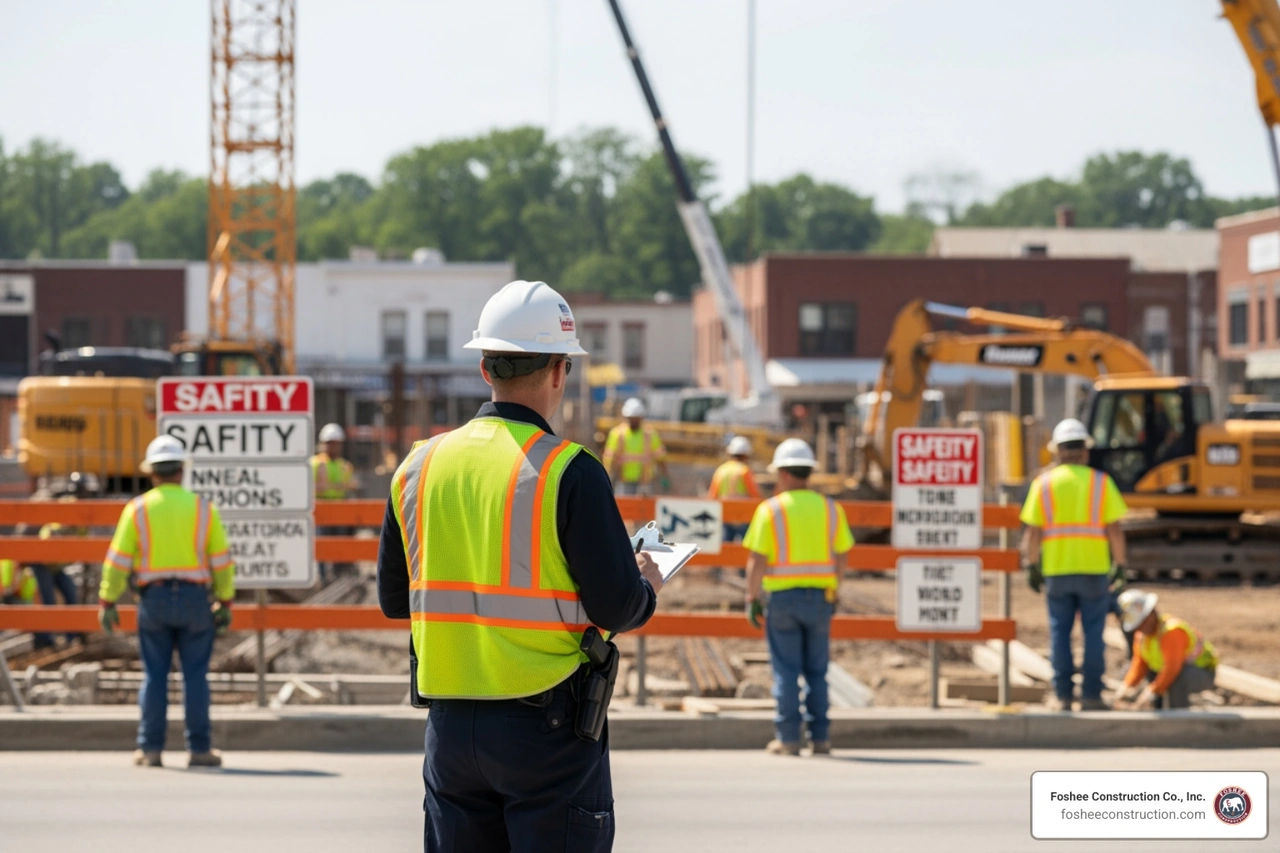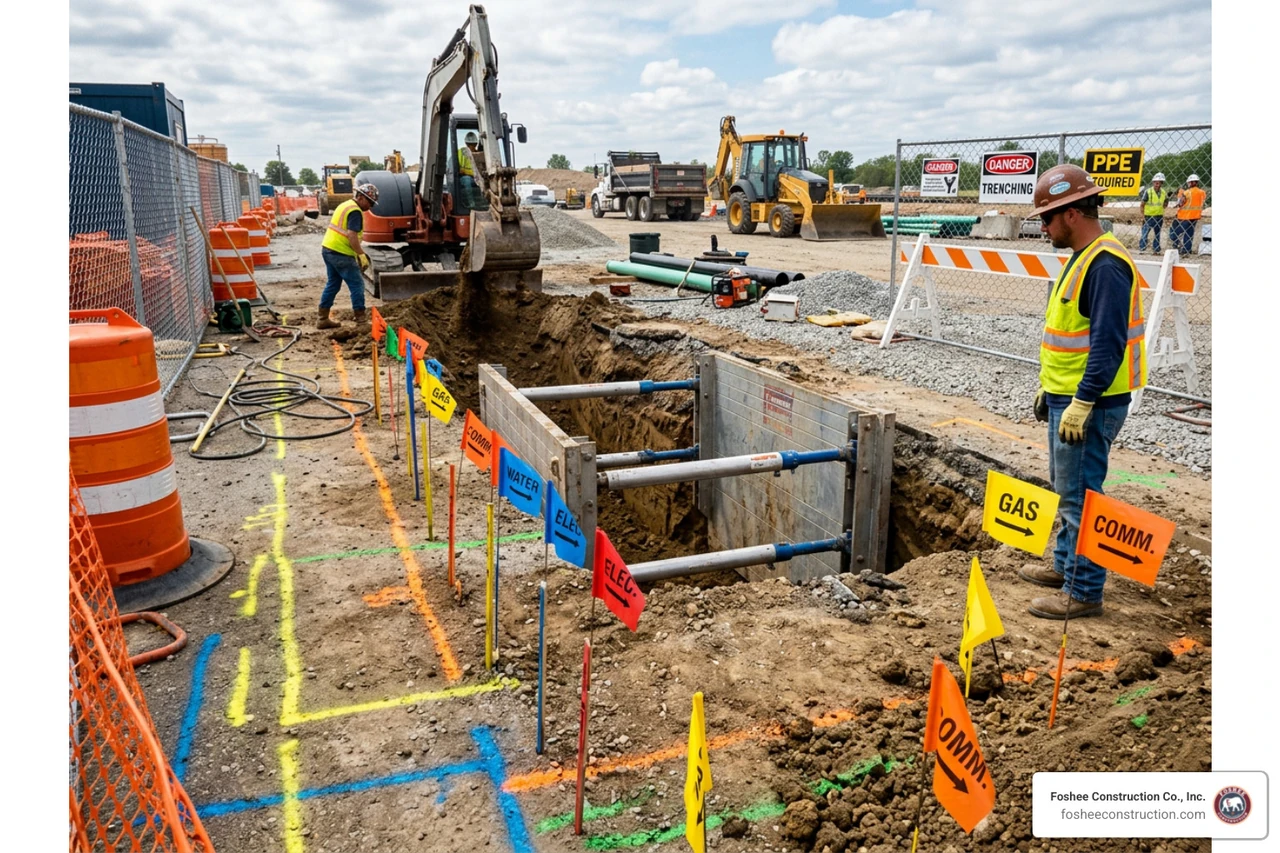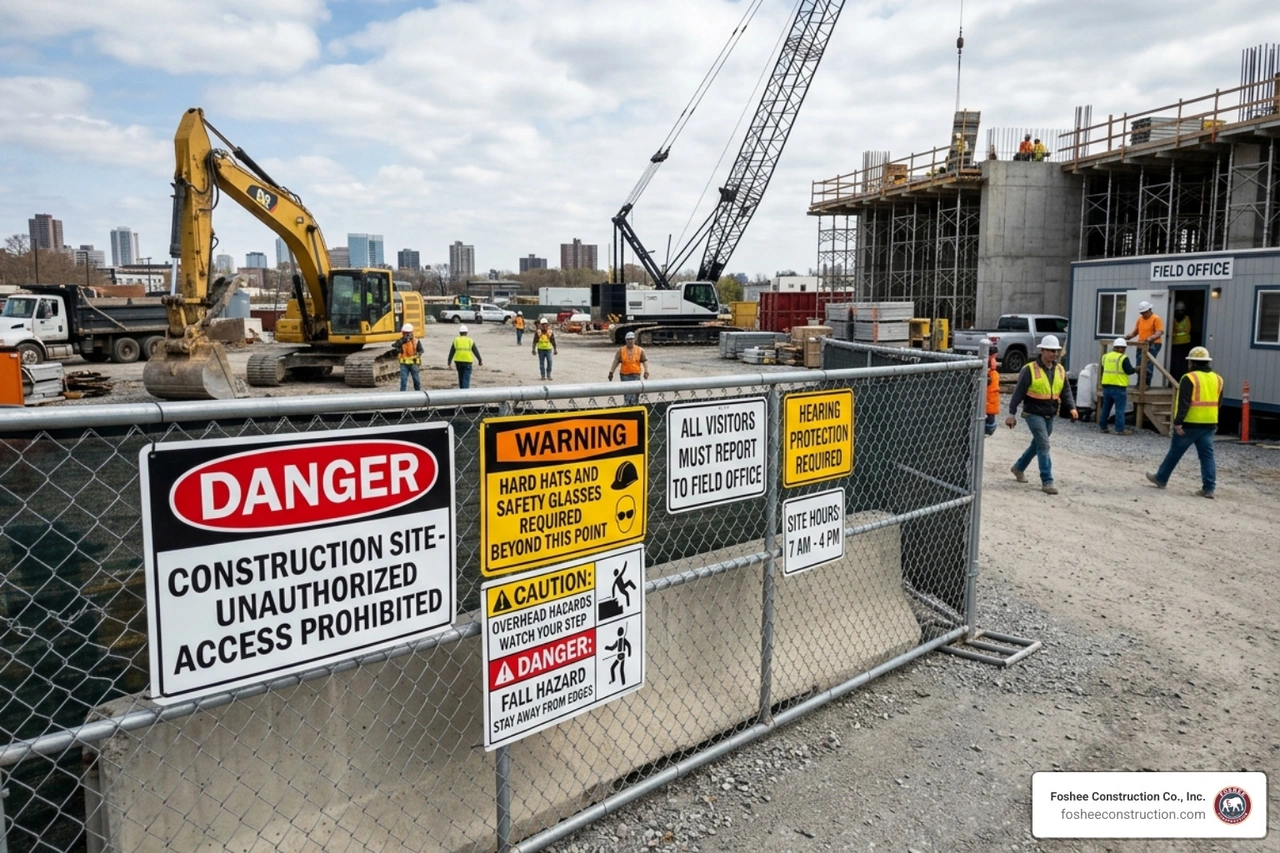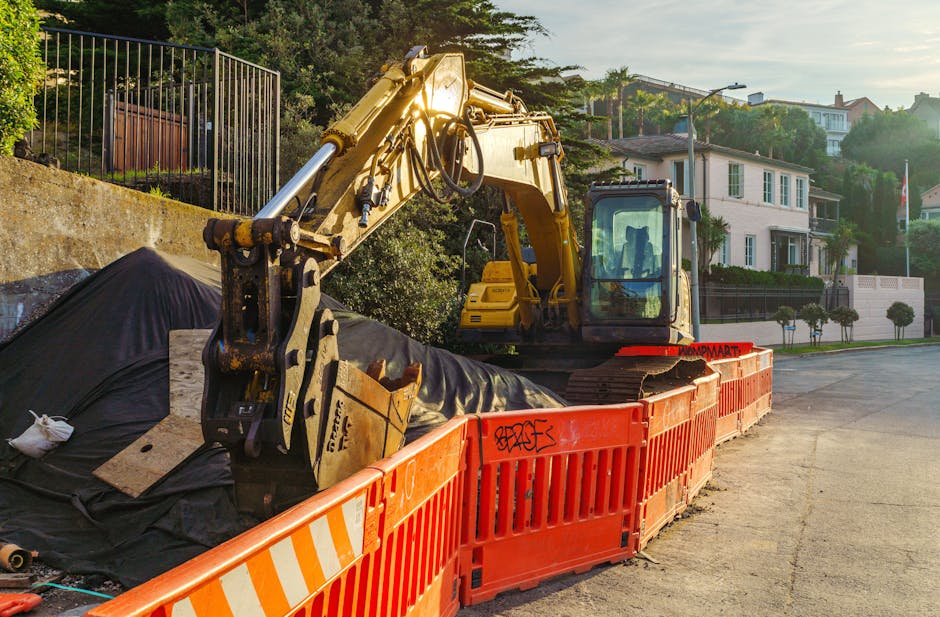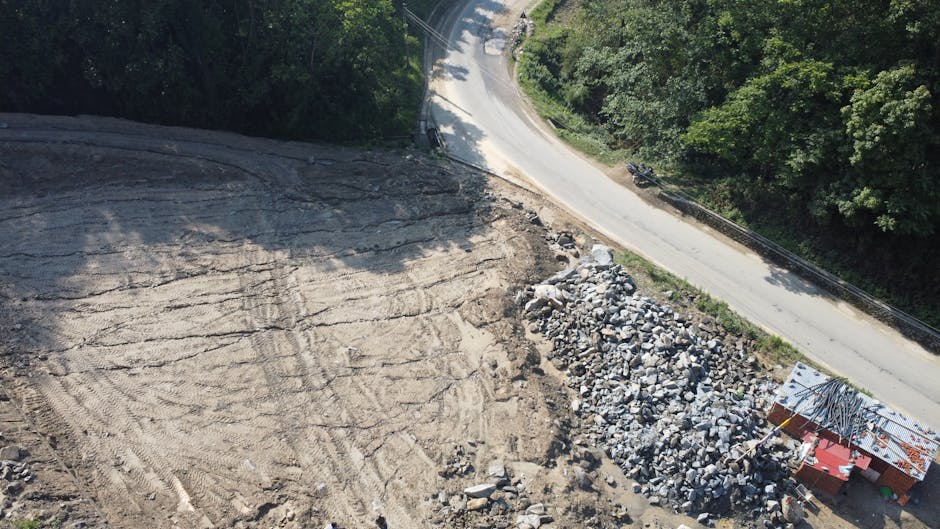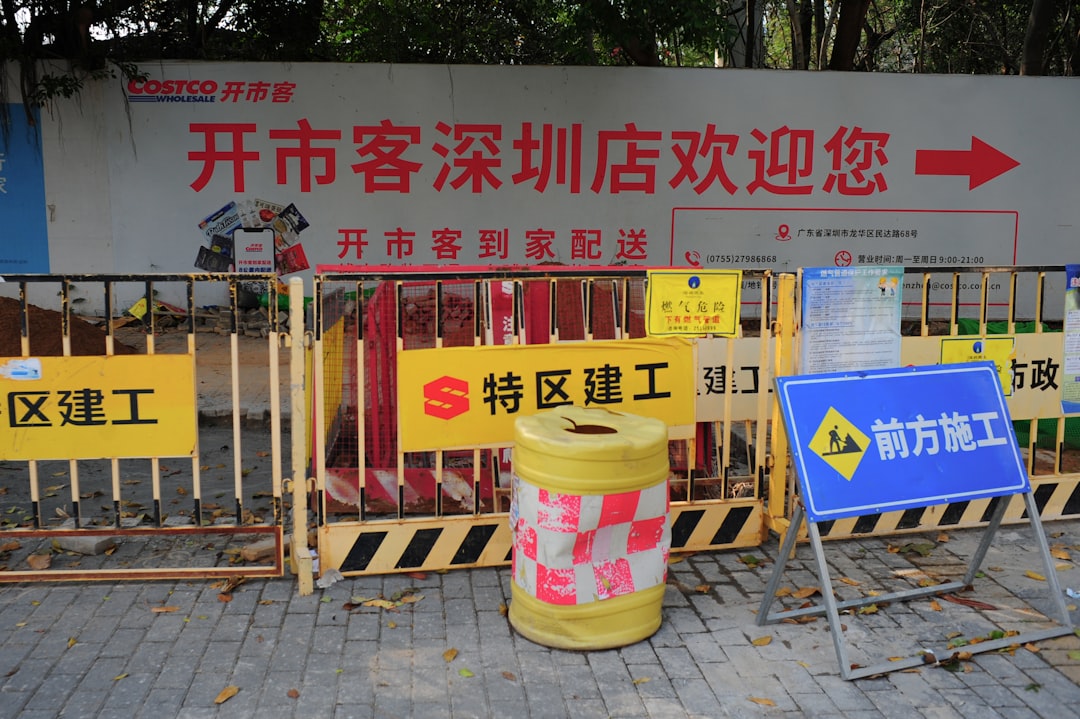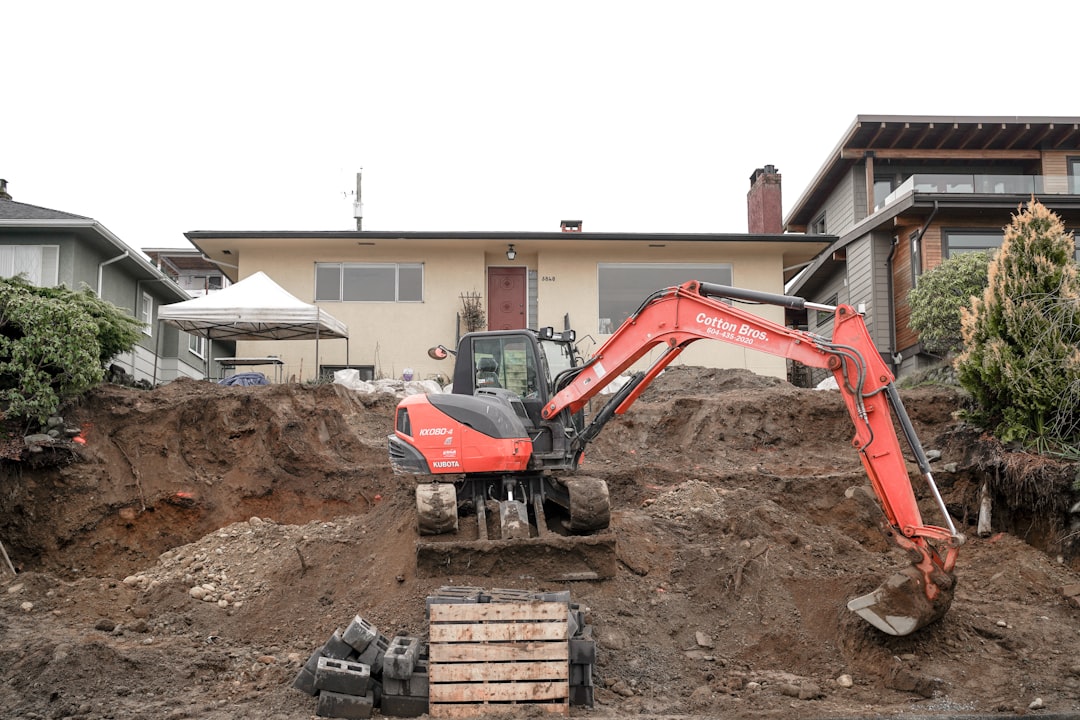
Every successful site preparation project relies on clear communication. When heavy iron meets raw dirt, physical surroundings change rapidly, making visual warnings essential for keeping crews and the public informed about shifting ground conditions.
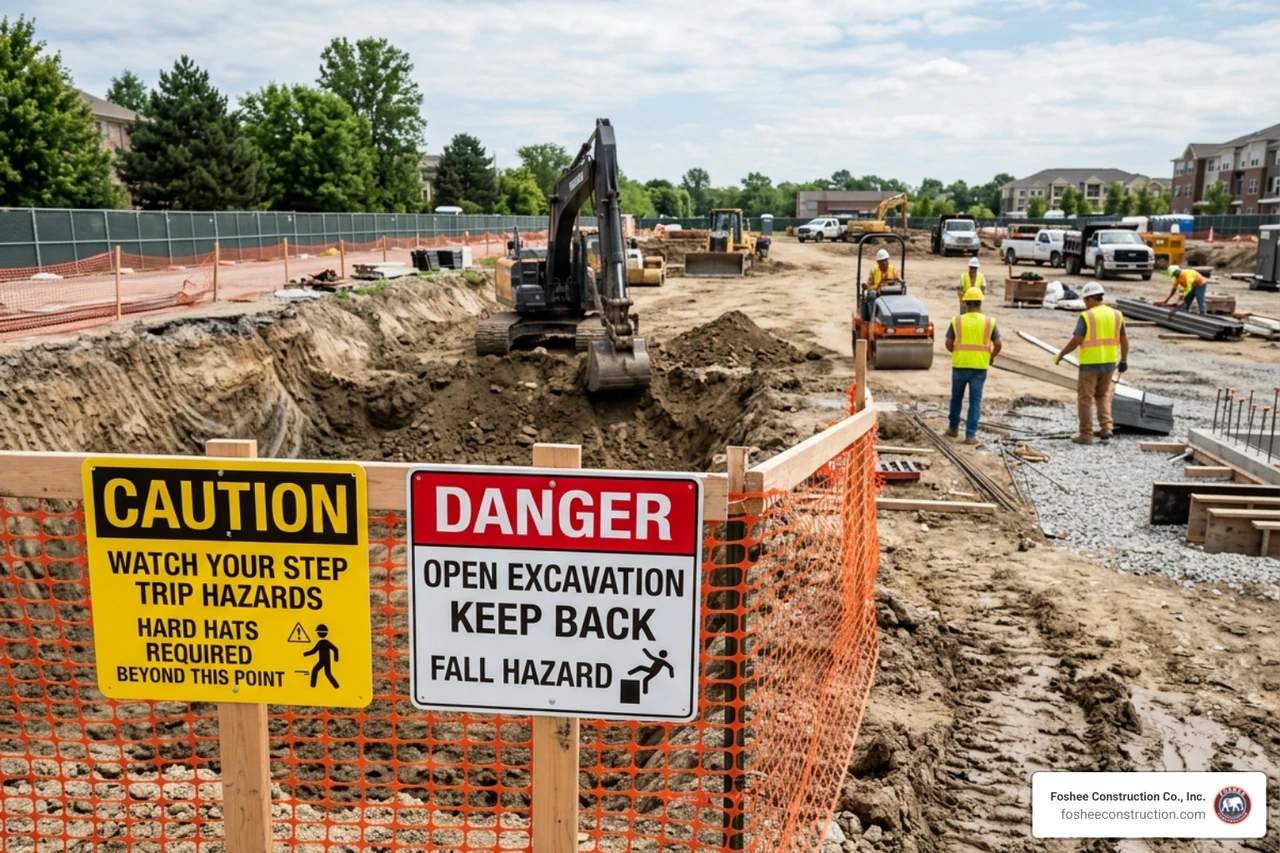
Federal regulations and industry design standards establish strict rules for hazard communication headers. Under OSHA 29 CFR 1926.200 and ANSI Z535 standards, safety sign headers must strictly correspond to the level of risk present:
Following proper excavation work safety guidelines means selecting the correct header level so workers retain respect for high-risk boundaries.
Different physical hazards around an open dig require targeted warnings. Combining explicit messaging with standard header colors ensures your message gets across instantly:
To select the correct labels for your job site, you can explore excavation warning signs specifications to match sign formats with site risks.
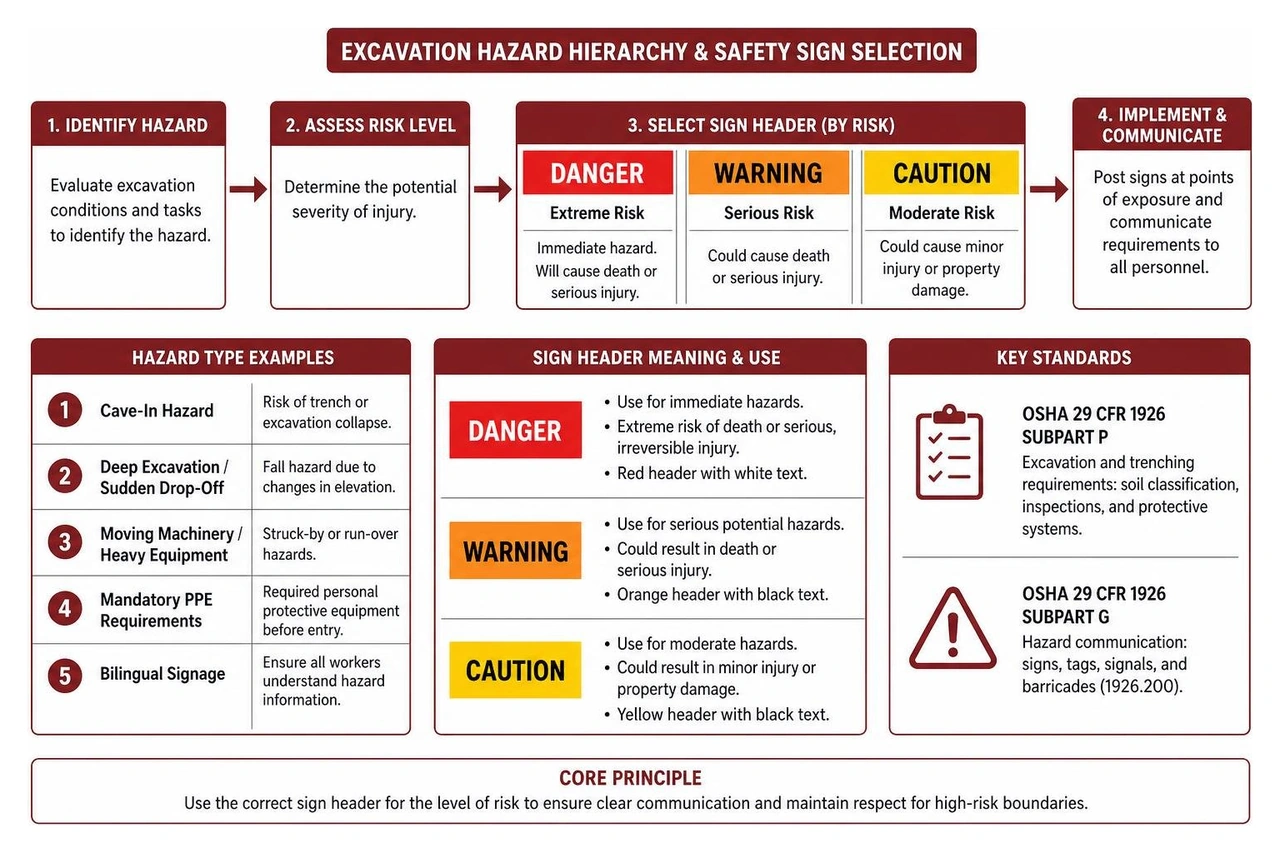
Regulatory compliance isn't just about avoiding citations during an inspection—it's about creating an unambiguous visual language across the job site.
OSHA rules for dig sites primarily draw from two subparts of the construction standards:
For comprehensive compliance guidelines, refer to our complete OSHA construction site requirements guide.
To maintain immediate recognition across all construction sectors, OSHA and ANSI Z535 dictate exact color schemes and physical proportions for safety signs:
A sign only works if people can actually see it before encountering the hazard.
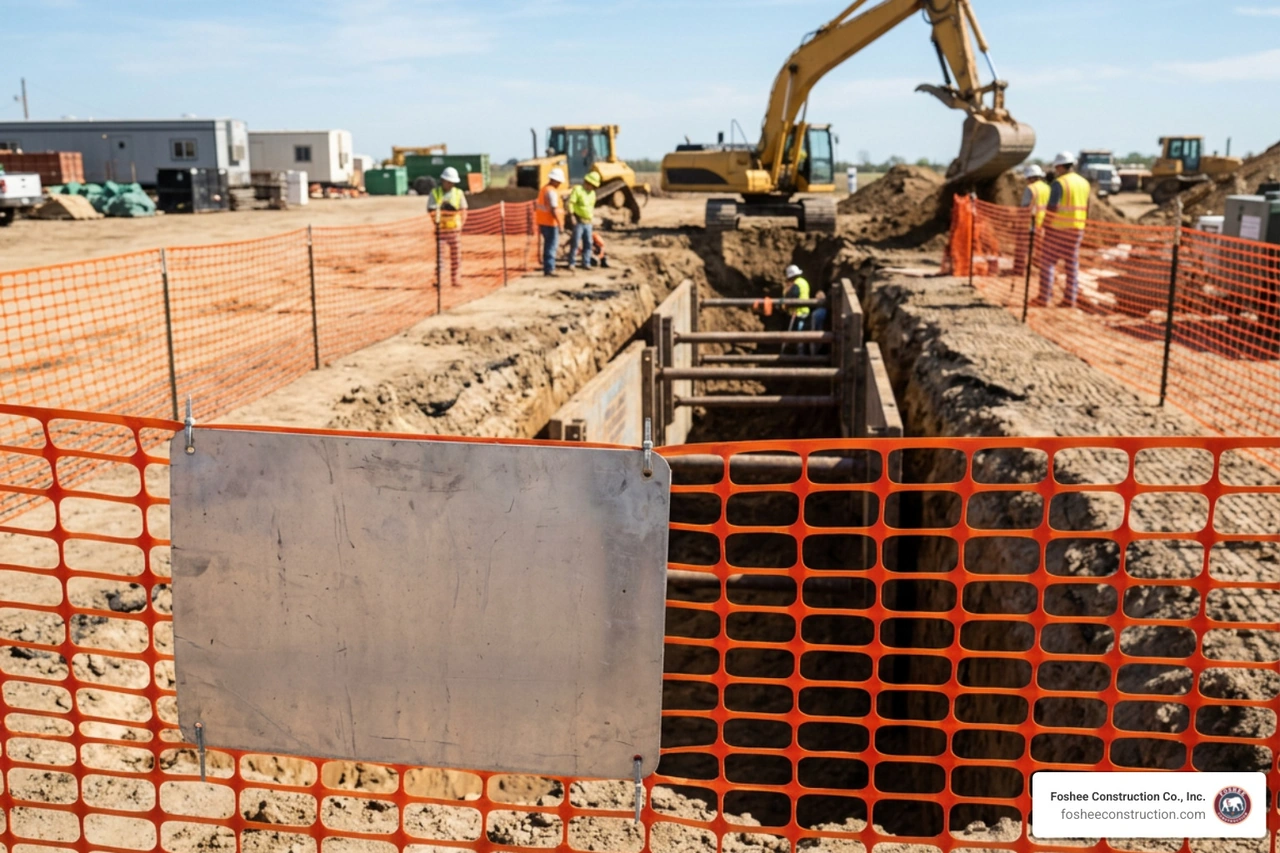
Choosing the correct signage requires matching physical sign materials to job duration and local weather exposure.
Outdoor work environments subject signage to relentless sun, high wind blowing dust, and heavy rain. Selecting short-term versus long-term materials impacts both your budget and your safety compliance.
| Sign Material | Average Lifespan | Best Site Application | Key Benefits |
|---|---|---|---|
| Corrugated Plastic | 3 to 6 Months | Temporary utility digs & short-term trenching | Lightweight, low-cost, easy to attach to wire fences |
| Rigid PVC Plastic (1mm - 3mm) | 1 to 3 Years | Mid-term commercial site prep & foundation work | Shatterproof, drillable, good impact resistance |
| Engineer Grade Reflective Aluminum | 7 to 10 Years | Long-term civil projects & permanent site perimeters | Maximum UV resistance, high retroreflectivity for night work, fully weather resistant |
| Adhesive Vinyl Labels | 1 to 5 Years | Equipment cabs, shoring boxes, & smooth site storage | High tack, oil-resistant, easy application on machinery |
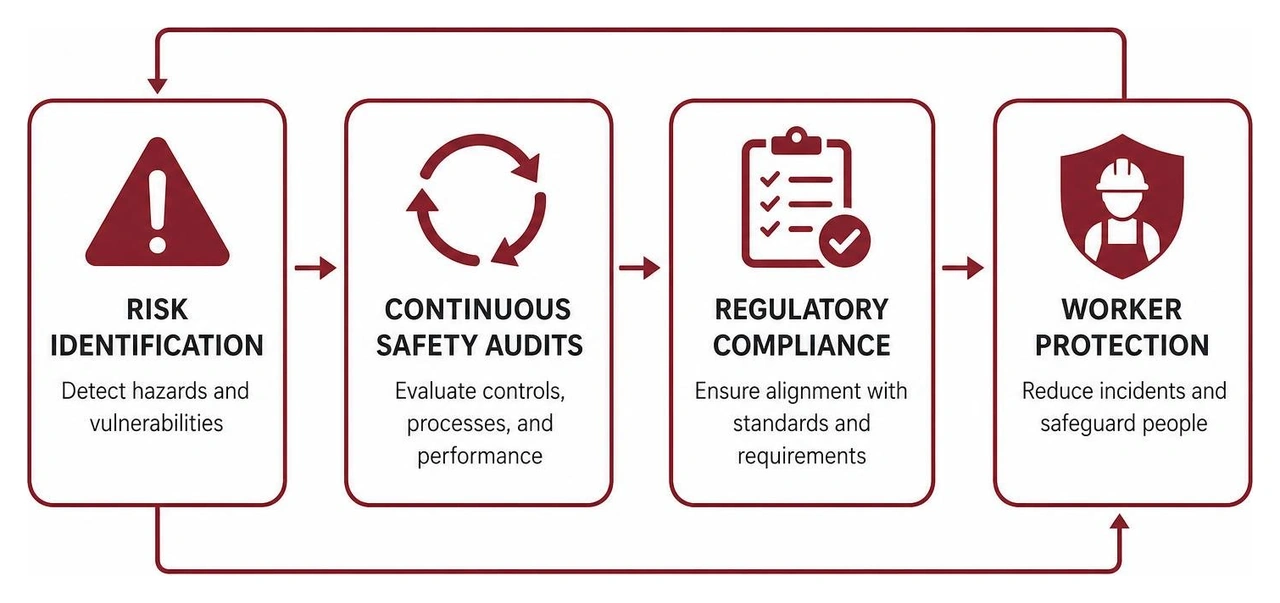
Signage is one component of a complete site defense strategy. To build a reliable visual safety grid:
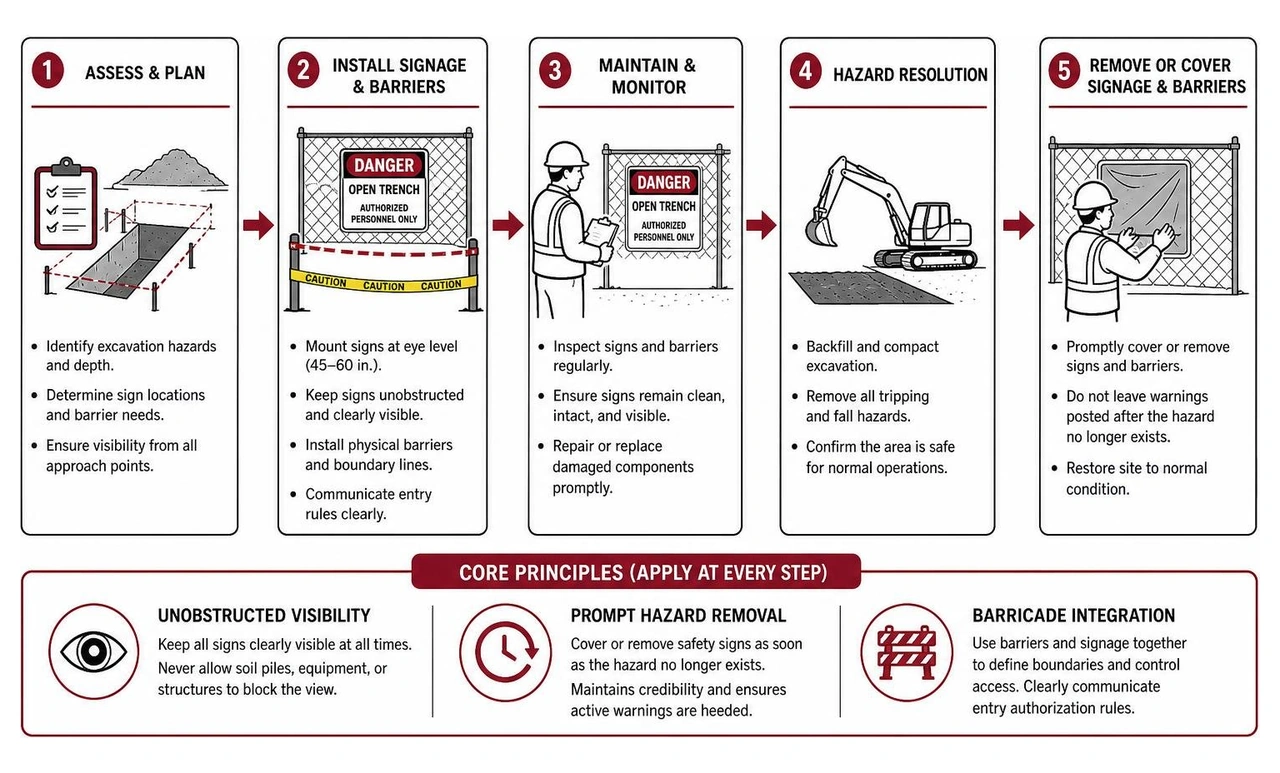
For complete job site hazard awareness, make sure your team reviews our comprehensive construction site safety guide 2026 and maintains well-stocked first aid in construction site stations near major excavation zones.
Excavation signage is primarily governed by OSHA 29 CFR 1926 Subpart P (Excavation Standard) for identifying soil hazards, combined with OSHA 29 CFR 1926.200 (Accident Prevention Signs and Tags) for design and color rules. Educational institutions like the University of Florida trenching safety program provide additional local policy frameworks that reinforce these federal guidelines.
OSHA mandates a protective system—such as sloping, benching, trench shields, or shoring—for any excavation depth of 5 feet or deeper, unless the dig occurs entirely in stable rock. Hazard signage alerting personnel to deep excavation hazards should be clearly posted at all perimeter entry points regardless of depth, but becomes critically urgent once a trench hits the 5-foot mark.
Under OSHA 29 CFR 1926.200, signs must be removed or covered promptly as soon as the hazard is abated. Once a trench is backfilled, compacted, and leveled, removing the signs preserves crew respect for active hazard alerts across the rest of the site. Reviewing these procedures during regular site walks will help keep your site prepared—for more inspection tips, see our guide on construction safety audit tips 2026.
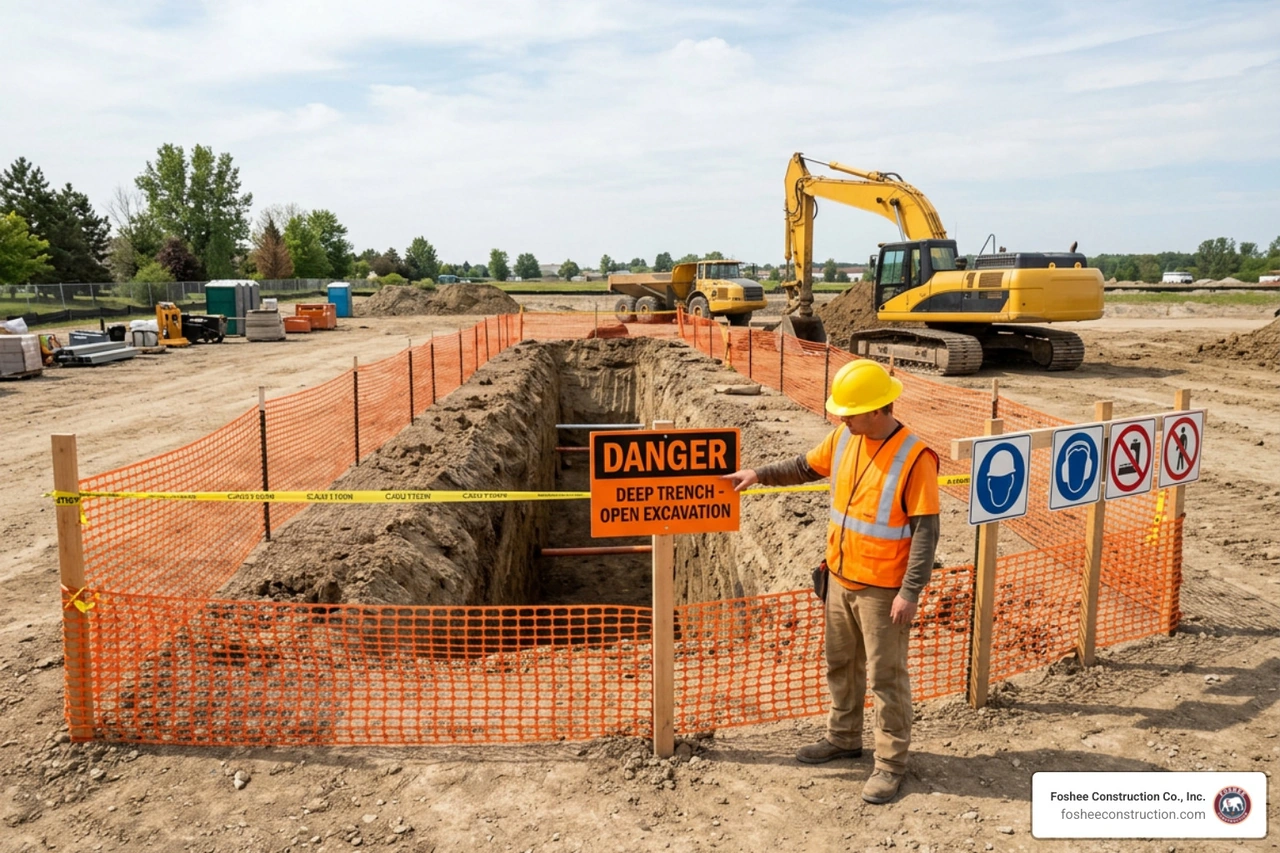
Clear, deliberate excavation safety signage transforms a complex dig site into an organized, visual workplace where every worker and visitor instantly understands local hazard boundaries. By choosing the right header levels, maintaining ANSI visual standards, and placing weather-durable signs alongside physical barricades, contractors keep work moving smoothly and securely.
At Foshee Construction Co., Inc., we take pride in managing site preparation, grading, erosion control, and underground utility installation with disciplined scheduling, transparent communication, and an uncompromised commitment to safety across Central Florida.
Ready to partner with a site preparation contractor who puts safety and precision first on every project? Discover why Foshee Construction is the preferred site preparation partner for your next build.
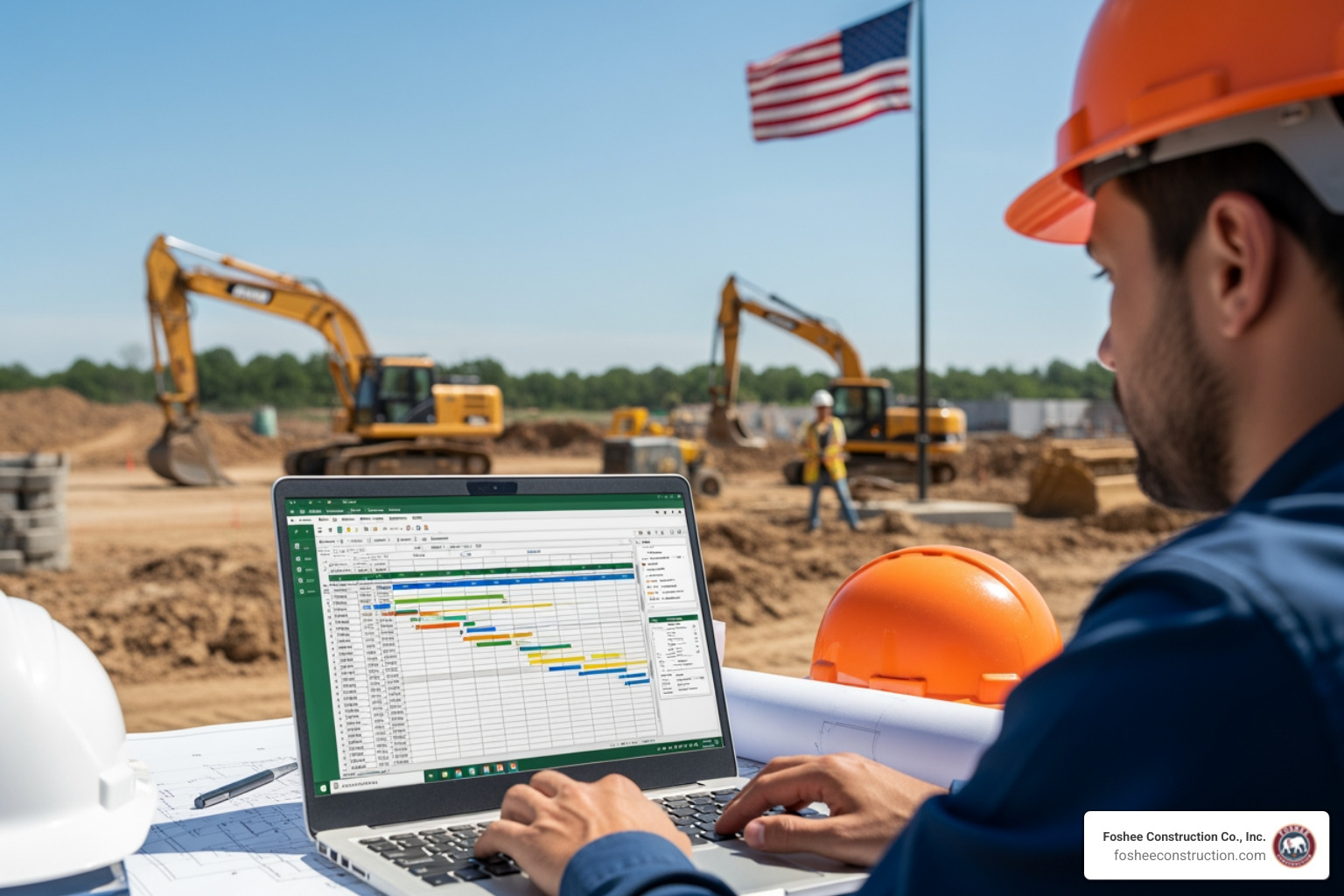
We build bids using HeavyBid and AGTEK because the details matter long before the job starts. When the numbers are accurate and the scope is clearly defined, it sets the tone for how the entire project runs. Estimating isn’t just a step in the process, it’s the foundation we build on.
That same mindset carries into the field. Our crew is trained to work with purpose, follow the Civil Engineers’ Plan to the finest detail, and hold the line on quality. When expectations are clear from day one, there’s no need for shortcuts, and no confusion about how the work gets done.
Clients trust our bid packages because they’re complete and ready to use. Project managers know what we’re covering, what’s excluded, and how we plan to approach the job. That clarity removes friction and lets teams focus on execution instead of interpretation.
As part of our review process, we go into the plans before anything hits the site. We ask the questions early, resolve issues before they show up in the field, and keep RFIs moving. This approach prevents delays and protects the timeline.
Over time, that consistency builds trust. Many of the people we work with today came through referrals from past projects – engineers, GCs, and superintendents who’ve seen how we operate and want the same experience again.
In 2024, Foshee Construction was acquired by Saga Infrastructure Solutions, a national network of civil construction companies. Saga supports regional contractors by giving them access to better tools, long-term resources, and operational backing, without changing how they run day to day.
Foshee will continue to operate under its name, with the same team and field leadership in place.
“From the very time a project starts, we start that partnership. We try to catch as much as we can with the tools that we have. Not everybody is using the software platforms we are. That’s the differentiator: we’re not just bidding. We’re anticipating, problem-solving, and making sure the job runs right.”
— Don, CEO, Saga Infrastructure Solutions
Foshee is now part of a broader regional strategy that includes Florida, the Piedmont Atlantic, Texas, Colorado, and the Arizona Sun Corridor. The name, crews, and standards remain. What’s improving is the support behind it.