Finding the right construction site safety rules and regulations pdf is the fastest way to get your compliance documents in one place. Here are the key sources:
Construction sites are among the most hazardous workplaces in the country. Falls alone account for roughly 50% of all construction accidents in the U.S. each year. And when something goes wrong, the costs go well beyond medical bills — indirect costs from workplace incidents are estimated to be at least 2.7 times the direct costs.
The good news? A well-implemented safety program works. Research shows that employers who adopt OSHA's recommended practices have seen:
These aren't small gains. They're the difference between a project that stays on schedule and one that spirals into delays, rework, and liability.
I'm Don Larsen of Foshee Construction Co., LLC, and after decades of site development and earthmoving work across Central Florida, I've seen how following construction site safety rules and regulations pdf standards protects both workers and project outcomes. In the sections below, I'll walk you through the essential regulations your site needs — from OSHA's core program elements to high-risk activity standards and where to download the right compliance documents.
Relevant articles related to construction site safety rules and regulations pdf:
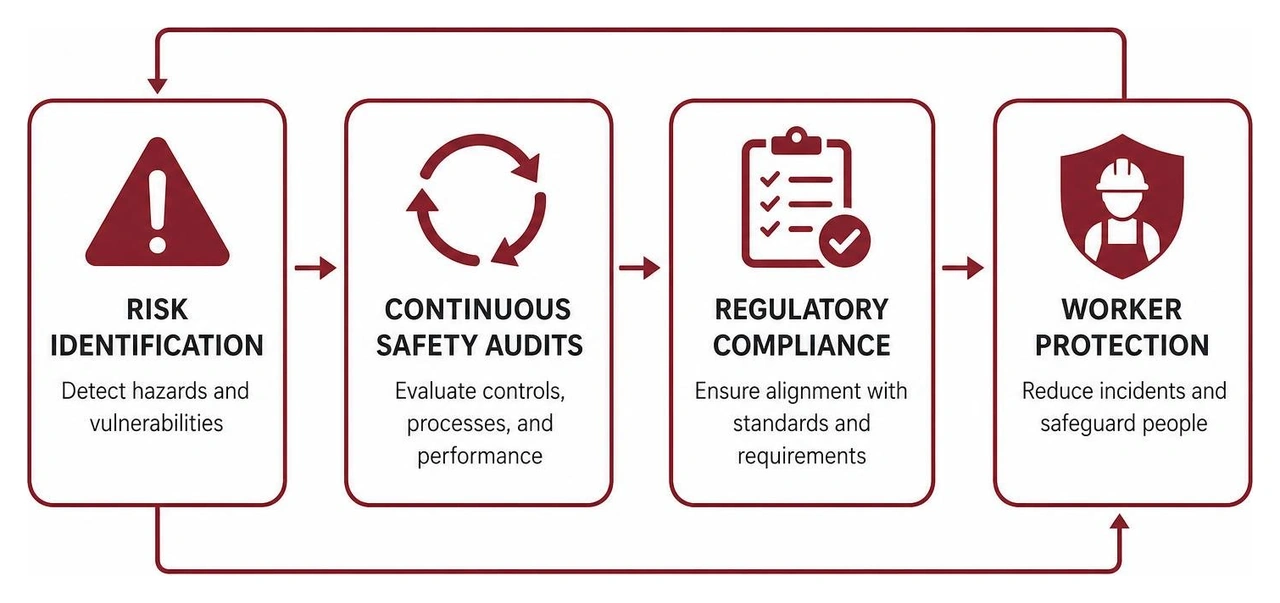
Building a solid safety culture starts with understanding the basic structure of a successful program. Rather than just reacting when an accident happens, a proactive safety program focuses on finding and fixing hazards before they cause harm. At Foshee Construction, we rely on these principles to keep our operations running smoothly on every grading and site prep project.
Implementing a structured construction site safety initiative is not just about avoiding OSHA fines—it is a smart business decision. When you reduce injuries, your insurance premiums drop, your team’s morale rises, and projects stay on track.
According to OSHA guidelines, an effective program relies on several interconnected core elements:
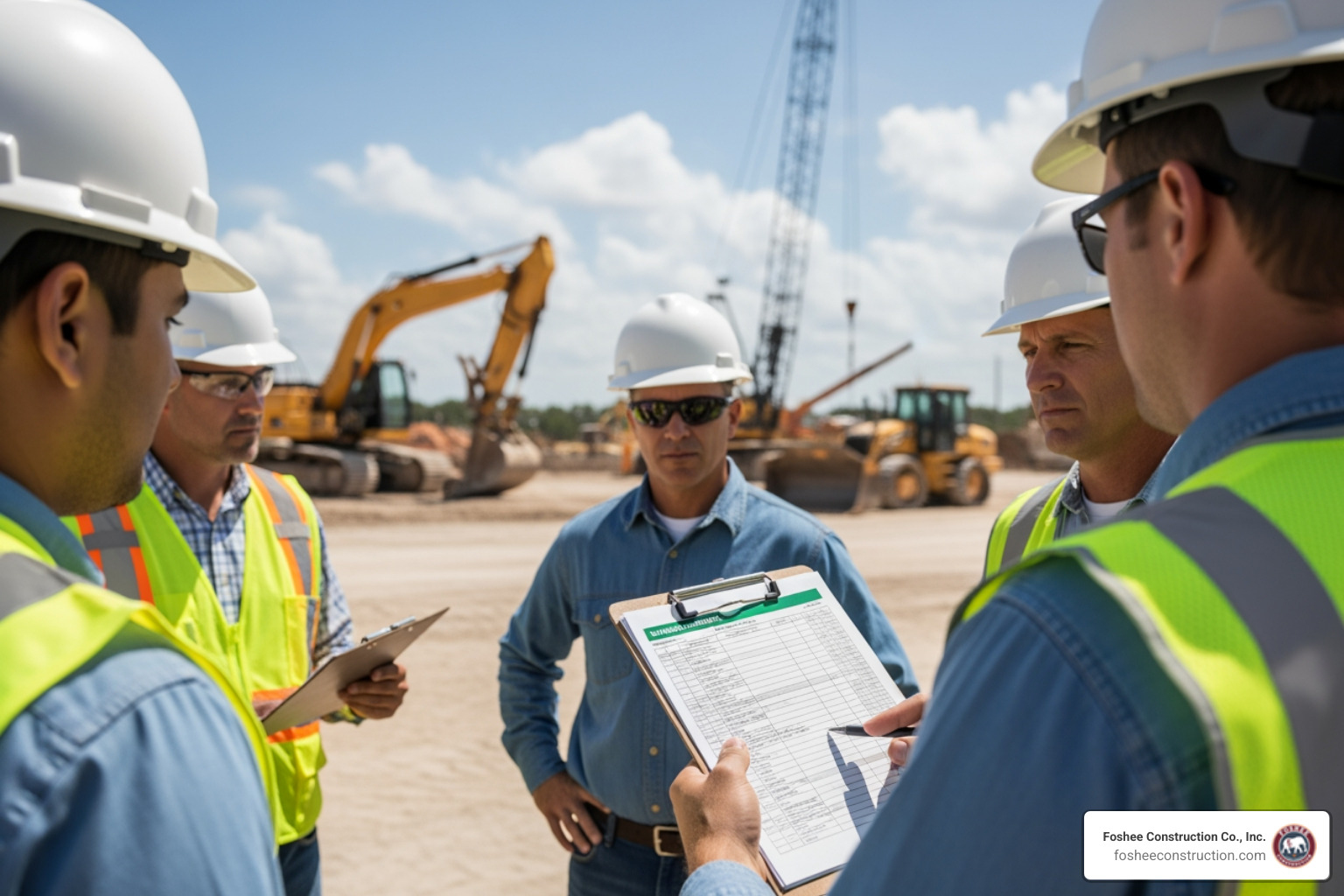
To ensure these elements are functioning correctly, regular site reviews are critical. You can learn how to structure these checks in our comprehensive construction site inspection guide 2026.
A safety program is only as strong as management's commitment to it. If supervisors walk around the site without safety glasses or shrug off minor violations, workers will notice and follow suit.
To demonstrate true management commitment, employers must:
However, management cannot do it alone. Worker participation is the lifeblood of any effective program. Because workers are on the ground handling the machinery and materials, they often spot potential hazards first.
To build an active culture of worker participation, employers must make it easy and safe for employees to report hazards. This means establishing a simple, clear safety reporting system and removing retaliation barriers. Workers must feel confident that reporting a near-miss or a faulty piece of equipment will not result in disciplinary action or peer pressure.
At Foshee Construction, we emphasize that every person on-site has "stop-work authority" if they observe an unsafe condition. This level of empowerment is a cornerstone of meeting OSHA construction site requirements and keeping everyone safe.
To prevent incidents, you have to know what you are up against. Proactive hazard identification involves continuous site assessments, routine inspections, and detailed investigations of close calls.
One of the most effective tools for this is the Job Hazard Analysis (JHA). Before starting a complex task—such as digging a deep trench or clearing heavy timber—supervisors and workers should sit down to break the job into steps, identify the hazards associated with each step, and determine the necessary controls.
If an incident or near-miss does occur, a thorough incident investigation should be conducted. The goal of this investigation is not to assign blame, but to find the root cause so you can prevent it from happening again.
To understand why this shift matters, consider how proactive safety measures compare to traditional reactive approaches:
| Proactive Safety Measures (Find and Fix) | Reactive Safety Measures (Wait and React) |
|---|---|
| Conducting daily site walks with workers to spot tripping hazards. | Cleaning up a spill only after someone slips and falls. |
| Performing a Job Hazard Analysis before starting excavation. | Rewriting safety policies after a trench cave-in occurs. |
| Testing and tagging electrical cords on a monthly schedule. | Replacing a damaged cord only after a worker receives a shock. |
| Providing continuous safety training and toolbox talks. | Mandating safety meetings only after receiving an OSHA citation. |
The federal regulations governing construction safety are housed under Title 29 of the Code of Federal Regulations, Part 1926 (29 CFR 1926). These standards cover everything from personal protective equipment to concrete construction.
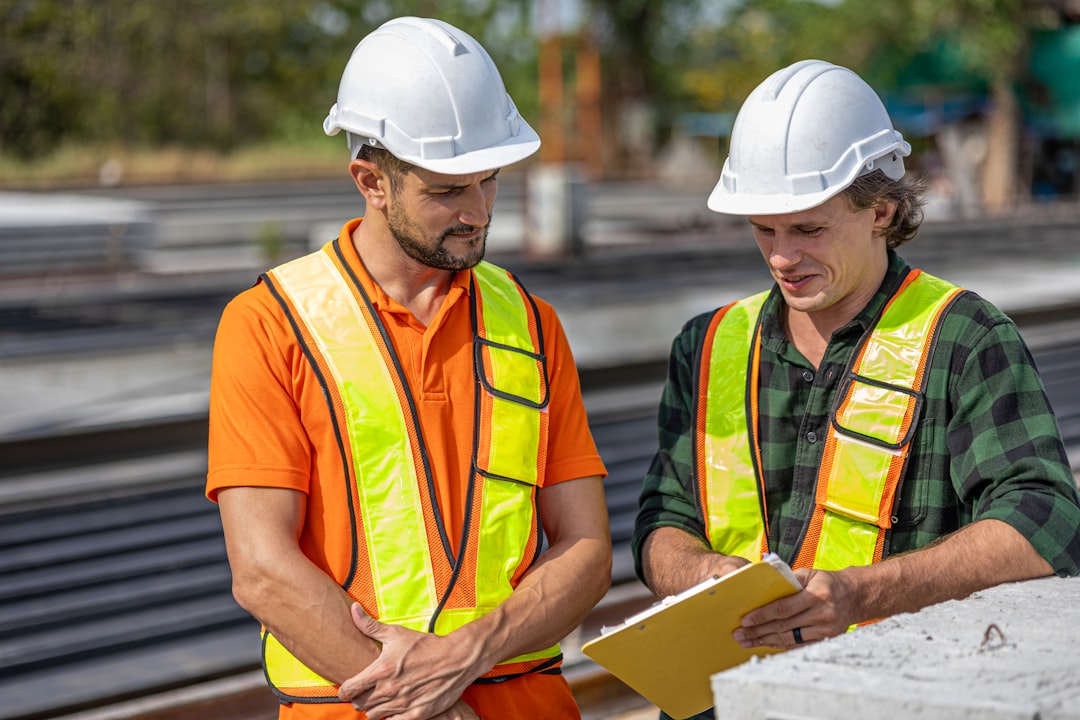
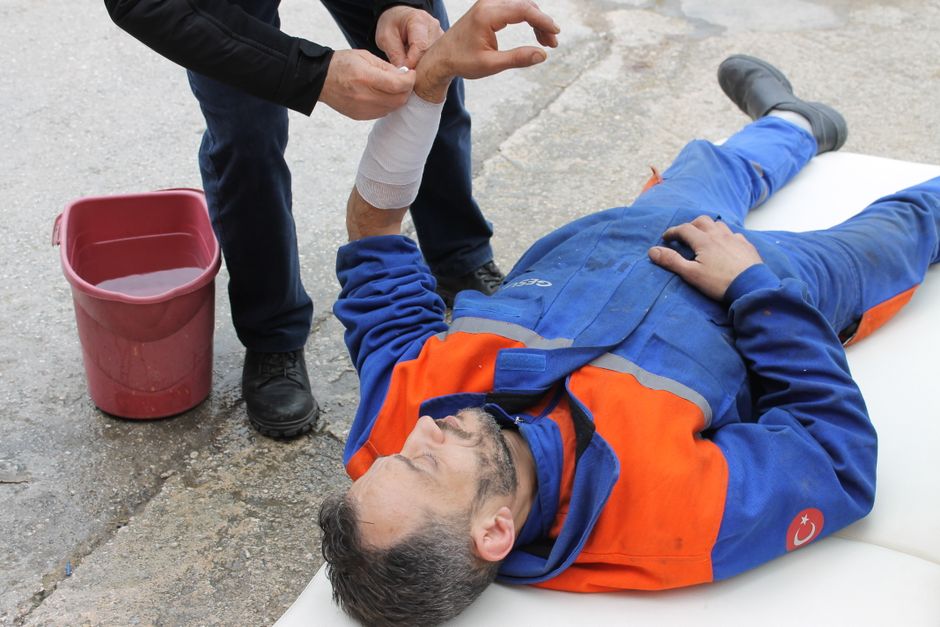
When dealing with high-risk activities, compliance with 29 CFR 1926 is non-negotiable. This includes providing appropriate personal protective equipment (PPE)—such as hard hats, high-visibility clothing, safety glasses, and steel-toed boots—at no cost to employees. Additionally, ensuring that your team has immediate access to medical attention and trained first-aid responders is a basic requirement. You can read more about setting up these resources in our guide on first aid in construction site.
Let's look at the specific requirements for two of the most dangerous activities on any construction site: working at heights and excavating.
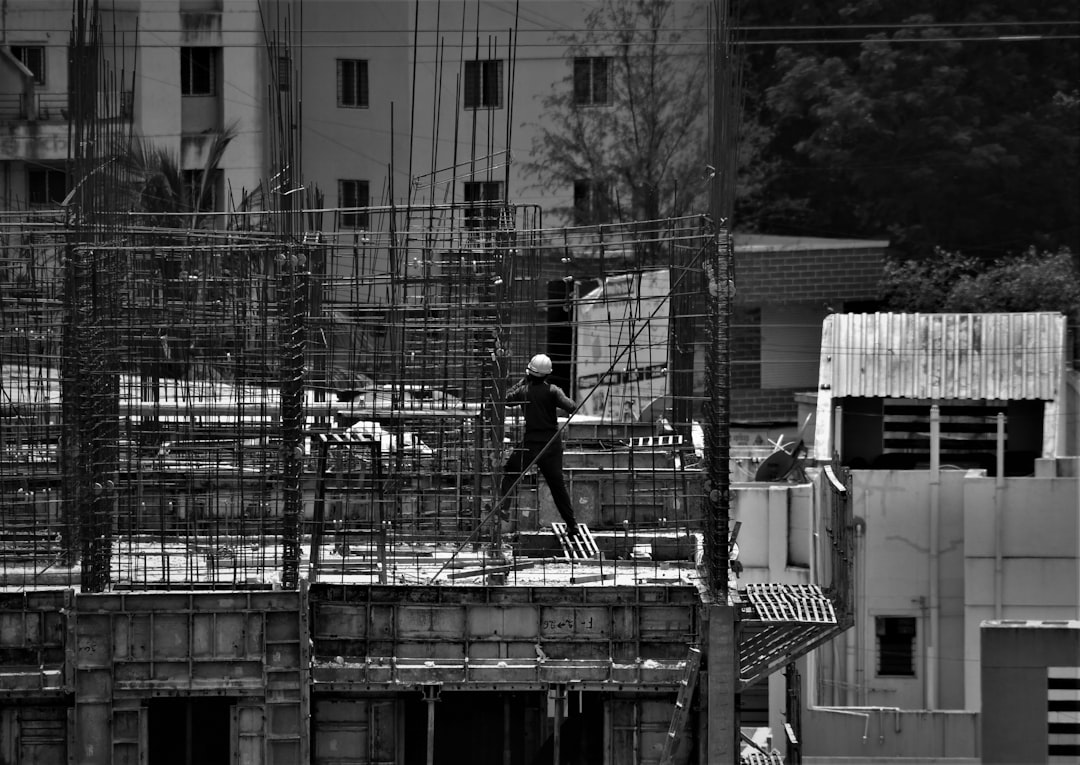
Falls remain the leading cause of death in the construction industry. OSHA requires fall protection to be provided at elevations of six feet or more on construction sites.
To protect workers at heights, employers must implement one or more of the following:
Scaffolding safety is another critical area. Scaffolds must be designed by a qualified person and erected, moved, or dismantled under the supervision of a competent person. They must be equipped with proper guardrails, midrails, and toe boards to prevent both workers and tools from falling. To dive deeper into these rules, check out our article on OSHA fall protection construction.
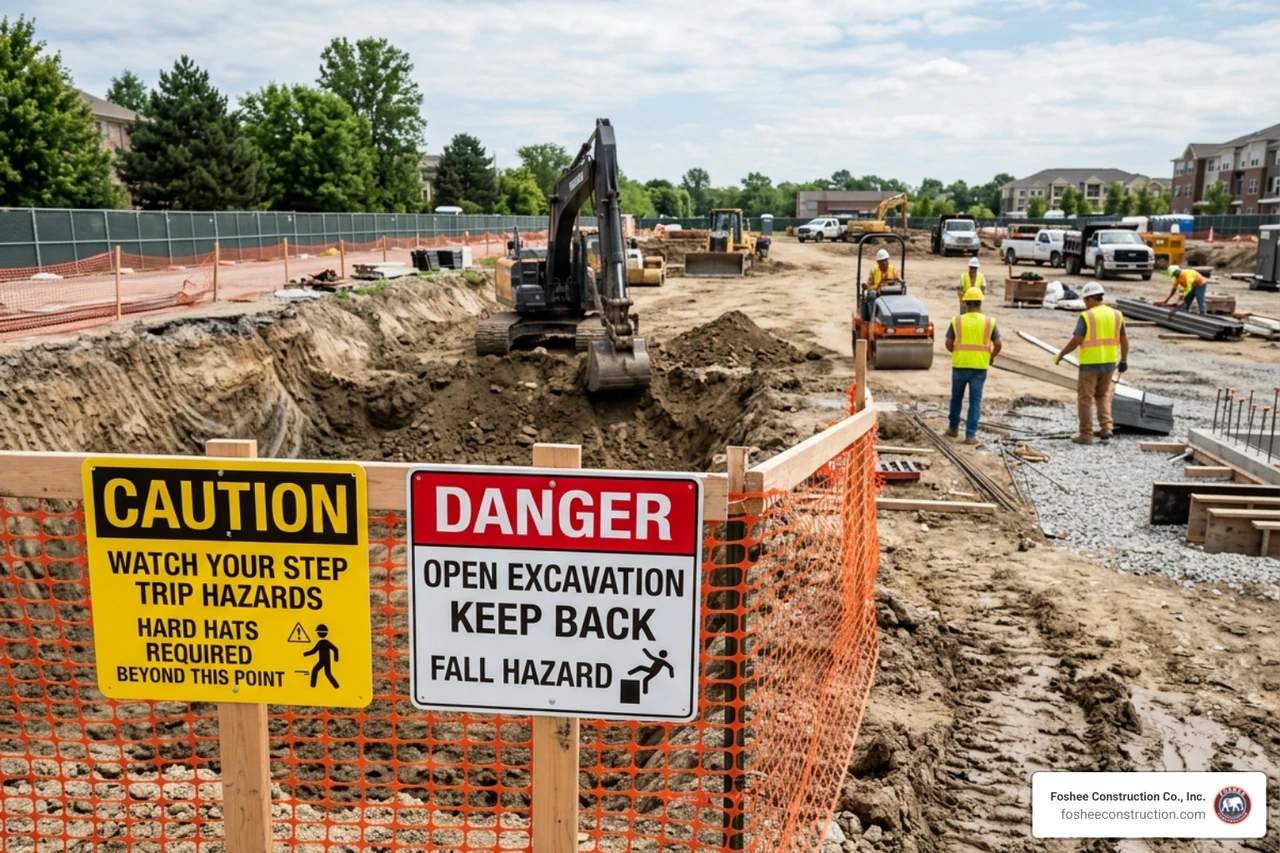
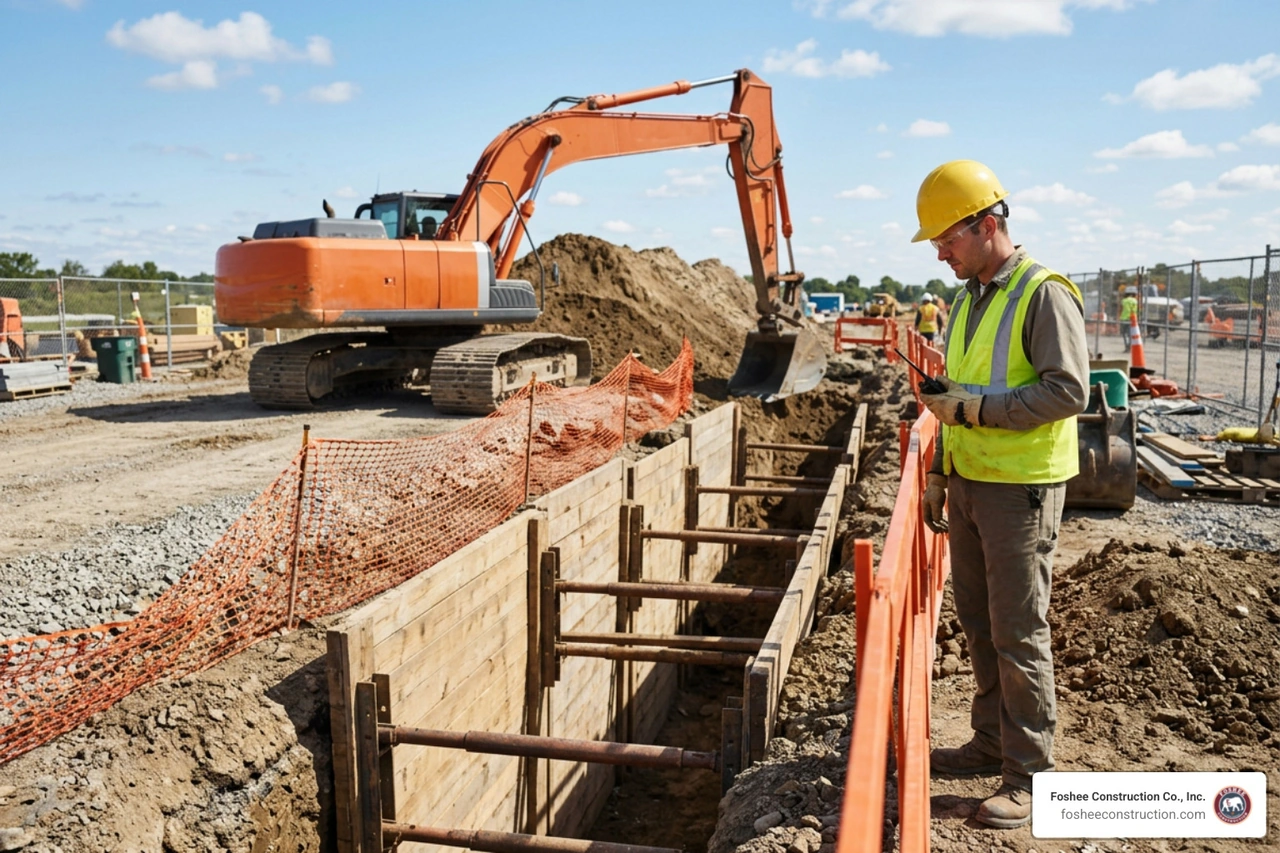
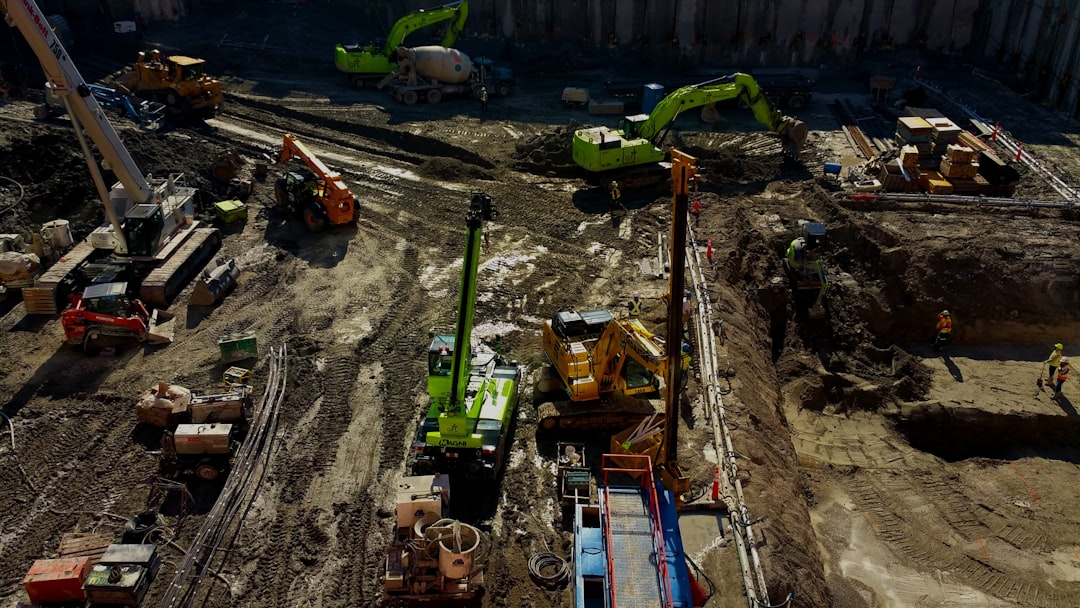
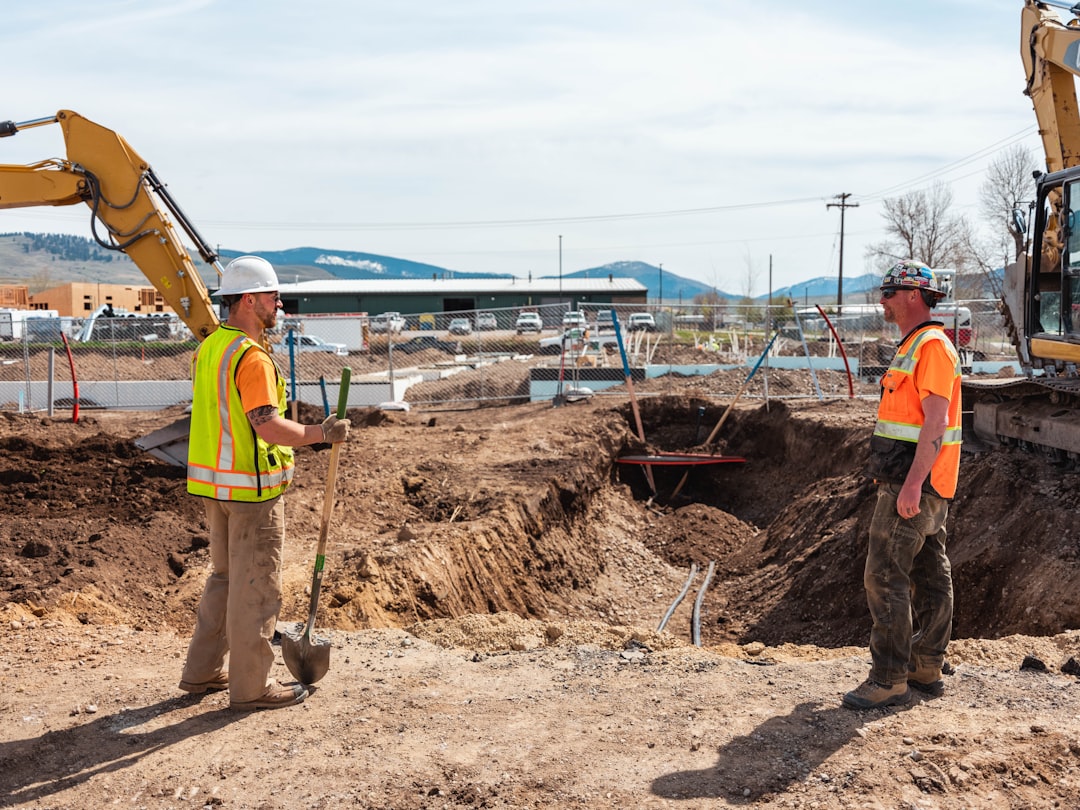
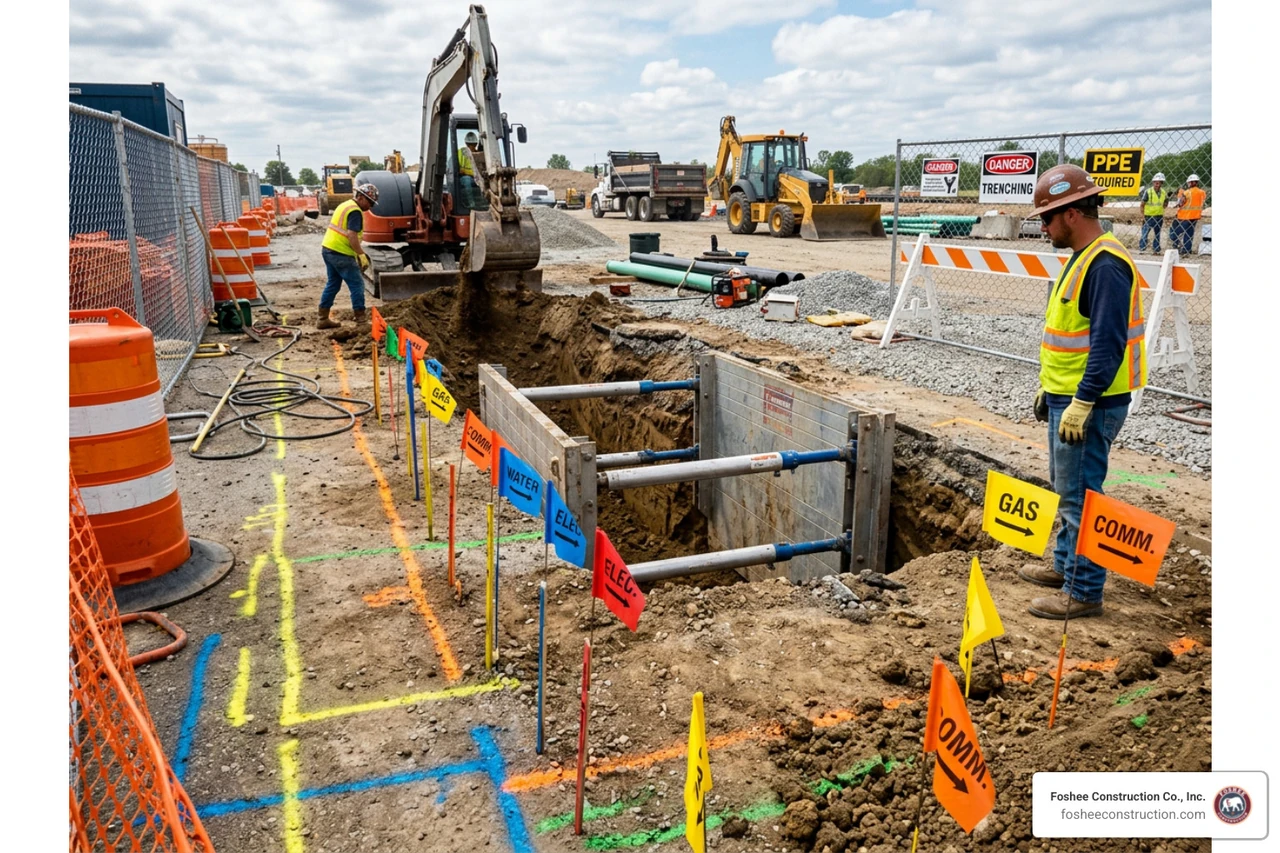
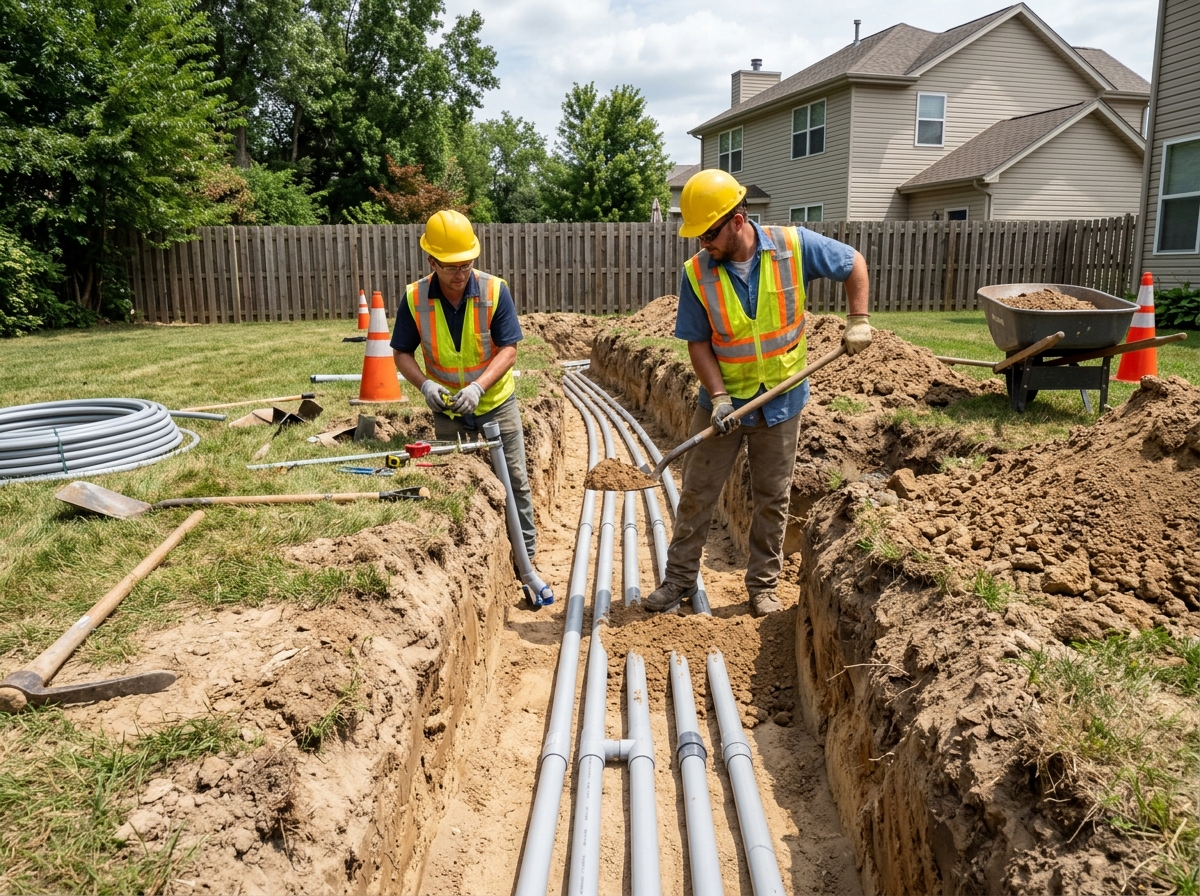
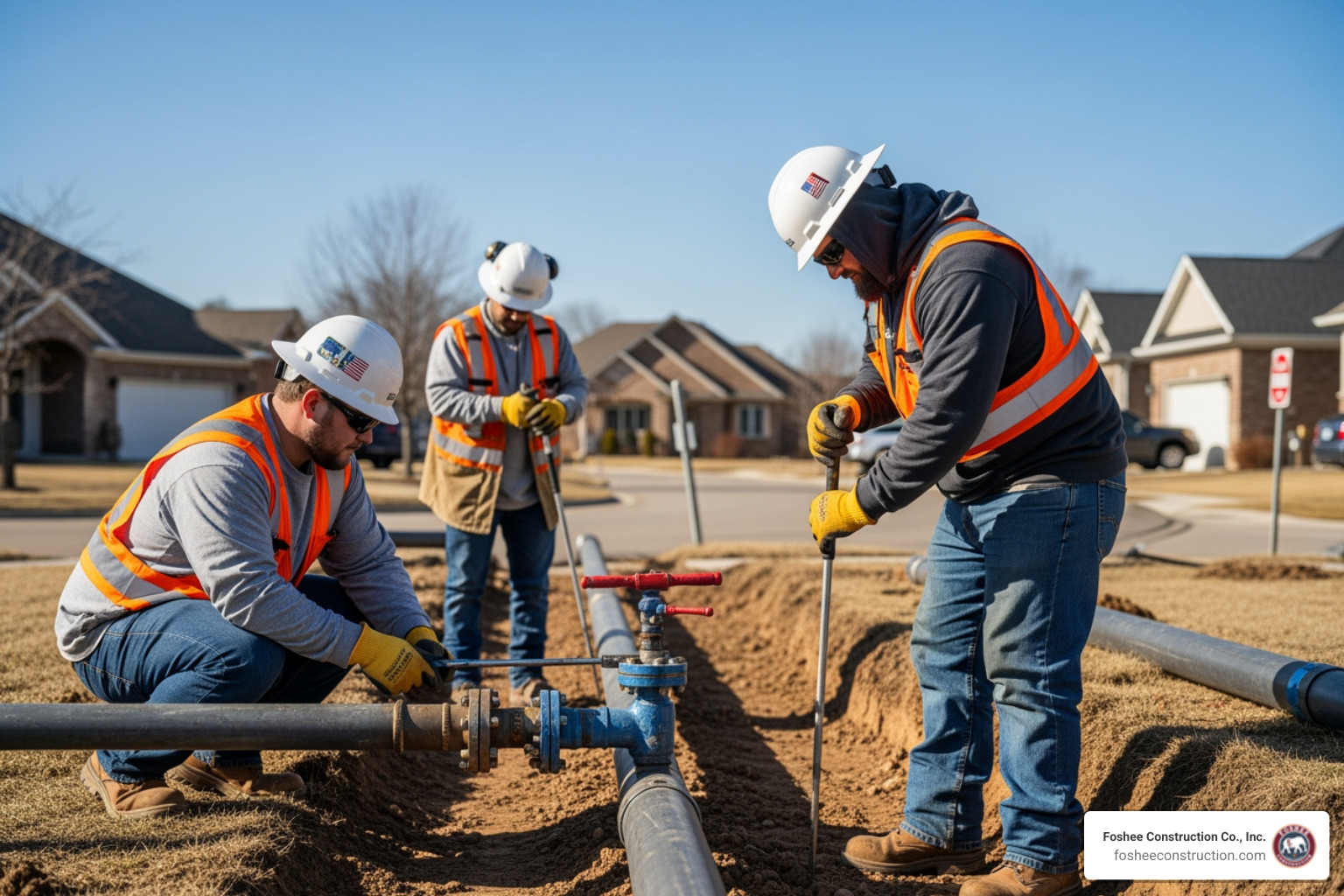
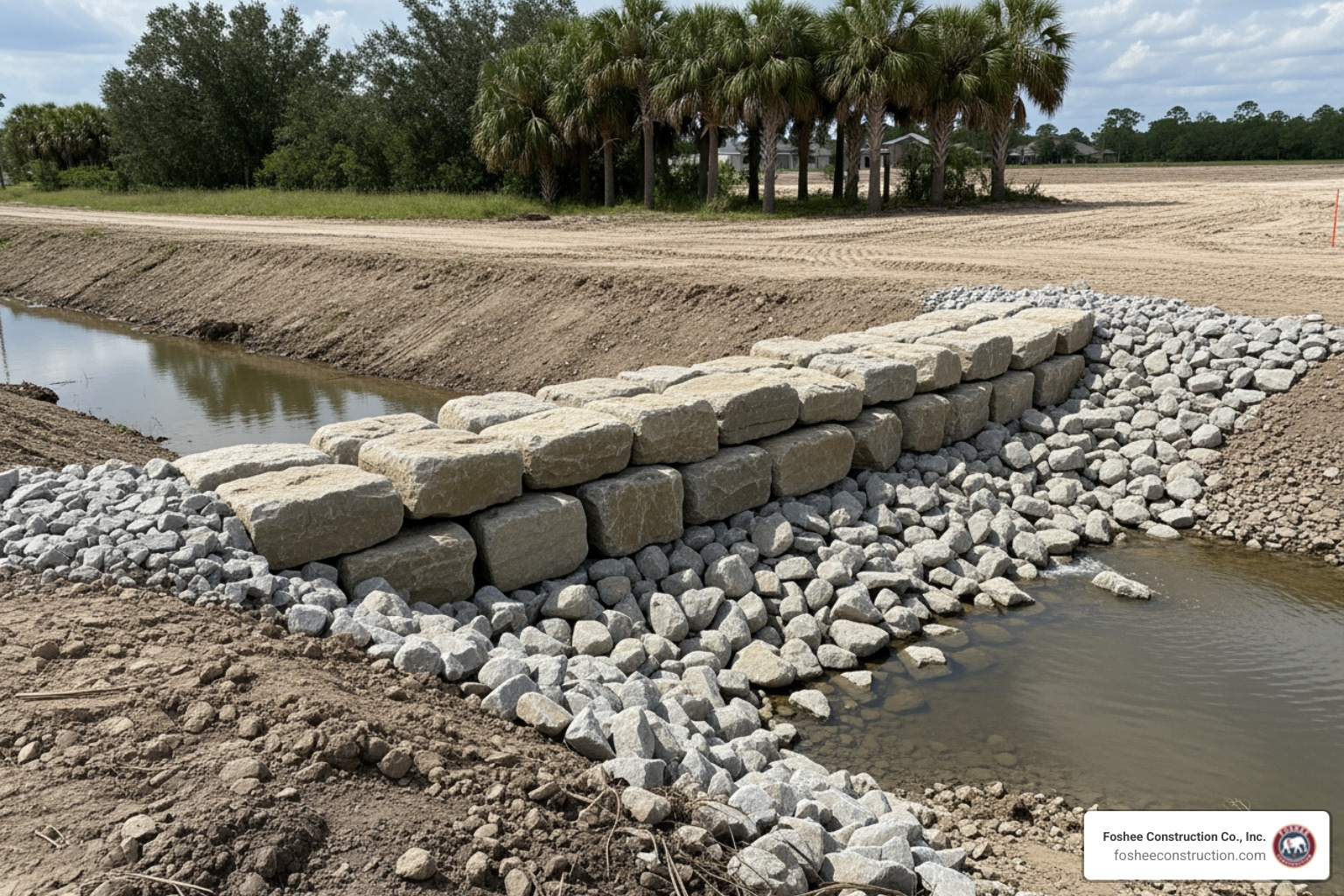
As site preparation specialists in Minneola and greater Lake County, excavation safety is incredibly close to our hearts. Trenching and excavation work are inherently dangerous; a single cubic yard of soil can weigh as much as a car, making cave-ins quickly fatal.
According to the [PDF] Construction Safety Guidelines - Cornell College , specific protective systems are required for any excavation deeper than five feet (or even shallower if a competent person identifies a cave-in hazard).
Before digging, a competent person must perform a soil classification to determine the stability of the ground. Soils are classified as:
Once the soil is classified, the competent person must select an appropriate protective system:
Furthermore, safe access and egress (such as secured ladders or ramps) must be located within 25 feet of lateral travel for workers in trenches four feet or deeper.
In Lake County, local land use and zoning rules also impact how we approach site preparation. For instance, the [PDF] LAKE COUNTY ZONING ORDINANCE 10042021 governs setbacks, grading, and environmental protections that must be integrated into our safety and operational plans. Additionally, when planning smaller jobs, referencing guidelines like [PDF] Residential Work Exempt from Permits - Lake County Government helps clarify when formal local permits are required before excavation begins.
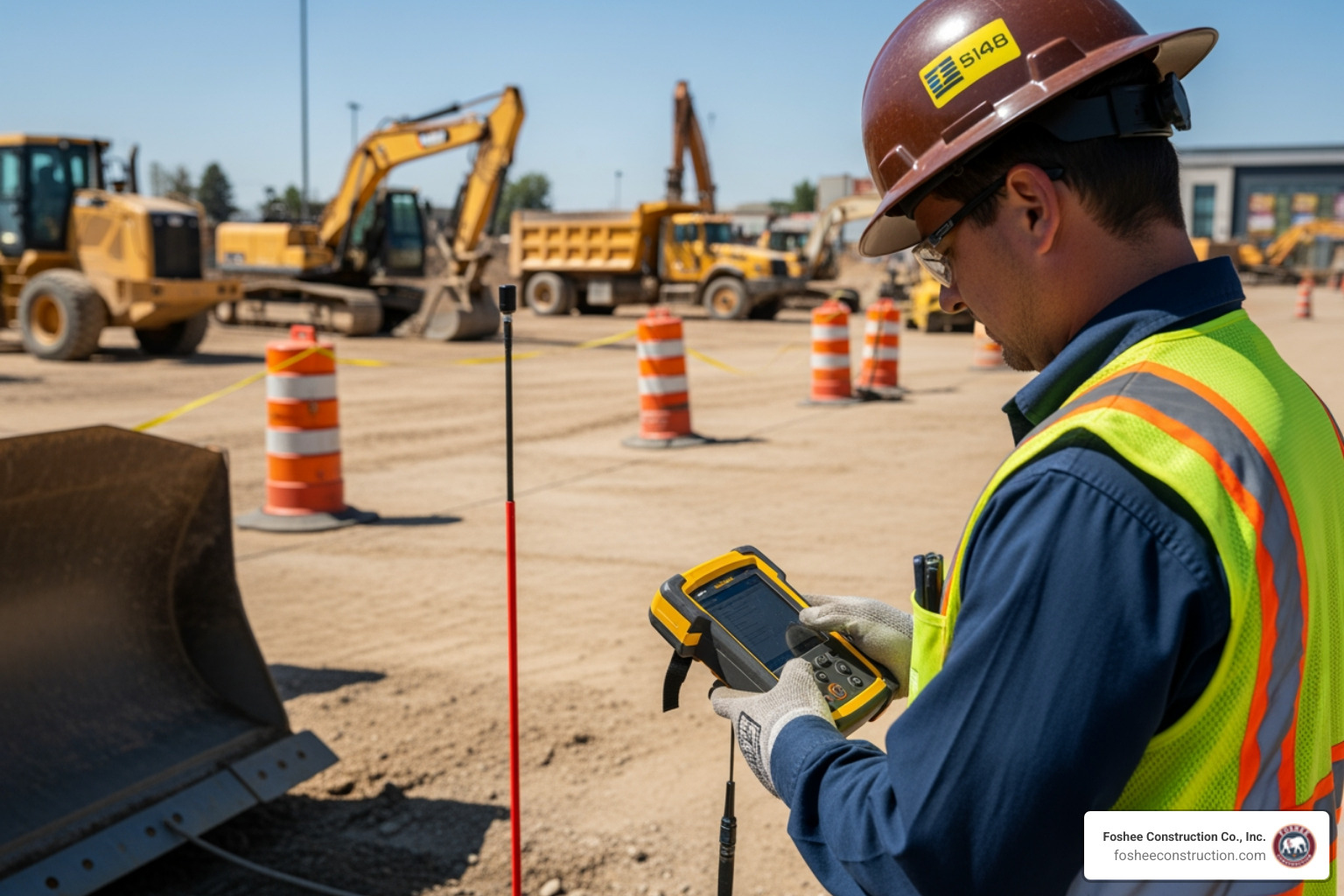
Having digital copies of safety manuals and regulations on hand is a game-changer for modern field supervisors. Instead of flipping through a dusty, torn binder in the back of a truck, a superintendent can quickly pull up a PDF on a tablet or phone to verify a specific clearance or soil sloping angle.

Maintaining digital access to these documents ensures that your safety program remains agile, up-to-date, and readily available to everyone on the job site.
For the foundational guidelines on setting up a proactive safety program, you should download the official [PDF] Recommended Practices for Safety and Health Programs in ... - OSHA .
This document, also known as OSHA publication 3886, provides a step-by-step framework that you can customize to fit your specific trade, company size, and project scope. It is an invaluable tool for building a program that moves beyond simple regulatory compliance and into active hazard prevention.
While private contractors in Florida fall under Federal OSHA jurisdiction, reviewing safety resources from other states can provide excellent practical reference material.
A prime example is the [PDF] CAL/OSHA POCKET GUIDE FOR THE CONSTRUCTION INDUSTRY 2022 . Because California's Title 8 CCR safety regulations are among the strictest in the country, this pocket guide serves as a highly detailed, field-friendly manual. It offers clear, concise summaries of safety rules for scaffolding, ladders, personal protective equipment, and aerial lifts that can help any contractor improve their safety standards, regardless of their location.
Rarely does a construction project involve only one company. Most sites are bustling ecosystems of general contractors, specialty subcontractors, and staffing agencies. Under OSHA's multiemployer worksite policy, safety is a shared responsibility, and clear communication is essential to keep everyone protected.
Safety training should never be a one-time event during onboarding. To keep safety at the forefront of everyone's mind, continuous education is necessary.
One of the most effective ways to do this is through weekly or daily toolbox talks. These are short, 10-to-15-minute informal safety meetings held on-site before the shift begins. They focus on specific topics—such as ladder safety, heat stress, or proper rigging techniques—and allow workers to ask questions and share feedback.
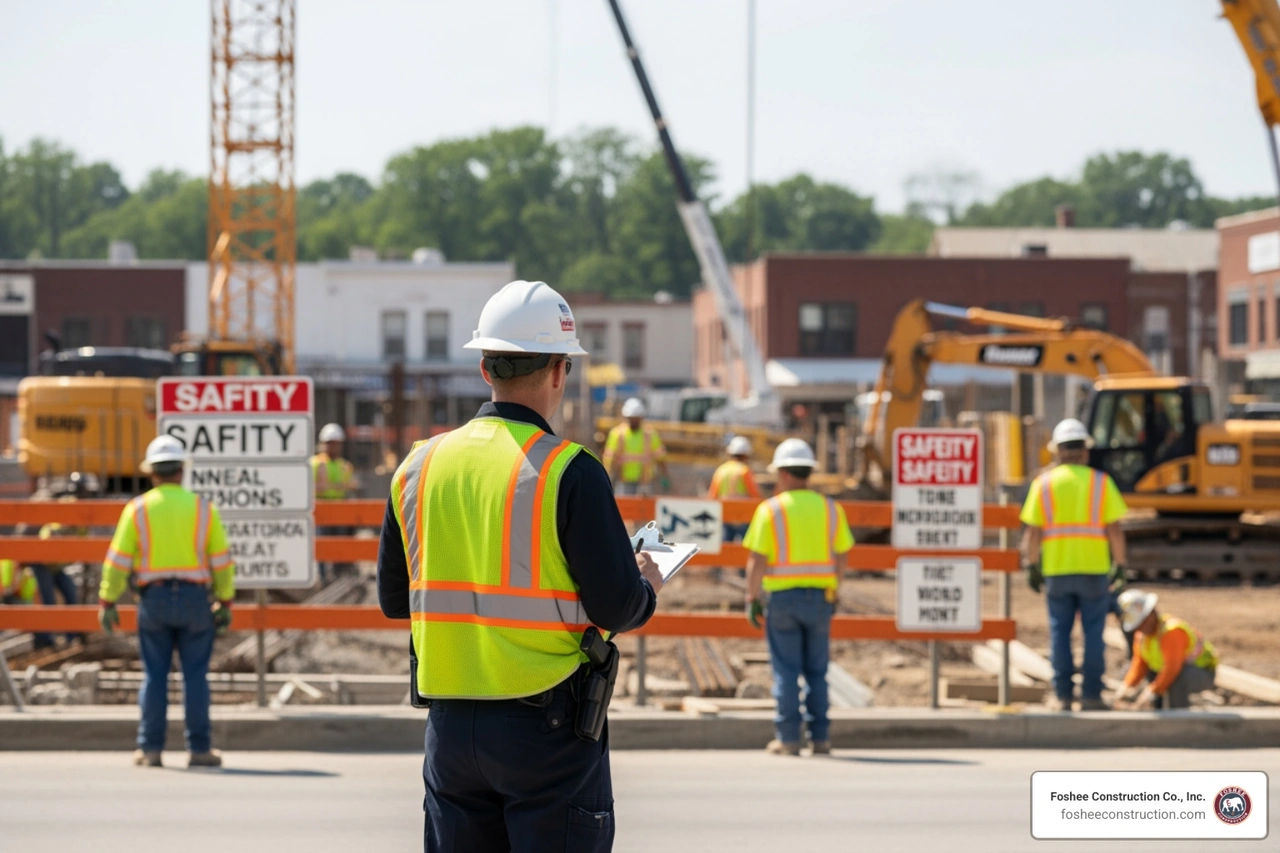
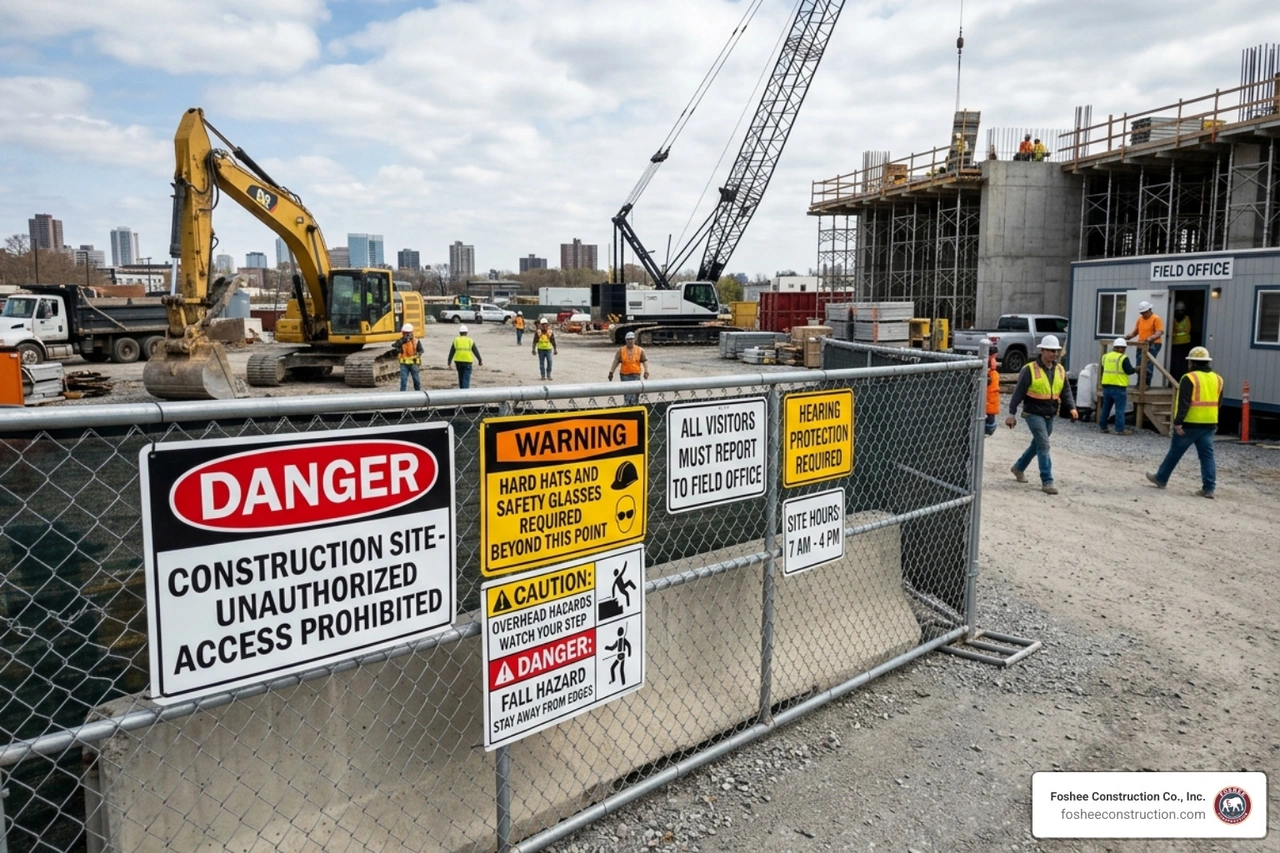
To reinforce these lessons, clear signage must be posted across the site to remind workers of hazards and mandatory PPE zones. You can find practical tips on setting this up in our construction site safety signage guide.
On a multiemployer site, the host employer or general contractor must establish clear safety expectations from day one. This starts with contractor prequalification—ensuring that any subcontractor hired has a solid safety record, typically demonstrated by a Workers' Compensation Experience Modification Rate (EMR) of 1.0 or less.
According to the [PDF] CONSTRUCTION SAFETY REQUIREMENTS , coordination requires:
OSHA identifies the "Focus Four" as the leading causes of fatalities in the construction industry. They are:
According to OSHA, a "competent person" is someone who is capable of identifying existing and predictable hazards in the surroundings or working conditions, and who has the authorization to take prompt corrective measures to eliminate them. This role requires both technical knowledge (to spot the hazard) and administrative authority (to stop work and fix it).
Safety programs should be evaluated at least annually to ensure they are effective and up to date. However, more frequent reviews are required if there is a significant change in site conditions, new equipment is introduced, or an incident occurs that reveals gaps in your existing controls.
At the end of the day, safety is not about paperwork or avoiding regulatory fines. It is about making sure that every single person who steps onto a job site goes home safely to their family at night.
By implementing the core elements of a proactive safety program, understanding key OSHA 29 CFR 1926 standards, and keeping digital resources like the construction site safety rules and regulations pdf readily accessible, you can build a culture where safety and productivity go hand in hand.
At Foshee Construction, we bring this disciplined, safety-focused mindset to every project we take on in Minneola, Lake County, and throughout Central Florida. From grading and erosion control to complete site preparation and underground utilities, we deliver transparent bids, reliable schedules, and an unwavering commitment to keeping our sites secure.
If you are looking for a trusted site preparation partner who values safety as much as you do, learn more about our values and approach by visiting Why Foshee Construction. Let's build something great together—safely.
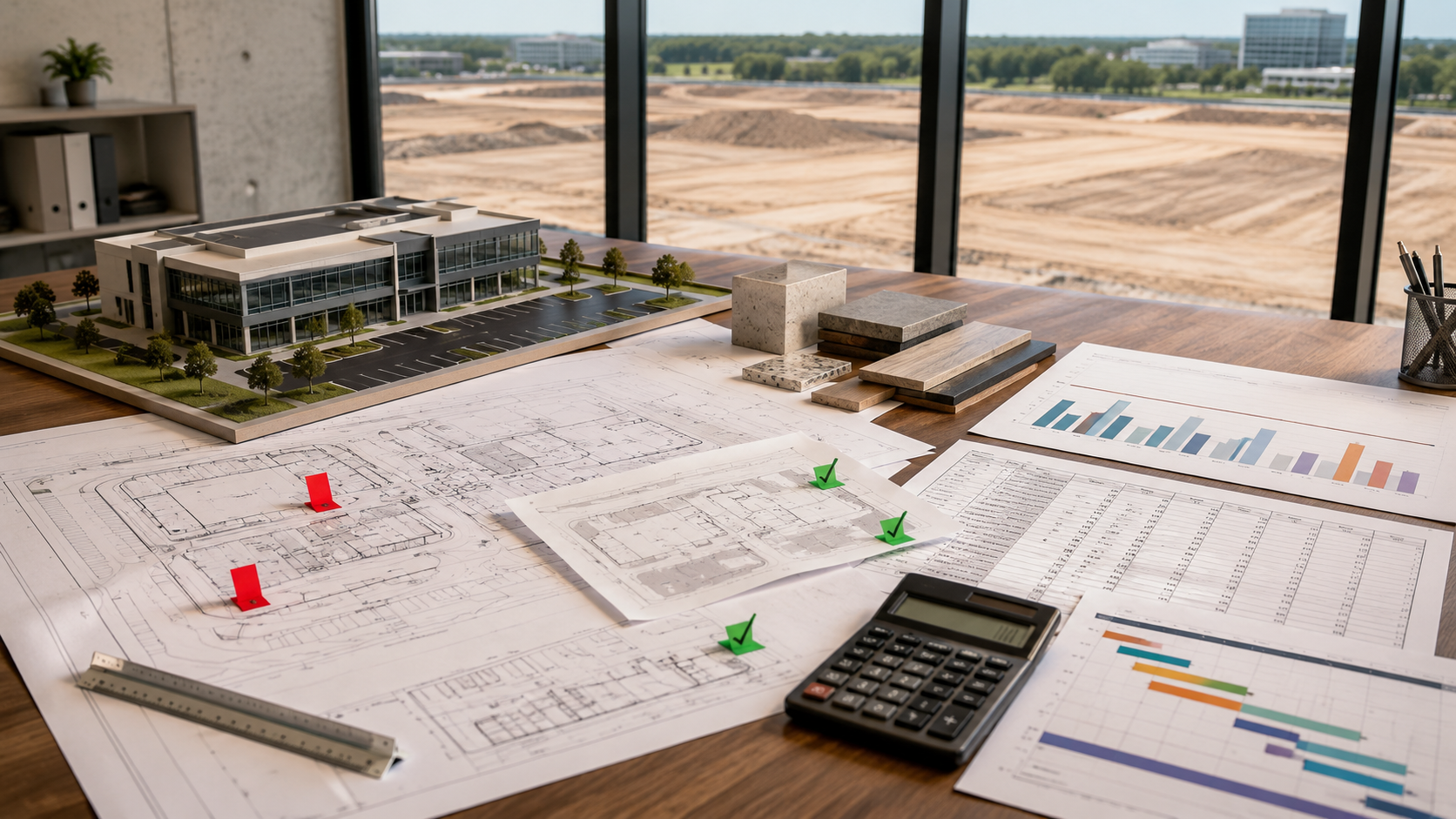
We build bids using HeavyBid and AGTEK because the details matter long before the job starts. When the numbers are accurate and the scope is clearly defined, it sets the tone for how the entire project runs. Estimating isn’t just a step in the process, it’s the foundation we build on.
That same mindset carries into the field. Our crew is trained to work with purpose, follow the Civil Engineers’ Plan to the finest detail, and hold the line on quality. When expectations are clear from day one, there’s no need for shortcuts, and no confusion about how the work gets done.
Clients trust our bid packages because they’re complete and ready to use. Project managers know what we’re covering, what’s excluded, and how we plan to approach the job. That clarity removes friction and lets teams focus on execution instead of interpretation.
As part of our review process, we go into the plans before anything hits the site. We ask the questions early, resolve issues before they show up in the field, and keep RFIs moving. This approach prevents delays and protects the timeline.
Over time, that consistency builds trust. Many of the people we work with today came through referrals from past projects – engineers, GCs, and superintendents who’ve seen how we operate and want the same experience again.
In 2024, Foshee Construction was acquired by Saga Infrastructure Solutions, a national network of civil construction companies. Saga supports regional contractors by giving them access to better tools, long-term resources, and operational backing, without changing how they run day to day.
Foshee will continue to operate under its name, with the same team and field leadership in place.
“From the very time a project starts, we start that partnership. We try to catch as much as we can with the tools that we have. Not everybody is using the software platforms we are. That’s the differentiator: we’re not just bidding. We’re anticipating, problem-solving, and making sure the job runs right.”
— Don, CEO, Saga Infrastructure Solutions
Foshee is now part of a broader regional strategy that includes Florida, the Piedmont Atlantic, Texas, Colorado, and the Arizona Sun Corridor. The name, crews, and standards remain. What’s improving is the support behind it.