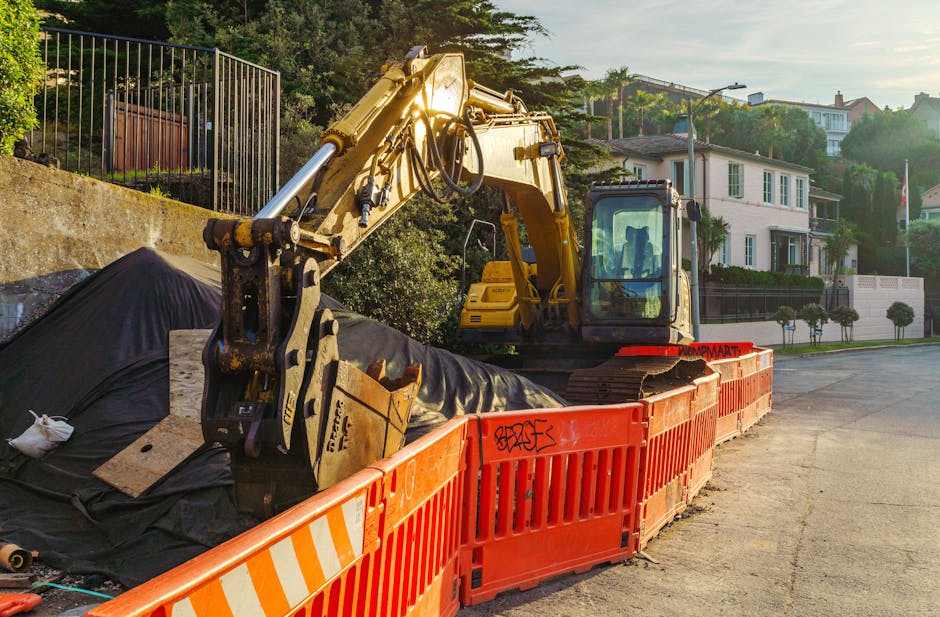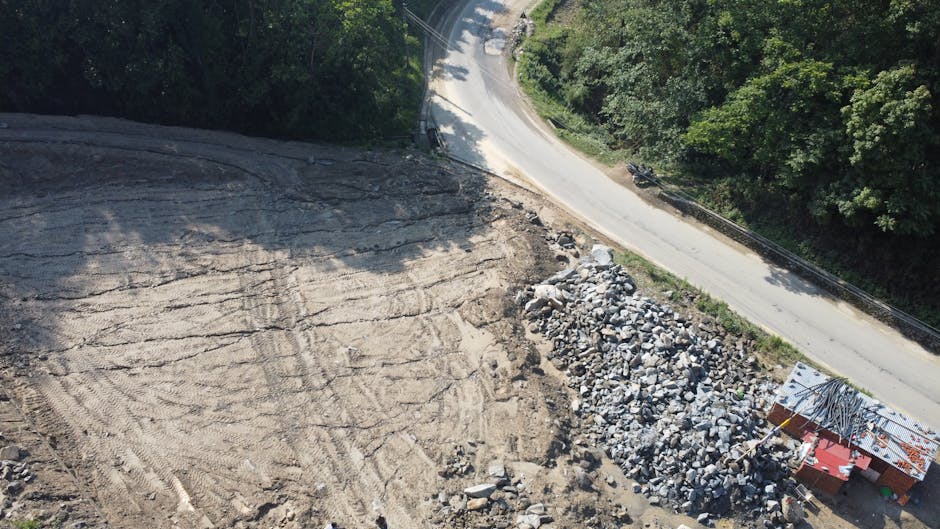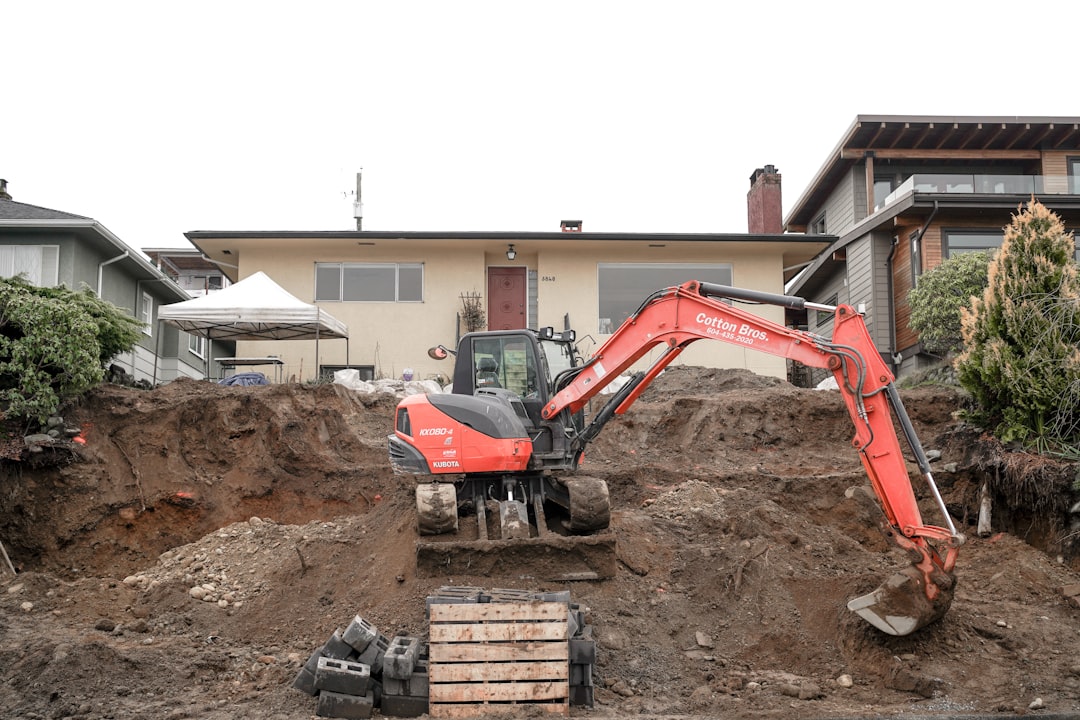
Central Florida's rain does not announce itself with much warning. A cleared site that looked stable on Monday can be running sediment into a swale by Thursday afternoon, and once that happens, the fix costs more than the control would have. The question that matters is not whether to install erosion control — it is what goes in first, second, and third, because sequencing is what keeps a storm from finding the one gap in the plan.
Foshee Construction has managed erosion control across Central Florida site development since 1994, working sites where sandy soils and afternoon storms are simply part of the job, not an exception to plan around.
Before clearing crews finish and grading begins in earnest, this is the order that keeps a site out of trouble:
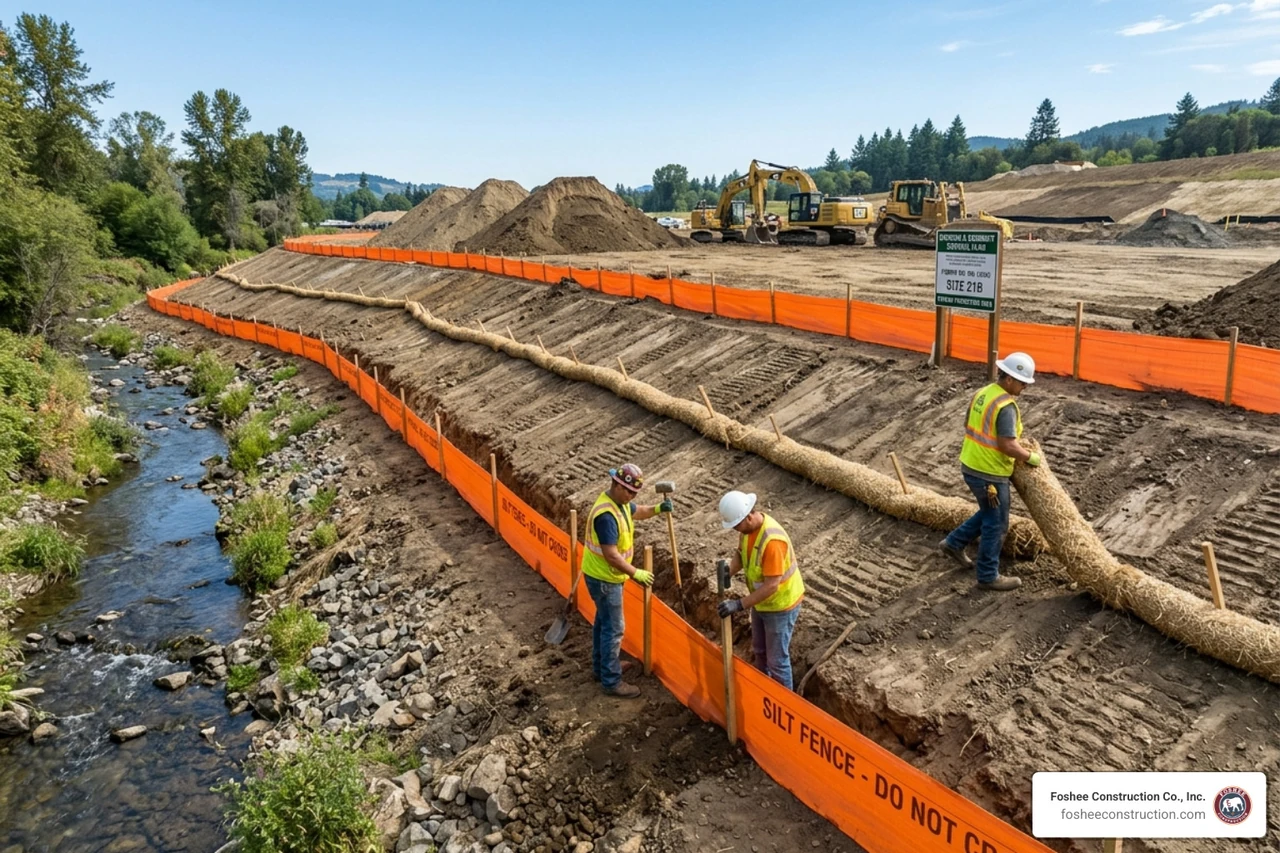
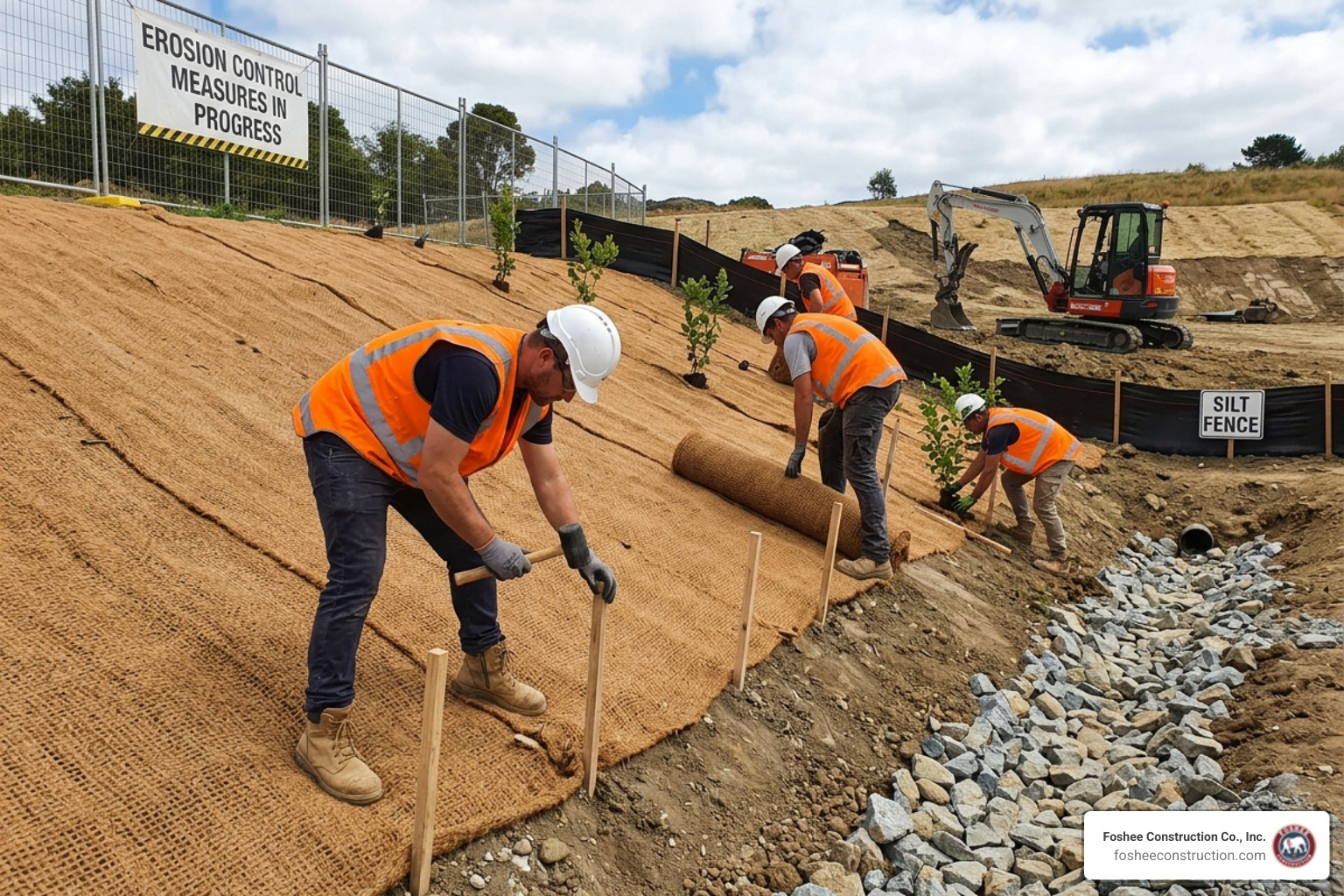
- Perimeter silt fence or filter socks go in before clearing is complete, not after — they need to be established before disturbed soil has anywhere to go.
- Inlet protection at every storm structure that is active or will receive runoff during construction, installed before the first rain event, not after the first violation notice.
- Construction entrance stabilization so vehicles are not tracking sediment onto public roads, which is one of the fastest ways to draw a compliance complaint.
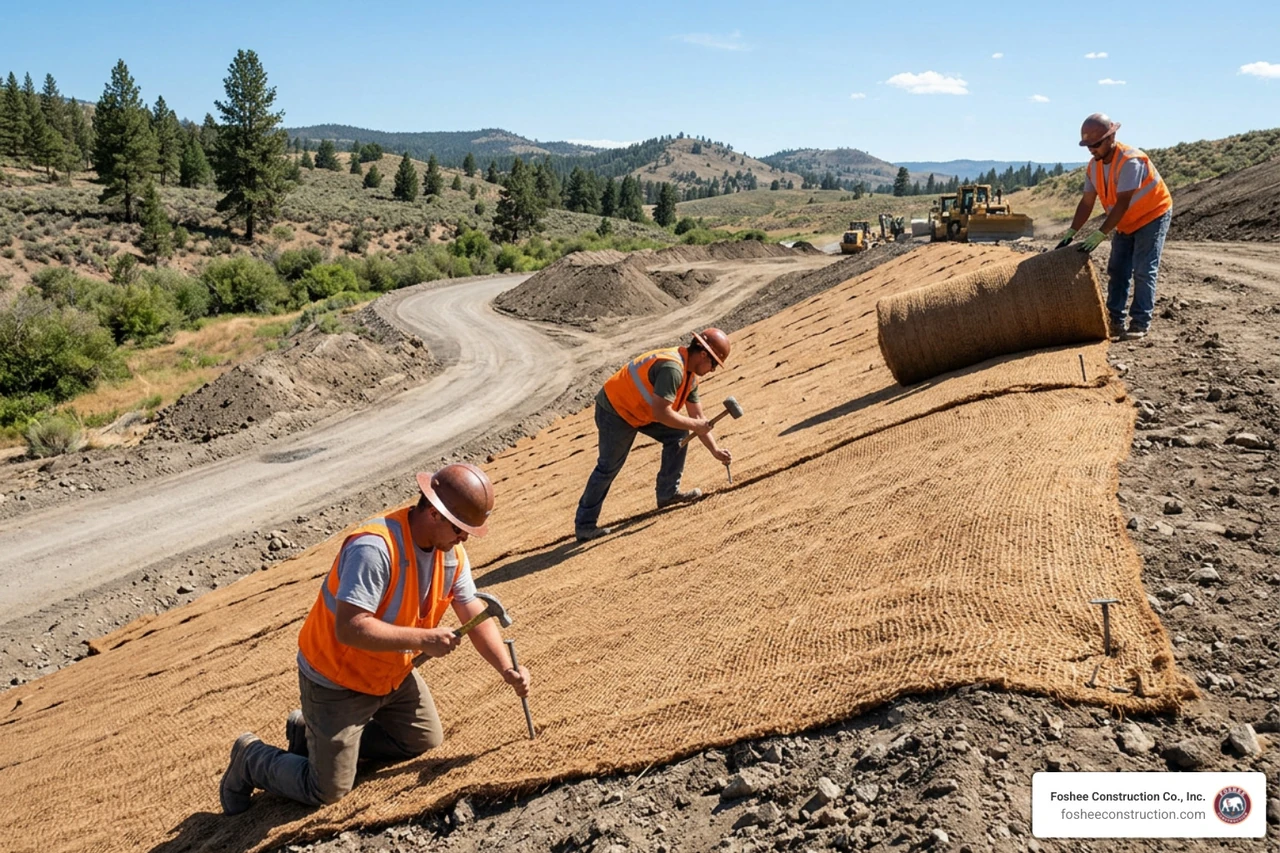
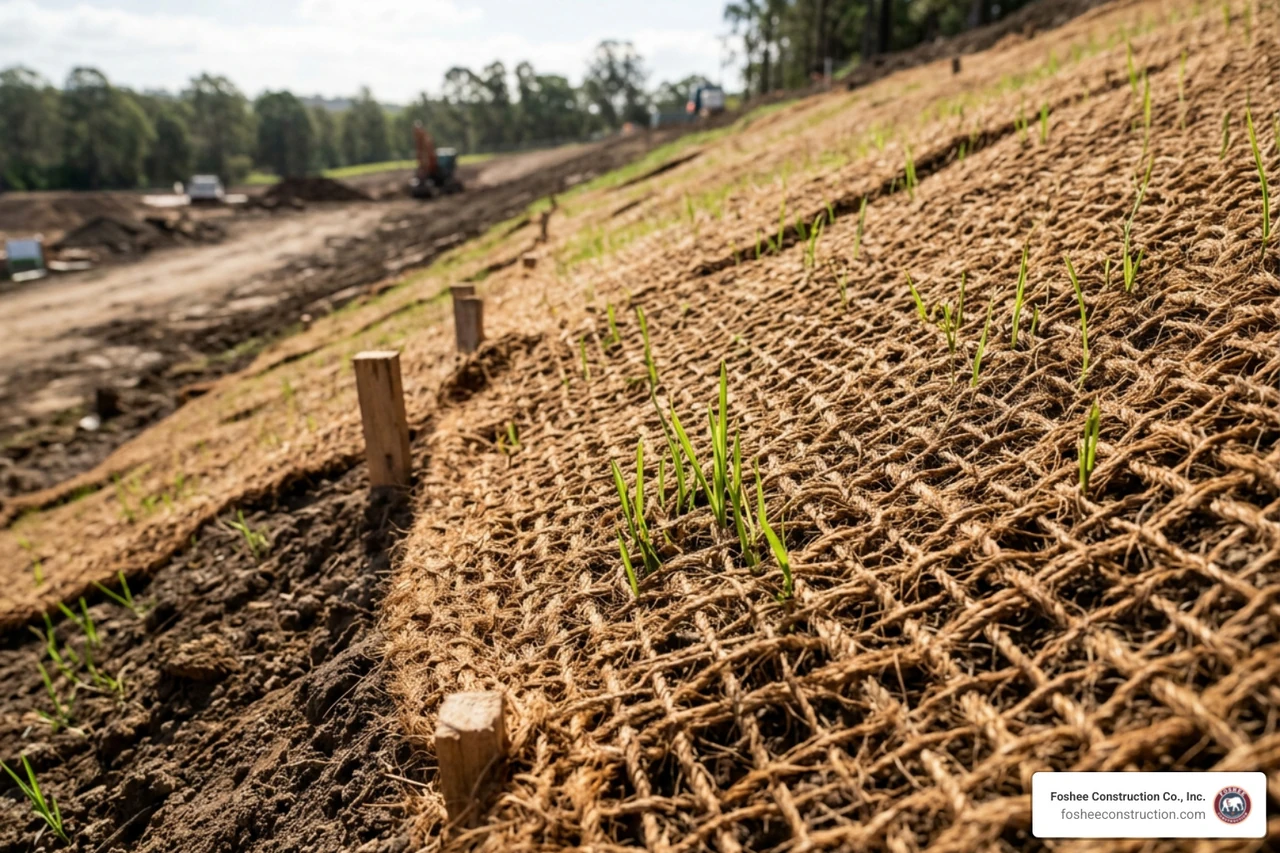
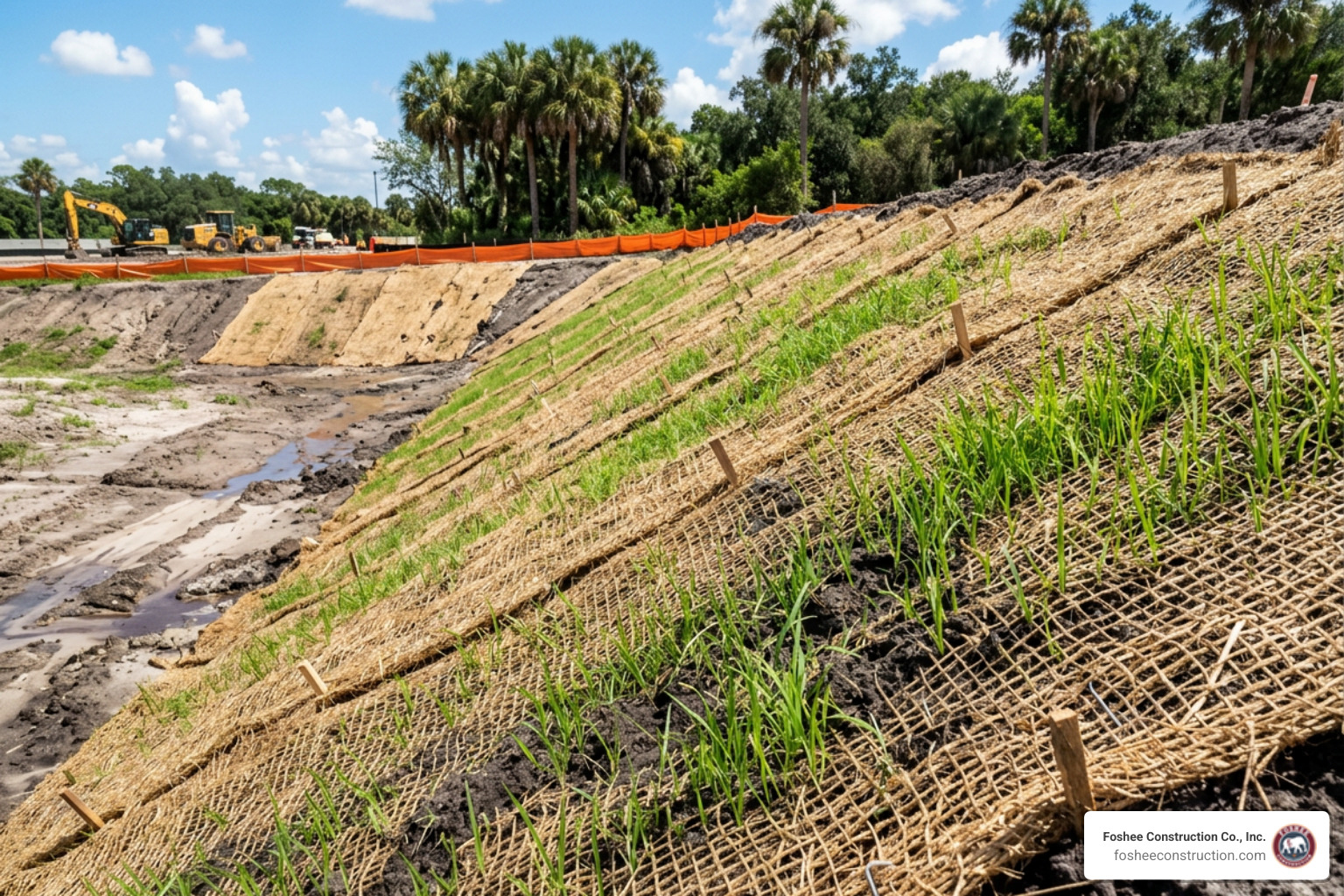
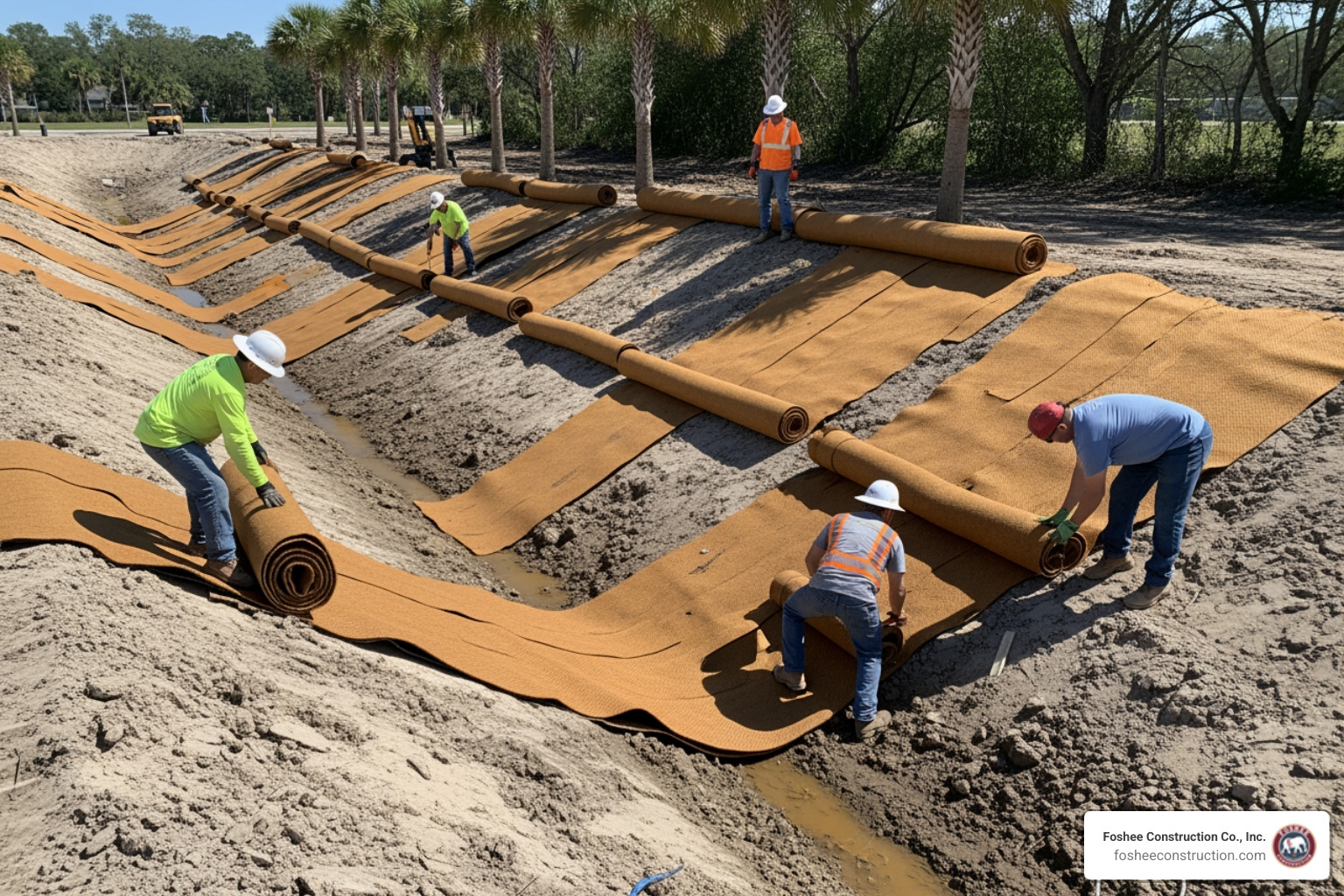
- Slope stabilization — blankets, matting, or temporary seeding — on any grade steep enough to channelize flow before it is left exposed over a weekend.
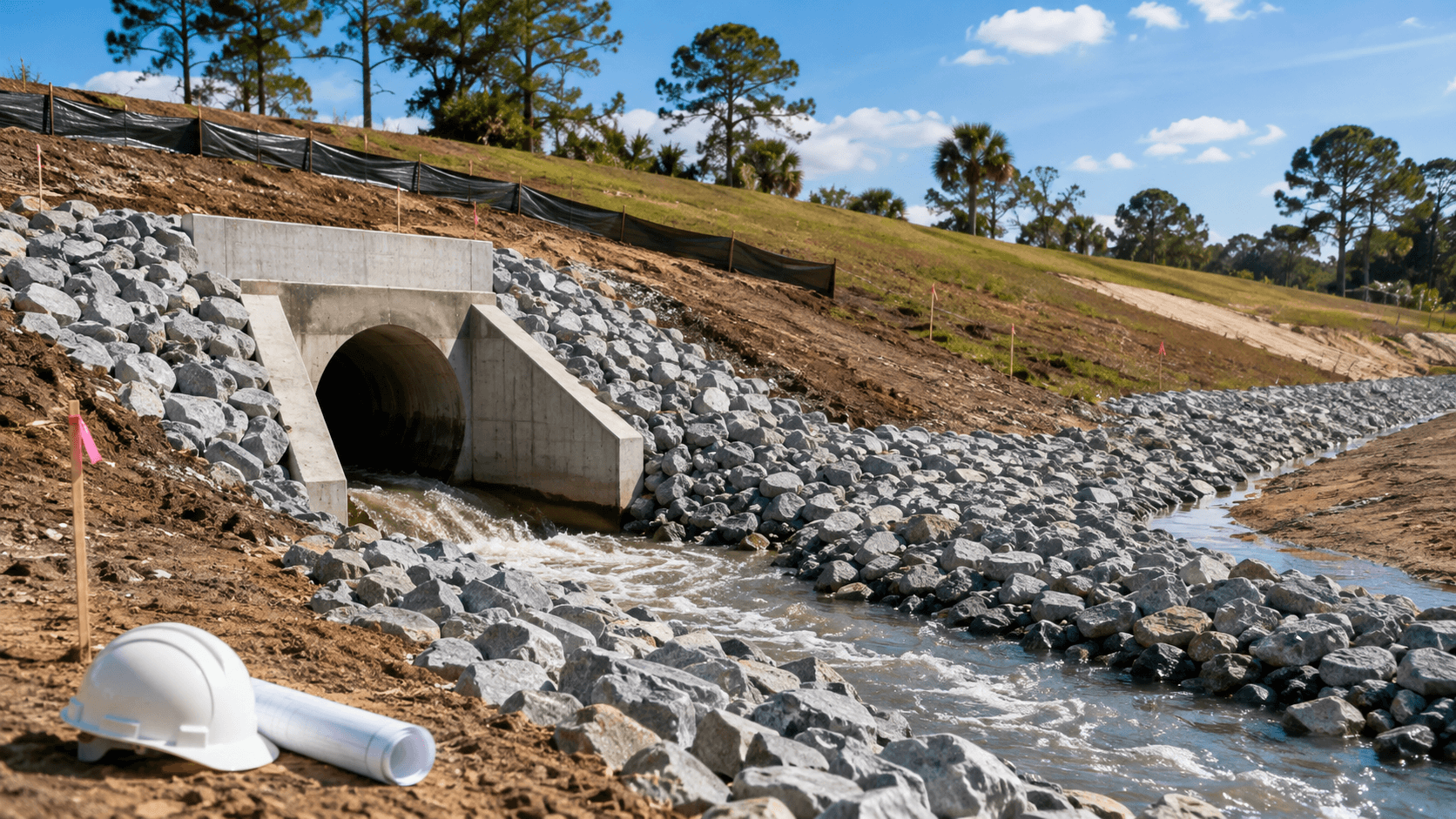
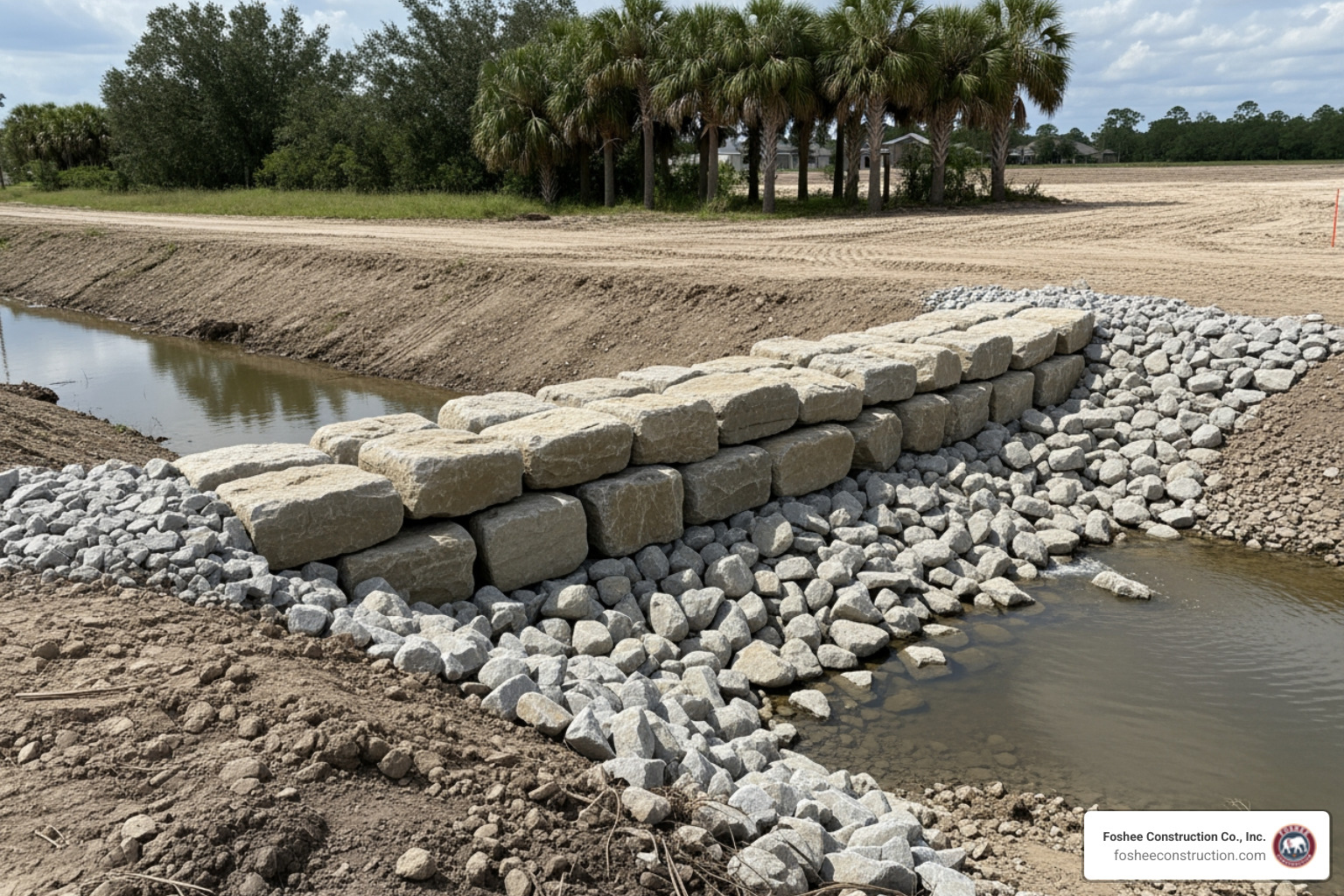
- Check dams in swales and ditches wherever concentrated flow is expected, sized for the drainage area above them, not applied uniformly across the site.
- Sediment basins or traps downstream of the largest disturbed areas, sized and maintained for the phase of construction actually underway.
Foshee's Mirror Lake project in Clermont is wrapping up by the end of this year, and like most residential sites in Lake County, it went through multiple phases of exposed soil before final stabilization was complete. The lesson on a project like Mirror Lake is not that erosion control gets installed once — it is that the controls have to be re-evaluated every time the grading plan changes, because a swale that was stable in phase one can become a concentration point in phase two if nobody rechecks it.
- Waiting until a NOI or permit condition forces the issue instead of sequencing controls with the grading plan from day one.
- Treating erosion control as a one-time install instead of something that gets inspected and adjusted as the site changes.
- Undersizing check dams or basins for the drainage area actually contributing to them.
- Leaving slopes bare over a weekend when a storm is in the forecast.
- Assuming reseeding or sod at the end of the job substitutes for temporary controls during construction.
Erosion control before Florida rain is a sequencing problem more than a materials problem. The right products only work if they go in before the soil is exposed to storm intensity they were never sized for, and they only keep working if someone rechecks them as the grading plan evolves — the way Foshee's crews did through the phases of Mirror Lake in Clermont.
To talk through a stabilization sequence for an active or upcoming site, start with the Foshee contact page - https://fosheeconstruction.com/contact.
- Erosion Prevention on Construction Sites - https://fosheeconstruction.com/blog/erosion-prevention-construction-sites
- Rock Check Dams - https://fosheeconstruction.com/blog/erosion-control-rock-check-dams
- Erosion Control Blankets - https://fosheeconstruction.com/blog/erosion-control-blanket
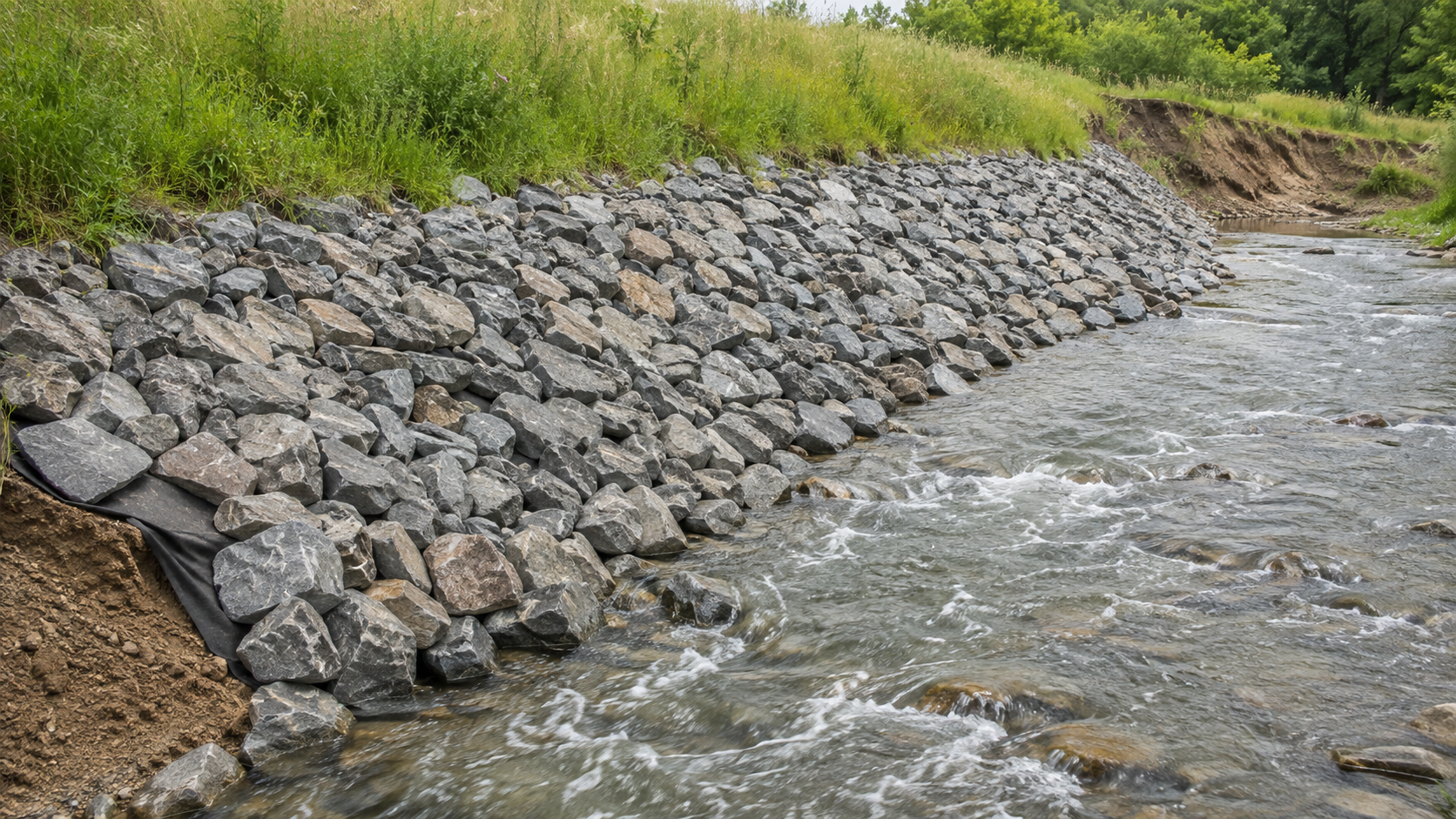
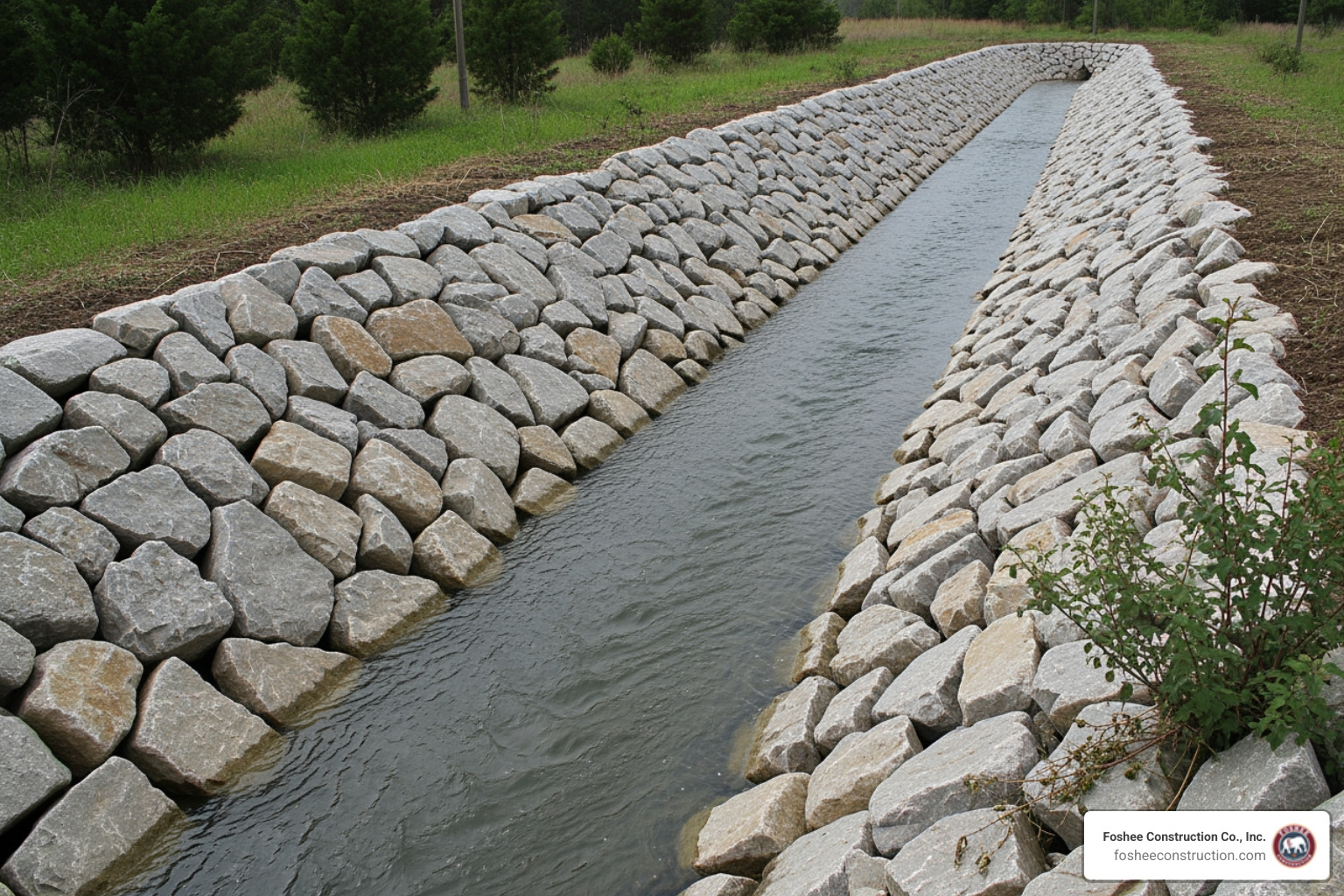
- Riprap for Erosion Control - https://fosheeconstruction.com/blog/erosion-control-rip-rap
- Foshee Construction Blog - https://fosheeconstruction.com/blog
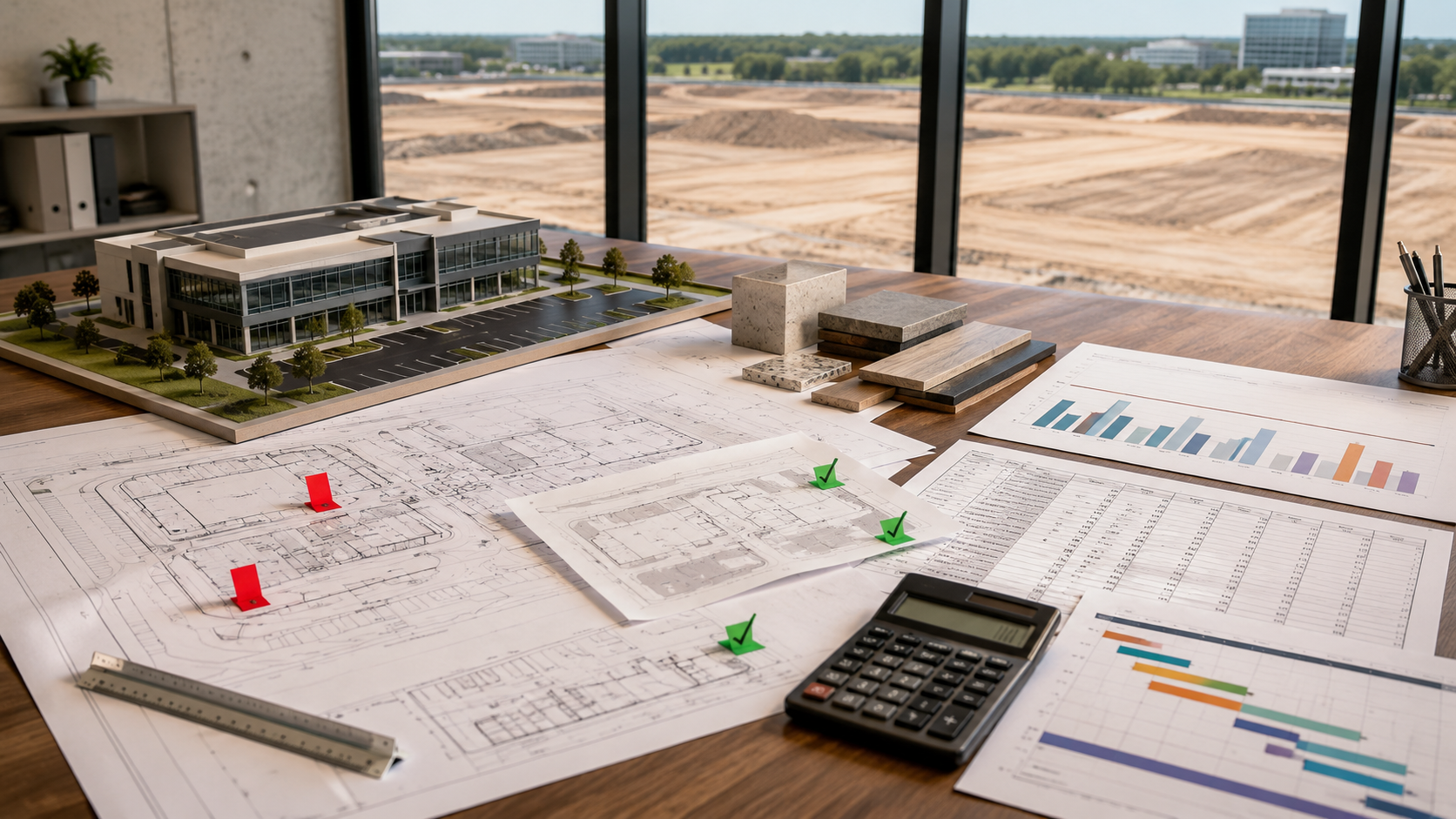
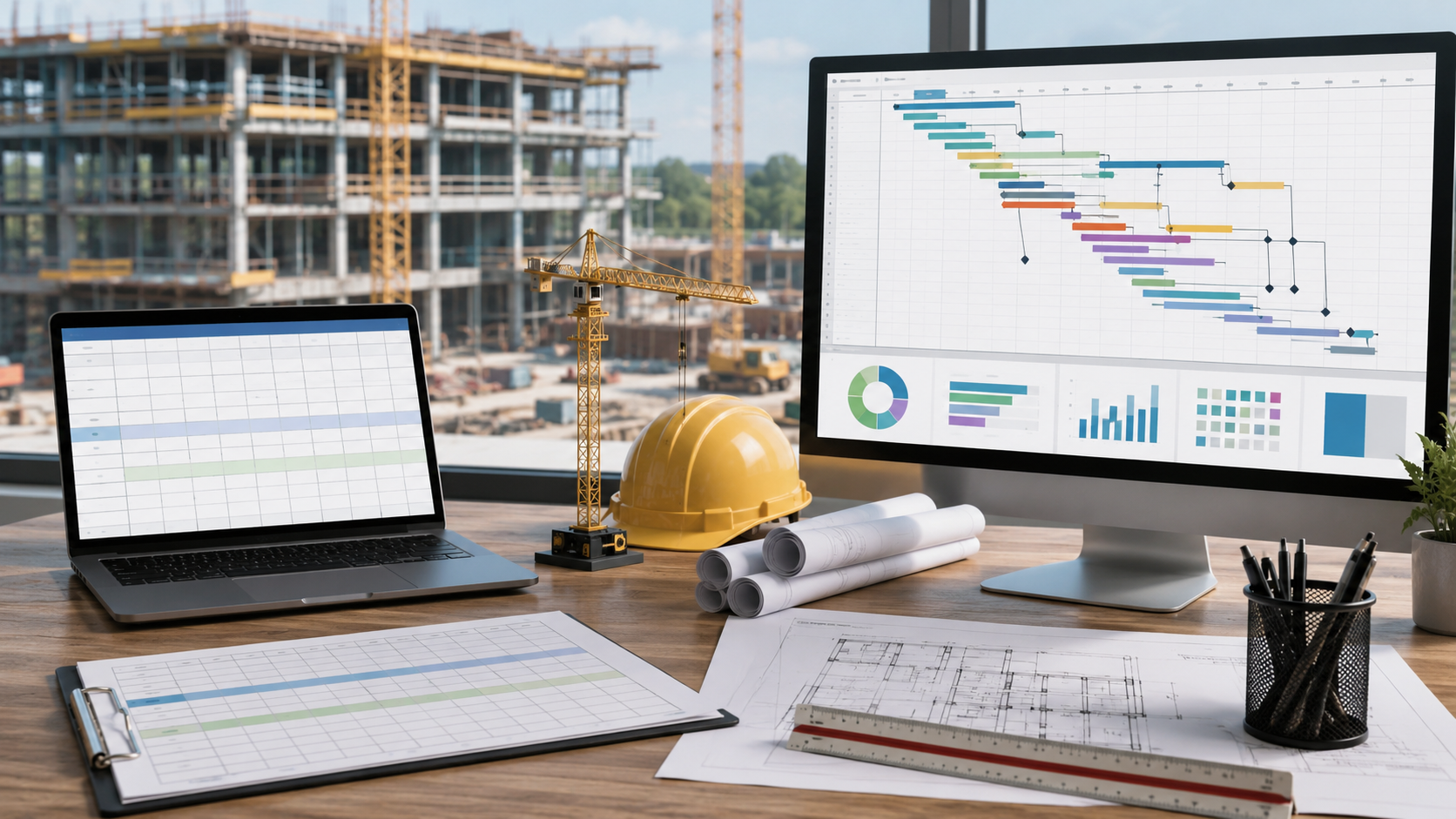
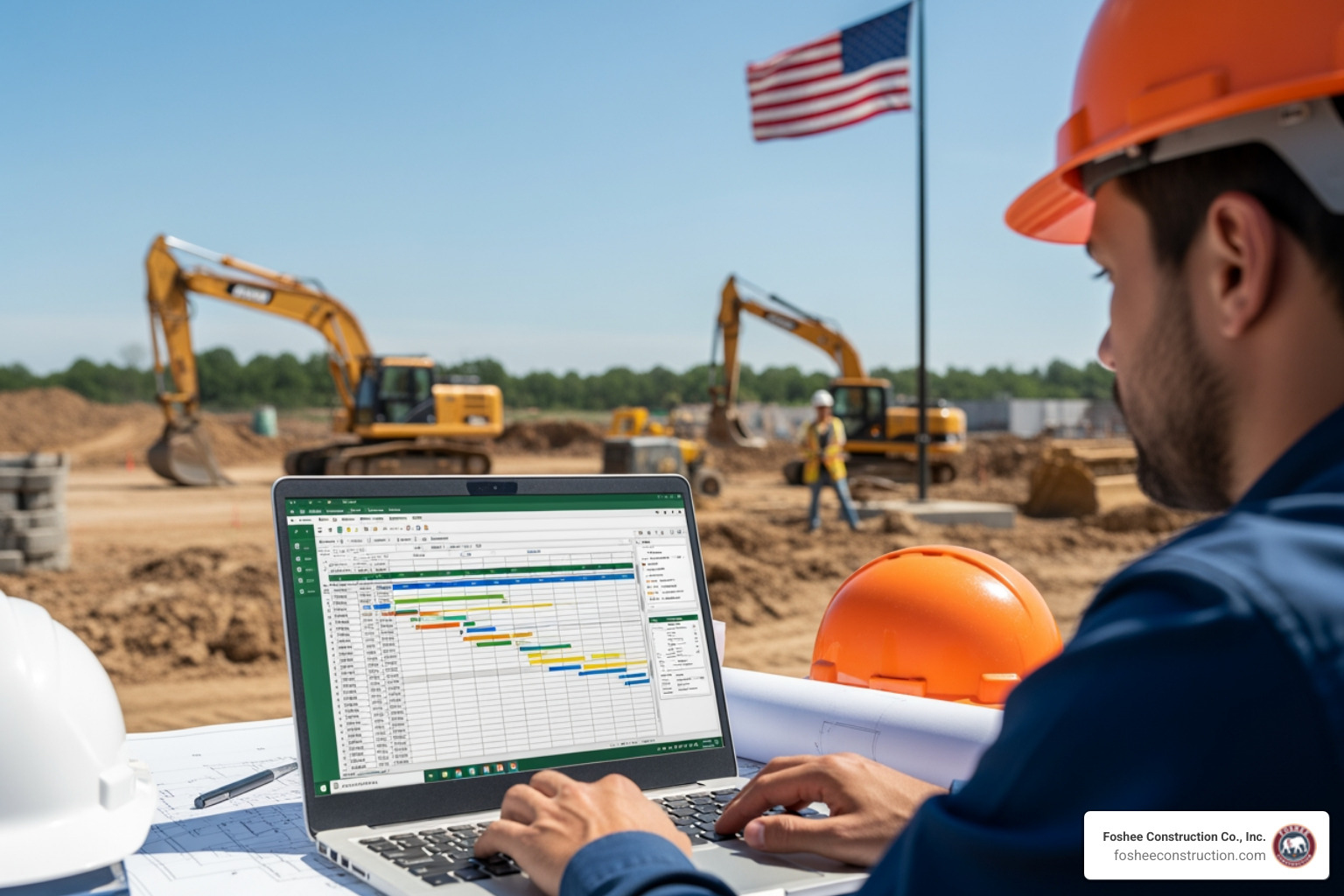
We build bids using HeavyBid and AGTEK because the details matter long before the job starts. When the numbers are accurate and the scope is clearly defined, it sets the tone for how the entire project runs. Estimating isn’t just a step in the process, it’s the foundation we build on.
That same mindset carries into the field. Our crew is trained to work with purpose, follow the Civil Engineers’ Plan to the finest detail, and hold the line on quality. When expectations are clear from day one, there’s no need for shortcuts, and no confusion about how the work gets done.
Clients trust our bid packages because they’re complete and ready to use. Project managers know what we’re covering, what’s excluded, and how we plan to approach the job. That clarity removes friction and lets teams focus on execution instead of interpretation.
As part of our review process, we go into the plans before anything hits the site. We ask the questions early, resolve issues before they show up in the field, and keep RFIs moving. This approach prevents delays and protects the timeline.
Over time, that consistency builds trust. Many of the people we work with today came through referrals from past projects – engineers, GCs, and superintendents who’ve seen how we operate and want the same experience again.
In 2024, Foshee Construction was acquired by Saga Infrastructure Solutions, a national network of civil construction companies. Saga supports regional contractors by giving them access to better tools, long-term resources, and operational backing, without changing how they run day to day.
Foshee will continue to operate under its name, with the same team and field leadership in place.
“From the very time a project starts, we start that partnership. We try to catch as much as we can with the tools that we have. Not everybody is using the software platforms we are. That’s the differentiator: we’re not just bidding. We’re anticipating, problem-solving, and making sure the job runs right.”
— Don, CEO, Saga Infrastructure Solutions
Foshee is now part of a broader regional strategy that includes Florida, the Piedmont Atlantic, Texas, Colorado, and the Arizona Sun Corridor. The name, crews, and standards remain. What’s improving is the support behind it.